
Introduction
There is something timeless about the sight of children playing freely in a backyard, and a well-built swing set sits at the heart of that experience. Whether you have a sprawling lawn or a compact outdoor space, a DIY swing set gives you the freedom to design a play area that fits your yard, your children, and your budget. Store-bought sets often come with limitations, whether in size, materials, or design, while a homemade structure allows you to build something that truly reflects what your family needs. The projects in this guide range from simple weekend builds to ambitious multi-feature playgrounds, and every single one of them can be completed with the right materials, basic tools, and a clear plan. Safety and style are not opposites, and this list proves exactly that.
Why Building Your Own Swing Set Makes Sense
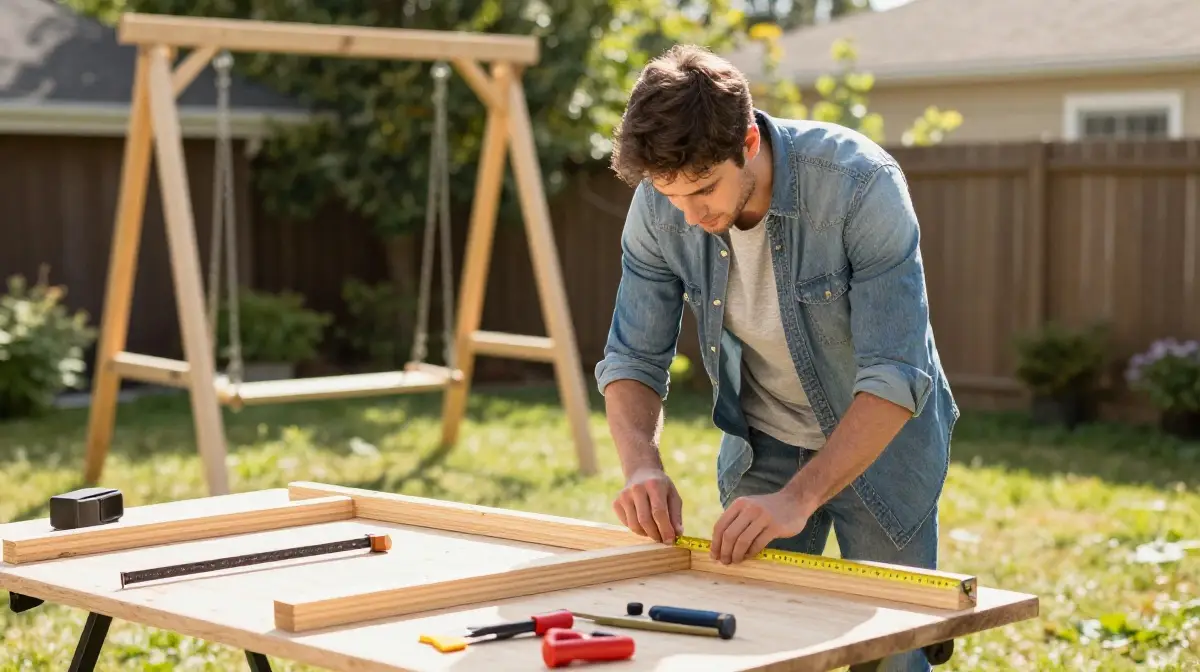
Building a DIY swing set is not just about saving money, though the savings are real. A comparable commercial wooden playset with slides, climbing walls, and multiple swings can easily cost over a thousand dollars, while many of the projects in this list can be completed for two to three hundred dollars using pressure treated lumber and off-the-shelf hardware. Beyond cost, a homemade swing set lets you choose the right size for your yard, select wood that will hold up to your local climate, and add features that your children actually want. You also know exactly what went into the build, which gives you far greater confidence in the structure’s safety than a flat-packed kit ever could.
The Classic A-Frame Wooden Swing Set
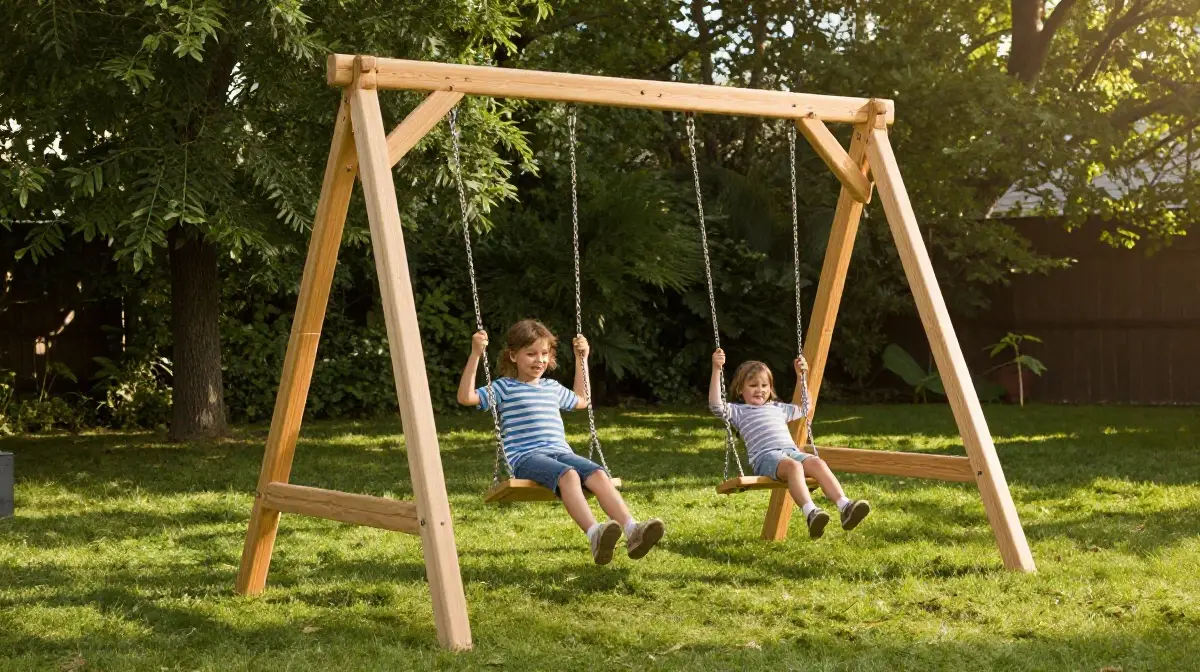
The A-frame design is the most popular starting point for good reason. It is stable, straightforward to build, and scalable. Using 4×4 posts for the legs and a 4×6 beam across the top, this structure can support multiple swings and is strong enough for children aged six and up. Family Handyman and several leading DIY sources recommend pre-drilling pilot holes before fastening lag bolts to prevent the wood from splitting. The A-frame can be assembled in a single afternoon by two adults and requires no concrete if the legs are set on properly leveled ground. This is the foundation upon which most of the more complex projects on this list are built.
A-Frame with Slide and Climbing Wall
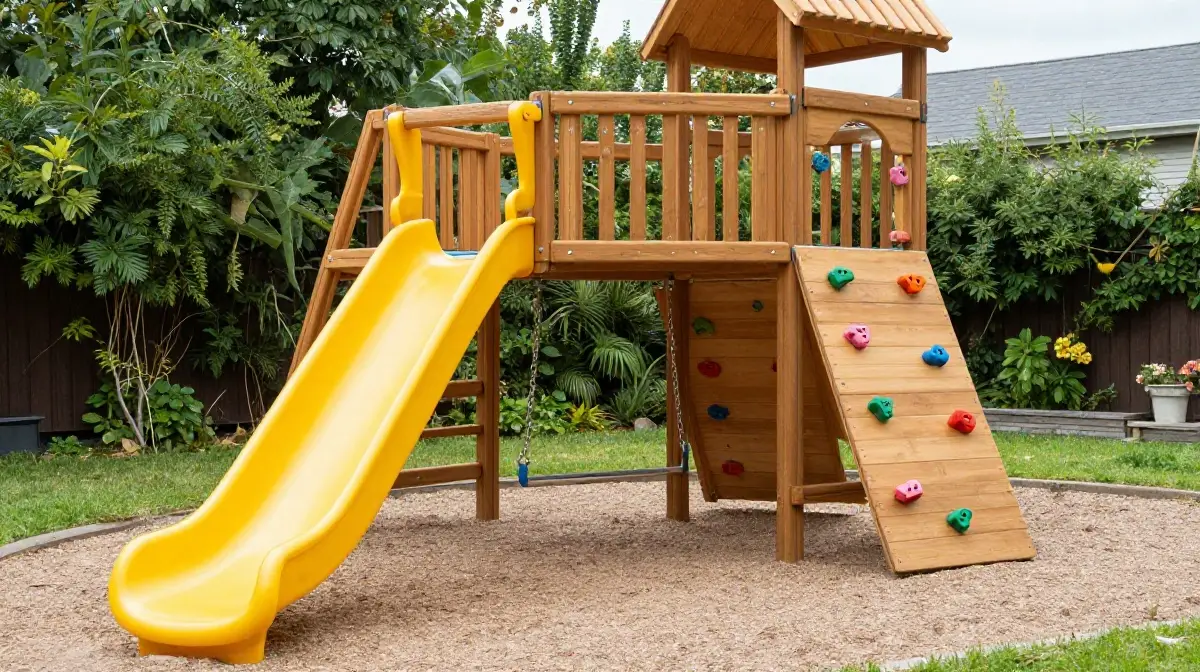
Once you have mastered the basic A-frame, adding a slide and climbing wall transforms it into a full playset. A climbing wall built from plywood with hand-holds attached at varying heights is excellent for developing upper body strength and coordination in children of all ages. The slide attaches to a raised platform section, which is framed using 2×6 joists and decking boards. For safety, the platform should include a guardrail on three sides, with the fourth side reserved for the slide entrance. This upgrade typically adds half a day to the total build time and is well worth every hour.
The Tower Fort Swing Set
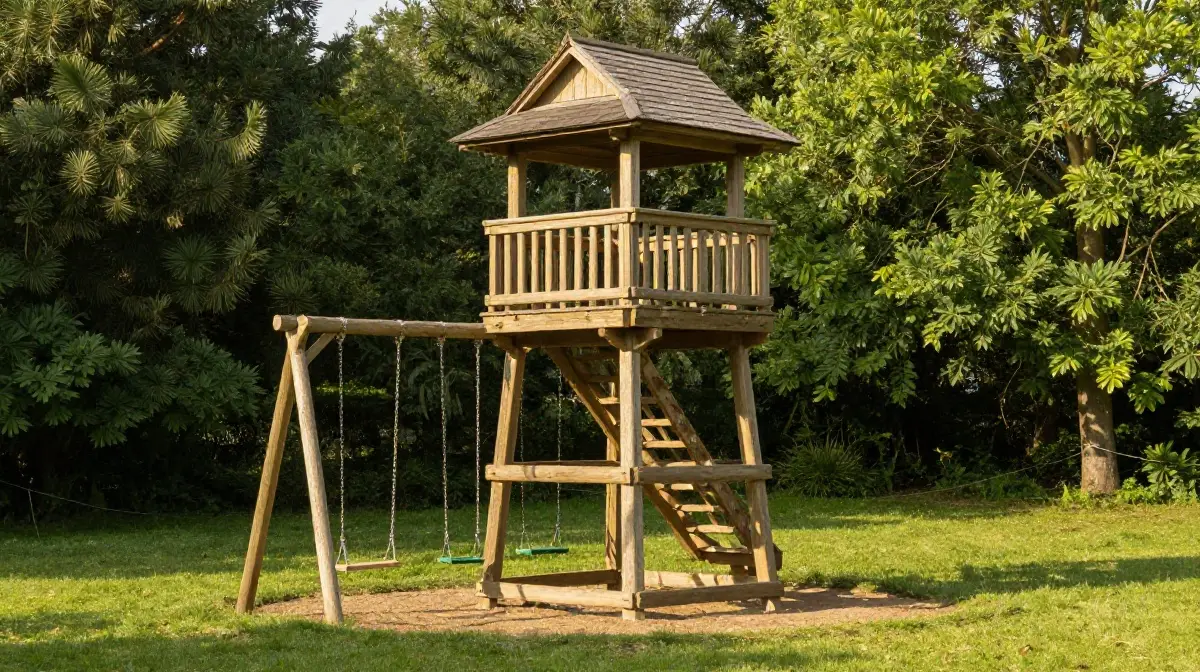
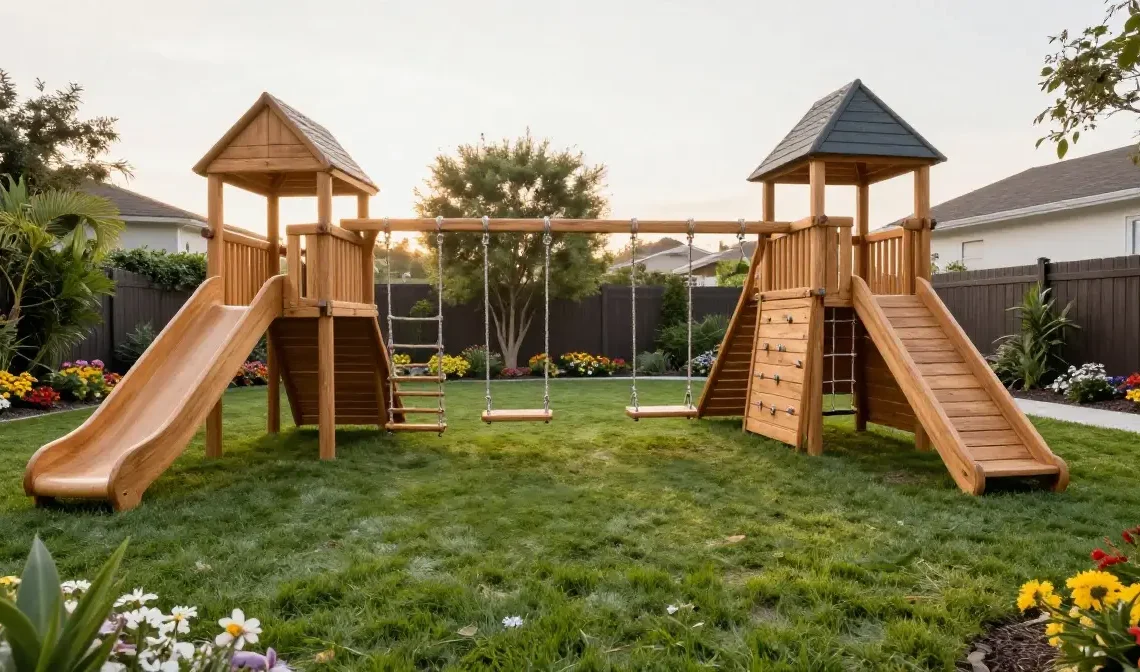
A tower fort elevates the play experience, quite literally, by adding an enclosed platform with a roof, railings, and interior space for imaginative play. This style of build uses two main 4×4 vertical posts on each corner of the tower and a joist system for the floor of the upper deck. The roof can be framed with simple 2×4 rafters and covered with cedar shingles or a pre-made plastic panel. DIYTyler’s celebrated two-tower build, which includes a bridge connecting both towers and monkey bars running underneath, demonstrates just how far this concept can go when planned well. Even a single-tower fort with one swing beam attached to the side creates a dramatic and inviting backyard centerpiece.
The Simple Tree Swing
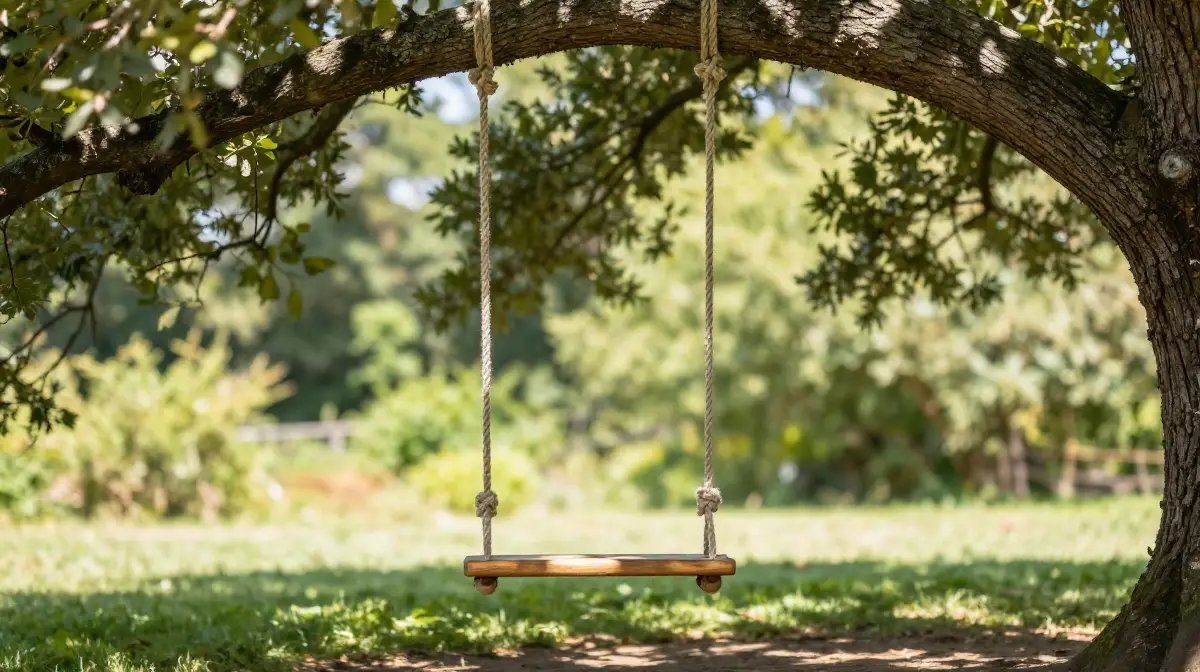
Not every DIY swing project requires lumber yards and power tools. A tree swing requires nothing more than a sturdy branch at least eight inches in diameter, appropriate rope or chain rated for the weight it will carry, and a quality swing seat. The key here is safety. The branch must be tested for health, any dead wood must be removed, and the rope must be attached with proper hardware, not tied directly to the bark, to avoid damage to the tree and prevent the rope from slipping. A simple round wooden disc seat or a flat board with drilled holes makes for an elegant and charming swing that can be installed in an hour.
The Pergola-Style Swing Set
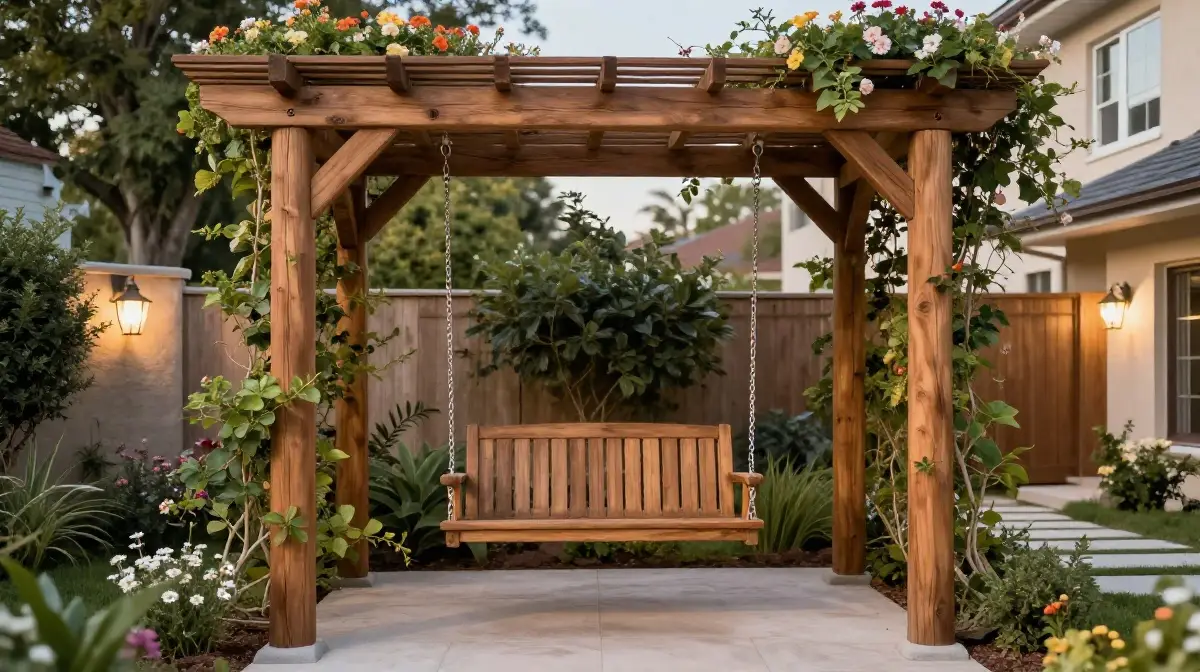
One of the most visually striking entries on this list, the pergola swing set blends function and landscape design in a way that commercial sets cannot. A four-post pergola frame provides natural shade over the swing area, making it ideal for warm climates. This design uses heavier lumber, typically 6×6 posts and 4×6 horizontal beams, for a sturdier and more architectural appearance. The pergola top can be left open for sun or covered with lattice and climbing plants for shade. The swing hangers are fastened directly to the center beam, and the whole structure feels more like a garden feature than a piece of playground equipment.
The Airplane Swing
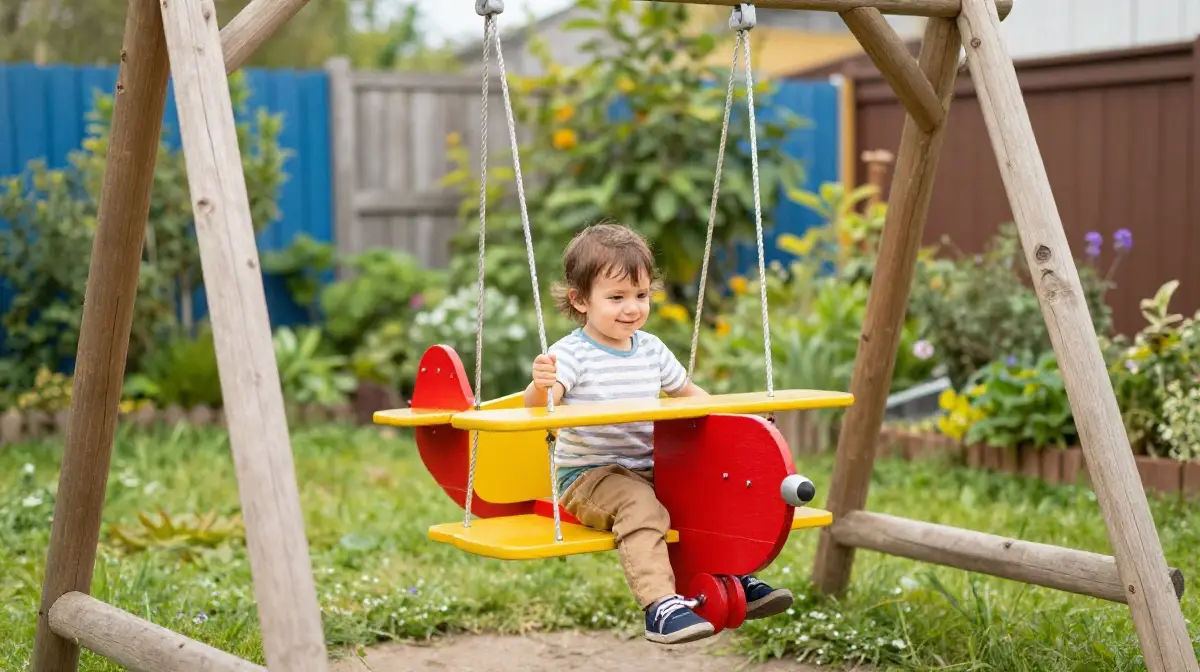
A single-seat airplane swing is one of the most charming projects for younger children. It is built from a few flat boards shaped into a simple cockpit silhouette, painted in bright colors, and hung from any suitable overhead beam. The seat is supported by rope or chain at four attachment points to keep it level and stable. This is a wonderful standalone project if you already have an A-frame or a porch beam and want to give a toddler or young child something uniquely theirs. It can be completed in a few hours and painted to match any theme.
The Disc Swing and Rope Ladder Combo
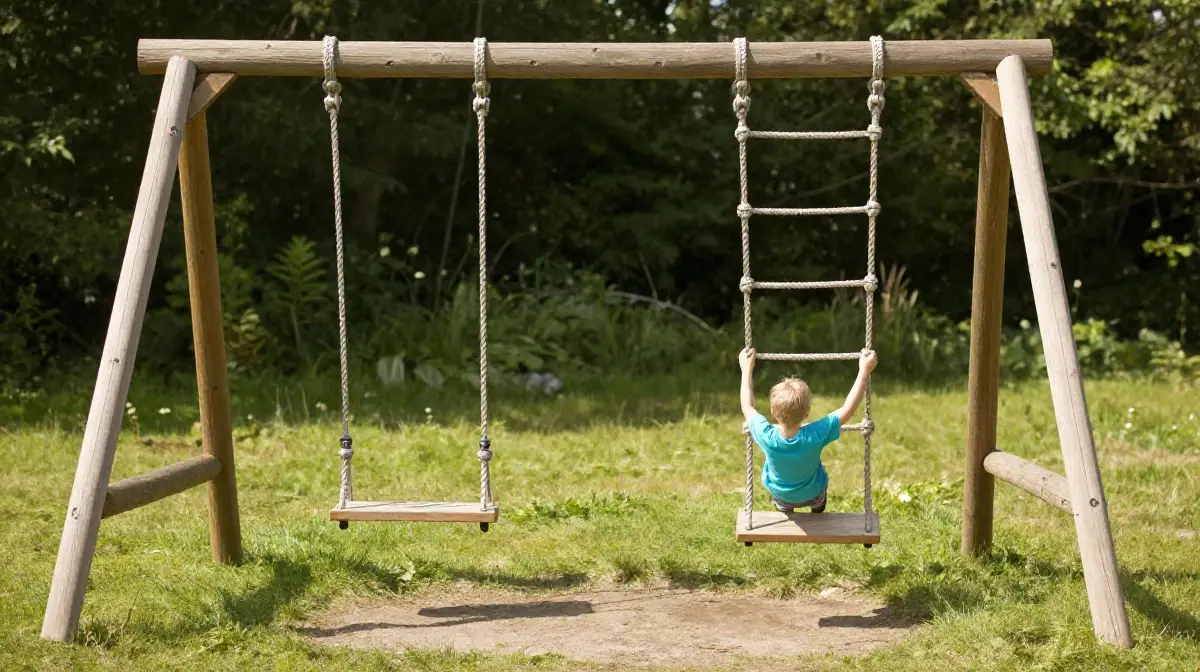
A disc swing, also known as a tire-style round swing, allows a child to spin as well as swing, which provides a different kind of vestibular stimulation compared to a traditional back-and-forth seat. Pairing it with a knotted rope ladder on one side of the frame adds a climbing element without requiring the space or lumber of a full climbing wall. This combination project works well in smaller yards and can be completed in a single weekend. The disc itself is a standard commercial piece of hardware attached with a heavy-duty swivel hook to prevent the rope from twisting.
The Porch Swing
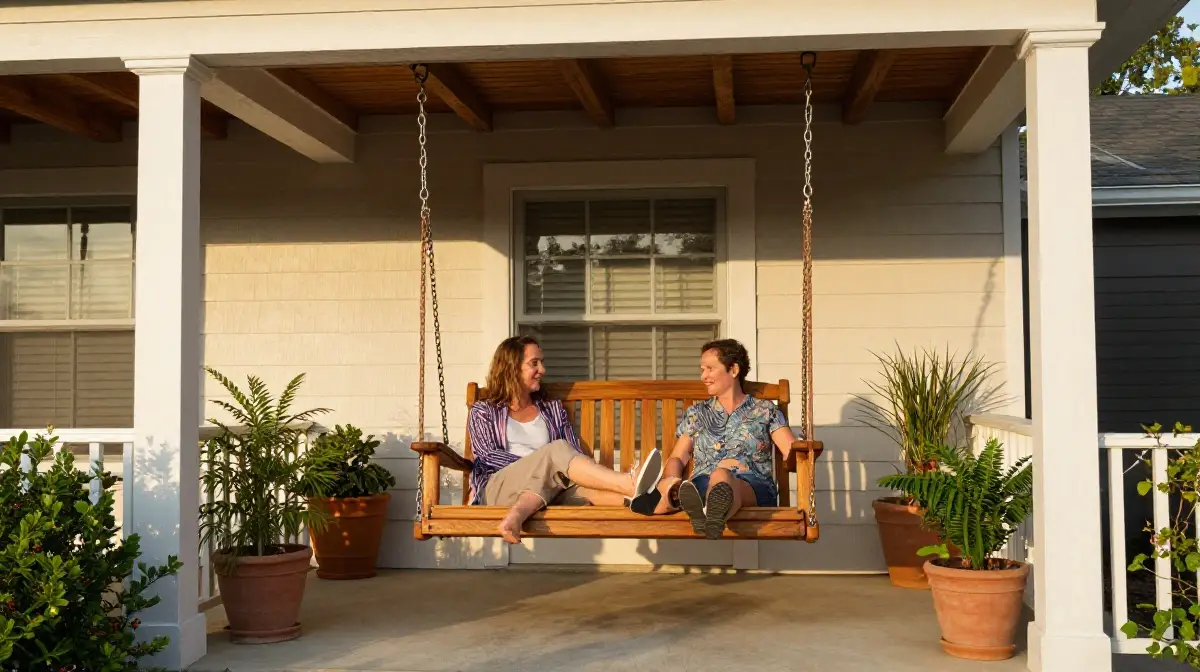
If you have a covered porch or a deck with exposed ceiling joists, a porch swing is one of the most satisfying DIY swing projects an adult can undertake. This is, strictly speaking, a swing for parents and older children, but it earns its place on this list because it transforms any porch into a place where families gather. The swing frame is built from 2×6 planks for the seat and back, connected at rounded corners for comfort, and hung from galvanized eye bolts fastened into ceiling joists. It requires staining or sealing before installation to protect against moisture and should be rated to hold at least 500 pounds if it will be used by adults.
The Ground-Level Baby Swing Frame
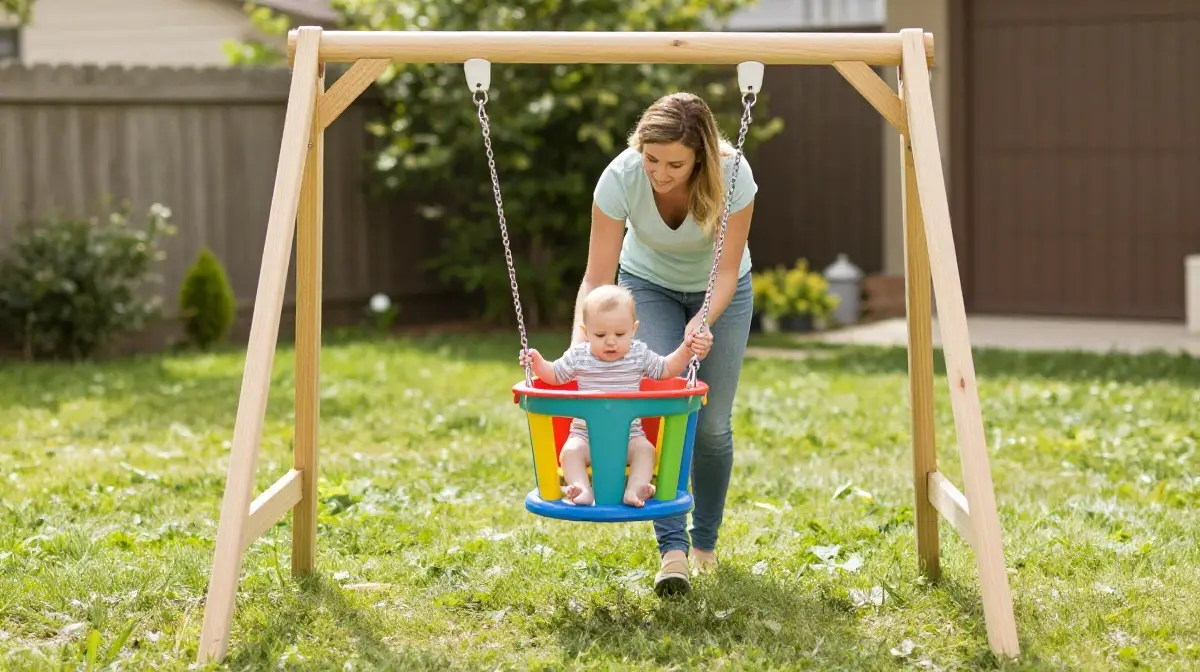
For families with infants and toddlers, a low standalone frame built specifically for a bucket-style baby swing is a practical and thoughtful project. This simple structure uses four 4×4 posts set in a rectangle, joined at the top by two parallel beams, with a crossbeam in the center from which the baby swing hangs. The low height keeps the swing close to the ground, making it easy for a parent to push gently without bending awkwardly. This frame can later be repurposed as a standalone swing for older children simply by swapping the seat.
The Wooden Sandbox Swing Set Combo
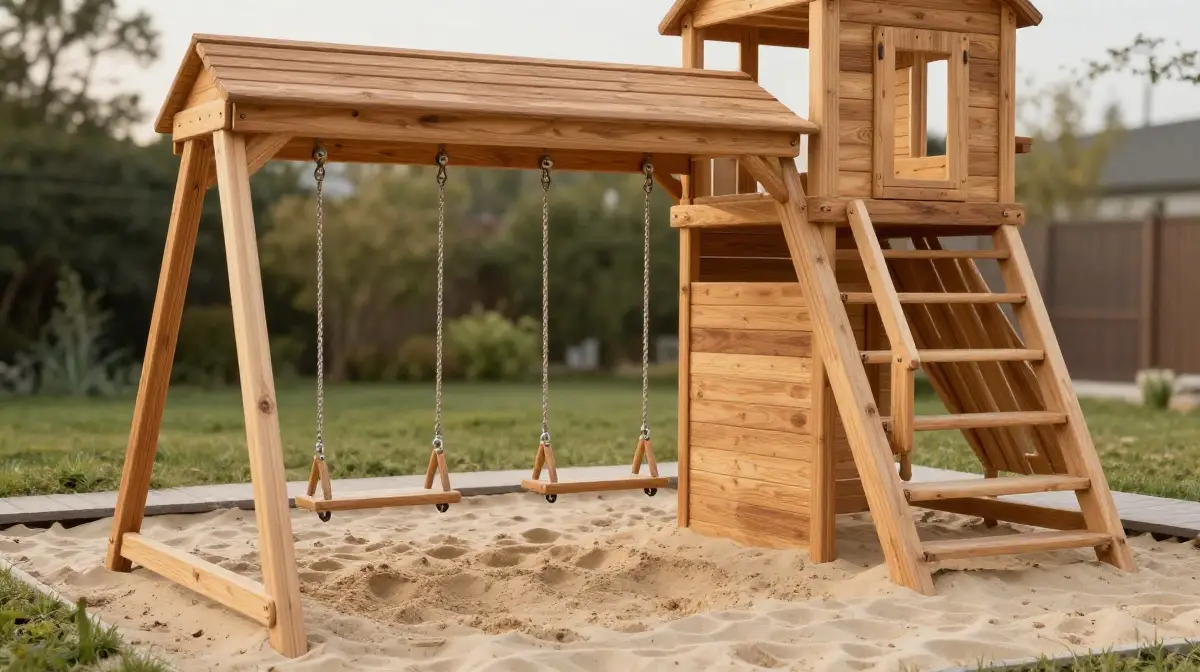
Combining a sandbox with a swing set maximizes the use of your outdoor space and keeps multiple children engaged at the same time. The sandbox sits directly beneath the raised deck of the tower fort, using the underside of the platform as natural shade. The sandbox frame is made from pressure treated 4×4 timbers arranged in a square or rectangle and filled with fine play sand. A removable waterproof cover keeps the sand clean when not in use. This project requires careful planning because the footprint of the whole structure must be laid out before any posts go into the ground.
The Multi-Tower Swing and Bridge Complex
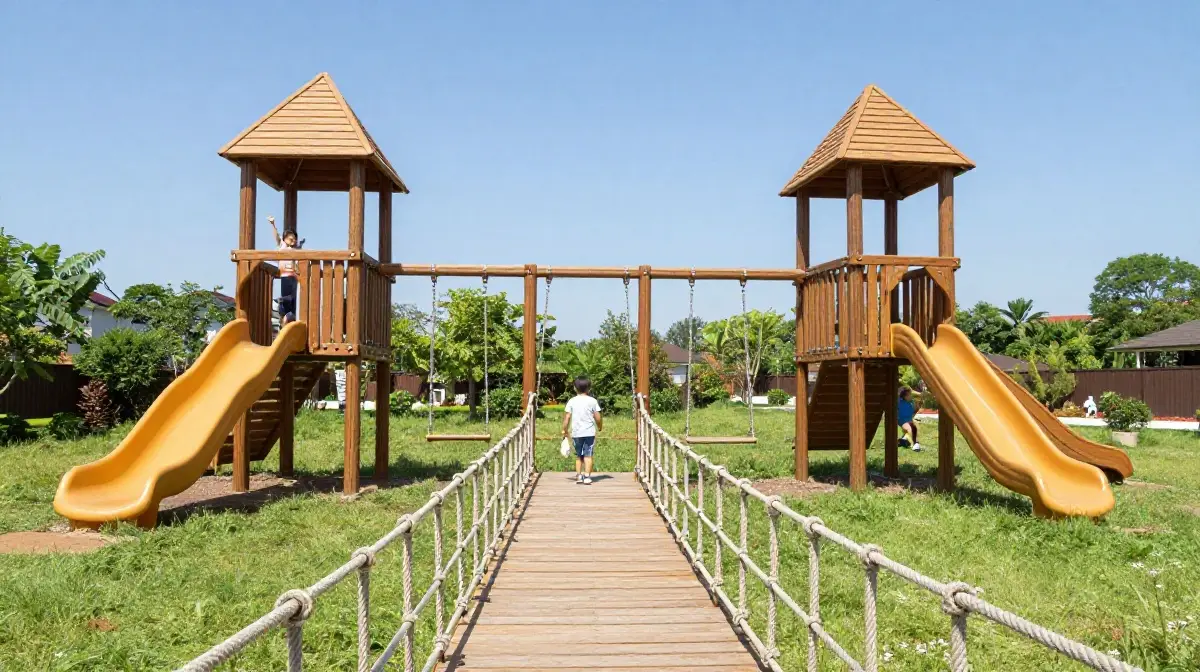
For families with the yard space and the ambition, a multi-tower swing set connected by a bridge is the pinnacle of backyard play structures. Two separate tower forts, each with their own platforms, slides, and climbing features, are joined by a plank bridge or a rope bridge stretched between them. The monkey bars can be incorporated into the underside of the bridge frame for an added challenge. This kind of build takes a full weekend of committed work by two or more adults and benefits greatly from detailed, drawn-out plans created before a single piece of wood is cut.
The Sensory Swing Frame
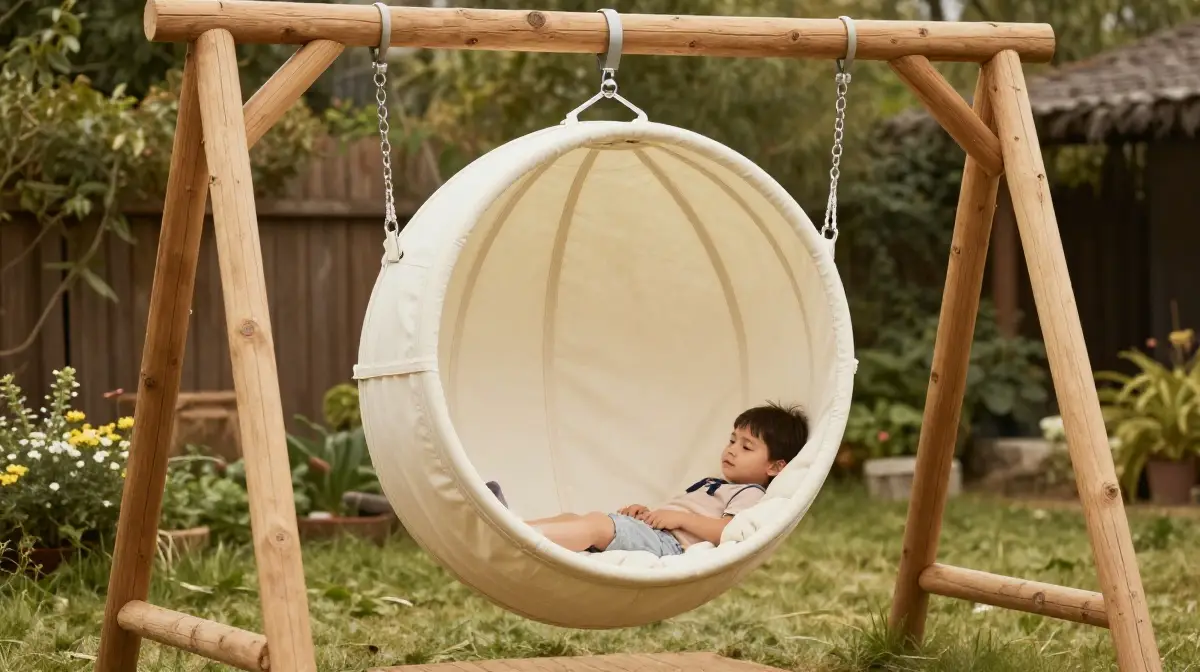
A sensory swing, often used for children with sensory processing needs, requires a specially designed indoor or outdoor frame that allows the swing to rotate and sway in multiple directions. An outdoor sensory swing frame uses heavy steel pipe or a robust 6×6 timber A-frame with a single center hanging point and a high-quality swivel hook. The swing itself is typically a canvas pod or hammock-style seat, but the frame project is entirely DIY-friendly. Families who build this note that it quickly becomes popular with all the children in the household, regardless of whether a sensory need prompted it.
The Repurposed Swing Set Upgrade
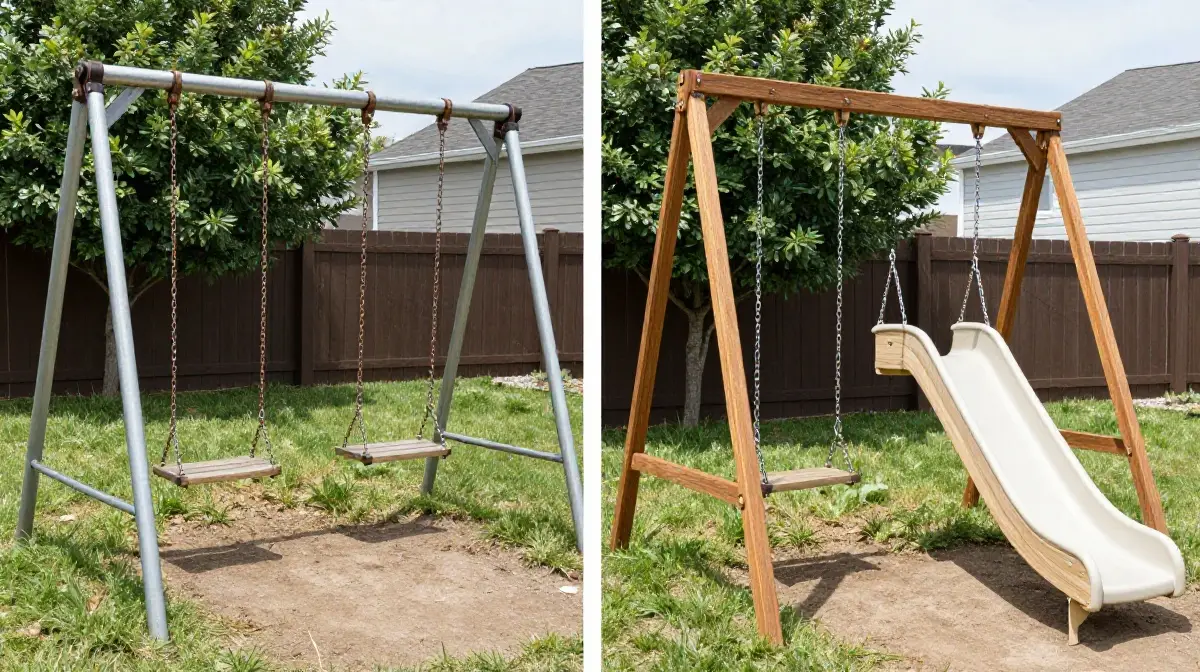
Rather than building from scratch, many homeowners have an old metal or wooden swing set that simply needs thoughtful upgrades to feel new again. Replacing rusted chains with powder-coated ones, adding a fresh coat of exterior wood stain, attaching new swing seats, and installing a new slide can transform a dated structure into something that looks and feels brand new. This is the most budget-friendly project on the list and, when done thoroughly, is also one of the most satisfying because it reduces waste and extends the life of an existing structure.
The Cedar A-Frame with Sandbox Below
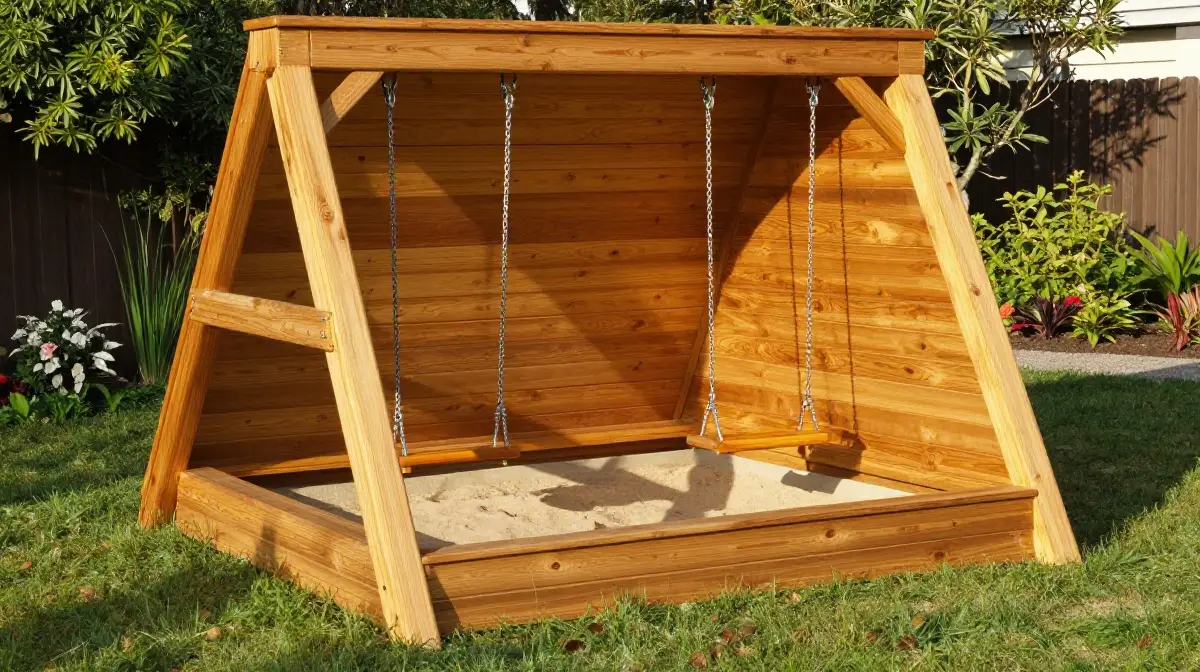
Cedar is one of the best woods for outdoor play structures because it is naturally resistant to rot and insect damage without requiring the chemical treatment that pressure treated pine involves. A cedar A-frame with a sandbox built into the base is both practical and visually warm in any garden setting. Cedar weathers to a beautiful silver-gray over time or can be maintained with natural oil finishes to keep its original golden tone. This project does cost more in materials than a pine equivalent, but the longevity and the aesthetics make the investment worthwhile for families planning a permanent play area.
The Adult Hammock and Swing Combo
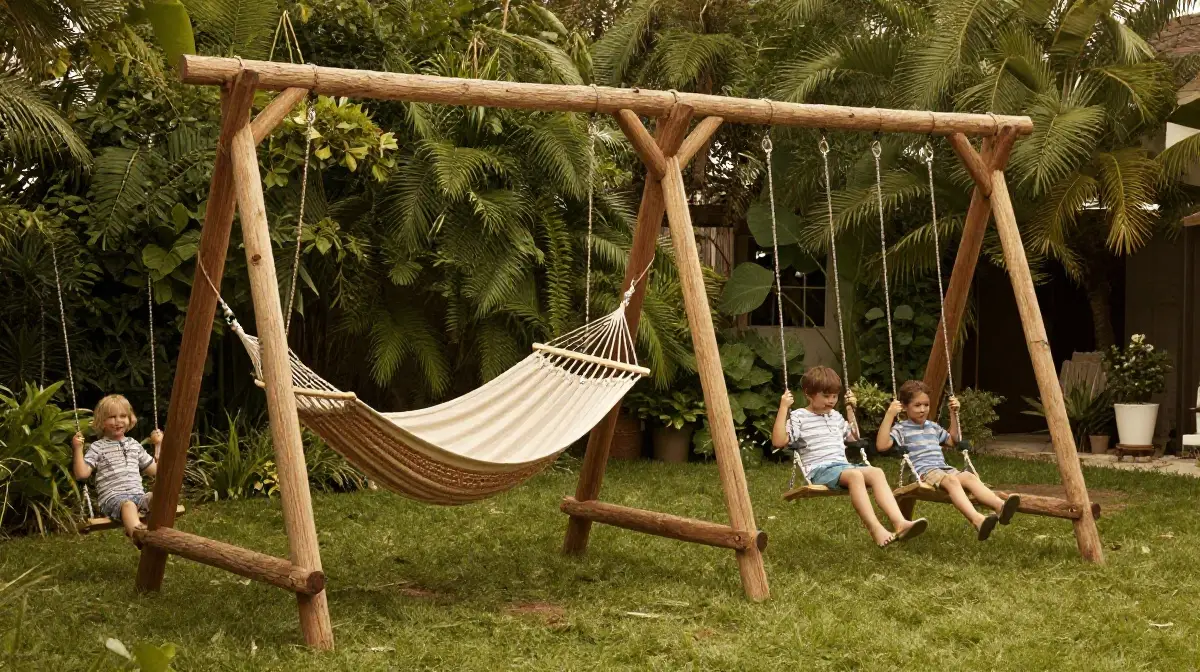
Not all swing sets are for children alone. A sturdy frame that accommodates both a traditional child swing and an adult-sized hammock chair creates a shared outdoor retreat for the whole family. The hammock chair hangs from one end of the beam while one or two traditional swings occupy the other end. The frame needs to be built with heavier lumber and deeper post foundations to safely handle the combined and dynamic loads of adults and children using it simultaneously.
The Tire Swing
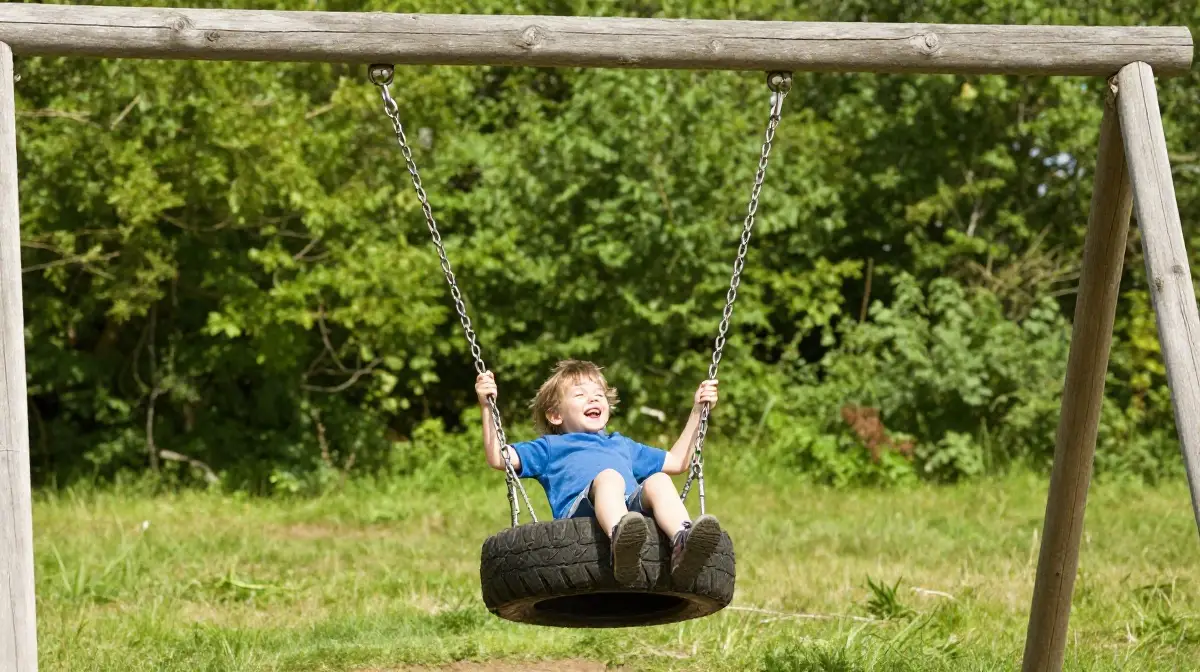
The classic tire swing needs no introduction. A single automobile tire hung from a sturdy tree branch or a dedicated frame post with three chains meeting at a central swivel point creates one of the most beloved and enduring backyard play features in existence. The tire should be drilled with drainage holes at the bottom to prevent water from pooling. The chains must be rated for the intended load and inspected regularly. This is a one-afternoon project with decades of returns on the investment.
Proper Safety Measures for Every DIY Swing Set
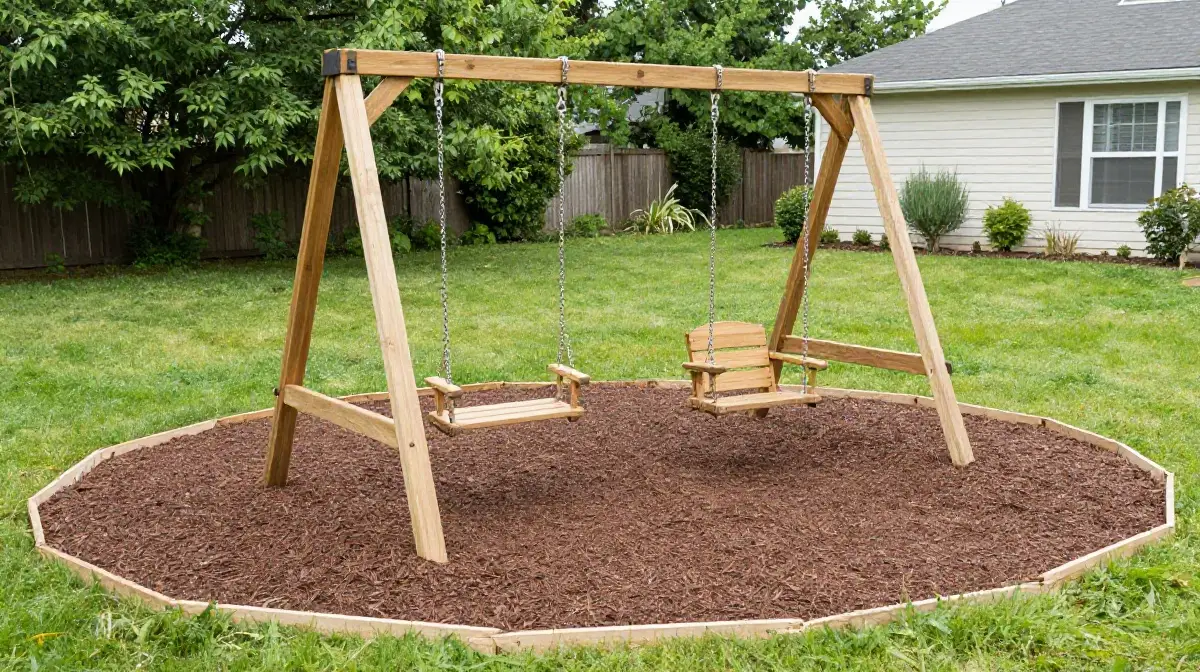
No swing set project is complete without a serious commitment to safety planning. Ground cover beneath and around the swing set should be impact-absorbing material such as rubber mulch, pea gravel, or wood chips laid to a depth of at least six inches. The safe fall zone should extend at least six feet in front and behind the swing and four feet to each side of the structure. All hardware must be inspected before installation and rechecked every season. Bolts must be tightened, wood must be checked for cracks and rot, and any sharp edges must be sanded or capped before children are allowed to use the structure.
Choosing the Right Wood and Hardware
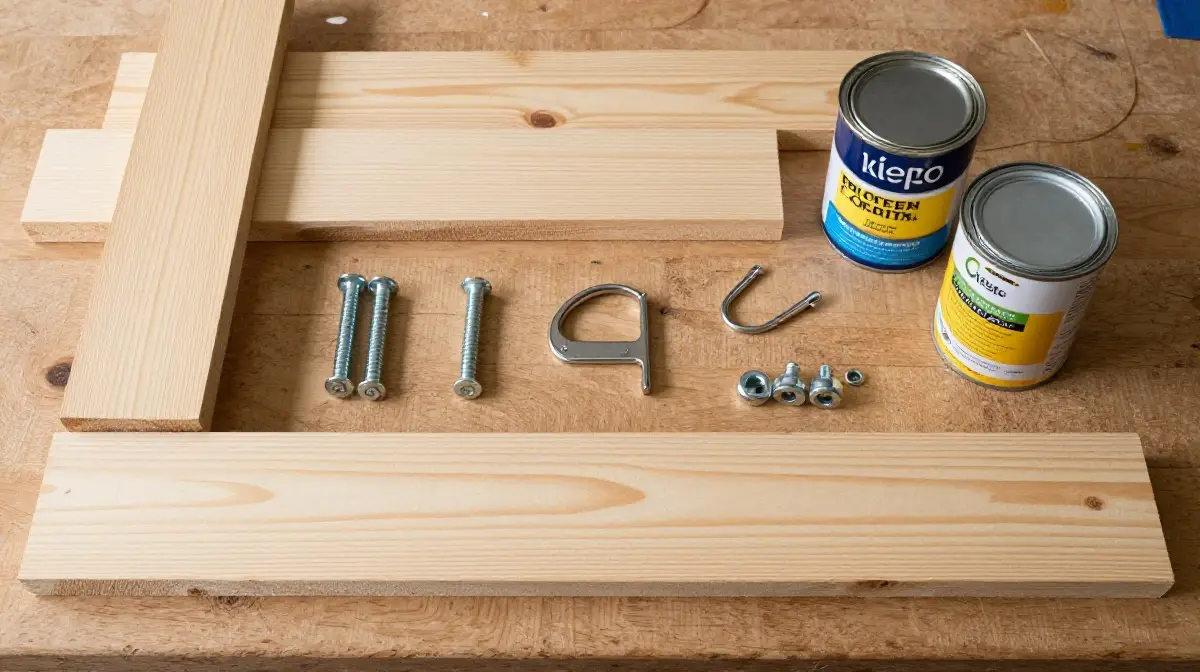
Pressure treated lumber is the most common choice for DIY swing sets because it resists moisture, insects, and rot. However, parents of very young children sometimes prefer cedar or redwood, which achieve similar durability without chemical preservatives. For hardware, galvanized steel or stainless steel fasteners are non-negotiable in an outdoor environment, as standard steel will rust and weaken within one or two seasons. Swing hangers, eye bolts, and lag screws should all be rated to at least twice the anticipated load to provide an appropriate safety margin.
Maintenance Tips to Keep Your Swing Set Safe for Years
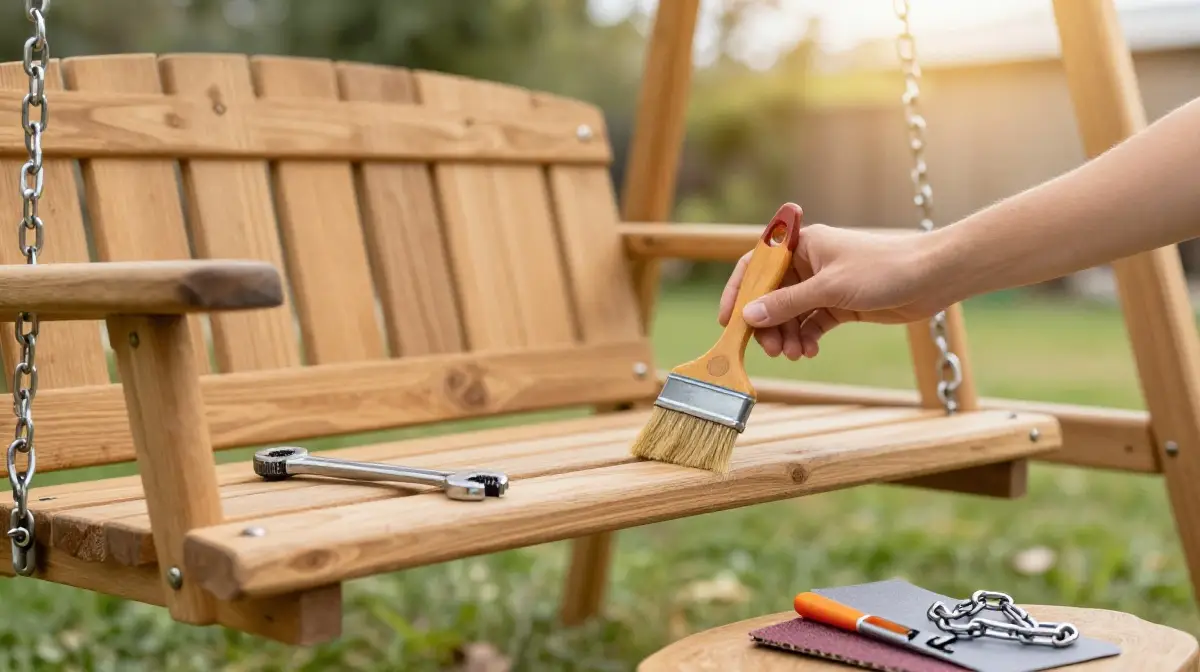
A DIY swing set is a long-term investment and requires regular care to stay in top condition. Every spring, inspect all bolts and hardware for signs of rust or loosening and tighten or replace as needed. Sand any raised wood grain or splinters that appear after winter moisture cycles. Apply a fresh coat of exterior wood stain or sealant every one to two years to protect the lumber from UV damage and water penetration. Check all ropes and chains for fraying or corrosion and replace them immediately if any wear is found. A well-maintained wooden swing set can serve a family for ten years or more.
Conclusion
Building a DIY swing set is one of the most rewarding outdoor projects a homeowner can take on. From the simplest tree swing to the most ambitious multi-tower complex, every project on this list is achievable with patience, the right materials, and careful planning. The result is a play space that is uniquely yours, built to your standards, and capable of creating outdoor memories that children carry with them for life. Start with a design that suits your yard and your skill level, prioritize safety at every stage, and enjoy the process of building something genuinely wonderful for your family.
You may also like this:18 Creative Swing Set Plans to Build the Perfect Outdoor Playground
Frequently Asked Questions
What is the best wood for a DIY swing set?
Pressure treated pine is the most widely used wood for DIY swing sets because it is affordable, widely available, and resistant to rot and insects. Cedar and redwood are excellent natural alternatives that offer similar durability without chemical treatment. Whichever wood you choose, always apply an exterior sealant or stain to extend its lifespan.
How deep should swing set posts be set in the ground?
For a standard backyard swing set, posts should be buried at a depth of at least two feet, ideally three feet for taller structures or heavier builds. Setting the posts in concrete adds significant stability, though compacted gravel can also be used as an alternative in well-drained soil.
How much does it cost to build a DIY swing set?
The cost of a DIY swing set varies widely depending on size and features. A simple A-frame with two swings can be built for under 200 dollars. A larger structure with a tower, slide, and climbing wall typically costs between 400 and 800 dollars in materials, still well below the price of comparable commercial playsets.
What type of ground cover is safest under a swing set?
The safest ground cover options under a swing set include rubber mulch, engineered wood fiber, pea gravel, and sand. Each of these materials should be laid to a minimum depth of six inches and maintained regularly to ensure consistent coverage across the entire fall zone.
How often should a DIY swing set be inspected for safety?
A DIY swing set should be given a thorough safety inspection at least twice per year, ideally at the start and end of the primary play season. Additionally, after any severe storm or extended period of rain, a quick visual check for loose bolts, cracked wood, or damaged hardware is strongly recommended.