
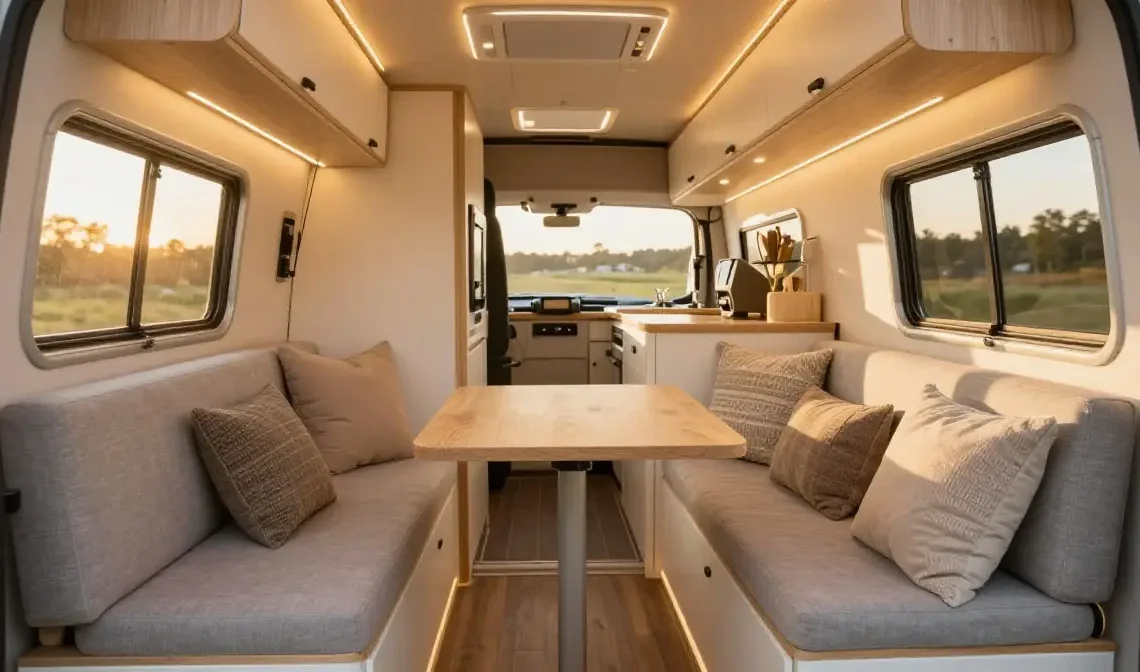
Introduction
Living small does not mean living without comfort, style, or personality. Millions of travelers, weekend adventurers, and full-time road dwellers have discovered that a well-designed small camper can feel just as inviting as any home. The secret lies in smart planning, creative thinking, and knowing exactly how to make every square inch work harder for you. Whether you are converting a van for the first time or refreshing an older camper trailer, the right interior choices can completely transform the way you experience life on the road. This guide walks you through 20 practical and inspiring small camper interior ideas that deliver real results without demanding a big budget or a full rebuild.
Under-Bed Storage Compartments
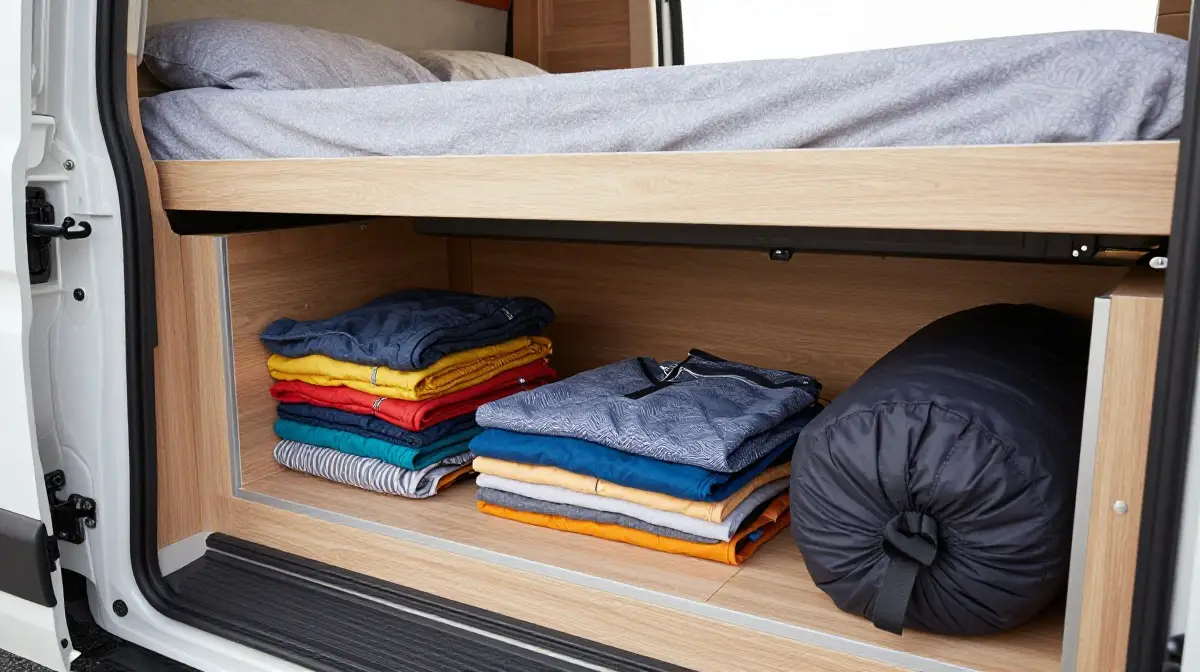
The area beneath your sleeping platform is some of the most valuable real estate in a small camper. Install pull-out drawers or use lift-up bed frames with hidden compartments underneath. This space handles bulky gear like sleeping bags, clothing, and tools that would otherwise pile up in the main living area.
Overhead Cabinets and Ceiling Bins
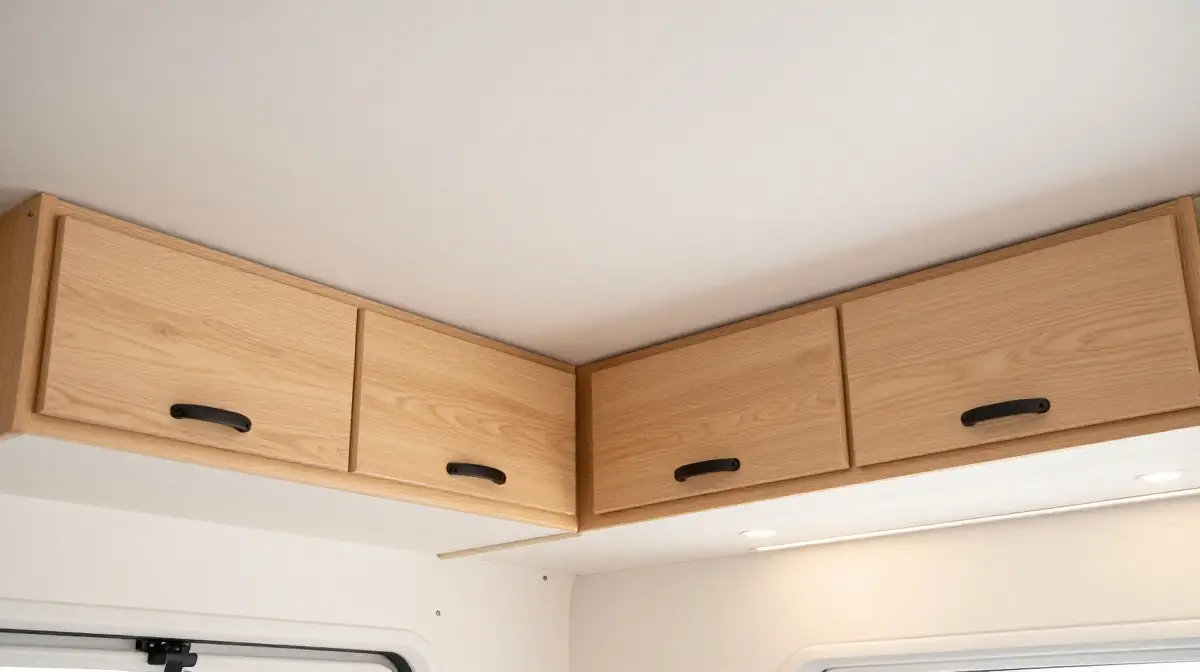
Vertical space is consistently underused in small campers. Installing overhead cabinets along the upper walls creates usable storage without eating into the floor area. Many experienced camper builders report that ceiling-level bins make the entire floor plan feel more open and organized.
Wall-Mounted Organizers and Hooks
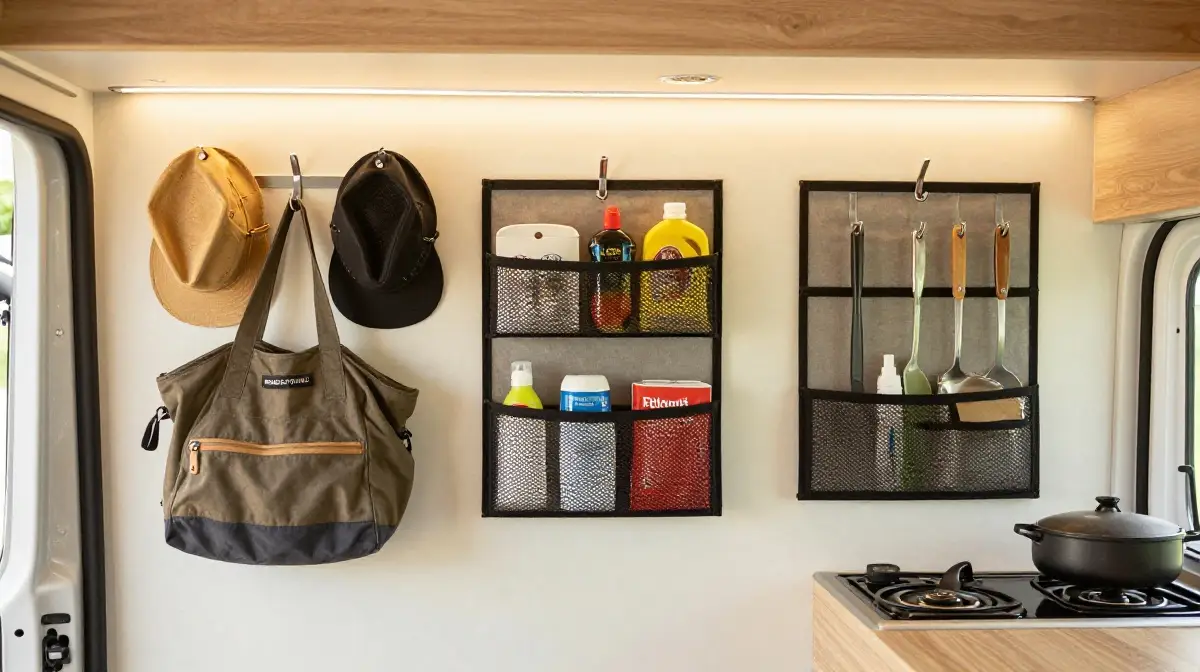
Simple hooks, mesh pockets, and wall-mounted organizers cost very little but deliver enormous results. Hang cooking utensils near the stove, store shoes at the entrance, and keep daily essentials within arm’s reach without crowding any surface.
Side Pods and Built-In Cubbies
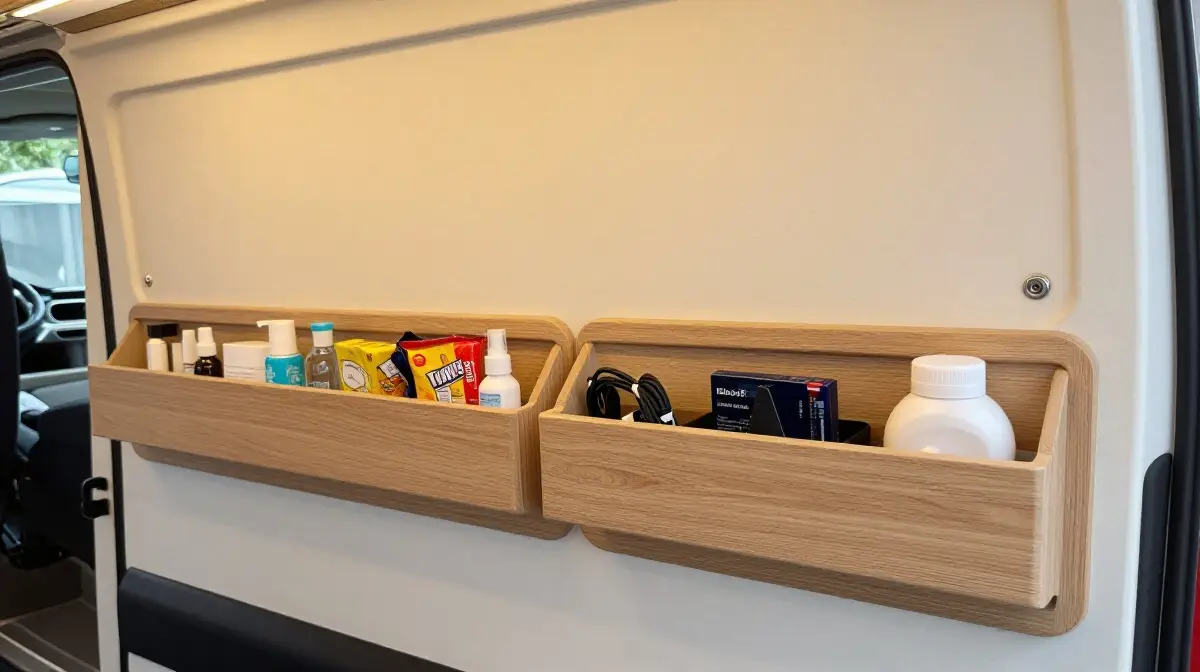
Side pods are compartments built directly into the wall panels of a camper. They sit flush with the surface, making use of space that normally goes to waste. These work especially well for toiletries, snacks, charging cables, and travel documents.
Convertible Sofa Beds
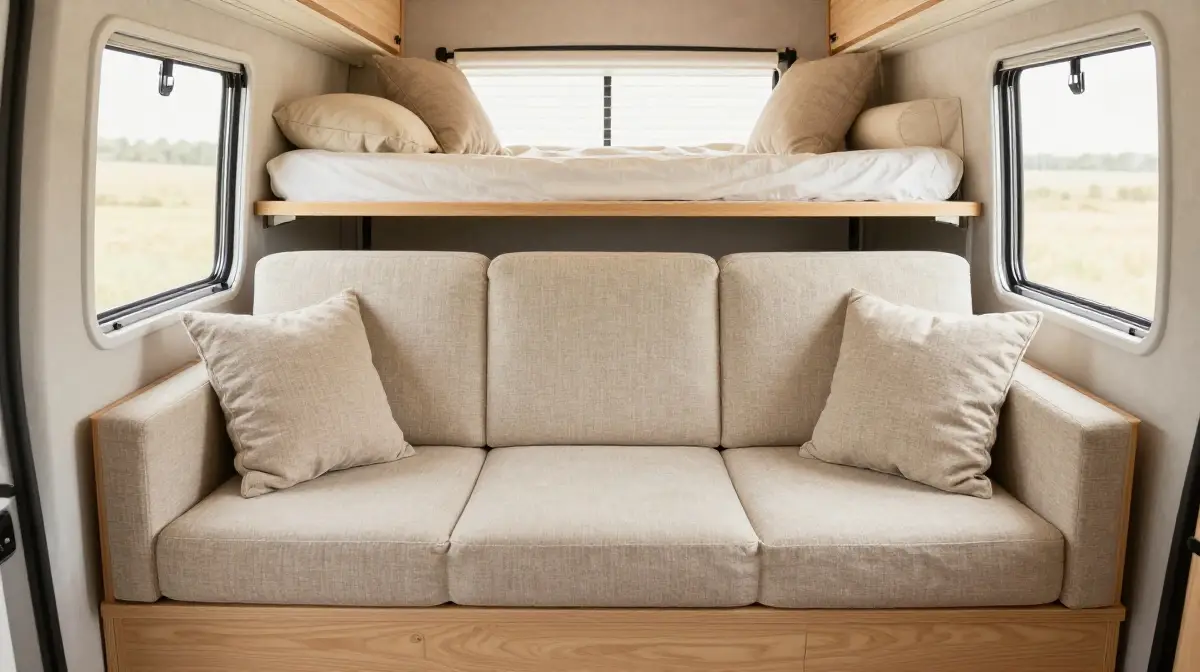
A convertible sofa that folds into a bed at night is one of the most practical investments for any small camper. During the day it functions as comfortable seating. At night it becomes a sleeping area. This single piece of furniture replaces two separate items and frees up significant space.
Fold-Down Tables and Collapsible Desks
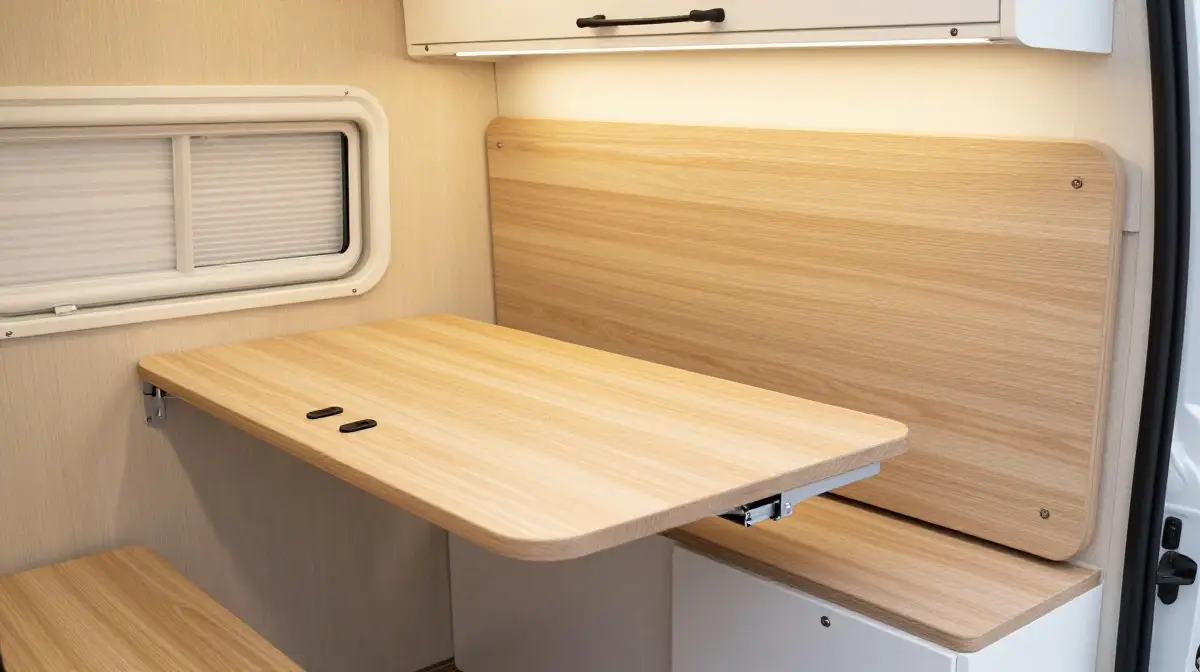
A table that folds flat against the wall when not in use gives you a dining surface, a workspace, and extra floor space all in one design. Fold-down tables are easy to build from scratch using a piano hinge and a piece of plywood, or they can be purchased ready-made for modest budgets.
Floating Daybed with Dual Seating
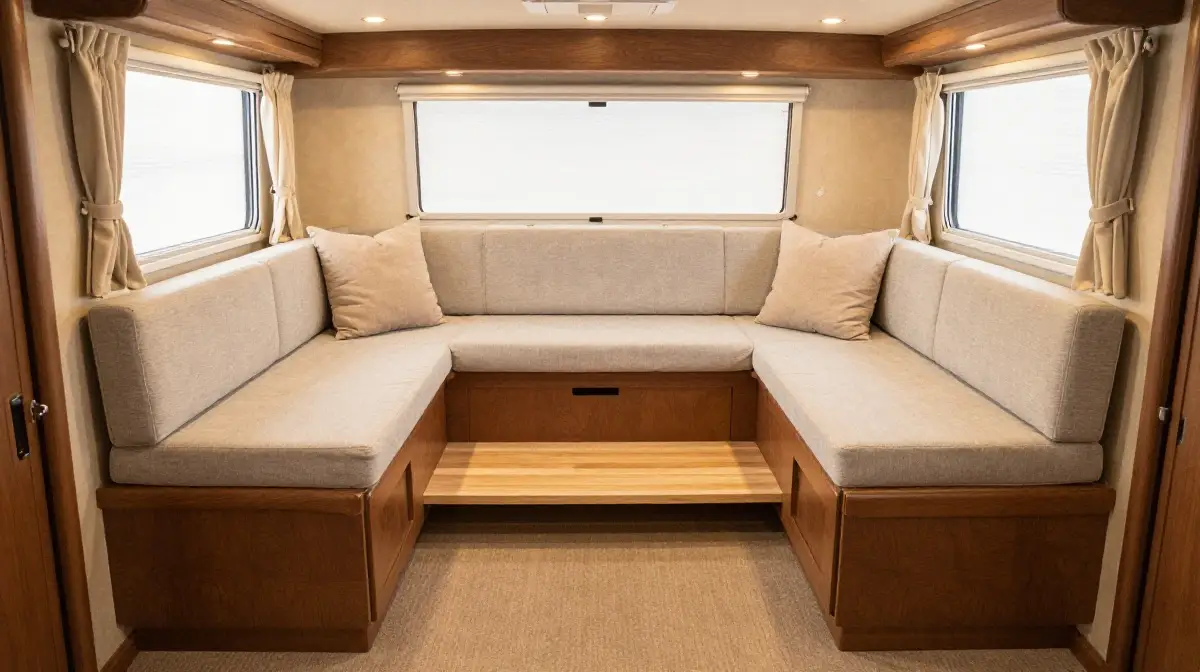
Rather than a traditional bench that converts awkwardly, consider a floating daybed design. Two facing bench seats sit on either side with space underneath for large items. At night, a simple wooden board and cushion bridge the gap to create a full-sized sleeping area. The under-storage access is far more convenient than any traditional setup.
Loft Beds Over a Living Area
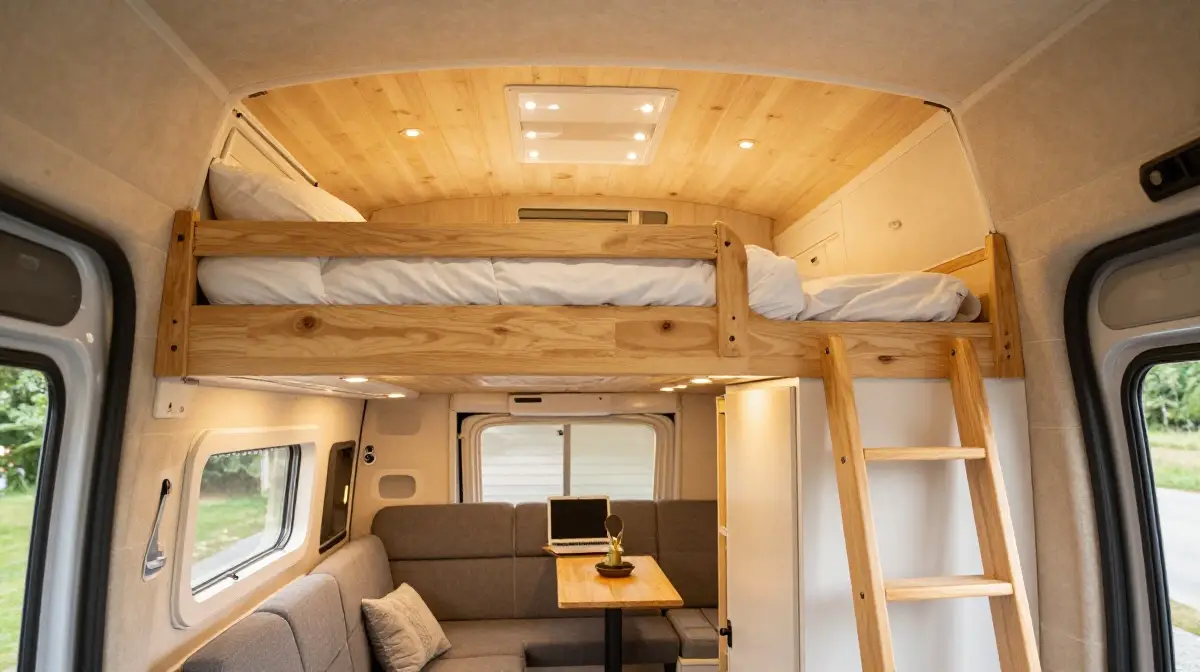
If ceiling height permits, elevating the sleeping area creates a dedicated zone below for seating, a workspace, or additional storage. This approach is popular in larger vans and some camper trailers where headroom allows for the split-level design.
LED Strip Lighting Under Cabinets
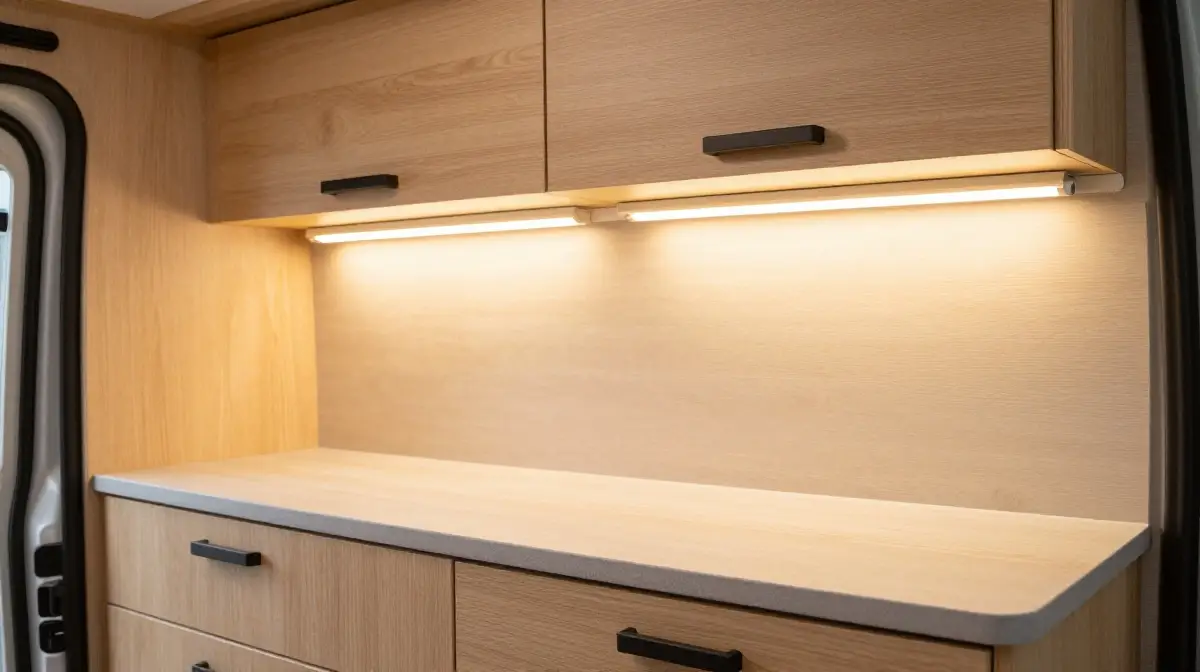
LED strip lights installed beneath upper cabinets create ambient lighting that makes the interior glow warmly without harsh overhead glare. They run on very little power, which matters greatly in off-grid camper setups.
Layered Lighting for Different Moods
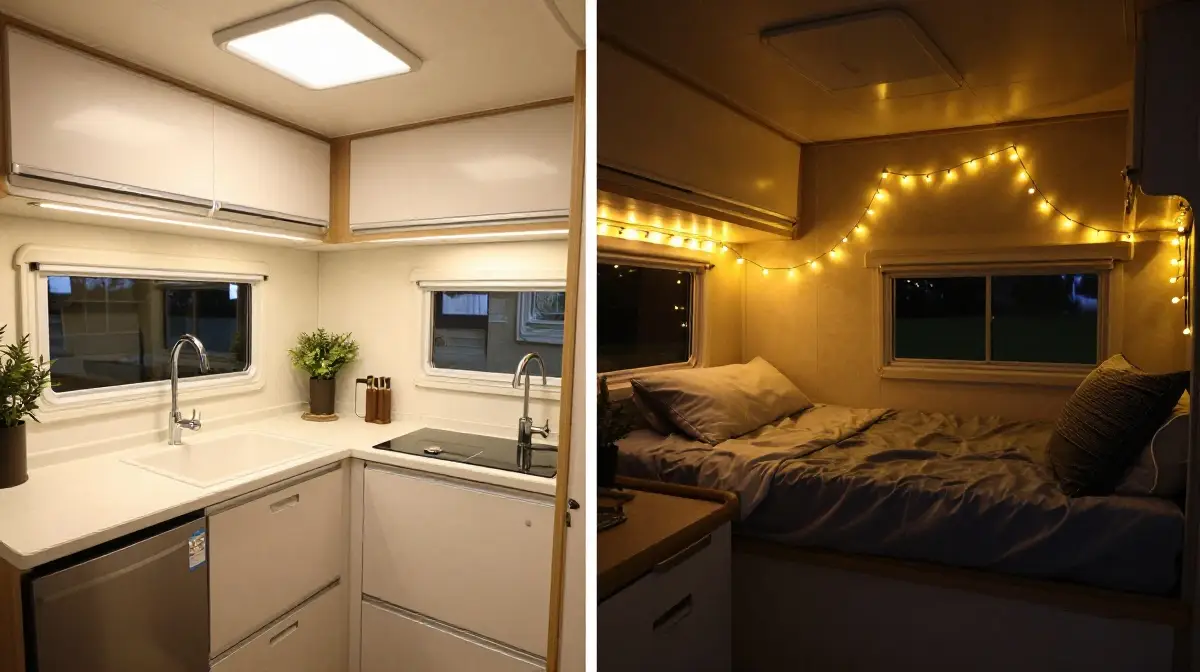
A single overhead light cannot do everything. Pair a bright central light near the kitchen area for cooking and cleaning with softer string lights or warm reading lights near the sleeping area. This approach makes the camper feel more residential and intentional.
Solar-Powered Lighting Options
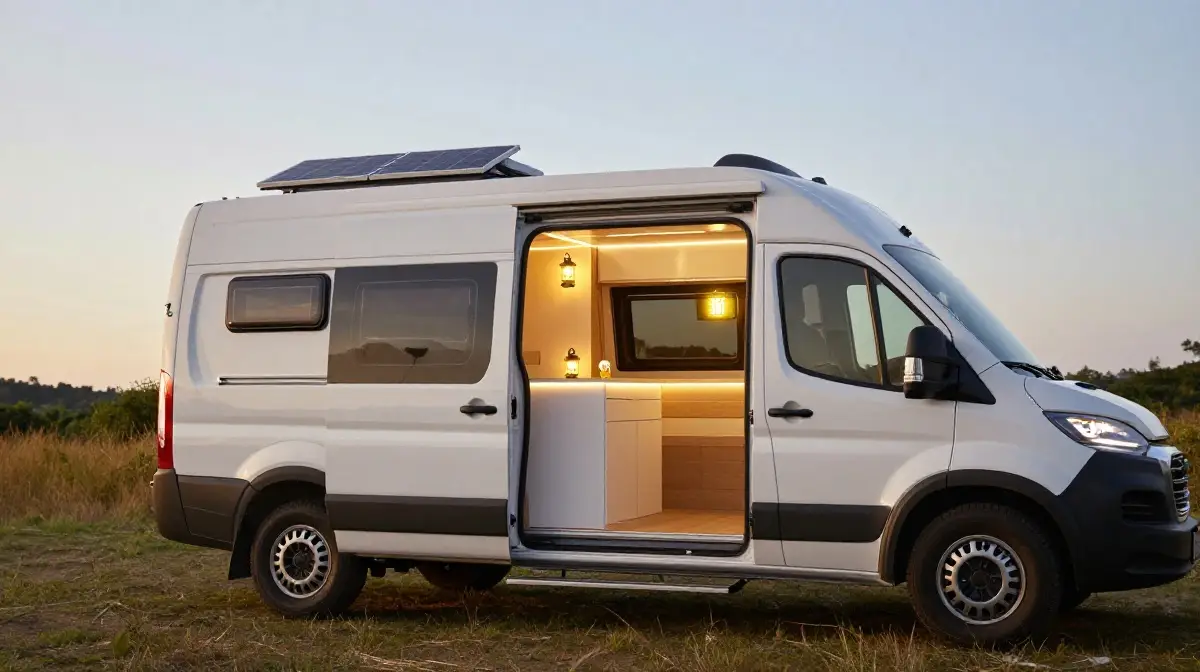
For campers spending time off-grid, solar-powered LED fixtures and rechargeable lanterns eliminate dependency on shore power or battery drain. They are a practical and cost-effective upgrade for anyone who camps in remote locations regularly.
Light and Neutral Color Palettes
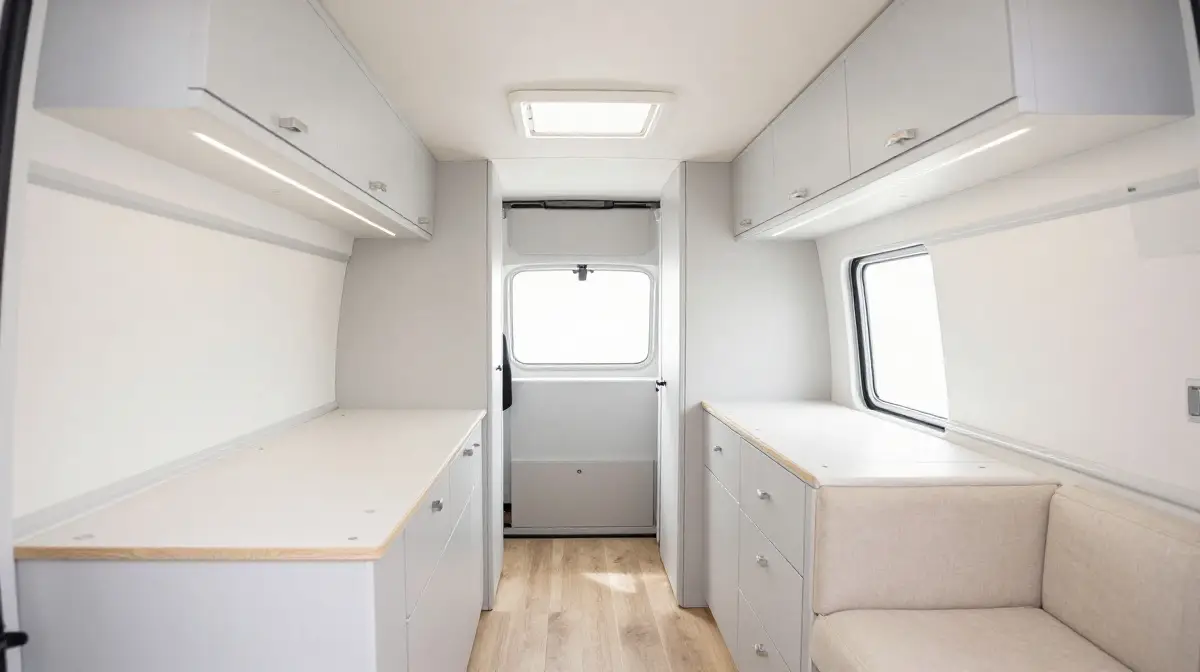
Soft whites, pale grays, warm beiges, and muted sage greens reflect more light and make walls appear farther apart than they are. Painting cabinets and walls in the same tone reduces visual clutter and gives the interior a calm, cohesive appearance that feels much larger than its actual dimensions.
Removable Wallpaper as an Accent
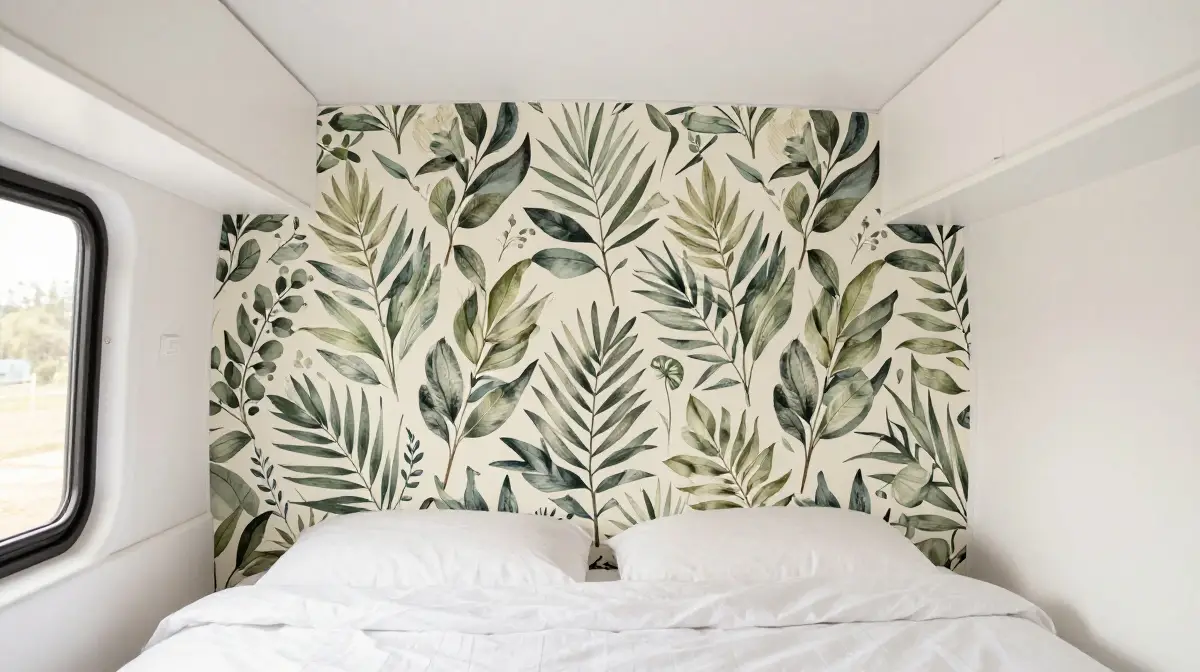
Peel-and-stick wallpaper is one of the most flexible decorating tools available to camper owners. Apply it behind the bed, inside a shelf, or along one feature wall to add character without permanent commitment. Moisture-resistant varieties work well in kitchens and near windows.
Mirrors to Reflect Light and Space
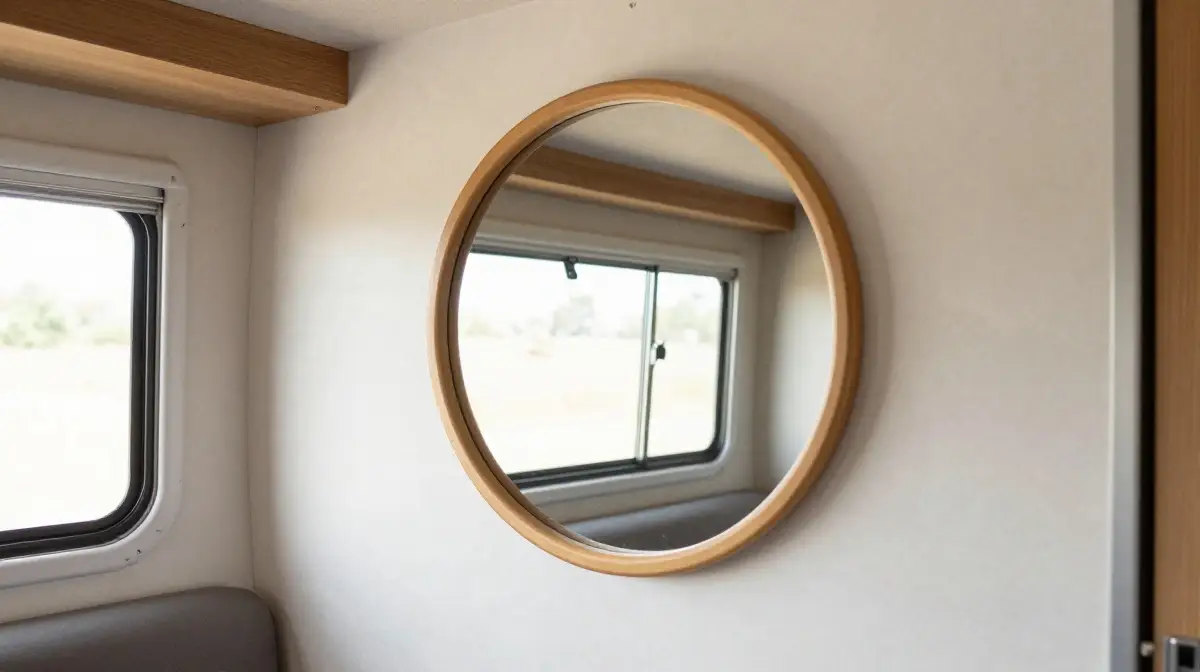
A well-placed mirror opposite a window bounces natural light deep into the camper and creates the illusion of additional depth. Even a small mirror mounted on a cabinet door contributes to the overall sense of openness.
Pull-Out Kitchen Stations
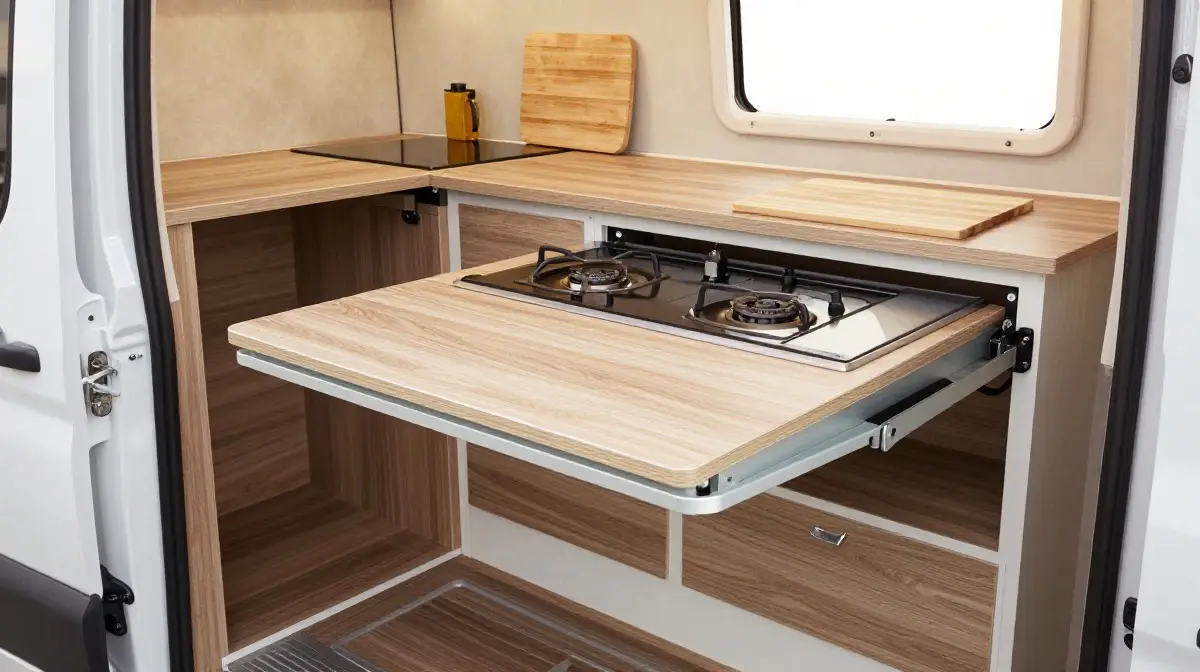
A kitchen built on a slider mechanism tucks neatly into a cabinet when not in use and extends outward during meal preparation. This design dramatically reduces the footprint of the cooking area while still providing a fully functional prep surface and stove setup.
Induction Cooktops for Cleaner Cooking
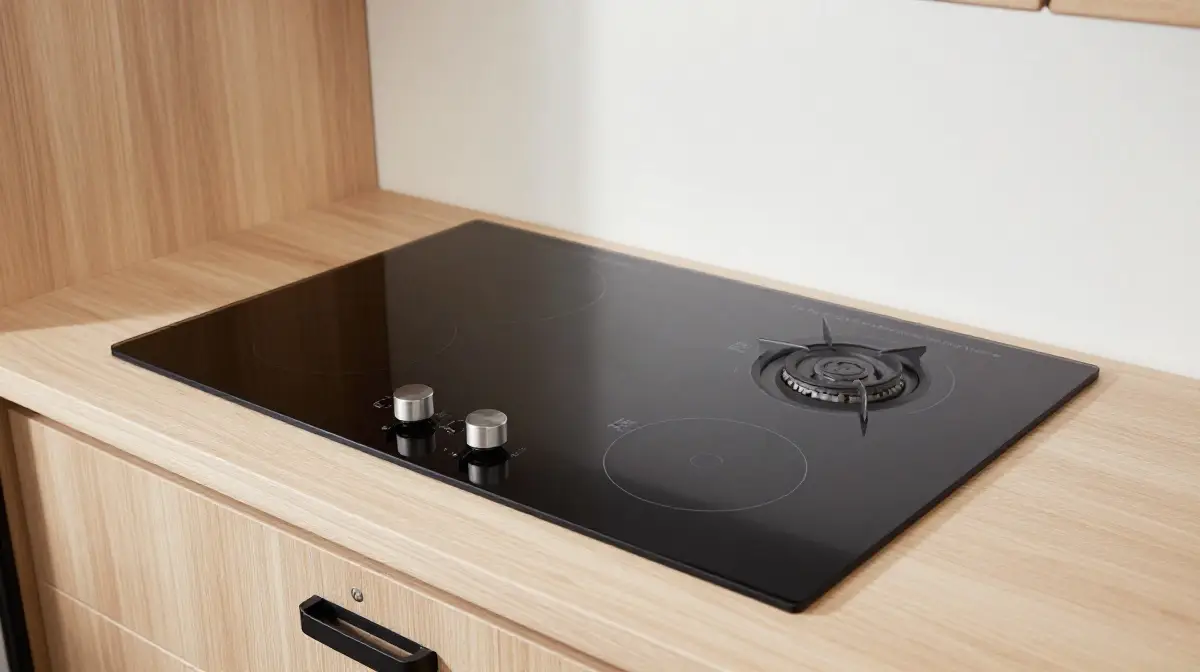
A two-burner induction cooktop sits flat on a counter and stores away easily when not needed. It produces no open flame, no gas fumes, and is significantly safer in confined spaces. For campers with a healthy solar setup and battery bank, induction cooking is a reliable daily option.
Compact Organization with Magnetic and Hanging Systems
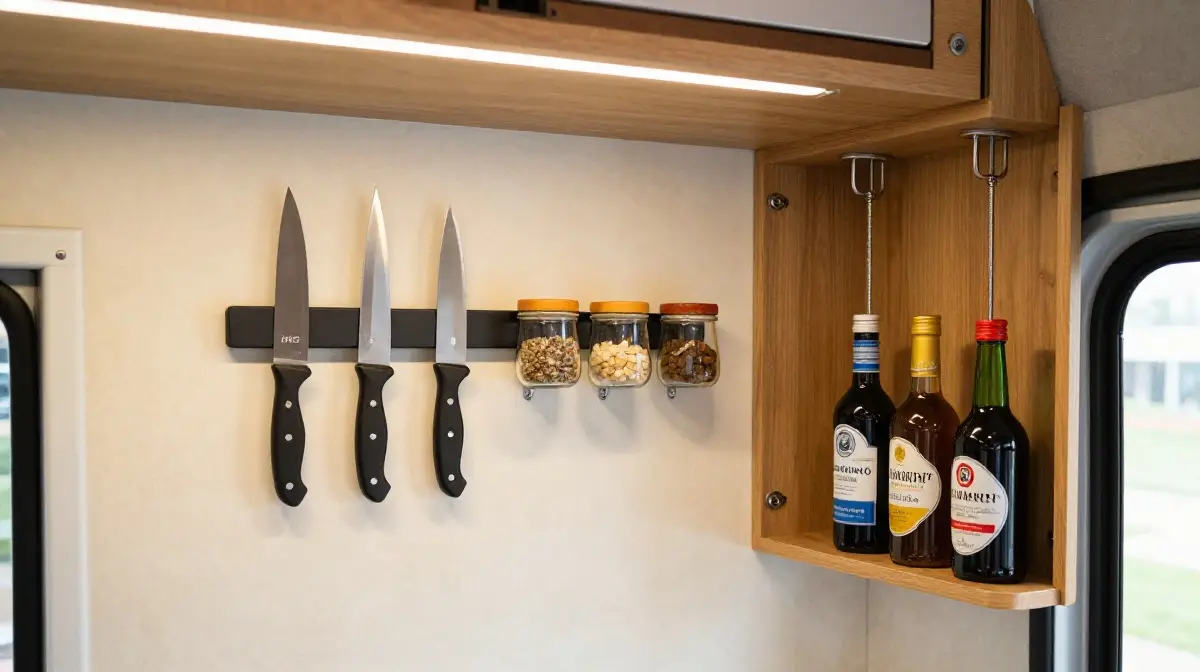
Mount a magnetic knife strip, hang spice jars on the wall, and use tension rods inside cabinets to keep bottles upright during travel. These small habits prevent the kitchen from becoming chaotic and make cooking in a compact space genuinely enjoyable.
Personal Textiles and Soft Furnishings
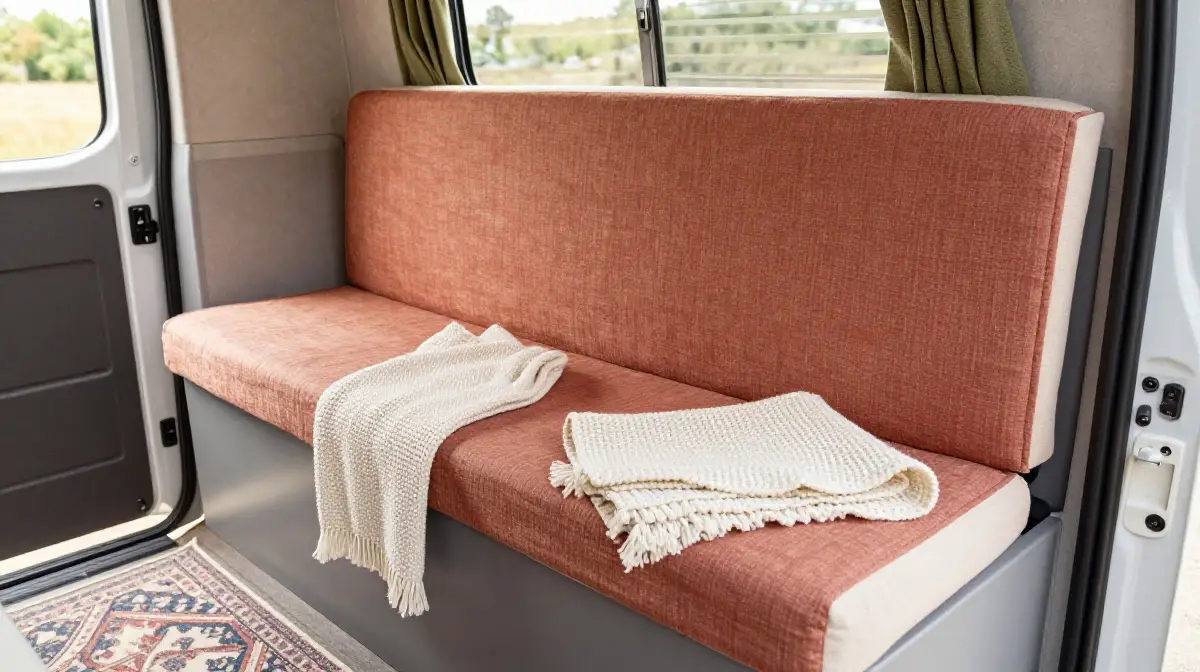
Fresh cushion covers, a lightweight throw blanket, a small rug near the entrance, and simple curtains in a pattern you love bring warmth and personality into the space immediately. Textiles cost very little but transform a bare interior into something that feels intentionally designed.
Plants and Natural Elements
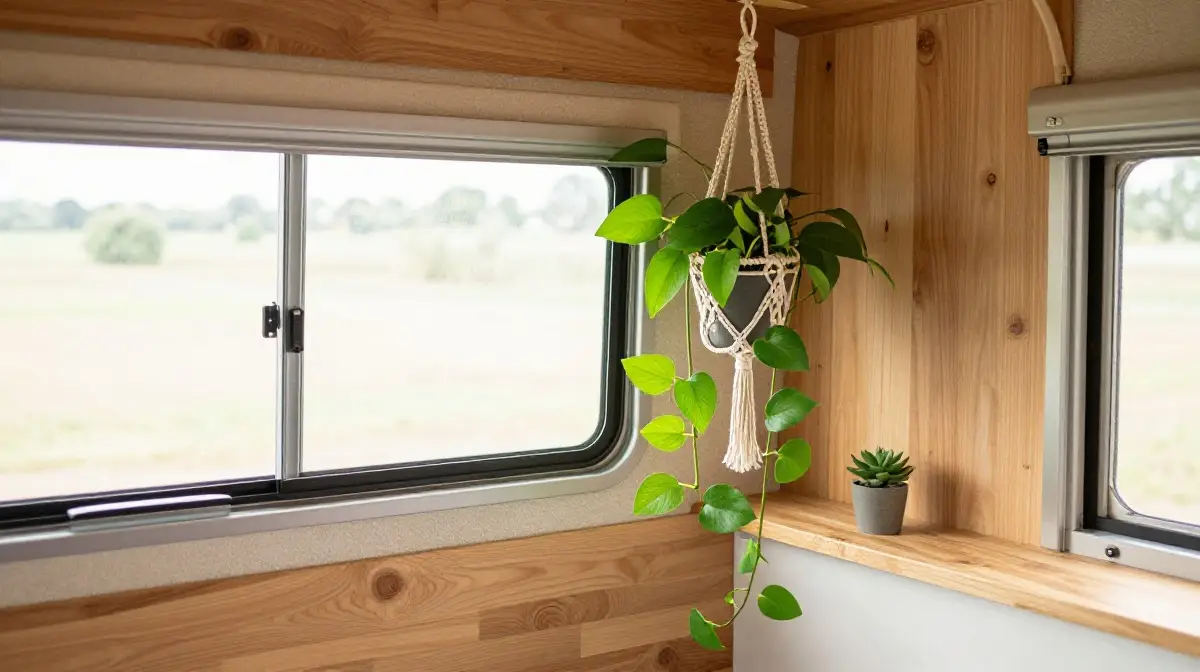
A single small succulent or a trailing pothos plant in a hanging pot adds life, color, and a connection to the outdoors that no decoration can replace. They also improve air quality in a small enclosed space, which is a genuine practical benefit.
Personal Photo Displays and Minimal Art
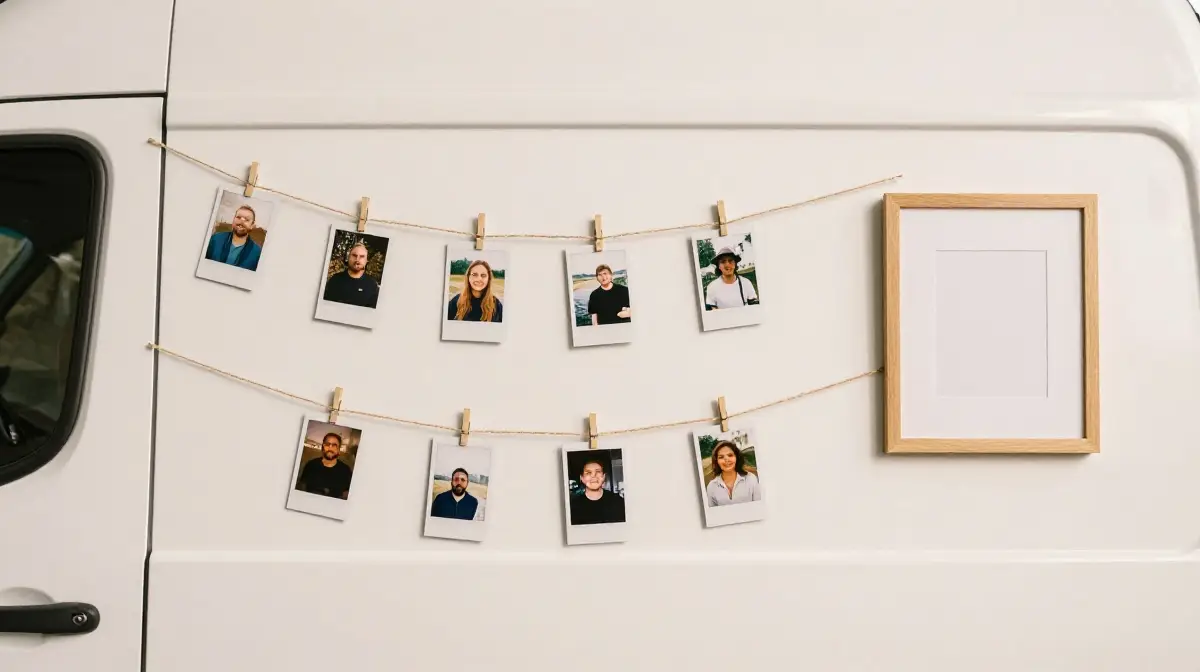
Clip a few favorite photographs to a length of twine strung across a wall, or hang a single piece of art that means something to you. The goal is not to fill every surface but to include a few meaningful details that make the camper feel personal rather than generic.
Conclusion
Designing a small camper interior is less about limitations and more about intelligent choices. Every idea in this list proves that a compact space can be comfortable, beautiful, and fully functional when approached with the right mindset. Start with storage, invest in furniture that does more than one job, use light thoughtfully, and add personal touches that reflect your style. The result will be a camper that feels like a real home no matter where the road takes you. You do not need a large space to live well. You simply need a well-planned one.
You may also like this:20 Ways to Create an Indoor Garden Oasis Ideas
Frequently Asked Questions
FAQ 1. What is the best way to maximize storage in a small camper?
The most effective approach is to use all three dimensions of the space. Install overhead cabinets for vertical storage, use under-bed compartments for bulky items, and add wall-mounted hooks and organizers for daily essentials. Combining these three strategies removes clutter from every surface and makes the interior feel significantly more spacious.
FAQ 2. What type of furniture works best in a small camper interior?
Multi-purpose furniture is the best choice for any small camper. Look for convertible sofa beds, fold-down tables, and bench seats with built-in storage underneath. These pieces perform multiple functions without occupying permanent floor space, which is the most valuable resource in a compact living setup.
FAQ 3. How can lighting improve the feel of a small camper?
Layered lighting makes a dramatic difference. Use bright task lighting in the kitchen and work areas and warm, dimmable lights near the sleeping zone. LED strip lights under cabinets add ambient glow without consuming much power. A well-lit camper always feels larger and more welcoming than one relying on a single overhead bulb.
FAQ 4. What colors make a small camper interior look bigger?
Light and neutral tones are most effective. Soft whites, pale grays, warm beiges, and light sage greens reflect natural light and push the visual boundaries of the space outward. Painting cabinets and walls in the same color family reduces contrast and visual clutter, making the interior appear more open and airy.
FAQ 5. Can a small camper interior be stylish as well as functional?
Absolutely. Style and function work together rather than against each other in small camper design. Removable wallpaper, quality textiles, personal photographs, small plants, and thoughtful color choices all contribute to a space that looks genuinely curated. The most admired camper interiors are always those where every element has both a practical purpose and an aesthetic role.