
Introduction
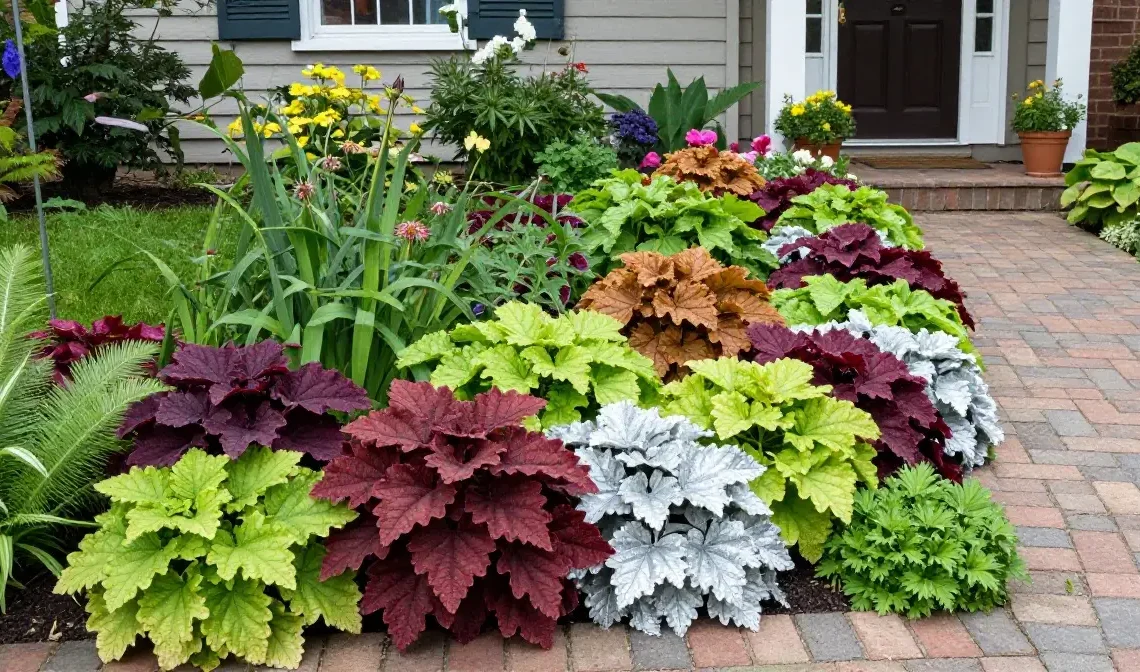
If you have ever walked past a front yard and stopped to admire the rich, jewel-toned leaves spilling over a garden border, there is a good chance heuchera was responsible for that moment. Also known as coral bells, heuchera is one of the most versatile and visually rewarding perennials available to home gardeners today. With foliage ranging from deep burgundy and near-black to bright chartreuse and silvery pewter, these plants bring genuine color to spaces that most plants simply cannot handle. Whether your front yard is full sun, dappled shade, or somewhere in between, heuchera adapts with impressive ease. This guide presents 22 creative ideas to help you use heuchera confidently and beautifully in your front yard landscaping.
Line Your Front Walkway With a Color Gradient
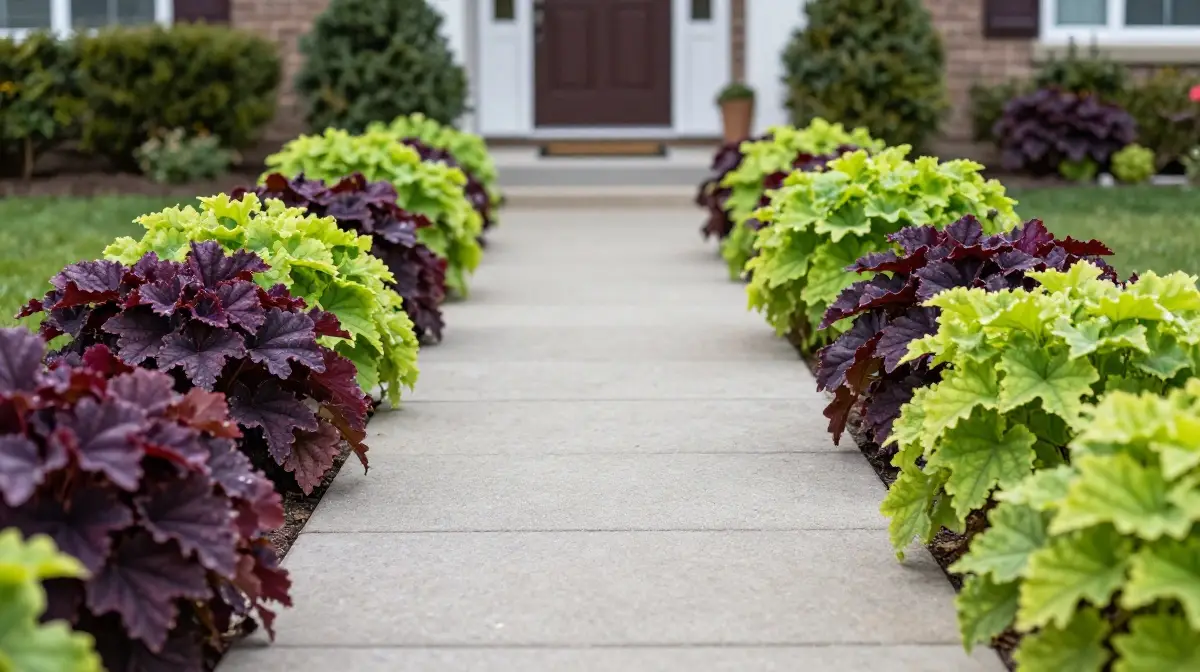
One of the most impactful ways to use heuchera in the front yard is to plant it along both sides of your walkway in a deliberate color gradient. Choose three to five varieties that shift from deep purple near the street to bright lime green near the door. This creates a natural visual flow that draws visitors toward your entrance without any complicated design work. Varieties like Palace Purple, Lime Rickey, and Caramel work beautifully together in this arrangement. The low mounding habit of heuchera keeps the path open and accessible while adding serious color at ground level. Plant them approximately 16 inches apart so the foliage fills in naturally by mid-season.
Create a Bold Entryway Focal Point
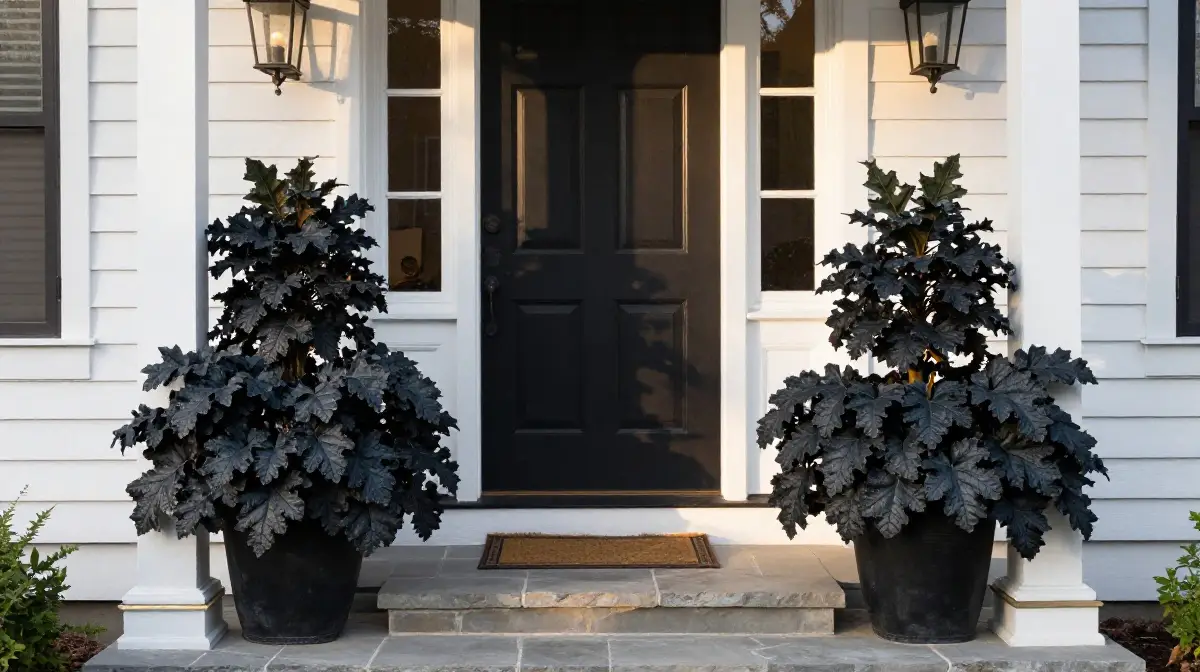
Positioning a large cluster of heuchera directly beside your front door or porch steps makes an immediate and lasting impression. Choose a single dramatic variety like Obsidian, which features nearly black foliage, or Electric Lime for a bright pop that catches the eye from the street. Grouping five to seven plants together in a tight mass planting creates a statement that competes easily with flowering shrubs. The consistent foliage color means your entryway looks polished even when nothing is in bloom. This idea works particularly well for homes with neutral or white exteriors where the contrast in color really stands out. Keep the surrounding area simple so the heuchera remains the star of the composition.
Pair Heuchera With Hostas for a Classic Shade Combination
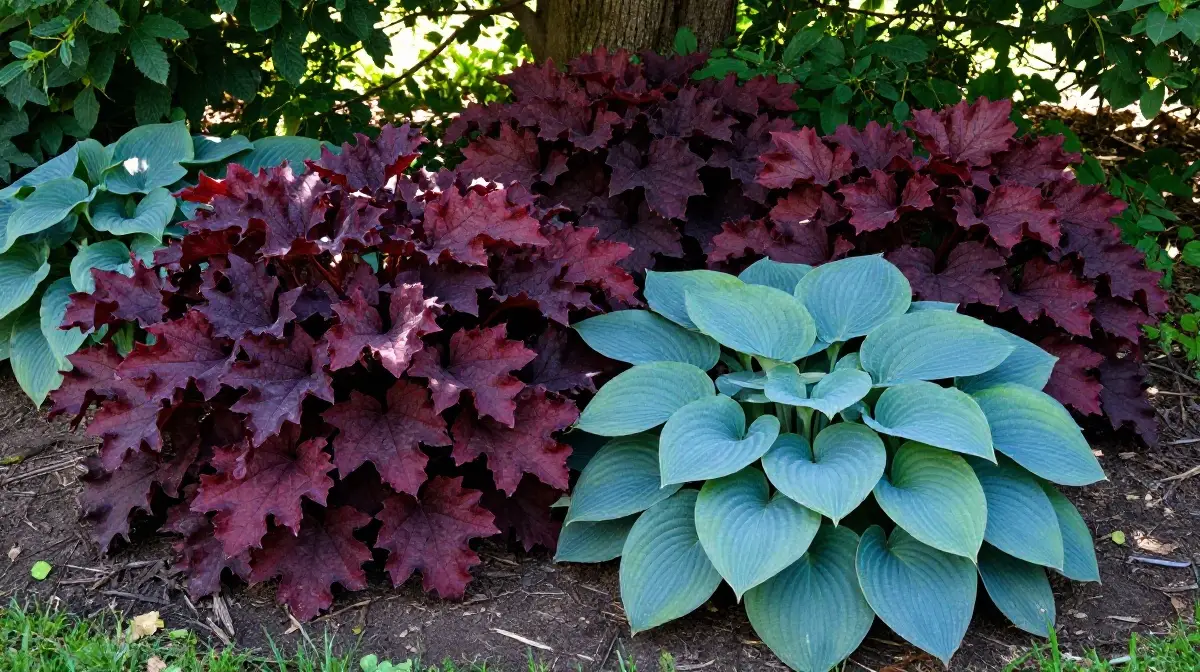
Few plant pairings are as reliable and attractive as heuchera grown alongside hostas in a shaded front yard bed. The broad, smooth leaves of hostas provide a perfect textural contrast to the ruffled, smaller foliage of heuchera. Choose a burgundy or purple heuchera beside a blue-green hosta like Halcyon or Elegans for a cool, sophisticated palette. Both plants thrive in similar conditions, preferring moist, well-drained soil and partial to full shade, which makes maintenance simple. This combination fills in garden beds densely enough to suppress weeds naturally over time. The layered look creates depth in spaces that might otherwise feel flat or one-dimensional.
Use Heuchera as a Low-Maintenance Ground Cover on a Slope
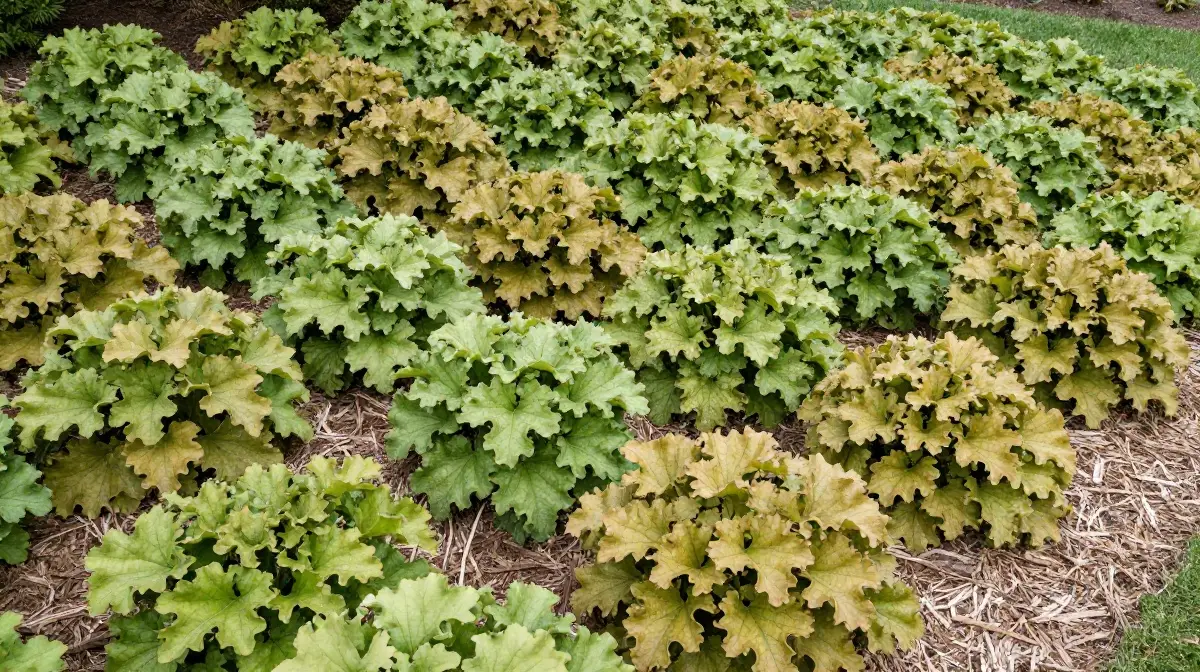
If your front yard includes a slope or hillside that is difficult to mow or plant traditionally, heuchera makes an excellent ground cover solution. Mass planting a single variety across a slope creates a uniform carpet of color that holds soil effectively while requiring very little ongoing care. Varieties with stronger root systems, such as Dolce Spearmint or Green Spice, establish well on inclines and spread to fill gaps within a season or two. The key is to plant them at staggered intervals rather than straight rows so coverage develops more naturally. Once established, heuchera is quite drought tolerant, which is especially useful on slopes where water tends to run off quickly. Mulch lightly between plants during the first season to retain moisture while roots take hold.
Mix Multiple Varieties in a Front Border for Maximum Color Impact
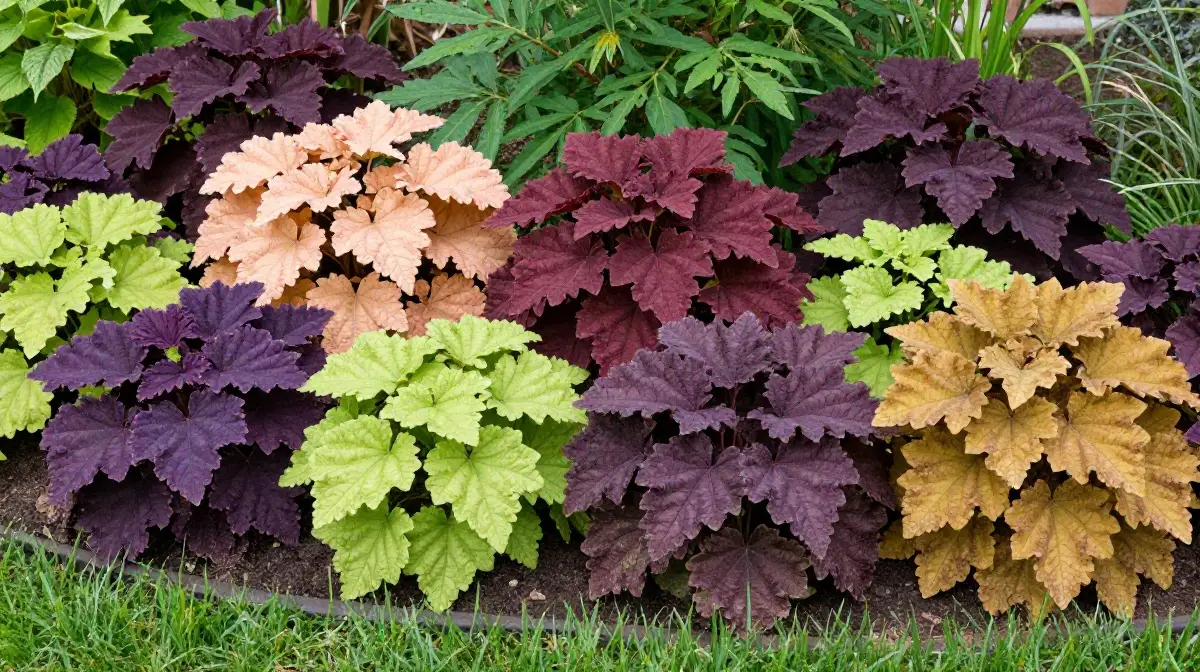
A mixed heuchera border featuring several complementary varieties is one of the most visually exciting approaches available to front yard gardeners. Combine warm tones like Caramel, Peach Flambe, and Marmalade alongside cooler tones like Blackout and Berry Timeless for a border that feels rich and layered without being chaotic. The trick is to repeat one or two varieties at intervals along the border so the eye has somewhere to rest. This repetition creates a sense of rhythm and intention that elevates a simple planting into something that looks professionally designed. Keep taller varieties toward the back and shorter ones at the front edge so every plant remains visible. This kind of border performs consistently from spring through fall with very little intervention.
Plant Heuchera in Containers for Flexible Front Porch Styling
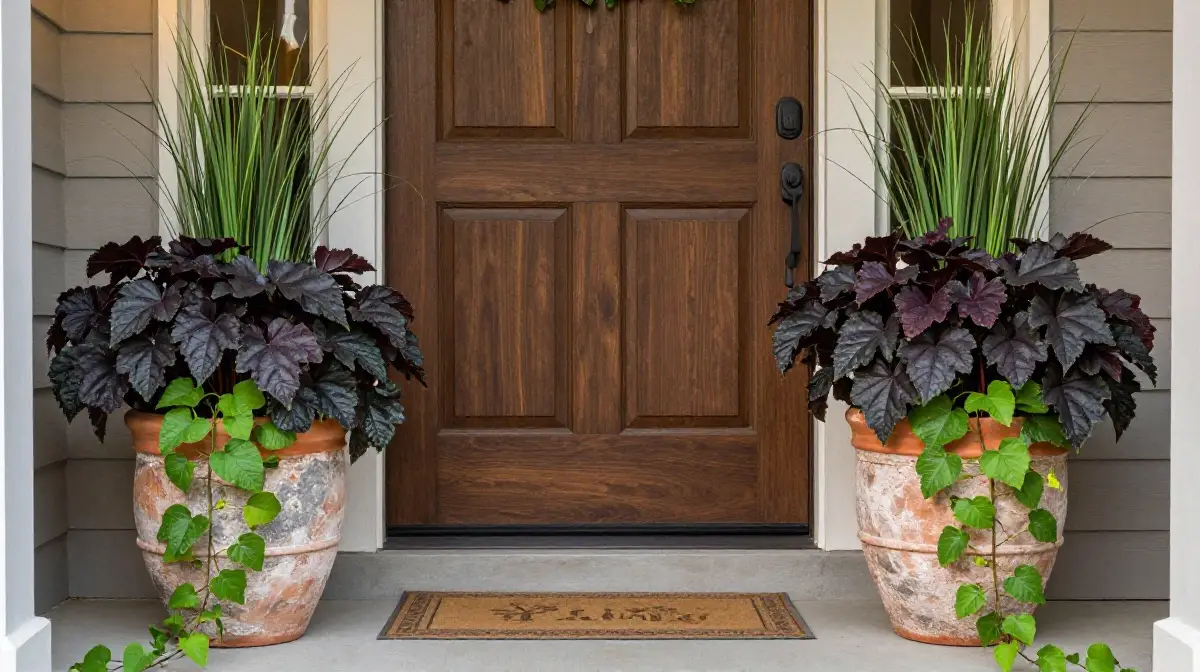
Heuchera thrives in containers, which makes it an ideal choice for front porch styling where flexibility matters. A large decorative pot filled with a dark-leafed heuchera like Midnight Rose paired with a trailing sweet potato vine and an upright ornamental grass creates a complete and polished composition. You can rearrange containers seasonally or move them indoors in colder climates to overwinter the plants. Choose containers with excellent drainage holes and fill them with a quality potting mix enriched with compost for the best results. Place containers on either side of a front door for a symmetrical, welcoming look. Because heuchera performs well in partial shade, porch placements that receive only morning sun are perfectly suitable.
Combine Heuchera With Ferns for a Woodland-Inspired Look
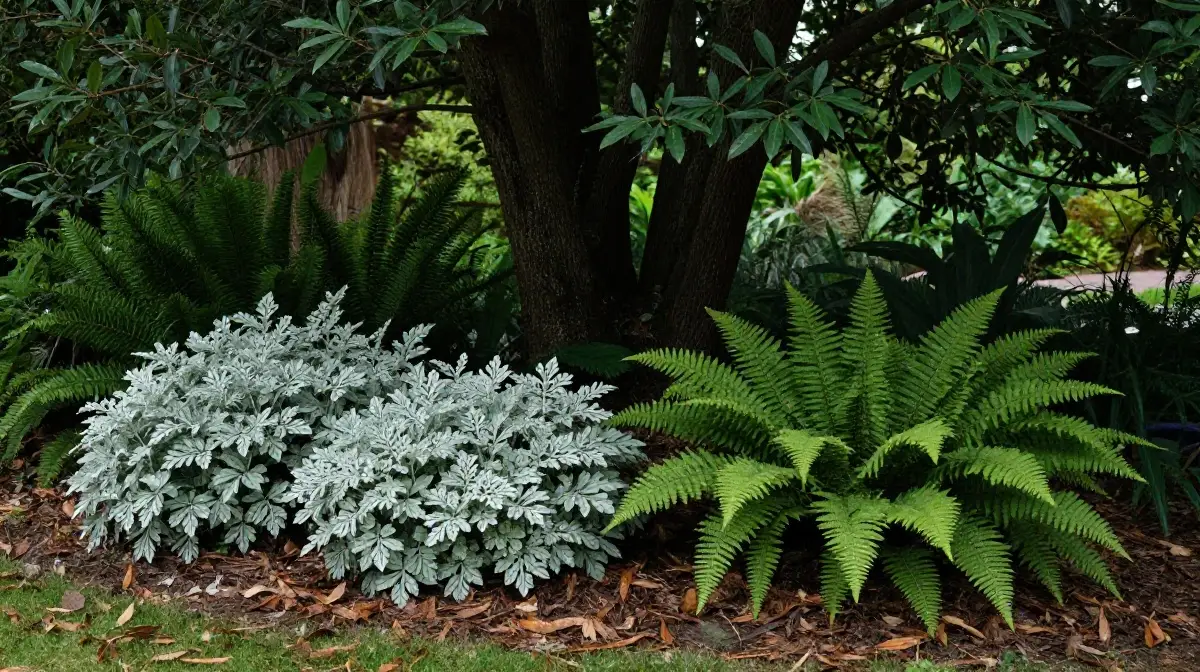
For front yards with significant tree cover or naturally shaded areas, combining heuchera with ferns creates a lush woodland garden aesthetic that feels intentional and curated. The feathery texture of ferns like Japanese Painted Fern or Autumn Fern pairs beautifully with the round, lobed leaves of heuchera, creating a layered canopy of foliage at ground level. Choose a silver or white-veined heuchera like Silver Scrolls to brighten darker areas under trees where color can often feel muted. This combination requires minimal fertilization since both plants prefer soil rich in organic matter from natural leaf fall. The result is a front yard bed that looks lush and green throughout the growing season while requiring very little pruning or deadheading. It is an ideal approach for gardeners who want high visual impact with low maintenance demands.
Edge Your Flower Beds With a Single Heuchera Variety
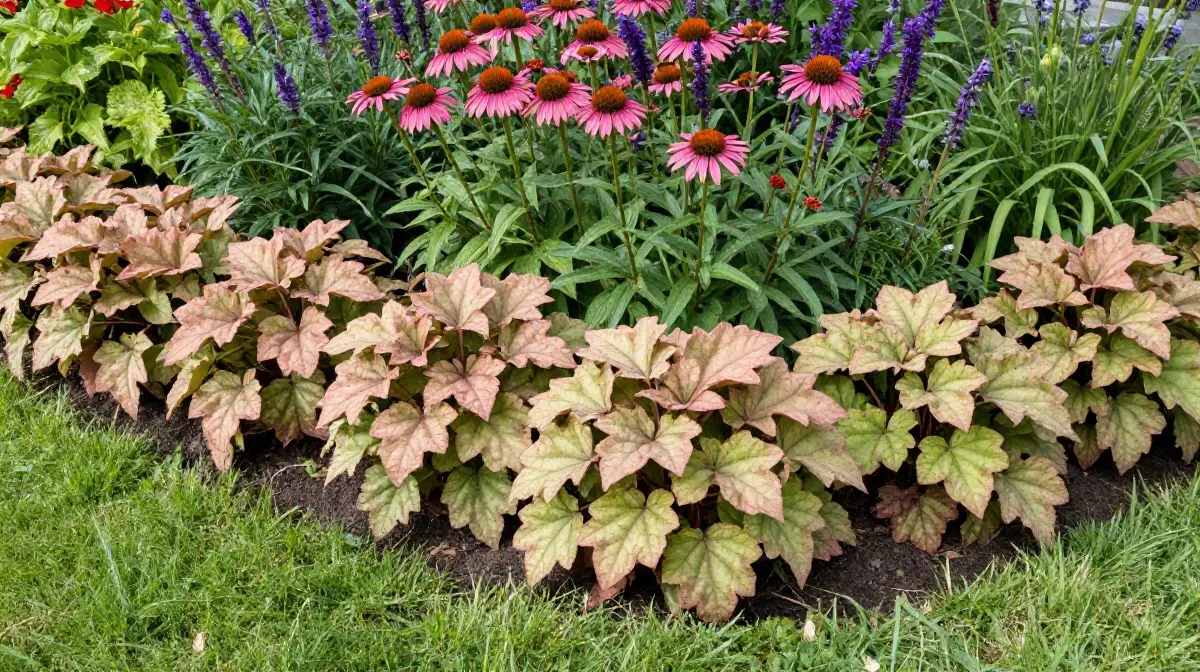
Using a single heuchera variety as a consistent edging plant along the front of your flower beds brings cohesion and polish to the entire yard. A low-growing variety like Little Cutie Sugar Berry or Dolce Appletini planted at regular spacing defines the boundary between lawn and garden bed with a clean, attractive line. The consistent color and texture of a single variety creates a visual anchor that makes even a densely planted bed feel organized and intentional. This approach works especially well when the interior of the bed contains taller, more colorful flowering plants like coneflower, salvia, or black-eyed Susan. The heuchera edge frames those flowers and gives the bed a finished, designed quality. Replace or divide plants every three to four years to maintain vigorous, full growth along the edge.
Create a Rock Garden Feature With Heuchera and Alpines
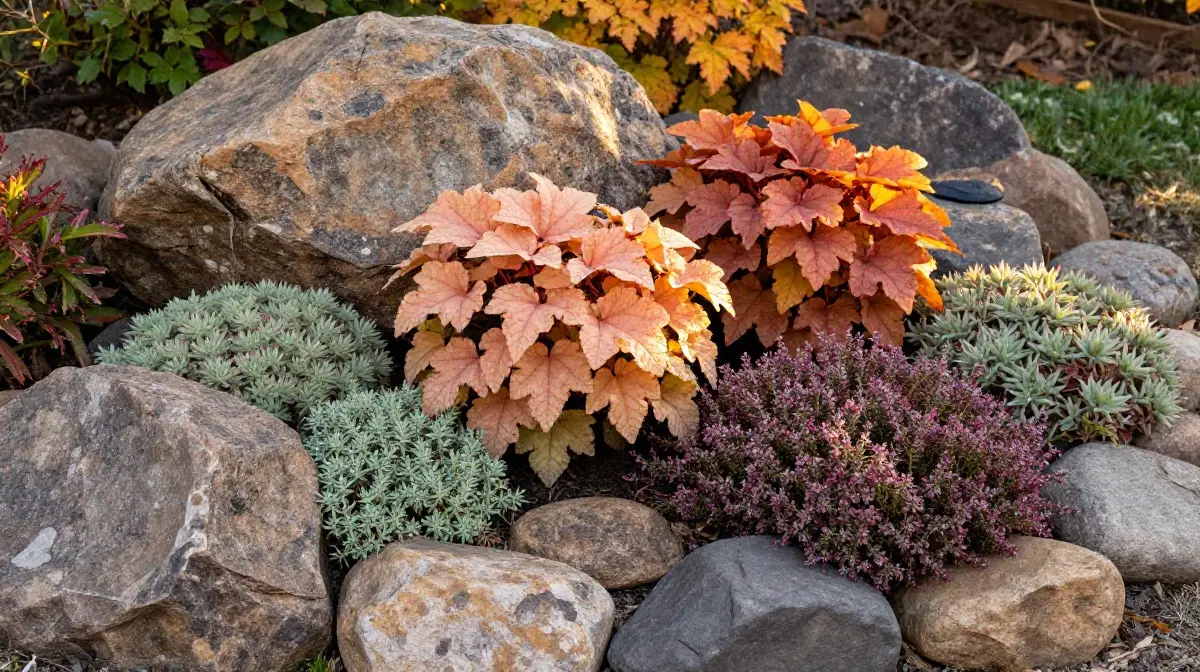
Heuchera planted among rocks and alpine plants creates a striking feature that suits both traditional and contemporary front yard designs. The compact mounding habit of many heuchera varieties makes them a natural fit between boulders and stones where soil pockets allow for planting. Choose varieties that offer seasonal color change, such as Peach Flambe, which deepens to brilliant orange and red tones in cooler weather, for a rock garden that evolves visually throughout the year. Pair them with drought-tolerant companions like sedum, creeping thyme, and small ornamental grasses for a low-water feature that looks spectacular with minimal watering. The contrast between the smooth stone surfaces and the textured heuchera foliage adds genuine visual interest. Keep the area around the crown of each plant free of gravel or pebbles to prevent crown rot.
Plant Heuchera Beneath Street Trees for Curb Appeal
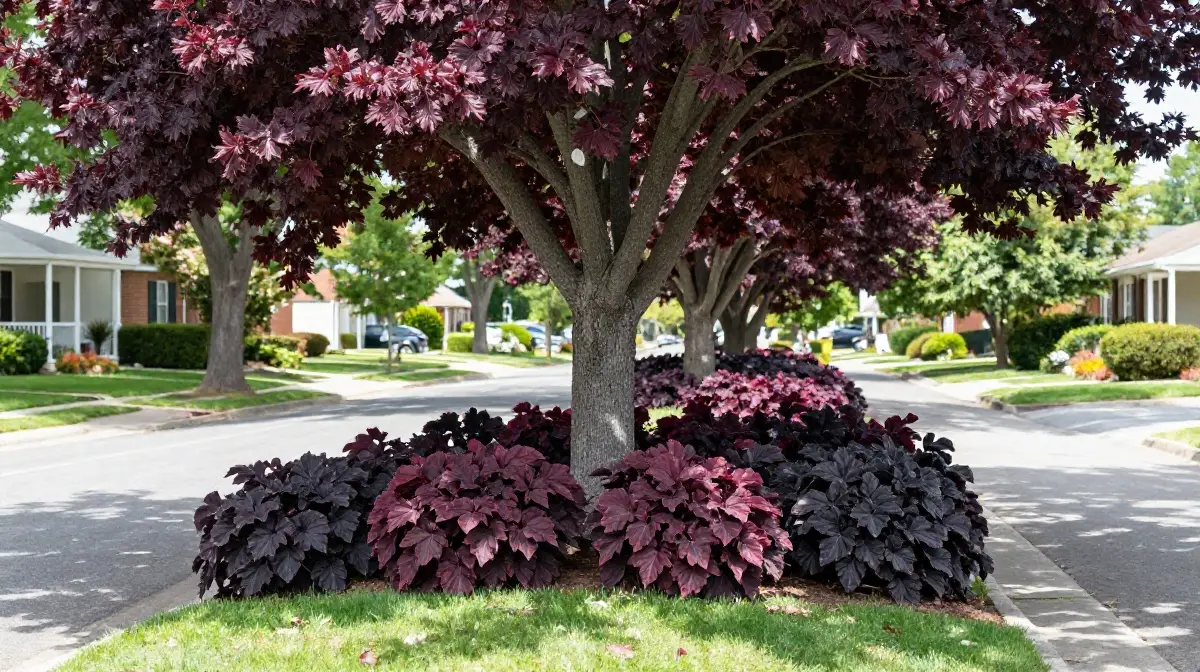
The area beneath street trees is often one of the most challenging spots in the front yard, where compacted soil, heavy shade, and root competition make it difficult for most plants to thrive. Heuchera handles these conditions better than many alternatives, making it a practical and attractive choice for underplanting street trees. Choose shade-tolerant varieties like Blackberry Crisp or Midnight Rose that maintain strong color even in low-light conditions. Plant in amended pockets of soil between surface roots, taking care not to disturb large anchoring roots during installation. Once established, these plants require minimal watering and no mowing, which simplifies care in a tricky spot. The consistent, attractive foliage beneath a tree canopy dramatically improves the overall appearance of your front yard from the street.
Design a Monochromatic Purple and Burgundy Garden Bed
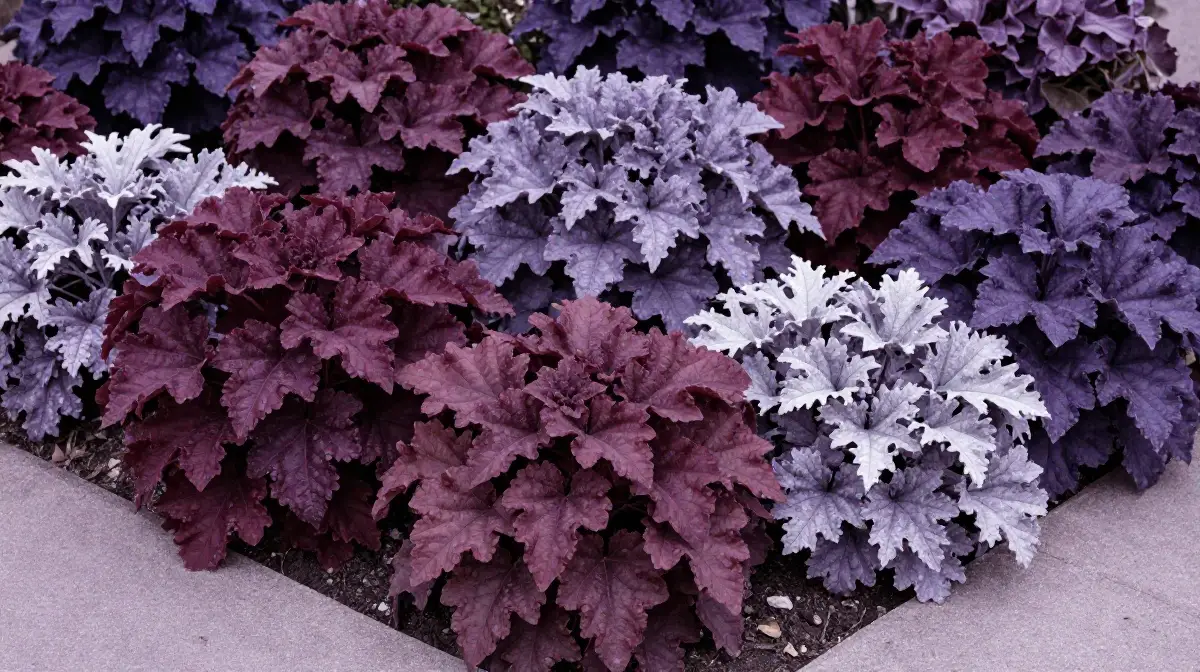
A front yard bed planted entirely in purple and burgundy heuchera varieties creates a sophisticated, moody aesthetic that photographs beautifully and looks refined through all four seasons. Choose varieties across a range of purple tones, from the deep wine of Obsidian to the silvery plum of Pewter Moon and the bright violet of Amethyst Mist, for a monochromatic palette with real depth. This kind of single-color planting looks intentional and curated even to untrained eyes. Adding a few silver or white variegated companions like Heuchera Silver Lode at intervals keeps the bed from feeling heavy or dark. The purple tones in heuchera often deepen beautifully in autumn, making this bed particularly impressive as the growing season winds down. It is a design approach that works well for formal front yards or homes with a more classic architectural style.
Use Heuchera to Brighten a North-Facing Front Yard
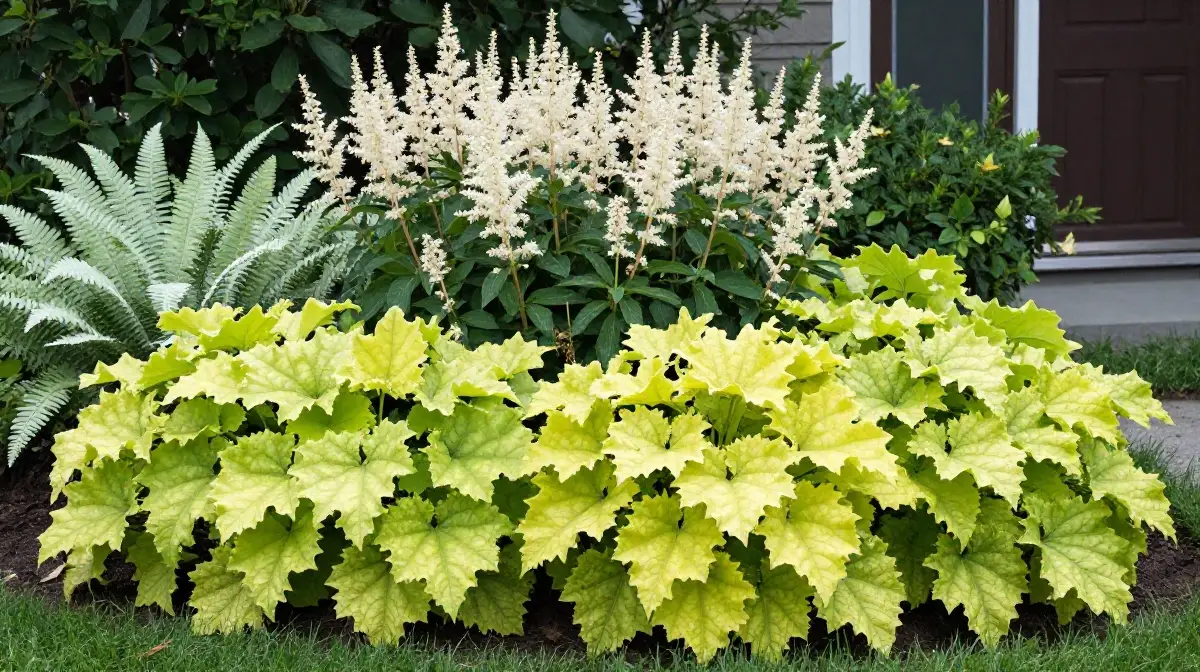
North-facing front yards receive the least direct sunlight of any orientation, and many gardeners struggle to find plants that both survive and look attractive in these conditions. Heuchera is genuinely one of the best solutions available for these challenging spaces. Bright varieties like Lime Rickey, Citronelle, and Key Lime Pie reflect available light beautifully and create the impression of a sunnier space than actually exists. Plant them in generous groupings rather than single specimens so the color impact is strong enough to register from the street. Pair them with white-flowering astilbe or the pale fronds of Japanese Painted Fern to keep the palette light and airy. Regular division every few years keeps the plants vigorous and prevents the center from dying out, which is the most common maintenance issue in shaded plantings.
Incorporate Heuchera Into a Pollinator-Friendly Front Garden
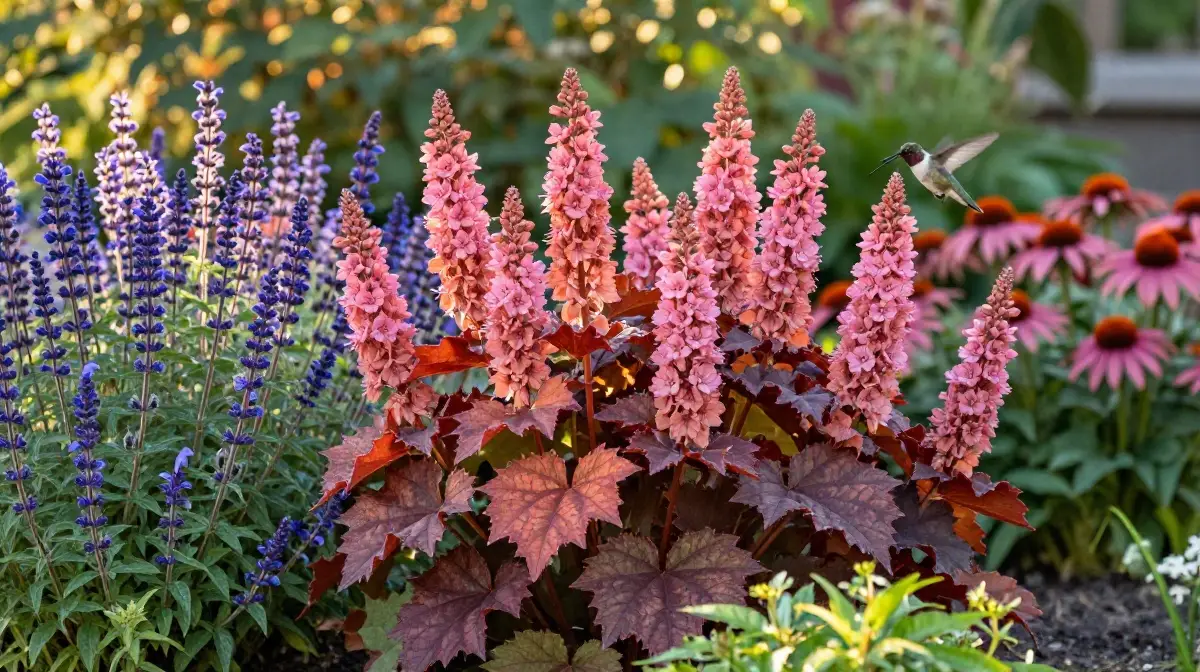
While heuchera is primarily celebrated for its foliage, its tall, airy flower spikes produced in late spring and early summer are genuinely attractive to hummingbirds and beneficial insects. Incorporating heuchera into a pollinator-friendly front garden design serves both aesthetic and ecological purposes. Plant it alongside other pollinator magnets like salvia, catmint, and coneflower for a garden that buzzes with activity throughout the warm months. The contrast between the bold heuchera foliage and the delicate flower spikes adds visual variety that keeps the garden interesting even between bloom cycles. Choose varieties known for strong flowering, such as Coral Bouquet or Spellbound, to maximize pollinator appeal alongside the usual foliage interest. Avoid deadheading the spent flower spikes immediately, as birds may feed on the small seeds they produce.
Layer Heuchera With Ornamental Grasses for Modern Texture
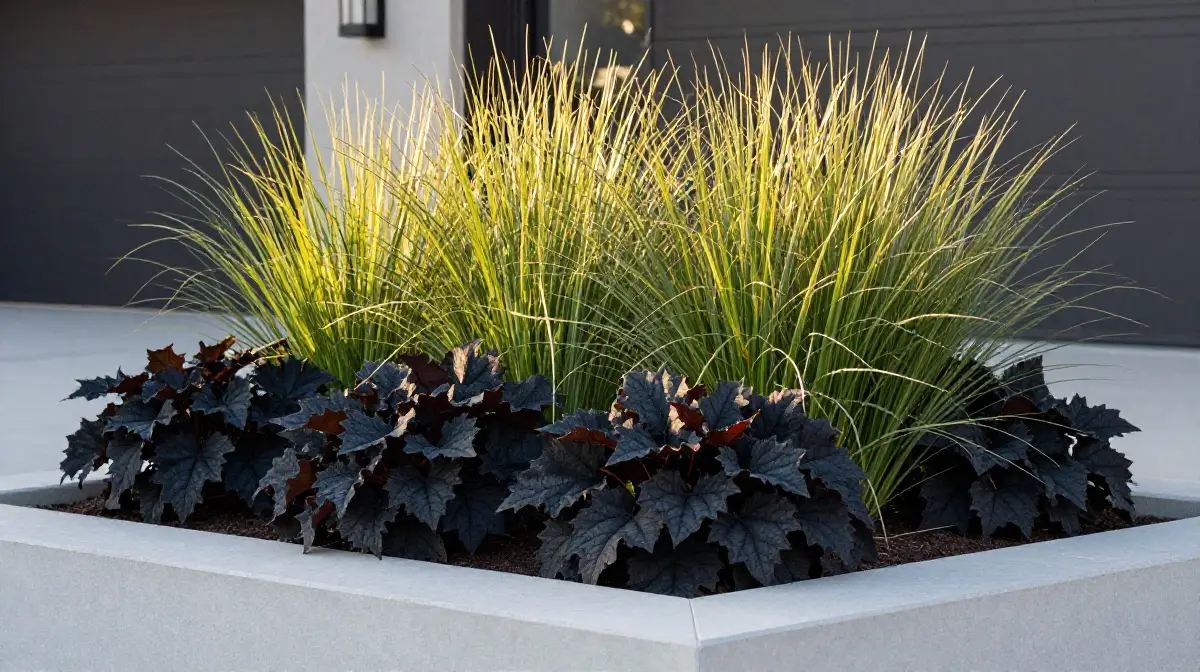
Pairing heuchera with ornamental grasses in the front yard creates a contemporary, textural planting that suits modern homes and minimalist landscape designs. The fine, upright blades of grasses like Blue Oat Grass or Blonde Ambition provide strong vertical contrast to the rounded, low mounding form of heuchera. Plant taller grasses behind a mass of dark heuchera like Black Taffeta for a layered composition that reads clearly from the street. The grasses add movement to the planting as they catch the breeze, which contrasts pleasantly with the solid, structured look of the heuchera below. This kind of pairing requires very little maintenance once established and looks attractive even in winter when the dried grass stems add architectural interest to the otherwise bare landscape. It is an ideal combination for gardeners who want a designed look without intensive upkeep.
Use Heuchera in a Rain Garden for Sustainable Front Yard Design
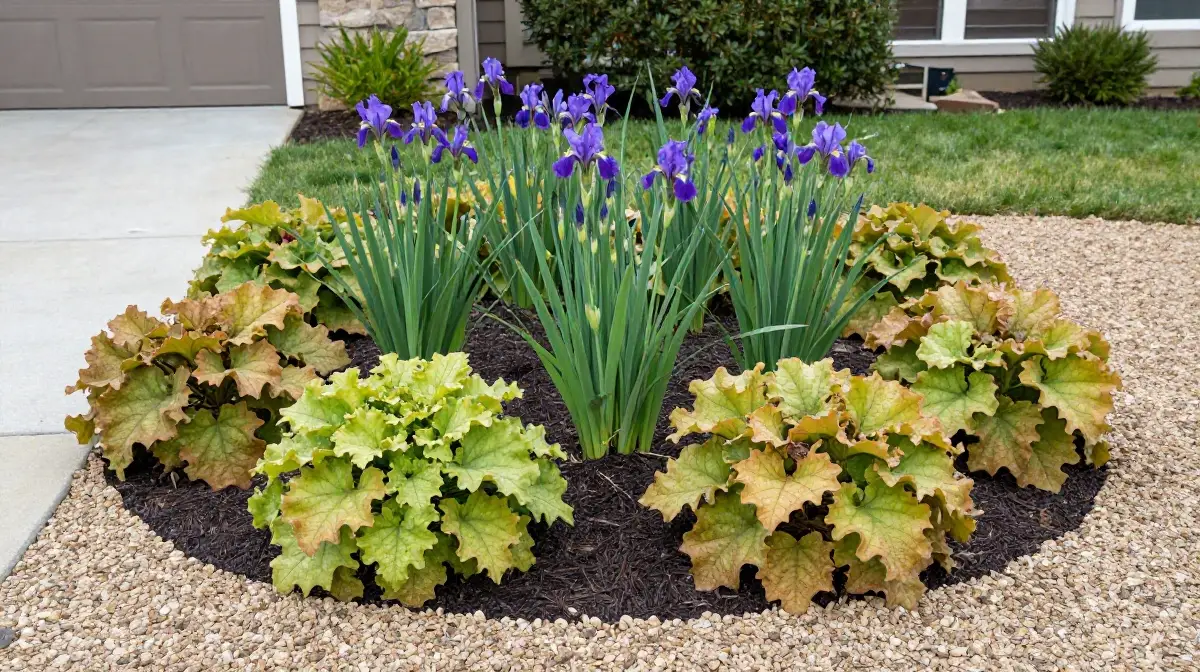
Rain gardens designed to capture and filter stormwater runoff are an increasingly popular feature in sustainable front yard landscaping, and heuchera works well within them. Position heuchera along the outer edges of a rain garden where soil moisture levels are moderate rather than in the lowest, wettest zone where standing water may persist after heavy rain. Varieties like Green Spice and Caramel tolerate occasional wet conditions better than more delicate cultivars. Pair them with moisture-tolerant companions like Siberian iris, sedge, and swamp milkweed to create a rain garden that is both functional and beautiful. The colorful foliage of heuchera helps the rain garden look like an intentional design feature rather than a purely utilitarian drainage solution. Adding a layer of fine gravel mulch around the plants improves drainage at the crown and reduces the risk of rot in wet seasons.
Plant Heuchera in a Symmetrical Foundation Planting
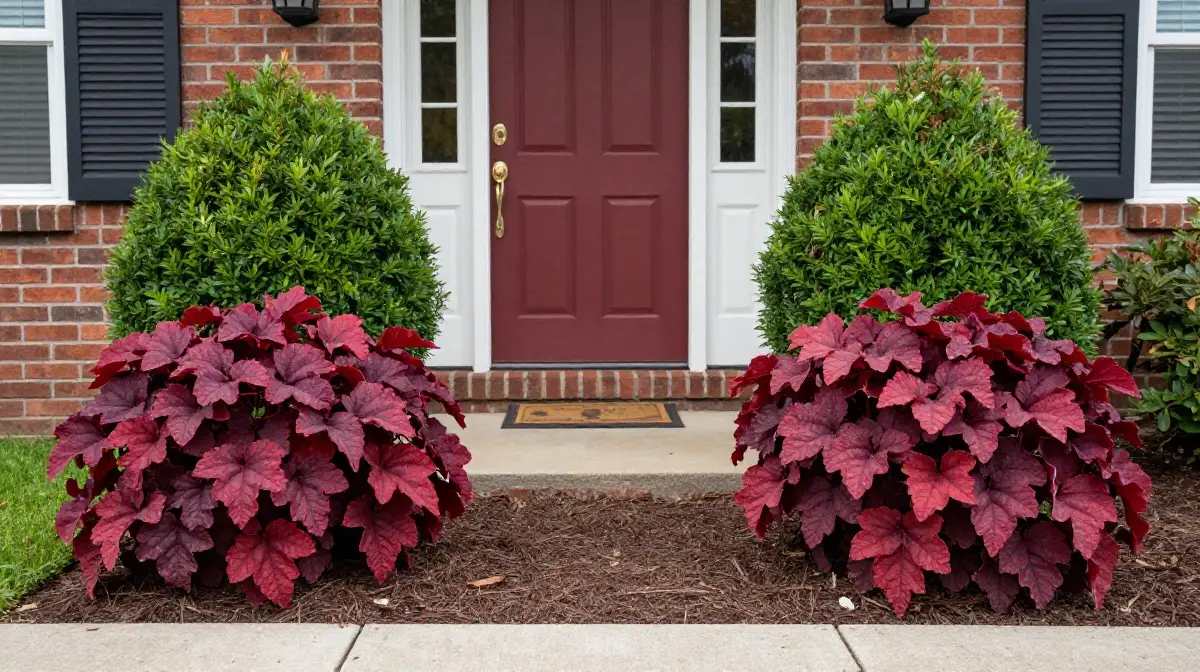
Foundation plantings along the front of a house benefit enormously from the addition of heuchera as a front-tier plant beneath taller evergreen shrubs. A symmetrical arrangement with matching heuchera on either side of the front door, paired with boxwood or dwarf yew behind them, creates a classic, polished look that suits nearly any architectural style. Choose a variety with good seasonal consistency, such as Forever Red or Autumn Leaves, so the foundation planting looks attractive through as many months of the year as possible. The heuchera fills the gap between the soil surface and the lower branches of foundation shrubs, preventing the bare-ground look that often makes foundation plantings appear sparse and unfinished. Spacing plants approximately 18 inches from the foundation wall allows for adequate air circulation and prevents moisture buildup against the structure. Divide and replant every three years to maintain vigorous, full coverage at the front of the bed.
Create a Four-Season Front Yard Display With Heuchera
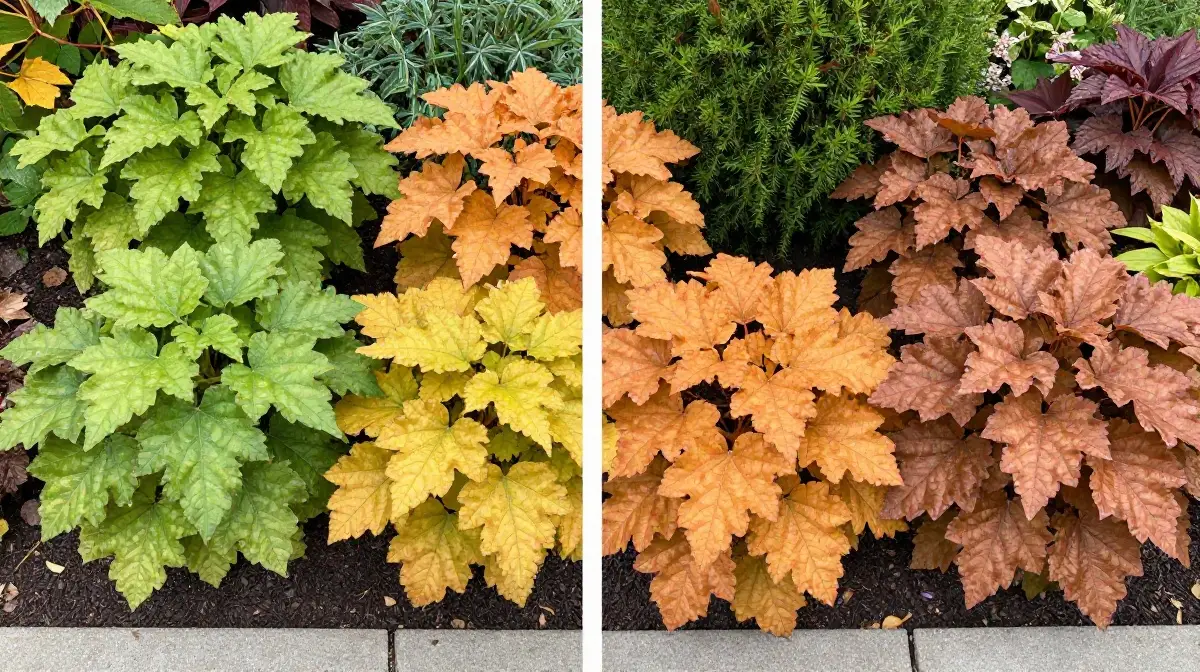
One of the most compelling arguments for using heuchera in the front yard is its ability to contribute color and interest across all four seasons in most growing zones. In spring, fresh new foliage emerges in vibrant tones, often accompanied by the slender flower spikes that hummingbirds find irresistible. Summer brings the foliage to its most lush and dense state, and the color of many varieties deepens or shifts slightly in the summer heat. Autumn is often the most spectacular season for heuchera, as varieties like Peach Flambe and Marmalade take on brilliant orange, red, and copper tones in response to cooling temperatures. In mild winters, many heuchera varieties remain semi-evergreen, holding enough foliage to keep the front yard from looking completely bare. Choosing three or four varieties with complementary seasonal color shifts allows you to design a front yard display that rewards attention throughout the entire year.
Mix Heuchera With Spring Bulbs for an Early Season Surprise
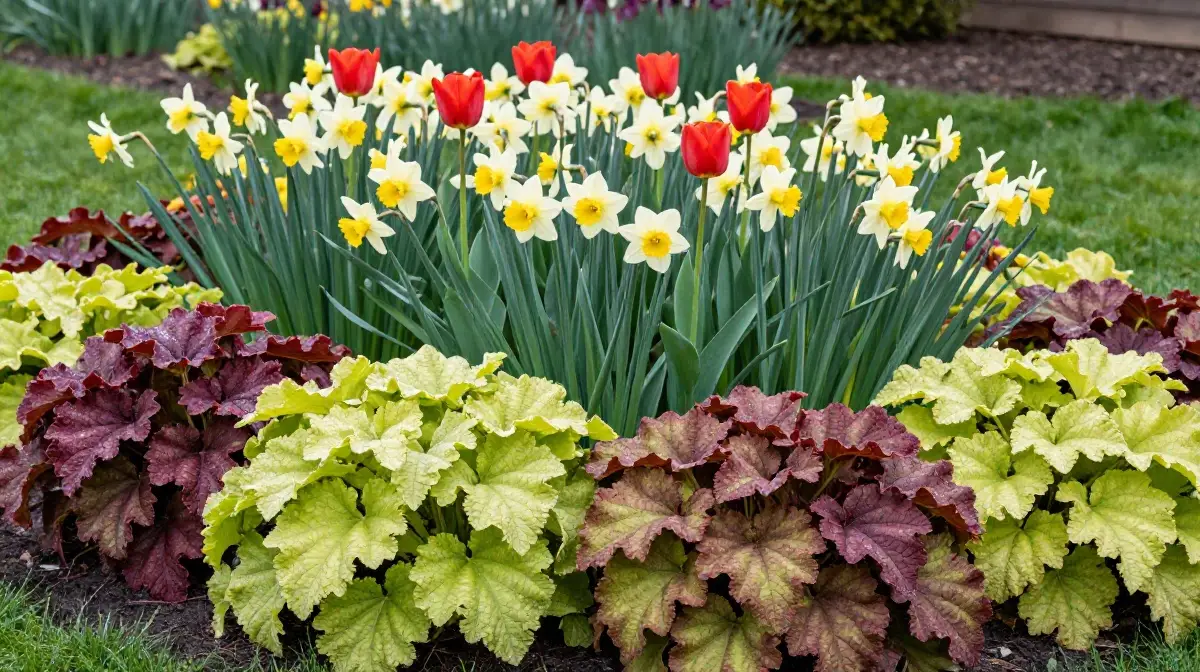
Planting spring bulbs like tulips, daffodils, or alliums among established heuchera creates a layered spring display that transitions seamlessly as the season progresses. The bulbs push through the heuchera foliage in early spring, adding height and bloom color to what would otherwise be a purely foliage planting. As the bulb flowers fade and their foliage yellows, the expanding heuchera covers the decline naturally, keeping the bed looking tidy without requiring the gardener to remove spent bulb tops prematurely. Choose bulb colors that complement the heuchera foliage for the most cohesive effect, such as pale yellow daffodils with chartreuse heuchera or deep red tulips with burgundy varieties. Plant bulbs in autumn at the recommended depth between established heuchera plants, taking care to avoid disturbing the crowns of the perennials. This layered approach maximizes the visual return from your front yard beds across a longer period of the growing season.
Use Variegated Heuchera to Reflect Light in Shady Spots
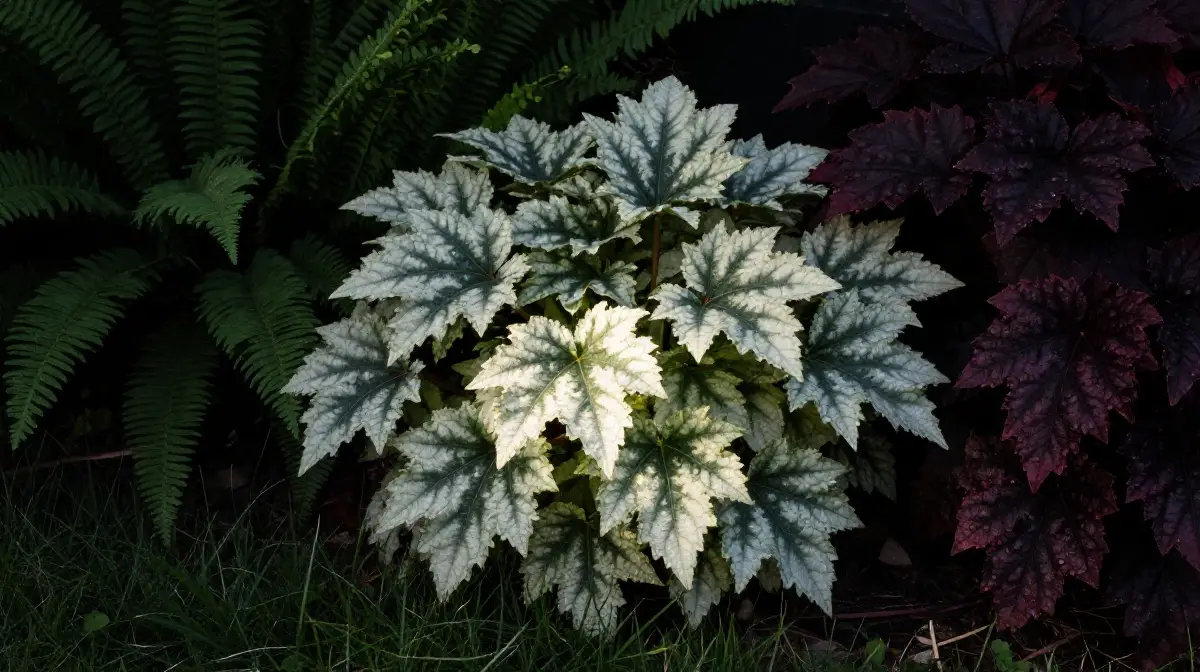
Variegated heuchera varieties featuring silver, white, or pale markings on their leaves are particularly valuable in deeply shaded front yard spots where darker foliage can disappear visually. Varieties like Snow Angel, Silver Lode, and Jade Gloss feature striking patterns that catch and reflect available light, making shaded areas feel brighter and more inviting. Plant them in clusters of three or more for maximum effect since a single variegated plant can be difficult to appreciate from the street. Pair them with dark green ferns or deep burgundy heuchera neighbors to maximize the contrast and make the variegation stand out even more strongly. The silver and white tones in variegated varieties also work beautifully in evening gardens where subtle light from porch fixtures or landscape lighting illuminates the foliage after dark. This is a thoughtful detail that elevates the front yard experience for homeowners who spend time outdoors in the evening hours.
Design a Low-Water Heuchera Xeriscape Front Yard
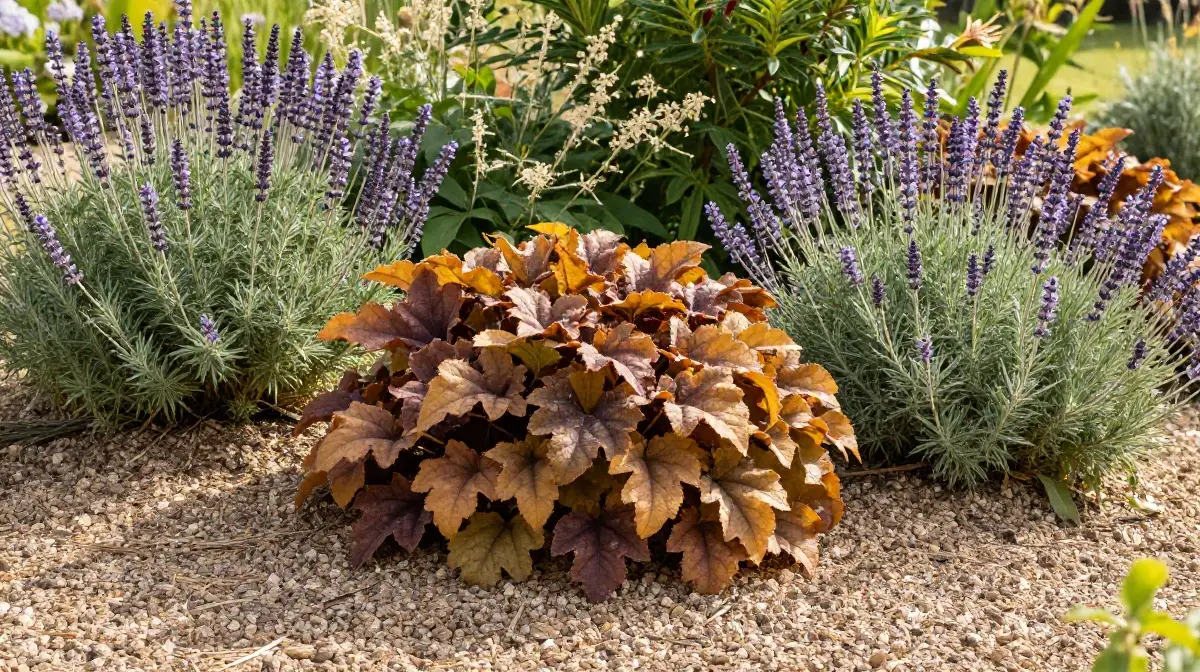
In regions where water conservation is a priority, heuchera varieties with strong drought tolerance can anchor a beautiful xeriscape front yard that requires minimal irrigation once established. Varieties like Dolce Mocha Mint and Caramel develop good drought resistance after their first season in the ground, particularly when planted in well-amended soil with organic mulch to retain moisture between waterings. Pair them with other low-water perennials like agastache, Russian sage, and penstemon for a front yard that looks lush and colorful while consuming a fraction of the water a traditional lawn requires. Group heuchera in large masses of five to nine plants rather than scattering individual specimens, as grouping reduces the total surface area exposed to drying sun and wind. Gravel mulch works well in xeriscape settings, but keep it a few inches away from the crown of each heuchera to prevent overheating. Once the garden is established in its second or third season, occasional deep watering during extended dry spells is usually sufficient to keep the plants healthy and attractive.
Pair Heuchera With Astilbe for a Complementary Shade Duo
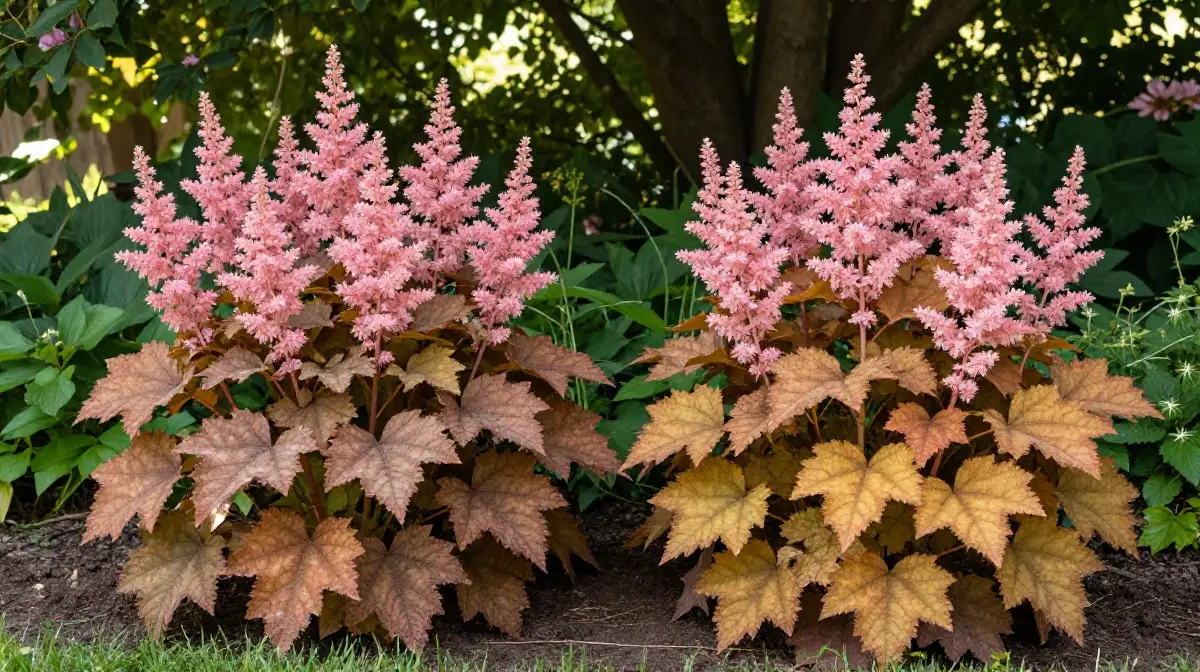
Astilbe and heuchera are a natural pairing that suits shaded front yard beds with exceptional results because both plants share similar soil and light requirements while offering very different visual qualities. Astilbe contributes tall, feathery plumes of white, pink, or red bloom in early to midsummer, while heuchera provides consistent foliage color throughout the entire growing season. The combination ensures that the bed looks interesting both when astilbe is in full bloom and after its flowers have faded. Choose astilbe varieties in colors that complement your heuchera selection, such as white astilbe with dark purple heuchera for a high-contrast pairing or rose-pink astilbe with caramel heuchera for a warm, analogous palette. Both plants prefer consistently moist, rich soil, so amending with compost at planting time benefits both simultaneously. Divide both plants every three to four years to maintain vigor and prevent overcrowding in the bed.
Refresh Your Front Yard Seasonally by Swapping Heuchera Varieties
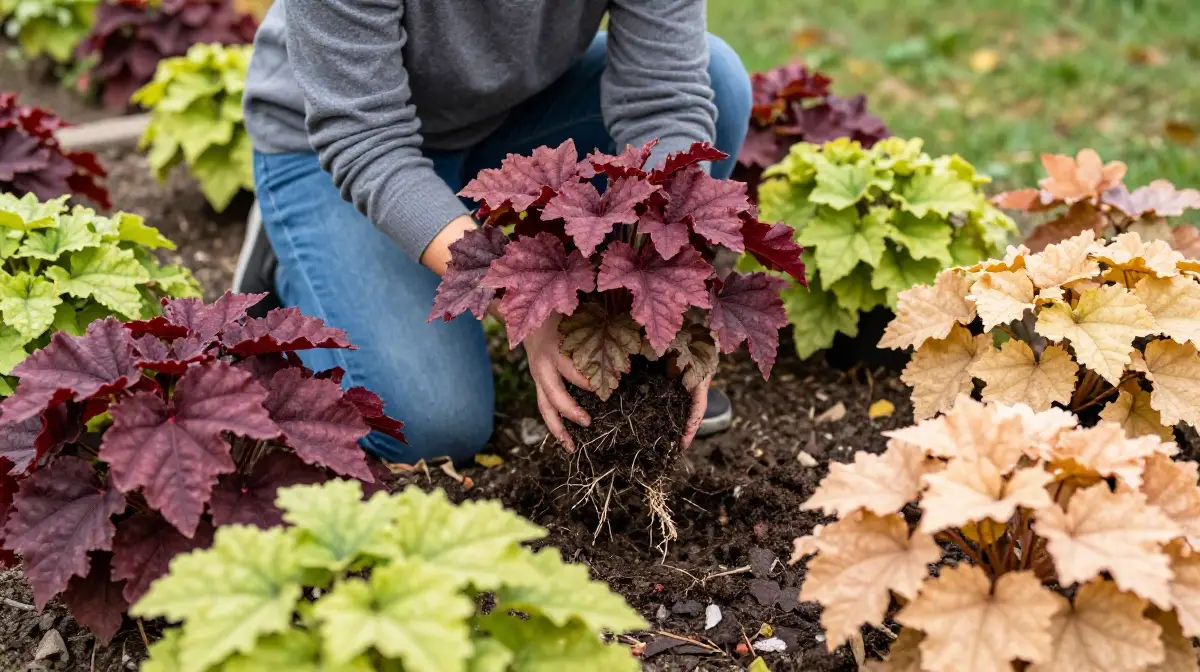
One of the great advantages of heuchera in the front yard is that established plants can be divided and rearranged seasonally to refresh the look of your landscape without significant expense. Every few years, lift mature clumps in early spring or fall, divide them into healthy rooted sections, and replant them in new arrangements or combinations. This seasonal rotation allows you to experiment with new color combinations as new varieties become available at your local nursery each spring. It is also an opportunity to introduce fresh soil amendments into the bed, which benefits all surrounding plants. Divided heuchera sections make excellent gifts for gardening neighbors, which is a pleasant side benefit of maintaining a well-stocked planting. Over time, this practice of dividing and rotating keeps your front yard feeling current, healthy, and personally curated rather than static and overgrown.
Conclusion
Heuchera is one of those rare plants that delivers far more than it asks in return. It requires no complicated care routine, no specialty soil, and no advanced gardening knowledge to look spectacular in a front yard setting. What it does offer is extraordinary, including season-long foliage color, adaptability to shade and sun, compatibility with dozens of companion plants, and enough variety in leaf color and texture to suit any design vision from traditional cottage gardens to sleek modern landscapes.The 22 ideas covered in this article represent just a starting point for what is genuinely a limitless plant when it comes to creative front yard use. Whether you choose to line your walkway with a color gradient, mass plant beneath street trees, design a drought-tolerant xeriscape, or simply drop a few containers on your front porch, heuchera will reward that decision consistently and beautifully. It performs when flowering plants are resting, holds the garden together through seasonal transitions, and improves visually with each passing year as the plants mature and fill in.If you are new to heuchera, start with two or three varieties in a small bed near your entrance and observe how they perform through a full growing season before expanding. If you are already a fan, the ideas in this guide may open up planting possibilities in your front yard that you have not yet explored. Either way, heuchera belongs in the front yard, and once you plant it, it is difficult to imagine that space without it.
You may also like this:22 Sunroom Furniture Ideas for a Bright Cozy Space
Frequently Asked Questions
1. What is heuchera and why is it good for the front yard?
Heuchera, commonly called coral bells, is a hardy perennial known for its colorful, long-lasting foliage. It is ideal for front yards because it provides consistent color from spring through fall, tolerates shade, requires minimal maintenance, and comes in a wide range of foliage colors to suit any design style.
2. Does heuchera grow well in full sun or shade?
Heuchera grows in both partial shade and partial sun, though most varieties prefer morning sun with afternoon shade. Brightly colored varieties benefit from some direct light to maintain their best color, while darker-leafed varieties handle deeper shade more comfortably. Avoid harsh afternoon sun in hot climates, which can scorch the leaves.
3. How often does heuchera need to be watered in the front yard?
Established heuchera needs moderate, consistent moisture and performs best when the soil stays evenly moist but not waterlogged. During the first season, water weekly to support root development. After establishment, most varieties are reasonably drought tolerant and may only need supplemental watering during extended dry periods.
4. How do I keep heuchera looking its best over the years?
Divide heuchera every three to four years to prevent the center of the plant from dying out, which is the most common decline pattern. Remove any dead or tattered leaves in early spring before new growth begins. Mulching around the base helps retain moisture and regulate soil temperature throughout the growing season.
5. What are the best heuchera varieties for front yard landscaping?
Some top-performing varieties for front yard use include Palace Purple for reliable deep color, Lime Rickey for bright chartreuse in shade, Caramel for warm amber tones, Obsidian for near-black dramatic foliage, and Peach Flambe for spectacular autumn color. Choose varieties based on your yard’s light conditions and your desired color palette for the best results.

1 Comment