
Introduction
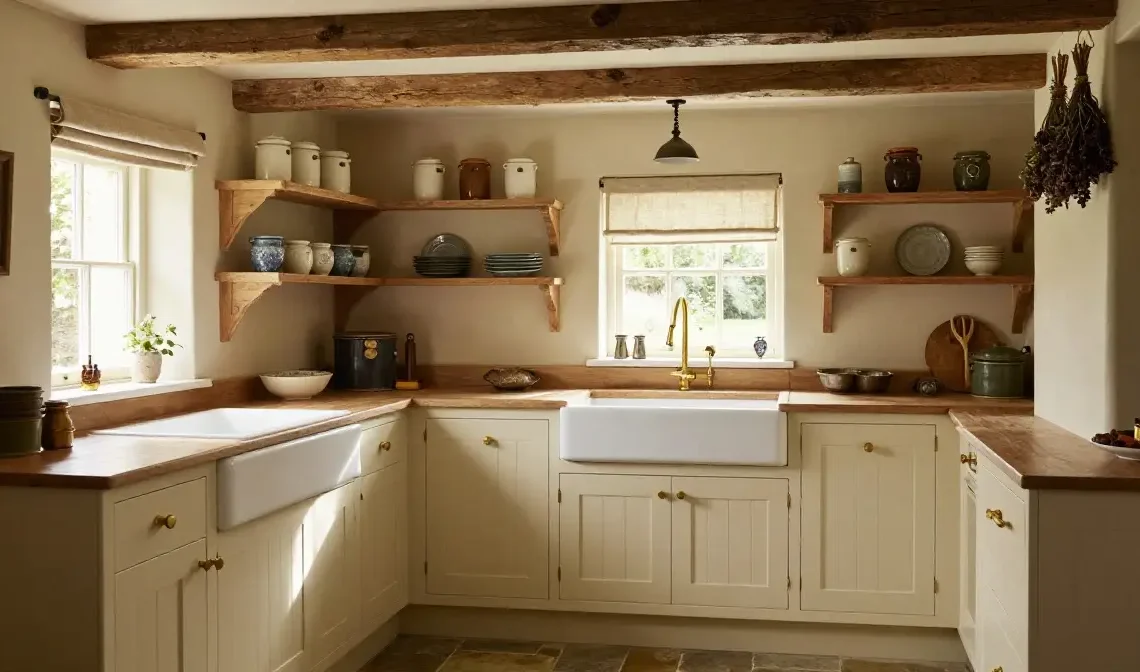
There is something deeply comforting about a cottage kitchen. It does not try too hard. It does not follow every trend. It simply feels like a place where real life happens, where bread is baked on Sunday mornings, herbs hang by the window, and mismatched mugs somehow look perfect together.
If your kitchen feels cold, generic, or just uninspiring, you are not alone. So many modern kitchens are functional but soulless. The good news is that timeless cottage kitchen styling does not require a full renovation or a large budget. It is about layering the right textures, choosing materials that age beautifully, and letting the space feel genuinely lived in.
This guide walks you through 22 practical ideas to bring that cozy, charming cottage kitchen aesthetic into your home, whether you are starting from scratch or simply refreshing what you already have.
Start With a Warm, Muted Color Palette
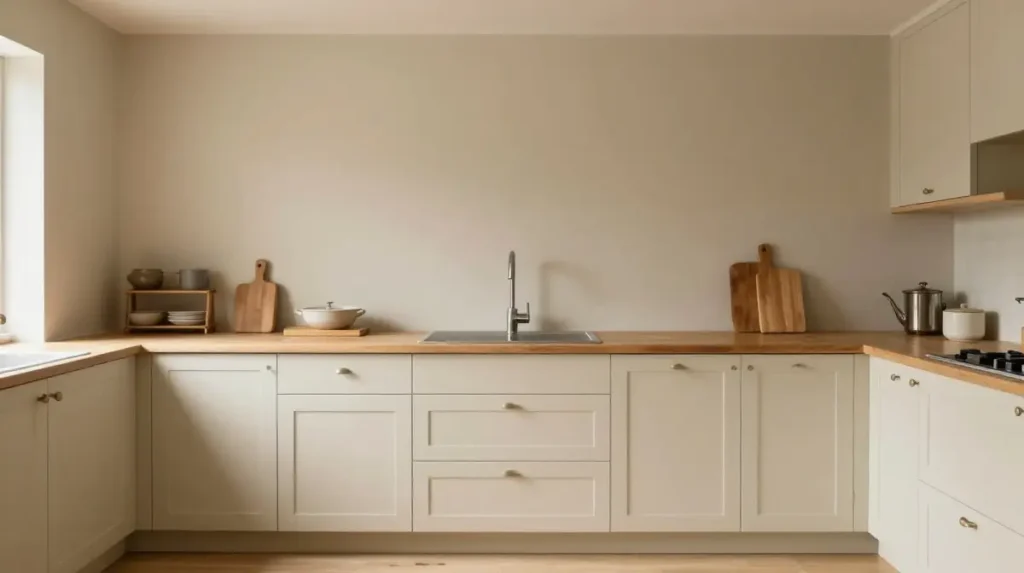
The foundation of any cottage style interior is color. Cream kitchen cabinets, soft sage greens, dusty blues, and warm off-whites create that muted kitchen color story that never goes out of style. Avoid anything too stark or too bright.
The goal is warmth, not drama. Beige kitchen walls paired with cream or white woodwork give the space visual harmony without feeling flat.
Choose Cream or Painted Cabinet Finishes
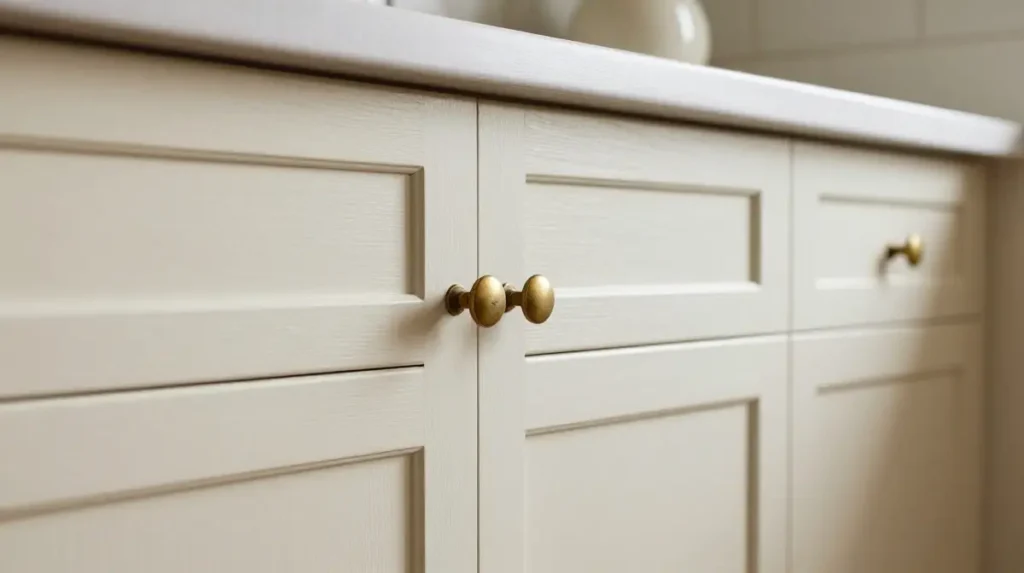
Painted kitchen furniture is one of the most affordable ways to shift your kitchen toward a heritage kitchen look. A soft chalky finish in a warm white or sage gives cabinets that imperfect beauty associated with the cottage aesthetic. You do not need brand-new cabinets.
Sanding and repainting existing ones works beautifully and adds to that time-worn character.
Add Open Shelving for a Curated, Collected Look
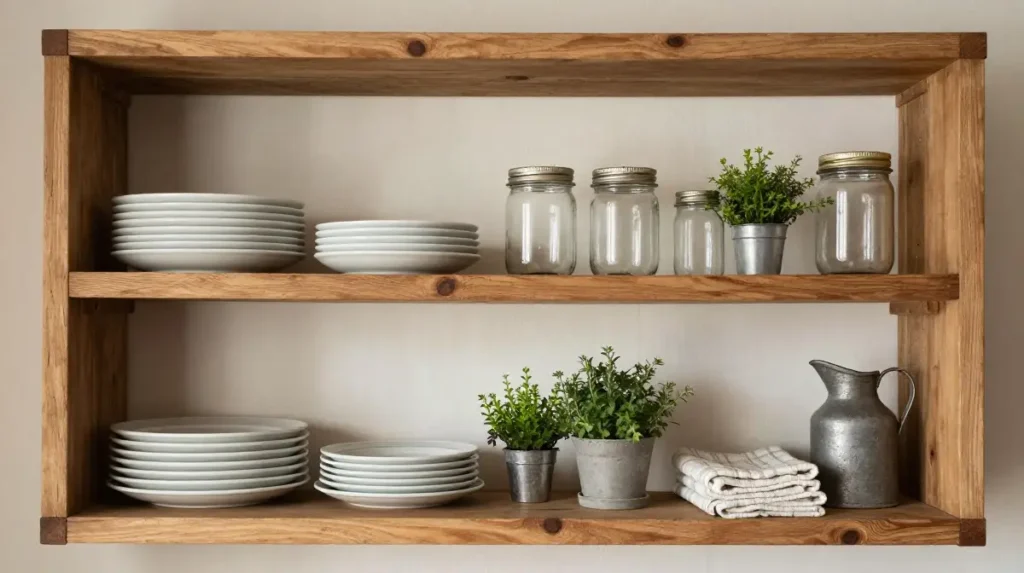
Open shelving is practically a signature of cottage kitchen ideas. It allows you to display your most loved pieces, ceramic kitchen accessories, stacked plates, glass jars, and small plants, in a way that tells a story.
The key is to style shelves intentionally without making them look too perfect. A slightly eclectic kitchen mix of old and new always feels more authentic.
Bring In a Farmhouse or Butler Sink
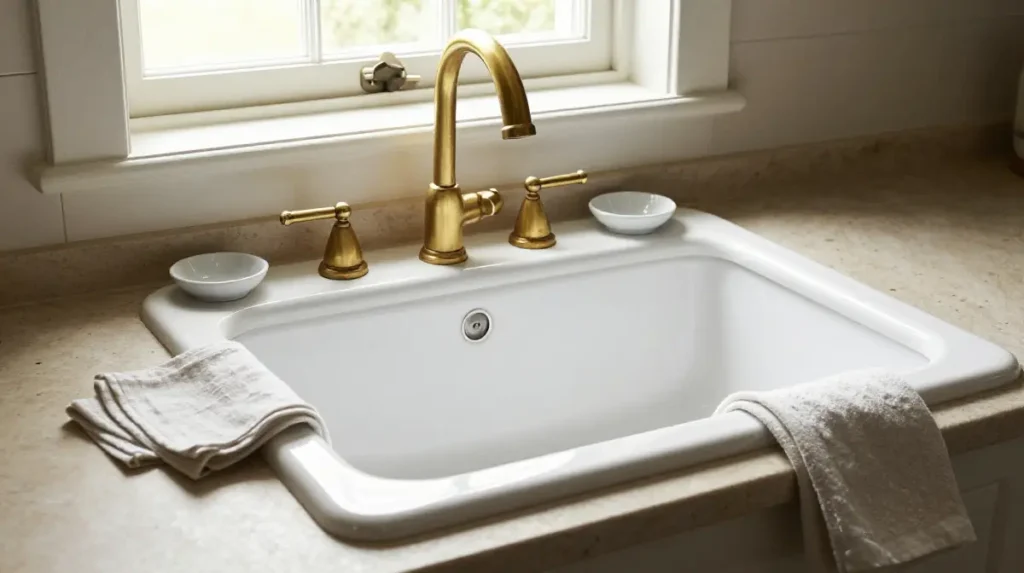
If there is one single feature that defines the English cottage kitchen, it is the farmhouse sink or butler sink style.
These deep, wide sinks have a practical elegance that modern sinks simply cannot replicate. They anchor the kitchen visually and immediately shift the room toward that traditional kitchen design feeling.
Use Reclaimed and Distressed Wood Surfaces
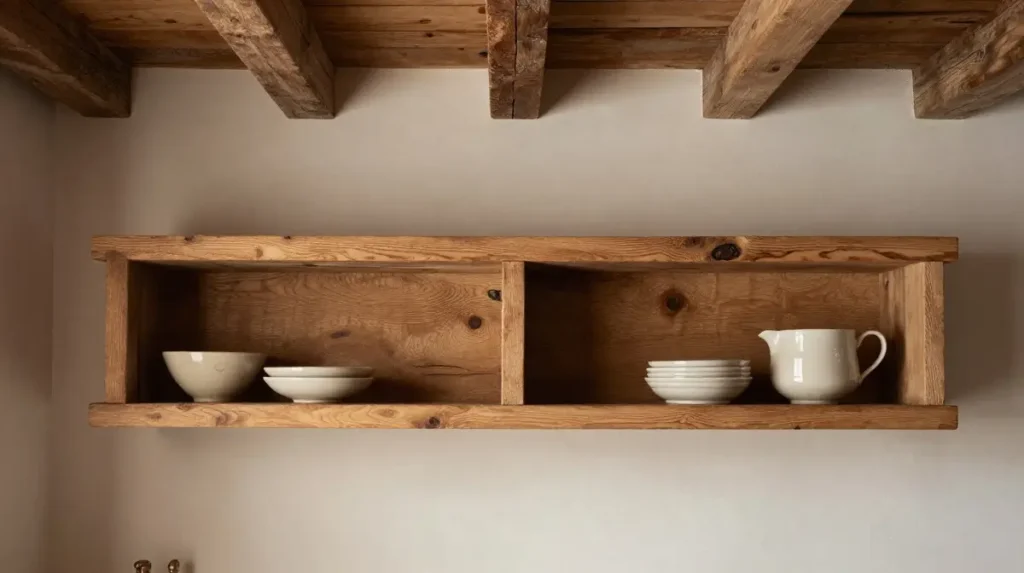
Natural material kitchens always feel grounded and warm. Distressed wood shelves, reclaimed wood kitchen accents, and exposed beam ceilings all contribute to that rustic kitchen warmth that makes a cottage kitchen so appealing.
Even a single wooden shelf or a reclaimed wood island top can make a meaningful difference.
Display Cast Iron and Vintage Cookware
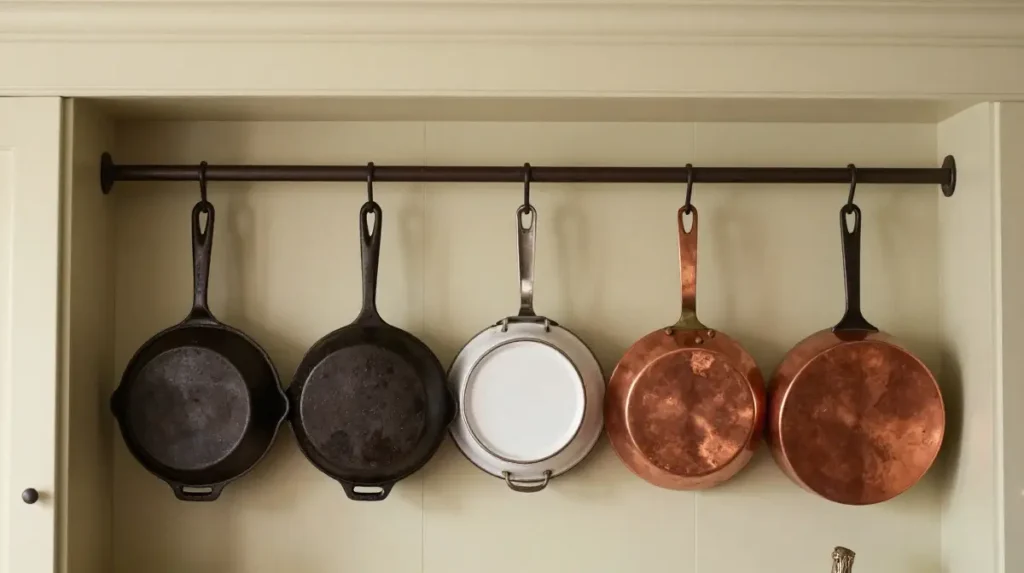
Nothing says cottage kitchen character quite like a collection of cast iron cookware displayed openly on a shelf or hanging from a rack.
Vintage kitchen appliances and antique kitchen fixtures serve the same purpose. They are not just decorative. They suggest a kitchen that has been used for generations, which is exactly the kind of nostalgic kitchen feel the cottage style is built on.
Layer Textiles for Sensory Appeal
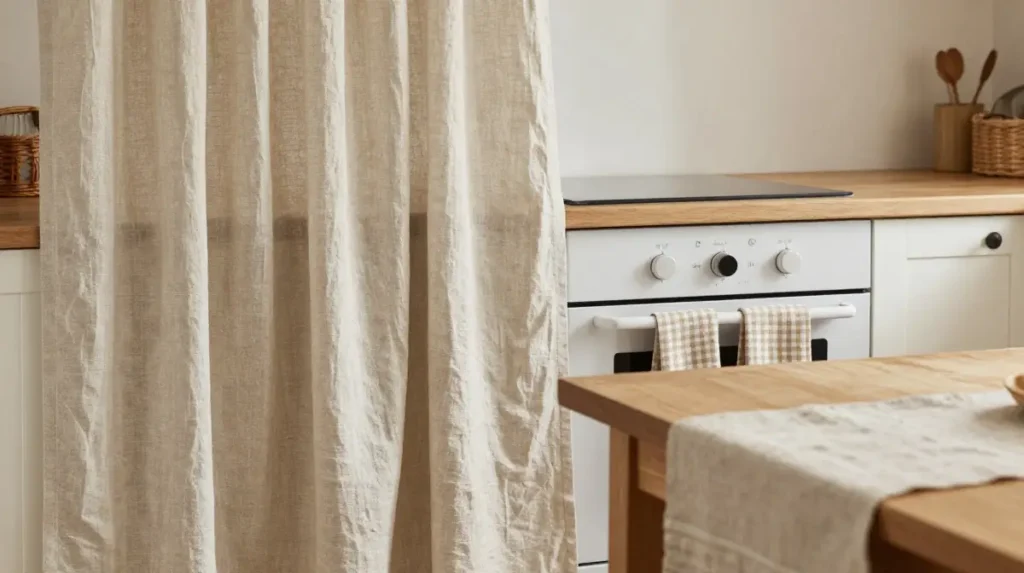
Kitchen sensory appeal comes largely from texture. Linen kitchen textiles, gingham kitchen curtains, and simple cotton tea towels in soft tones add layers that make the space feel warm and welcoming. Do not match everything perfectly.
Slight variations in tone and fabric create that relaxed kitchen styling that feels effortless rather than styled.
Hang Dried Herb Bundles
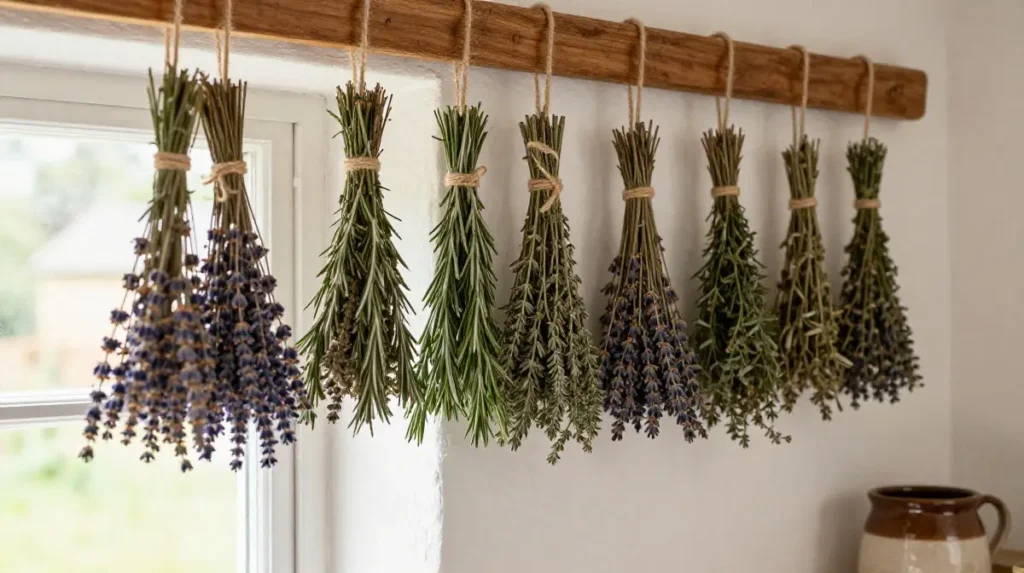
Dried herb bundles hanging near the window or above a shelf are one of the simplest and most effective garden-to-kitchen styling details.
They bring a botanical kitchen theme into the space, add a soft fragrance, and reinforce the idea of a kitchen that is connected to nature. Lavender, rosemary, and thyme all work beautifully.
Style With Wicker and Natural Baskets
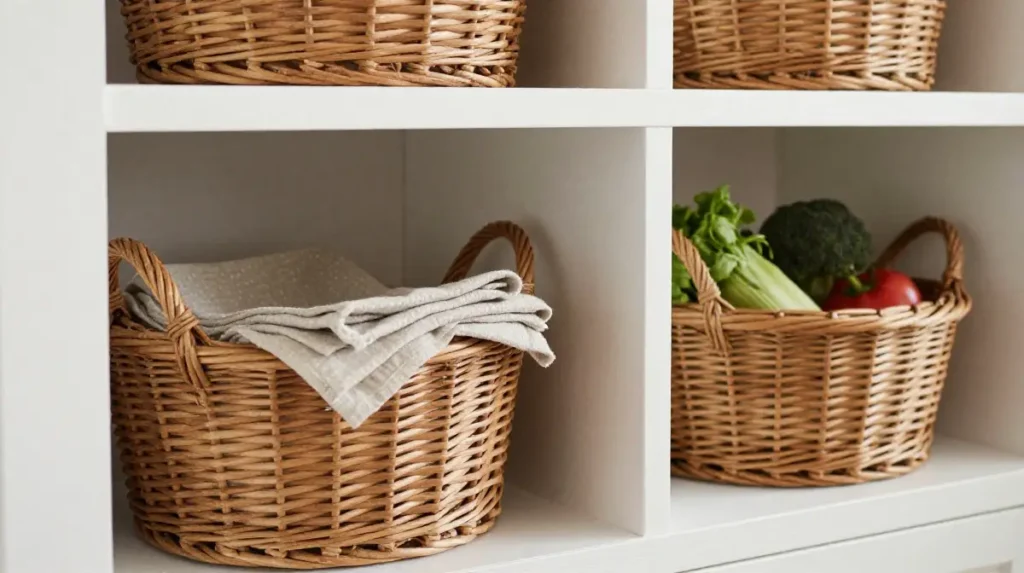
Wicker kitchen baskets tucked under open shelves or sitting on countertops add organic texture and practical storage at the same time.
They fit perfectly into a slow living kitchen design approach, where every object serves a purpose and also contributes to the visual warmth of the room. Choose natural tones over dyed options.
Use Aged Brass or Copper Hardware
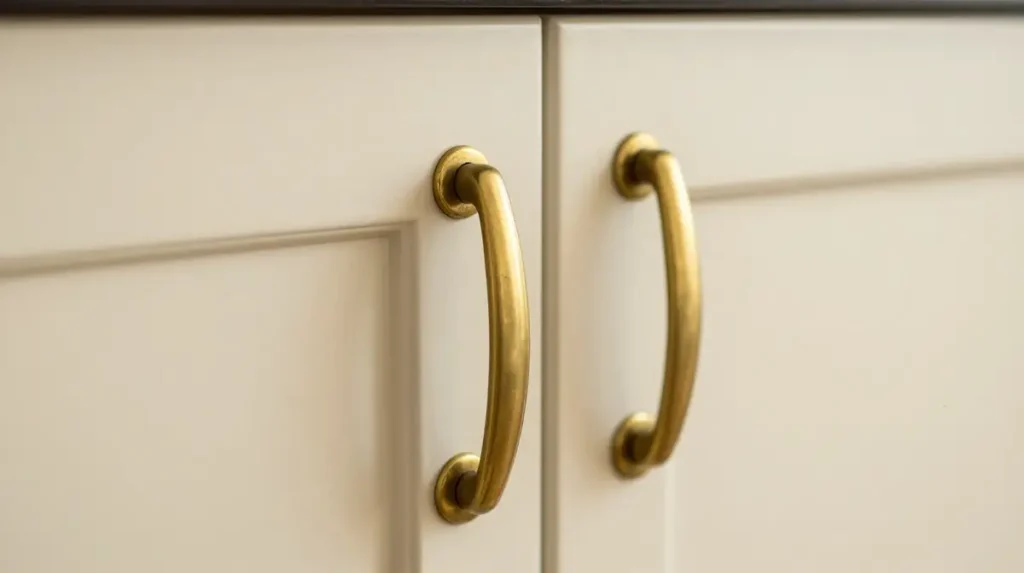
Antique kitchen fixtures do not need to be genuinely antique. Aged brass hardware on cabinet doors and drawers gives the entire kitchen a cohesive, heritage kitchen material feel.
Copper kitchen accents, like a copper pot rack or a few copper measuring cups on display, add warmth and a gentle visual contrast against cream or sage tones.
Install Hand-Painted or Patterned Tiles
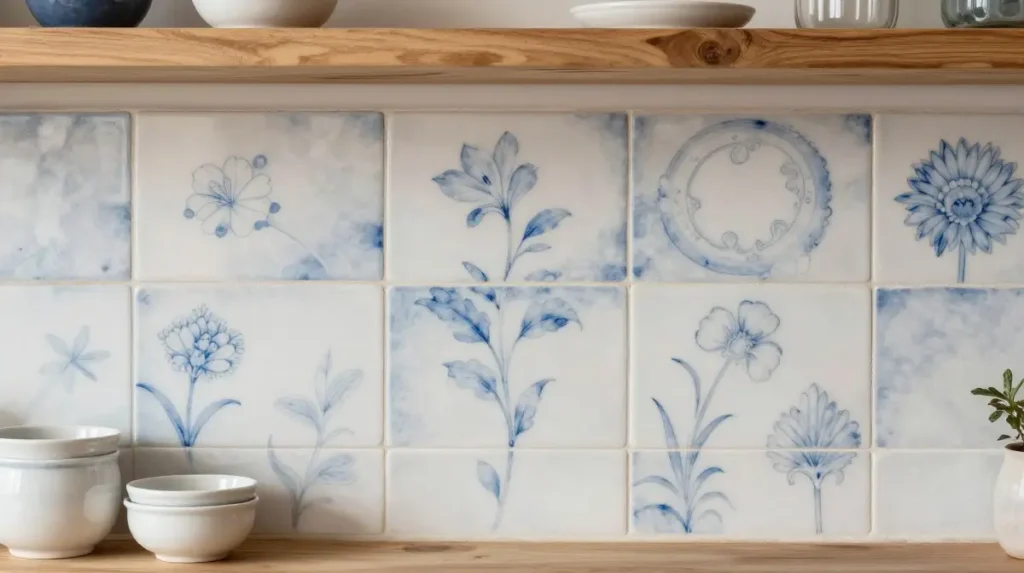
Hand-painted tiles used as a backsplash or around a range bring artisan kitchen details into the space without overwhelming it.
Whether you choose a simple floral motif, a geometric pattern in muted tones, or traditional Delft-style designs, these tiles add kitchen character that no flat, uniform surface can match.
Choose Stone or Flagstone Flooring
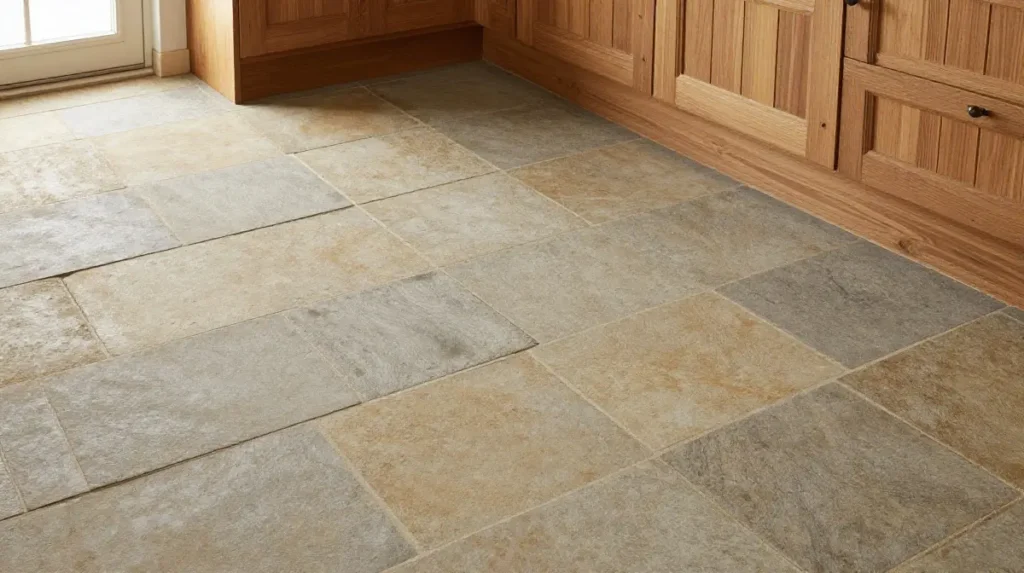
Stone kitchen flooring, including flagstone kitchen tiles, is both practical and visually rooted in the cottage tradition.
It ages gracefully, develops a patina over time, and works beautifully with wooden furniture and soft textiles above it. If stone is not an option, high-quality stone-effect tiles can achieve a similar visual result.
Incorporate Freestanding Furniture
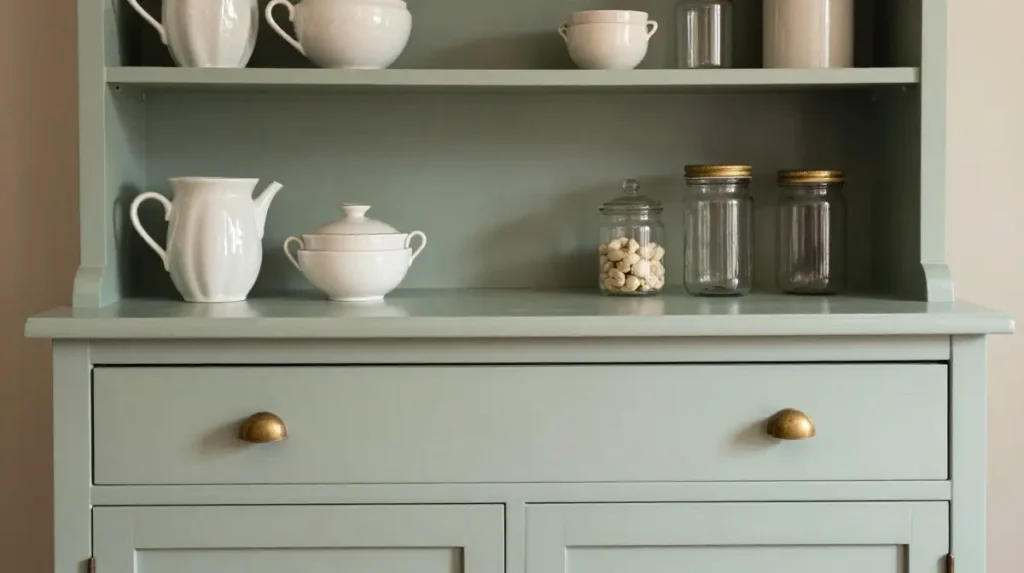
One of the easiest ways to avoid the look of a fitted, overly uniform kitchen is to incorporate freestanding kitchen units.
A painted dresser used for kitchen storage, a butcher block island, or a vintage table used as a prep station all contribute to that collected kitchen look. This approach also makes rented kitchens far easier to personalize.
Create a Plate Rack Display
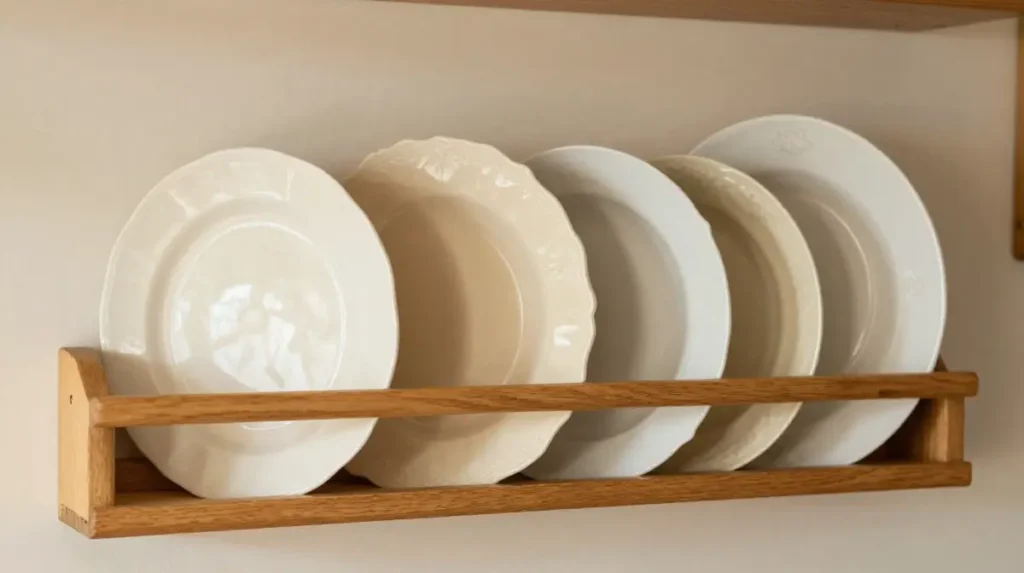
A plate rack display, whether built into the wall or freestanding, is a classic cottage kitchen detail. It keeps everyday crockery accessible while turning it into a decorative feature.
Mixing slightly different patterns and sizes of plates in similar tones looks far more interesting than a perfectly matched set.
Use Mason Jars and Ceramic Containers for Storage
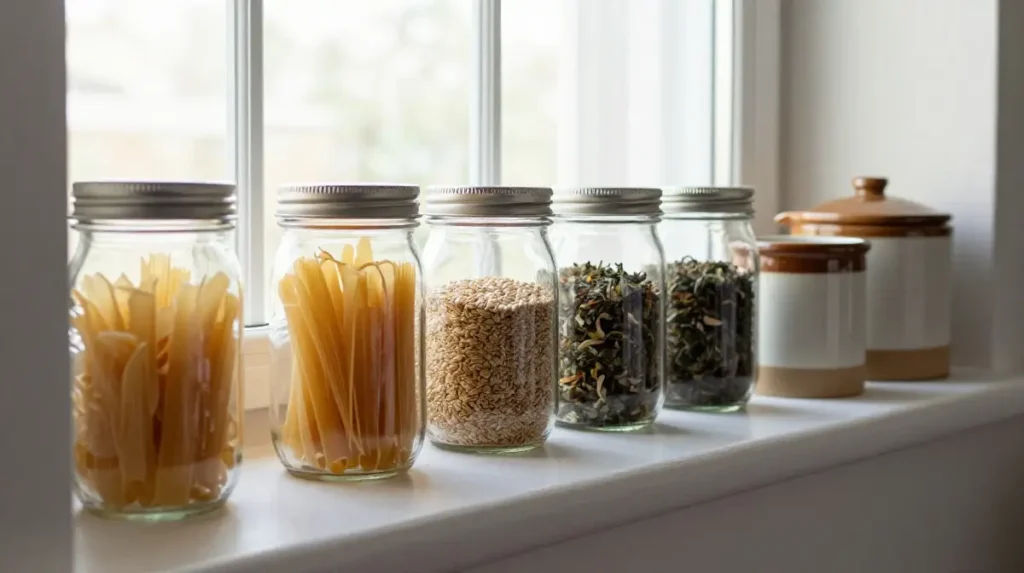
Mason jar kitchen storage is both practical and visually pleasing. Fill glass jars with dried pasta, grains, or loose tea and line them up on a shelf or windowsill.
Pair them with handmade ceramic containers for a curated, artisan kitchen feel. The goal is storage that you actually want to look at.
Style the Kitchen Window With Care
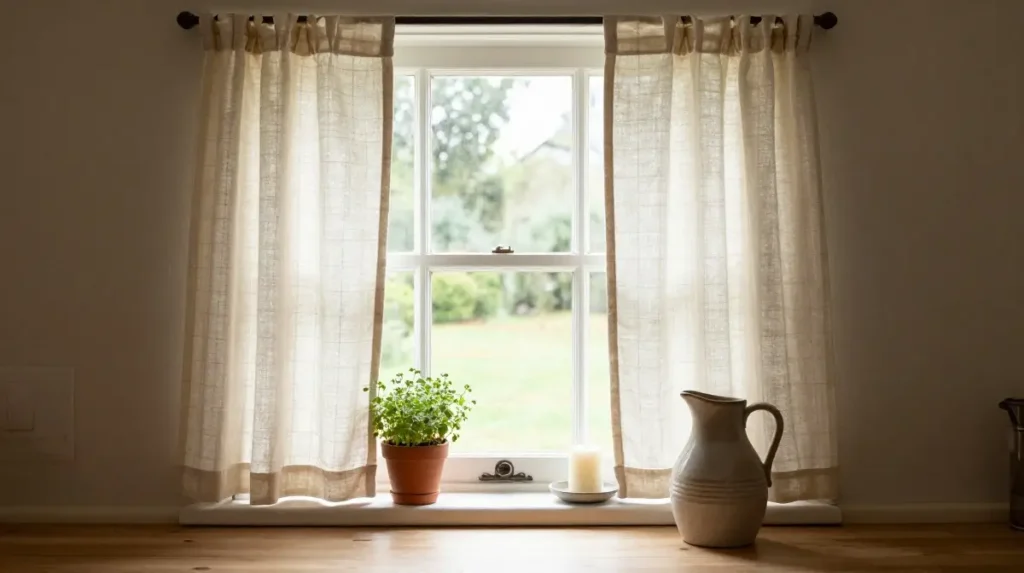
Kitchen window treatments in a cottage kitchen should feel soft and light. Linen or cotton curtains in a simple check or plain weave allow natural light through while adding that gingham kitchen curtain charm.
A windowsill with a small potted herb, a candle, and a ceramic jar creates a simple but deeply satisfying kitchen focal point.
Add Warm, Ambient Lighting
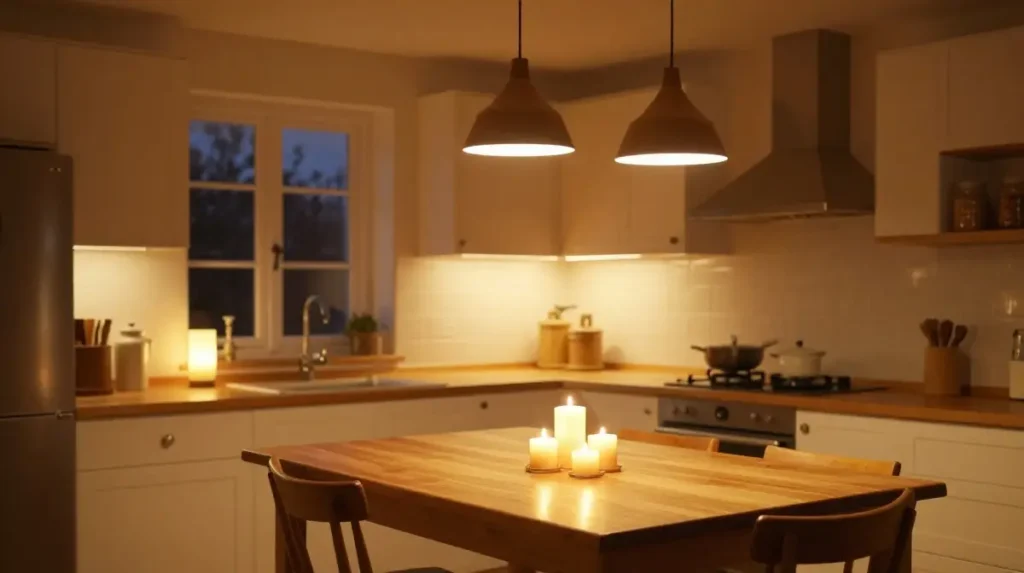
Warm kitchen lighting is essential for achieving that cozy kitchen atmosphere. Avoid cool white bulbs entirely.
Instead, use warm LED bulbs in pendant lights over the island or worktop, and consider adding small plug-in wall sconces or battery-operated candle lights for ambient kitchen glow in the evenings. Candlelight on the kitchen table also works particularly well.
Bring In Botanical Prints and Artwork
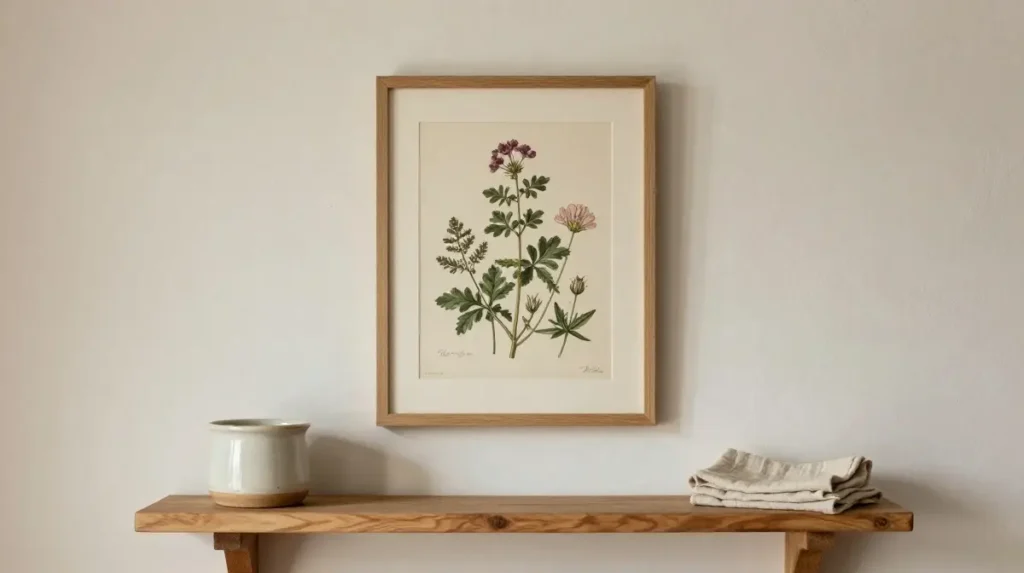
Botanical kitchen prints framed simply and hung on an empty wall or propped against a shelf add a garden-inspired softness to the space.
Choose illustrations of herbs, flowers, or vegetables in muted, earth-tone palettes. They do not need to be expensive. Printed vintage botanical illustrations found online are often entirely cost-free.
Use Seasonal Decoration to Keep It Fresh
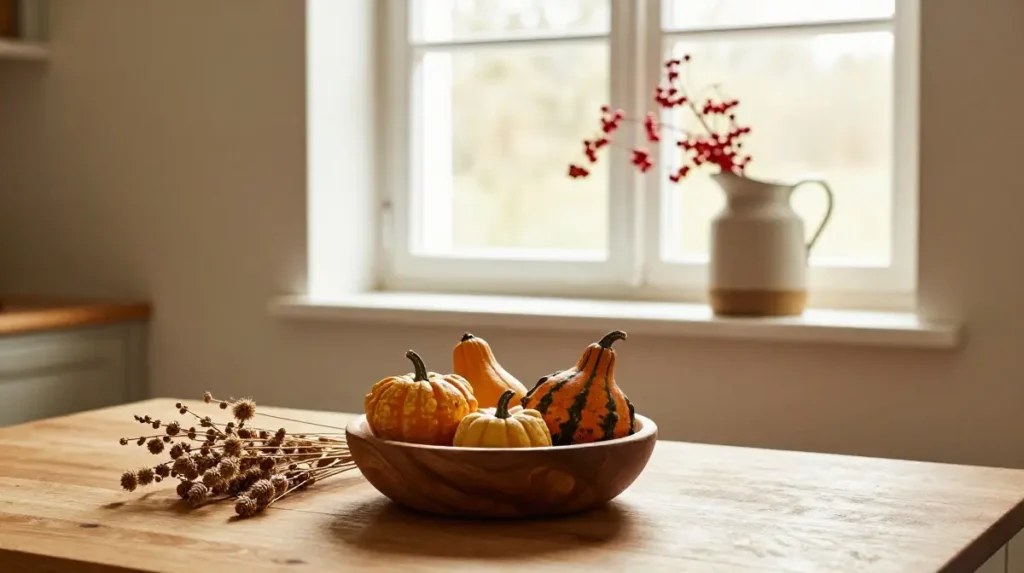
One hallmark of timeless cottage kitchen styling is that it shifts gently with the seasons without ever feeling overdone.
A small vase of spring flowers in March, a bowl of autumn gourds in October, or a sprig of dried winter berries near the window keeps the space feeling alive and connected to the world outside. Seasonal kitchen decoration does not need to be elaborate.
Embrace Imperfection and Patina
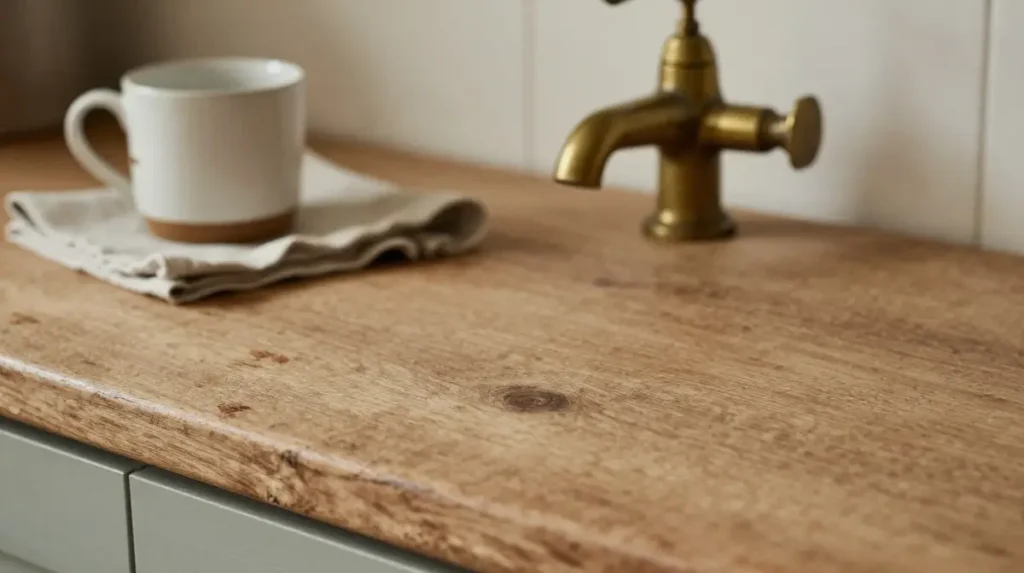
The wabi-sabi kitchen aesthetic, which celebrates age, imperfection, and the beauty of things that have been used and loved, is at the heart of cottage style. Do not replace a slightly worn worktop immediately.
Do not stress about a small chip in a ceramic mug. Kitchen patina and age tell a story, and that story is exactly what makes these spaces feel so genuinely warm.
Layer Meaningful Objects Over Time
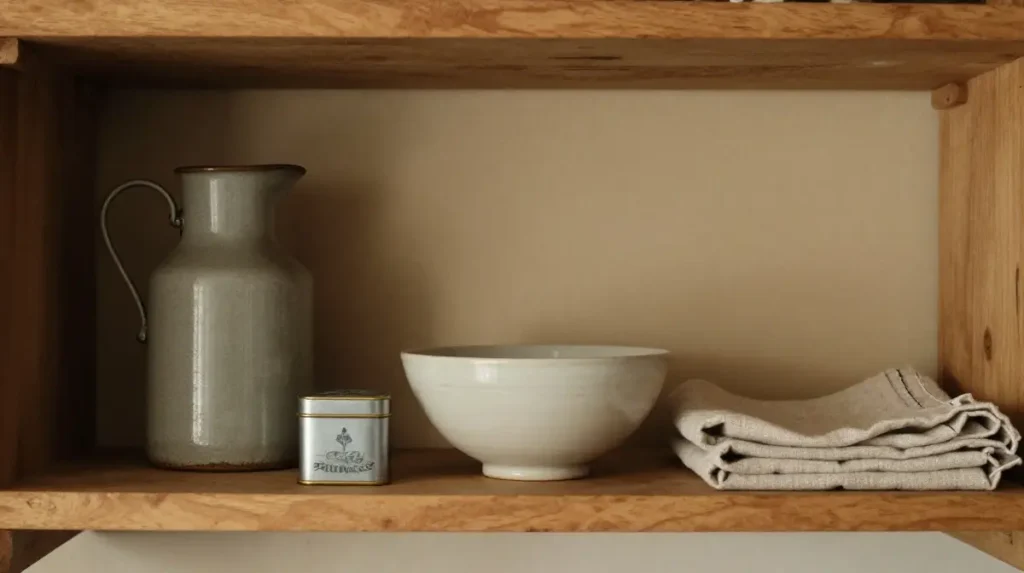
The most beautiful cottage kitchens are not styled in a single afternoon. They are built slowly, through collected kitchen objects gathered over years.
A jug bought at a market, a tin passed down from a grandparent, a bowl picked up on holiday. Mindful kitchen curation means choosing fewer things, but choosing them because they mean something.
Keep the Space Functional Above All Else
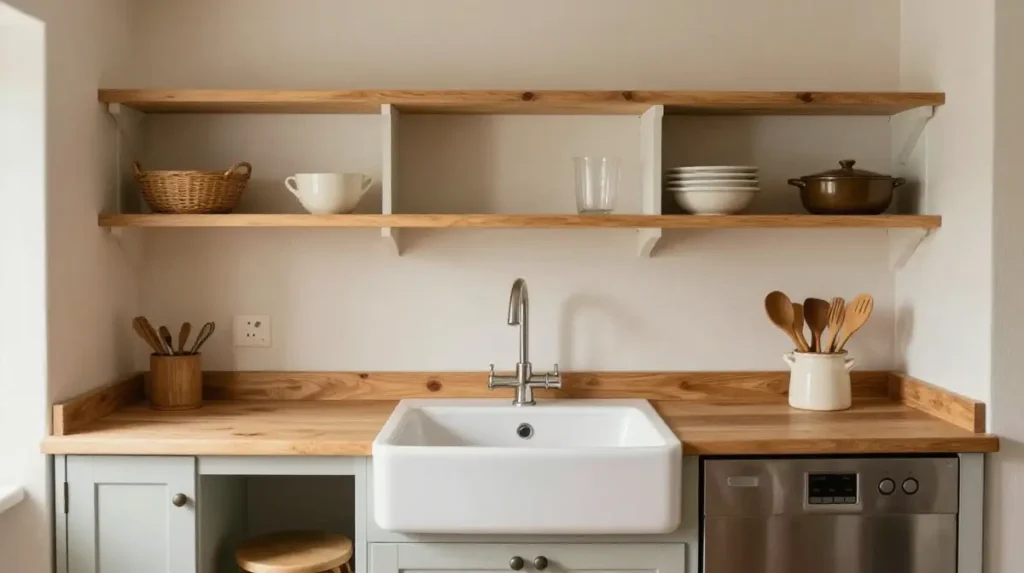
This final point might be the most important. A cottage kitchen should work beautifully as a kitchen first. All the styling in the world means nothing if the space is impractical. Think about kitchen comfort and function together.
Storage should be accessible, surfaces should be clear enough to cook on, and the layout should make sense for how you actually use the space.
Quick Comparison Table: Cottage Kitchen Styling Elements at a Glance
| Element | Style Contribution | Budget Level | Beginner Friendly | Maintenance Level |
|---|---|---|---|---|
| Cream painted cabinets | Warm, heritage base tone | Medium | Yes | Low |
| Open wooden shelving | Curated, collected look | Low to Medium | Yes | Low |
| Butler or farmhouse sink | Anchor feature, traditional feel | High | No | Low |
| Hand-painted tile backsplash | Artisan detail, visual interest | Medium | Yes | Low |
| Aged brass hardware | Warmth, antique character | Low | Yes | Very Low |
| Wicker baskets | Organic texture, practical storage | Low | Yes | Very Low |
| Stone or flagstone flooring | Grounded, timeless base | High | No | Low |
Conclusion
Timeless cottage kitchen styling is less about following rules and more about building a space that feels genuinely yours. It takes patience, a willingness to mix old and new, and an appreciation for materials and objects that carry real character.
You do not need to do everything at once. Start with color, add a few meaningful textures, and let the rest come together naturally over time. A well-styled cottage kitchen does not shout for attention. It simply draws you in and makes you want to stay.
You may also like this: 22 Timeless Christmas Home Styling Ideas for Elegant Holidays
Frequently Asked Questions
1. What colors work best for a timeless cottage kitchen?
Warm neutrals work best. Cream, soft sage green, warm white, and dusty blue are all strong choices. Avoid cool greys or stark whites, as they tend to work against the cozy atmosphere that cottage kitchens are known for.
2. Can I achieve a cottage kitchen look on a small budget?
Yes, absolutely. Repainting existing cabinets, adding open shelving, swapping out hardware for aged brass, and layering in linen textiles are all low-cost changes that make a significant visual difference. You do not need to renovate to change the feel of a kitchen.
3. How do I make a small cottage kitchen feel less cramped?
Use open shelving instead of upper cabinets where possible, choose light paint tones, and keep the countertops as clear as you can. A plate rack, wicker baskets, and wall-hung storage all help free up surface space while still adding character.
4. What is the difference between cottage kitchen style and farmhouse style?
They overlap significantly, but cottage kitchens tend to feel softer, more collected, and slightly more eclectic. Farmhouse style often leans toward a cleaner, more deliberate rustic look. Cottage style embraces imperfection and layers of personal detail more openly.
5. How do I keep a cottage kitchen looking styled without it feeling cluttered?
Edit regularly. Keep only what you genuinely use or love on display. Group objects in odd numbers, vary heights on shelves, and leave some negative space so the eye has somewhere to rest. Intentional styling always looks calmer than filling every surface.