
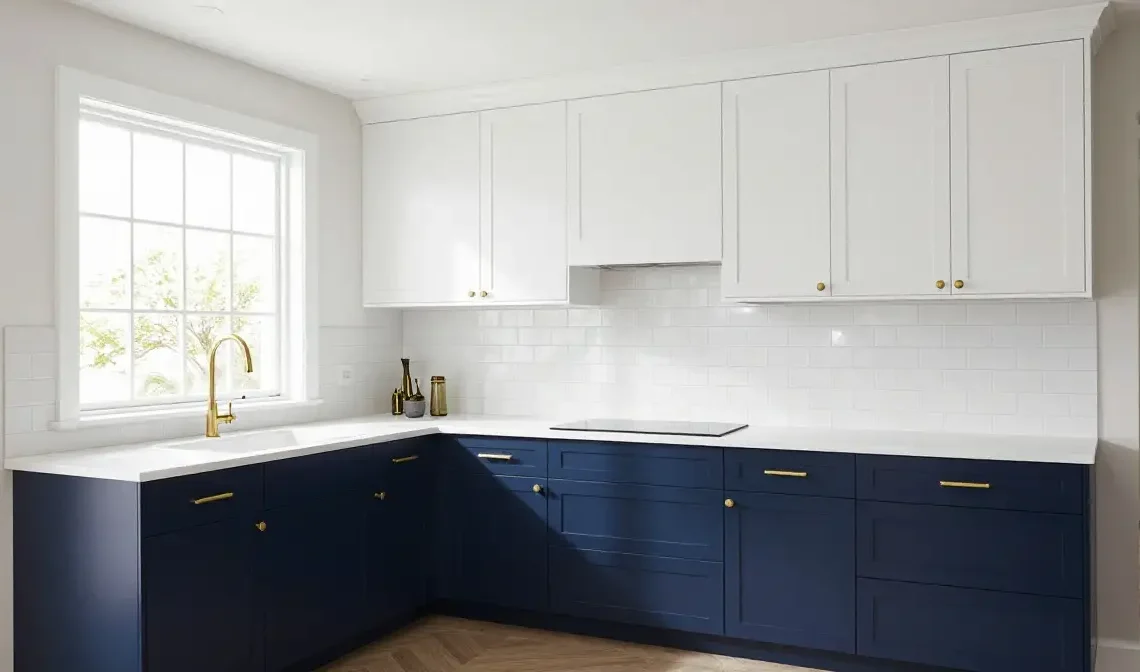
Introduction
There is something quietly frustrating about a kitchen that feels flat. Everything matches, nothing stands out, and the space just looks… fine. Not special. Not yours. If that sounds familiar, two tone kitchen cabinets styling might be exactly what your home has been waiting for.
This approach is not complicated or only for big renovation budgets. It is simply about using two colors or finishes on your cabinets to create contrast, depth, and a kitchen that actually has personality. Whether you prefer something bold or calm, classic or contemporary, there is a two tone combination that fits your space.
This guide covers 22 real, practical styling ideas along with tips on color pairing, hardware, finishes, and common mistakes worth avoiding.
White Upper Cabinets With Navy Lower Cabinets
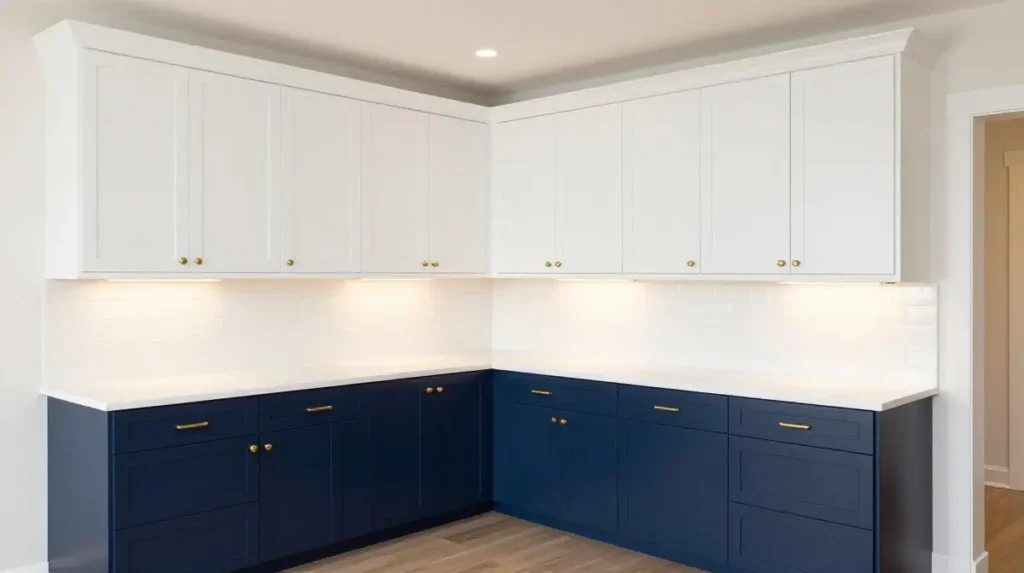
This is one of the most popular two tone kitchen cabinet combinations for good reason. White upper cabinets keep the space feeling open and bright, while navy lower cabinets bring richness and grounding without making the kitchen feel small.
It works particularly well in kitchens with natural light. Pair this look with brass or gold hardware and a marble or quartz countertop to pull everything together. Even in a smaller kitchen, this pairing reads as sophisticated rather than heavy.
Light Gray Uppers With Charcoal Lowers
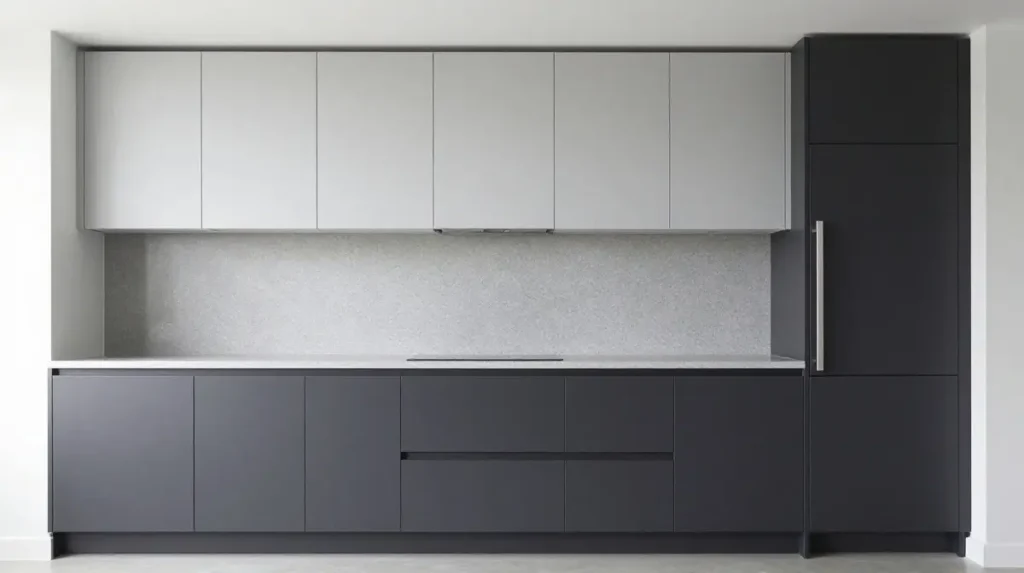
If you want contrast without going full dark and light, gray on gray works beautifully. Light gray upper cabinets paired with charcoal or deep slate lower cabinets creates a tonal look that feels modern and polished.
This combination suits contemporary kitchen design well. It also hides everyday marks better on the lower cabinets, which is a practical bonus for busy households.
Wood Grain Lowers With Painted White Uppers
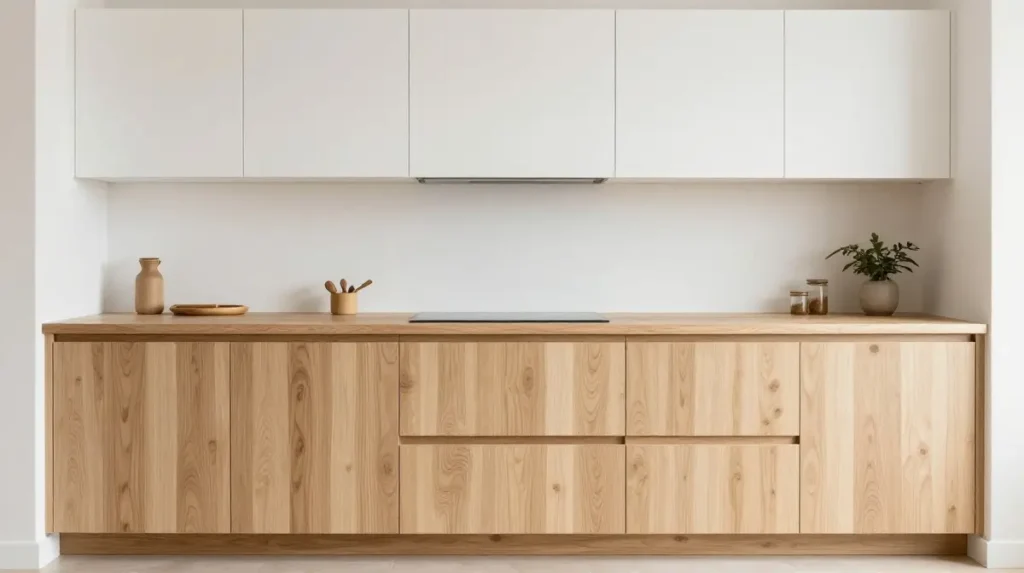
Mixing painted and natural wood finishes is one of the most on-trend approaches in two tone kitchen cabinets styling right now. White or off-white painted upper cabinets sit above warm wood grain lower cabinets for a look that feels both modern and organic.
This pairing works in farmhouse kitchens, Scandinavian-inspired spaces, and transitional kitchen styles alike. The key is choosing a wood tone that reads warm, not orange. Think walnut, white oak, or light ash.
Sage Green Lowers With Cream Uppers
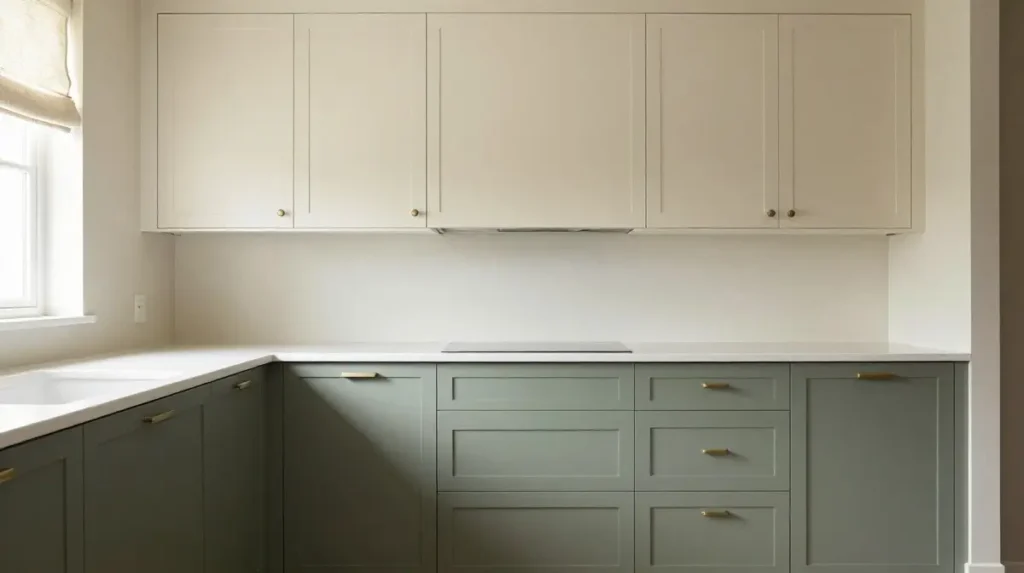
Sage green kitchen cabinets have had a steady moment in interior design, and for good reason. The color is calming, earthy, and pairs incredibly well with cream or warm white uppers.
This is a great option for those who want color but feel nervous about going too bold. Sage is soft enough to feel relaxed but distinct enough to give the kitchen real character. Use matte finishes and simple hardware to let the color do the work.
Black Lowers With White Shaker Uppers
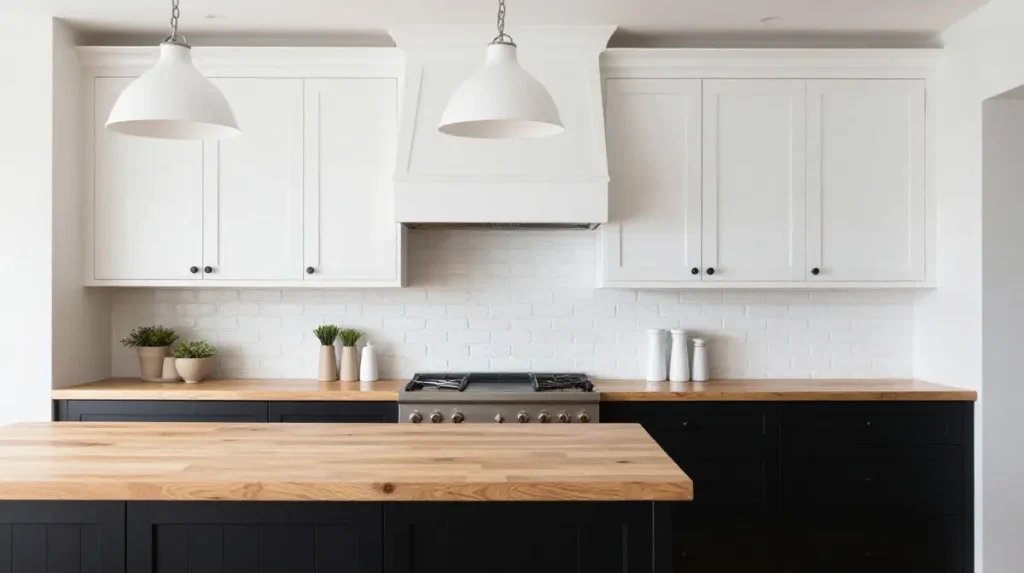
For those who love contrast, black and white kitchen cabinets in a two tone shaker style make a striking statement. The shaker profile softens what could otherwise feel too harsh, giving the kitchen a farmhouse or transitional feel.
This is also one of the most versatile combinations. It works with almost any countertop material, from butcher block to quartz to concrete. Keep the backsplash simple, perhaps a classic white subway tile, so the cabinets remain the focal point.
Dusty Blue Uppers With Natural Wood Lowers
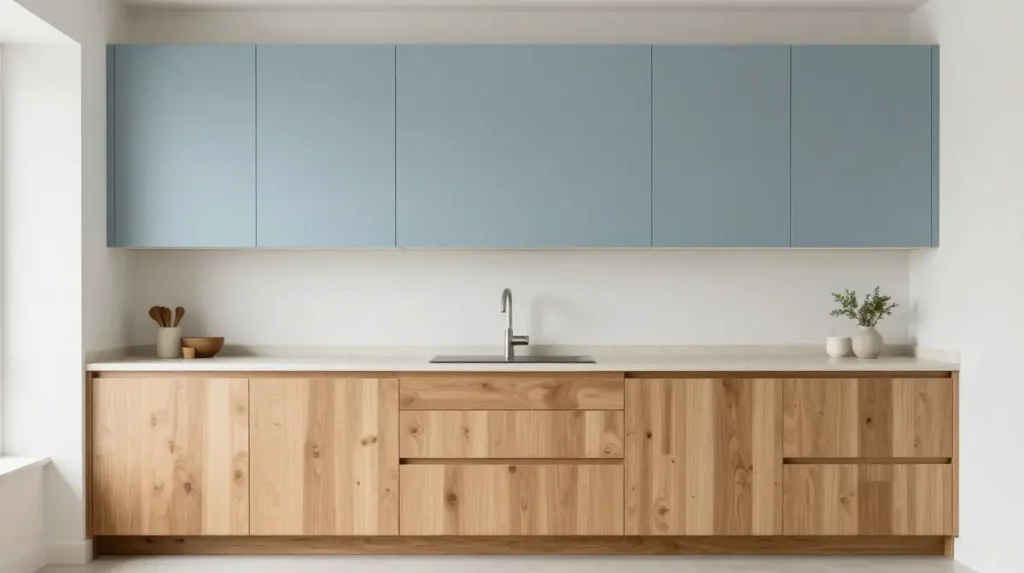
Soft, dusty blue upper cabinets combined with natural wood lower cabinets create a kitchen with a coastal or Scandinavian feel. It is relaxed without being casual, and layered without being overwhelming.
This two color kitchen cabinet pairing suits open-plan spaces well. If your kitchen flows into a dining or living area, this combination transitions naturally between the two zones.
Olive Green Island With White Perimeter Cabinets
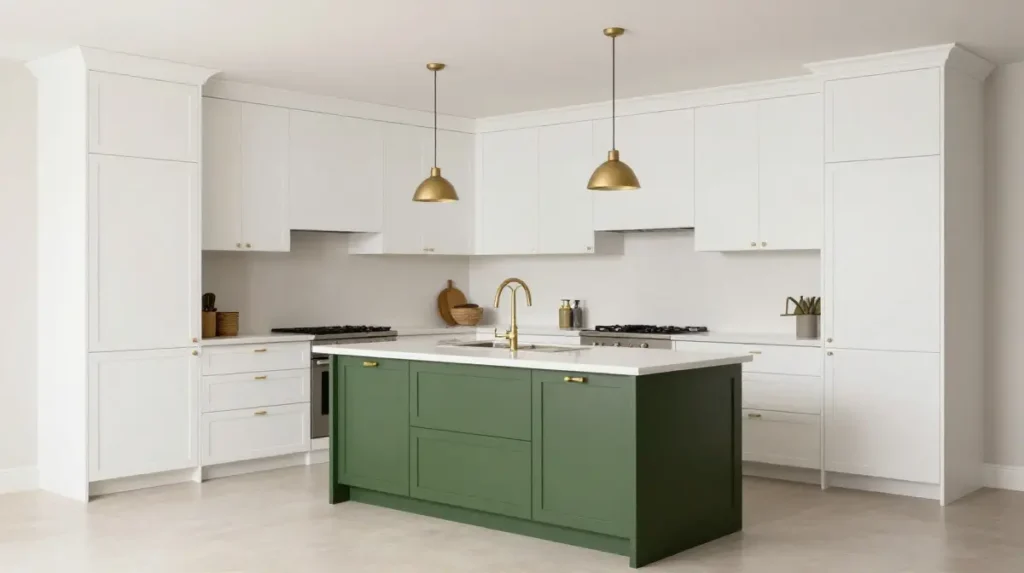
Using a different color on the kitchen island alone is one of the easiest ways to try two tone kitchen cabinets styling without committing to a full repaint. An olive green or deep green island against white surrounding cabinets creates a focal point that feels intentional and put together.
It also makes the island feel more like a piece of furniture than a built-in fixture, which adds warmth and character to the overall kitchen design.
Terracotta Accent Cabinets With Neutral Surrounds
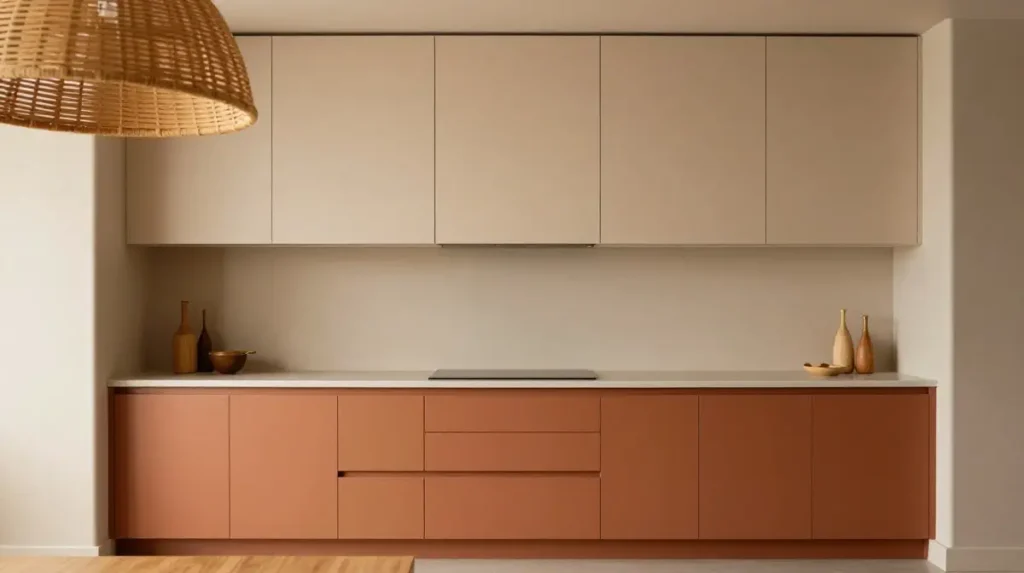
Terracotta is one of those colors that photographs beautifully and feels incredibly warm in person. Using it on a section of lower cabinets or a pantry wall against soft beige or warm gray surrounding cabinets creates a kitchen with a bold, earthy personality.
This works well in kitchens with warm lighting and natural textures like rattan, wood, or woven materials nearby.
Quick Comparison Table: Popular Two Tone Cabinet Color Combinations
| Color Combination | Style Vibe | Best Finish | Ideal Countertop | Difficulty Level |
|---|---|---|---|---|
| White upper + Navy lower | Classic, coastal | Matte or satin | White quartz or marble | Beginner friendly |
| Light gray + Charcoal | Modern, minimal | Matte | Gray quartz or concrete | Beginner friendly |
| White painted + Wood grain | Organic, Scandi | Painted upper, natural lower | Butcher block or oak | Moderate |
| Cream upper + Sage green lower | Earthy, calm | Matte | White quartz or limestone | Beginner friendly |
| White shaker + Black lower | Bold, farmhouse | Matte or semi-gloss | Any style | Moderate |
| Dusty blue + Wood lower | Coastal, relaxed | Satin | Light stone or quartz | Moderate |
| White perimeter + Green island | Fresh, modern | Gloss or matte | Marble or white quartz | Easy accent option |
Cream and Warm Beige for a Tonal Two Tone Look
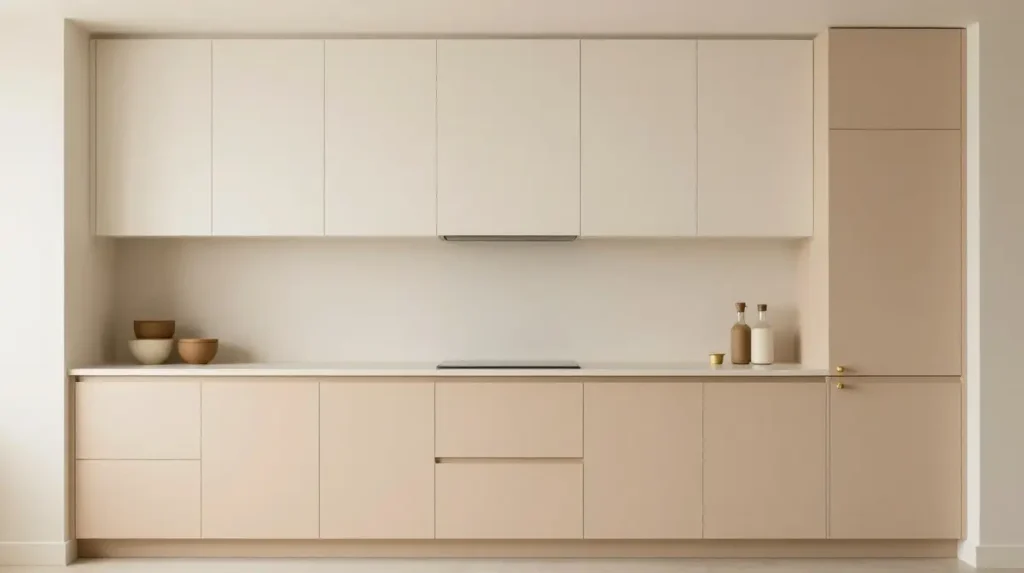
Not every two tone kitchen needs obvious contrast. Using cream upper cabinets alongside a slightly deeper warm beige on the lowers creates a layered, tonal effect that is subtle and refined.
This approach suits minimalist or Scandinavian kitchen design especially well. It is also forgiving for those who are nervous about committing to a strong color. The variation is there, but the space still feels cohesive and calm.
Muted Pink or Blush Lowers With White Uppers
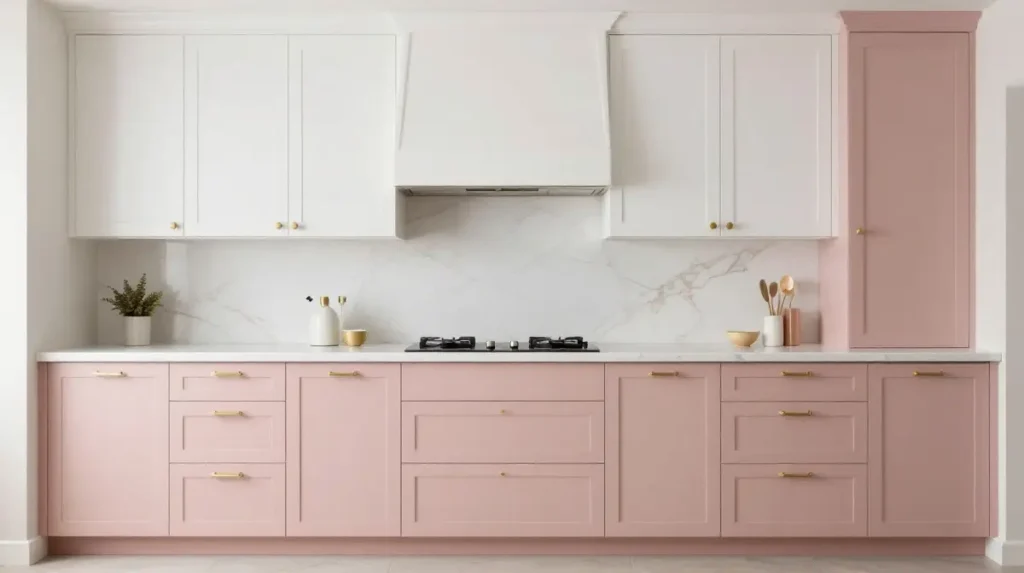
Blush or muted dusty pink lower cabinets paired with white uppers create a kitchen that feels soft, feminine, and completely current without trying too hard. This is not hot pink or pastel baby pink. Think more aged rose or faded terracotta pink.
This combination works beautifully with brass hardware, warm lighting, and marble countertops. It suits both modern and vintage-inspired kitchens.
Bold Teal Lowers With Soft White Uppers
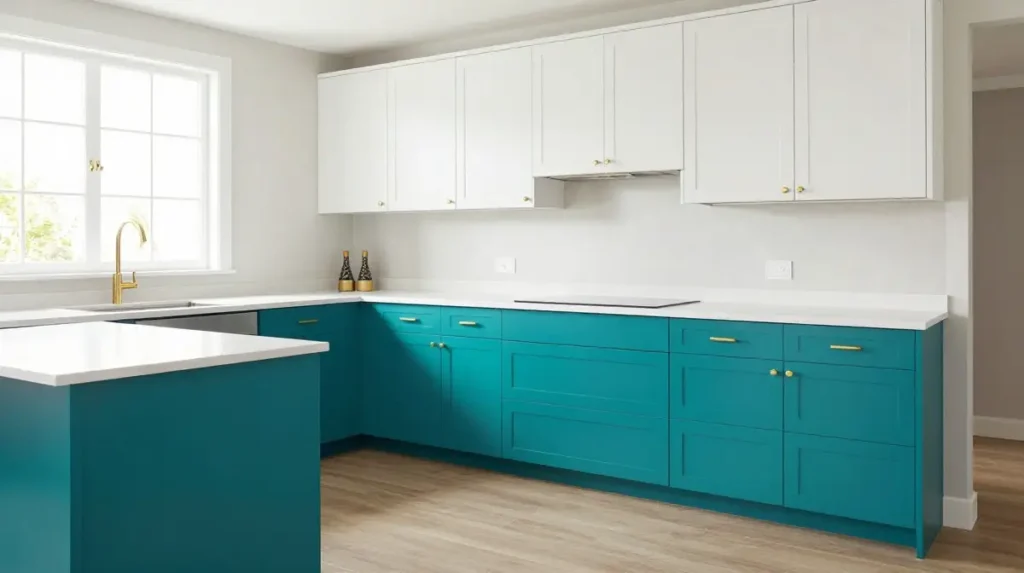
Teal is a color that reads as both playful and sophisticated depending on how it is used. In a two tone kitchen cabinet setup, teal lower cabinets under soft white uppers create something that feels bold but not chaotic.
This pairing suits kitchens with good natural light. Without it, deep teal can feel heavy, so balance matters here.
Open Shelving Uppers With Painted Lower Cabinets
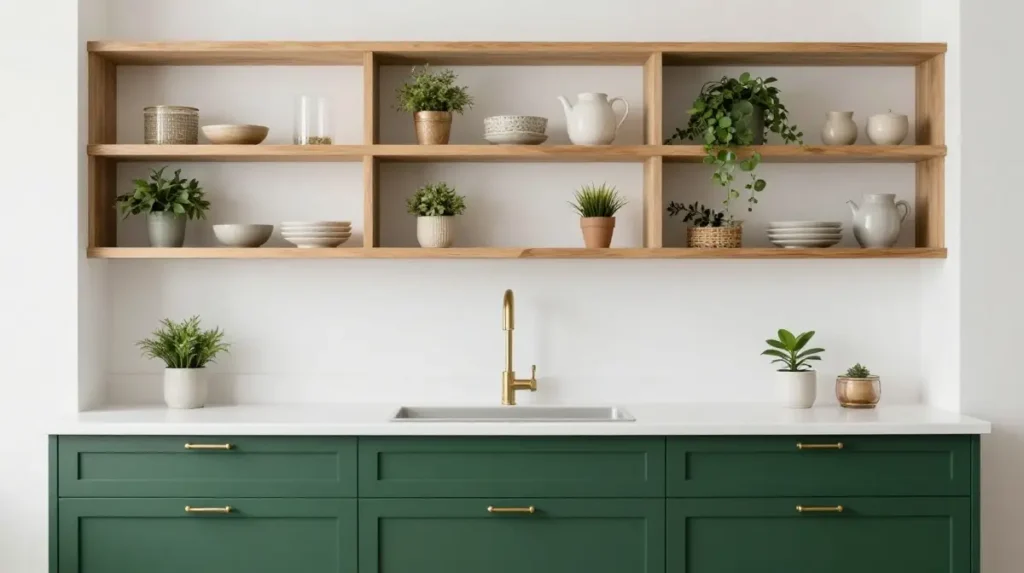
Replacing upper cabinets with open shelving and pairing those open shelves with painted lower cabinets in a contrasting color is one of the most popular two tone kitchen ideas right now.
It gives the kitchen a more open, airy feel while still allowing the lower cabinets to carry bold color. Deep green, navy, or warm charcoal all work well here. This also works nicely in kitchens where storage is less of a concern.
Two Tone Kitchen Cabinets With Brass Hardware
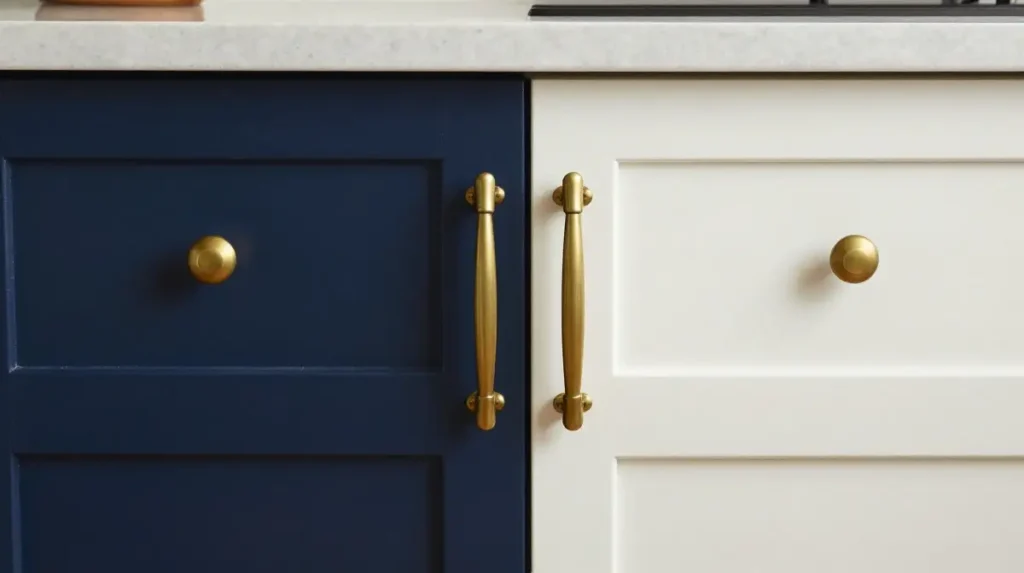
Hardware choice plays a major role in how two tone kitchen cabinets styling comes together. Brass hardware is one of the most versatile options because it bridges warm and cool tones naturally.
Whether you are working with navy and white, sage and cream, or gray and charcoal, brushed brass or antique brass handles and knobs add warmth and finish that pulls both colors into a unified look.
Mixing Matte and Glossy Finishes on the Same Color
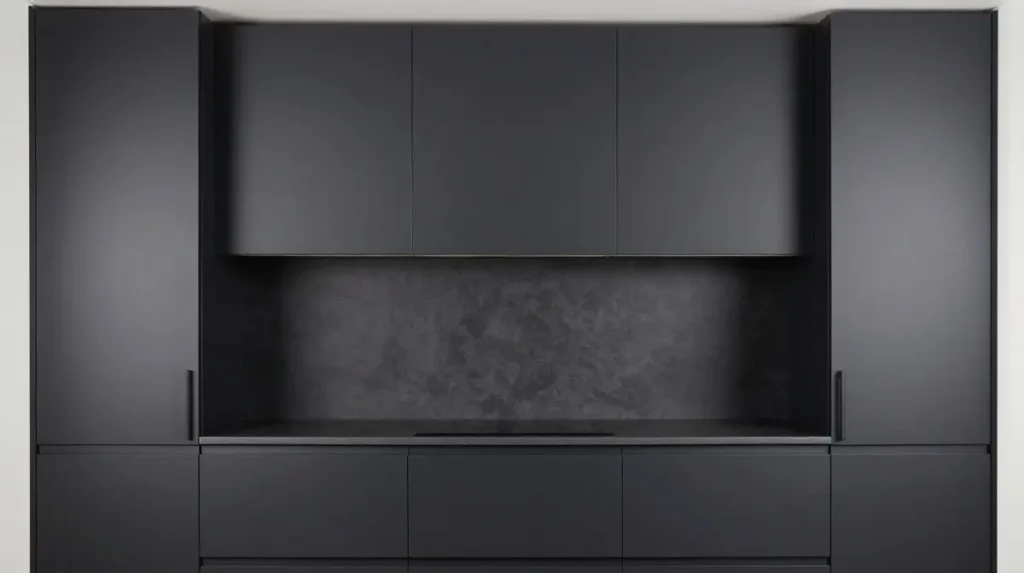
This is a more unusual approach but worth considering. Using the same color on upper and lower cabinets but switching the finish, matte on uppers and gloss on lowers, creates a two tone effect that is subtle and interesting.
It is particularly effective with deep colors like charcoal, forest green, or navy. The glossy lower cabinets reflect light while the matte uppers absorb it, creating a natural visual distinction between the two levels.
Dark Green Lowers With Warm Off-White Uppers
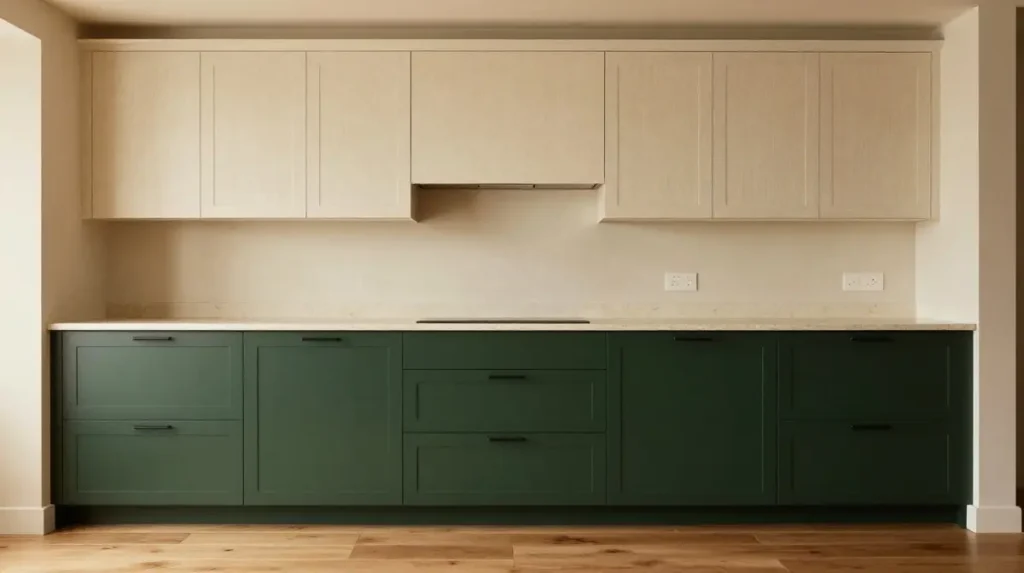
Deep forest green or bottle green lower cabinets alongside warm off-white or linen-toned upper cabinets create one of the richest, most layered looks in two tone kitchen cabinet design.
This works especially well in kitchens with dark or mixed wood elements elsewhere, like a wood floor or timber ceiling beam. It feels grounded and considered rather than trendy.
Two Tone Styling in Small Kitchens
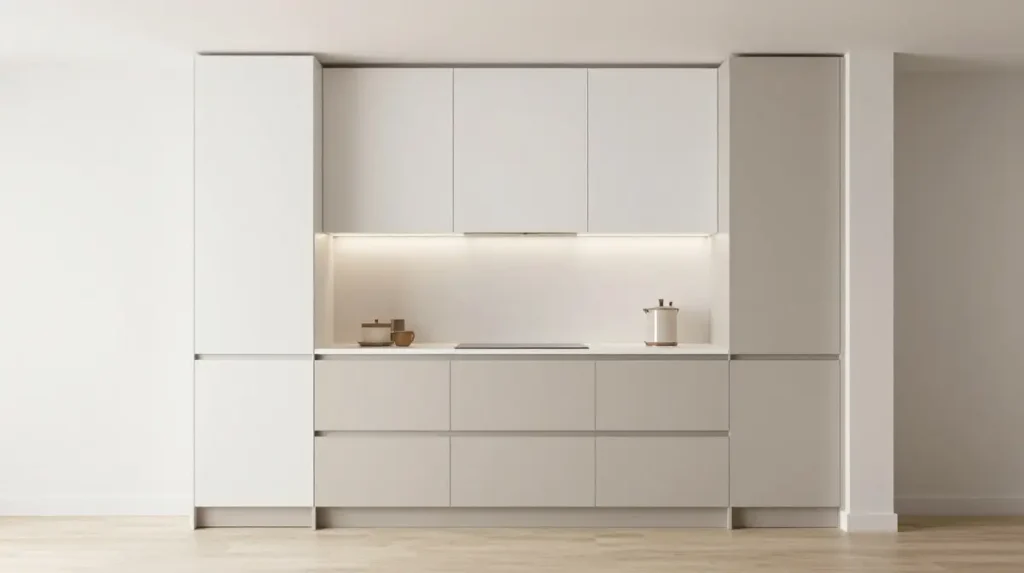
Many people assume two tone kitchen cabinets styling is only for large, open kitchens. That is not true. In a small kitchen, using lighter uppers with slightly deeper lowers actually creates an illusion of height and space.
The key in a compact kitchen is keeping the lower cabinet color medium in tone rather than very dark. Something like soft gray, sage, or warm beige works better than navy or black in a tight space.
Slate Blue and White for a Timeless Feel
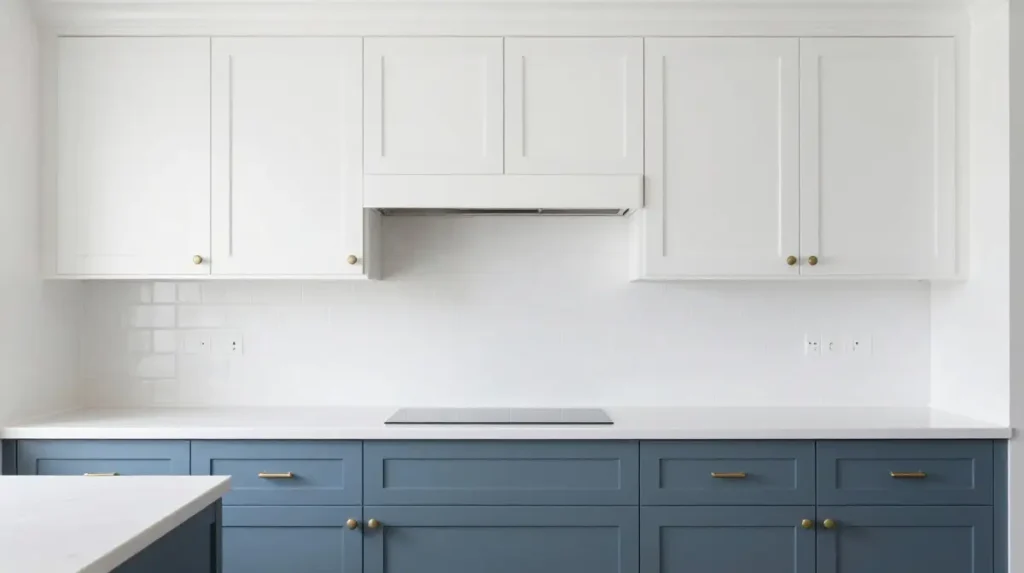
Slate blue sits somewhere between gray and navy, and it is a quieter, more understated option than either. Paired with white upper cabinets, slate blue lower cabinets create a kitchen that feels classic and timeless rather than trend-driven.
This is a good option for those who want color but are worried about it dating quickly. Slate blue has been a consistent color in kitchen design for decades, unlike some more fashion-led shades.
Two Tone Cabinets With a Marble Countertop
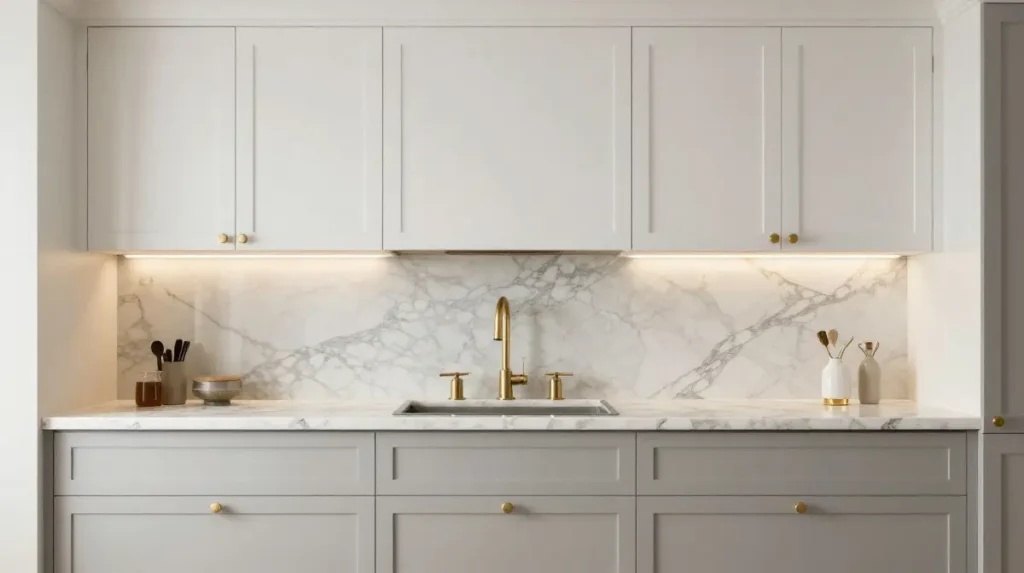
When your countertop is doing something visually strong, like a veined marble, the cabinet colors need to work with it rather than compete. Two tone kitchen cabinets styling with marble works best when one of the two cabinet colors picks up a tone already present in the marble.
For example, a marble with gray veining pairs naturally with gray lowers and white uppers. A marble with warm gold tones suits cream and wood combinations.
Contrasting the Kitchen Island Color From Perimeter Cabinets
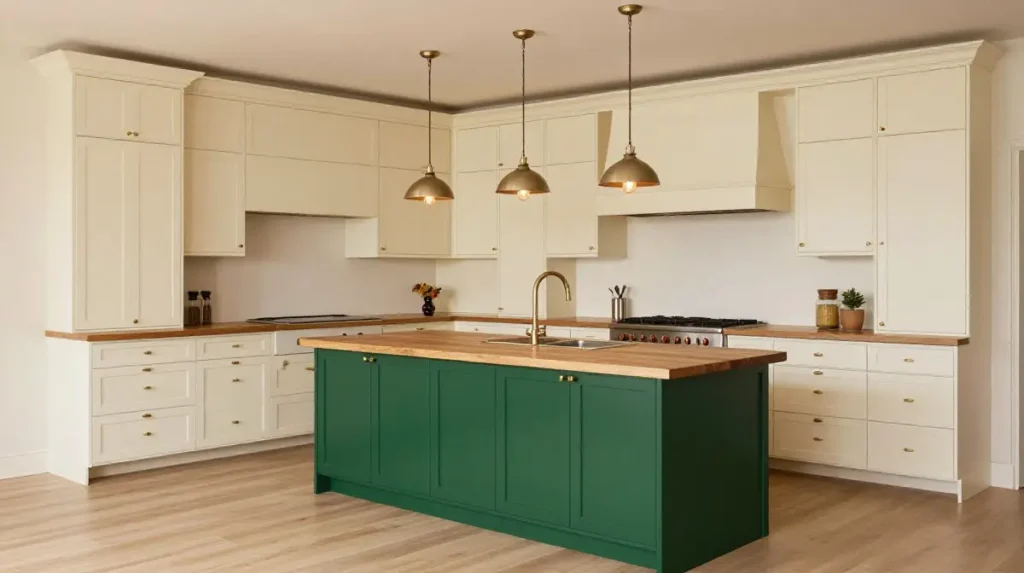
The kitchen island is the most natural place to introduce a second color in any two tone setup. It breaks the monotony of a single color scheme and creates a functional zone that also serves as a design statement.
Some of the most striking combinations include a black island with white perimeter cabinets, a warm wood island with painted gray surrounding cabinets, or a deep green island against a soft cream kitchen.
Two Tone Styling With Subway Tile Backsplash
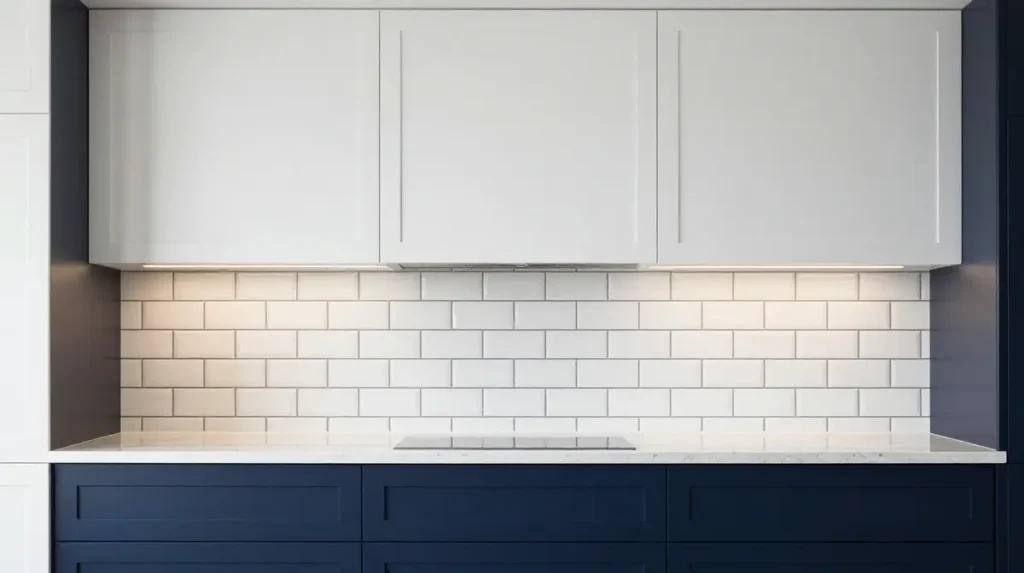
A classic white subway tile backsplash is one of the safest and most effective backdrops for two tone kitchen cabinet styling. It does not compete with either color and provides enough texture to make the space feel layered.
If you want to bring the backsplash into the two tone scheme more actively, try using colored grout that echoes one of the cabinet tones. Dark gray grout with a white tile, for example, connects to a charcoal or navy lower cabinet in a subtle, clever way.
Common Mistakes to Avoid in Two Tone Kitchen Styling
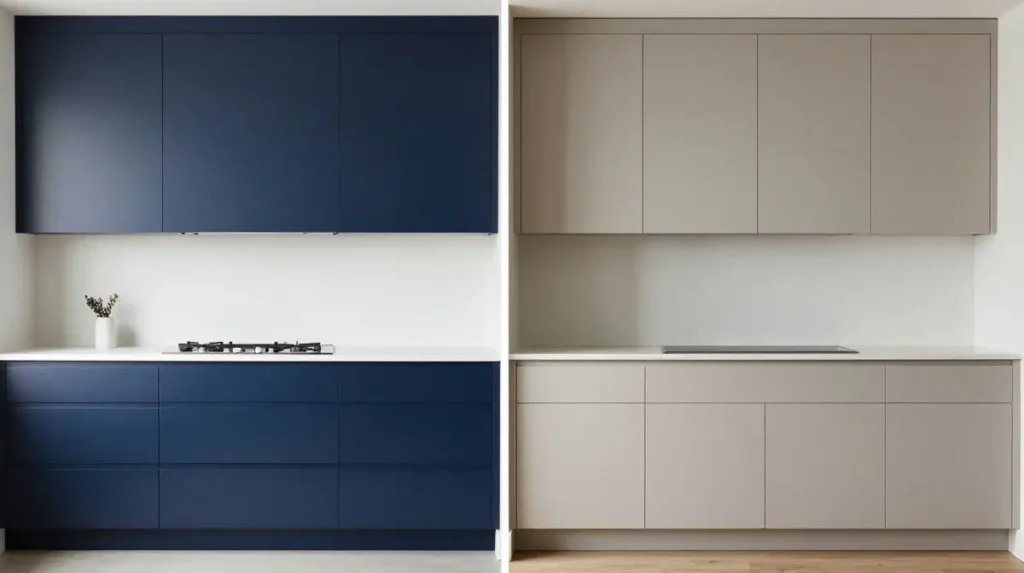
The most common mistake is choosing two colors that are too similar. If the contrast between your upper and lower cabinets is not clear enough, the effect reads as inconsistency rather than intention.
Another common issue is forgetting about the transition point between the two colors. In most kitchens, the countertop acts as the natural dividing line between upper and lower cabinets, which helps visually. But if you have tall cabinets that run floor to ceiling, you need a clear stopping and starting point for each color.
Finally, matching hardware on both cabinet colors rather than choosing one consistent hardware finish across the whole kitchen is a mistake that makes the space feel unresolved. Pick one hardware finish and use it throughout.
Using Lighting to Bring Out Two Tone Cabinet Colors
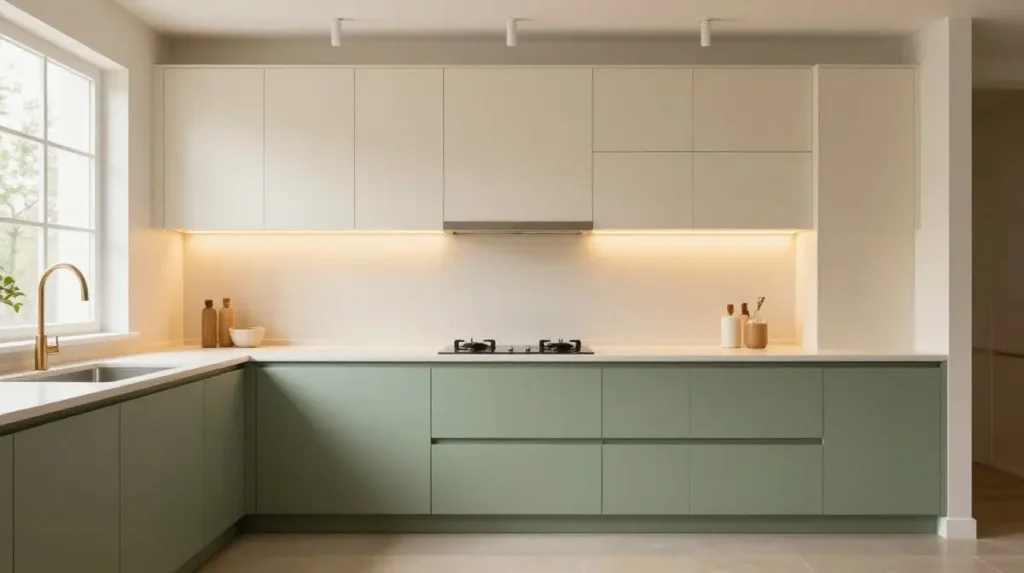
Lighting has a significant effect on how two tone kitchen cabinet colors read in real life. Warm-toned bulbs make cream, beige, and green cabinets feel richer and cozier. Cooler, daylight-balanced bulbs suit gray and navy combinations better.
Under-cabinet lighting is particularly useful in a two tone kitchen because it draws the eye to the lower cabinets and countertop area, reinforcing the visual separation between the two tones.
Conclusion
Two tone kitchen cabinets styling is one of the most rewarding changes you can make to a kitchen. It does not require a full renovation. Sometimes it is as simple as repainting the lower cabinets a deeper shade than the uppers, or swapping out a painted island for a wood finish.
What makes two tone styling work is contrast, cohesion, and intention. Choose colors that genuinely complement each other rather than simply being different. Keep hardware consistent. Let the countertop and backsplash bridge the two tones.
Whether you are drawn to something calm and earthy or bold and graphic, the combinations available within two tone kitchen cabinet design are broad enough to suit almost any taste or space. Start with the pairing that feels most like you and build from there.
You may also like this: 22 Retro Kitchen Pinterest Style Ideas for Vintage Charm
Frequently Asked Questions
Is two tone kitchen cabinet styling suitable for small kitchens?
Yes. Using lighter uppers with a medium-toned lower cabinet creates depth without making a small kitchen feel closed in. Avoid very dark lower cabinets in compact spaces unless you have strong natural light.
What is the most popular two tone kitchen cabinet color combination?
White upper cabinets with navy lower cabinets remain one of the most requested combinations. Gray and white, and white with sage green, are also consistently popular choices across different kitchen styles.
Should upper or lower cabinets be darker in a two tone kitchen?
In most cases, darker lower cabinets and lighter upper cabinets create the most natural-looking result. It mirrors the way color works in nature, with heavier tones grounding the base and lighter tones opening the top.
Do I need to repaint all cabinets to achieve a two tone look?
No. Painting just the lower cabinets or the kitchen island a different color from the existing upper cabinets is a straightforward way to create a two tone effect without a full repaint.
What hardware works best with two tone kitchen cabinets?
Brushed brass works across the widest range of color combinations. Matte black suits bold contrasts like black and white or navy and white. Brushed nickel is a reliable neutral for gray-based schemes. Choose one finish and apply it consistently across both cabinet colors.