
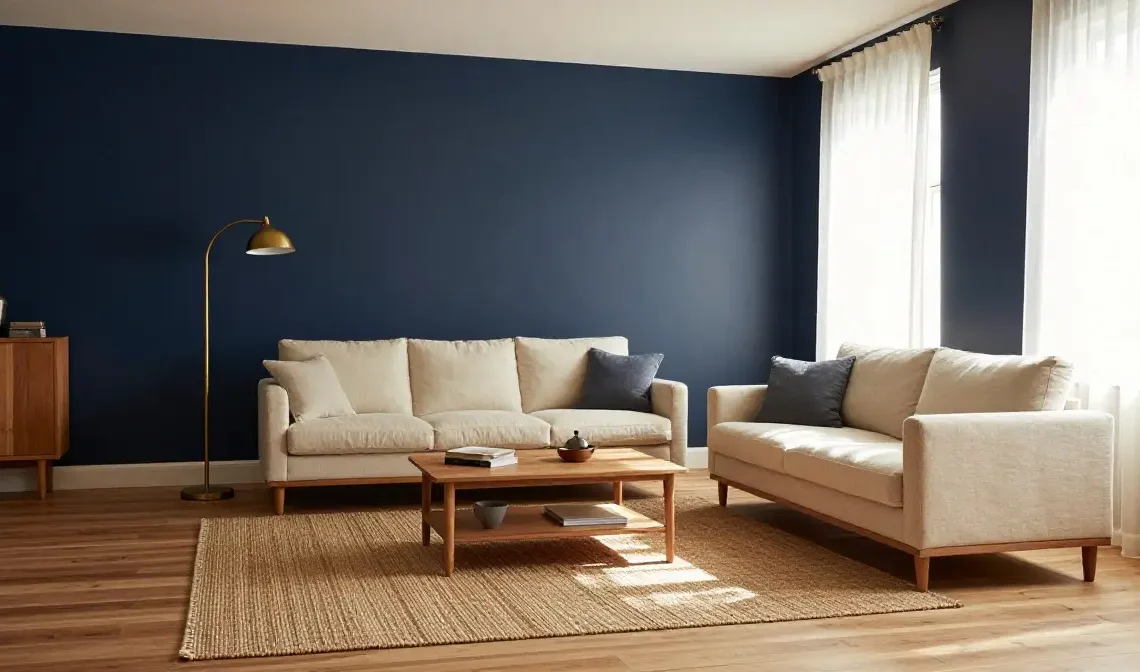
Introduction
There is something about a blue living room that just feels right. It is calm without being cold, stylish without trying too hard, and versatile enough to work in almost any home. Whether you are staring at beige walls wondering what went wrong, or you are finally ready to commit to a color that actually makes a room feel like yours, blue is worth the conversation.
Blue color psychology in interiors tells us that cooler tones slow the mind down. They signal rest and ease. That is exactly what a living room should do. And yet blue is not boring. From a moody midnight blue that turns a plain room into a proper retreat, to a soft powder blue that makes a tight space feel airy and open, there is a version of this color for every taste, budget, and room size.
This article walks through 22 blue living room design ideas, from bold to barely-there, so you can find what works for your actual home and not just a showroom.
Navy Blue Accent Wall With Warm Wood Furniture
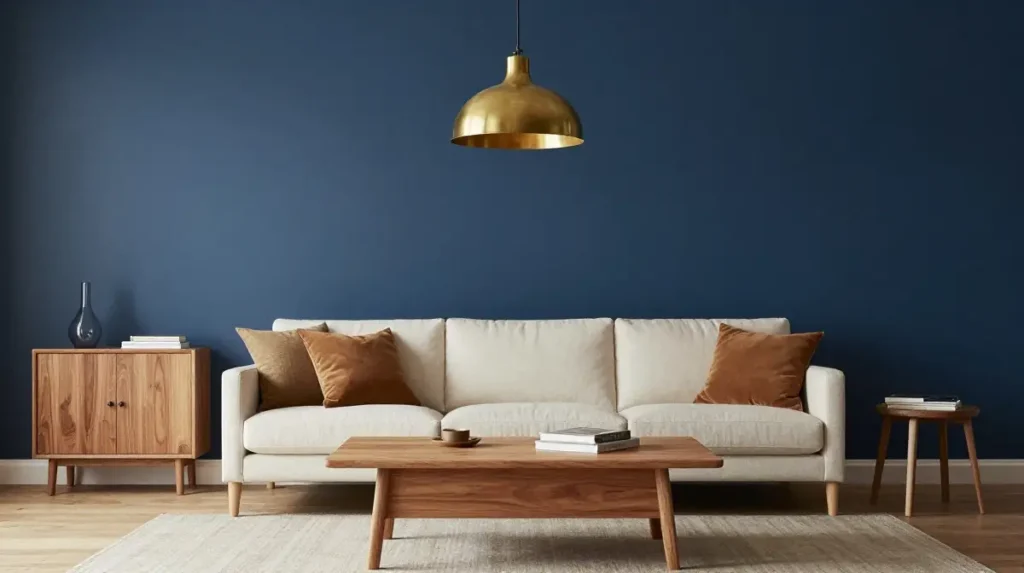
A navy blue accent wall is one of the most popular starting points for a blue living room, and for good reason. It adds weight and depth without painting the whole room. Pair it with natural wood furniture and the contrast becomes genuinely striking.
The wood tones warm up the cool blue so the room never feels cold or clinical. Keep the remaining walls in a soft white or warm cream to let the navy breathe.
Light Blue Painted Walls for a Relaxed Everyday Feel
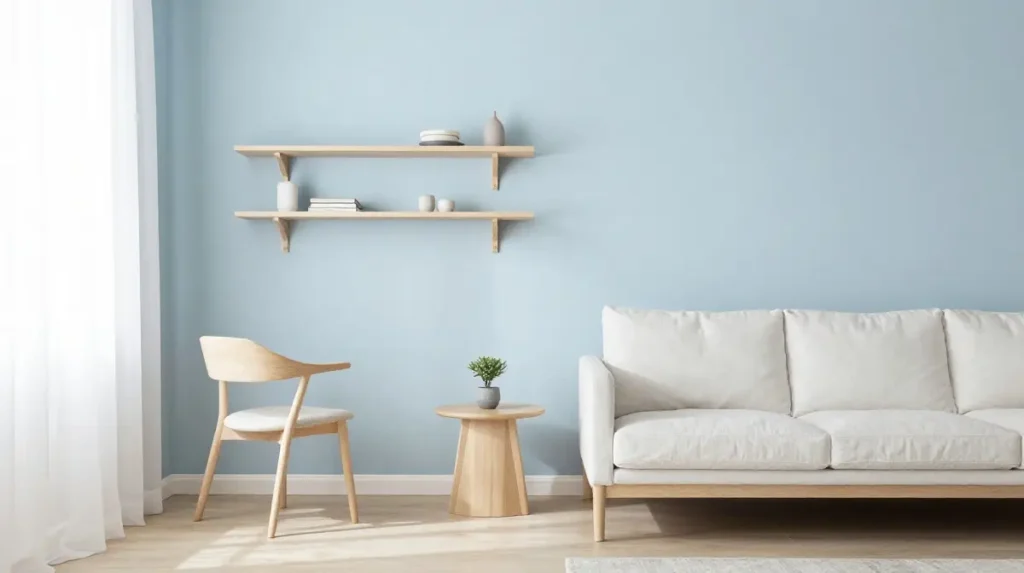
If you want your living room to feel open and unhurried, light blue painted walls are a reliable choice. Sky blue or powder blue tones work particularly well in rooms with decent natural light. They reflect brightness without bouncing harsh glare.
This approach suits a blue Scandinavian interior beautifully, especially when paired with linen sofas, simple wooden shelving, and minimal clutter.
Blue Velvet Sofa as the Room’s Focal Point
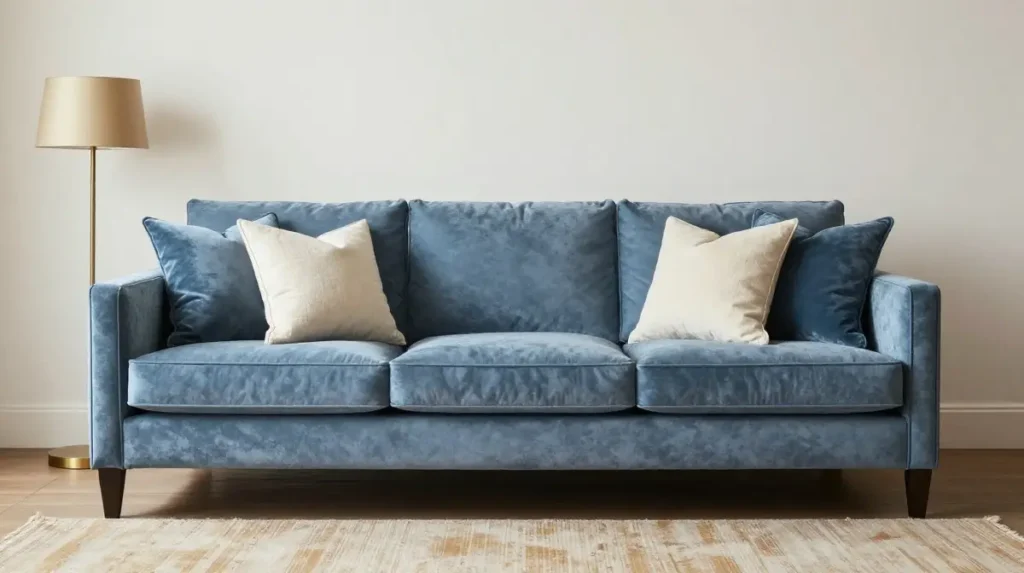
A blue velvet sofa does most of the decorating work on its own. It is a statement piece that reads as luxurious without being fussy. Position it against a neutral wall, add a warm-toned rug underneath, and layer in a few blue throw pillows in slightly different shades for dimension.
Dusty blue or royal blue velvet tends to photograph particularly well, which matters if you want a room that looks as good in pictures as it does in person.
Dusty Blue and Natural Linen for a Quiet, Layered Look
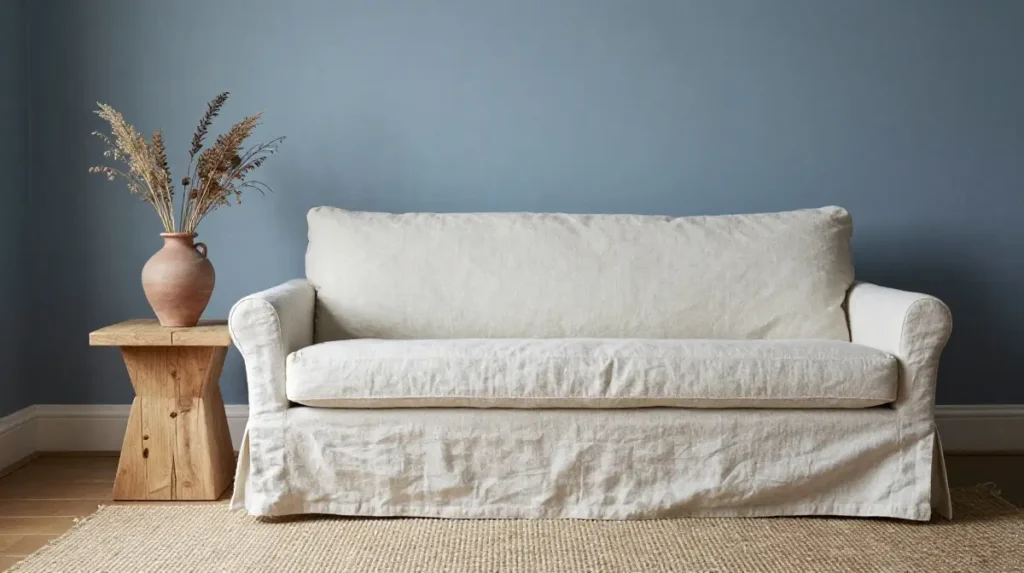
Dusty blue is one of those shades that suits almost every interior style. It is not too sharp, not too muted. When you pair it with natural linen curtains, a jute rug, and unfinished wood accents, the result is a lived-in space that feels curated rather than decorated.
This combination works well in a blue bohemian living room or a relaxed coastal cottage setting.
Blue and White Living Room With Classic Appeal
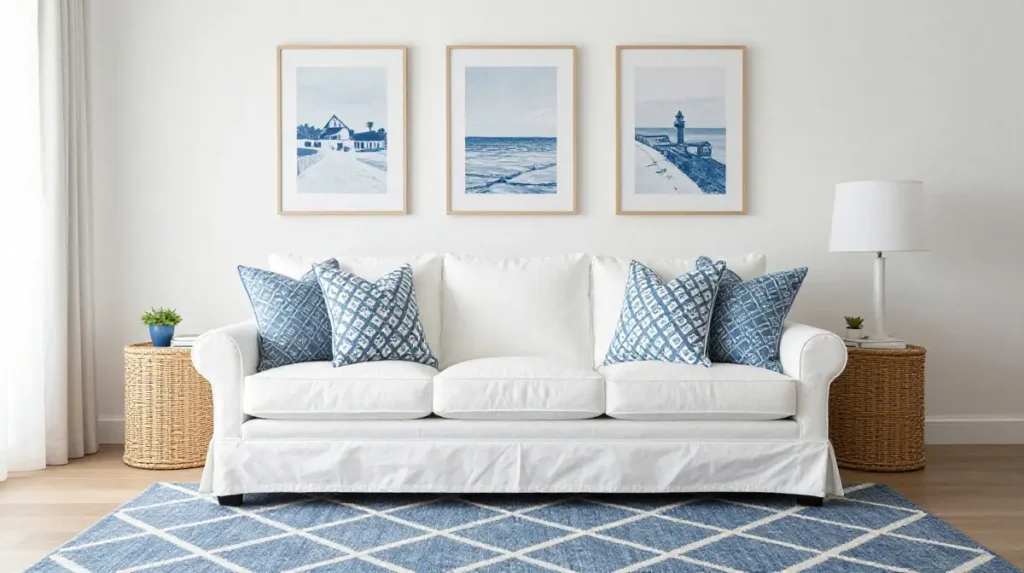
Blue and white is a timeless pairing that never really goes out of style. In a living room, it can read as coastal, traditional, or clean and contemporary depending on how you approach it.
Blue cushions on a white sofa, blue-painted built-ins against white walls, or a blue and white patterned rug are all ways to work this combination without over-committing. The key is keeping one element dominant so the room has a clear direction.
Teal Living Room for a Warmer Take on Blue-Green
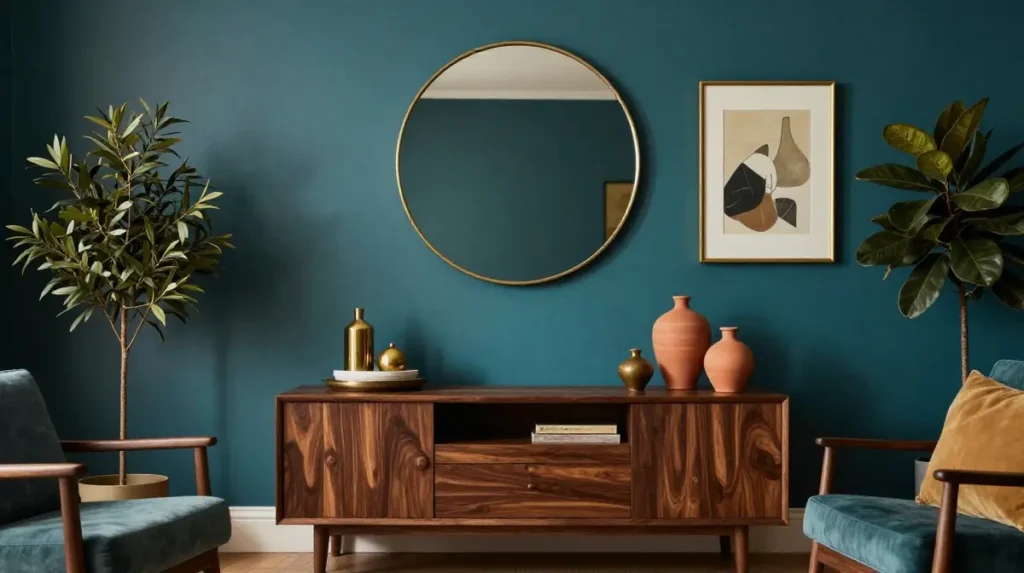
Teal sits between blue and green, and that makes it unusually warm for a cool-leaning color. A teal living room feels jewel-like and cozy, especially in the evening.
It pairs well with brass or gold hardware, warm terracotta accents, and dark wood. If you want a blue living room design that leans more welcoming than calm, teal is the direction to go.
Blue and Grey Living Room for a Sophisticated Neutral Base
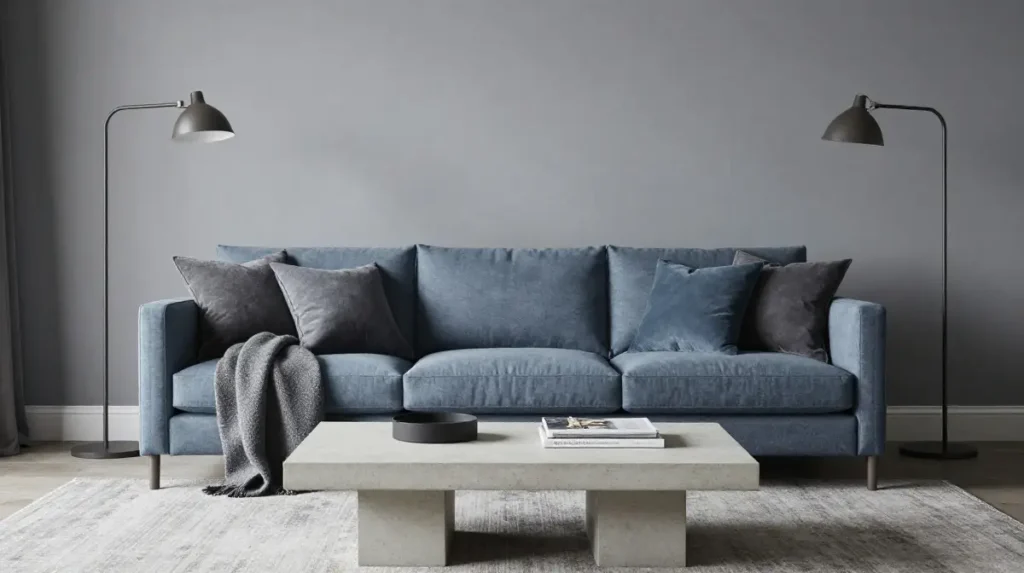
Blue and grey is arguably the most wearable combination in interior design right now. It works because both colors share the same cool undertone, so they sit comfortably together without competing.
A slate blue sofa against a mid-grey wall, layered with textured cushions and a wool throw, creates a sophisticated base that can shift from casual to formal with very little effort.
Midnight Blue Moody Interior for a Cozy Evening Space
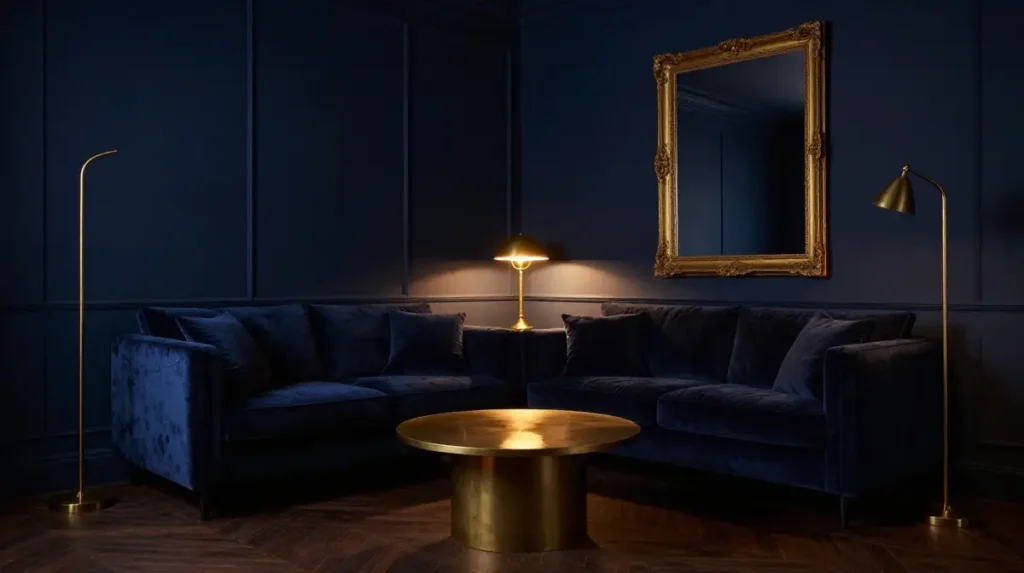
Deep blue moody interiors have become increasingly popular for living rooms that double as evening retreats. Midnight blue walls, dark upholstery, and low warm lighting create a room that genuinely feels like somewhere you want to settle into.
Balance the depth with reflective surfaces like a brass mirror, glass coffee table, or metallic lamp base so the room does not feel flat.
Blue Wallpaper Living Room for Instant Pattern and Depth
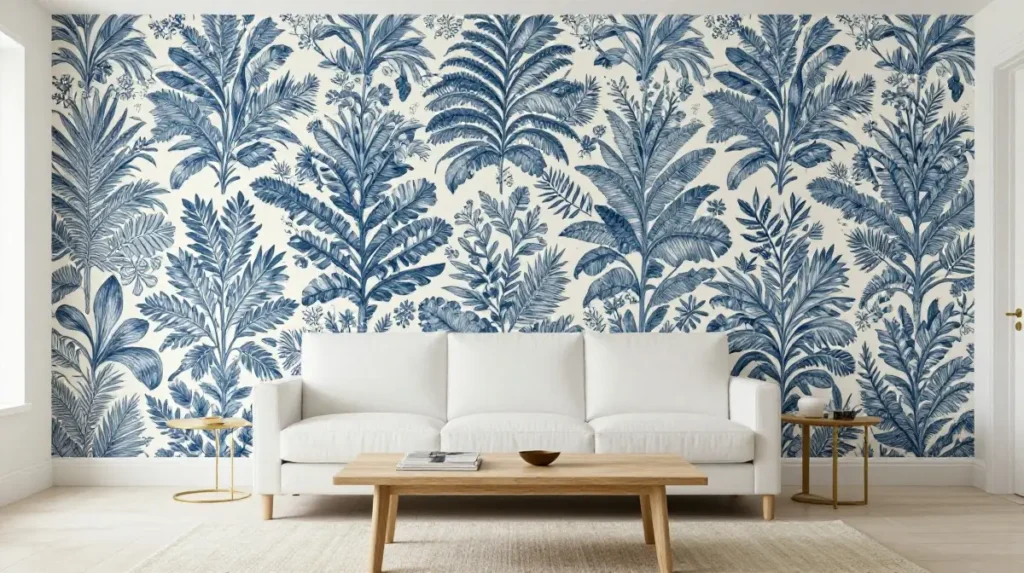
Blue wallpaper is a lower-commitment way to bring pattern and color into a living room without a full renovation. A botanical print in navy or teal on a feature wall adds personality and texture.
A geometric pattern in dusty blue can make a room feel more structured and curated. Wallpaper also works well in rented homes when you use peel-and-stick versions that leave no damage behind.
Cerulean and White With Natural Wood for a Fresh Modern Look
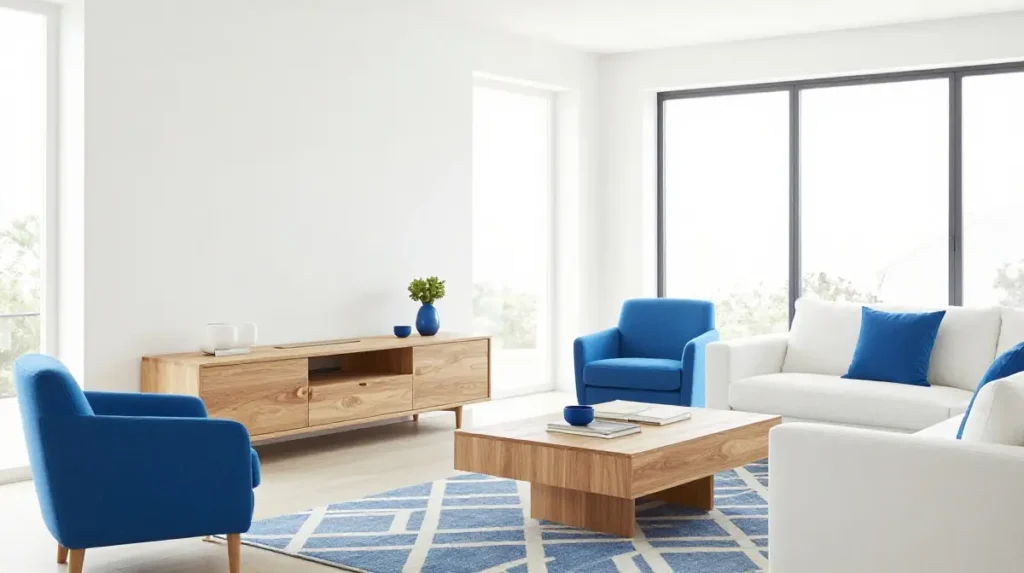
Cerulean home decor sits in that bright, clear blue territory that feels fresh rather than stark. Against white walls and natural wood furniture, cerulean accents in cushions, a rug, or an armchair create a modern living room with an effortless, almost Mediterranean quality.
It suits open-plan living rooms particularly well because the brightness helps the space feel cohesive across a larger footprint.
Blue and Gold Living Room for a Luxurious Finish
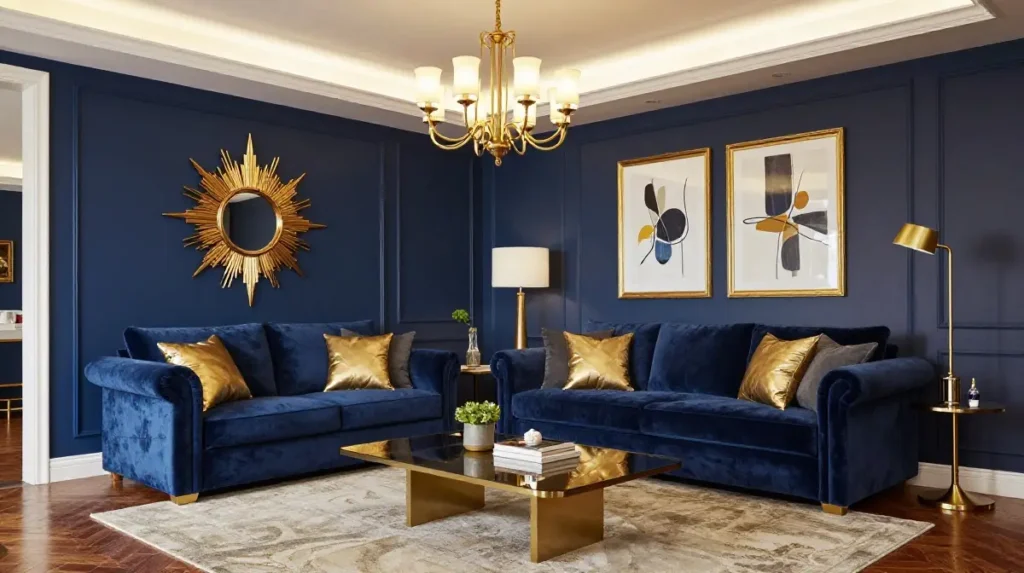
Blue and gold is a classic interior pairing that leans toward the luxurious end of the spectrum without requiring a luxury budget.
Navy or indigo as a wall color or sofa choice, combined with gold picture frames, brass light fittings, and warm-toned accessories, delivers a level of richness that feels intentional and considered. A blue and gold living room photographs beautifully and makes a strong impression in person.
Quick Comparison Table: Blue Shades and Their Best Uses
| Blue Shade | Best Room Size | Ideal Style | Best Paired With | Mood Created |
|---|---|---|---|---|
| Navy Blue | Medium to Large | Traditional, Coastal | Warm wood, cream, gold | Bold, grounded |
| Dusty Blue | Any size | Boho, Scandi, Farmhouse | Linen, jute, natural textures | Soft, relaxed |
| Powder Blue | Small to Medium | Minimal, Coastal | White, pale wood, rattan | Airy, open |
| Teal | Medium to Large | Eclectic, Modern | Brass, terracotta, dark wood | Warm, jewel-like |
| Midnight Blue | Medium to Large | Moody, Traditional | Gold, velvet, marble | Rich, intimate |
| Cerulean | Any size | Modern, Mediterranean | White, oak, linen | Bright, fresh |
| Slate Blue | Any size | Transitional, Scandi | Grey, charcoal, wool | Calm, sophisticated |
Indigo Living Room With Patterned Textiles
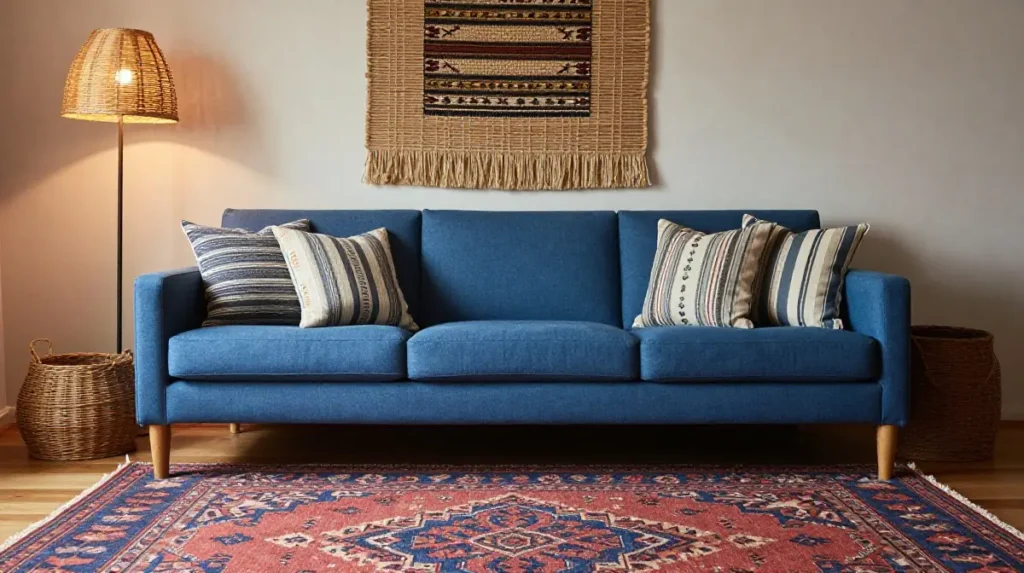
Indigo is one of those deep, saturated tones that works particularly well with layered pattern. A plain indigo sofa becomes a starting point rather than an endpoint when you add a kilim rug, striped cushions, and a woven throw.
This approach suits a blue eclectic living room where mixing periods, textures, and patterns is part of the appeal.
Blue Shiplap Wall for a Farmhouse-Inspired Space
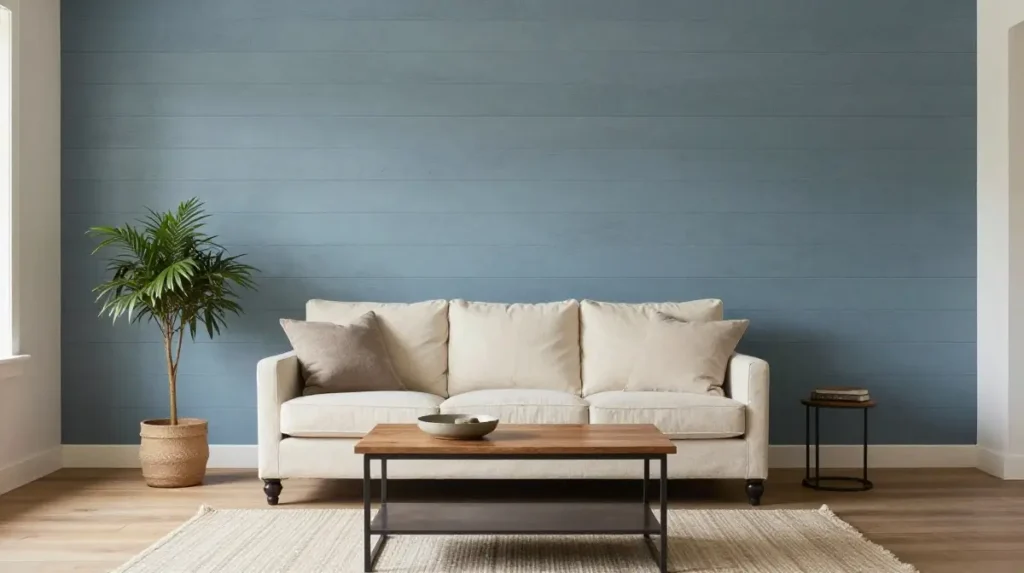
A blue shiplap wall brings texture and a relaxed character to a living room in one move. Painted in a soft dusty blue or a weathered coastal tone, shiplap reads as farmhouse-friendly without being overly themed.
It pairs well with simple linen furniture, iron accents, and warm wooden floors.
Sky Blue Room With Plenty of Natural Light
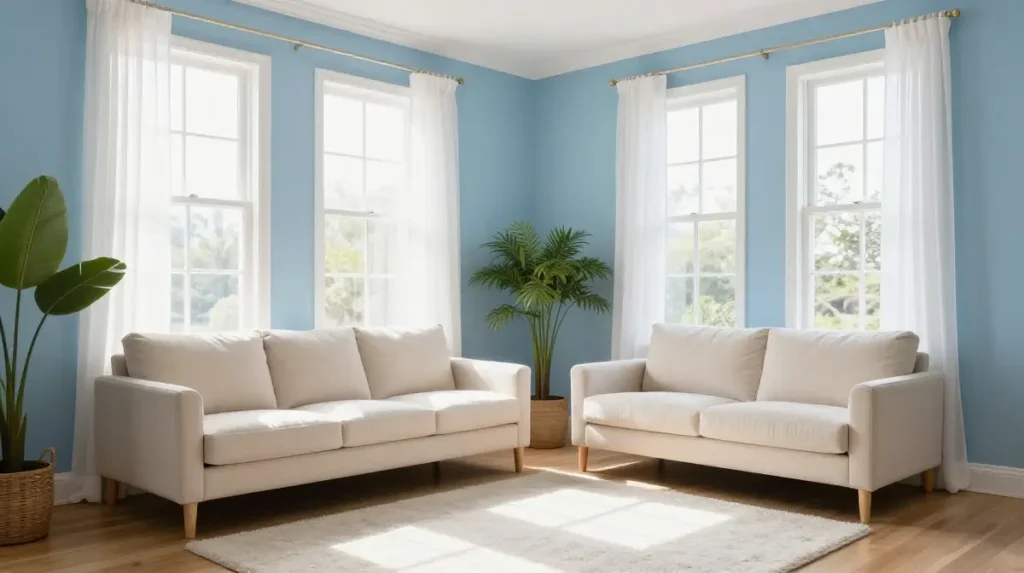
Maximizing natural light in blue rooms is always worth thinking about. Sky blue walls respond especially well to sunlight, shifting from almost lavender in the morning to a clean, clear blue at midday.
In a north-facing room, this shade can feel a little cool, so warm it up with amber-toned lighting, cream upholstery, and natural materials that absorb rather than reflect light.
Blue and Beige Living Room for a Timeless Warm Pairing
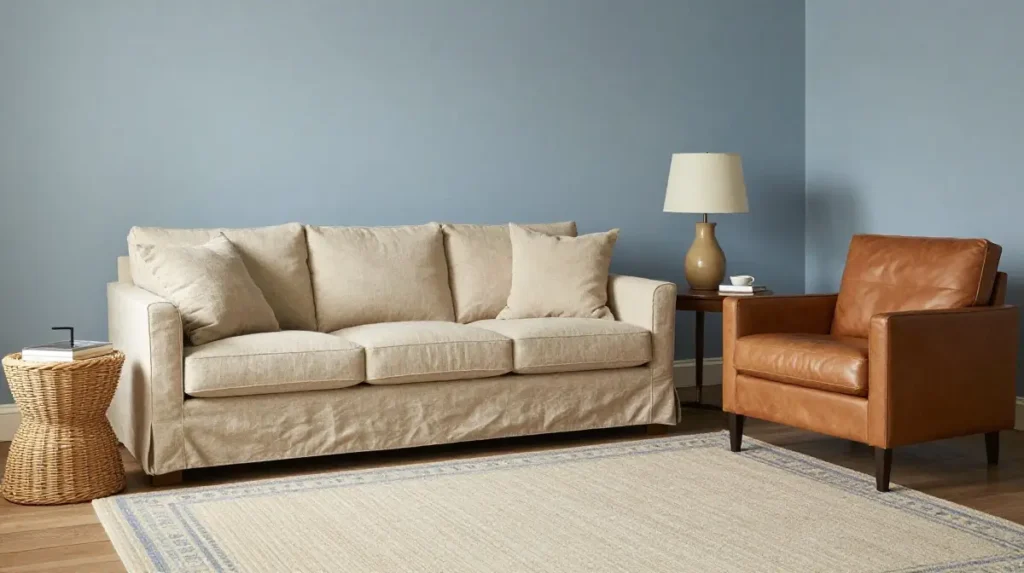
Blue and beige is a combination that has been around for decades because it works reliably well. The warmth of beige softens the coolness of blue, and the result is a room that feels balanced and easy to live in.
This pairing suits a blue transitional decor style, where the aim is a space that is neither too modern nor too traditional.
Blue Monochromatic Room Using Multiple Tones
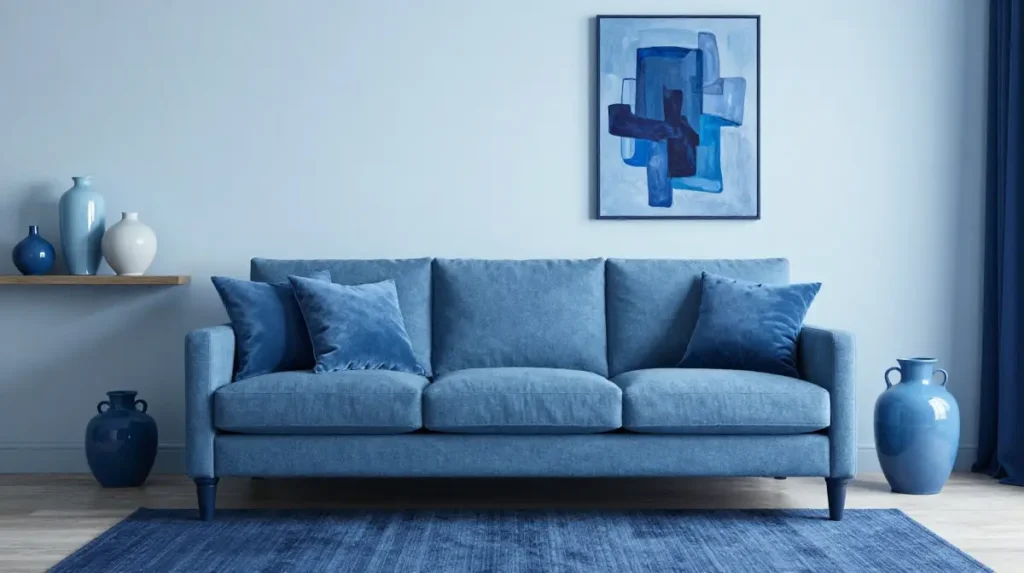
A blue monochromatic room uses different shades of the same color to create depth without introducing contrast.
Think a mid-blue sofa, a lighter blue on the walls, a darker blue in the rug, and pale blue accents in cushions and ceramics. The layering creates visual interest while keeping the room cohesive. This approach requires some attention to undertones so the shades sit harmoniously together.
Blue Two-Tone Walls for a Considered, Design-Forward Look
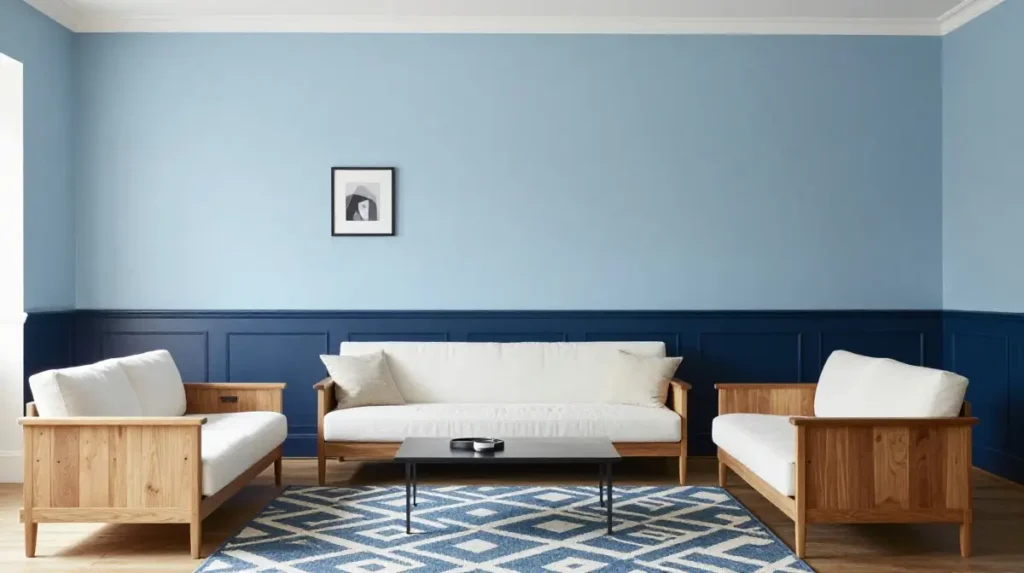
Blue two-tone walls divide a room horizontally, typically with a deeper shade at the bottom and a lighter tone at the top.
This technique adds architectural interest without structural changes. In a blue living room design, this can ground the space visually and make ceilings feel higher. A classic choice is navy below the dado rail and soft sky blue above.
Blue Decor With Artwork and Gallery Walls
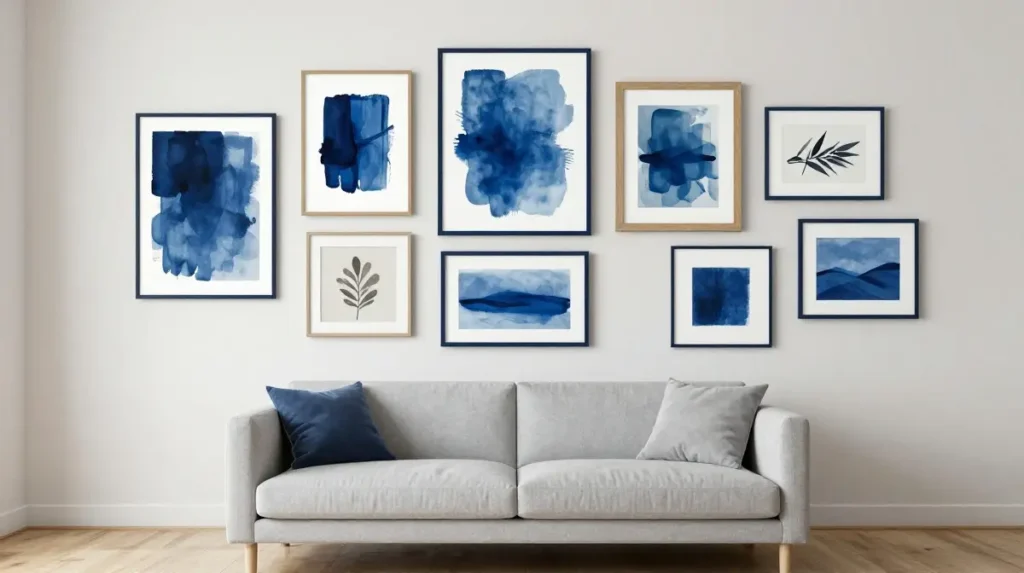
Blue art wall decor is one of the more flexible ways to work this color into a room without commitment. A gallery wall featuring blue-toned prints, abstract paintings in cerulean and indigo, and a few neutral pieces creates a focal point that is easy to change as your taste shifts.
This approach also works well in rented spaces where painting walls is not an option.
Blue Hamptons Style for a Relaxed Coastal Elegance
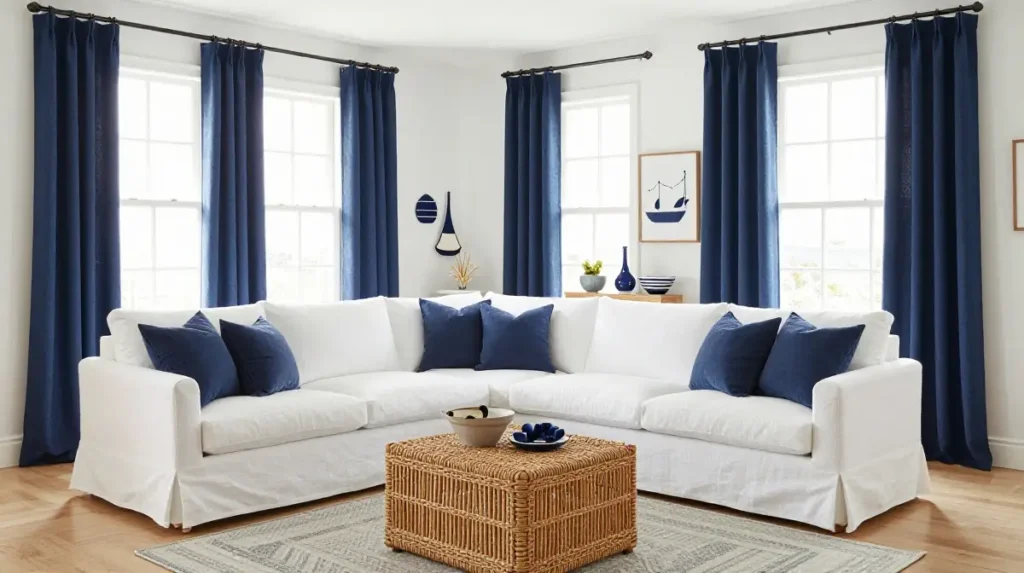
The Hamptons style lives somewhere between coastal casual and refined elegance, and blue is central to it. Think clean white walls with blue accents, natural timber floors, woven furniture, and navy cushions on a white linen sofa.
Blue curtains in a lightweight fabric add softness. The overall effect is a blue coastal cottage feel with a slightly more polished finish.
Blue Statement Furniture in an Otherwise Neutral Room
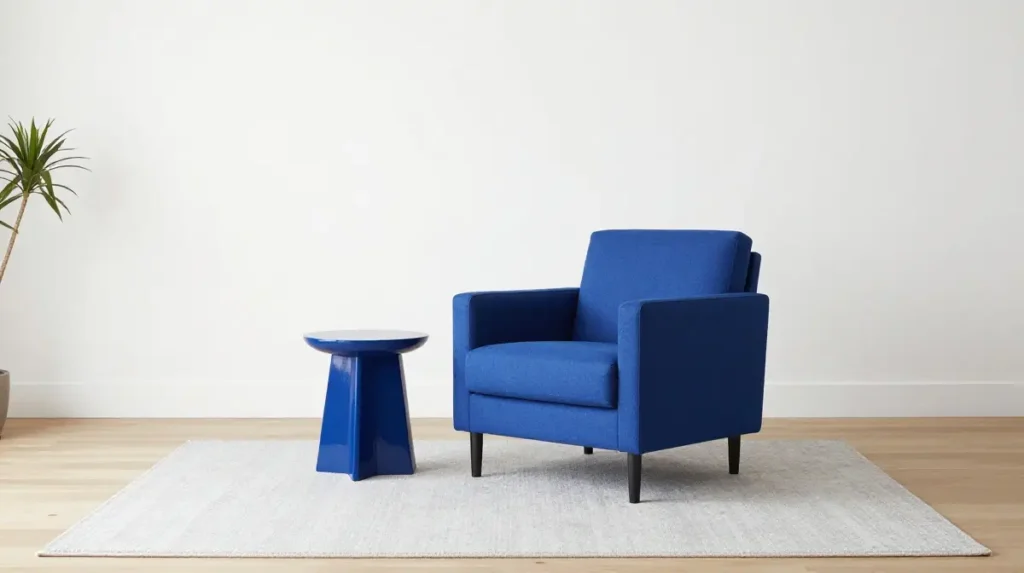
If committing to blue walls feels like too much, blue statement furniture is the entry point that keeps things manageable.
A blue coffee table, a pair of blue armchairs, or a blue bookshelf in an otherwise neutral room adds personality without taking over. This is also a practical approach for family living rooms where the rest of the space needs to stay adaptable.
Blue Decor With Indoor Plants for a Living Room That Breathes
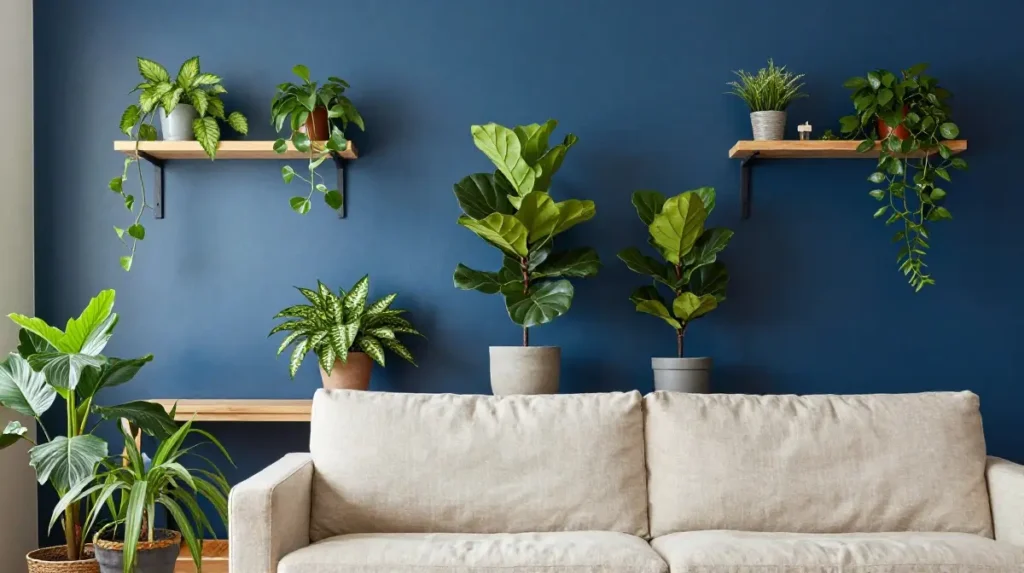
Blue decor with plants is a combination that deserves more attention. The green of foliage sits directly next to blue on the color wheel, which means the two work together without effort.
A navy wall behind a collection of leafy plants creates a rich, layered backdrop. Lighter blue walls make greenery pop in a cleaner, more graphic way. Either direction adds a layer of freshness that keeps a blue room from feeling static.
Blue Room Lighting Ideas to Set the Right Atmosphere
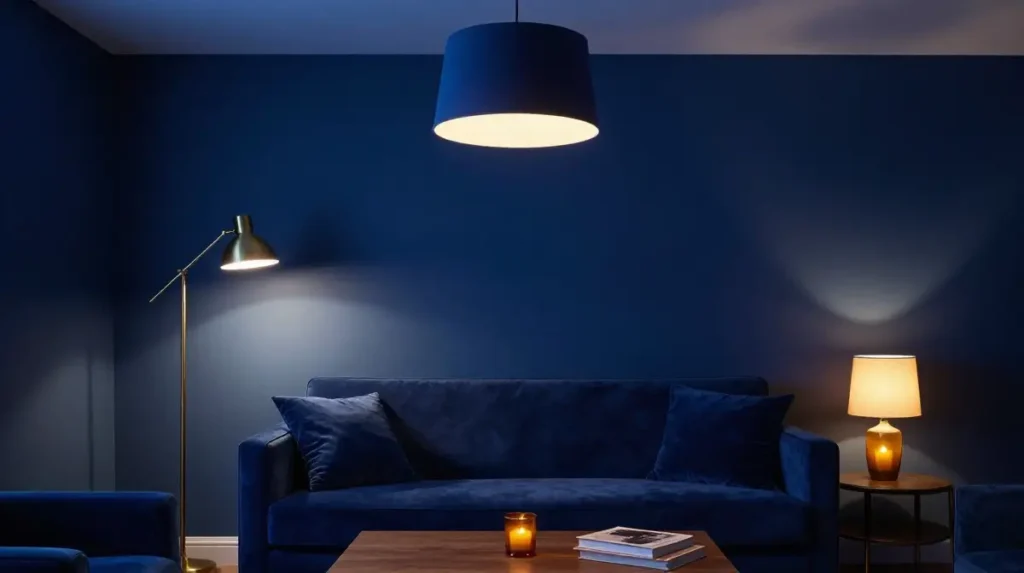
Lighting changes everything in a blue living room. Warm-toned bulbs pull blue walls toward comfort and coziness. Cool daylight bulbs sharpen the room and make it feel crisper.
For a moody midnight blue interior, low-level warm lighting from floor lamps and table lamps rather than overhead lighting creates the most appealing atmosphere. A blue lamp shade adds a subtle wash of color across the ceiling that feels quietly sophisticated.
Conclusion
A well-designed blue living room is not about picking one shade and covering every surface. It is about understanding what each tone does, how it responds to light, and how it sits with the materials and colors around it.
The 22 ideas covered here range from bold and moody to soft and coastal, from budget-friendly accessory updates to full room transformations. There is a version of blue living room design that works for your space, your style, and your budget. The only step left is deciding where to start.
You may also like this: 22 Farmhouse Entryway Design Ideas for Warm Welcoming Spaces
Frequently Asked Questions
1. What is the best shade of blue for a small living room?
Powder blue or sky blue tend to work best in smaller spaces. These lighter tones reflect natural light and make a room feel more open without losing the benefit of color. Avoid very dark shades like navy or midnight blue in small rooms unless you are going for a deliberately cozy, enclosed feel.
2. Does a blue living room make a space feel cold?
It can, but it does not have to. The key is pairing blue with warm materials like natural wood, wool, linen, and jute. Warm-toned lighting also makes a significant difference. Dusty blue and teal are naturally warmer tones within the blue family and are less likely to feel cold.
3. What colors go best with a blue sofa?
A blue sofa pairs well with neutrals like cream, beige, grey, and white. For a warmer look, natural wood tones and terracotta work well. For a more formal or luxurious finish, gold and brass accents complement most shades of blue beautifully.
4. Can I use blue in an open-plan living room?
Yes. In an open-plan space, use blue as an anchor in the living area through a feature wall, sofa, or rug. Keep the surrounding areas in compatible neutrals so the blue reads as intentional rather than disconnected. Cerulean and teal tend to work particularly well in larger, open footprints.
5. How do I use blue without overwhelming my living room?
Start with one blue element, either a sofa, a rug, or a feature wall, rather than introducing blue everywhere at once. Use the 60-30-10 rule: 60 percent neutral, 30 percent your main color, and 10 percent accent. This keeps the room balanced and gives you room to adjust without starting over.