
Introduction
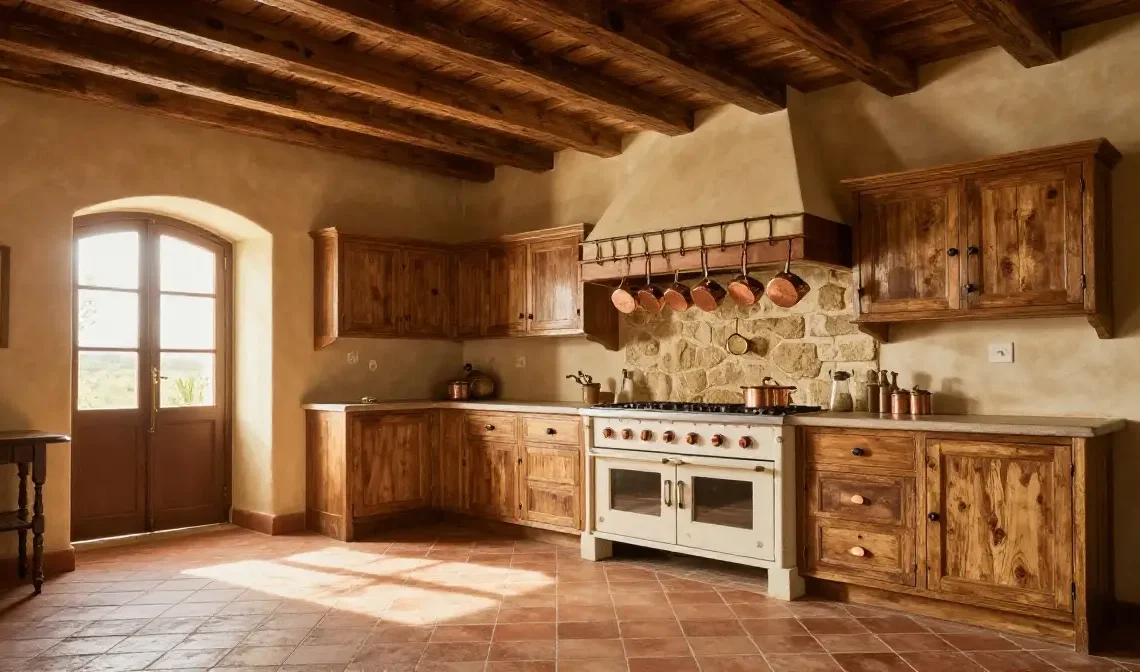
There is something about a Tuscan kitchen that feels like a warm hug after a long day. It is not just a style. It is a feeling. The kind of space where the air seems to carry the scent of fresh herbs, where rough stone walls meet the golden glow of candlelight, and where every corner tells a quiet story about slow living and good food.
If you have ever scrolled through images of Italian countryside homes and thought “I want my kitchen to feel like that,” you are not alone. Tuscan kitchen design has been a dream for homeowners across the world for decades, and the good news is that you do not need to renovate an old villa to get there. Whether you are working with a small apartment kitchen or a spacious open-plan layout, these ideas will help you bring that rustic European warmth into your home in a real and practical way.
Warm Terracotta Tile Flooring
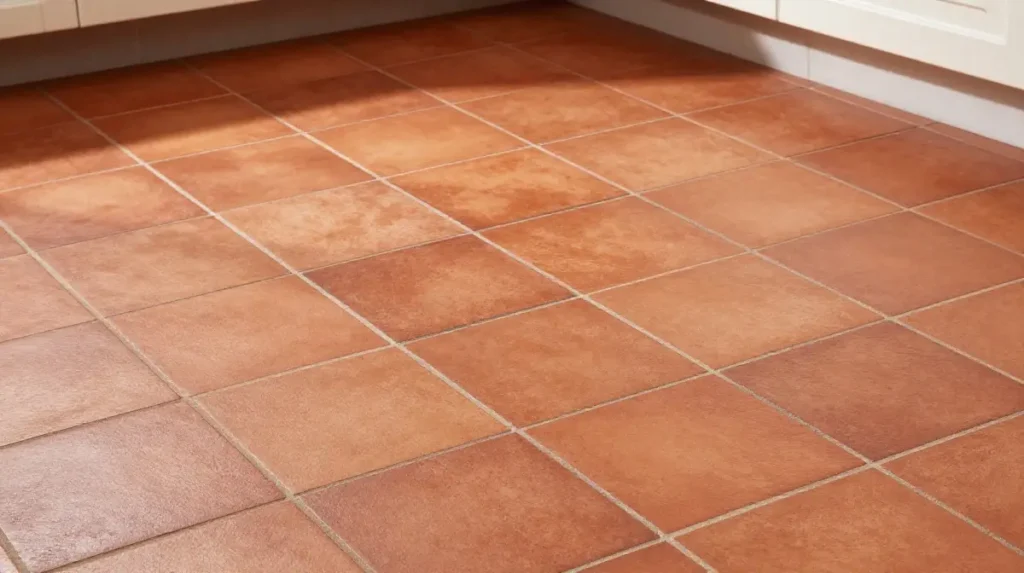
Terracotta is the foundation of almost every authentic Tuscan kitchen design. These warm, clay-colored tiles carry a natural imperfection that actually makes them more beautiful over time. They age gracefully, picking up the subtle marks of daily life without looking worn out.
If real terracotta feels out of budget, porcelain tiles that mimic the terracotta look work surprisingly well. Lay them in a classic square or diagonal pattern and seal them properly to avoid staining.
Earthy Ochre and Warm Neutral Wall Colors
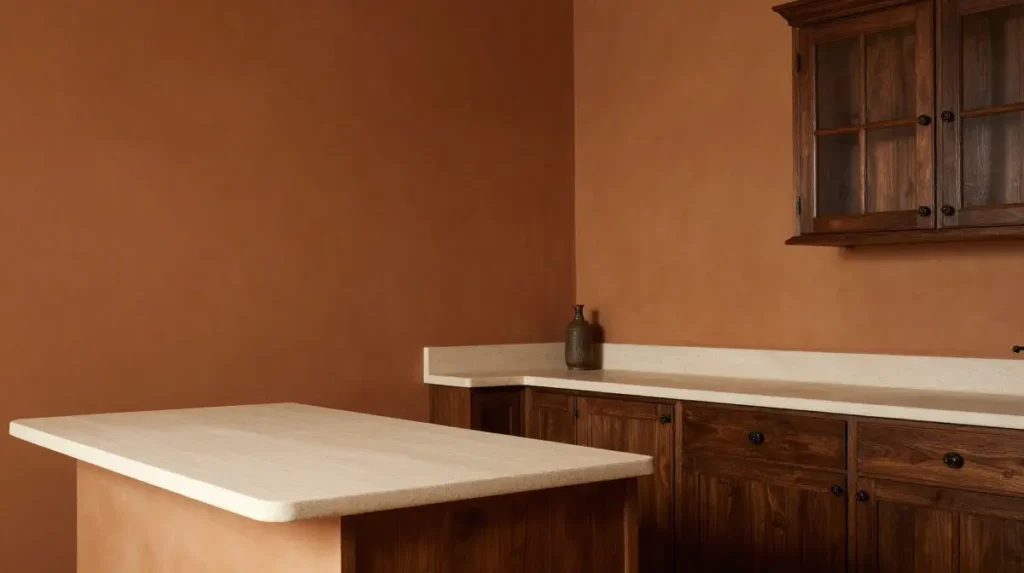
The Tuscan color palette is built on earth. Think deep ochre, soft amber, warm ivory, and sun-baked beige. These tones do not feel heavy when applied well. They actually make a kitchen feel open, cozy, and full of character.
Avoid going too orange or too yellow. The sweet spot is a muted, dusty warmth that looks like a wall that has been kissed by years of Mediterranean sun. Test a few paint samples in your actual lighting before committing.
Exposed Stone or Plaster Walls
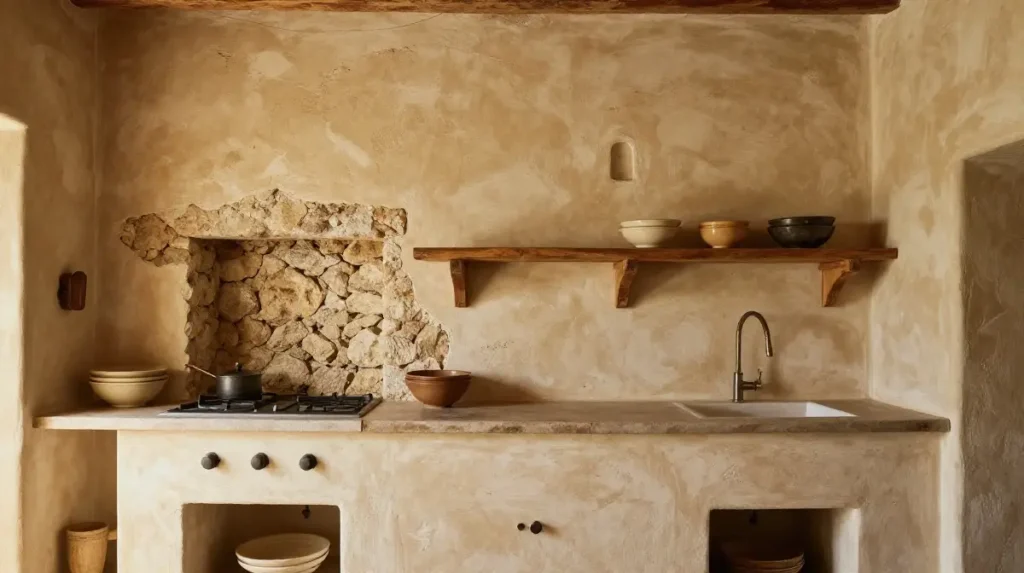
One of the most recognizable elements of Tuscan villa interiors is the rough, textured wall surface. You do not need real stone to achieve this. Textured plaster walls in warm neutral tones give the same Old World kitchen aesthetic at a fraction of the cost.
For those willing to invest more, natural stone cladding on a feature wall behind the stove or sink area can become the focal point of the entire room. It adds depth, texture, and a genuinely timeless feel.
Distressed Wood Kitchen Cabinets
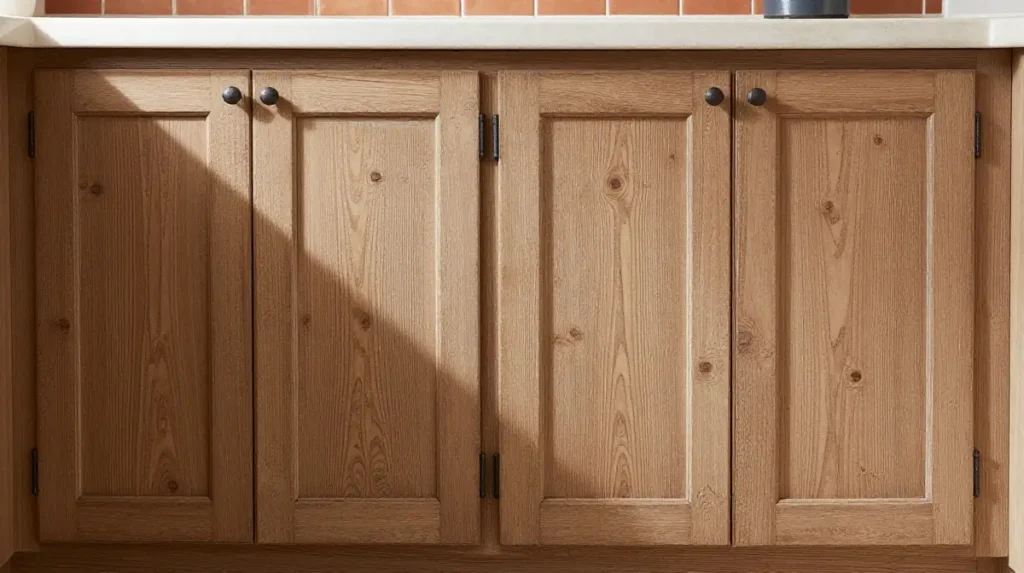
Heavy, solid wood cabinets with a slightly aged or distressed finish are central to Tuscan kitchen decor. The grain of the wood, the visible knots, and the subtle unevenness all add to that handcrafted, vintage kitchen design quality that makes the space feel lived-in and loved.
Avoid glossy finishes. Matte or satin oil finishes look far more natural and work better with the overall aesthetic. Warm walnut, chestnut, and dark oak tones all fit well within a Tuscan color scheme for kitchens.
Wooden Beam Ceiling Design
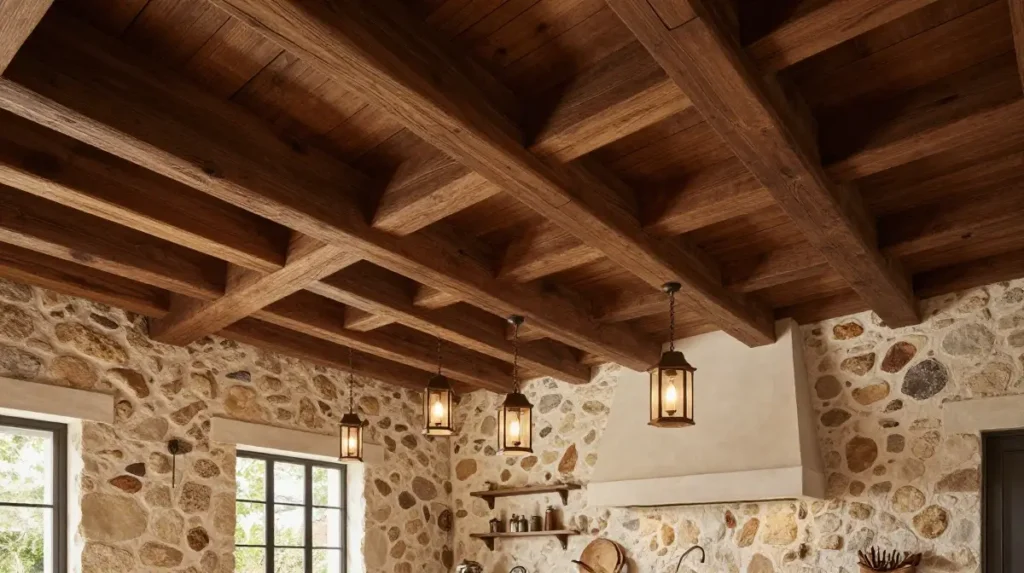
If you have the ceiling height for it, exposed wooden beams are one of the most impactful changes you can make to a kitchen. They immediately signal a rustic kitchen design language and anchor the space with a sense of age and solidity.
Even in modern homes, faux wood beams made from lightweight materials can be installed relatively easily. Stain them in a warm, dark tone and pair them with simple pendant lighting for an authentic result.
Wrought Iron Hardware and Fixtures
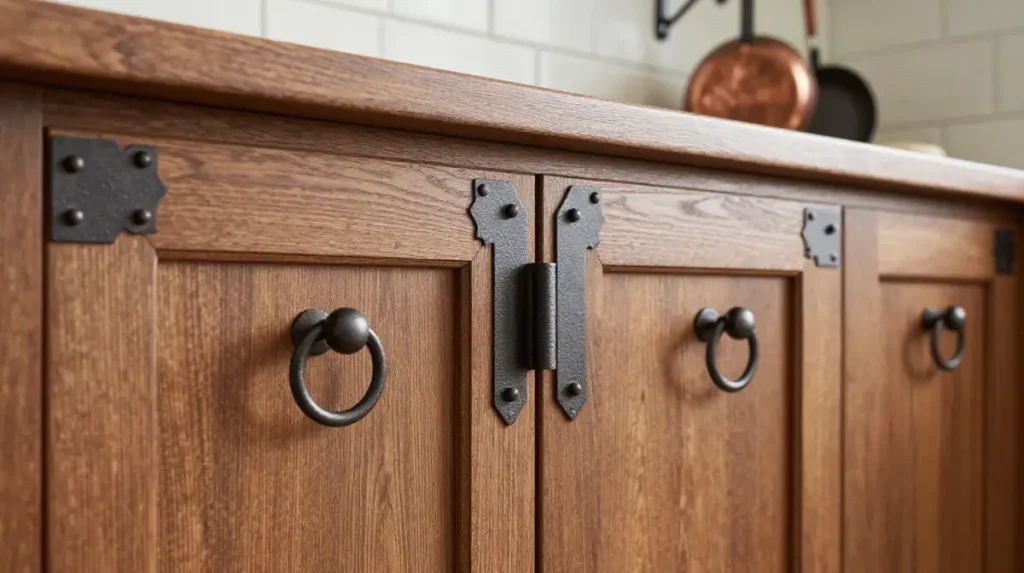
Wrought iron kitchen hardware is one of those small details that quietly holds the whole design together. Cabinet pulls, drawer handles, pot racks, and even light fixtures in a matte black or oil-rubbed finish all reinforce the Mediterranean kitchen feel without being loud about it.
This is also one of the most budget-friendly updates you can make. Swapping out modern chrome hardware for wrought iron versions is a weekend project that makes a significant visual difference.
Hand-Painted Tile Backsplash
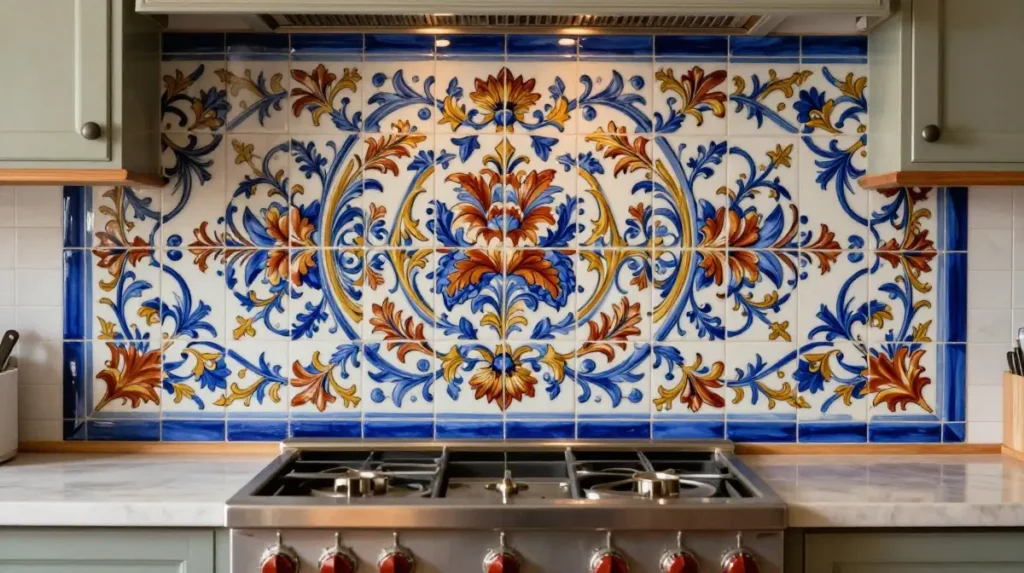
A hand-painted tile backsplash is where Tuscan kitchen design gets to show some personality. Traditional Italian ceramic tiles with floral, vine, or geometric patterns in cobalt, terracotta, and gold bring color and artistry into the kitchen without overwhelming it.
You do not have to tile the entire backsplash this way. A single column of decorative tiles flanking the range or a small inset panel above the sink is enough to create that mosaic kitchen backsplash effect with real visual impact.
Natural Stone Countertops
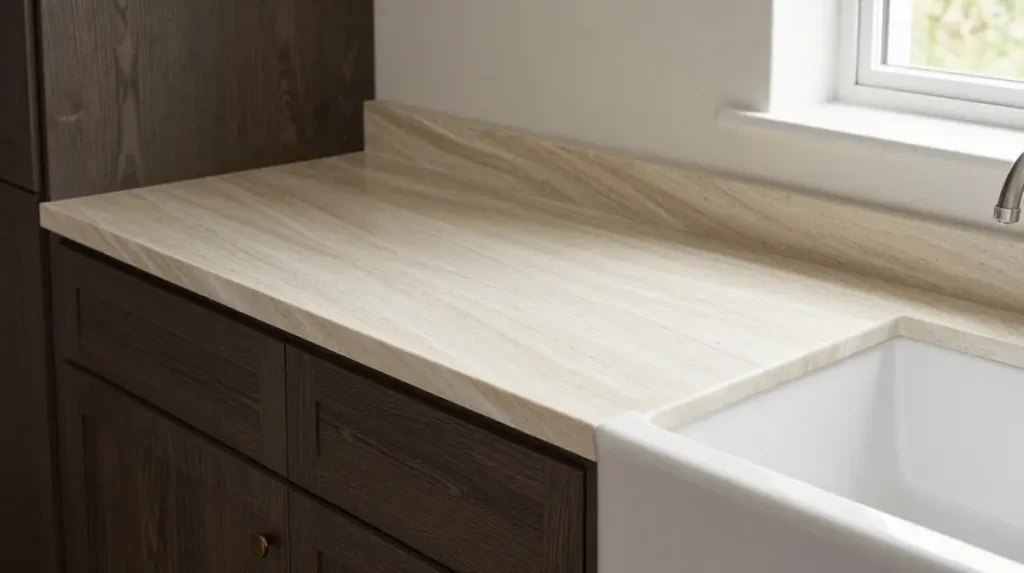
Travertine, honed marble, and natural limestone are the countertop materials most associated with Tuscan home interiors. They are not perfectly uniform, and that is exactly the point. The natural veining and tonal variation make each surface genuinely unique.
For a more practical option, butcher block wooden countertops paired with a stone section near the sink offer a beautiful combination that also works hard in a busy kitchen.
Quick Comparison Table: Tuscan Kitchen Materials at a Glance
| Element | Best Material | Budget Option | Finish Type | Difficulty to Install |
|---|---|---|---|---|
| Flooring | Terracotta tile | Porcelain look-alike | Matte sealed | Moderate |
| Countertops | Travertine / Limestone | Honed concrete | Natural matte | High |
| Cabinets | Solid oak / walnut | MDF with wood veneer | Distressed matte | Moderate |
| Backsplash | Hand-painted ceramic | Printed ceramic tile | Glazed | Low to moderate |
| Walls | Plaster or stone | Textured paint | Rough matte | Low |
| Hardware | Wrought iron | Matte black zinc alloy | Oil-rubbed | Very low |
| Ceiling | Real wood beams | Faux polyurethane beams | Stained matte | Moderate |
Copper Accent Kitchen Decor
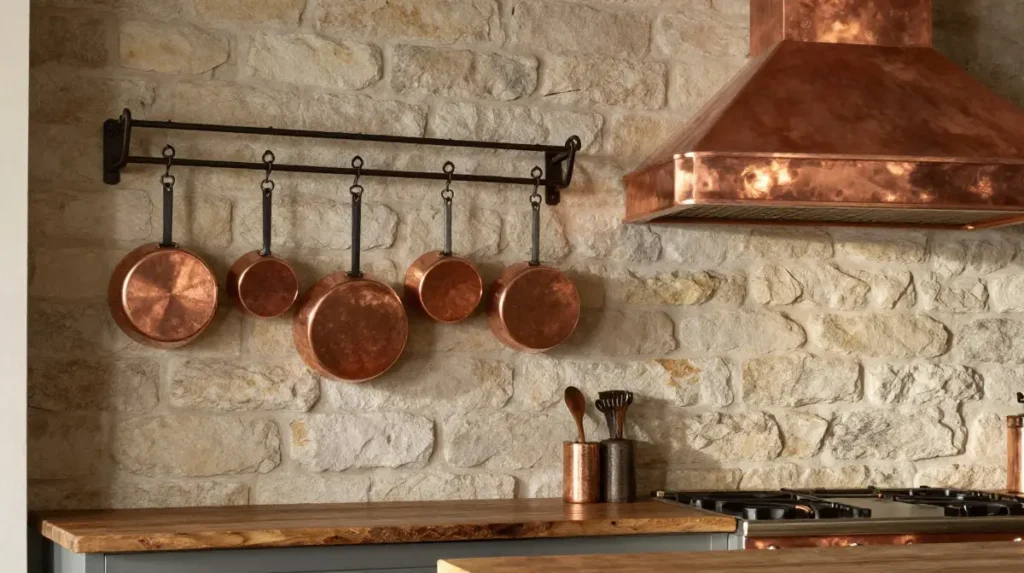
Copper is one of the warmest metals you can bring into a kitchen, and it fits the Tuscan aesthetic perfectly. Think copper pots hanging from an iron rack above the island, a copper range hood, or even just a few copper measuring cups displayed on open shelving.
The beauty of copper is that it develops a natural patina over time, which only adds to the aged, rustic kitchen feel. Do not obsessively polish it. Let it live.
Arched Doorways and Window Frames
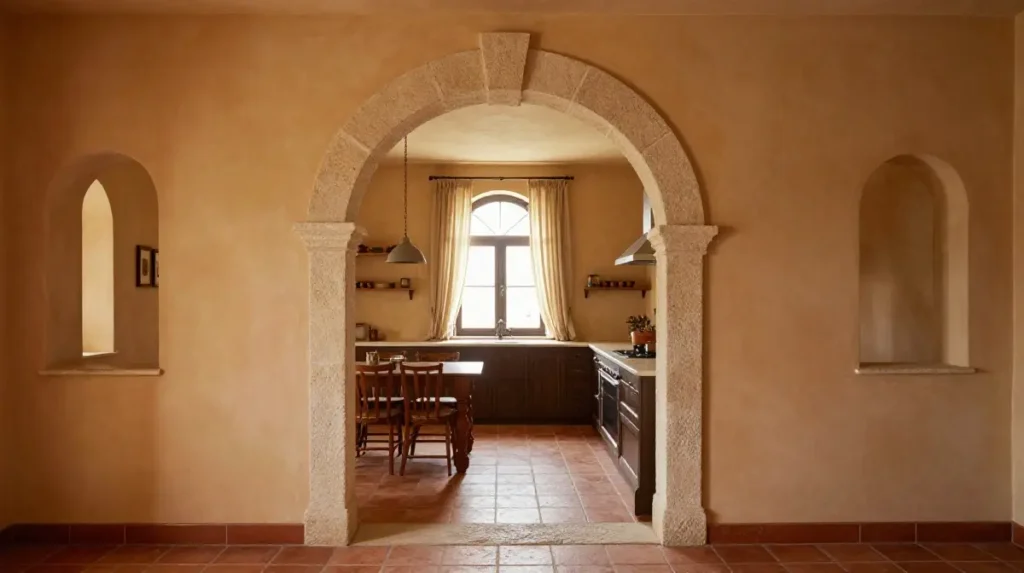
The arch is an architectural signature of Tuscan courtyard style and Mediterranean design broadly. If you are doing a more substantial renovation, incorporating an arched doorway between the kitchen and dining area immediately signals that Old World sensibility.
For those not moving walls, arched window treatments or curved cabinet doors can introduce the same visual rhythm at a smaller scale.
Iron Chandelier or Pendant Lighting
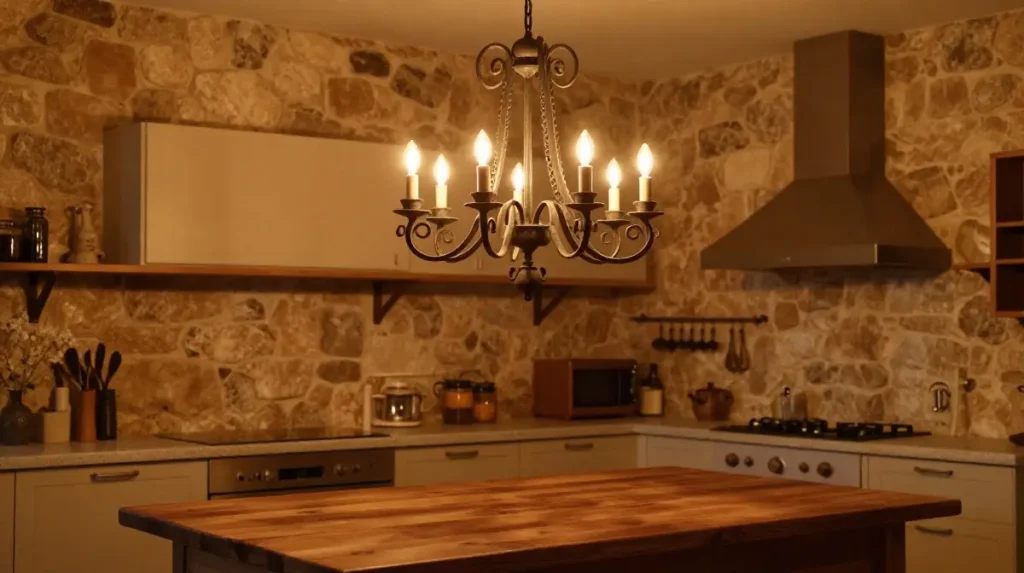
Warm kitchen lighting is non-negotiable in Tuscan kitchen design. Overhead fluorescent strips are the enemy of this aesthetic. Instead, look for iron chandeliers with candle-style bulbs, woven pendant lights, or simple lantern-style fixtures that cast a warm, ambient glow.
Layering your lighting helps too. Combine overhead fixtures with under-cabinet warm lighting and a few candles or lanterns on the countertop for evenings.
Open Shelving with Woven Baskets
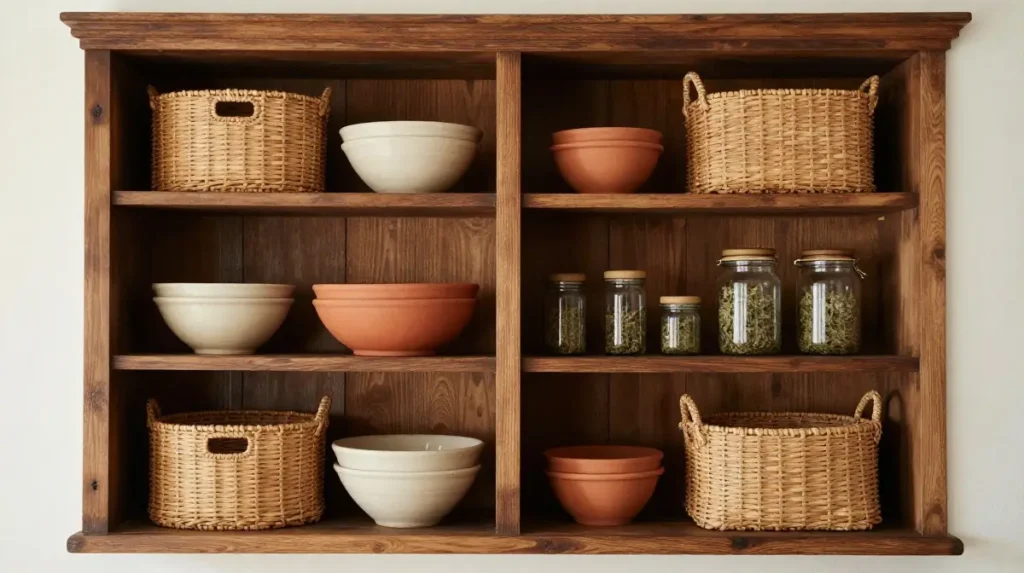
Open shelving fits naturally into the European kitchen style because it allows everyday objects to become part of the decor. Line your shelves with ceramic bowls, clay pots, glass jars of dried goods, and woven basket kitchen decor to create a space that feels both functional and visually rich.
The key is keeping things curated. Open shelving looks beautiful when thoughtfully arranged but chaotic when it becomes a dumping ground for random items.
Tuscan Kitchen Island with Rustic Finish
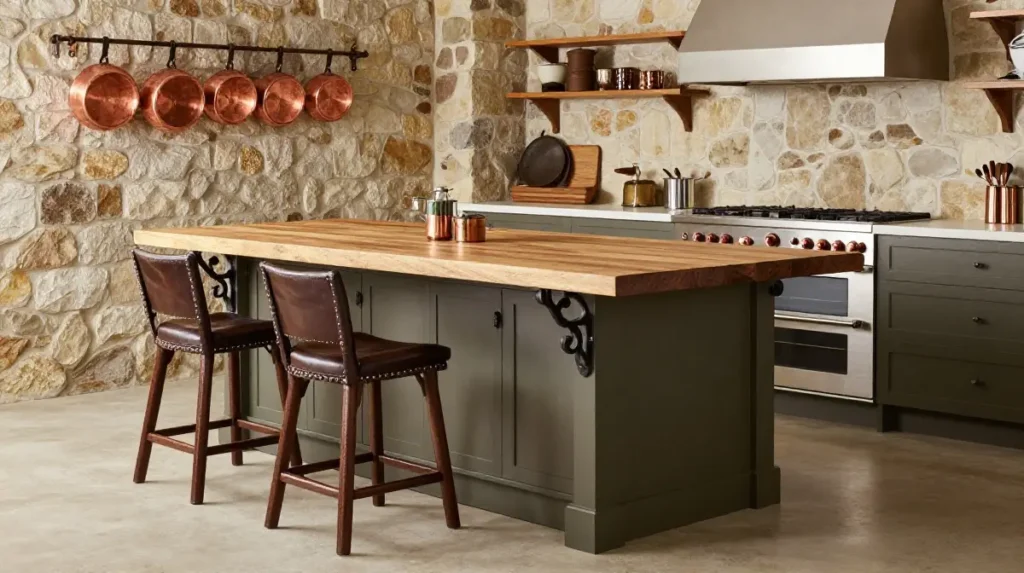
A kitchen island with a heavy, aged wood top and an iron or stone base anchors the room and gives it a sense of substance. If your kitchen has the space, a Tuscan style kitchen island becomes both a work surface and a gathering point, which aligns perfectly with the Italian idea of the kitchen as the heart of the home.
Paint the base in a deep, earthy tone like dark olive or charcoal to contrast with lighter walls. Add a few bar stools in leather or rattan to complete the look.
Herb Garden Inside the Kitchen
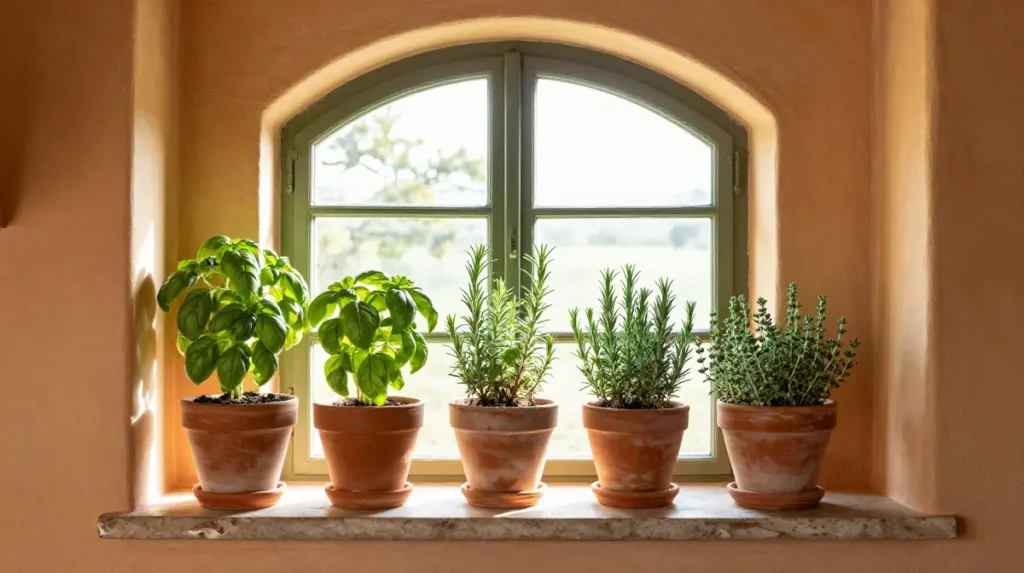
No Tuscan kitchen design feels complete without some connection to the garden. A small indoor herb garden on the windowsill or countertop brings freshness and life into the space while also being genuinely useful when you are cooking.
Terracotta pots work best here, both aesthetically and practically since they allow the soil to breathe. Basil, rosemary, and thyme are classic choices and they happen to thrive on a sunny kitchen windowsill.
Mosaic or Patterned Floor Details
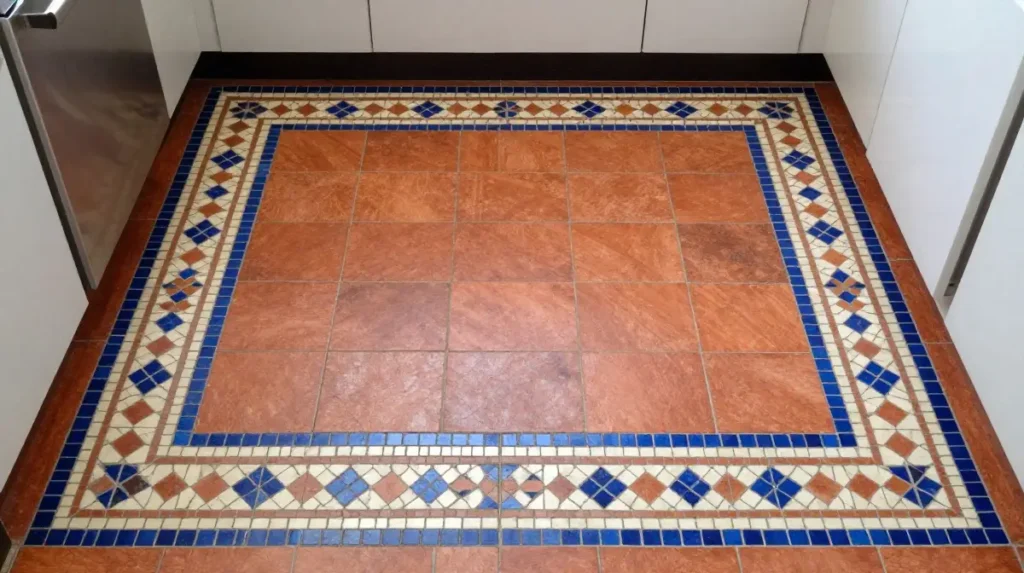
Beyond terracotta, some Tuscan kitchens incorporate mosaic or patterned tile details, particularly as a border around the perimeter of the floor or as a decorative inset near the entrance. This adds a layer of craftsmanship that makes the floor feel intentional rather than just functional.
Keep the main floor color neutral and let the pattern be the accent. Too many competing patterns across the floor, walls, and backsplash can make a space feel restless.
Wine Rack as a Design Feature
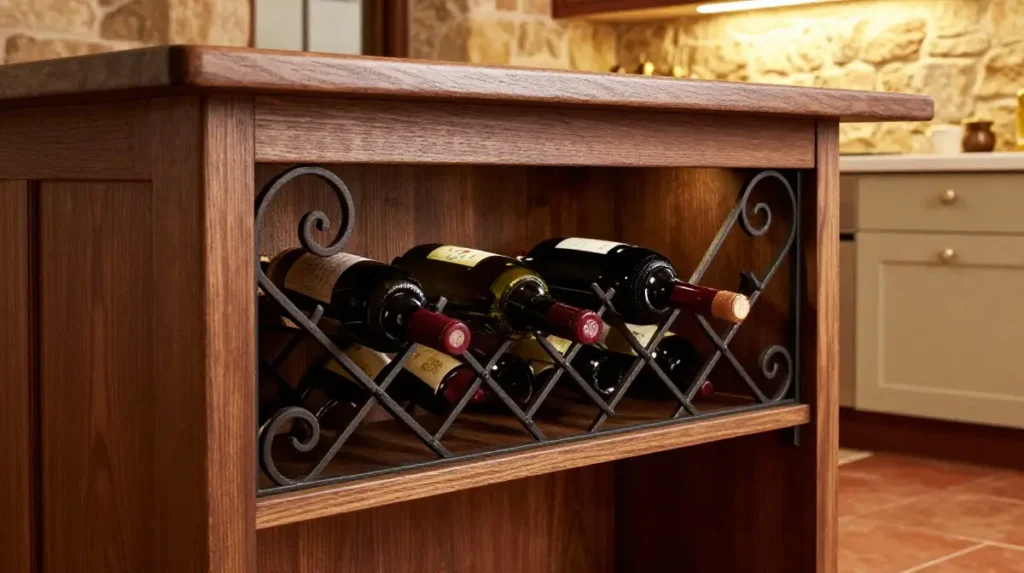
Wine is inseparable from Italian culture, and a built-in or freestanding wine rack makes both a practical and decorative statement in a Tuscan kitchen. A wooden wine rack tucked under the island, or a wrought iron wall-mounted version near the dining area, adds character while keeping your bottles within easy reach.
Choose a style that feels integrated with the rest of the kitchen rather than like an afterthought. Rustic wood and iron options are widely available at most home goods stores.
Linen and Natural Textile Accents
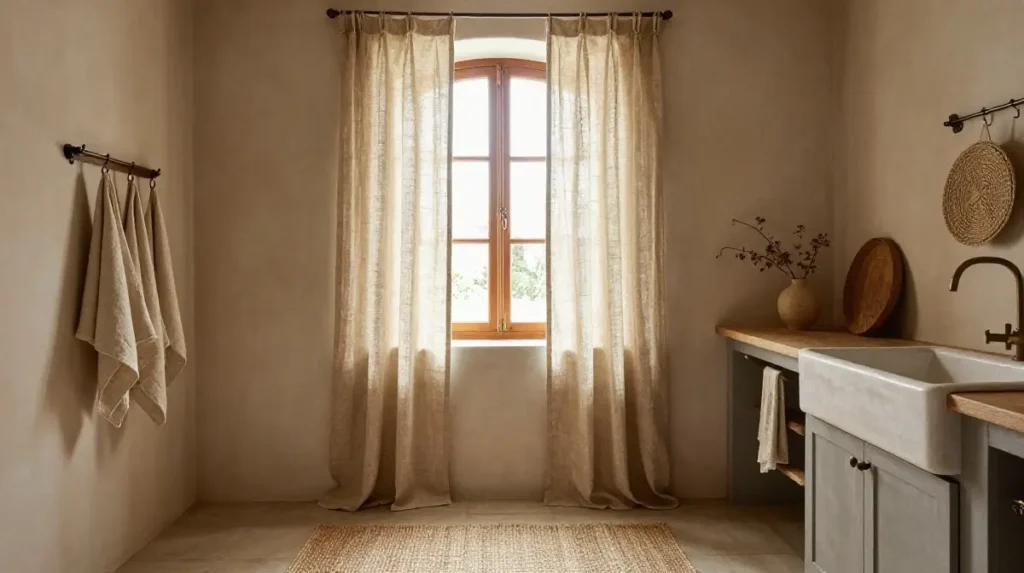
The textiles you bring into a kitchen matter more than most people realize. Linen kitchen textiles in warm, undyed or softly toned colors add softness to an otherwise hard material-heavy space. Think linen curtains on a lower window, cotton dish towels hanging from an iron hook, or a natural fiber rug in front of the sink.
These are small investments but they meaningfully shift the texture and warmth of the room.
Fresco or Mural Wall Detail
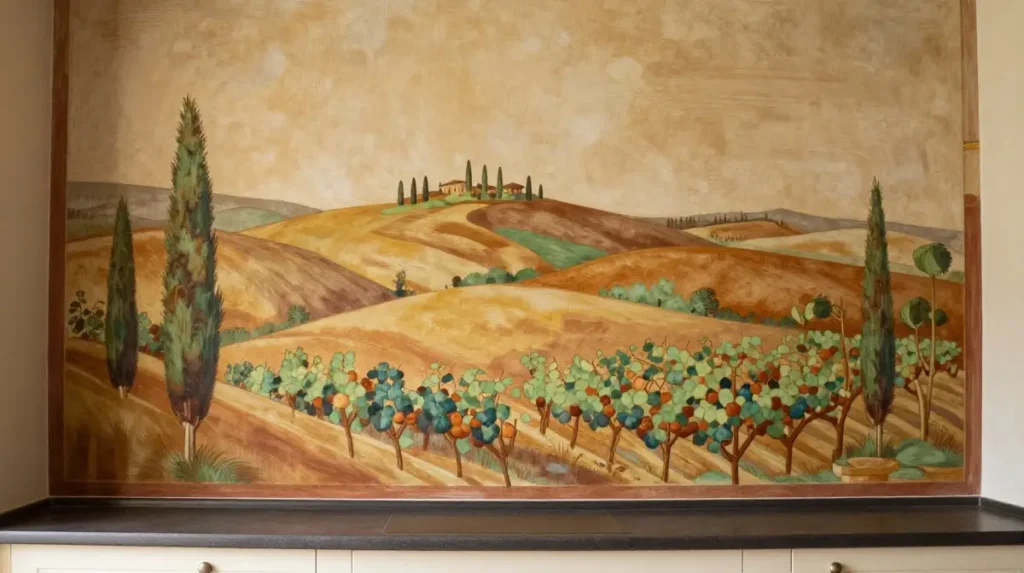
In more elaborate Tuscan kitchen designs, a painted fresco or mural on a single wall adds a truly dramatic Old World element. This could be a painted landscape of rolling hills and cypress trees, a simple botanical vine pattern, or an abstract earthy pattern that echoes the colors of the room.
This works best as a statement in a larger kitchen where one wall can be a genuine focal point without overwhelming the space.
Antique or Vintage Furniture Pieces
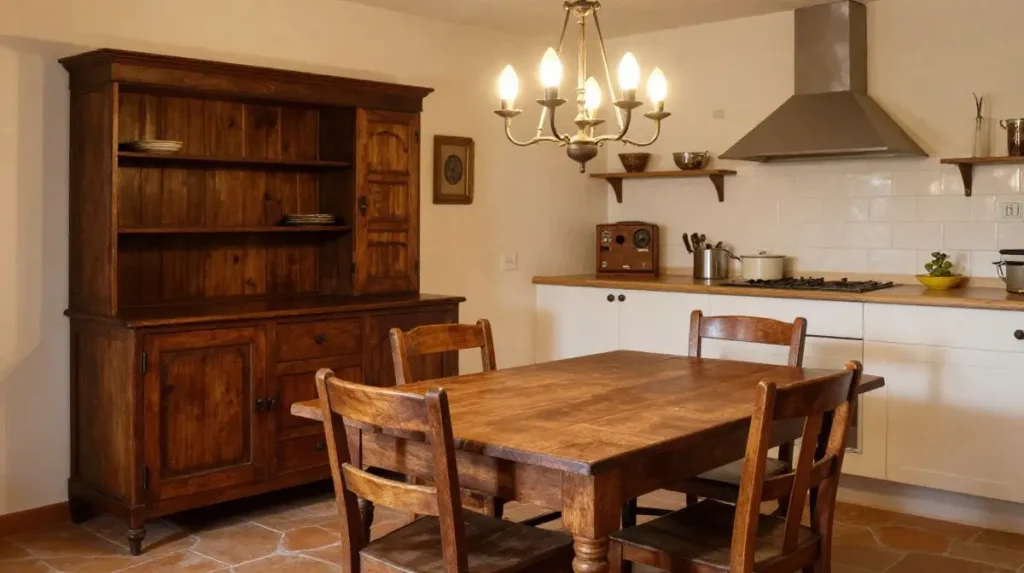
Incorporating one or two pieces of genuine antique or vintage kitchen furniture grounds the design in something real. A farmhouse dining table with mismatched chairs, an old bread cabinet repurposed as a pantry, or a wooden bench along one wall all contribute to that lived-in, generational quality that new furniture struggles to replicate.
Visit local markets, estate sales, or antique shops rather than buying reproduction pieces. The imperfections in genuinely old furniture are exactly what makes them work so well in a Tuscan farmhouse kitchen.
Clay Pot and Ceramic Accessory Display
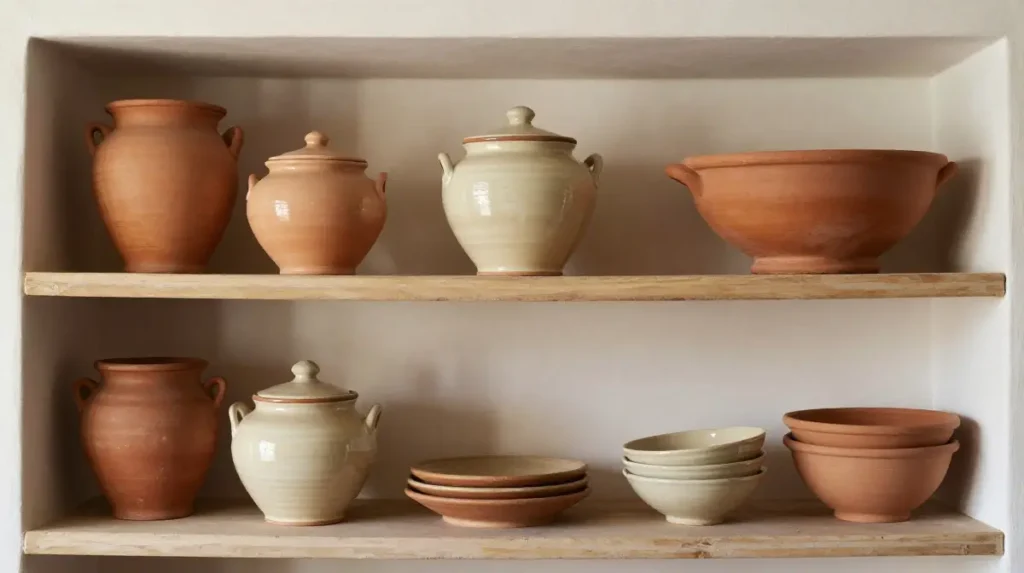
Beyond herb pots, clay and ceramic accessories throughout the kitchen reinforce the earthy kitchen tones that define Tuscan design. A collection of hand-thrown ceramic bowls stacked on open shelves, a large clay olla used as a decorative piece near the stove, or a set of ceramic canisters in terracotta and cream all build visual cohesion.
These pieces do not need to match perfectly. In fact, slight variation in size, glaze, and tone makes them look more authentic.
Simple Stone or Brick Accent Wall Behind the Range
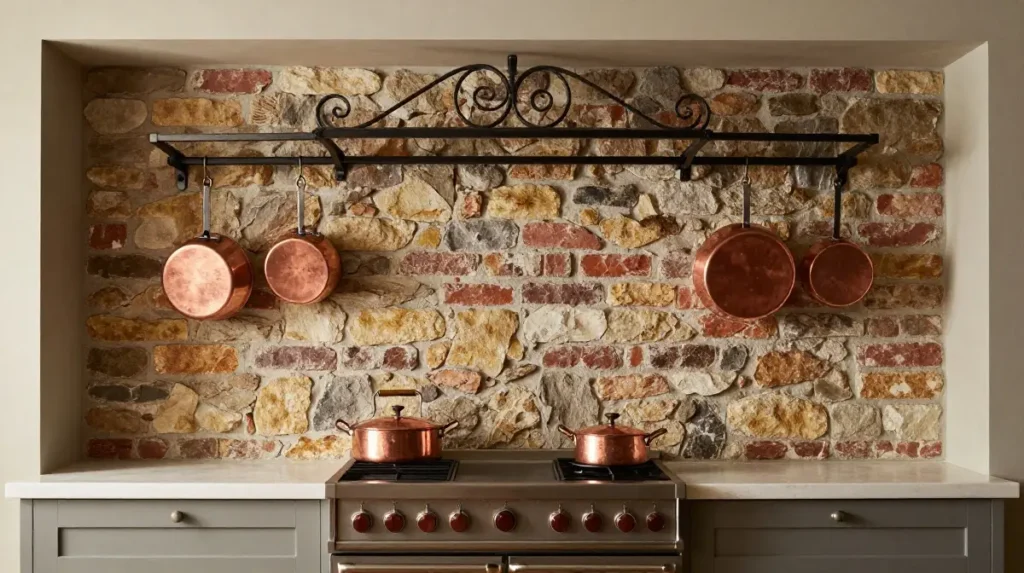
If you are looking for one change that delivers the most visual impact in a Tuscan kitchen, consider a stone or exposed brick feature wall behind the range. This immediately becomes the visual anchor of the kitchen and gives the cooking area a sense of importance and ceremony.
Pair it with a simple iron pot rack overhead and good task lighting, and that corner of your kitchen will feel like something from a countryside trattoria.
Common Mistakes to Avoid
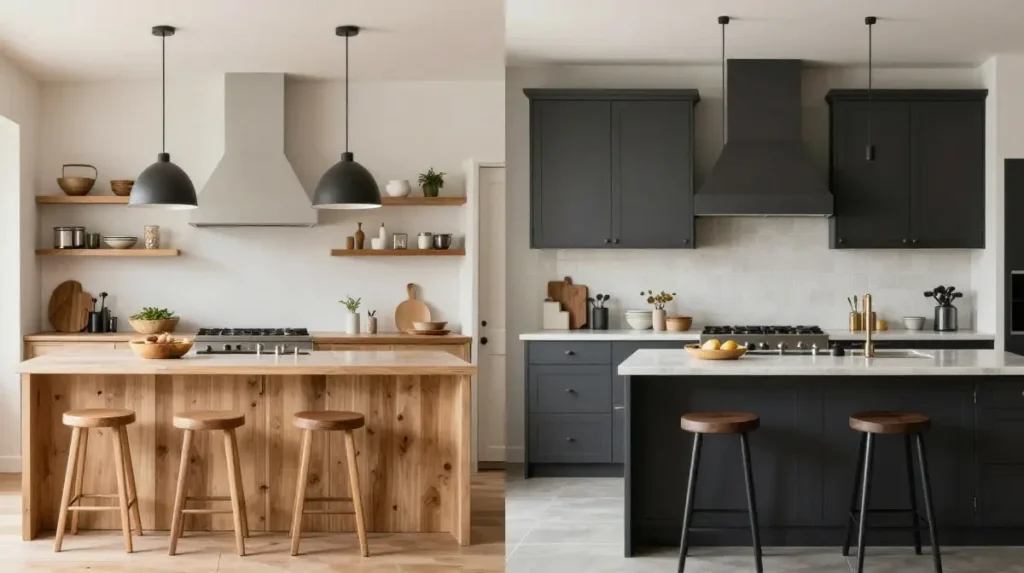
Getting the proportions wrong is one of the most frequent issues in Tuscan kitchen design. Overloading a small kitchen with too many heavy elements, dark tones, and rough textures can make the space feel oppressive rather than cozy. Balance is essential. If your cabinets are very dark, keep the walls lighter. If your floor is very busy, keep the countertops simple.
Another common mistake is buying too many items from the same matching set. Tuscan design is not about uniformity. It is about things that look as though they were gathered over time, from different places, by someone who simply loved beautiful, useful objects.
Conclusion
Tuscan kitchen design is not a trend. It has endured because it connects to something genuinely appealing in how we want to live. It values warmth over sleekness, character over perfection, and comfort over minimalism. Whether you start with a simple coat of ochre paint and a few iron drawer pulls, or commit to a full renovation with travertine floors and wooden beam ceilings, each step in that direction makes your kitchen feel more like a place where people actually want to gather.
Start with what fits your budget. Add layers over time. And do not be afraid of imperfection, because in a Tuscan kitchen, that is where all the beauty lives.
You may also like this: 22 Bathroom Counter Design Ideas for Stylish Spaces
Frequently Asked Questions
1. What colors are used in Tuscan kitchen design?
Tuscan kitchens typically use warm, earthy tones like ochre, terracotta, deep amber, warm ivory, and dusty gold. These colors mimic the natural landscapes of the Italian countryside and work well with stone, wood, and iron materials.
2. Is Tuscan kitchen design expensive to achieve?
It does not have to be. Many elements, such as swapping hardware for wrought iron versions, adding linen textiles, using terracotta pots, and applying a warm paint color, are very affordable. A full renovation with natural stone and real wood beams costs more, but the look can be built gradually over time.
3. What type of flooring works best for a Tuscan kitchen?
Terracotta tiles are the most traditional choice. However, travertine, natural stone, and even high-quality porcelain tiles that replicate these materials work very well and offer better durability and easier maintenance in some cases.
4. Can I create a Tuscan kitchen in a small space?
Yes. Focus on a few key elements rather than trying to include everything. A warm wall color, distressed wood cabinets, wrought iron hardware, and a simple herb garden on the windowsill are enough to bring the spirit of Tuscan kitchen design into a compact space.
5. What lighting works best in a Tuscan style kitchen?
Warm, ambient lighting is essential. Iron chandeliers with Edison or candle-style bulbs, lantern pendant lights, and under-cabinet warm strip lighting all work well. Avoid cool white or blue-toned light bulbs as they work against the warmth that defines this style.