
Introduction
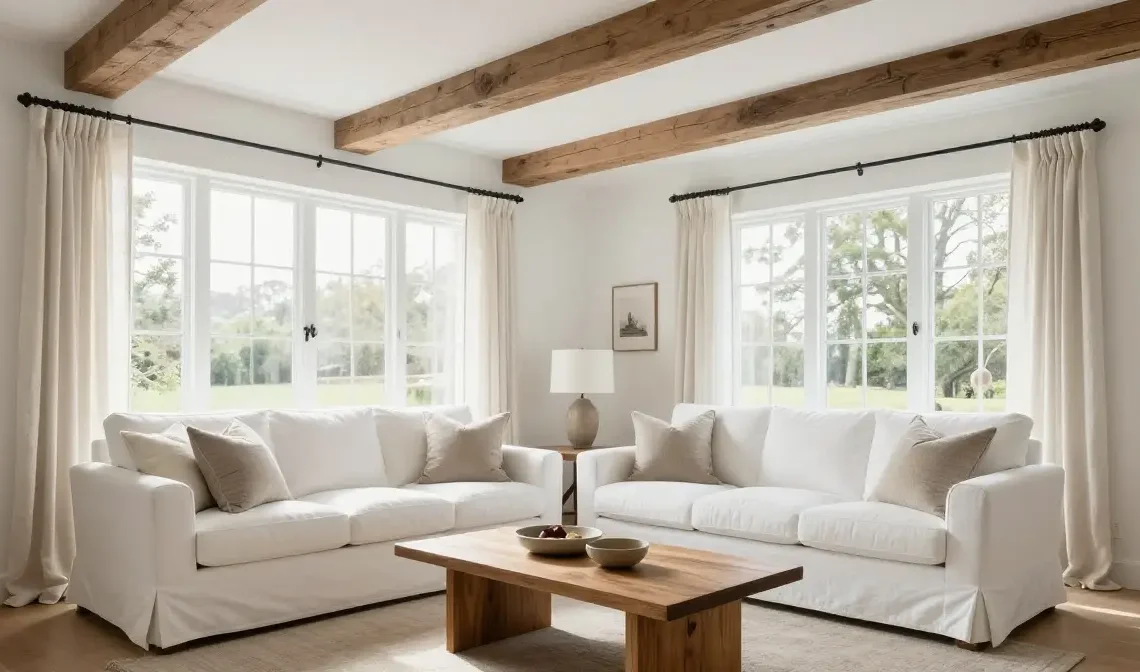
If your living room feels a little flat, a little too matchy, or just not “you” yet, you’re not alone. A lot of people land on modern farmhouse living room design because it solves a real problem — it feels warm without being cluttered, and elegant without being cold or showroom-stiff. It’s the kind of room where you can put your feet up on the coffee table and not feel like you’re ruining a magazine spread.
This style works because it borrows from two opposite worlds. You get the worn-in comfort of an old farmhouse and the clean, calm lines of modern design. The result is a living room that feels lived-in but never messy, and stylish but never intimidating. Below are 22 ideas you can actually use, whether you’re working with a big budget or just rearranging what you already own.
Start With a Neutral Color Palette
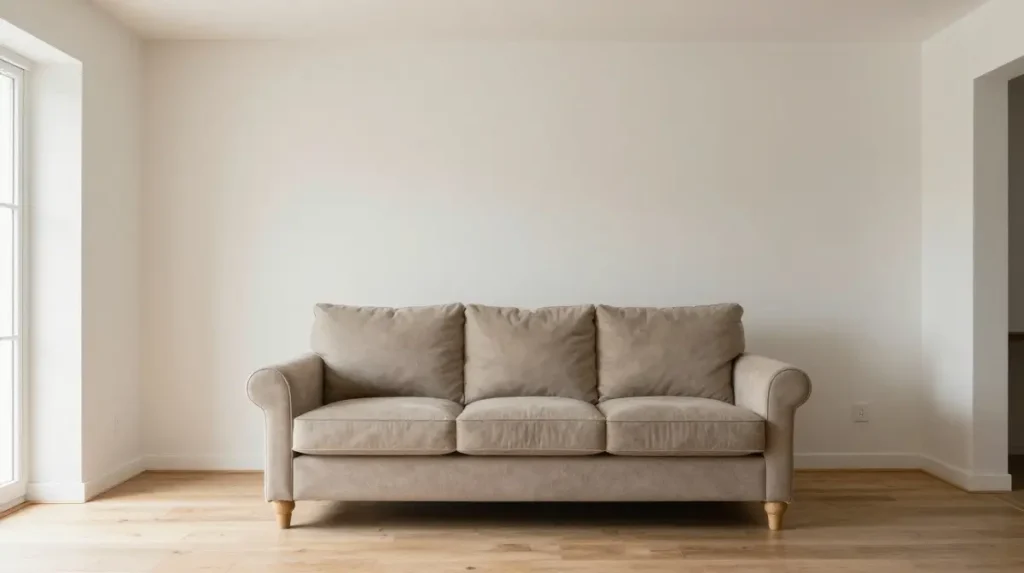
A neutral color palette is the backbone of farmhouse interior design. Think warm whites, soft greige, oatmeal, and gentle taupe. These shades make a room feel airy and let your furniture and textures do the talking instead of bold wall colors competing for attention.
If you’re nervous about an all-white room feeling sterile, add warmth through wood tones and textiles instead of color. That’s the real trick behind a cozy farmhouse style — it’s not about being plain, it’s about being calm.
Add a Shiplap Accent Wall
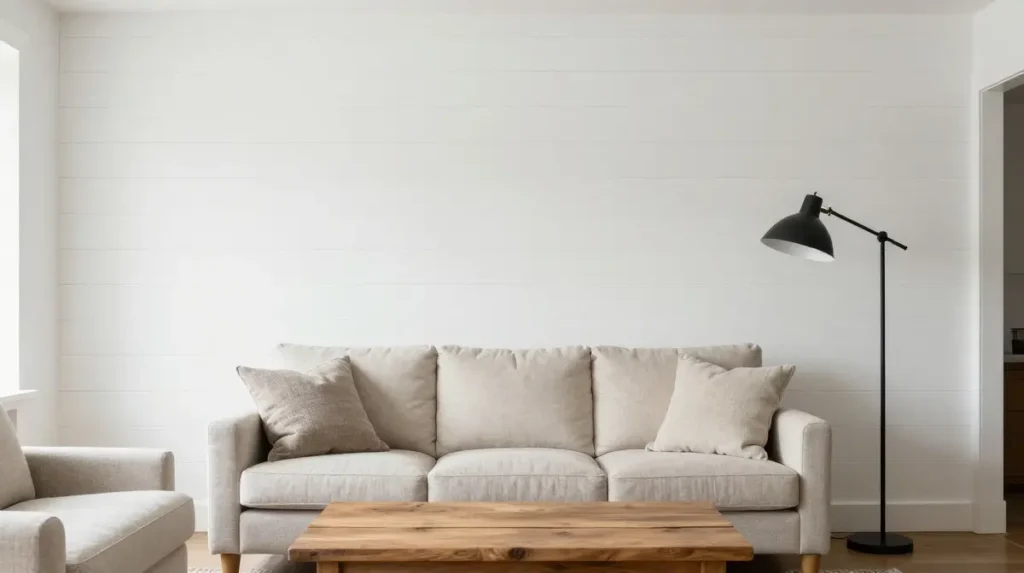
A shiplap accent wall is almost a signature move at this point, but it still works because it adds texture without adding visual noise. You don’t need to cover the whole room. One wall behind the sofa or around the fireplace is usually enough to set the tone.
If real shiplap installation feels like too much of a project, peel-and-stick wood panels are a beginner-friendly shortcut that still gives the same look.
Bring in Rustic Wood Furniture
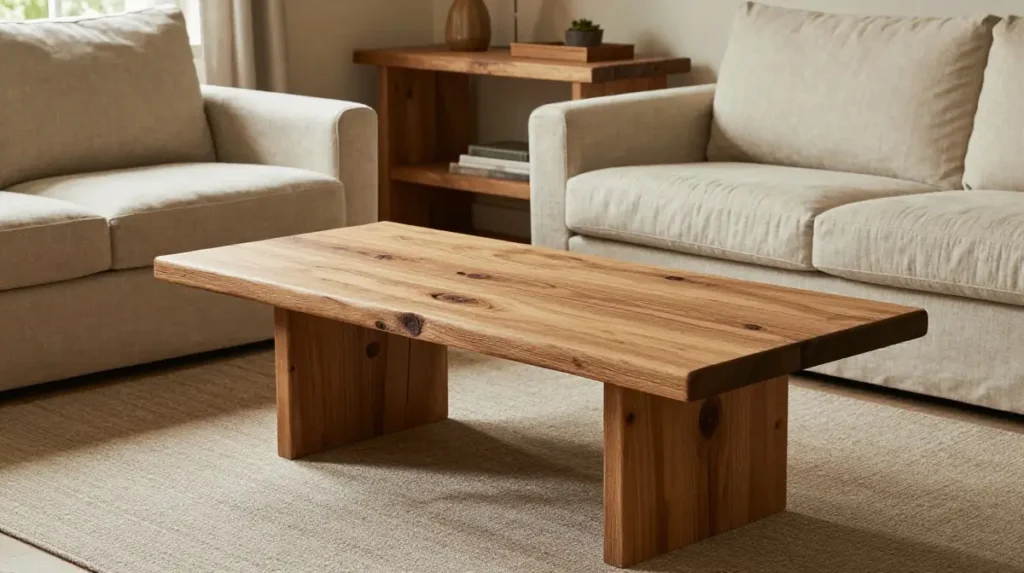
Rustic wood furniture is what gives a farmhouse living room its character. A solid wood coffee table, a wood-framed console, or even a single chunky side table can anchor the whole room.
The trick is balance. Pair raw or distressed wood finish pieces with something cleaner and more modern, like a simple linen sofa, so the room doesn’t feel like a log cabin.
Choose a White Slipcovered Sofa
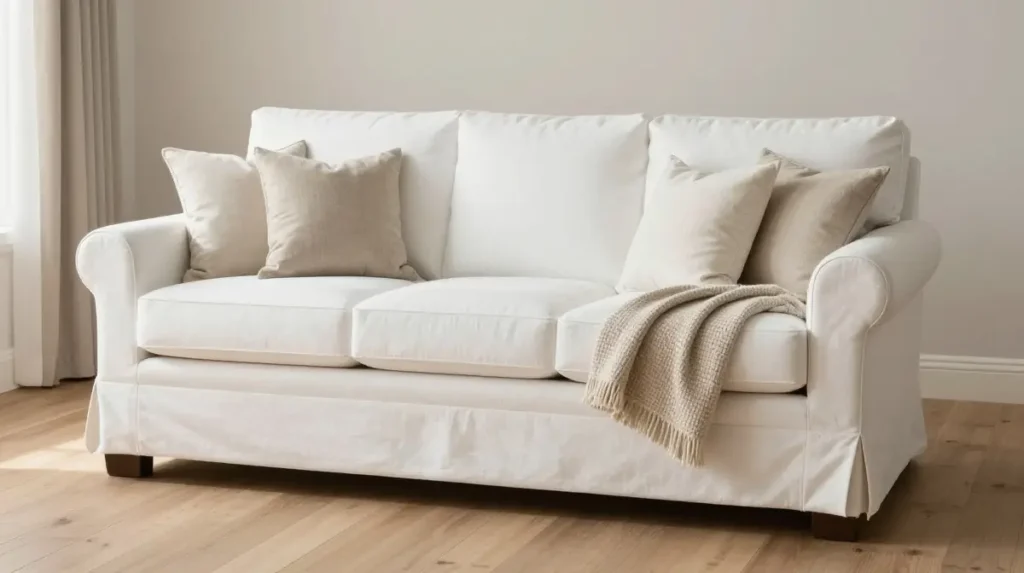
A white slipcovered sofa is practically the unofficial symbol of this style. It’s soft, casual, and surprisingly practical since most slipcovers are removable and washable, which matters a lot if you have kids or pets.
If pure white feels risky, a warm ivory or oatmeal slipcover gives the same relaxed look with a little more forgiveness for everyday life.
Use Reclaimed Wood Decor
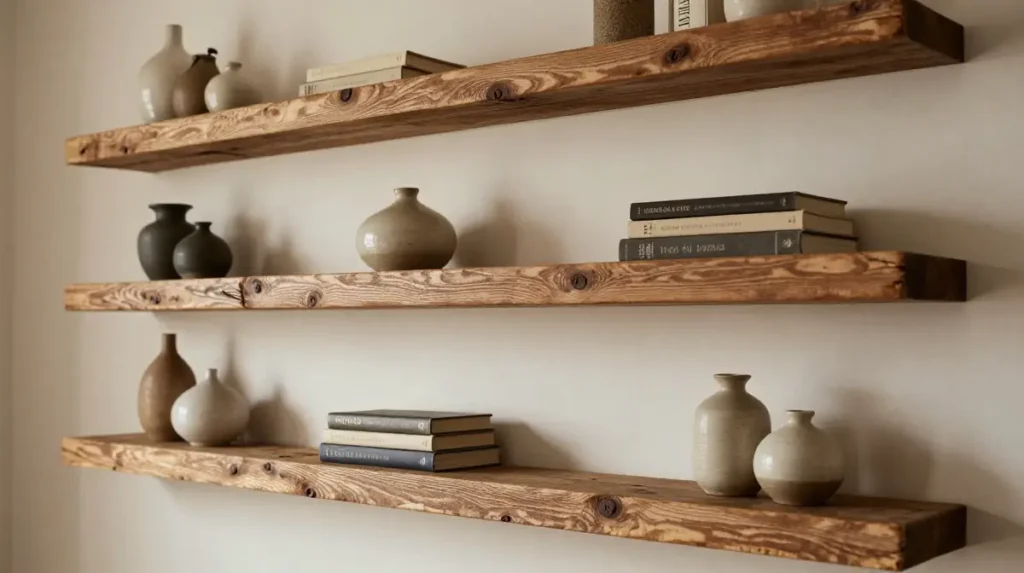
Reclaimed wood decor brings history into the room, even if the piece is brand new. Floating shelves, a mantel, or a media console made from reclaimed wood adds depth that mass-produced furniture just can’t match.
This is also one of the more sustainable choices you can make, since you’re often reusing materials instead of buying new.
Add Exposed Wooden Beams (Real or Faux)
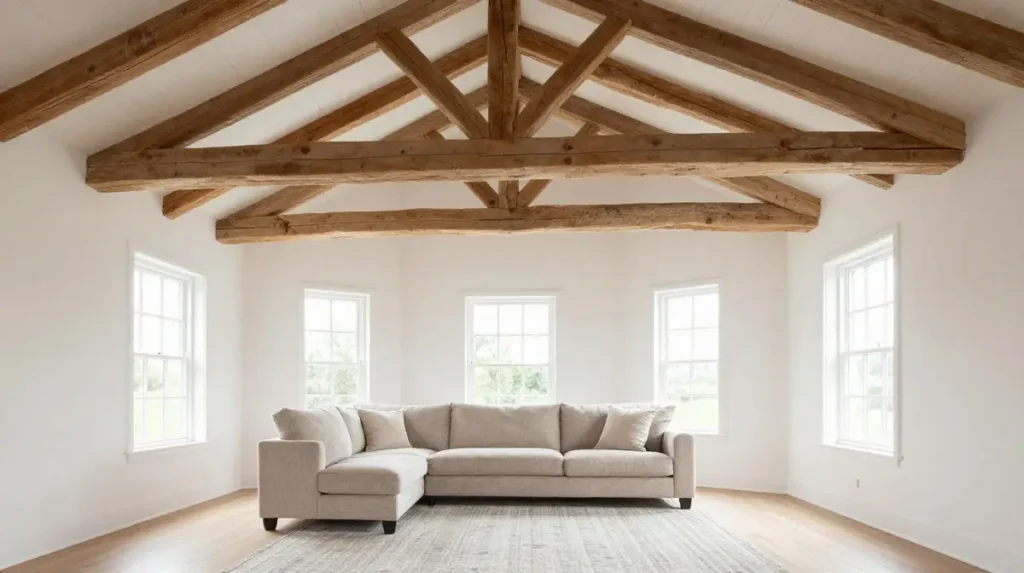
Exposed wooden beams instantly make a ceiling feel architectural instead of flat. If your home doesn’t have real beams, lightweight faux beam kits are widely available and surprisingly convincing once painted and installed.
This is one of those farmhouse design elements that changes the entire feel of a room without touching the floor plan.
Layer in Natural Fiber Rugs
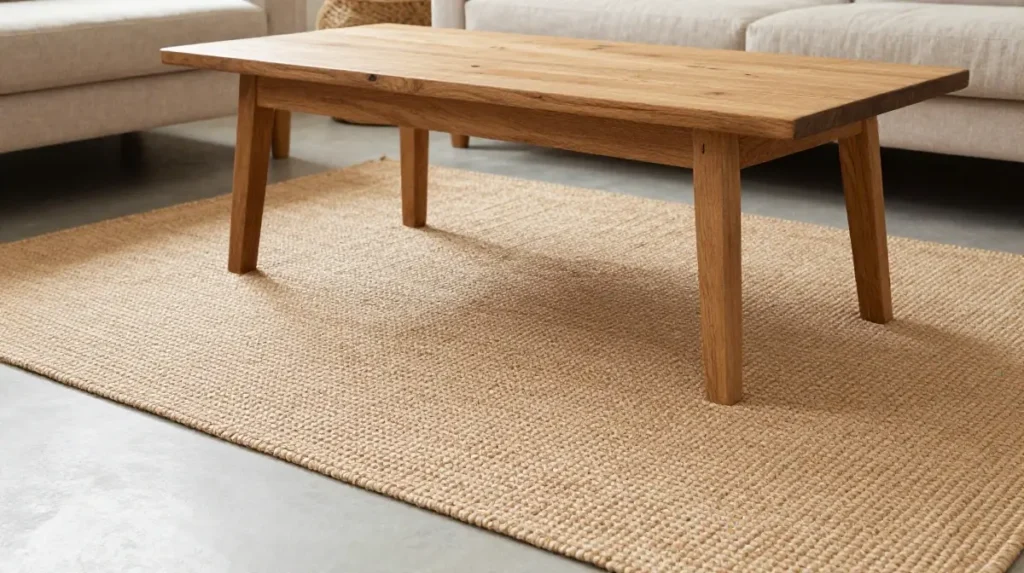
Natural fiber rugs, like jute or sisal, ground the room without competing with your furniture. They’re durable, budget-friendly, and they bring in texture that synthetic rugs just don’t have.
For extra comfort underfoot, layer a smaller wool or cotton rug on top in the seating area.
Pick Black Metal Lighting
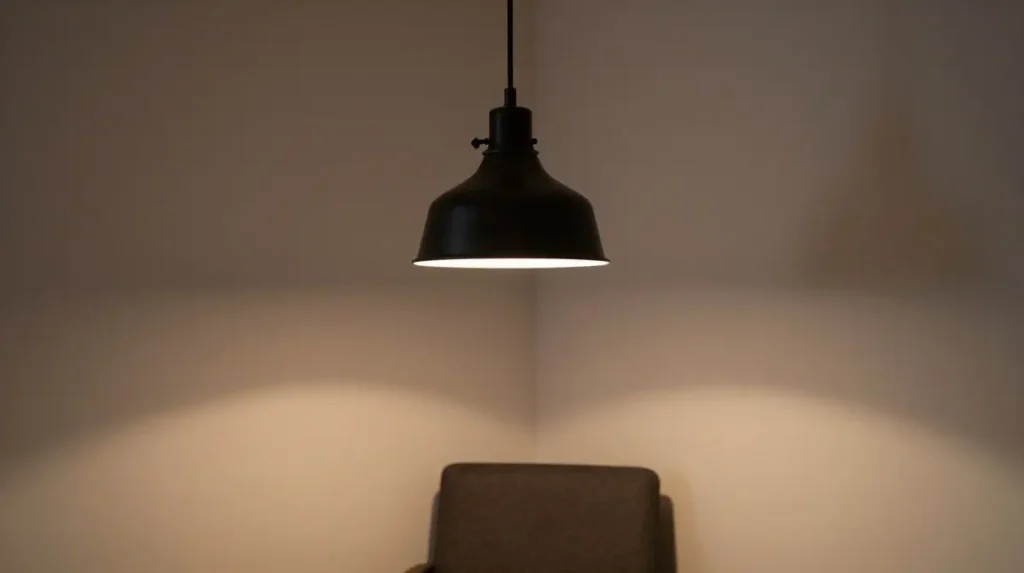
Black metal lighting fixtures, especially pendant lights or sconces, are a simple way to bring in the industrial farmhouse style without going overboard. The dark metal contrasts beautifully against light walls and wood tones.
A single statement pendant over a reading nook does more work than you’d expect for the price.
Style a Statement Fireplace Mantel
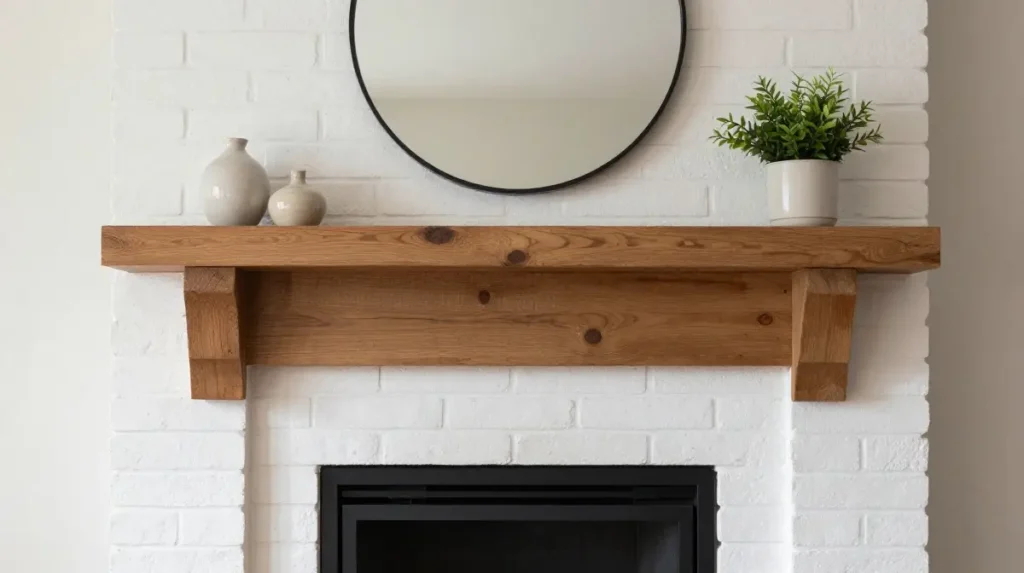
A statement fireplace mantel, whether it’s a thick wood beam or a simple white-painted ledge, becomes the natural focal point of most farmhouse living rooms. Keep styling simple here: a mirror or art piece, a small plant, and one or two ceramic farmhouse vases is usually plenty.
Avoid cluttering the mantel with too many small objects. The goal is a clean, intentional look, not a collection.
Mix Wood and Metal Accents
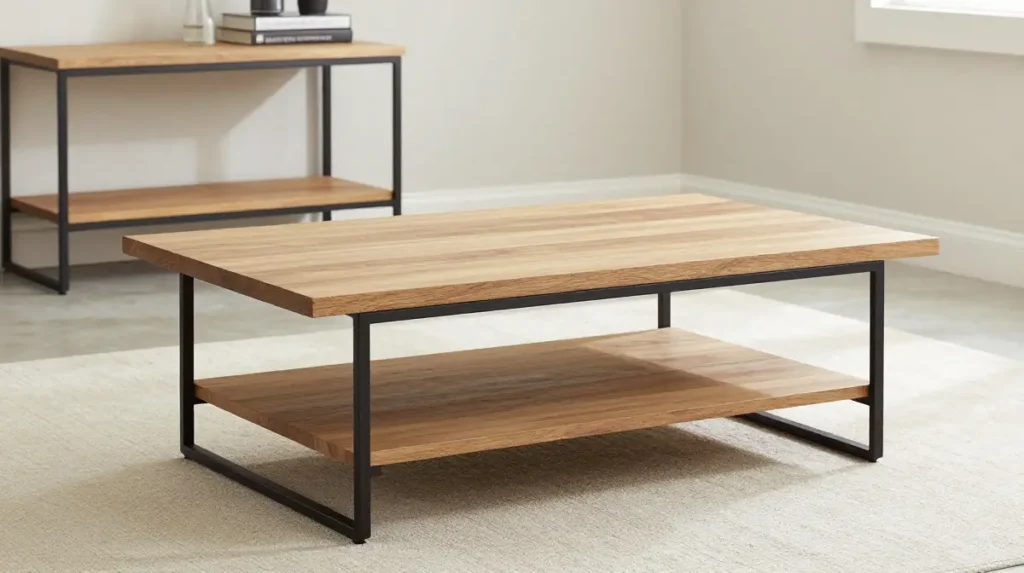
Wood and metal accents together are what give modern farmhouse design its “modern” half. Think a wood coffee table with iron legs, or a wood shelf with black metal brackets.
This combination keeps the room from feeling too rustic or too cold.
Hang Linen Curtains
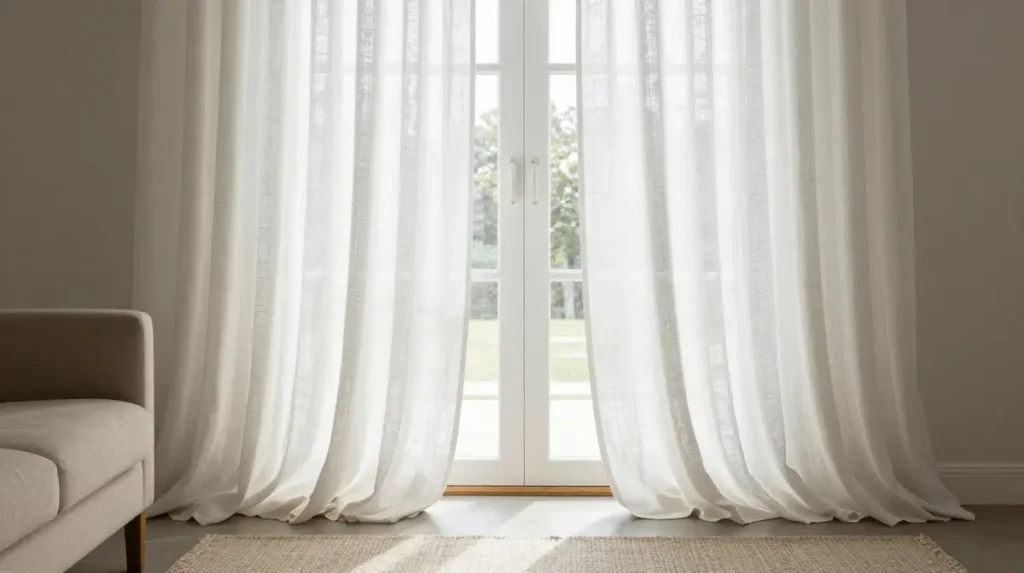
Linen curtains are soft, breathable, and they let in natural light beautifully, which matters a lot for farmhouse window treatments. Stick to neutral tones like white, cream, or light gray so the curtains feel like part of the background rather than a loud statement.
Hanging curtain rods closer to the ceiling also makes windows look taller, which helps smaller living rooms feel more open.
Use Woven Baskets for Storage
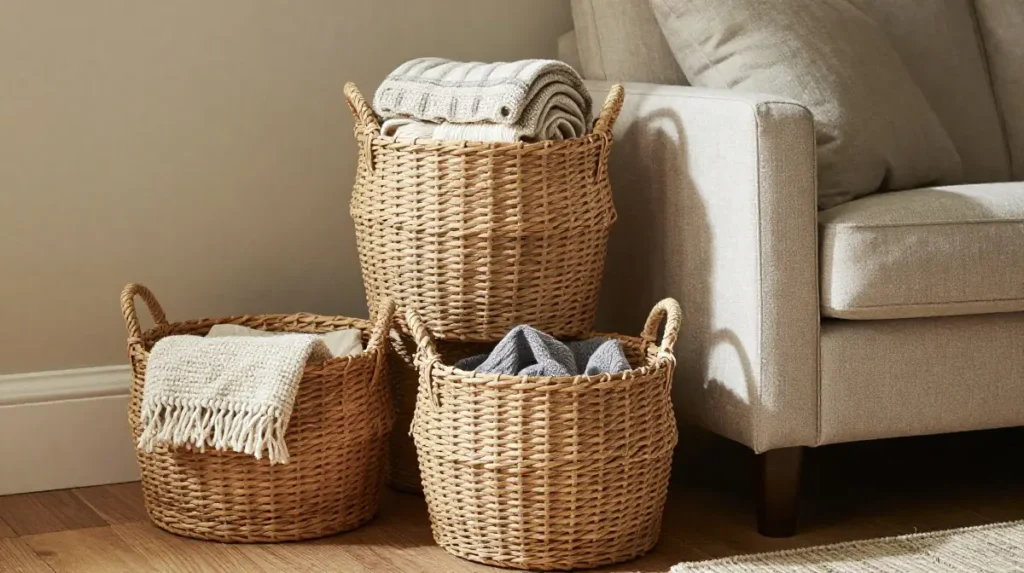
Woven baskets storage is one of the most underrated farmhouse living room ideas because it’s genuinely useful, not just decorative. Use them to hold throw blankets, magazines, toys, or remote controls.
They’re also a budget-friendly way to add texture to open shelving without spending much.
Add Farmhouse Built-In Shelves
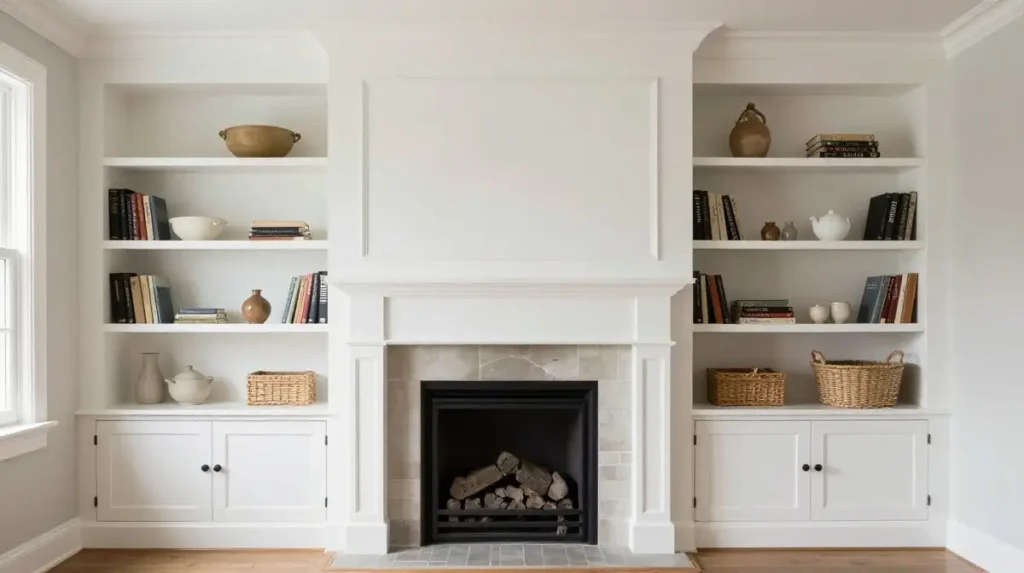
Farmhouse built-in shelves around a fireplace or along an empty wall give you both storage and display space. Mix books, a few ceramic pieces, and some woven texture rather than filling every shelf to the edge.
If built-ins aren’t possible, a simple wood bookshelf styled the same way gives a similar effect.
Choose a Farmhouse Style Sectional
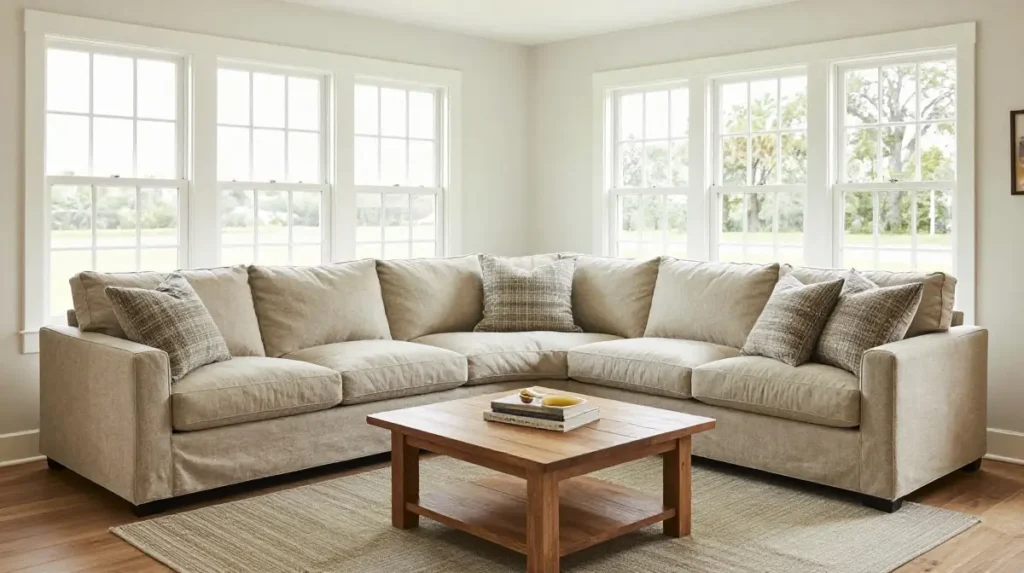
A farmhouse style sectional works especially well in open concept living rooms where the sofa needs to define the seating area without walls to lean on.
Look for slipcovered or linen-blend options in neutral tones to keep the cozy farmhouse aesthetic intact.
Layer Textiles for Warmth
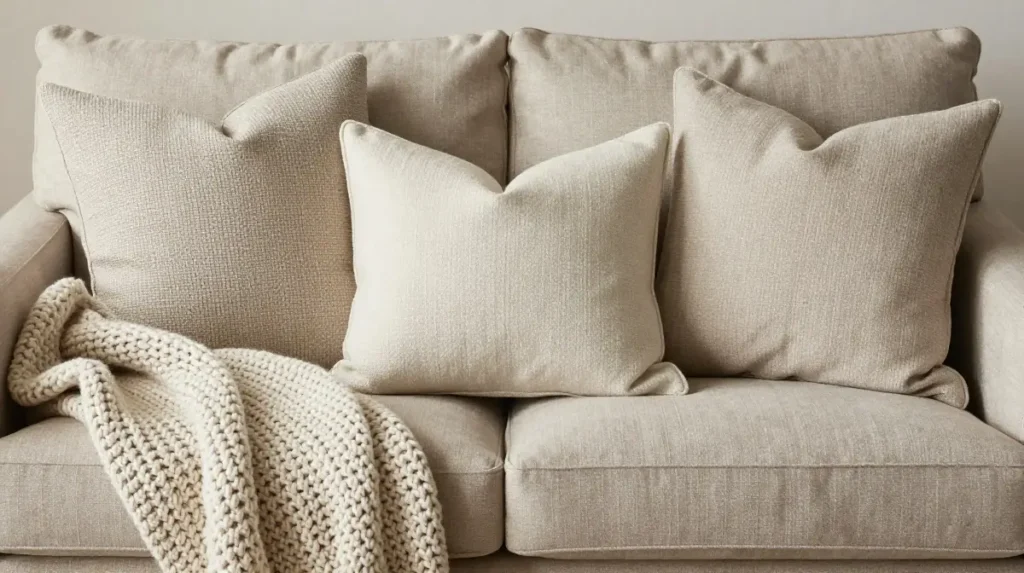
Layered textiles in a living room, like textured throw blankets, woven pillow covers, and a soft area rug, are what make a room feel inviting instead of just photogenic.
Stick to neutral throw pillows in varying textures rather than busy patterns, so the look stays calm.
Add a Farmhouse Coffee Table
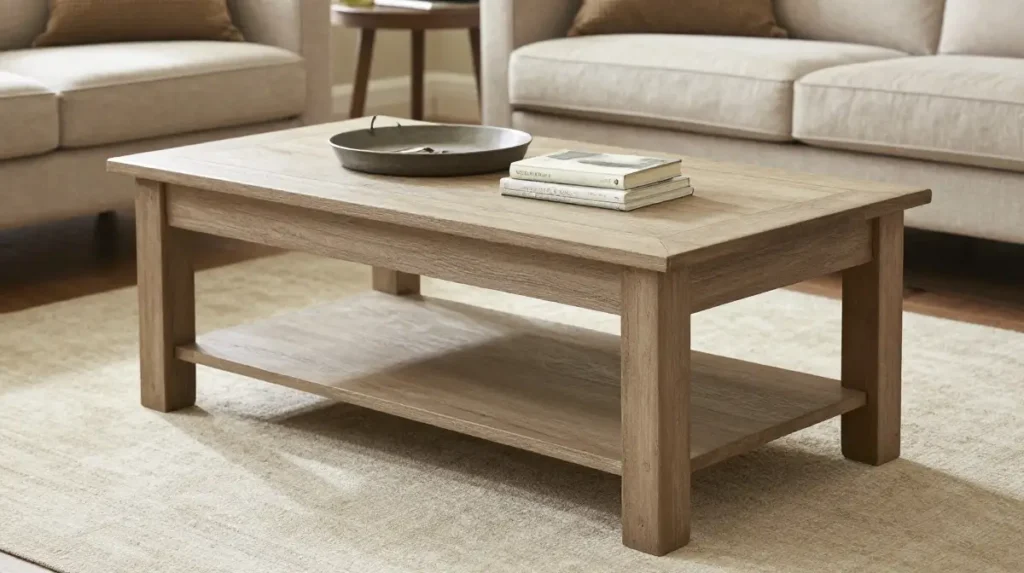
A farmhouse coffee table, ideally with a slightly distressed or reclaimed finish, often becomes the most-touched piece in the room.
Round or rectangular both work, but leave enough walking space around it, roughly 30 inches, so the room doesn’t feel cramped.
Try a Farmhouse Barn Door
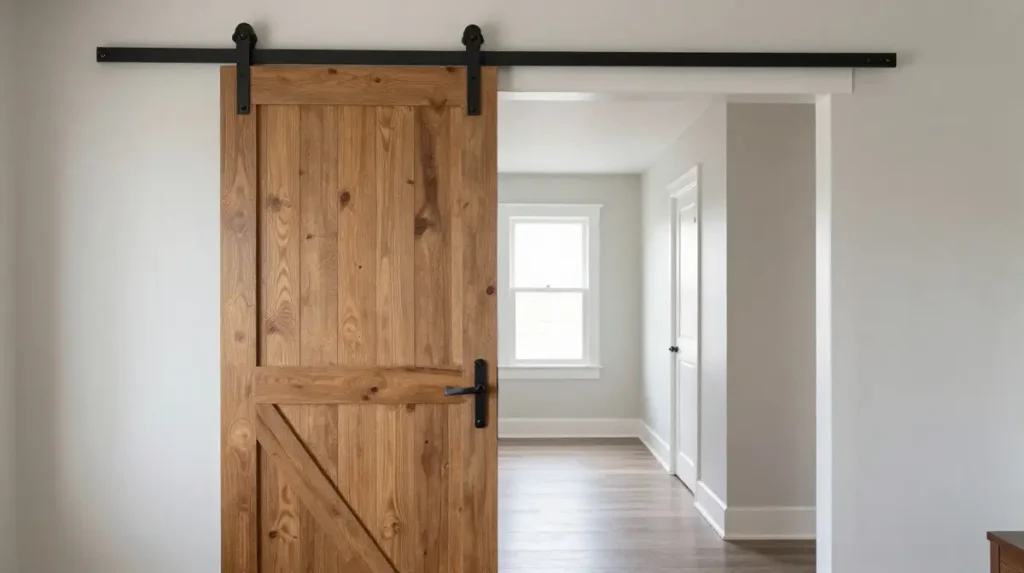
A farmhouse barn door isn’t just for closets and pantries anymore.
Used as a sliding divider between a living room and a hallway or office nook, it adds architectural interest while saving floor space that a swinging door would take up.
Add Wood Plank Flooring or a Wood-Look Rug
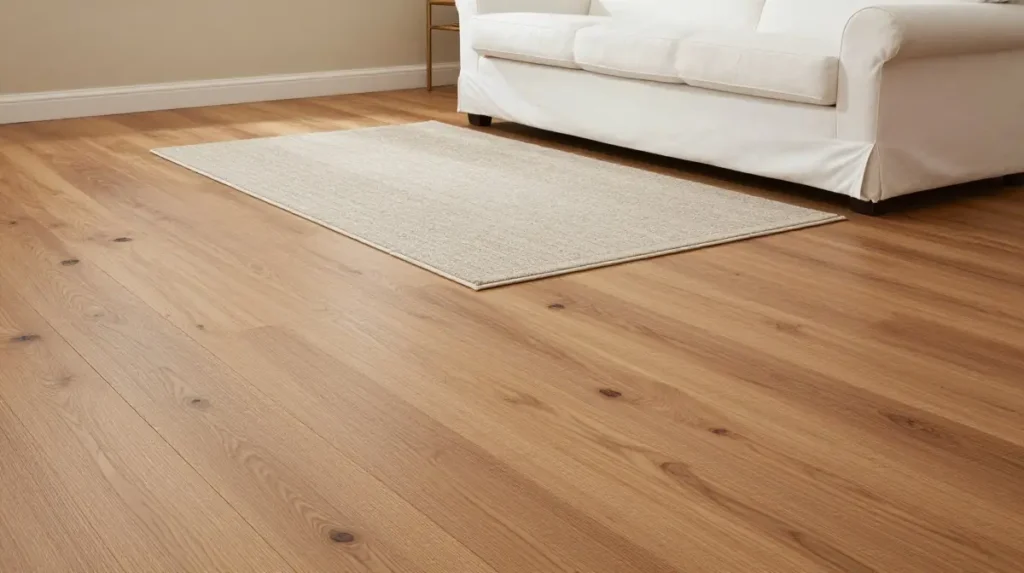
Wood plank flooring brings natural warmth underfoot and ties the whole farmhouse interior design together.
If replacing flooring isn’t in the budget right now, a wood-look vinyl plank or a warm wood-toned area rug gives a similar visual effect for far less money.
Use a Farmhouse Sofa Table Behind Seating
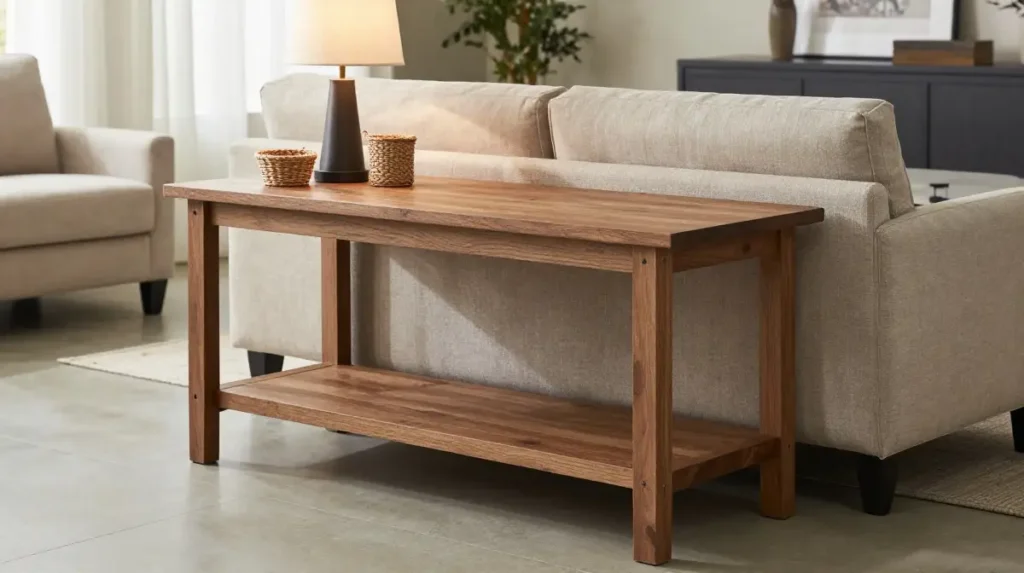
A farmhouse sofa table placed behind a sofa that floats in the middle of the room (common in open concept layouts) gives you extra surface space for lamps, books, or a small basket, while also helping to define the seating area.
Keep Wall Decor Minimal and Meaningful
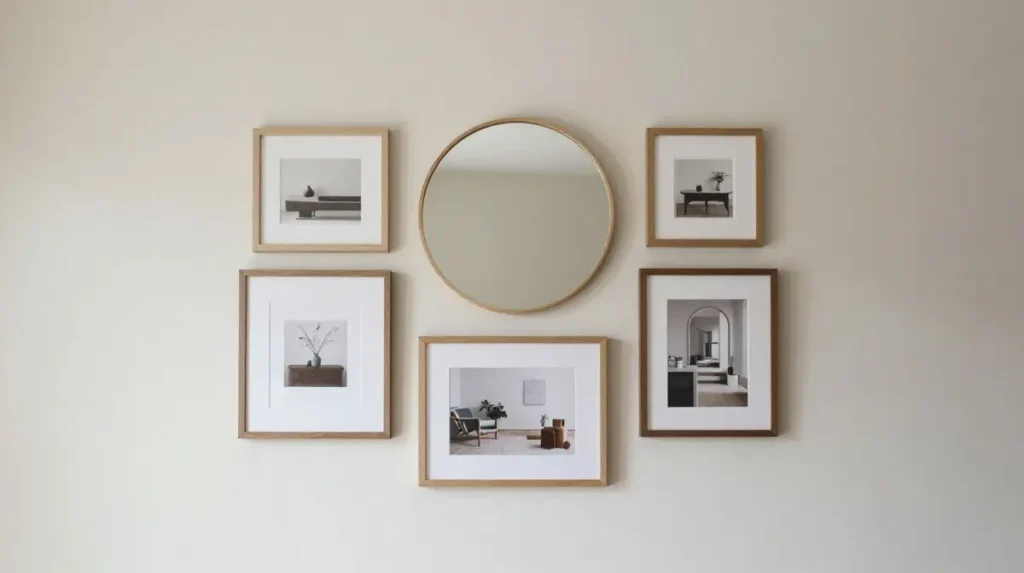
Farmhouse wall decor works best when it’s curated, not crowded. A few framed pieces, a clock, or a simple wood sign go further than a wall packed with mismatched frames.
This ties into the minimalist farmhouse design approach that keeps rooms feeling calm rather than busy.
Add Galvanized Metal Accents
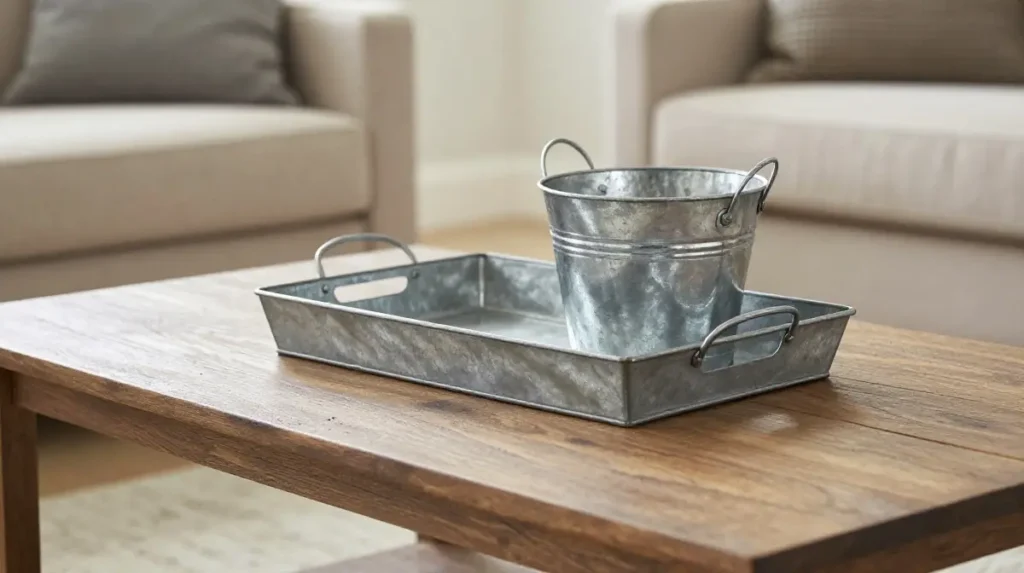
Galvanized metal accents, like a small bucket planter or a tray on the coffee table, bring in that lived-in, vintage farmhouse accent without feeling costume-y. A little goes a long way here.
Blend Old and New for a Transitional Farmhouse Style
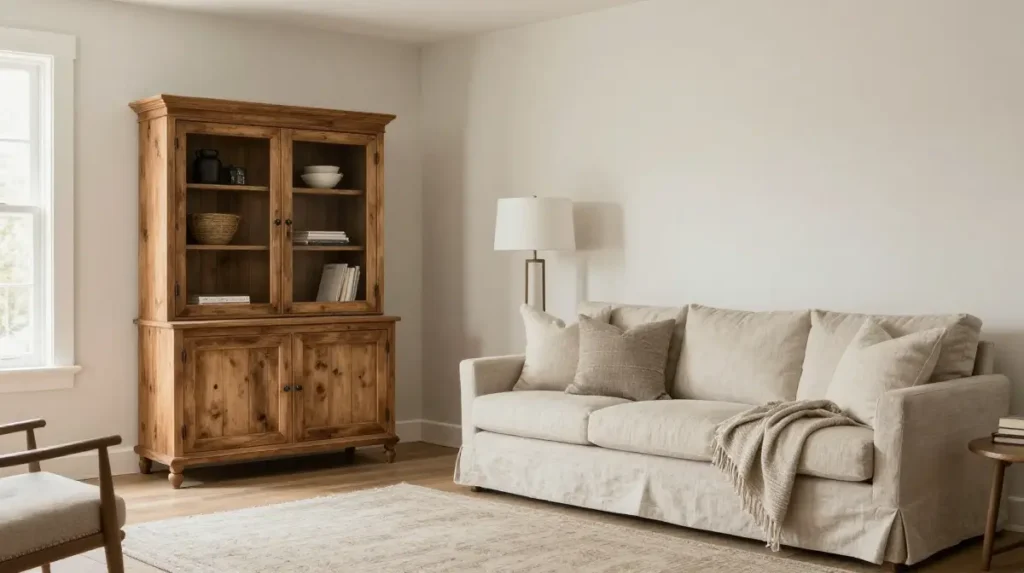
The easiest way to avoid a theme-park version of farmhouse style is to mix one vintage or rustic piece with two more modern ones.
This transitional farmhouse style is what most designers actually use, and it’s why high-end farmhouse rooms look elegant rather than costume-like.
Quick Reference Table: Farmhouse Living Room Elements at a Glance
| Element | Best For | Budget Level | Maintenance | Style Pairing |
|---|---|---|---|---|
| Shiplap accent wall | Adding texture to one focal wall | Medium | Low | Industrial or minimalist farmhouse |
| White slipcovered sofa | Households with kids or pets | Medium to High | Medium (washable covers) | Country chic or transitional |
| Reclaimed wood coffee table | Adding warmth and history | Medium | Low | Rustic or industrial farmhouse |
| Natural fiber rug | Grounding open layouts | Low to Medium | Medium (avoid spills) | Any farmhouse substyle |
| Black metal lighting | Industrial farmhouse touches | Low to Medium | Low | Modern rustic blend |
| Woven baskets | Practical, low-cost storage | Low | Low | All farmhouse styles |
Common Mistakes to Avoid
A few small missteps tend to repeat across farmhouse living rooms, so it helps to know them ahead of time. Going too heavy on shiplap or rustic wood can tip the room into theme territory instead of elegant farmhouse charm.
Skipping texture is another common one; an all-white room without textured pillows, baskets, or a layered rug can feel flat instead of cozy. And overcrowding the fireplace mantel or open shelving with too many small objects often makes a room feel cluttered rather than styled.
Conclusion
Modern farmhouse living room design works because it doesn’t ask you to choose between comfort and style. You get warm wood tones, soft neutral colors, and just enough rustic charm to feel cozy, balanced with clean lines and simple furniture that keep things from feeling outdated.
Whether you start small with a few woven baskets and a textured throw, or go bigger with shiplap and built-in shelves, the goal stays the same: a living room that feels calm, welcoming, and genuinely usable every single day.
You may also like this: 22 Cozy Farmhouse Bedroom Design Ideas for Warm Interior
Frequently Asked Questions
Is modern farmhouse style still popular? Yes, it remains a popular interior design choice because it blends timeless comfort with clean, updated lines, which keeps it from feeling like a passing trend.
What colors work best for a modern farmhouse living room? Neutral colors like warm white, greige, taupe, and soft beige work best, since they let wood tones and textures stand out without competing for attention.
How do I make my farmhouse living room feel less plain? Add layered textiles, woven baskets, a natural fiber rug, and a few wood or metal accents. Texture is what keeps a neutral room from feeling flat.
Do I need shiplap to achieve this style? No. Shiplap helps but isn’t required. A neutral palette, rustic wood furniture, and simple textiles can create the same look without it.
What’s the easiest way to start a farmhouse makeover on a budget? Begin with textiles and accessories, like throw pillows, a woven basket, and a natural fiber rug, before investing in bigger furniture pieces or wall treatments.