

Introduction:
Most people do not realize how much their closet affects their state of mind. You wake up, walk to your wardrobe, and within thirty seconds, you are either calm and confident or already defeated by the chaos staring back at you. For years, I was part of the second group. My mornings were a cycle of frustration, lost socks, and that sinking feeling of standing in front of a full closet thinking there was nothing to wear.
Then I started making small, consistent changes to how I organized my closet. Not expensive renovations. Not a complete overhaul in a single weekend. Just deliberate habits, one at a time. Within a few weeks, my mornings changed completely. I want to share those 18 closet organization ideas with you, because the impact goes far beyond just finding your shirt faster.
Create Distinct Zones for Every Clothing Category
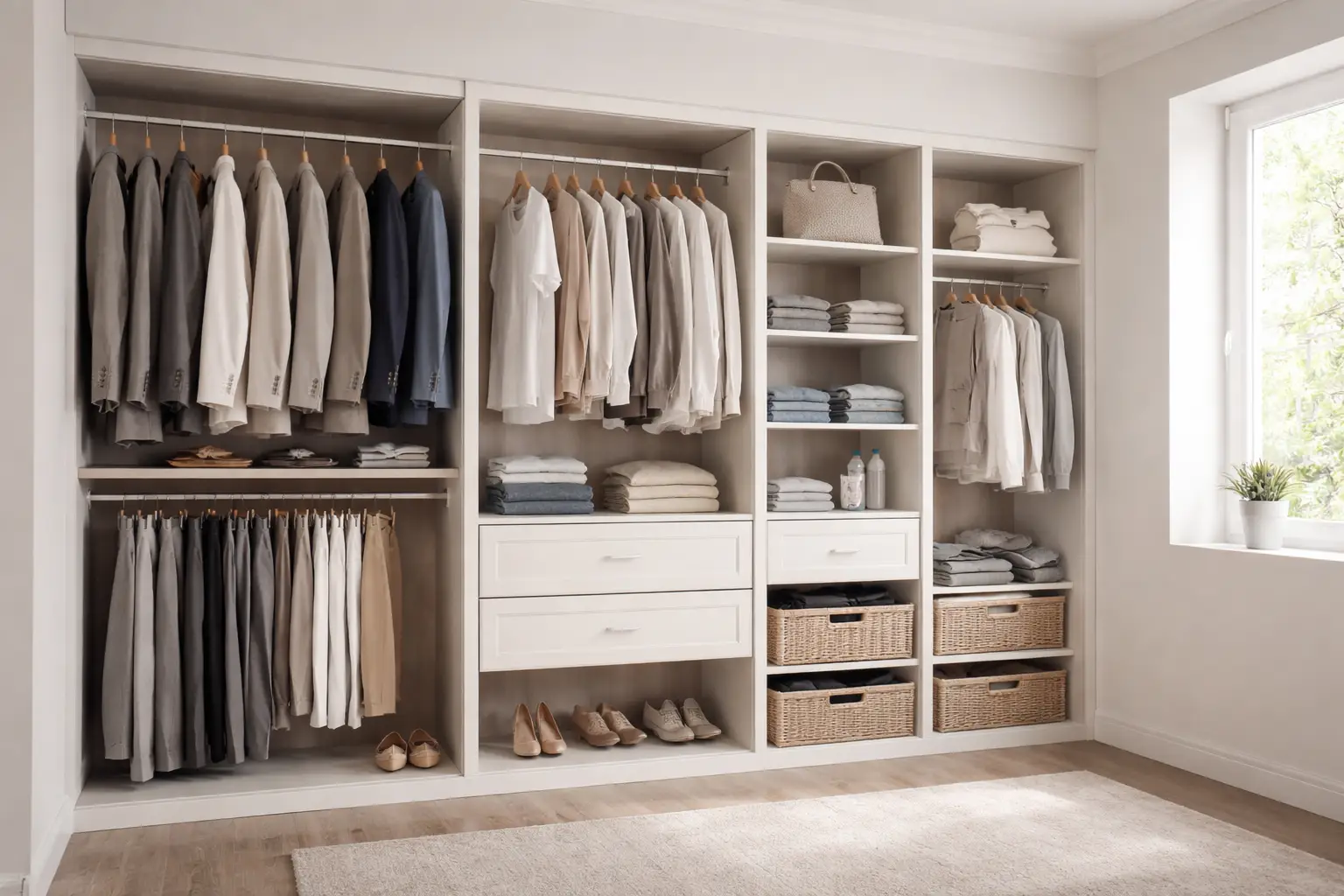
One of the simplest ways to bring order to your closet is by organizing it into distinct zones. Think of your wardrobe in categories: workwear, casual outfits, gym gear, loungewear, outerwear, and accessories. When everything has a dedicated area, your brain stops wasting energy scanning the entire closet. You go directly to the zone you need.
Move Your Most-Worn Pieces to the Front
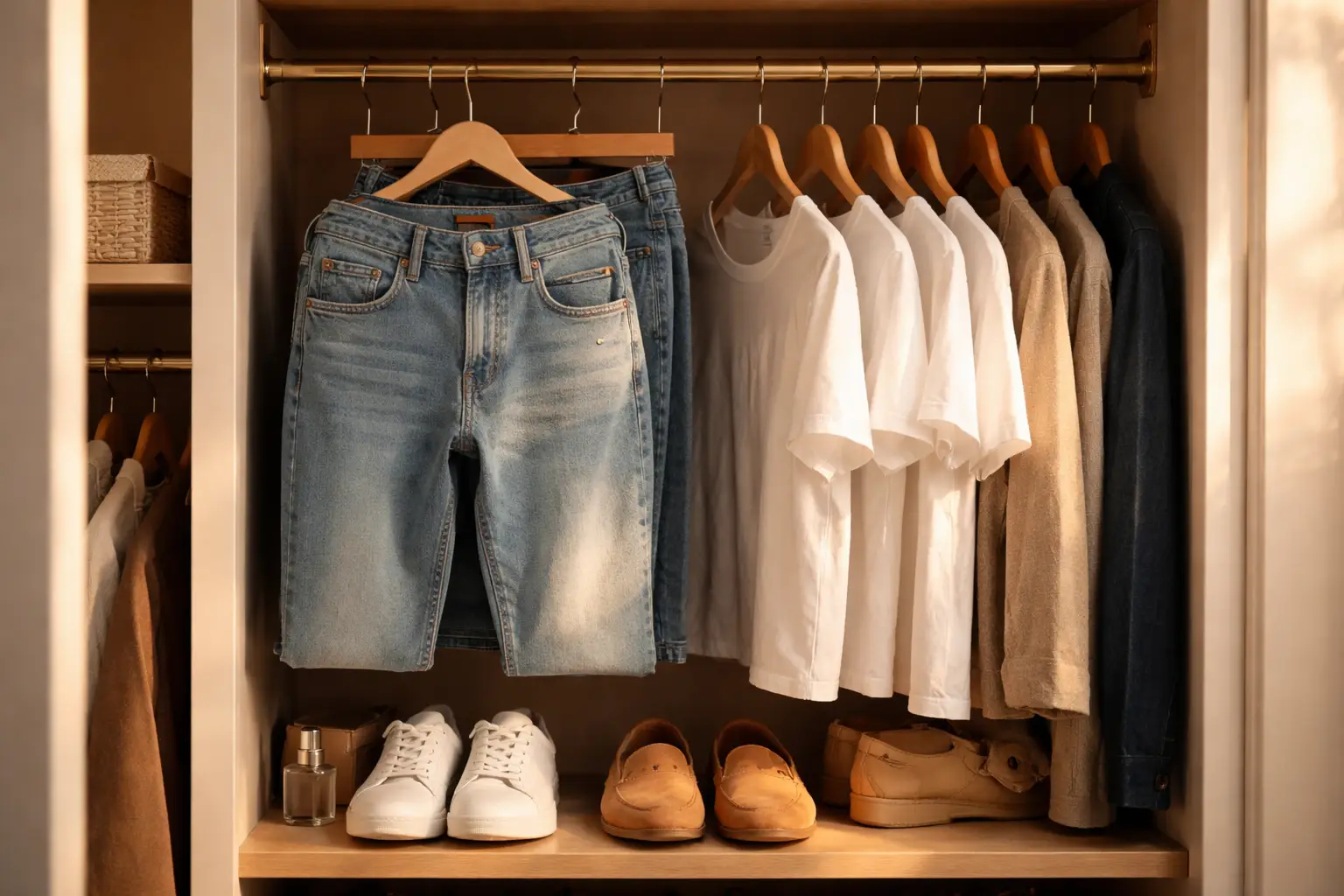
Keep your most-worn pieces front and center. Move your go-to jeans, favorite tees, and everyday shoes to the most accessible spots. Storing seasonal or occasional pieces higher up or toward the back helps clear the way for your daily staples.
This single shift saves more time than any storage bin or label maker ever will. When your hands go directly to what you actually wear, the decision is made before your mind even fully wakes up.
Prepare Your Outfit the Night Before
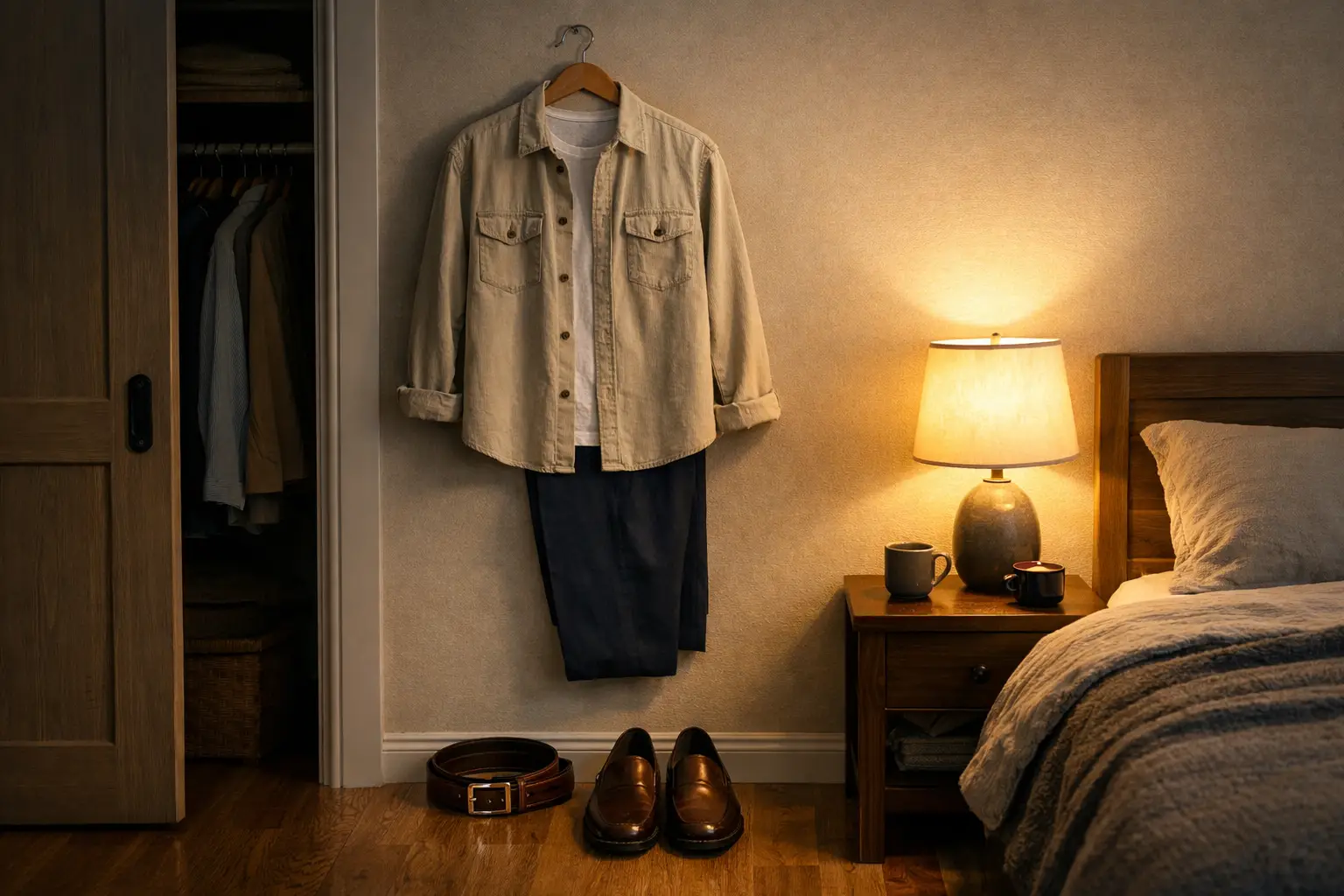
Designate a spot, on a hook or small rack beside your closet, for the next day’s outfit. It only takes five minutes every night to prepare everything, including underwear and accessories. A minimal time investment to keep mornings stress-free.
This habit alone transformed my weekday mornings more than anything else on this list. Five minutes of planning at night buys you fifteen minutes of calm in the morning.
Use the Backward Hanger Method to Track What You Wear

At the beginning of the season, face all your hangers backward. When you wear something, return it to the closet with the hanger facing forward. This visual tracking system reveals your real wardrobe habits with no additional effort on your part.
After one season, the items still facing backward are the ones you can comfortably donate. No guessing. No guilt.
Color Code Your Hanging Clothes
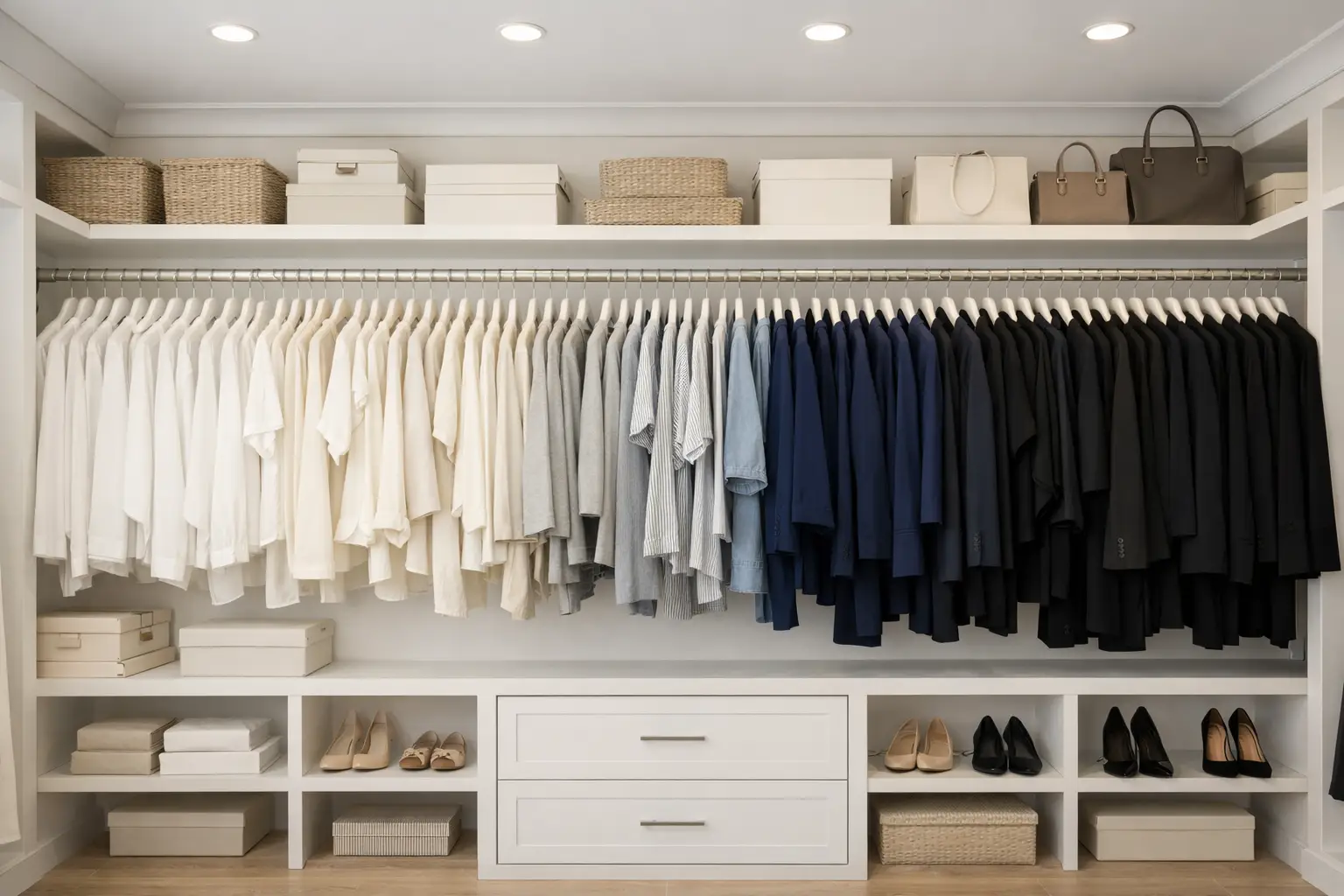
Organize your clothes into color families, but in a functional sense: dark neutrals together, light neutrals together, and bold colors together. Color coding is not just about aesthetics. It actually reduces the time your eyes spend searching, because your brain processes color faster than shape or text. When you know your navy blazer lives in the dark neutrals section, you find it in seconds.
Install Shelf Dividers to Maintain Order
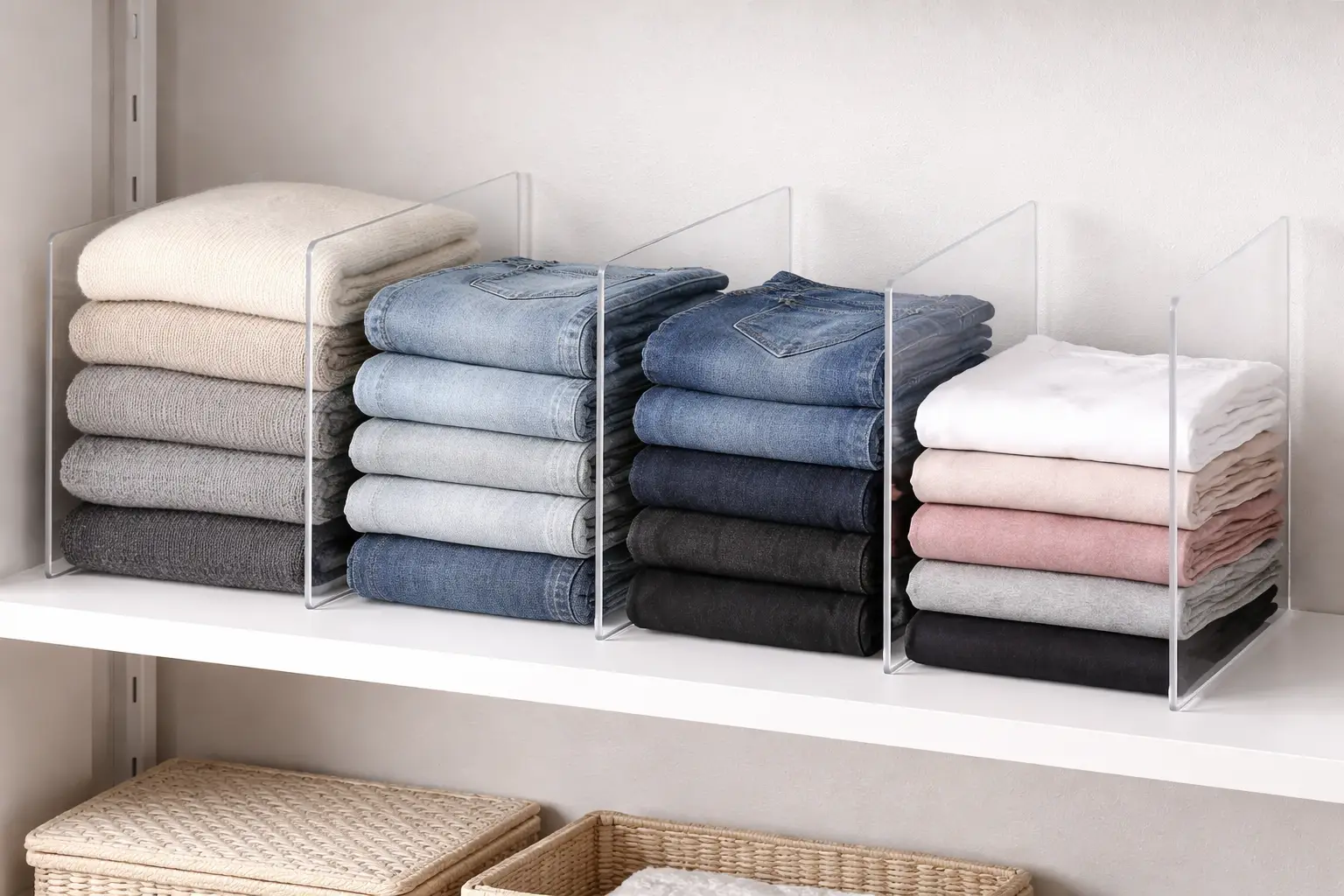
Stacked shelves without dividers always collapse into chaos. A few shelf dividers keep sweaters, jeans, and folded items from toppling into each other. You will never again unfold three shirts just to get to the one at the bottom.
Use Vertical Space With Stackable Storage
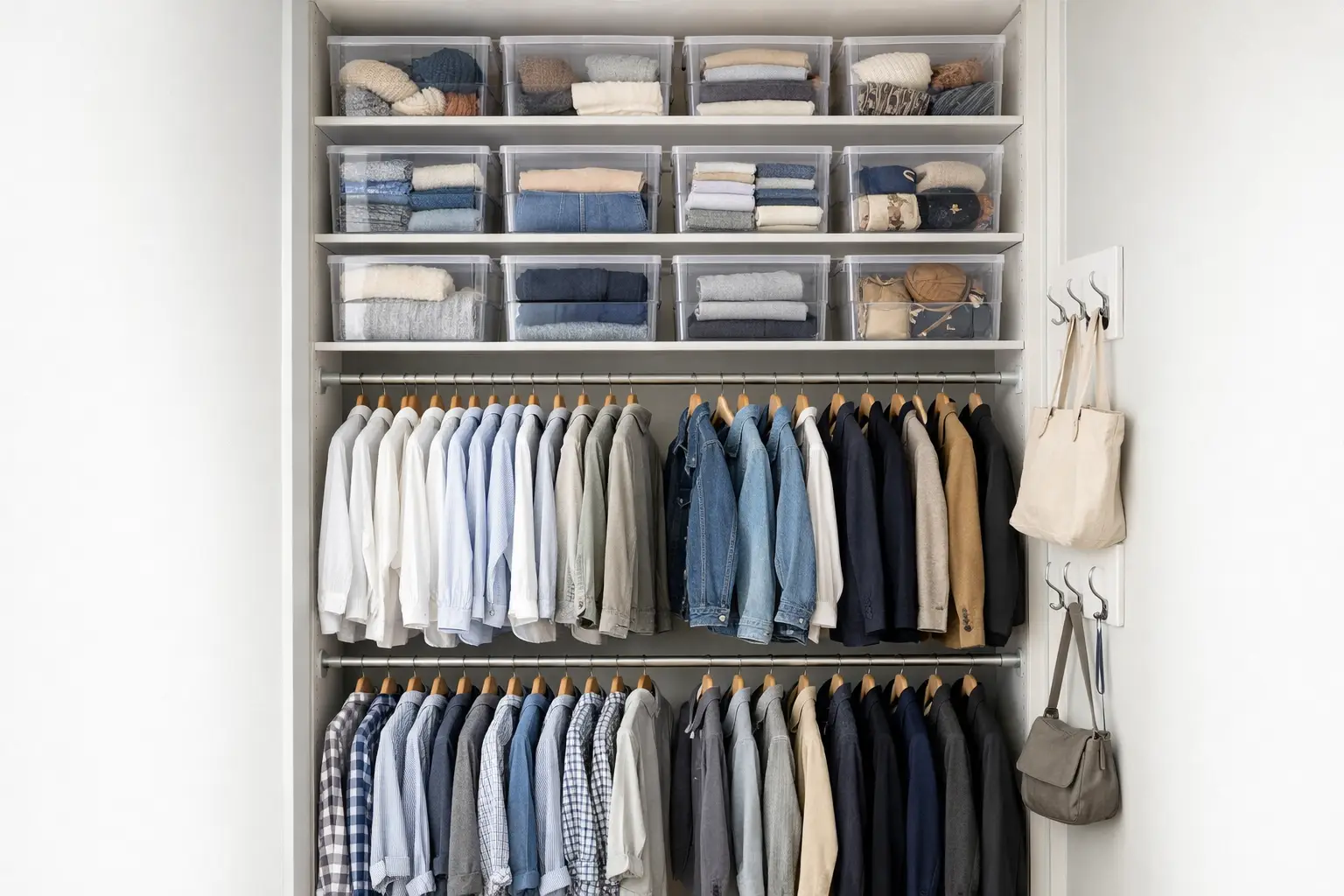
Use vertical space with stackable storage or over-the-door hooks, and consider color-coding or arranging items by frequency of use to streamline your daily routine.
Most closets waste the top third of their space entirely. Add a second hanging rod for shorter items like shirts and jackets. Stack clear bins on upper shelves for seasonal items. Every inch of vertical space you claim back is space that relieves morning pressure.
File Fold Your Drawers
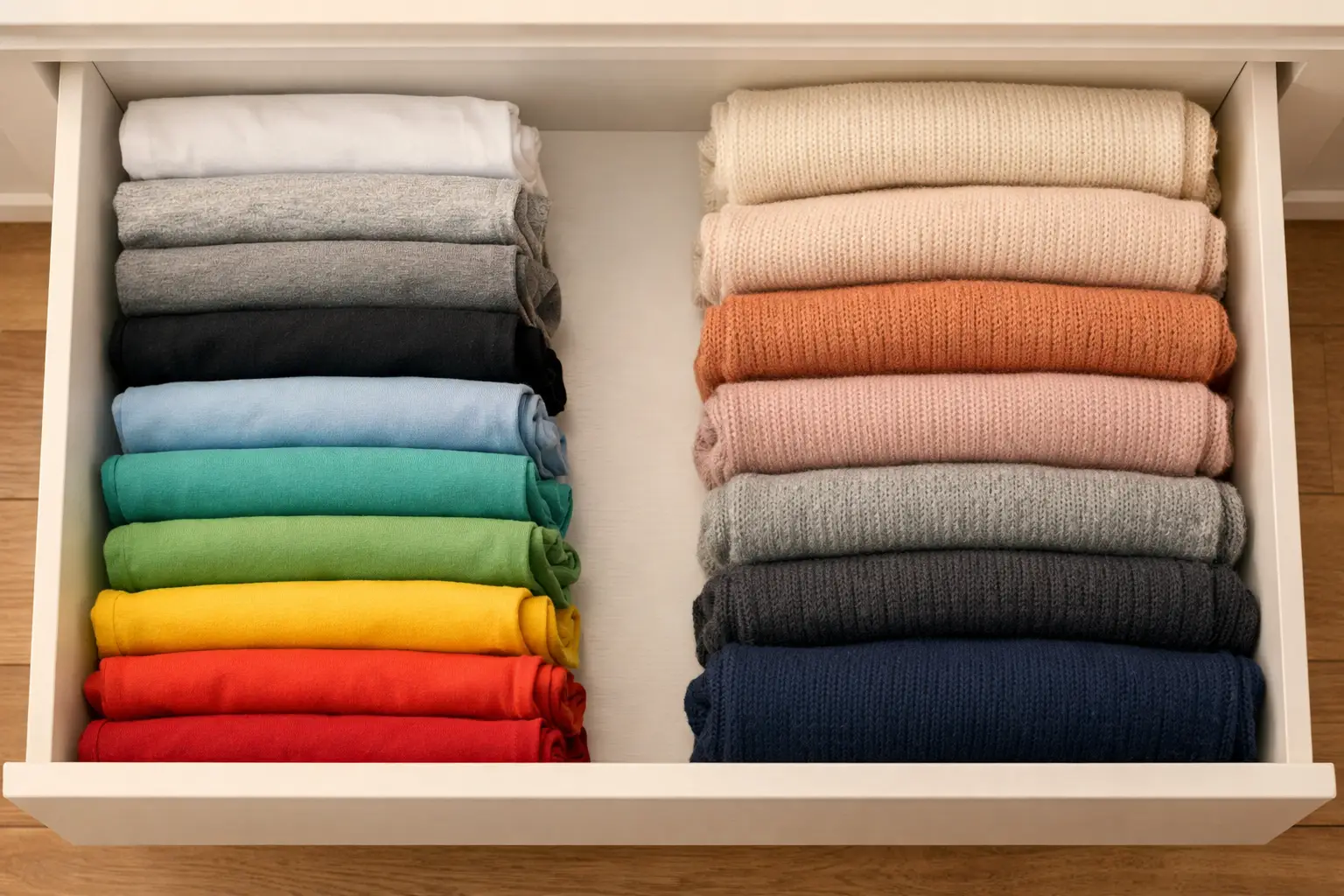
Fold and store clothes so every item in a drawer is visible at a single glance. Use the file fold method for t-shirts and sweaters, standing them upright rather than stacking. This avoids that frustrating problem of reaching the bottom of a stack and finding clothes that have not been worn for ages.
Once you file fold, going back to stacking feels like returning to dial-up internet. Everything is visible, accessible, and stays in place.
Add an Accessory Display Tray

An accessory display tray is the perfect way to organize your daily essentials like watches, sunglasses, and keys. Placing a beautiful tray on a shelf or a central island adds a touch of sophistication to your closet. This organized drop zone helps you stay efficient during your morning routine because everything you need is in one place.
Small items cause the most morning chaos precisely because they have no fixed home. A tray fixes that instantly.
Store Shoes at Eye Level With Slanted Shelves

Slanted shelves allow you to view each pair at a glance without lifting boxes or moving other shoes. You can easily identify and retrieve any shoe you need, making morning routines faster and more efficient.
Shoe chaos is one of the most common closet complaints. When your footwear is visible and accessible, the final step of getting dressed becomes effortless.
Dedicate a Space for Unused Hangers
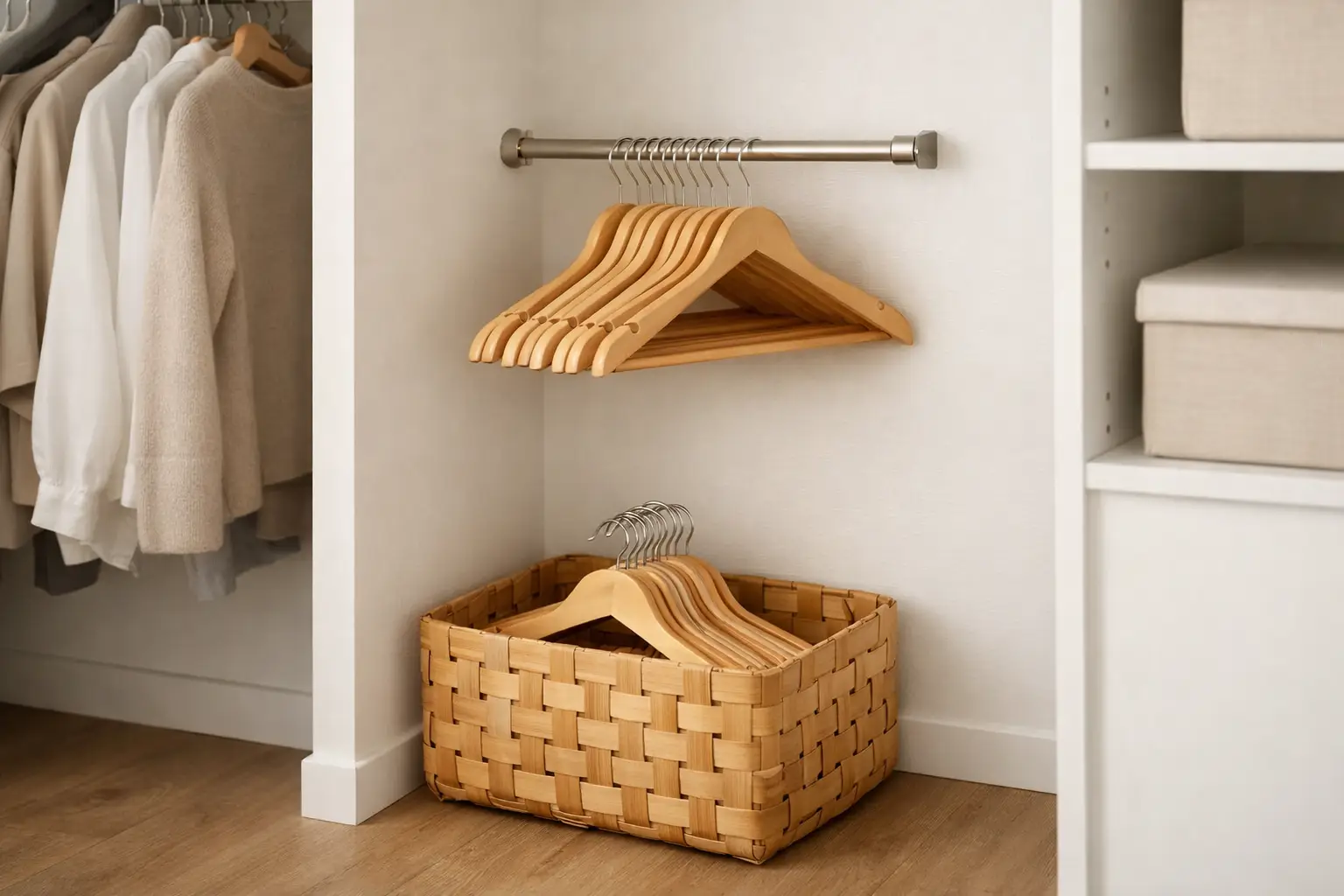
Designate a place for unused hangers instead of letting them be dispersed throughout your closet. Take a special hanging rod or box and dedicate it to unused hangers only. This avoids the cluttered look of empty hangers mixed with clothes and makes putting away clean laundry much easier.
Separate Seasonal Clothing Entirely
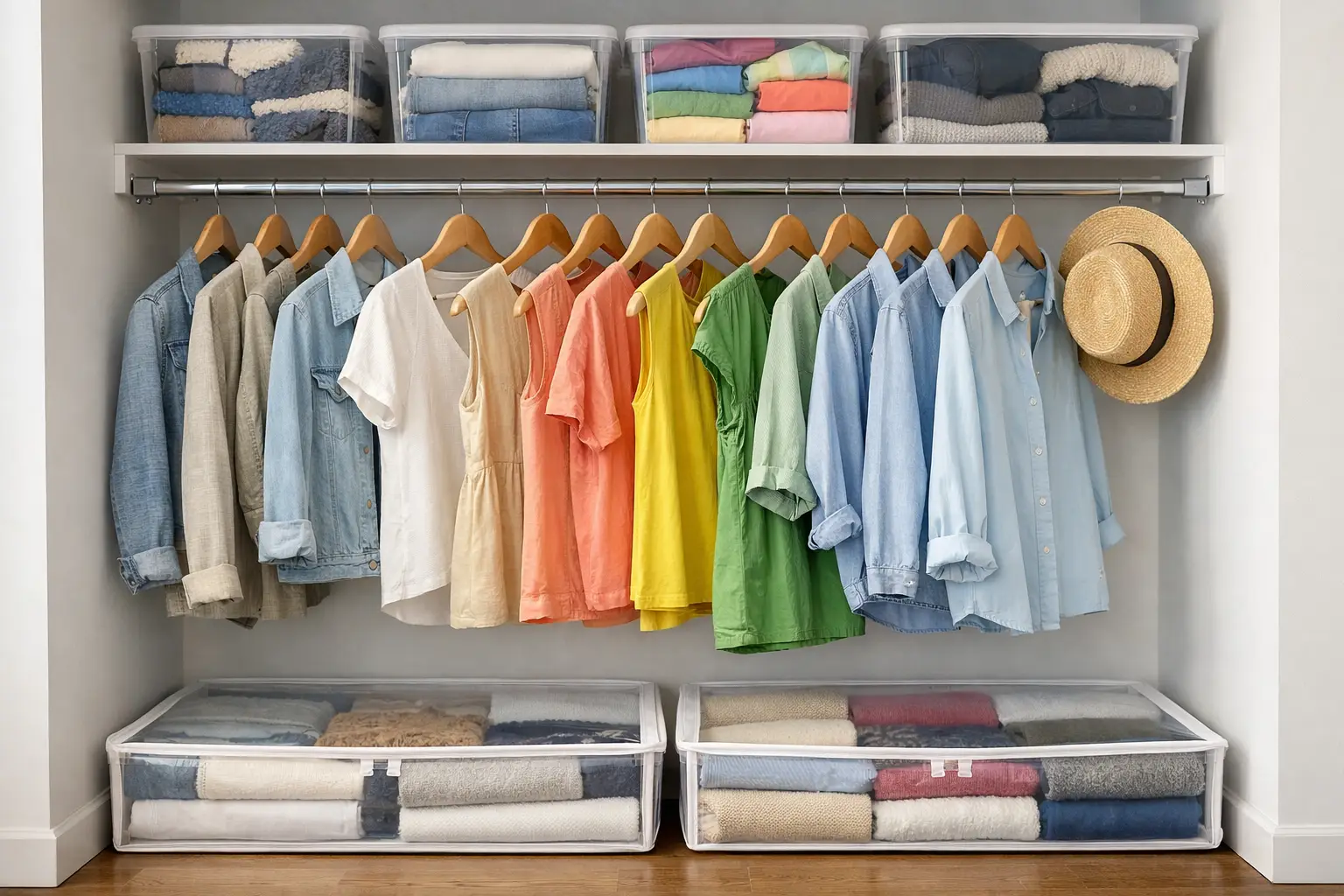
Create clear boundaries between your current season’s clothes and everything else. When the weather changes, physically move out-of-season items to a separate space, such as under-bed storage or the top shelf of your closet. Keep a small transition section for those unpredictable weather days.
Reducing your active wardrobe to only what is seasonally relevant makes every single morning decision easier.
Add a Valet Rod for Outfit Planning
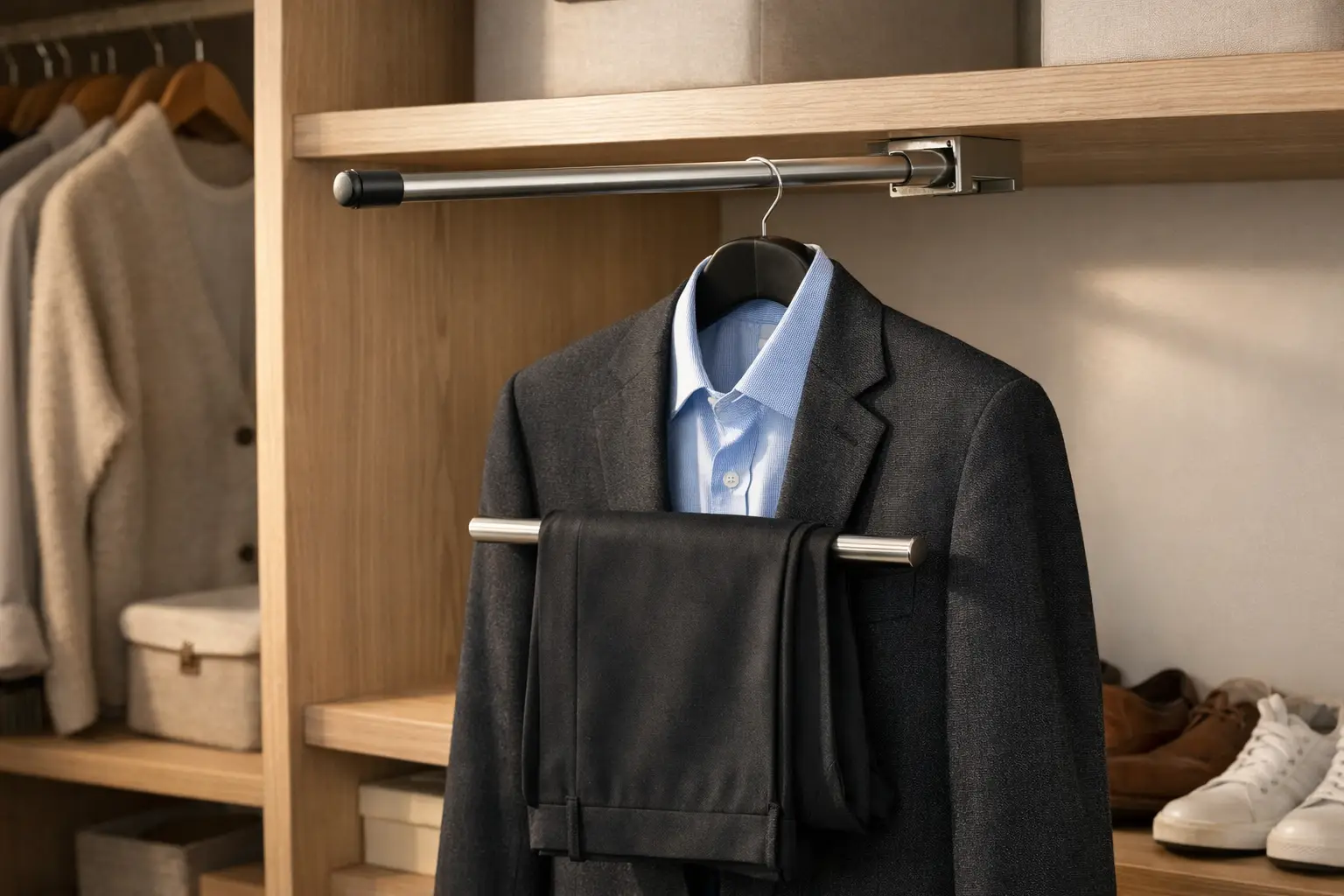
A valet rod is a small but incredibly useful accessory that provides a temporary hanging spot. It typically slides out from a shelf or cabinet side when you need it and disappears when you do not. This is perfect for planning your outfit for the next day or hanging up dry cleaning before you put it away.
Keep a Donation Bin Inside the Closet
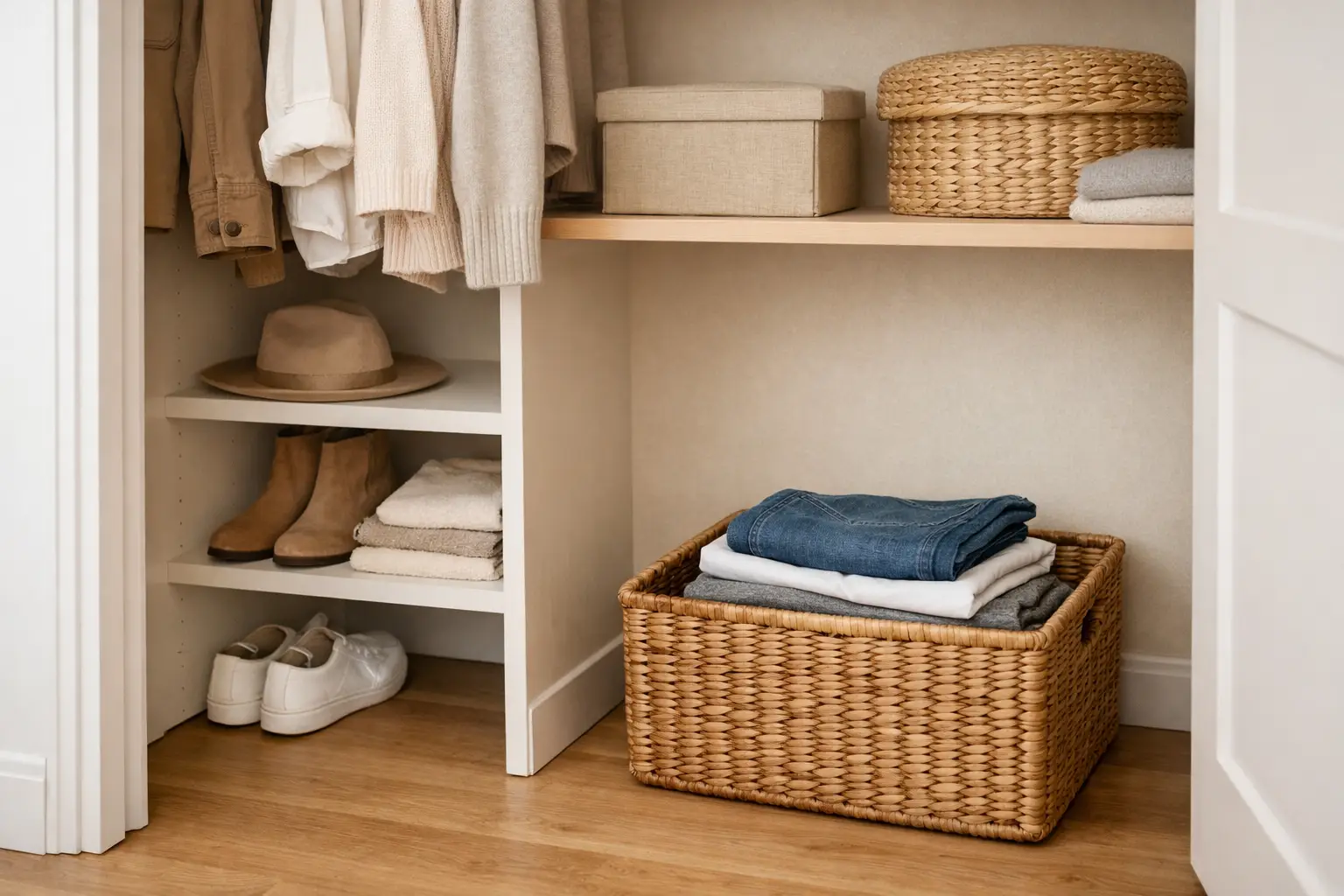
Keep a designated bin or basket in your closet for clothes you no longer wear or need. When it is full, it is time for a donation drop-off. This habit helps you avoid the dreaded closet overflow, keeps your space fresh, and makes your morning routine simpler.
Decluttering becomes easy when it happens gradually, item by item, rather than in one overwhelming purge session.
Use Drawer Dividers for Small Items
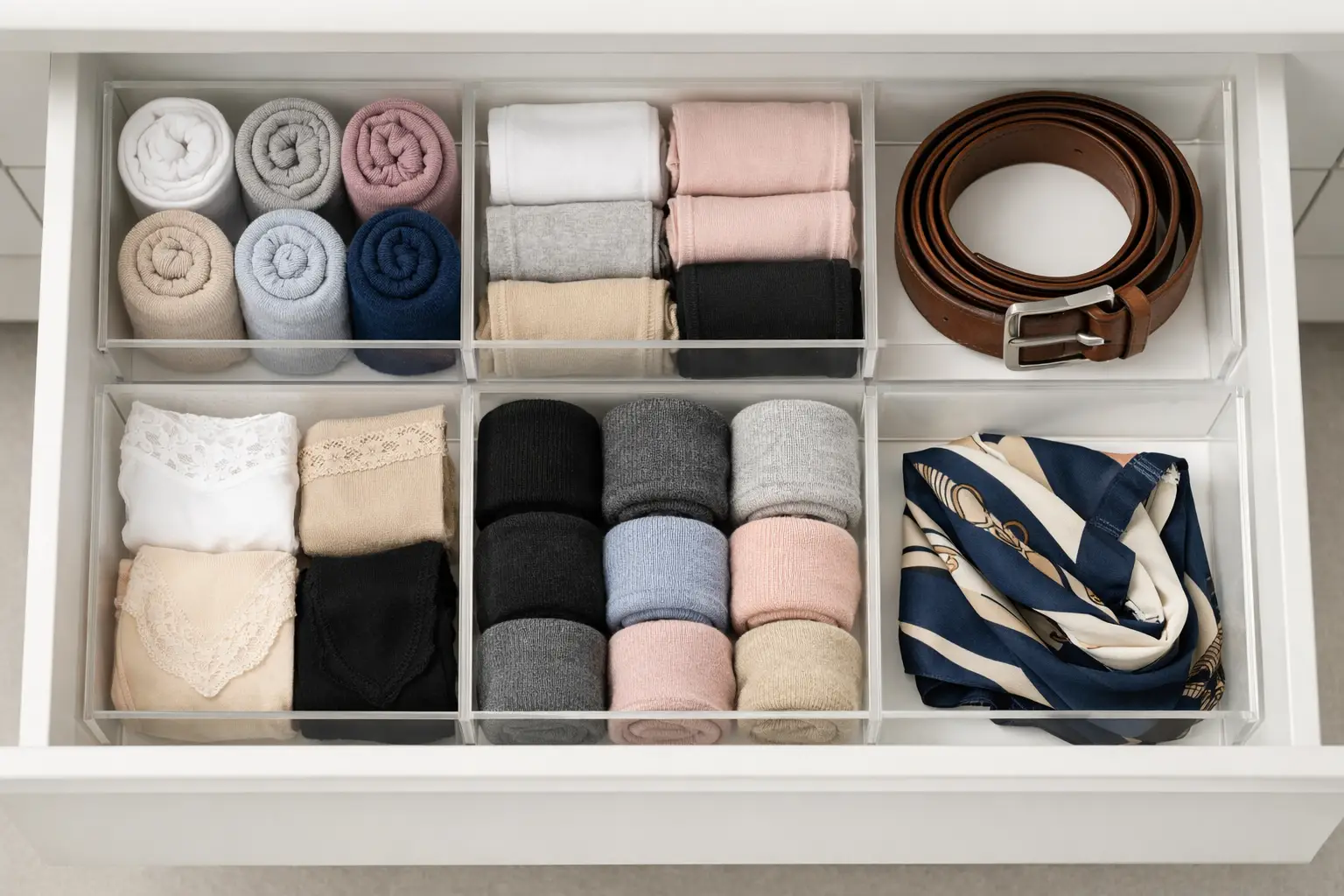
Socks, belts, undergarments, and scarves disappear into drawers without dividers. Small compartments inside drawers give every item a fixed home. For smaller items such as belts, socks, or scarves, allocate individual bins or drawers that prevent misplacements or tangles.
Return Clean Laundry to Its Exact Spot Every Time

An organized closet only stays functional when clean clothes return to their rightful place. After cleaning your laundry, make it a routine to fold, hang, or store items in the same spot consistently. Habitually maintaining this flow keeps your setup intact.
Organization is not a one-time event. It is a daily practice of returning things where they belong. The system only works when you respect it consistently.
Build Your Closet Around Your Lifestyle, Not an Ideal One
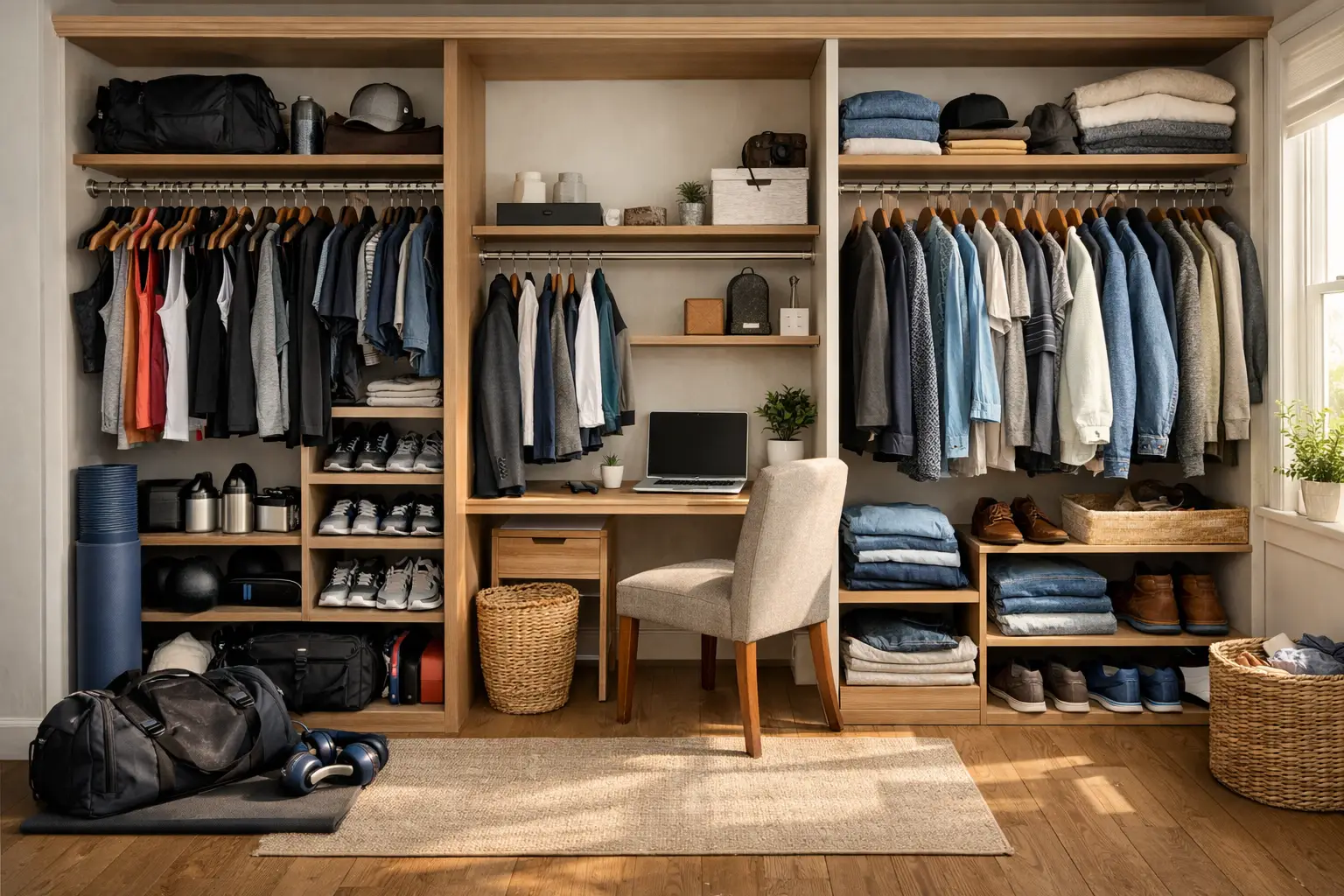
The most important idea on this entire list is this: organize your closet around how you actually live, not how you wish you lived. Everything in your closet should be something you actually want to wear. While you can organize any closet with a little effort, nothing beats a system that is custom-designed for your lifestyle.
If you work from home five days a week, your workwear section should be small. If you work out every morning, your gym clothes should be the first thing you see. Build your system around reality and it will sustain itself.
Label Everything in Your Closet Clearly
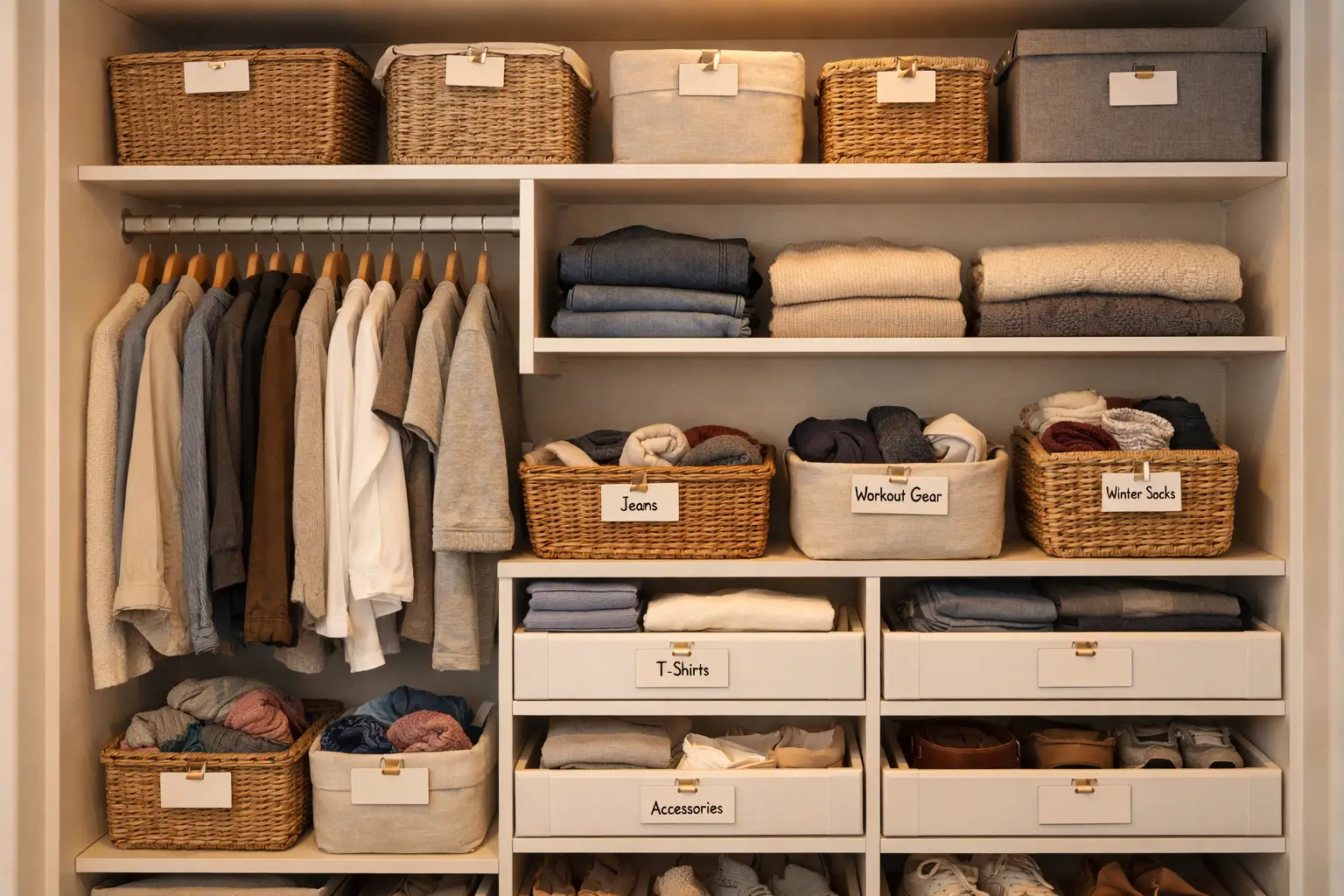
A neatly organized closet with small handwritten or printed labels attached to baskets, bins, shelf edges, and drawer fronts, each label identifying its contents such as scarves, workout gear, or winter socks, clean white shelving, soft warm lighting, photorealistic interior lifestyle photography, no text, no watermark
Conclusion:
None of these 18 closet organization ideas require a large budget or a professional installation crew. What they require is intention. When you give every item in your closet a purpose and a place, getting dressed stops being a source of stress and becomes a source of quiet confidence. You walk into your day knowing exactly who you are and what you are wearing, and that certainty carries forward into everything else you do.
Start with just one idea from this list today. Tomorrow, add another. Within a month, your mornings will not look anything like they do right now.
You may also like this:Best 16 Low Light Plant Ideas for Indoor Spaces Actually Need
Frequently Asked Questions
Q1. What is the first step to organizing a closet? Start by removing everything and sorting items into three piles: keep, donate, and discard. Once you can see what you actually own, organizing it becomes far simpler.
Q2. How do I keep my closet organized long-term? Return every item to its designated spot after each use, do a small seasonal edit every few months, and keep a donation bin in the closet so clutter never accumulates.
Q3. What is the best way to organize clothes in a small closet? Maximize vertical space with a double hanging rod, use over-the-door organizers for accessories, file fold drawer items so everything is visible, and store only the current season’s clothing inside.
Q4. How does closet organization reduce morning stress? When every item has a fixed home, you eliminate decision fatigue and the time spent searching. Your brain can focus on higher priorities instead of hunting for a matching pair of shoes.
Q5. How often should I declutter my closet? A light edit every three months is ideal, aligning with seasonal changes. A full declutter once or twice a year keeps your wardrobe manageable and your mornings efficient.