
Introduction
Children do not need a screen to spark their imagination. A patch of soil, a handful of water, and a few old pots can open up an entire world of wonder. That is exactly what a mud kitchen setup offers. As parents, educators, and outdoor play advocates have come to realise, there is no better gift you can give a child than the freedom to get genuinely messy outside. Mud kitchens have grown from a simple backyard trend into a well-researched tool for child development, supporting creativity, problem-solving, sensory growth, and even emotional wellbeing. Whether you are working with a sprawling garden or a compact patio, this guide walks you through 22 mud kitchen setup ideas that will keep children engaged, stimulated, and happily covered in mud for hours on end.
What Is a Mud Kitchen Setup and Why Does It Matter
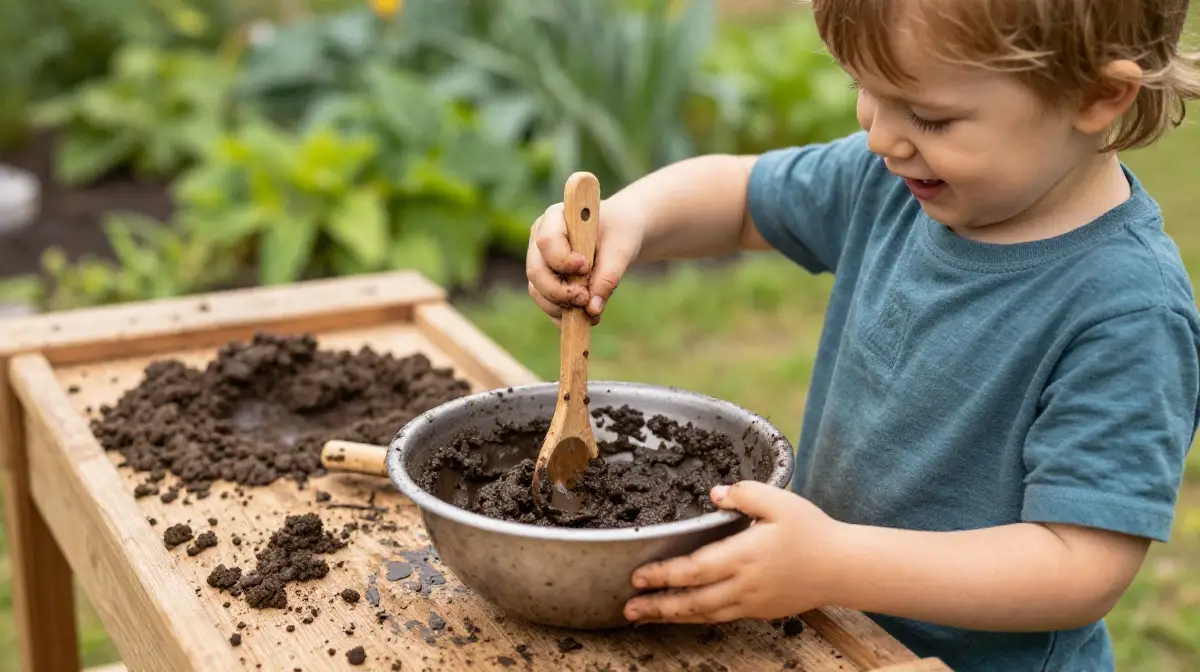
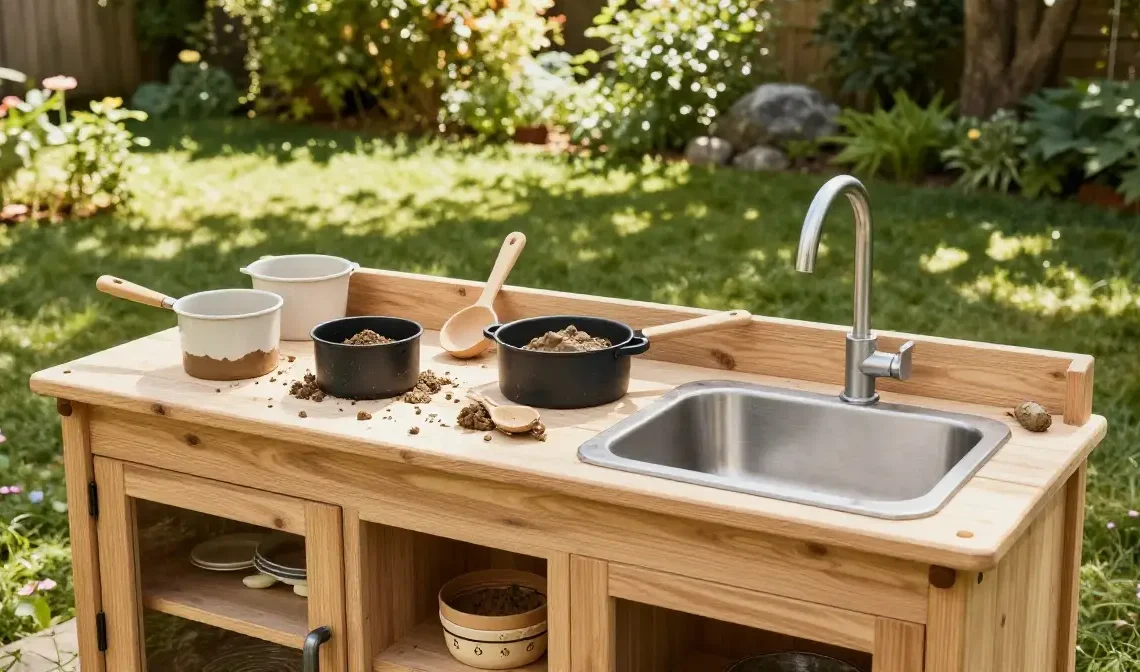
A mud kitchen setup is an outdoor play space designed to mimic a real kitchen, giving children the tools and materials to mix, stir, pour, and create using mud, water, sand, and natural loose parts. At its core, it is a workbench with a surface, some form of water access, and a collection of kitchen tools scaled to a child’s hands. The idea sounds simple, but the developmental benefits are anything but ordinary. Research consistently shows that children who engage in unstructured outdoor messy play develop stronger fine motor skills, better emotional regulation, and deeper connections to the natural world. Soil also contains the bacterium Mycobacterium vaccae, which when absorbed through the skin has been shown to trigger a release of serotonin in the brain, acting as a natural mood lifter. A mud kitchen is not just fun. It is genuinely good for children in ways that go far beyond the afternoon they spend making mud pies in the garden.
The Classic Pallet Mud Kitchen Setup
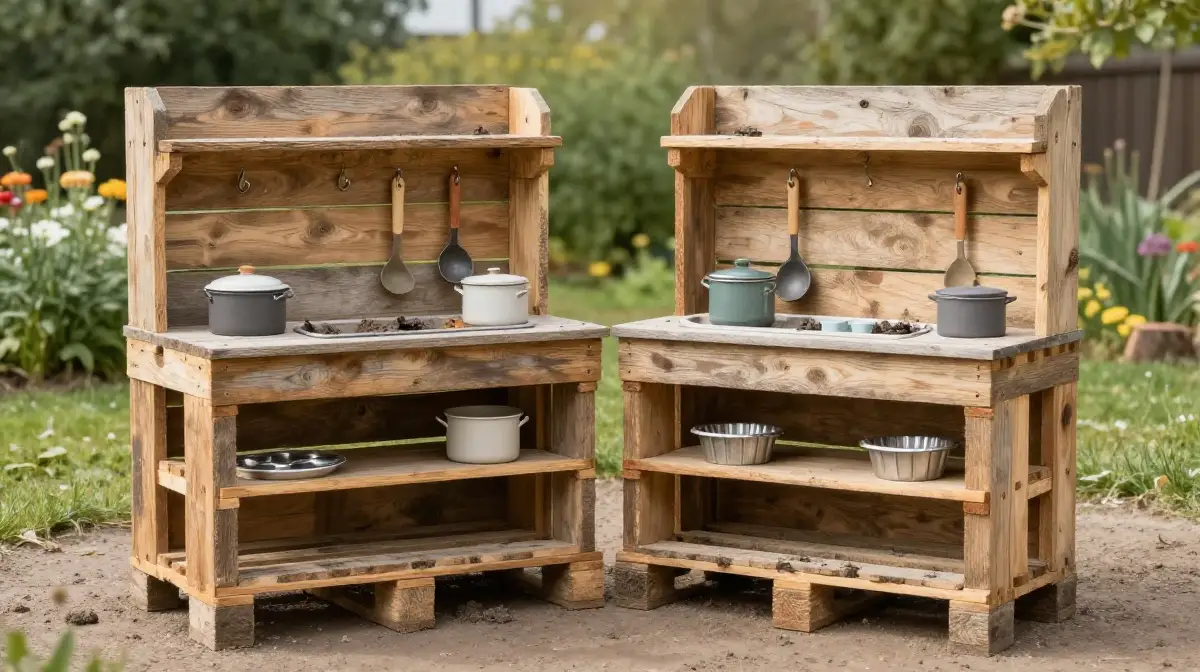
One of the most popular and budget-friendly approaches is the pallet mud kitchen setup. Wooden pallets are widely available for free or at very low cost, and with a little sanding and some outdoor wood stain, they can be transformed into a sturdy, attractive kitchen structure. A single pallet stood upright provides a vertical surface perfect for attaching hooks, shelves, and even a small chalkboard for writing recipes. Two pallets arranged side by side create a generous countertop area that supports group play. Adding a wooden shelf below offers storage for pots and pans. This setup is ideal for parents who want to build something themselves over a weekend without a large investment. Cedar wood is particularly recommended for its natural weather resistance and its ability to stand up to rain, snow, and year-round outdoor conditions without warping or rotting quickly, making it a long-lasting and worthwhile choice.
The Sink and Running Water Mud Kitchen Setup
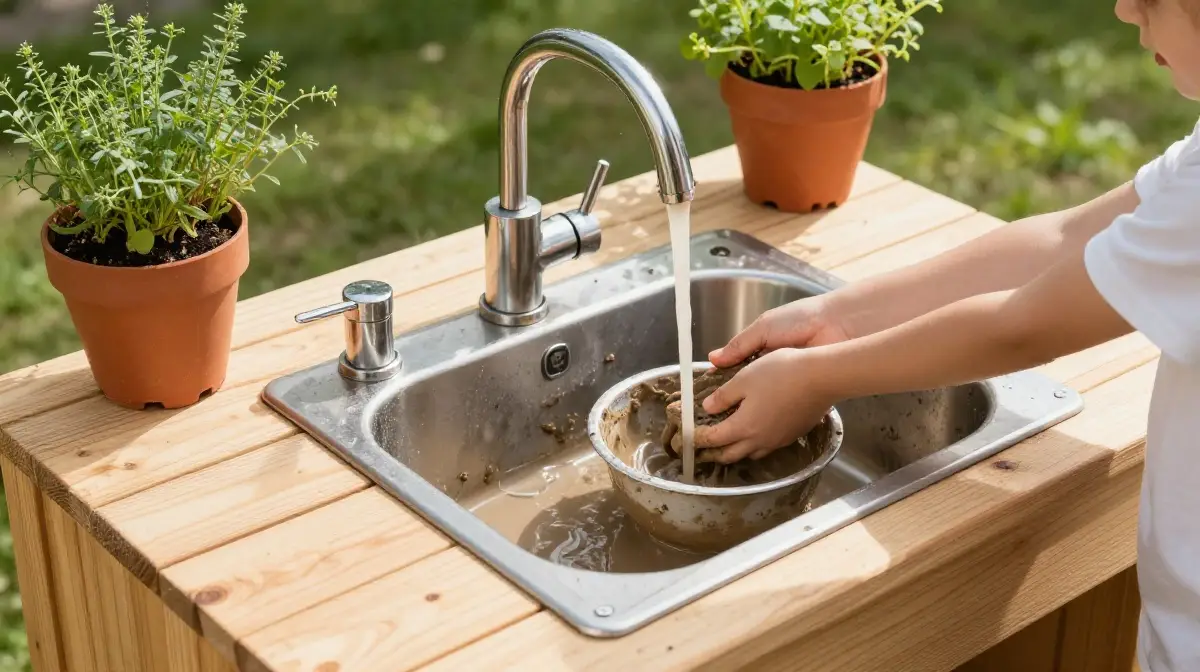
Adding a real sink to your mud kitchen setup elevates the play experience considerably. Children are naturally drawn to water, and having a functional tap or a gravity-fed water source transforms a simple mud station into a full outdoor kitchen. You can achieve this by connecting a garden hose to a small stainless steel sink mounted into the countertop, or by placing a large camping water container with a tap at height so children can operate it independently. The key is giving children control over the water flow themselves, which teaches water conservation and builds confidence in their own abilities. Parents often find that a sink encourages longer play sessions, as children will rinse, refill, and start entirely new recipes dozens of times without any prompting from adults. Keep the water shallow and change it regularly to maintain hygiene throughout the playing season without worry.
The Two-Level Mud Kitchen Setup for Multiple Children
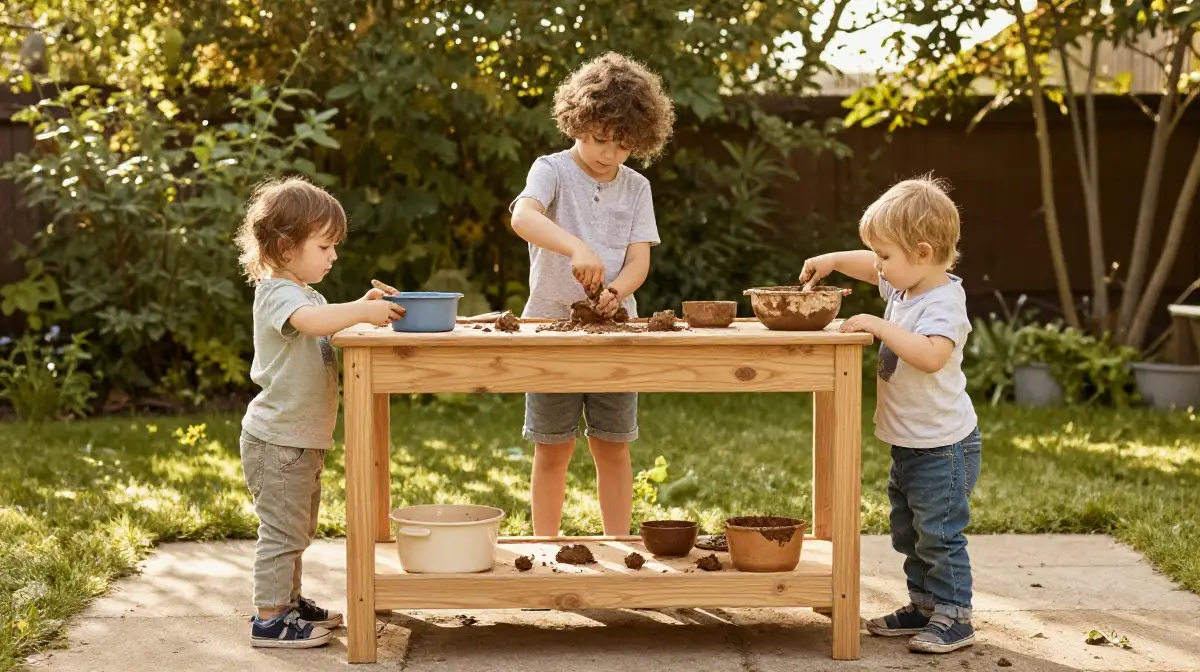
If you are setting up a mud kitchen for a school, nursery, or a household with several children of different ages, a two-level structure is one of the smartest mud kitchen setup ideas you can implement. The upper level provides a standard worktop height suitable for older children aged five and above, while a lower shelf or second surface brings everything into reach for toddlers and younger players. This inclusive design means no child feels left out of the action, and mixed-age groups can play together comfortably without anyone struggling to reach the workspace. It also creates natural opportunities for older children to mentor younger ones, pouring, measuring, and sharing tools cooperatively. Building this at a school garden has shown in numerous case studies that a well-organised, spacious mud kitchen can comfortably accommodate twelve to fifteen children at one time when arranged in an open U-shape layout.
The Repurposed Furniture Mud Kitchen Setup
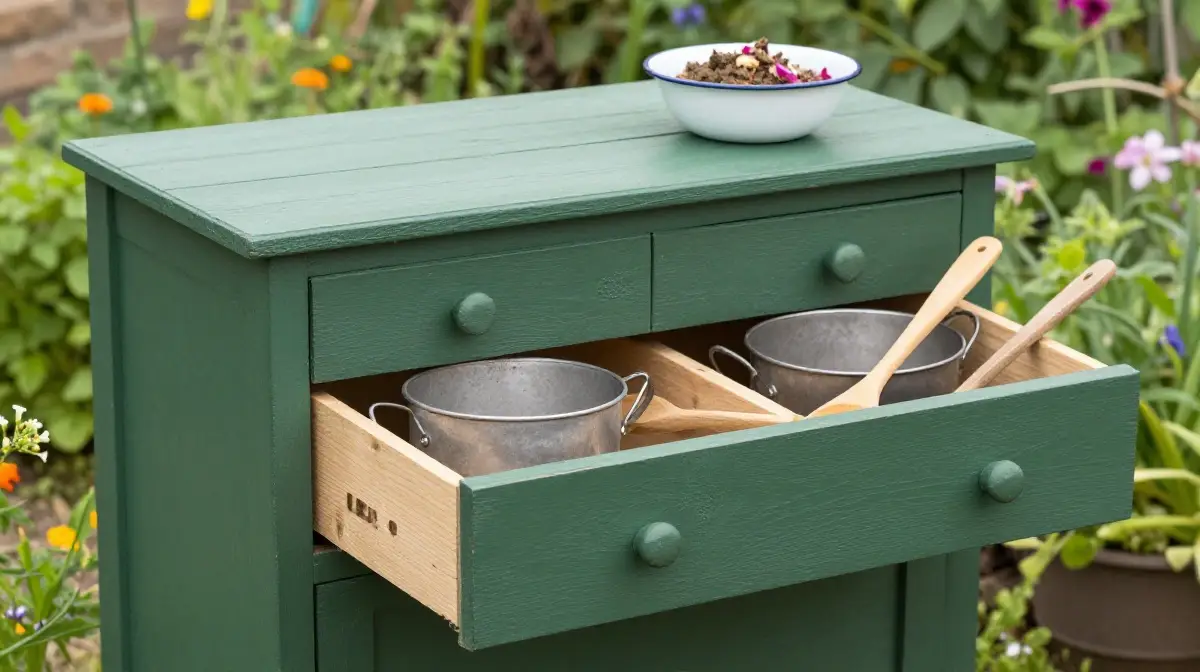
Not every mud kitchen setup needs to be built from scratch. One of the most charming and resourceful approaches is to repurpose old indoor furniture. An old chest of drawers becomes an instant outdoor kitchen with its built-in storage compartments ready to hold utensils, spices jars of sand, and collected natural materials. An indoor children’s play kitchen made from wood can be relocated outside and treated with exterior sealant to withstand the elements through every season. Old bookshelves, side tables, and even workbenches can all be given a second life as the foundation of a mud kitchen without spending a single penny on new materials. This approach is particularly appealing from a sustainability perspective, keeping furniture out of landfill while creating something genuinely useful. A coat of weather-resistant outdoor paint in a bold colour gives repurposed pieces a fresh, intentional look that children find just as exciting as a brand-new build.
The Cinder Block and Plank Mud Kitchen Setup
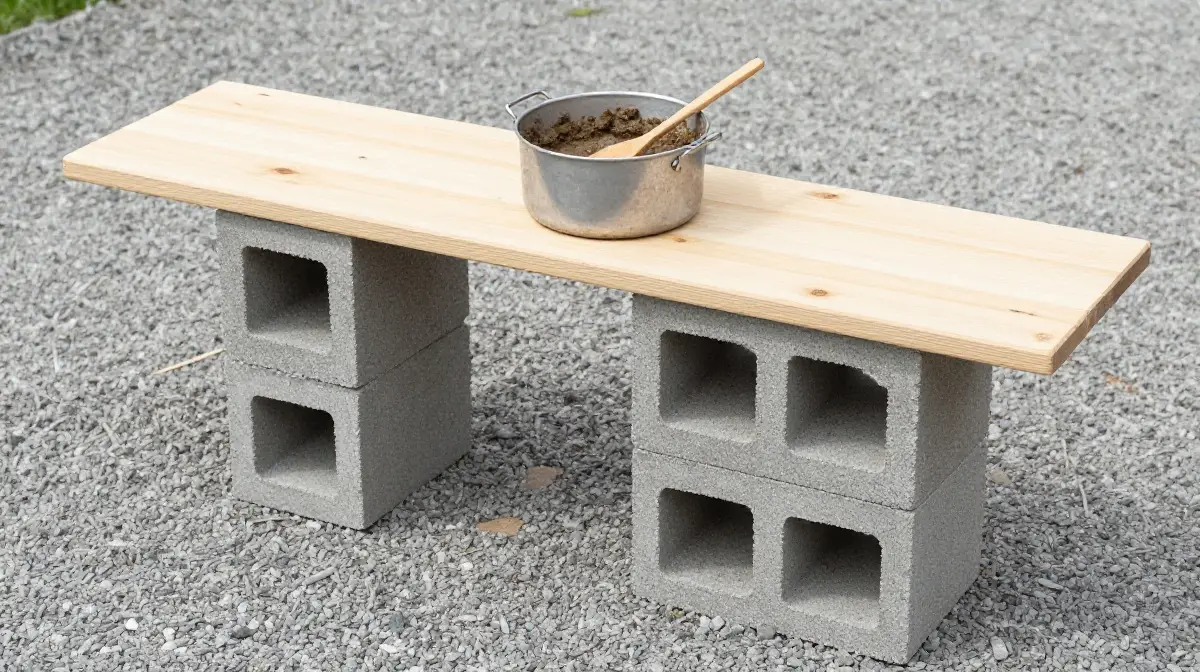
For the most minimal, low-cost mud kitchen setup possible, a pair of cinder blocks with a plank of weather-treated wood laid across them is all you truly need to get started. This stripped-back approach proves that a mud kitchen does not need to be elaborate to be effective at delivering rich sensory and imaginative play. Children are entirely unconcerned with aesthetics. What matters to them is having a surface at the right height, space to work, and the freedom to make a mess on their own terms. This setup can be assembled in under fifteen minutes, costs almost nothing if you have scrap wood available, and can be expanded over time as budget and enthusiasm allow. Many families start here and gradually add shelves, hooks, sinks, and additional surfaces as they see how much consistent use the mud kitchen gets through the first season of outdoor play.
The Mud Kitchen Setup with a Dedicated Digging Pit
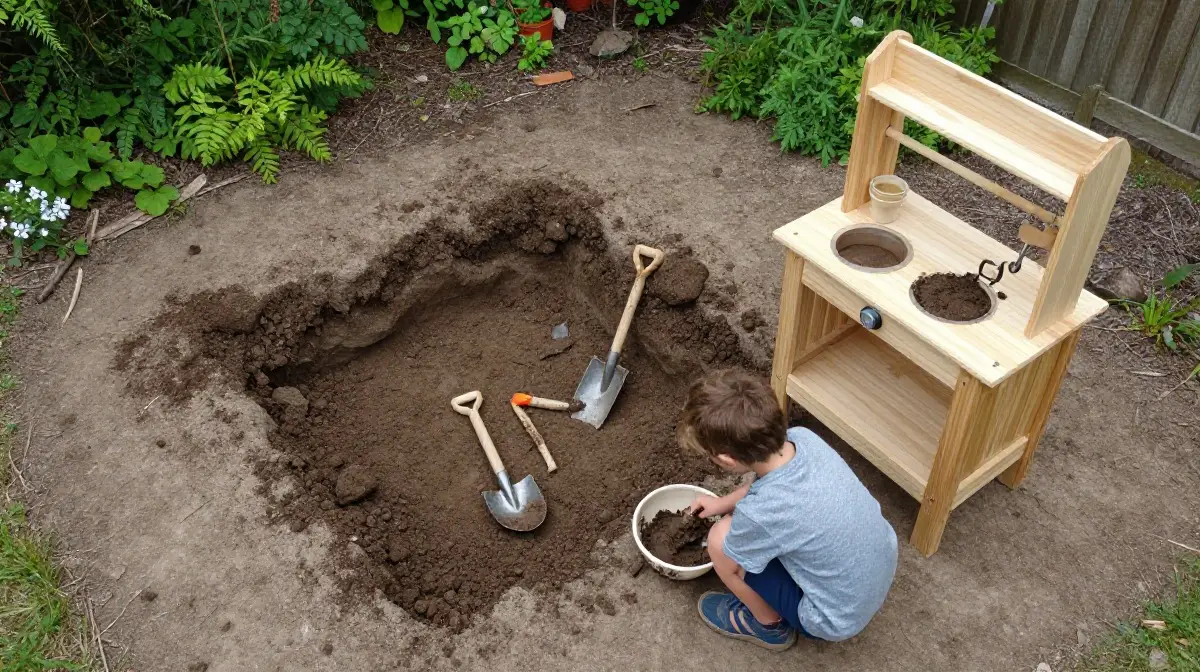
Every great mud kitchen setup needs a reliable source of mud, and the best way to manage this without destroying your garden beds is to create a dedicated digging pit positioned directly beside the kitchen. A digging pit can be as simple as a defined area of loose soil enclosed with low timber edging, or a large wooden sandbox frame filled with a mix of soil and sand that produces the ideal mud consistency when water is added to the right ratio. Placing the dig pit as close as possible to the main kitchen structure keeps the material in play and reduces the spread of mud across the wider garden. Children will naturally move between digging, collecting, and cooking in a satisfying loop that can occupy them for the better part of an afternoon without interruption. A dig pit also teaches children early lessons about soil structure, earthworms, and the fascinating natural world beneath their feet.
The Mud Kitchen Cafe Setup for Role Play
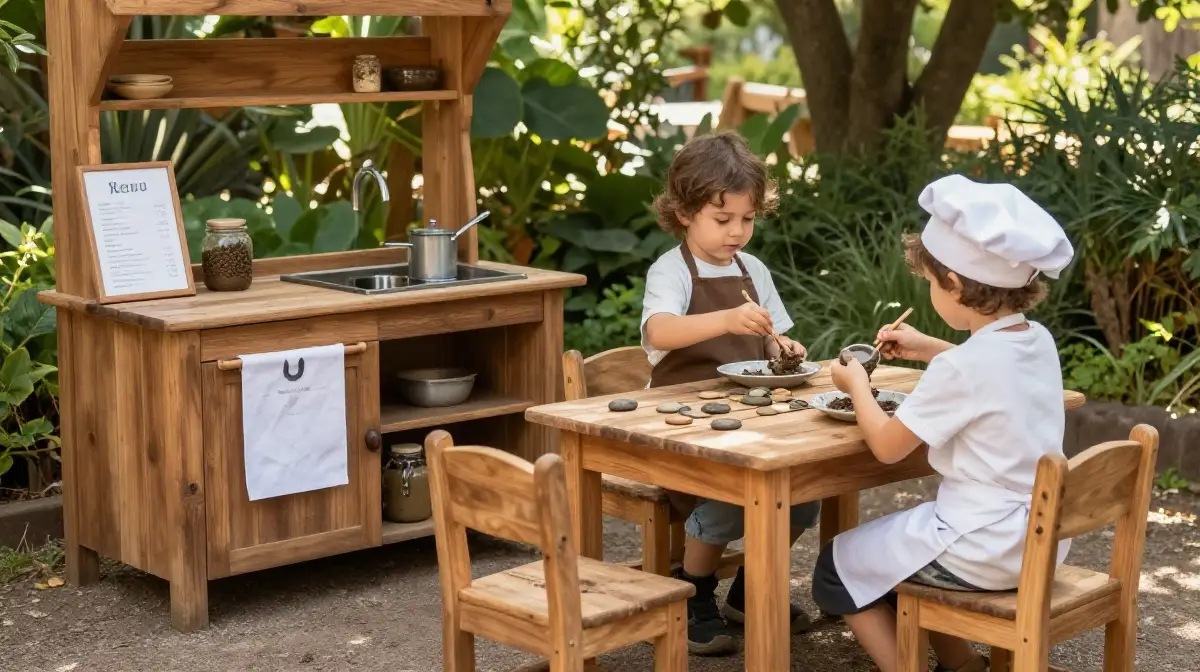
Taking the mud kitchen setup further into imaginative territory, the mud kitchen cafe theme encourages rich role-play scenarios that build language, literacy, and social skills simultaneously. Set up a small table and chairs beside the main kitchen station and watch children naturally transform into chefs, waiters, and customers without any adult direction or scripted instruction. You can laminate a simple menu featuring items like petal soup, stone stew, and mud chocolate cake, then add some smooth pebbles as currency to introduce early numeracy concepts through purposeful play. Children of primary school age in particular thrive with this setup, extending their play for significantly longer periods when given a narrative framework to work within and explore. A small chalkboard mounted to the kitchen structure completes the cafe experience and gives children a space to display their daily specials to their fellow players.
The Sensory-Rich Mud Kitchen Setup with Natural Loose Parts
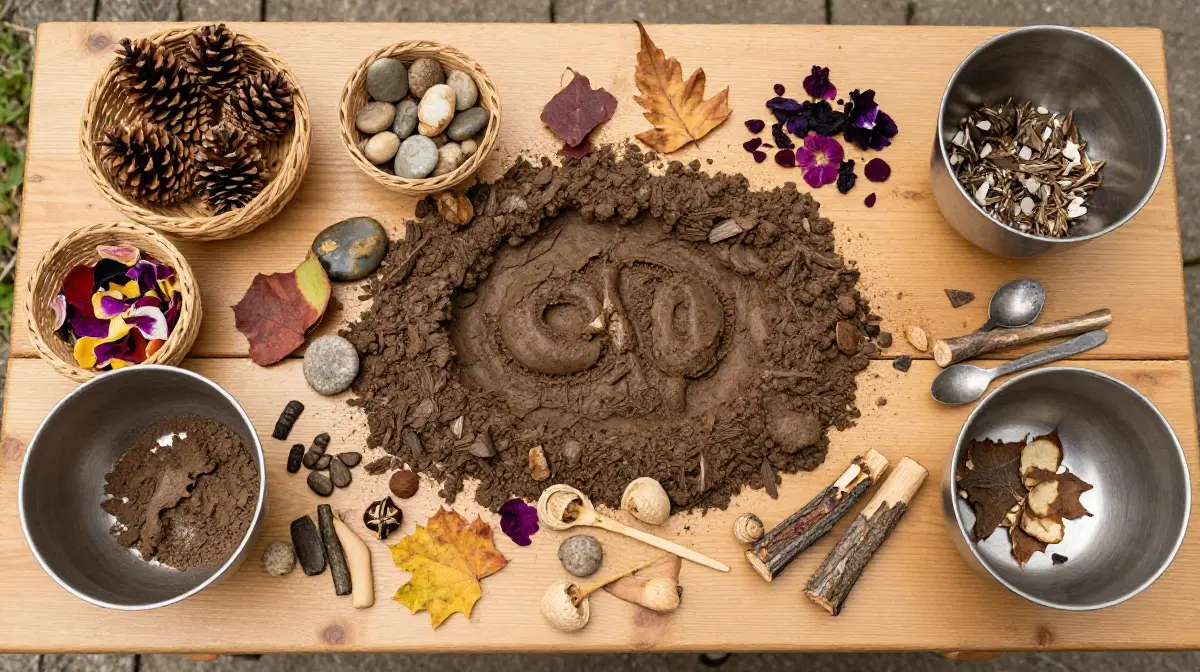
The most developmentally rich mud kitchen setup is one stocked generously with natural loose parts that children can incorporate into their creations at will. Pine cones, pebbles, seed pods, flower petals, leaves, sticks, bark, and grass clippings all become ingredients in a child’s outdoor kitchen world. These open-ended materials have no fixed purpose, which means children must use their imagination to assign them meaning and function in context. A pine cone might be a porcupine-shaped cake decoration one day and a flavouring spice the next afternoon. Stocking a collection of small baskets or open containers around the mud kitchen area keeps these materials organised and accessible, encouraging children to sort, select, and use them with genuine intention. Rotate the loose parts seasonally to keep the play environment fresh and aligned with what is naturally available in the garden throughout the year.
The Small Space and Balcony Mud Kitchen Setup
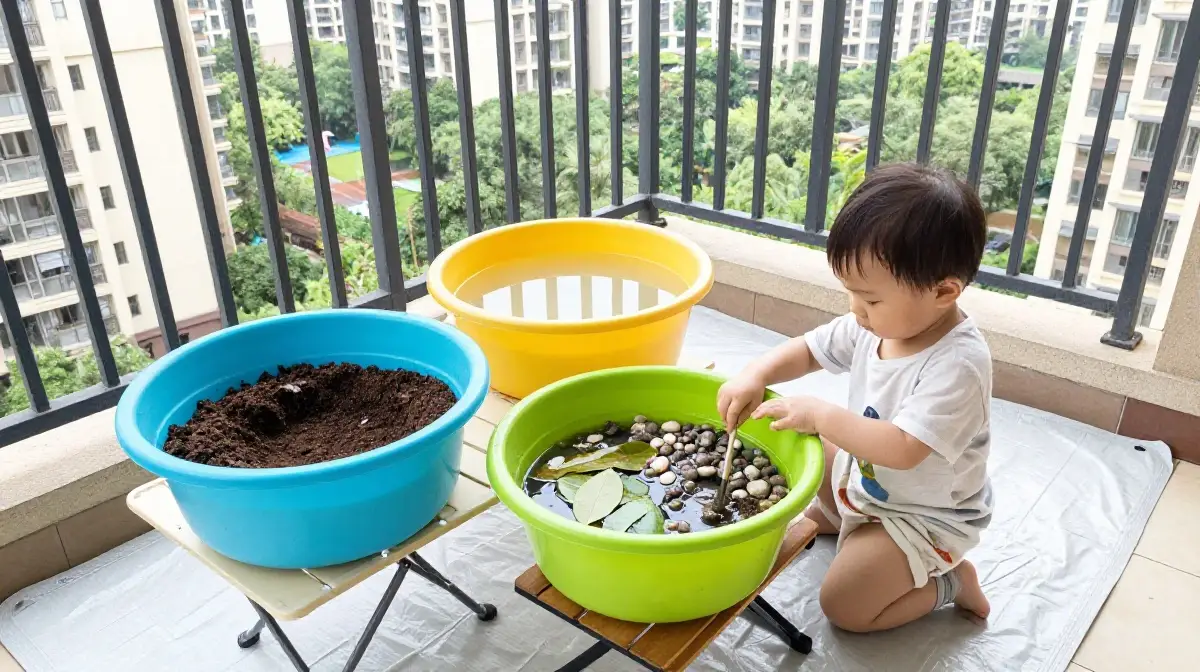
Living in a flat or a home without a garden does not mean missing out on mud kitchen play entirely. A small space mud kitchen setup using a few deep plastic tubs, a portable folding table, and a bucket of soil placed on a balcony or courtyard can deliver a very similar play experience to a full outdoor kitchen. Use one tub for mud mixing, one for clean water, and one for collecting natural materials found on local walks and outings. A waterproof play mat laid beneath the setup contains mess efficiently and makes clean-up a straightforward process even in a restricted space. This compact approach is also ideal for taking to outdoor events, play dates, or school fetes where a full structure cannot be installed. The key principle is the same regardless of scale: give children the tools, materials, and permission to create freely, and the learning and fun will always follow naturally.
The Seasonal Mud Kitchen Setup for Year-Round Play
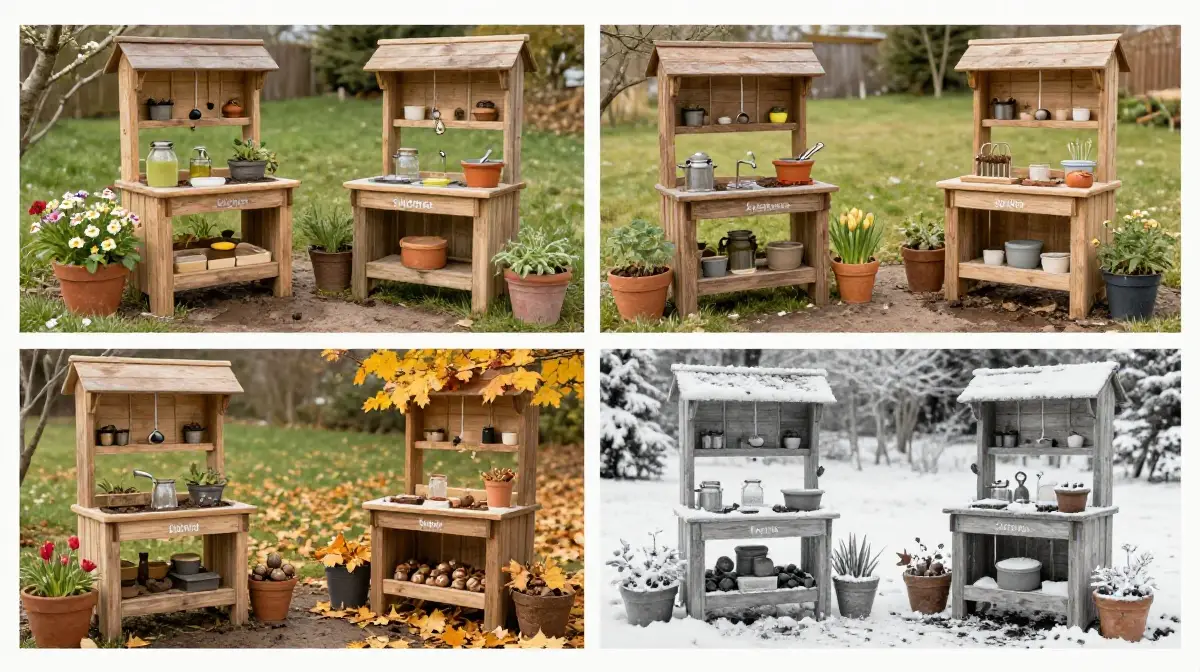
A well-built mud kitchen setup does not need to be put away when the seasons change and the weather turns. In autumn, fill the kitchen with fallen leaves, conkers, and seed heads for rich seasonal recipe-making that connects children to the natural calendar. In winter, snow and ice become fascinating new ingredients that teach children about states of matter in a completely hands-on and experiential way. Spring brings mud at its richest and most workable, along with fresh flowers and new plant material to incorporate into potions and pies. Summer calls for water-heavy play with petal potions and herb-infused mud creations under the warm sun. Keeping a seasonal restock list ensures the mud kitchen remains an exciting and relevant play space throughout the entire year. Children who play outdoors across all seasons develop greater resilience, stronger immune systems, and a deeper relationship with the natural world.
The Garden Herb Mud Kitchen Setup
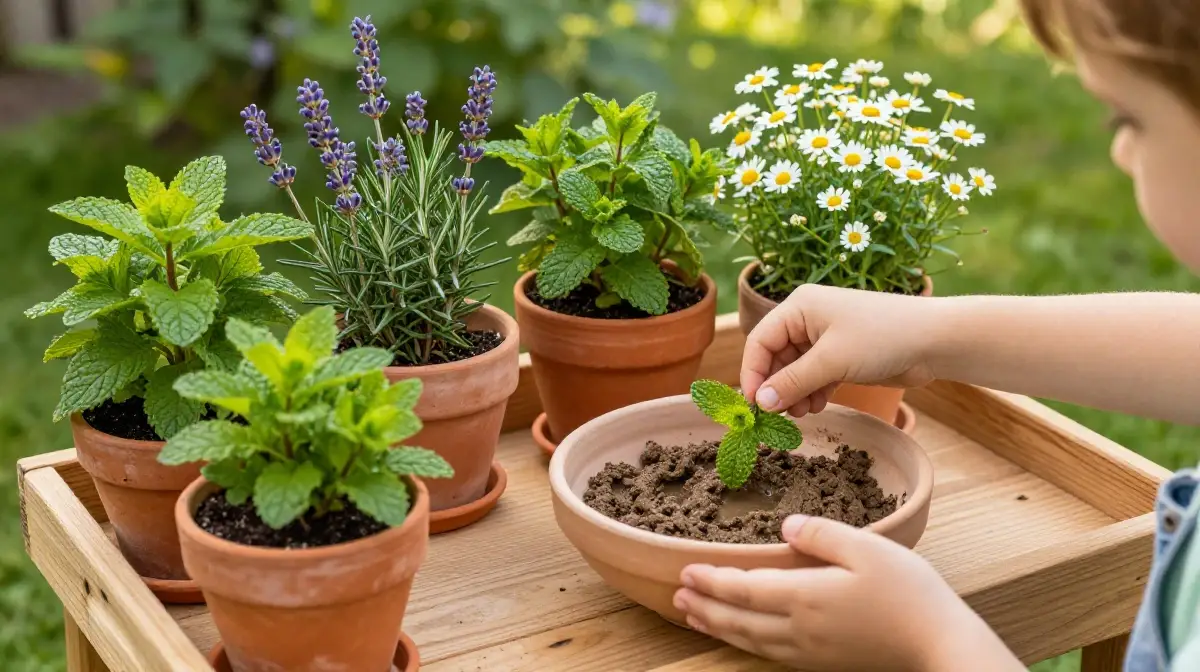
Integrating a small herb garden directly into or beside your mud kitchen setup adds a wonderful new sensory dimension that children find utterly captivating. Planting mint, lavender, rosemary, and chamomile within easy reach of the kitchen workspace means children can pick, crush, and add real fragrant ingredients to their mud creations, producing potions and soups with genuinely distinct and pleasant aromas. This setup bridges the gap between imaginative play and real-world gardening knowledge in a seamless and natural way. Children who tend to their own herb plants develop a sense of responsibility and ownership over the play space that deepens their engagement with it over time. Growing edible and safe herbs also means parents can feel comfortable knowing that whatever small amounts children may taste in the process of play are entirely harmless. It is a creative, educational, and deeply sensory extension of any mud kitchen environment.
The Mud Kitchen Setup with a Chalkboard Recipe Wall
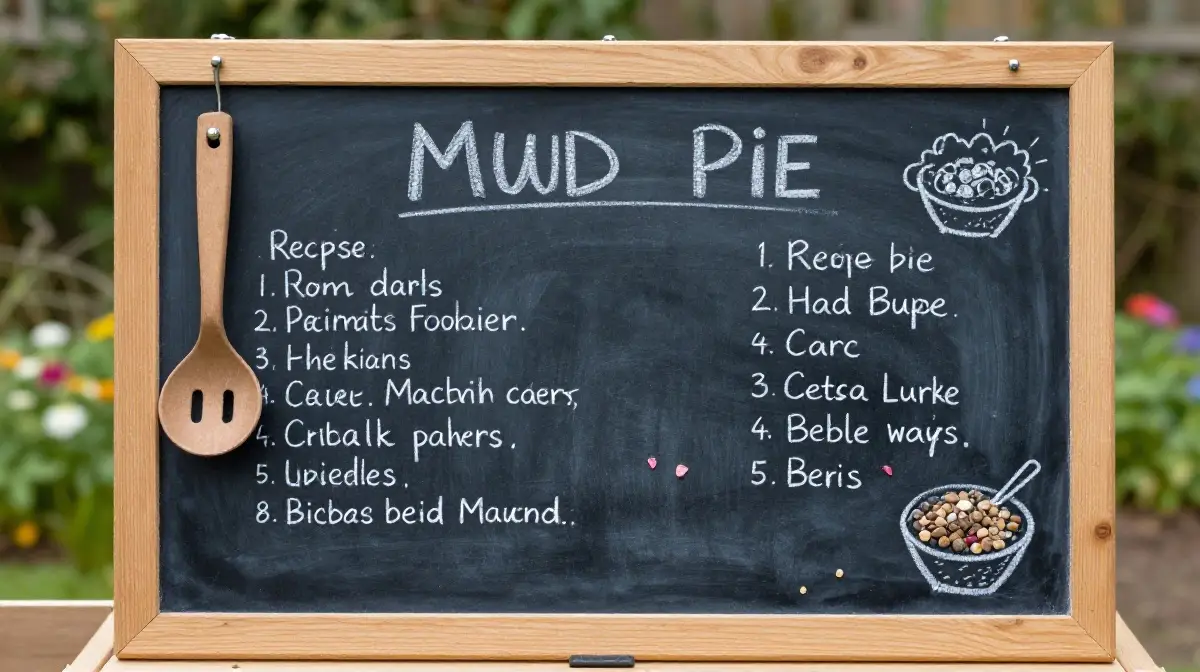
Mounting a chalkboard panel directly onto the back wall or upright section of your mud kitchen setup creates an invaluable feature that supports early literacy, creativity, and sustained play in equal measure. Children can write out their own mud kitchen recipes, draw pictures of what they are making, list the ingredients they have collected, or set up a daily menu for the mud kitchen cafe. Even children who are not yet writing independently will enthusiastically scribble, copy letters they know, or ask an adult to write down their recipe for them, turning the experience into a meaningful literacy activity. Older children might tally up how many pots of soup they have made, introducing basic maths into play without it ever feeling like a lesson. A weatherproof chalkboard paint applied to a sheet of exterior-grade plywood provides a durable surface that holds up well through wet outdoor conditions year after year.
The Mud Kitchen Setup Using Upcycled Kitchen Appliances
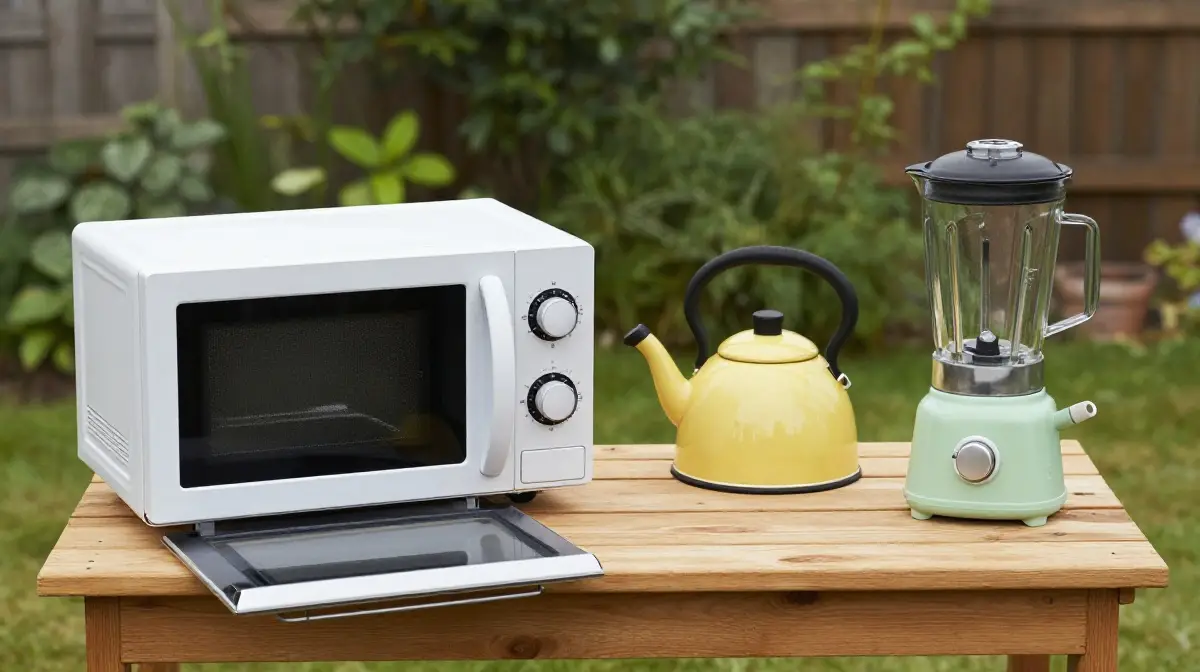
One of the most inventive and visually engaging mud kitchen setup ideas involves sourcing old and broken kitchen appliances from charity shops, recycling centres, or online selling platforms and incorporating them into the outdoor play space. An old microwave with its electrical components removed becomes a perfect pretend oven. A broken blender becomes a mud smoothie maker. An old kettle becomes a watering and pouring tool. These real-world objects give children a visceral sense of playing in an authentic kitchen rather than a toy version of one, which dramatically increases the depth and duration of their imaginative play. It is important to ensure all electrical components have been safely removed and that there are no sharp edges before introducing any appliance to the play space. With those simple safety checks completed, the results are genuinely impressive and deeply loved by children of all ages who encounter them.
The Mud Kitchen Setup with Stove Burners and Knobs
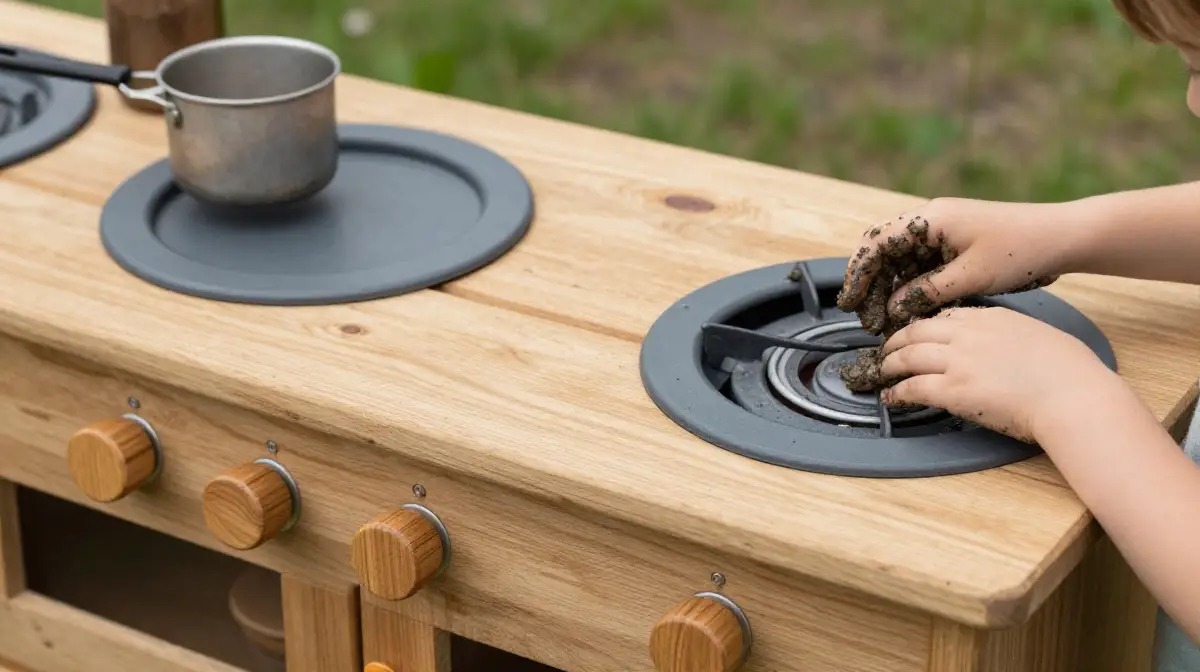
Adding decorative stove burners and turning knobs to the worktop surface of your mud kitchen setup is one of the most popular enhancements parents and builders choose to include. Burners can be cut from plywood in different sizes to represent hobs of varying heat levels, while wooden knobs or old cabinet handles attached below the counter give children the satisfying tactile experience of turning the stove on and off before they begin cooking their mud creations. This level of detail transforms the mud kitchen from a simple outdoor table into a space that genuinely feels like a fully equipped kitchen, encouraging much richer and more sustained pretend play scenarios. Children will refer to the burners and knobs repeatedly during play, adjusting the heat of their soups, turning off pots that are ready, and directing one another in ways that mirror real kitchen behaviour they have observed at home.
The Mud Kitchen Setup with a Potions and Science Station
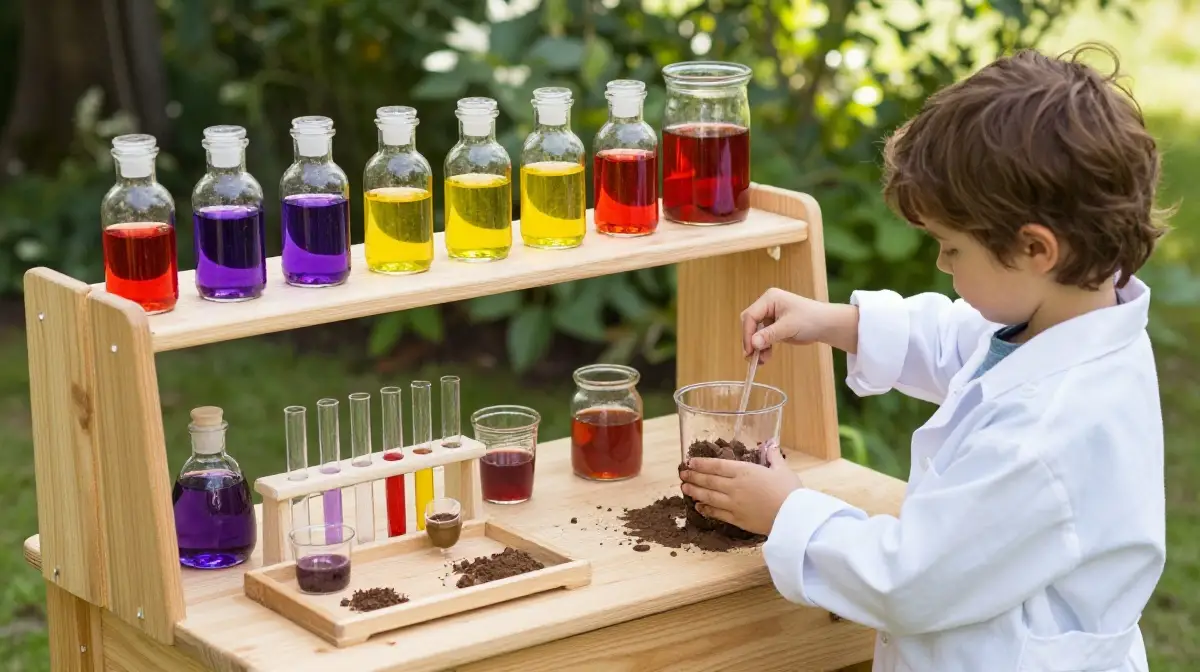
Transforming one corner of your mud kitchen setup into a dedicated potions and science station opens up a completely different dimension of outdoor play that appeals especially to curious and investigative children. Fill small glass jars and bottles with coloured water made from natural flower pigments, arrange test tubes and droppers alongside a selection of natural powders like cinnamon or turmeric, and watch children enter full scientist mode as they experiment, mix, observe reactions, and record their findings. This type of play aligns closely with early science education concepts such as solubility, colour mixing, viscosity, and the properties of matter, all of which children discover naturally and independently without any formal teaching. Parents and educators who have introduced a potions station report that it is consistently one of the most visited and intensely focused areas of any mud kitchen space, drawing in children who might otherwise show less interest in traditional mud pie making activities.
The Mud Kitchen Setup with Outdoor Storage and Organisation
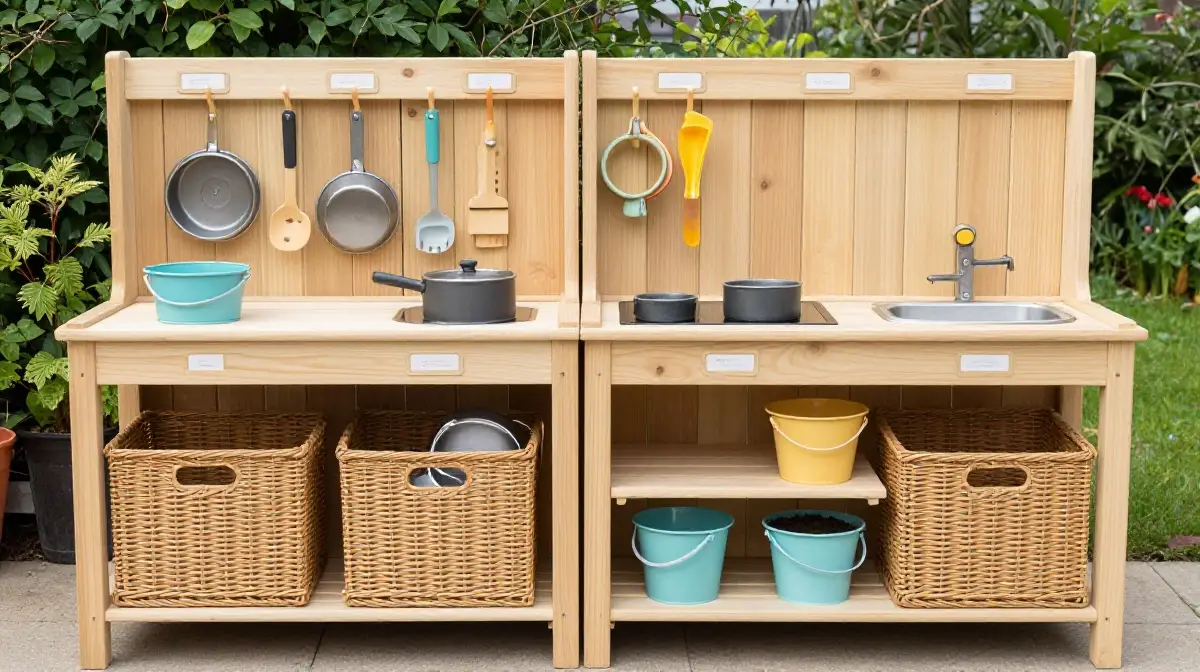
A mud kitchen setup that is well organised will always be used more consistently and enthusiastically than one where tools are scattered, lost in the mud, or buried beneath cluttered surfaces. Thoughtful storage design is therefore one of the most important elements to plan when building or buying a mud kitchen. Open laundry hampers placed on lower shelves allow children to toss everything in quickly at the end of play, keeping the area tidy without requiring precision or patience from young users. Hooks mounted at child height on the back wall and sides of the kitchen hold utensils, allow them to drip-dry naturally, and keep them visible and easy to select. Labelled buckets or baskets for loose parts, soil, sand, and water tools help children develop organisational habits while also making the play environment feel intentional and well-cared-for, which in turn encourages children to treat the space with greater respect and care during play.
The Mud Kitchen Setup Inspired by a Real Restaurant Kitchen
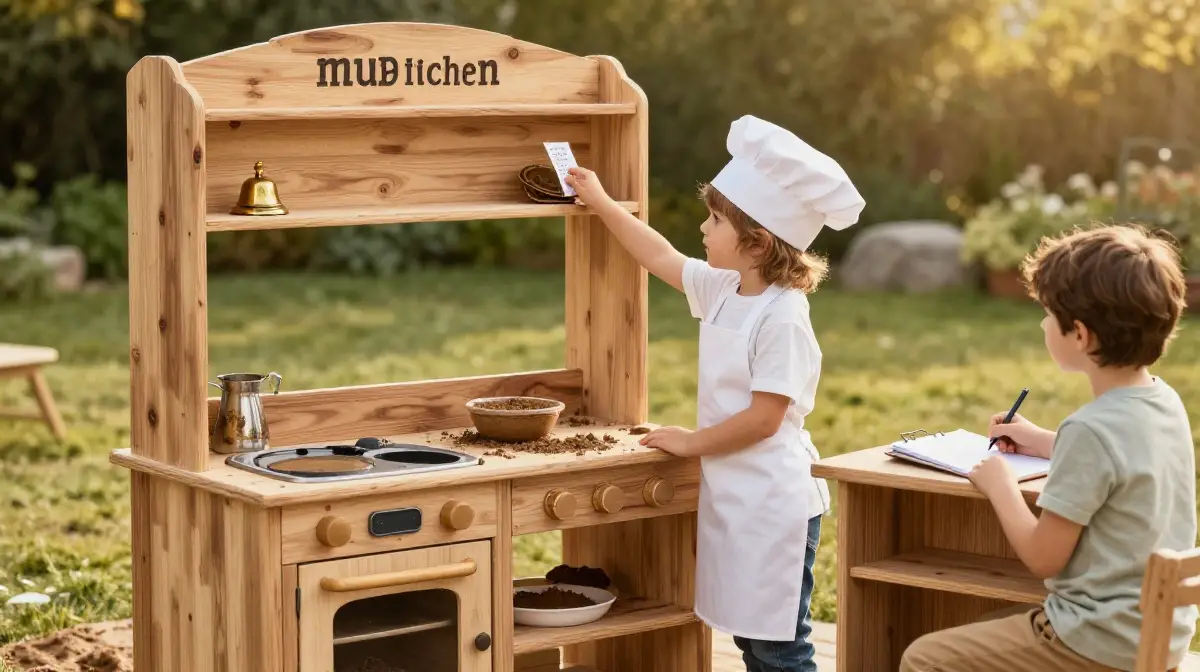
For older children aged seven and above, a mud kitchen setup designed to resemble a real professional restaurant kitchen provides an extraordinarily rich play environment that draws in sustained engagement over many months. Include a pass-through shelf where finished dishes can be presented for serving, hang a small bell that a child playing chef can ring when an order is ready, and set up a separate order station where the front-of-house team takes customer requests on a notepad. This level of structured role-play builds communication skills, turn-taking, leadership, cooperation, and an understanding of professional social roles in a way that is deeply absorbed because it emerges entirely from child-directed play. Schools and forest school programmes that have implemented this model consistently report that children return to the mud kitchen restaurant day after day, developing increasingly complex narratives and social dynamics within the play space over extended periods of time.
The Mud Kitchen Setup with a Water Pump or Hand Pump
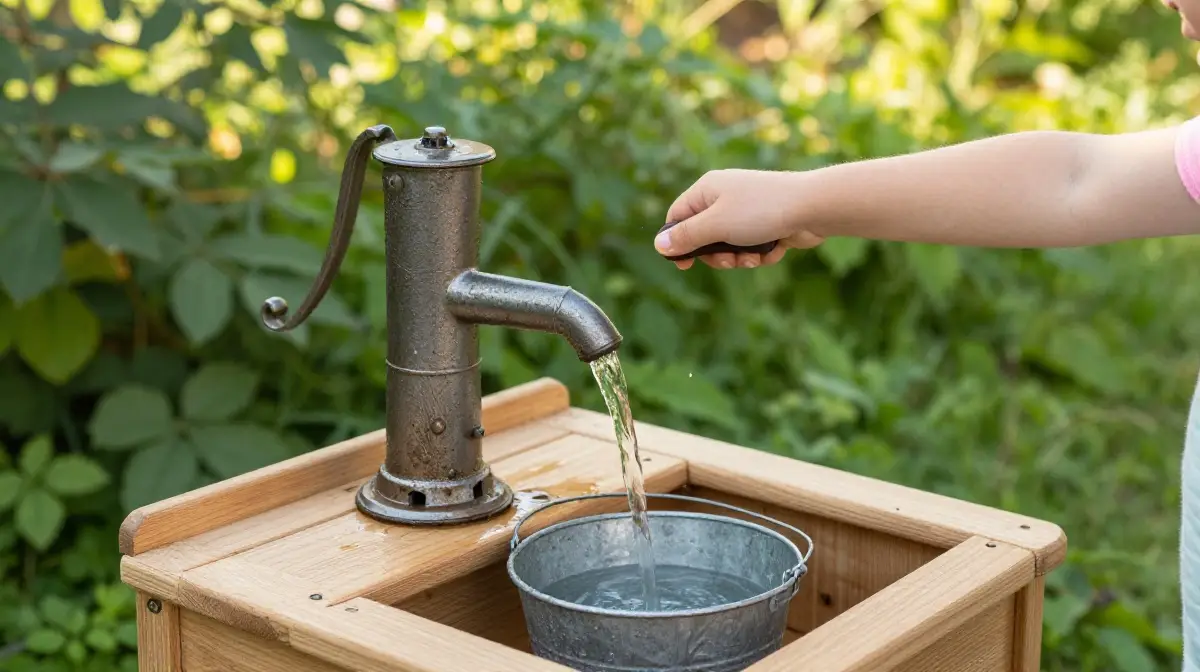
Installing a hand-operated water pump as the primary water source in your mud kitchen setup is a particularly satisfying and developmentally rich design choice that children of all ages find endlessly enjoyable to operate. A simple cast iron or plastic hand pump mounted to the side of the kitchen frame draws water from a large container buried or positioned below the surface, allowing children to pump water up independently on demand at any point during their play. The physical action of working the pump handle builds upper body strength, bilateral coordination, and persistence in young children who must keep going until the water flows. It also introduces children to the concept of mechanical advantage and simple machines in a tangible and memorable way. The hand pump adds a charming aesthetic quality to the mud kitchen setup that many parents find visually appealing, and its durability makes it a feature that lasts for many seasons without needing replacement or significant maintenance.
The Mud Kitchen Setup for School and Forest School Settings
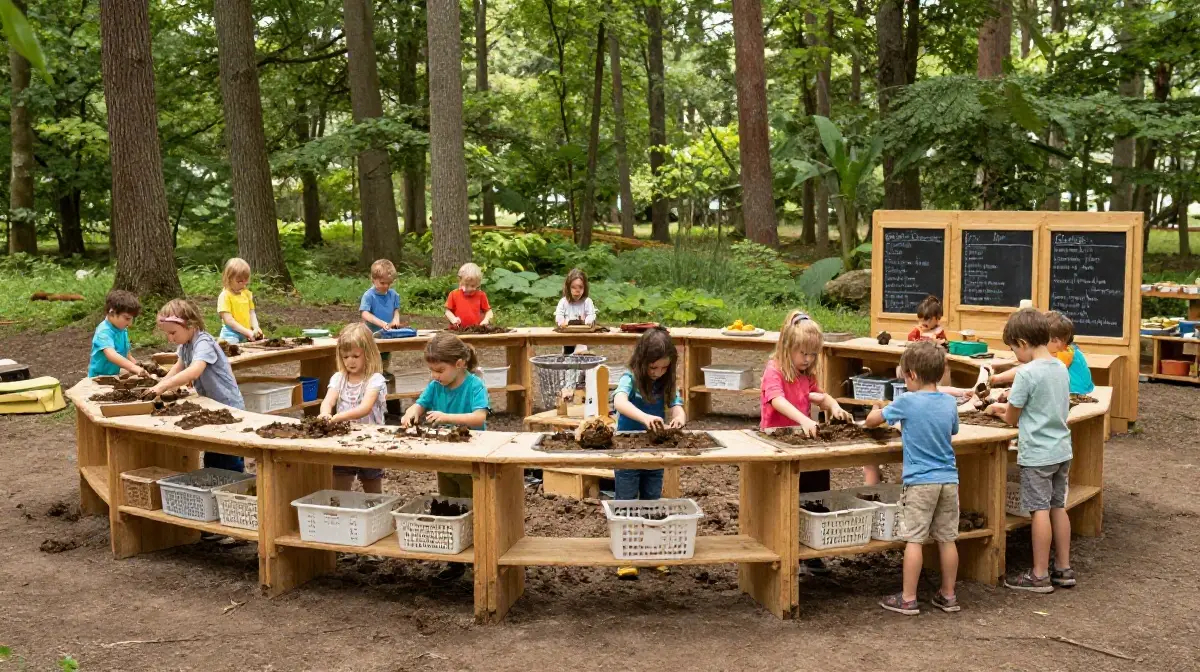
A mud kitchen setup designed for a school garden or forest school environment needs to meet a different set of requirements from a home backyard version, primarily around scale, durability, and the number of children it can accommodate simultaneously. A school mud kitchen should be large enough for twelve to fifteen children to access at one time, with clear zones for digging, mixing, cooking, and serving that reduce congestion and conflict during busy play sessions. Materials must be robust enough to withstand daily heavy use across multiple years without requiring frequent replacement or repair. Open storage in laundry hampers ensures quick tidying by the children themselves, reducing teacher workload at the end of outdoor sessions. A school mud kitchen also benefits from a clear set of expectations around use of mud and water that are established at the beginning of the year, displayed visually near the kitchen, and reinforced consistently by staff to ensure that the space remains safe, enjoyable, and welcoming for every child who uses it.
The Budget-Friendly Mud Kitchen Setup Under Fifty Pounds
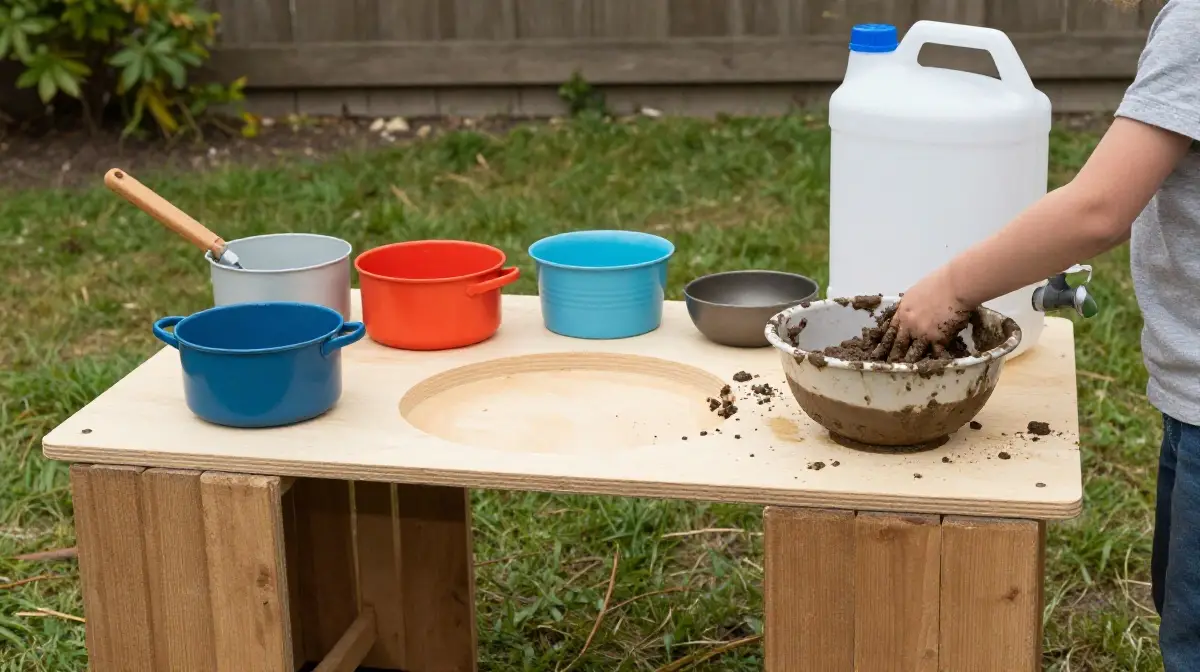
Creating a fully functional and genuinely enjoyable mud kitchen setup does not require a significant financial investment, and many of the most beloved mud kitchens families have built cost under fifty pounds in total. Start with a sheet of exterior-grade plywood or a reclaimed wooden board as your countertop, supported by two sturdy wooden crates or concrete blocks. Source pots, pans, spoons, colanders, and muffin tins from charity shops, car boot sales, or the back of your own kitchen cupboards where unused items sit gathering dust. Collect natural loose parts on walks with children so they feel invested in the gathering process from the very beginning. A five-litre water container with a tap becomes the water source. The entire setup can be ready in a single afternoon, and the children who help gather the materials and assemble the space will feel a genuine pride of ownership that deepens their connection to the mud kitchen play experience from the very first day they use it.
Essential Tools and Supplies for Any Mud Kitchen Setup
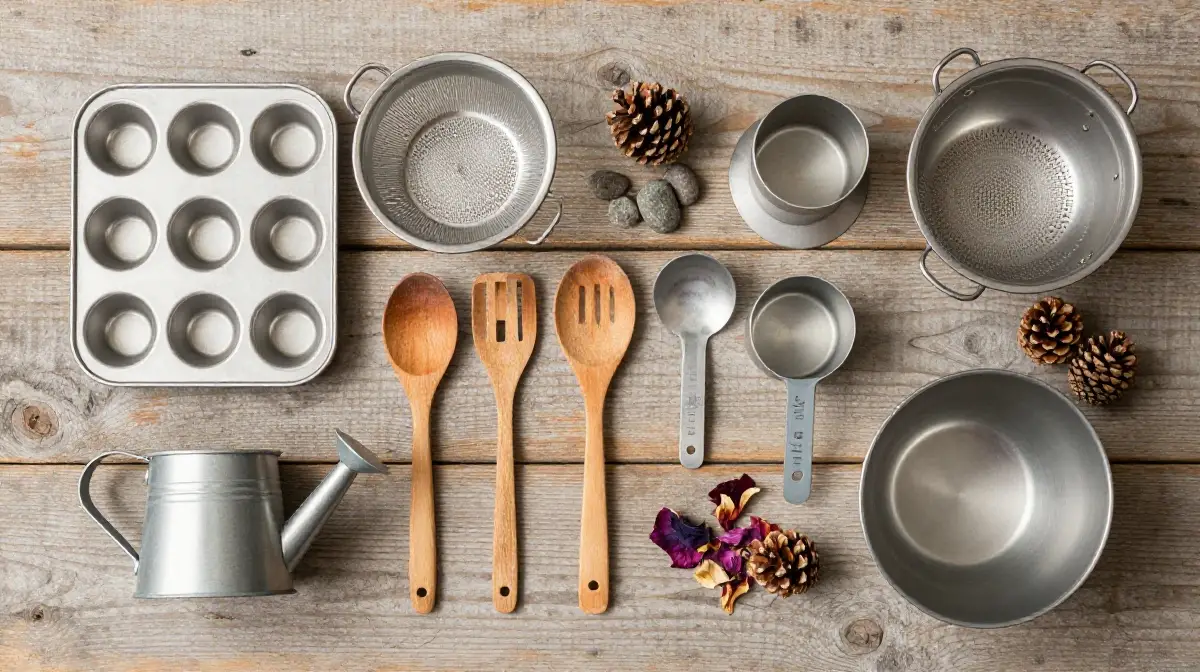
No mud kitchen setup is complete without the right collection of tools and equipment chosen thoughtfully for both durability and child accessibility. The most-used items in any mud kitchen are real kitchen utensils rather than plastic toy versions, as genuine tools hold up far better to outdoor use and feel more satisfying and authentic in small hands. Muffin tins, cookie trays, large mixing bowls, wooden spoons, ladles, measuring cups, and colanders are all staples worth sourcing from charity shops or the back of your own cupboards. Hang utensils on hooks so they dry properly between play sessions and stay visible and easy to grab without digging through cluttered storage. Store pots and pans in open laundry hampers on lower shelves so everything can be tipped in quickly at the end of an outdoor session. A well-stocked mud kitchen that is also consistently well-organised will be used far more enthusiastically and frequently than one where tools are buried and hard to locate in the mud.
Conclusion
A mud kitchen setup is one of the most rewarding investments you can make in a child’s outdoor play environment, regardless of your budget, space, or level of DIY experience. From a simple plank balanced on cinder blocks to a fully fitted outdoor kitchen complete with a running water pump, seasonal loose parts, a herb garden, and a chalkboard recipe wall, every version of a mud kitchen offers children the same fundamental gift: the freedom to create, experiment, and connect with the natural world entirely on their own terms. The 22 ideas explored throughout this article give you a clear and inspiring starting point that can be adapted to any circumstance, climate, or context. Begin with whatever you have available, build on it as your confidence and enthusiasm grow, and trust completely that the mud, the mess, and the magical play that emerges from it will do the rest without any further prompting from you.
You may also like this:22 Above Ground Pool Deck Ideas for Backyard Upgrade
Frequently Asked Questions (FAQs)
1. What age is a mud kitchen setup suitable for?
Mud kitchen play is suitable for children from around 18 months through to age ten and beyond. The experience scales naturally with age since toddlers enjoy simple sensory exploration while older children create elaborate recipes and role-play scenarios. The key is matching the tools to the child’s developmental stage and supervising younger children closely around any water source.
2. How do I keep a mud kitchen setup hygienic and safe?
Use only non-toxic plants and materials in and around the kitchen area at all times. Change standing water frequently and empty containers after each play session to prevent any build-up of bacteria or mosquito breeding. Encourage children to wash hands thoroughly after every play session. Cover any sand components when not in use to prevent animals from accessing the area.
3. What is the best wood to use for a DIY mud kitchen setup?
Cedar is widely recommended as the best wood for an outdoor mud kitchen because it is naturally resistant to moisture, decay, and insects without requiring chemical treatment. Pressure-treated timber is another strong option if you intend to leave the kitchen outside through all seasons including winter snow and heavy sustained rainfall across multiple years.
4. How much does a mud kitchen setup cost to build?
A basic DIY mud kitchen can be built for under fifty pounds using reclaimed pallets, scrap timber, and second-hand kitchen utensils sourced from charity shops. More elaborate builds with sinks, taps, shelving, and painted finishes can cost between one hundred and three hundred pounds. Ready-made mud kitchens purchased online typically range from eighty to two hundred and fifty pounds depending on size and quality.
5. Can a mud kitchen setup be used in a small flat or without a garden?
Yes. A compact version of a mud kitchen setup works very well on a balcony, courtyard, or any small outdoor space using plastic tubs and a folding table as the base. For fully indoor messy play, use a waterproof tray lined with soil or kinetic sand on a protected floor surface with a mat beneath. The core experience of mixing, pouring, and creating transfers well to smaller and more contained environments without losing any of its developmental value.

1 Comment