
Introduction
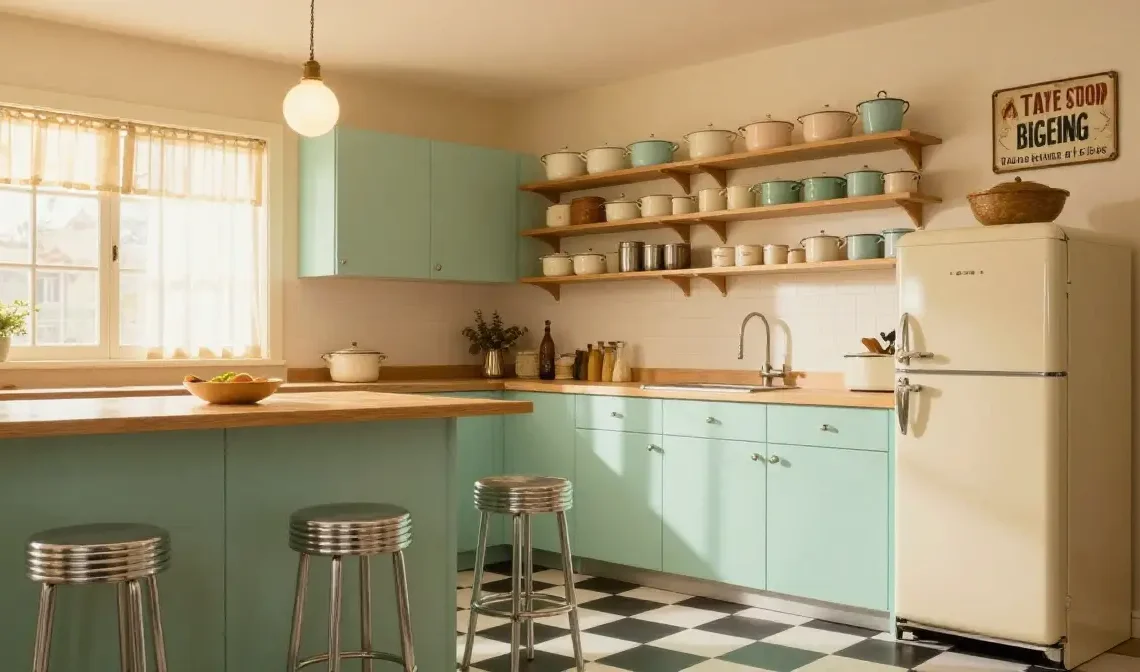
There is something deeply comforting about a kitchen that feels like it belongs to another era. Whether it is the soft pastel walls, the smell of old wood, or the sight of vintage canisters lined up on an open shelf — retro kitchens have a warmth that modern spaces sometimes miss. If you have been saving retro kitchen Pinterest style boards for months, wondering how to actually bring that look into your own home, this article is for you.
You do not need a full renovation or a large budget. Many of these ideas work in small spaces, rental kitchens, and even apartments. What you do need is a clear vision, a little patience, and the right starting points.
Understand What Retro Kitchen Pinterest Style Actually Means
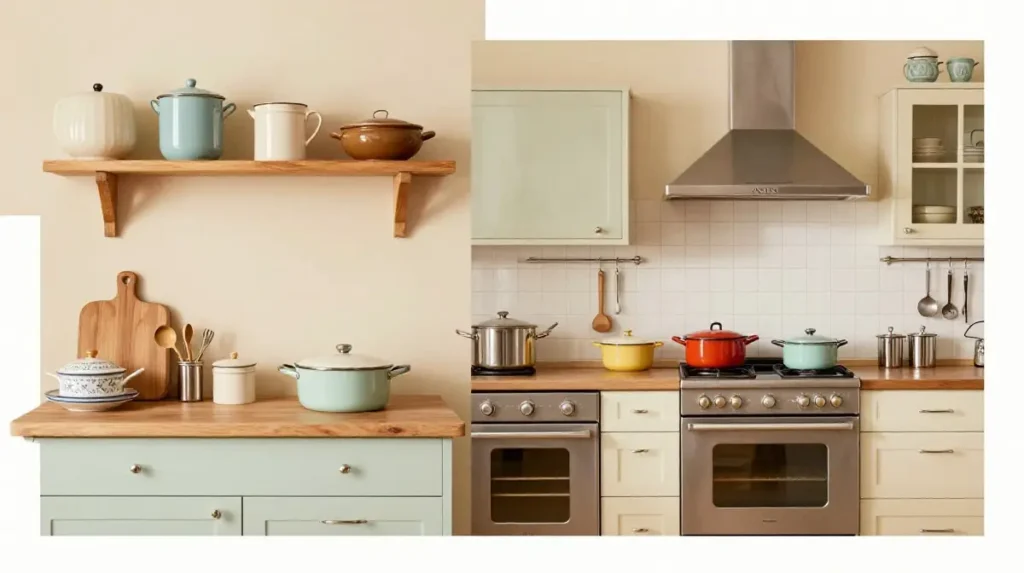
Before you start shopping or painting, it helps to understand the aesthetic. Retro kitchen Pinterest style pulls from several decades — mostly the 1950s, 1960s, and 1970s. Each era has its own personality. The 1950s lean into pastel colors, chrome details, and diner-style charm. The 1960s bring bolder patterns and kitschy accessories. The 1970s add warm earth tones and a more casual, lived-in feel.
Most Pinterest boards mix elements from all three, creating a nostalgic kitchen decor style that feels collected rather than themed. That is the key difference between a retro kitchen and a costume kitchen — subtlety and layering.
Start With a Vintage Color Palette
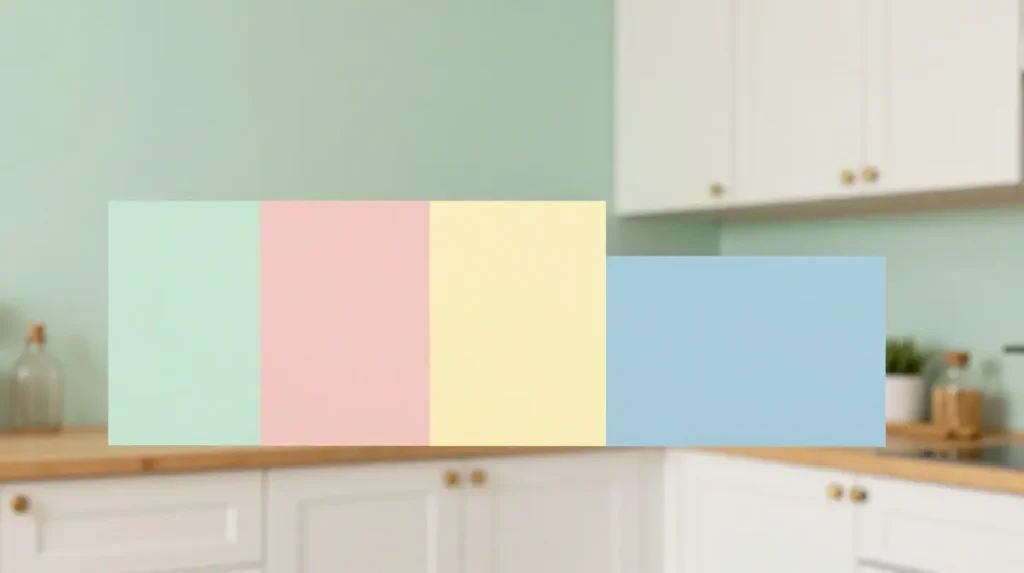
Color is the fastest way to set a retro tone. Classic choices include mint green, buttercream yellow, blush pink, robin egg blue, and warm cream. These pastel kitchen colors were staples of mid-century homes and they still read as vintage today.
You do not have to paint every wall. Even one painted wall or a set of painted lower cabinets can shift the entire mood. Pair a soft sage green with white upper cabinets and wooden accents for a look that feels both old-fashioned and fresh.
If pastels are not your preference, consider the warm amber and harvest gold tones from the 1970s kitchen design era. These retro kitchen color schemes work beautifully with natural wood and woven textures.
Use Retro Kitchen Tiles to Set the Tone
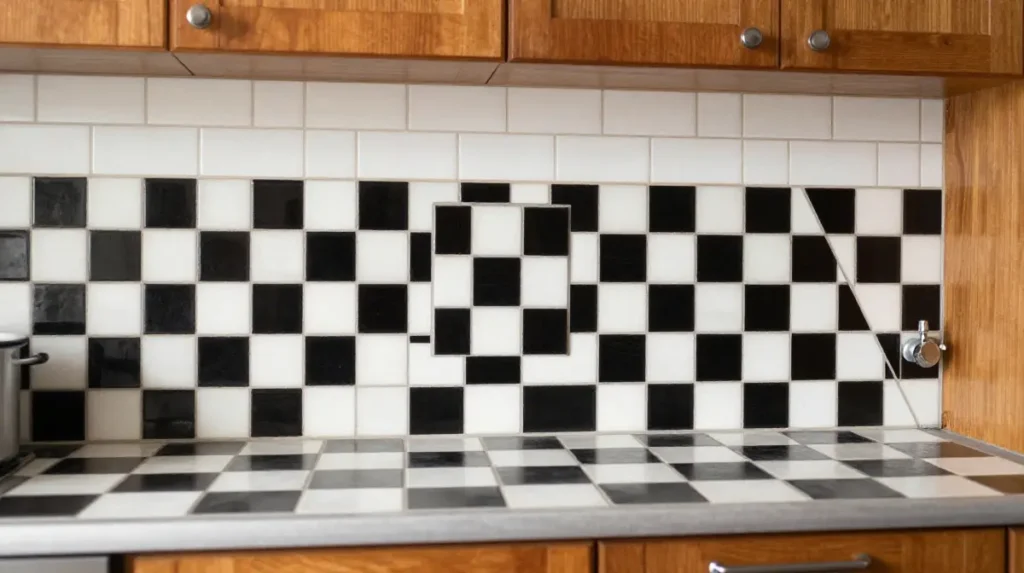
Tile is one of the most impactful design choices in any kitchen. For a retro look, focus on patterns rather than plain surfaces. A retro checkered floor in black and white is perhaps the most recognizable vintage kitchen detail — it reads clearly, photographs beautifully, and works in kitchens of nearly any size.
For walls, consider small subway tiles with colored grout, bold geometric patterns, or classic white tiles with a colored border. Retro kitchen backsplash ideas often feature simple repeating patterns that feel deliberately old-school.
Peel-and-stick tile options make this accessible for renters, and the results can look genuinely convincing when installed carefully.
Bring In Vintage Kitchen Cabinets Without Replacing Them
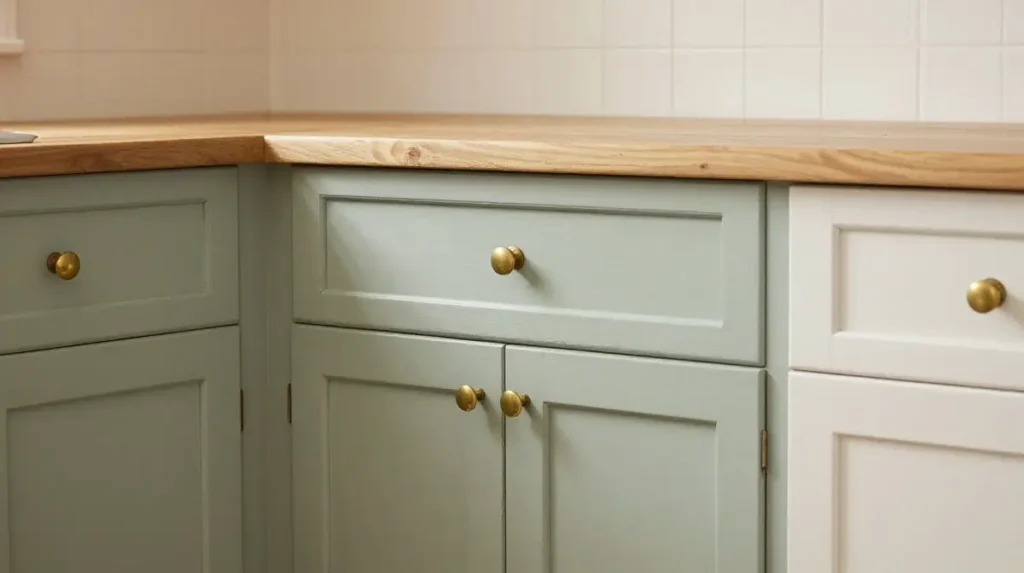
Replacing cabinets is expensive. Fortunately, you can achieve a vintage kitchen cabinet look without touching the structure. Paint is the most obvious tool — soft colors with slightly distressed edges give a shabby chic kitchen feeling that suits the retro aesthetic well.
Swap out modern hardware for something more period-appropriate. Cup pulls in chrome or brass, glass knob handles, and simple bar pulls all have retro roots. These small changes make a surprisingly large visual difference.
If your cabinets have flat fronts, adding simple raised panel molding before painting can give them more character and depth.
Style Open Shelving the Vintage Way
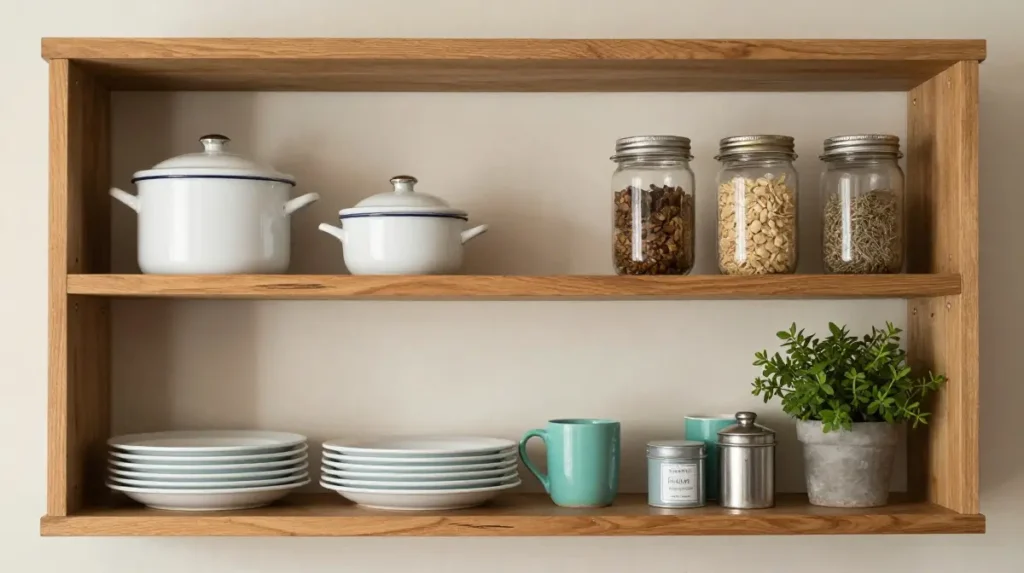
Open shelving is one of the most Pinterest-friendly details in a retro kitchen. The key is what you put on those shelves. Vintage kitchenware display done well looks curated, not cluttered. Think enamelware in matching colors, stacked ironstone plates, old mason jars filled with dry goods, and a few decorative tins.
Group items by color or material rather than by function. A row of white ceramic pieces next to a cluster of turquoise enamel creates a visual rhythm that feels both organized and lived-in.
Avoid mixing too many different styles. Stick to one or two decades of influence and let that guide your choices.
Add a Retro Breakfast Nook for Instant Character
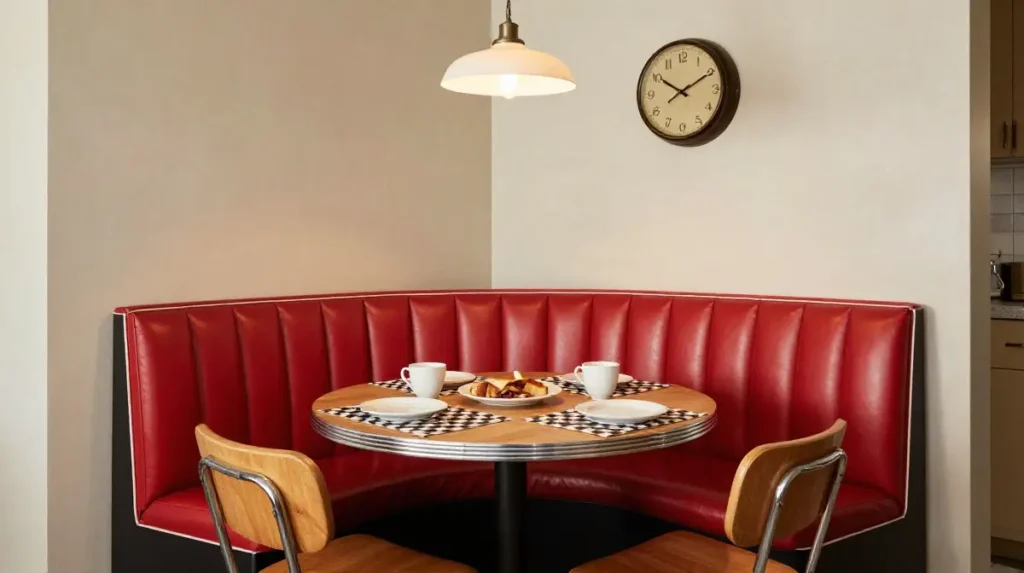
A breakfast nook is one of the most charming elements of classic American kitchen design. Even in a smaller kitchen, a corner banquette with a round table and two mismatched chairs can create that retro diner kitchen feeling without a major renovation.
Look for vinyl-covered seating in red, teal, or yellow for an authentic 1950s kitchen style. A small pendant light overhead and a vintage clock on the nearby wall complete the scene. This corner alone can become the most photographed spot in your home.
Choose Retro Appliances or Style Modern Ones to Look Vintage
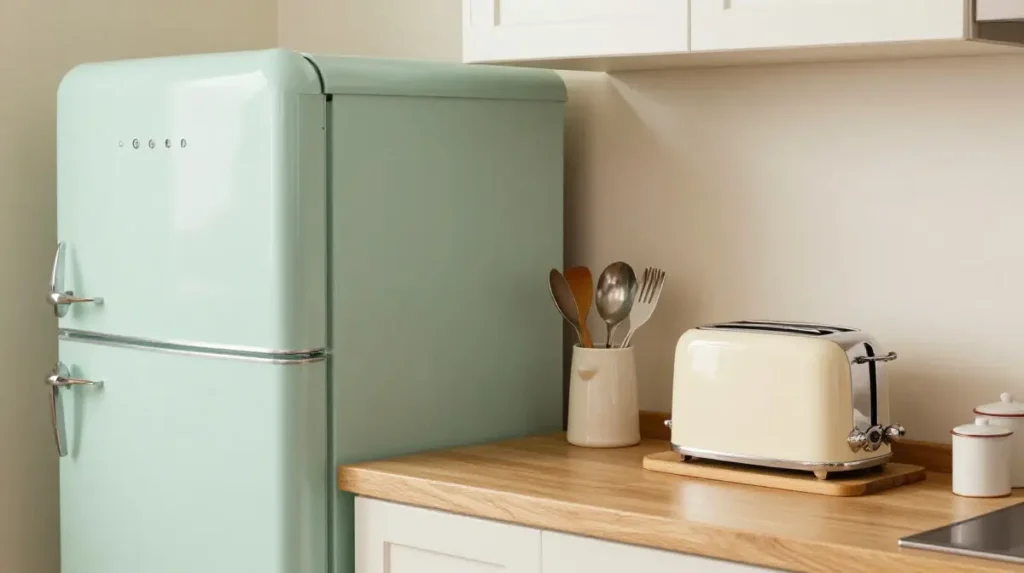
Retro appliances decor is one of the most searched topics in this space. Brands like Smeg and Big Chill produce refrigerators, toasters, and kettles that genuinely look like they came from another era. If the budget allows, a pastel fridge or a cream-colored range can anchor the entire kitchen aesthetic.
If budget is a concern, you can style modern appliances to feel more vintage. A stainless steel toaster on a wooden board, surrounded by vintage canisters and a ceramic utensil holder, already starts to shift the mood. The appliance itself matters less than the context around it.
Hang Vintage Kitchen Wall Art That Tells a Story
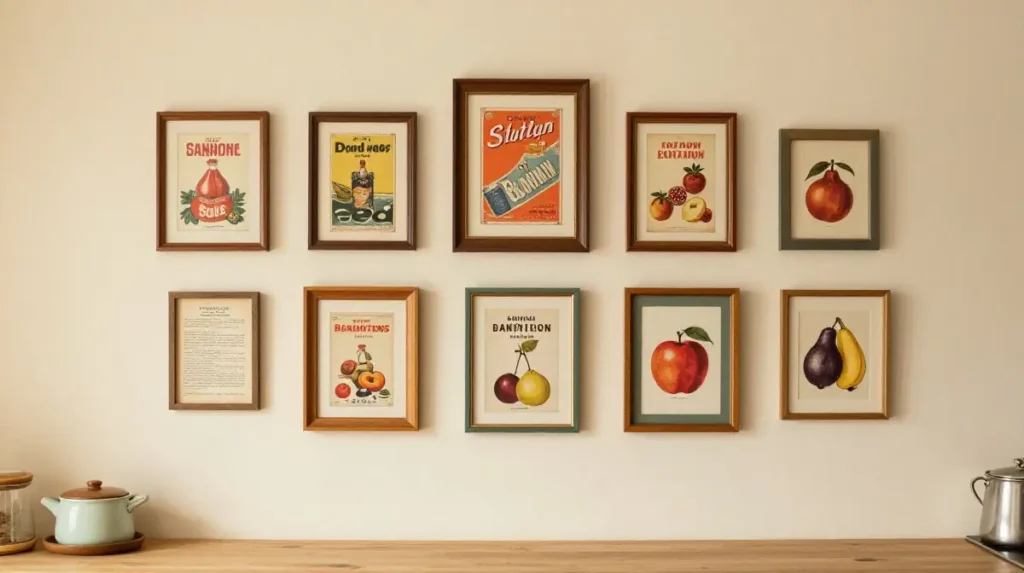
Walls in a retro kitchen should feel personal and layered. Classic tin signs with food-related slogans, framed vintage seed packets, old recipe cards in simple frames, and retro kitchen wall art featuring illustrated fruits or vegetables all work beautifully here.
Avoid anything too polished or modern in its typography. Vintage-looking fonts, hand-drawn illustrations, and faded color palettes read more authentically than contemporary graphic prints.
A gallery wall with mismatched frame sizes and finishes often looks more convincing than a perfectly matched set.
Use Retro Lighting to Change the Mood Immediately
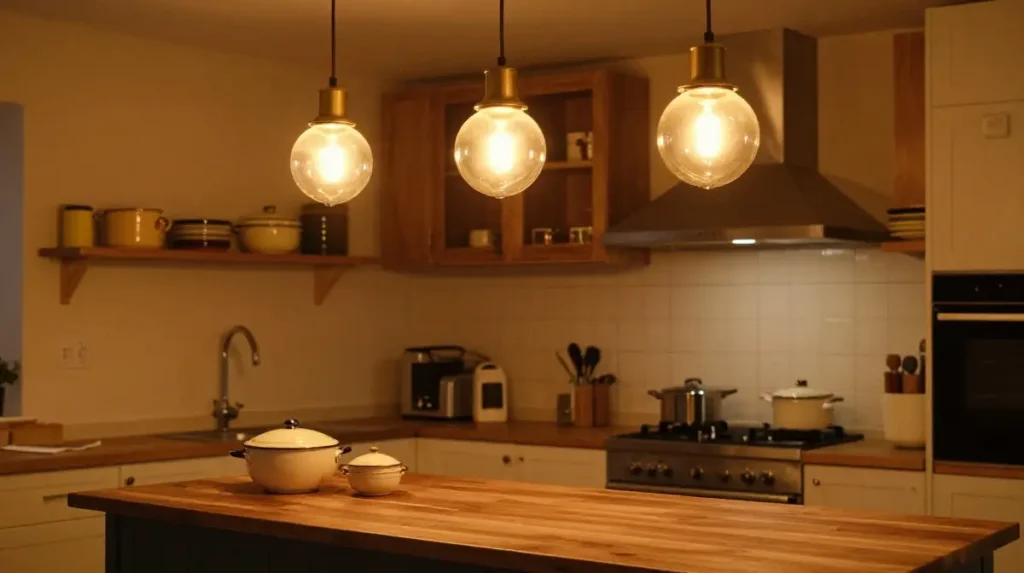
Retro kitchen lighting does a lot of heavy lifting. Pendant lights with glass globe shades, schoolhouse-style fixtures, and cage-style pendants all have strong mid-century roots. Even a simple pendant in a warm brass or matte black finish can shift a modern kitchen toward something that feels older.
For under-cabinet lighting, avoid harsh white LEDs in favor of warm-toned bulbs. The goal is a soft, slightly golden light that makes the kitchen feel cozy and lived-in rather than clinical.
Lay Down a Retro Checkered Floor for Maximum Impact
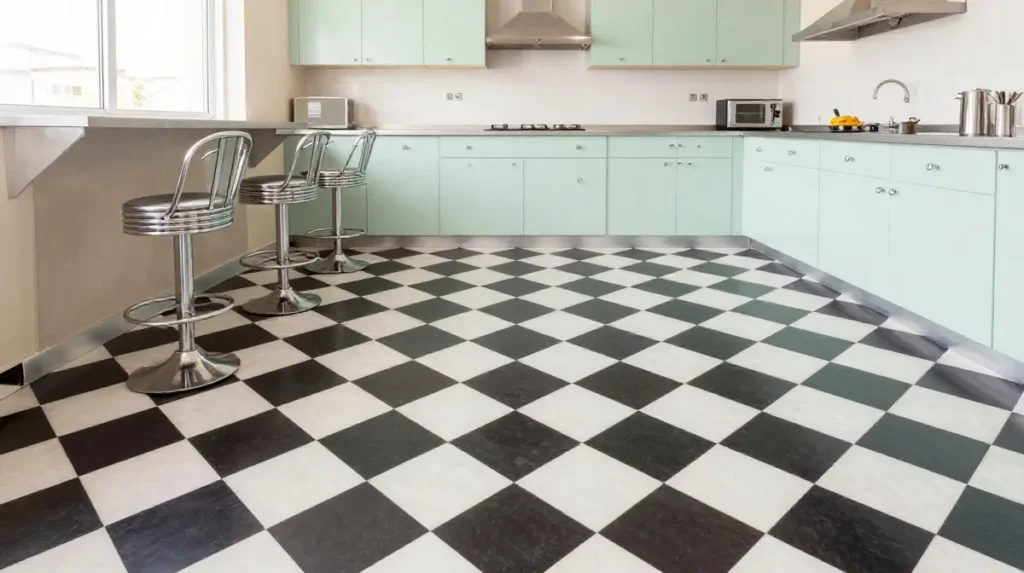
If you have the opportunity to change your flooring, the retro checkered floor is one of the most effective single choices you can make. Black and white vinyl tile was a staple in mid-century American kitchens and remains one of the most recognizable vintage signals.
It works in both large and small kitchens, photographs well, and pairs with almost every retro color palette. For renters, peel-and-stick vinyl tile versions are available and can be removed without damage.
Alternatively, a classic linoleum floor in a warm speckled pattern recalls the 1960s kitchen decor era and is a slightly softer option than high-contrast checkerboard.
Display Vintage Kitchenware as Decoration
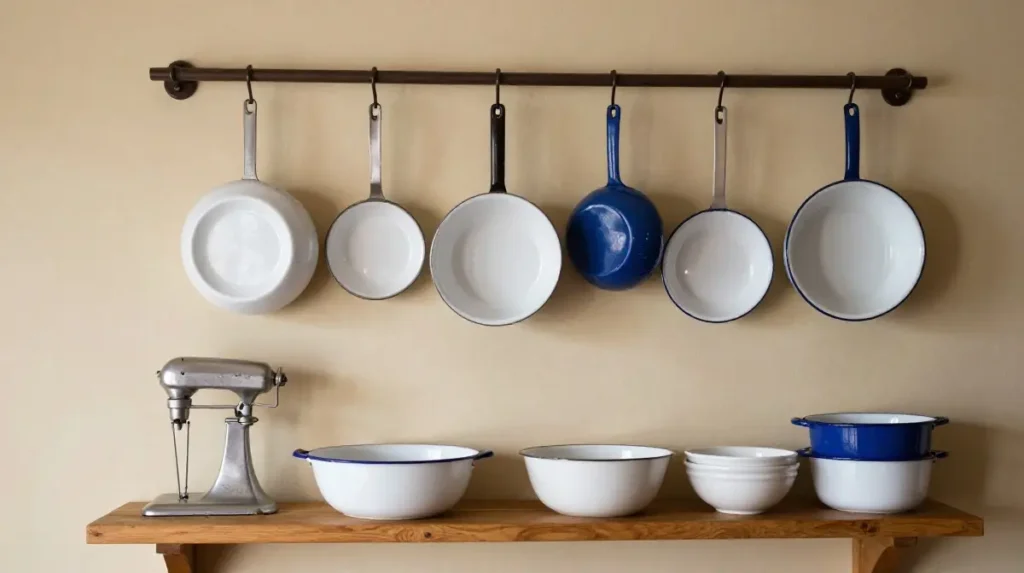
One of the easiest ways to add retro personality is to treat your kitchen tools and dishware as decor. Hang a collection of vintage enamelware on a wall-mounted rack. Display antique kitchen accessories like old scales, hand-cranked egg beaters, or ceramic mixing bowls on the counter.
A vintage kitchenware display works best when items share a color story. A collection of all-white pieces, or all blue-and-white, or all red-accented items, feels intentional rather than random.
Flea markets, estate sales, and online secondhand platforms are excellent places to build this kind of collection affordably.
Add a Retro Bar Stool to Your Kitchen Island or Counter
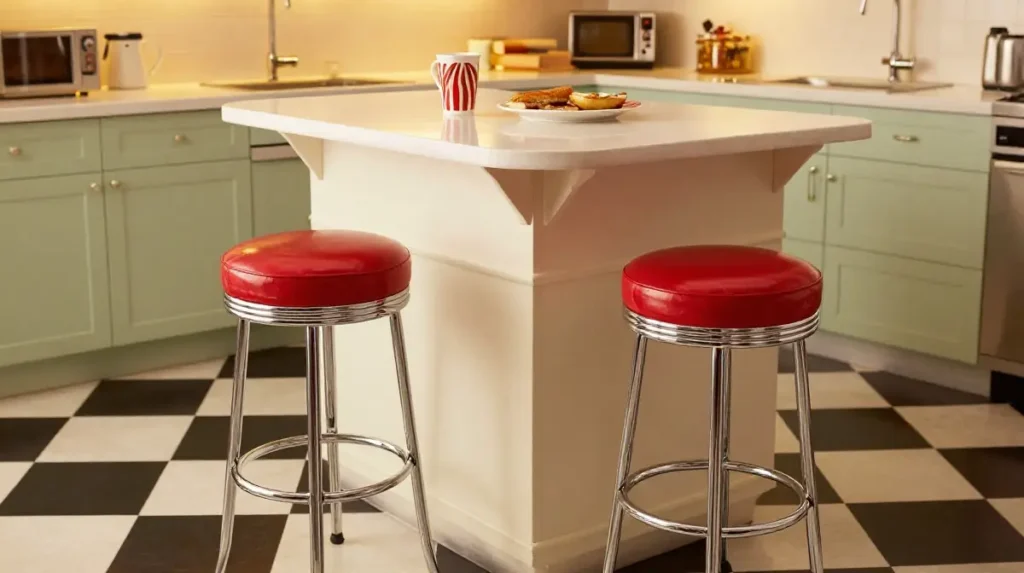
Bar stools are a relatively low-cost way to add serious retro personality. Look for styles with chrome legs and vinyl upholstery in classic diner colors — red, black, white, or teal. Retro bar stools kitchen options are widely available, and even a pair of well-chosen stools can shift the entire reading of the space.
Backless swivel stools with a round seat are the most authentically vintage option. Stools with low backs and chrome footrests also work well and tend to be more comfortable for longer use.
Hang Vintage Curtains for a Soft, Layered Look
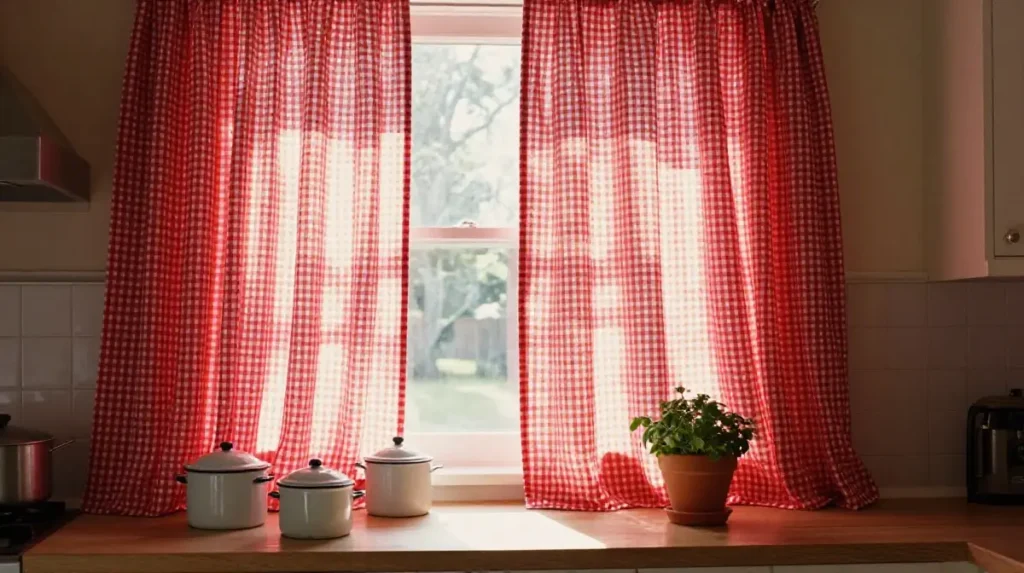
Window treatments are often overlooked in kitchen styling, but vintage curtain ideas for kitchens can add a lot of warmth and character. Look for cotton or linen curtains in gingham, small floral prints, or retro plaid kitchen decor patterns.
Cafe-style curtains — short panels that cover only the lower half of the window — are a classic choice for vintage kitchens. They let in light while maintaining the period feel. Tie-top and gathered-top styles look more authentic than grommets or modern rod pockets.
Incorporate an Antique Clock as a Functional Focal Point
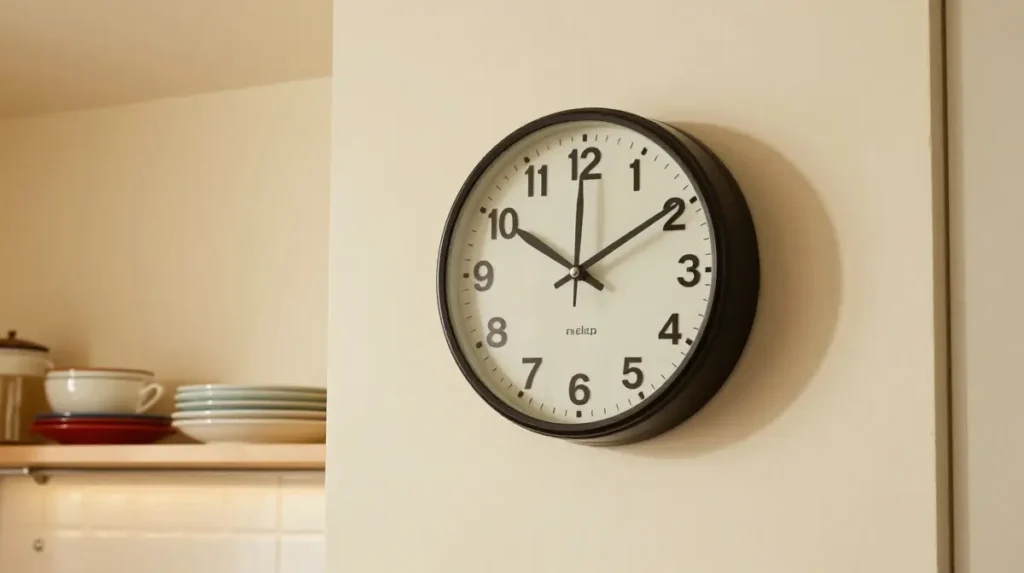
An antique clock kitchen decor choice sounds simple, but the right clock can become a genuine focal point. Look for round wall clocks with bold numbers in a classic diner style, or smaller mantel-style clocks for shelving. Vintage advertising clocks with brand logos from past decades add a kitschy, nostalgic layer.
Place the clock where it can be seen from multiple angles in the kitchen — above the stove, on an open wall near the breakfast nook, or centered above the sink.
Create a Retro Storage Solution That Is Also Beautiful
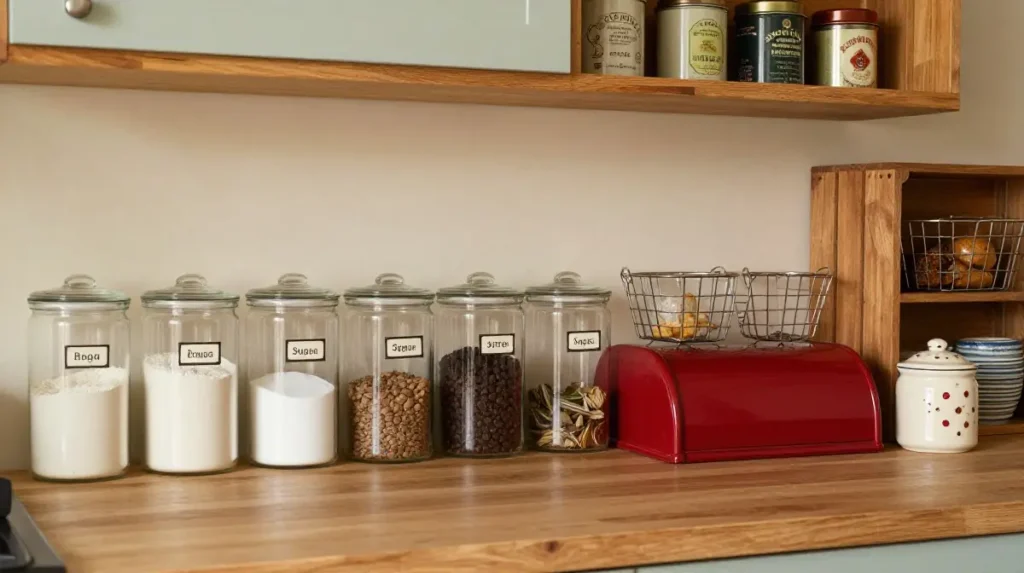
Retro kitchen storage was often as decorative as it was functional. A row of labeled glass canisters for flour, sugar, coffee, and tea is both practical and visually satisfying. A bread box in a bold color adds a period detail while actually being useful.
Retro storage kitchen solutions also include open wire baskets for produce, wooden crate shelves, and ceramic cookie jars in novelty shapes. These pieces often show up at thrift stores for very little money and add genuine character.
Style Your Countertops With Retro Details
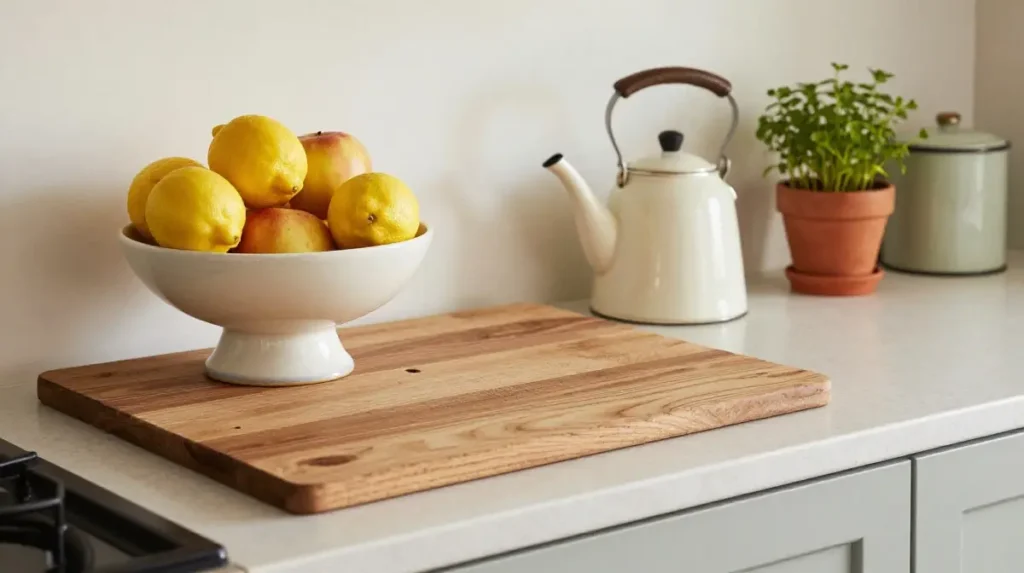
Retro countertop ideas focus on what sits on the surface as much as the surface itself. A wooden bread board, a ceramic fruit bowl, a vintage-style kettle, and a small potted herb in a terracotta pot together create a counter scene that feels warm and layered.
Avoid cluttering the surface. Pick three to five items that share a visual story and leave enough space for actual cooking. The goal is a styled counter, not a packed one.
Use Mason Jars and Vintage Containers Throughout
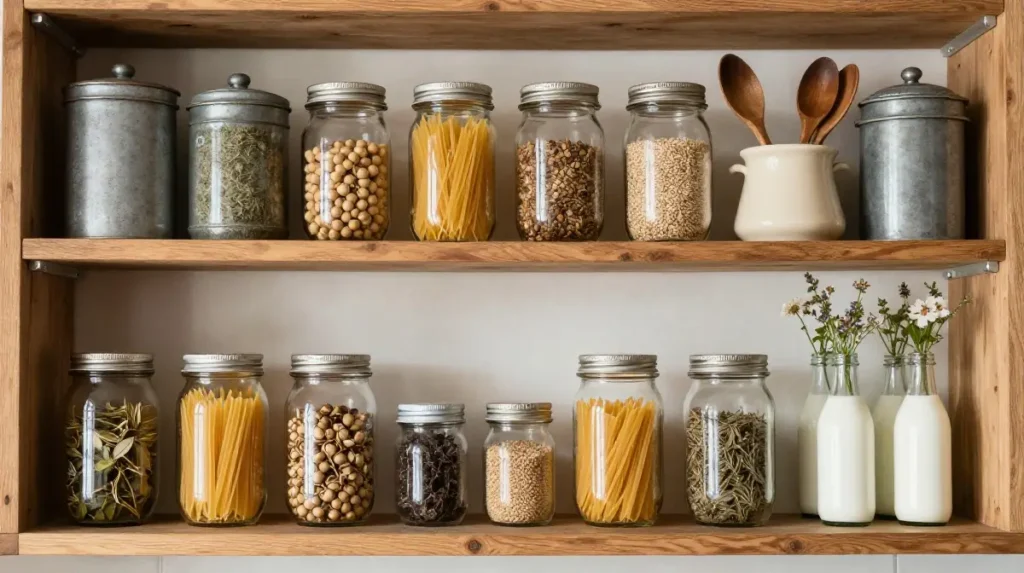
Vintage mason jar decor appears on nearly every retro kitchen Pinterest board for good reason — mason jars are inexpensive, widely available, and genuinely useful. Use them to store dry goods on open shelves, hold fresh flowers on the windowsill, or keep cooking utensils on the counter.
Pair them with other vintage containers — old tin canisters, ceramic crocks, and glass bottles — for a storage wall that looks collected and personal rather than purchased all at once.
Add Kitschy Kitchen Decor Without Going Overboard
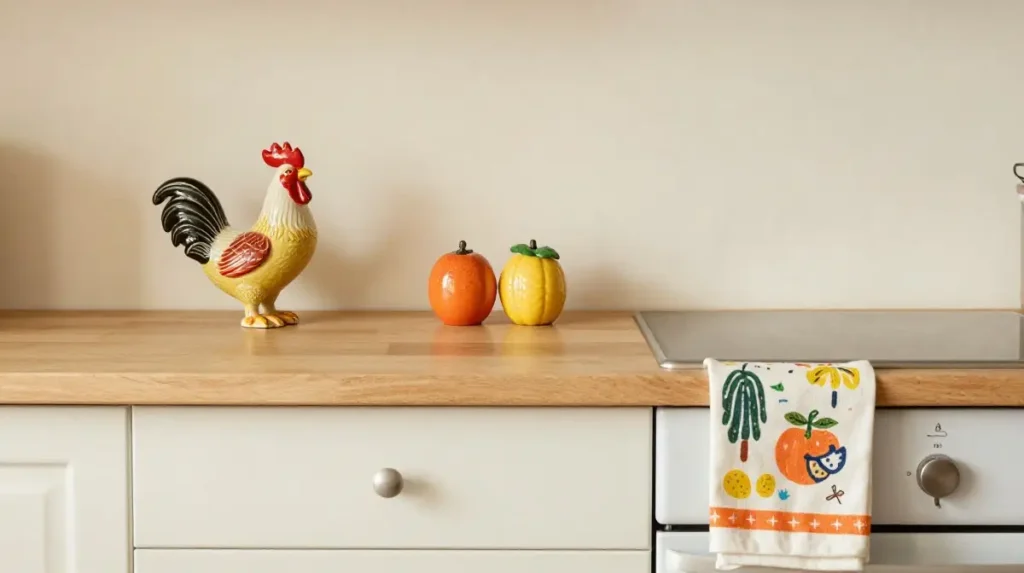
Kitschy kitchen decor is a hallmark of retro Pinterest boards. Think ceramic rooster figurines, novelty salt and pepper shakers, fruit-shaped cookie jars, and illustrated dish towels. These details add humor and personality without requiring a large investment.
The key is restraint. Choose two or three kitschy pieces and let them be conversation starters rather than filling every surface with novelty items. A single ceramic pineapple ice bucket or a rooster-print apron hanging on a hook can say everything it needs to without overwhelming the space.
Consider a Classic Diner Style Kitchen Corner
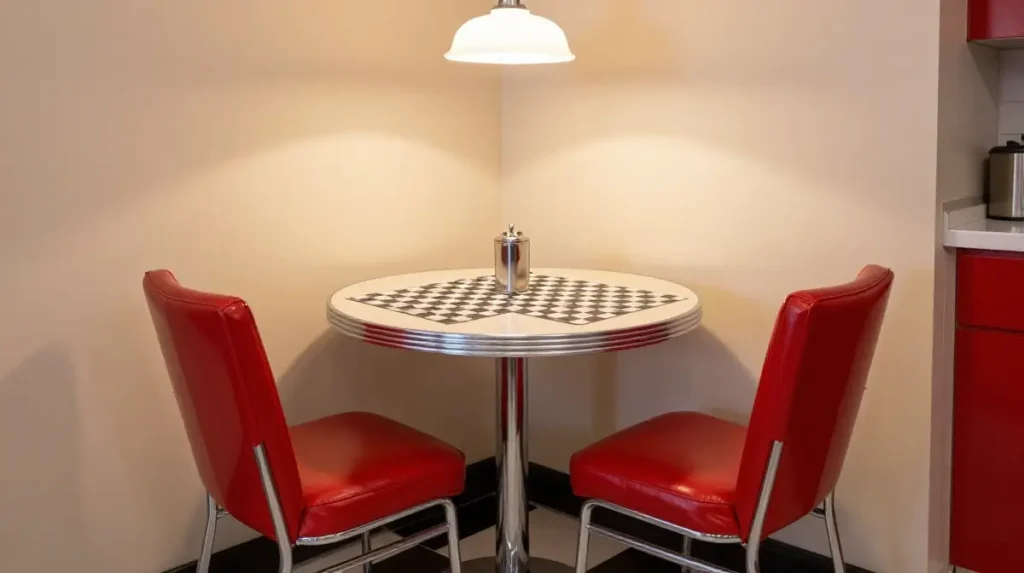
A dedicated diner-inspired corner — even in a small kitchen — can pull the entire retro theme together. This might include a small round table with a chrome edge, two red vinyl chairs, a checkerboard placemat, a napkin holder, and a sugar dispenser.
This setup works particularly well in eat-in kitchens where a corner has been left unused. It becomes the most characterful spot in the house and photographs beautifully for social sharing.
Mix Textures Thoughtfully for a Lived-In Feel
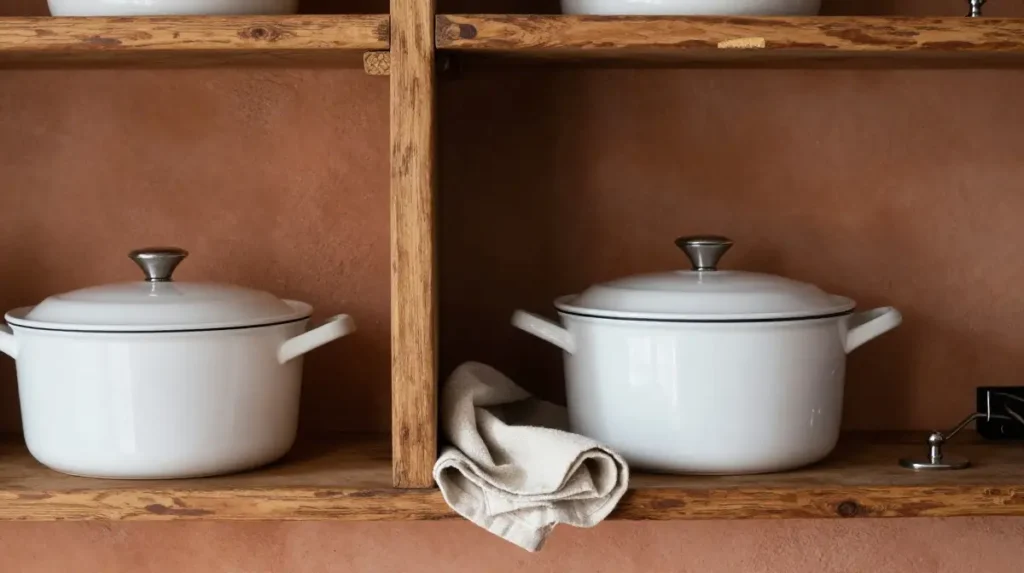
One of the most common mistakes in creating a retro kitchen is making it feel too polished or theme-park-like. Real vintage kitchens had layers of texture — worn wood, slightly scuffed tile, cotton textiles, and ceramic surfaces all living together.
When styling your own space, mix smooth enamel with rough wood, soft linen with hard metal, and matte surfaces with chrome details. This contrast is what makes the space feel genuinely aged rather than recently decorated.
Work With Small Spaces Using Retro Vertical Styling
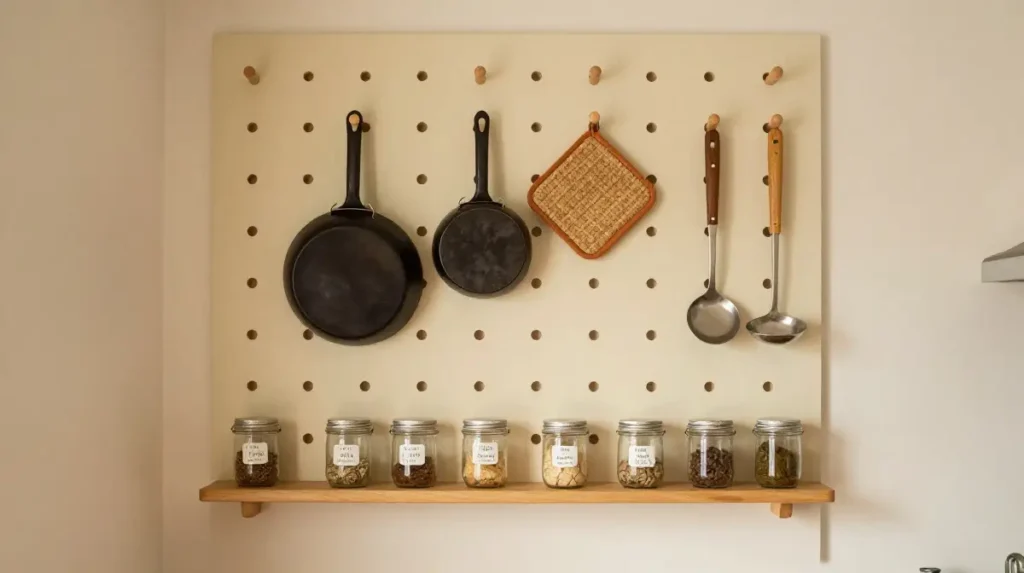
Small kitchen retro ideas often rely on vertical space rather than horizontal. A tall open shelving unit, a wall-mounted pegboard painted in a period color, or a series of hooks holding vintage mugs and tools all use vertical space effectively.
A pegboard in cream or sage green with wooden pegs is both functional and visually interesting. Hang cast iron pans, woven pot holders, and vintage utensils to create a working wall that doubles as display.
Bring the Look Together With a Vintage Mood Board Before You Buy
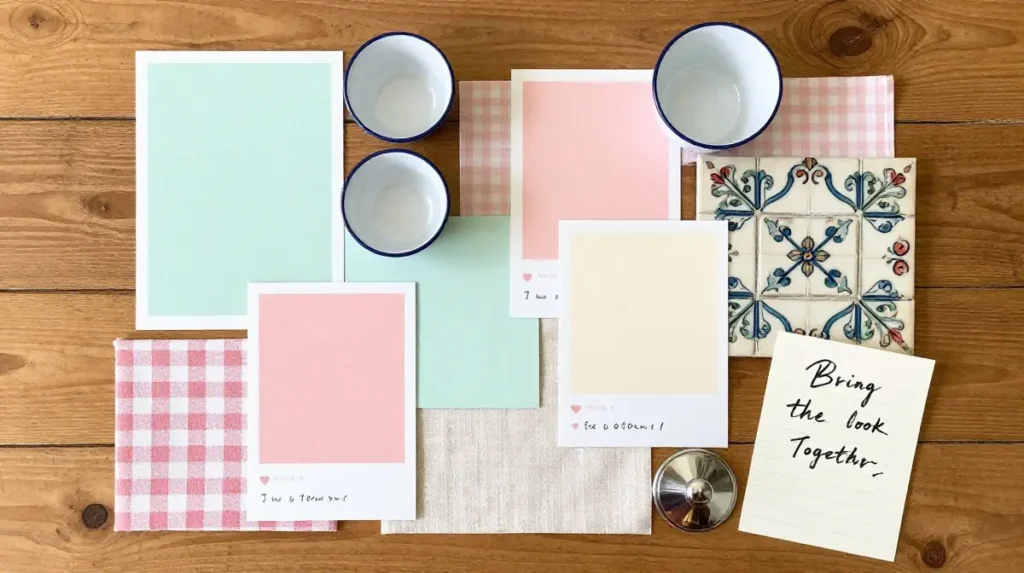
Before purchasing anything, spend some time building a retro kitchen mood board. Pinterest is genuinely useful here — save images that feel right, then look for the common threads. Is it mostly a color? A material? A specific decade? Understanding your own taste helps avoid impulse purchases that do not fit the overall look.
A mood board also helps you identify what you already own that could work. Old mixing bowls, a wooden cutting board, linen dish towels — many people have pieces that already suit the aesthetic without realizing it.
Quick Reference: Retro Kitchen Style by Era
| Decade | Key Colors | Common Materials | Signature Details | Budget Range |
|---|---|---|---|---|
| 1950s | Mint, pink, cream | Chrome, vinyl, linoleum | Diner stools, checkerboard floor | Low to Medium |
| 1960s | Harvest gold, avocado | Formica, enamel, wood | Bold tile patterns, kitschy decor | Low to Medium |
| 1970s | Burnt orange, brown | Wood, terracotta, wicker | Earth tones, macrame, rattan | Low |
| Mixed Retro | Pastels with warm accents | Mix of above | Curated vintage display, open shelving | Low to High |
| Farmhouse Retro | White, sage, rust | Wood, ceramic, linen | Apron sink, open shelving, tin signs | Medium to High |
| Diner Style | Red, black, white | Chrome, vinyl, tile | Neon signs, bar stools, countertop display | Medium |
Conclusion
A retro kitchen Pinterest style is not about perfection — it is about warmth, character, and the feeling that a space has been lived in and loved.
Whether you start with a single vintage find from a flea market or commit to a full color palette change, the process is genuinely enjoyable. Take it one piece at a time, trust your instincts, and let the space reflect your own version of nostalgia. The best vintage kitchens feel personal, not purchased.
You may also like this:22 Colorful Apartment Styling Ideas for Vibrant Living Spaces
Frequently Asked Questions
What is the easiest way to start creating a retro kitchen style?
Start with color and accessories. Paint one wall or your lower cabinets in a vintage-inspired pastel, then add a few period-appropriate accessories like enamelware, a retro clock, or a checkerboard mat. These changes are low-cost and reversible.
Can I achieve a retro kitchen look without renovating?
Yes. Most retro kitchen styling comes from accessories, textiles, and paint rather than structural changes. Swap cabinet hardware, hang vintage wall art, add open shelving, and choose period-inspired accessories to create the look without major work.
What colors work best for a 1950s kitchen style?
Mint green, soft pink, buttercream yellow, and robin egg blue are the most authentic 1950s kitchen colors. Pair them with white or cream and add chrome details for a genuinely period feel.
Where can I find affordable vintage kitchen accessories?
Thrift stores, estate sales, flea markets, and online secondhand platforms are the best sources. Look for enamelware, ceramic canisters, tin signs, old clocks, and vintage dish towels. Most pieces cost very little individually.
How do I keep a retro kitchen from looking too themed or overwhelming?
Choose one dominant decade for your inspiration and limit kitschy or novelty pieces to two or three. Mix vintage finds with neutral or natural materials to ground the space. The goal is a kitchen that feels collected over time, not assembled all at once.