
Introduction
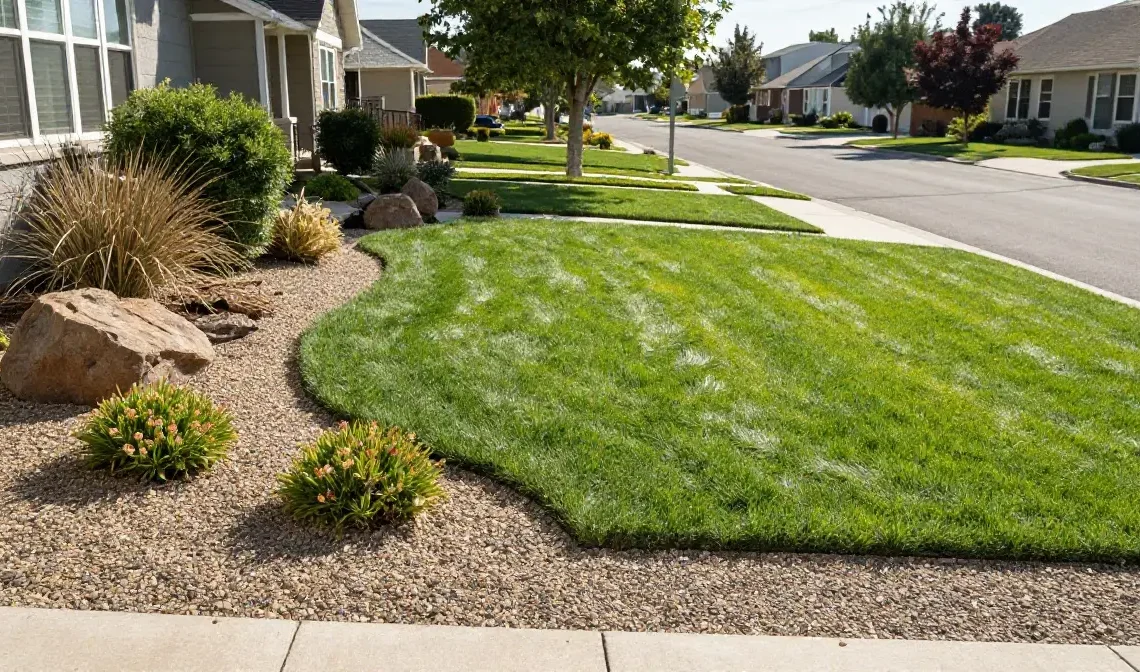
The traditional green lawn has long been considered the mark of a well-kept home. However, a growing number of homeowners are rethinking that idea entirely. Whether driven by rising water costs, limited time for yard maintenance, or a genuine desire to create something more beautiful and sustainable, the shift toward grass free front yards is accelerating at a remarkable pace. Removing your lawn does not mean accepting a bare or uninspiring outdoor space. On the contrary, a grass free front yard opens the door to a world of creative design possibilities that require far less effort to maintain. From lush native plant gardens to sleek gravel pathways and elegant stone patios, the options are both practical and visually impressive. This guide walks you through 22 of the best ideas to help you transform your front yard into a low-maintenance masterpiece that your neighbors will admire for years to come.
Gravel and Decomposed Granite Landscapes
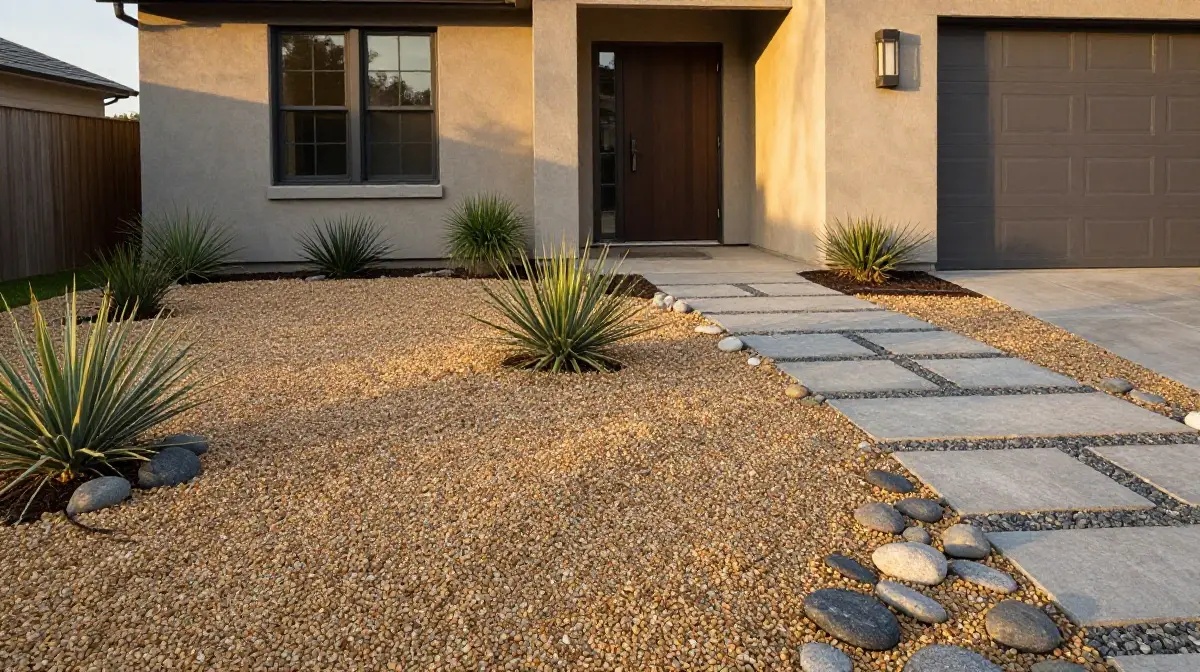
One of the most popular choices for grass free front yards is the use of gravel or decomposed granite as a ground covering. These materials are affordable, widely available, and extremely low maintenance once installed. Gravel comes in many colors and textures, from smooth river rock to sharp crushed granite, allowing you to tailor the look to your home’s architectural style. Decomposed granite, in particular, compacts well and creates a natural-looking surface that works beautifully in both modern and rustic settings. When paired with a few well-chosen drought-tolerant shrubs or ornamental boulders, a gravel landscape can look polished and intentional rather than sparse. A simple layer of landscape fabric beneath the gravel helps control weeds without the need for chemical herbicides, keeping your yard tidy throughout every season.
Native Plant Gardens for Effortless Beauty
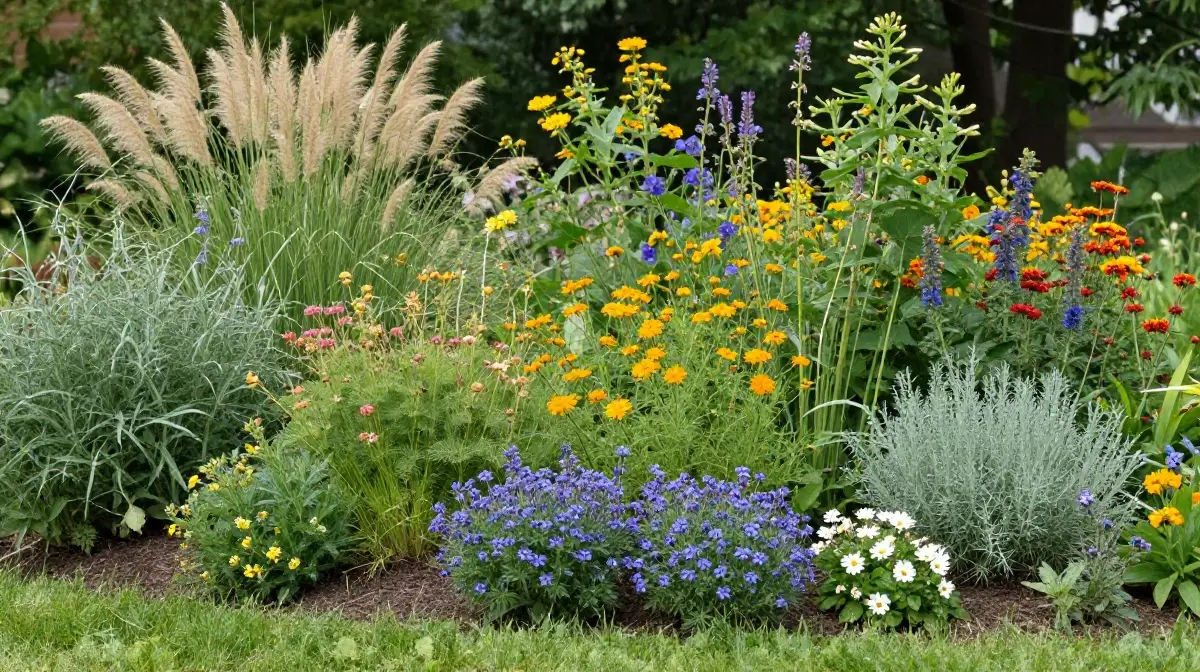
Replacing your grass with native plants is one of the smartest long-term investments you can make in your front yard. Native plants are those that naturally occur in your region and have adapted over centuries to local rainfall patterns, soil conditions, and temperature ranges. Because of this adaptation, they require very little supplemental watering, minimal fertilization, and virtually no pesticide treatments once established. A native plant garden can be designed to provide year-round color and texture, with flowering perennials, ornamental grasses, and low-growing shrubs creating a layered and dynamic landscape. Native gardens also serve as important habitat corridors for birds, butterflies, and bees, making your front yard a genuine contribution to local biodiversity. The initial planning takes some thought, but the rewards in beauty and reduced maintenance are well worth the effort.
Creeping Ground Covers as Grass Alternatives
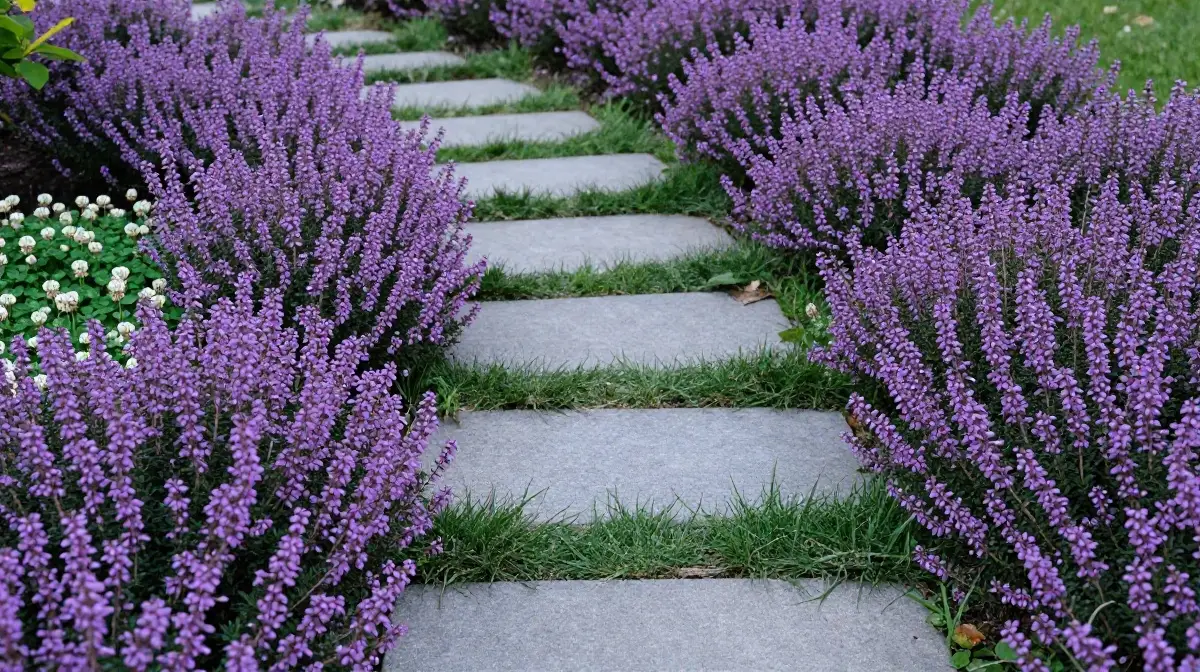
For homeowners who still want a soft, green, carpet-like surface without the demands of traditional turf, creeping ground covers are an outstanding solution for grass free front yards. Plants such as creeping thyme, clover, sedum, and ajuga spread low and wide to create a dense, uniform ground layer that suppresses weeds naturally. Creeping thyme is particularly beloved because it releases a pleasant fragrance when walked upon and produces small purple flowers in spring and summer that attract pollinators. Clover is another excellent option because it fixes nitrogen in the soil, reducing or eliminating the need for fertilizer. These ground covers can handle light foot traffic, remain green through most of the year, and require only occasional trimming rather than weekly mowing. They blend especially well with stone pathways and garden beds.
Xeriscaping for Dry Climate Regions
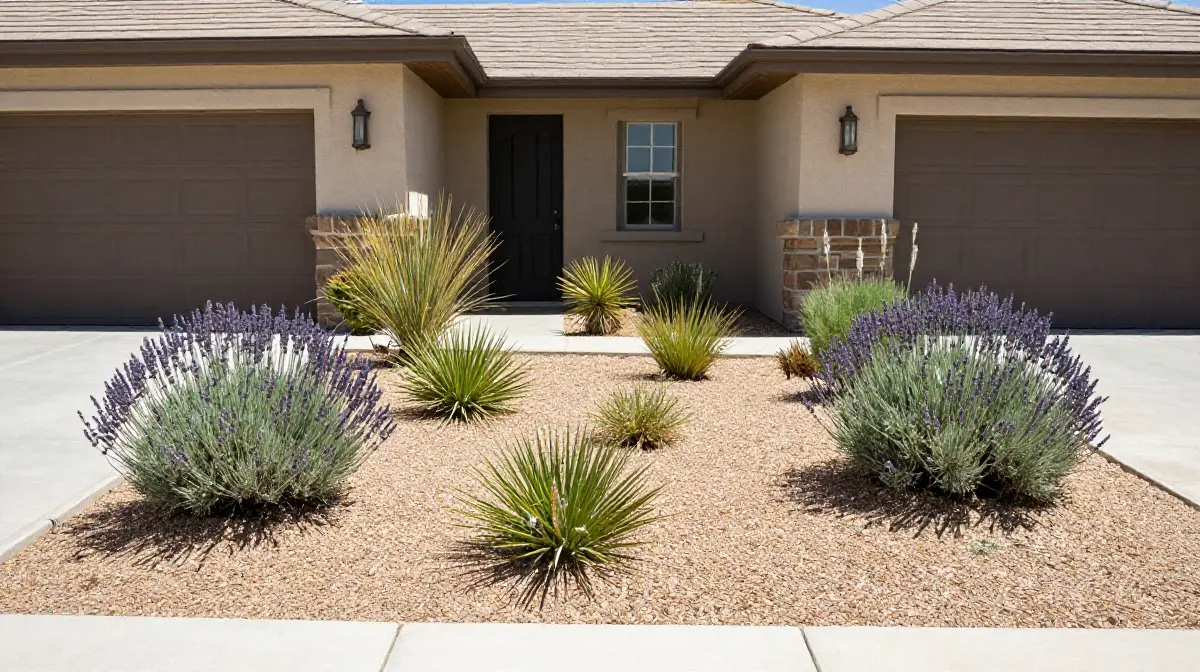
Xeriscaping is a landscaping philosophy specifically designed for regions with limited rainfall, and it translates beautifully into grass free front yard designs. The concept centers on using drought-resistant plants, efficient irrigation methods, and water-retaining mulches to create a landscape that thrives with minimal supplemental water. Common xeriscape plants include lavender, sage, ornamental grasses, agave, yucca, and various cacti, all of which are well suited to sunny and dry conditions. The design typically incorporates gravel, decomposed granite, or mulch as ground covers between plant groupings, creating clean lines and natural contrast. Xeriscaping is not limited to desert aesthetics and can be adapted to a wide variety of styles, from sleek and modern to lush and Mediterranean. For homeowners in regions like the Southwest, California, or Texas, it is one of the most sensible and sustainable choices available.
Succulent and Cactus Gardens
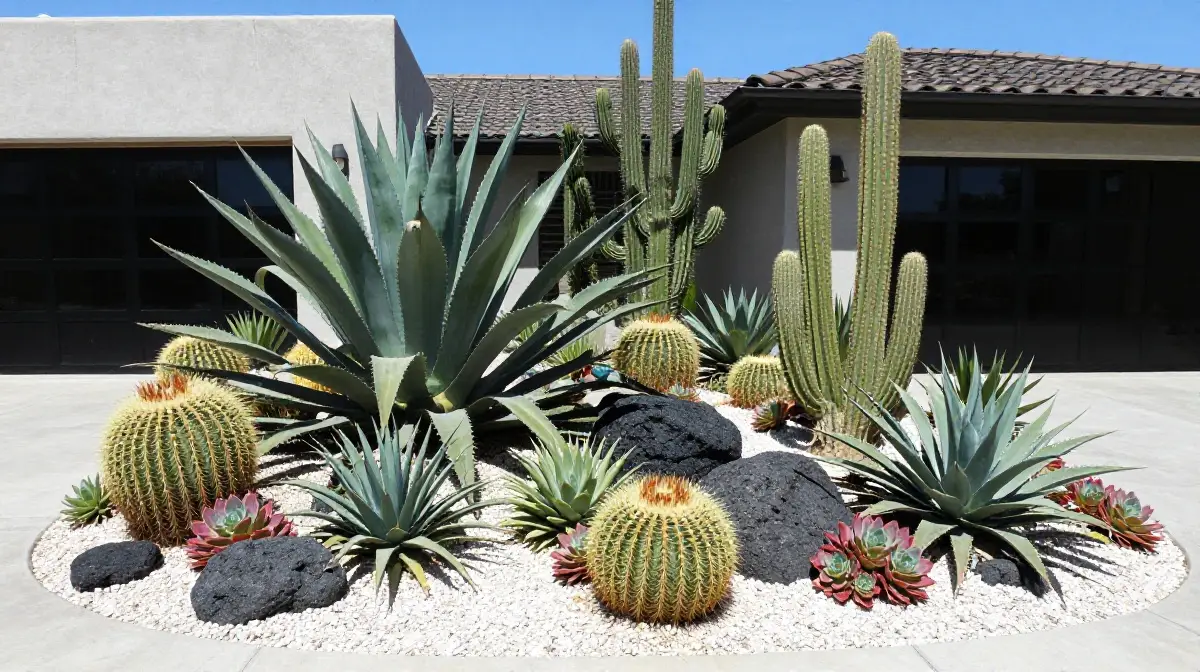
Few plant families offer the combination of architectural beauty and absolute drought tolerance that succulents and cacti bring to a grass free front yard. Agaves, aloes, echeverias, and barrel cacti are available in a remarkable range of shapes, sizes, and colors, making it easy to design a front yard that feels bold and curated rather than ordinary. Succulents store water in their thick leaves and stems, meaning they can go weeks or even months between waterings once established in the right soil. When arranged thoughtfully alongside decorative rocks, boulders, and gravel, a succulent garden creates a striking visual statement that stands out on any street. Many succulents also produce vivid flowers, adding seasonal color to your landscape without requiring any special care. These plants are particularly popular in Southern California, Arizona, and other warm climates, but cold-hardy varieties exist for cooler regions as well.
Paver Patios and Hardscaped Entertaining Spaces
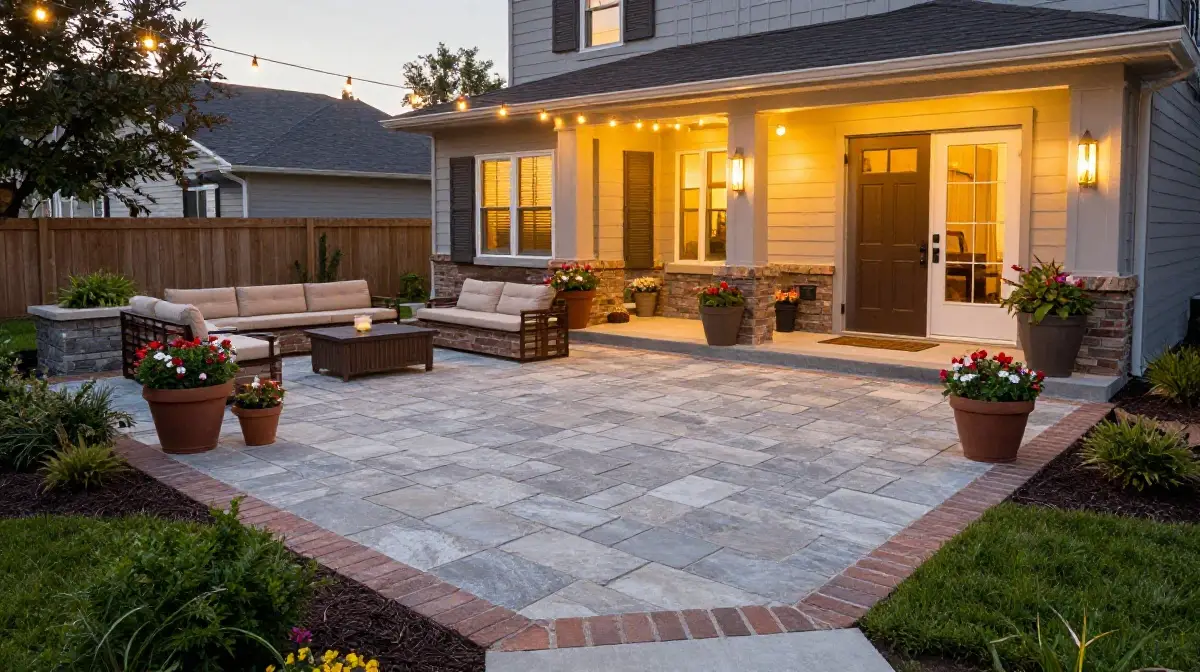
Replacing a portion of your front yard lawn with a paver patio or hardscaped seating area is a practical way to add usable outdoor living space while eliminating grass entirely. Concrete pavers, natural stone, brick, and flagstone are all excellent materials that hold up well to foot traffic and changing weather conditions. A front yard patio can be softened with container plants, potted flowering shrubs, or low garden beds along its edges, creating a balance between structure and greenery. Hardscaping permanently reduces the area that needs any watering or maintenance, and a well-designed paved space actually increases the curb appeal and resale value of your home. Adding outdoor furniture, decorative lighting, or a small water feature to your patio transforms it into an inviting extension of your living space that you can enjoy throughout the warmer months of the year.
Moss Gardens for Shaded Yards
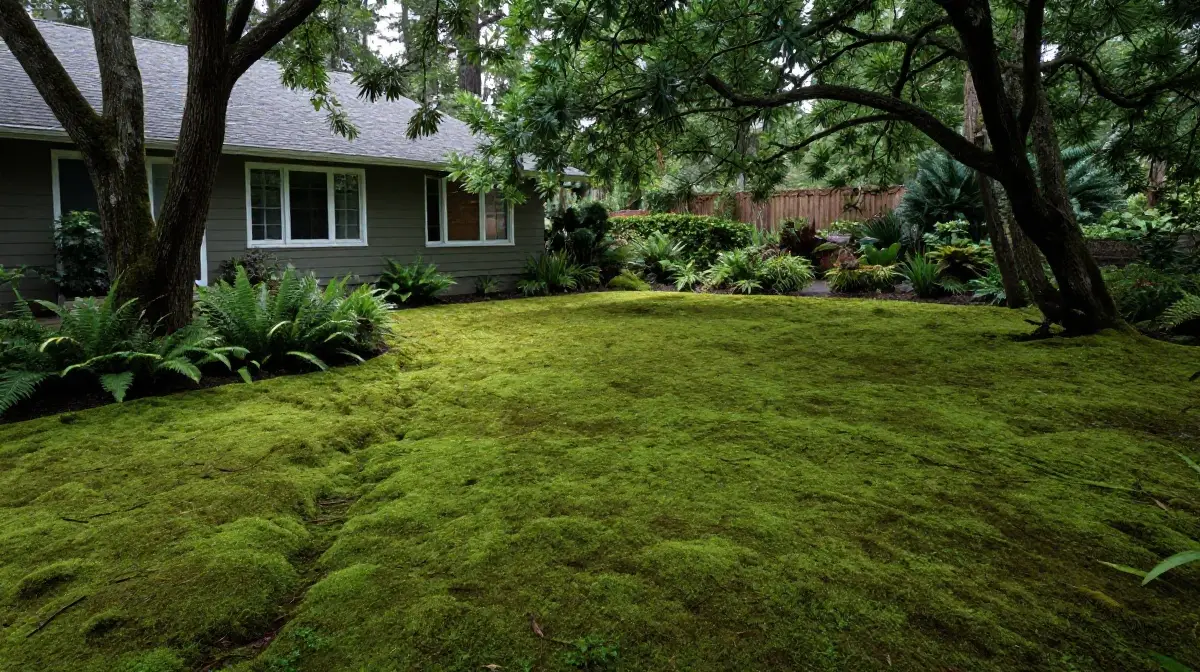
Homeowners with shaded front yards often struggle to grow traditional grass successfully, making moss an ideal and elegant alternative. Moss thrives in cool, moist, and shaded conditions where grass would thin out and look patchy. A well-established moss lawn has a lush, velvety texture and maintains its deep green color year-round, including during winter months when most other plants go dormant. Moss requires no mowing, no fertilizer, and very little water once it has taken hold in suitable conditions. It grows naturally in poor soil and can be established on slopes, around tree roots, and in areas with irregular terrain where grass would be difficult to maintain. The result is a serene, forest-like aesthetic that feels peaceful and unique. Moss gardens are especially well-suited to homes surrounded by mature trees or located in the Pacific Northwest and other regions with high natural humidity.
Mulched Garden Beds with Flowering Perennials
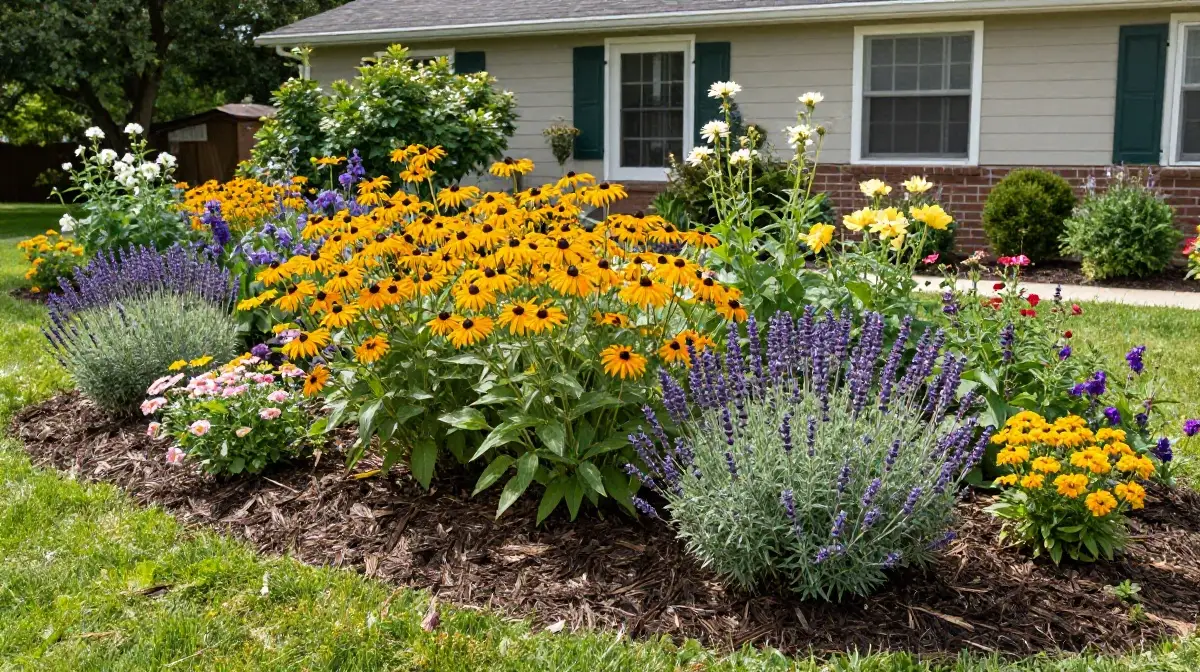
A classic and always appealing approach to grass free front yards is to fill the space with well-planned garden beds mulched generously with wood chips, bark, or shredded leaves. Mulch serves multiple functions simultaneously, suppressing weed growth, retaining soil moisture, regulating soil temperature, and adding an attractive, finished appearance to planting areas. Flowering perennials such as coneflowers, black-eyed Susans, lavender, salvia, and daylilies provide seasonal color and texture without requiring replanting each year. Arranging plants in layers by height, with taller specimens toward the center or back and lower ground covers along the edges, creates depth and visual interest that a flat lawn simply cannot match. A good layer of three to four inches of mulch applied each spring keeps the garden beds looking tidy and dramatically reduces the time you spend weeding throughout the growing season.
Artificial Turf for Year-Round Green
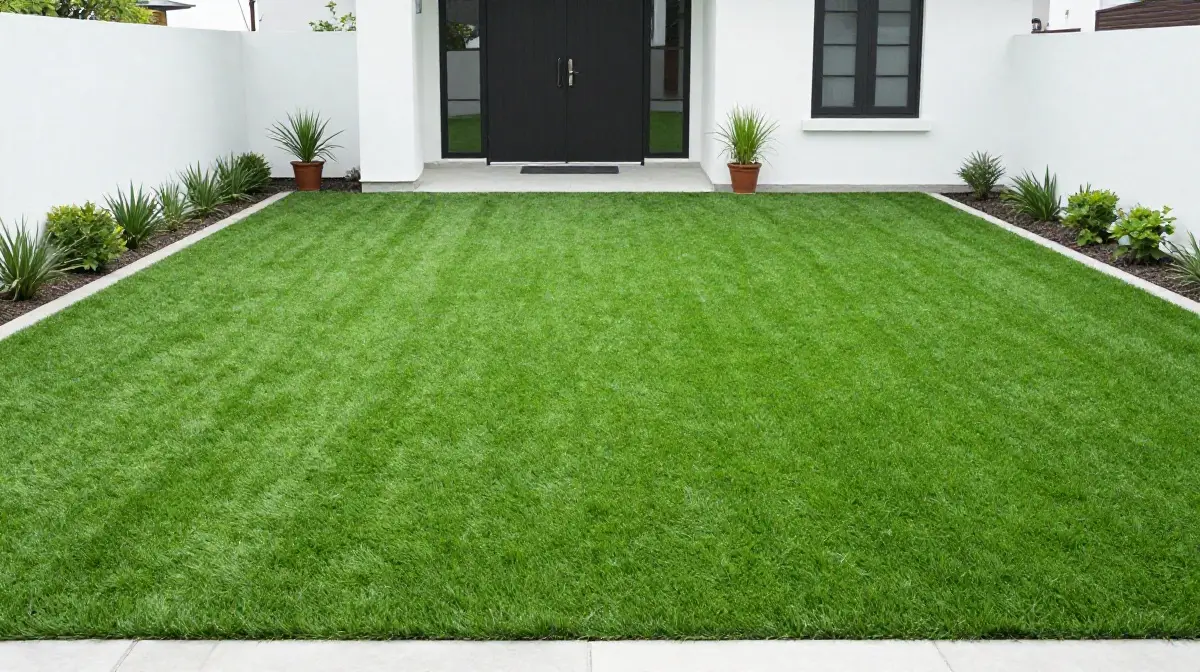
For those who love the look of a green lawn but want none of the upkeep involved, high-quality artificial turf has become a genuinely attractive option for grass free front yards. Modern synthetic grass products look remarkably realistic, with varied blade lengths and natural color variations that closely mimic real turf. Artificial turf requires no mowing, watering, fertilizing, or pesticide treatments, and it stays uniformly green and presentable throughout all twelve months of the year. It is particularly practical for homes with young children or pets who need a safe, clean outdoor surface to play on. Installation involves preparing a compacted gravel base, laying weed fabric, and securing the turf, which is typically a one-time investment that pays for itself over several years of eliminated lawn care costs. Many cities with water restrictions also permit or even incentivize artificial turf installation as part of conservation programs.
Stone Pathways and Walkways
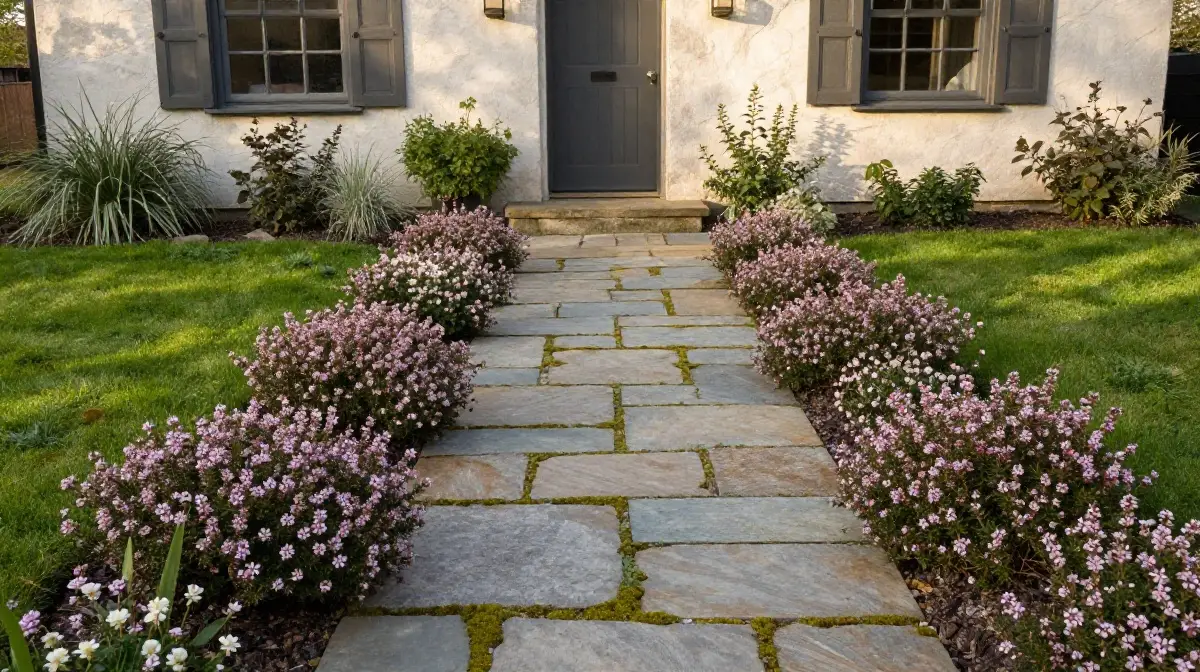
Replacing a portion of your front yard with a thoughtfully designed stone pathway creates both functionality and visual appeal in a grass free landscape. Stepping stones, flagstone paths, and poured concrete walkways all guide visitors naturally toward your front door while dividing the yard into distinct planting zones that are easier to manage. The spaces between stepping stones can be planted with low-growing ground covers like creeping thyme or Irish moss, which fill the gaps softly while requiring minimal care. A meandering pathway feels more relaxed and organic than a straight concrete walk, inviting the eye to travel through the landscape and notice its various elements. Pathway materials should be chosen to complement your home’s exterior and the overall style of your landscape design, whether that is rustic, modern, coastal, or cottage-inspired. Well-lit pathways with solar or low-voltage lighting also improve safety and add beautiful ambiance after dark.
Water Features as Focal Points
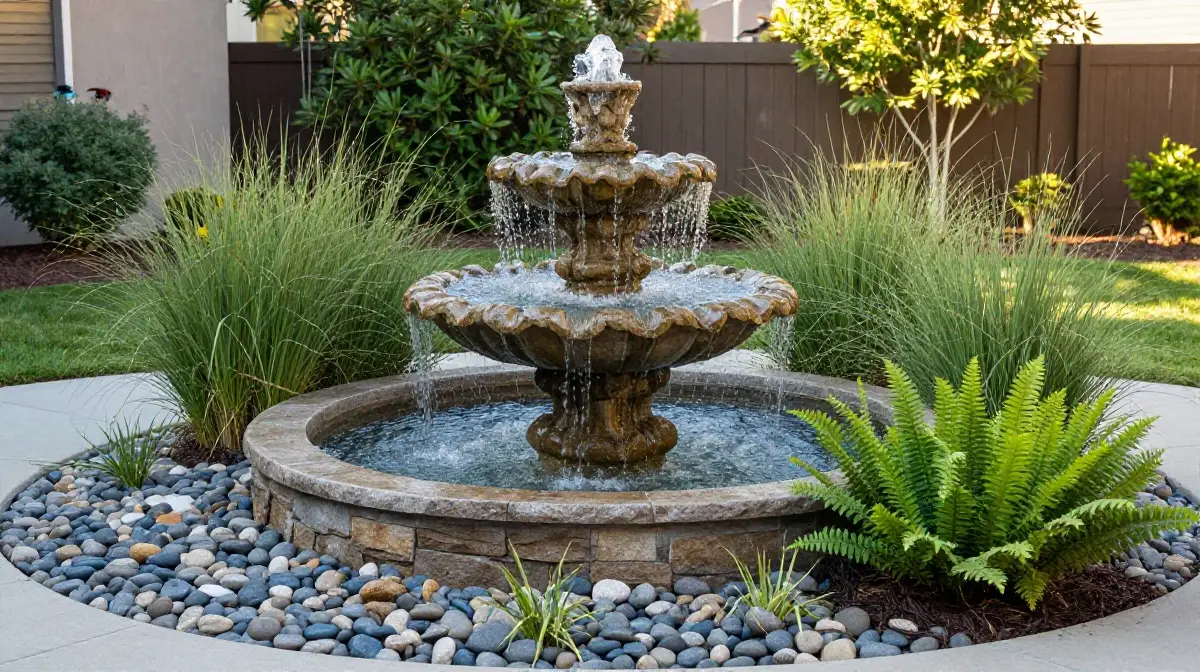
Adding a water feature such as a fountain, small pond, or recirculating stream to a grass free front yard creates an immediate focal point that elevates the entire design. The sound of moving water adds a sensory dimension to the outdoor space that plants and hardscaping alone cannot provide, making the front yard feel calming and welcoming from the street. Compact wall-mounted fountains, freestanding tiered fountains, and naturalistic rock waterfalls are all well-suited to front yard settings and are available at a wide range of price points. Many modern water features are equipped with recirculating pumps that reuse the same water continuously, making them surprisingly water-efficient despite appearances. Surrounding a water feature with moisture-loving plants such as ornamental grasses, hostas, or ferns creates a cohesive and lush design that feels intentional. A water feature also tends to attract songbirds and beneficial wildlife, adding another layer of life and movement to the yard.
Raised Vegetable and Herb Gardens
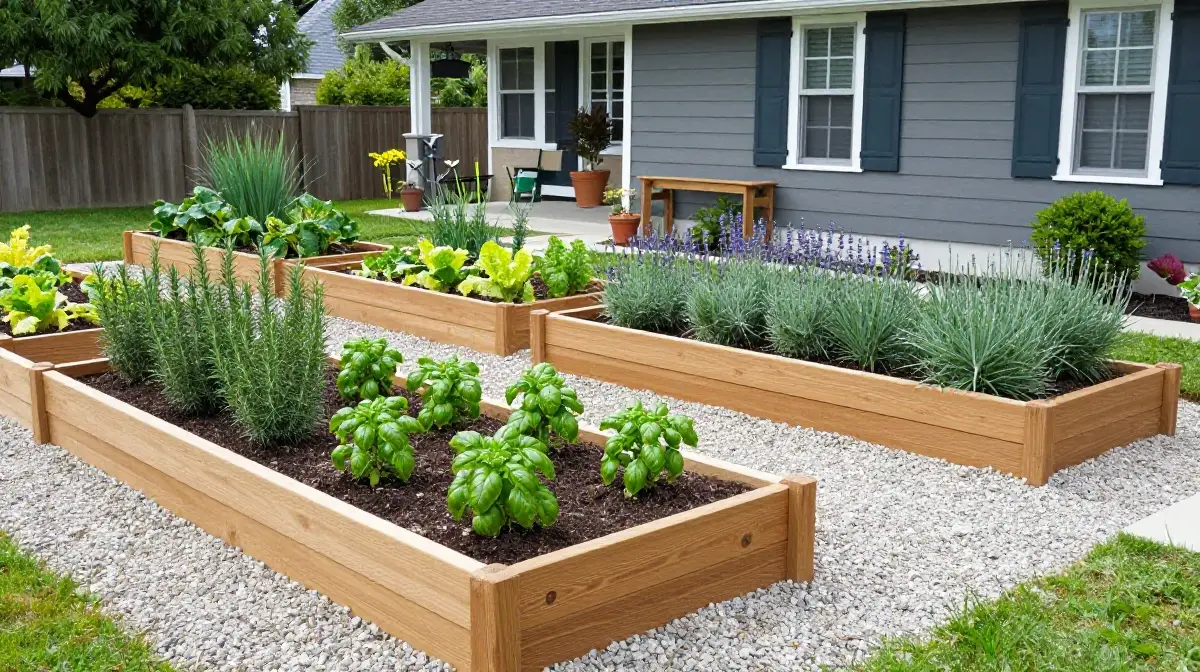
Converting your front yard lawn into a productive vegetable or herb garden is a rewarding way to make use of the space while eliminating grass entirely. Raised garden beds built from cedar, redwood, or galvanized steel add structure and visual interest to the yard while making it easier to control soil quality and manage planting conditions. Growing edible plants in the front yard is increasingly popular in urban and suburban neighborhoods, and many homeowners find that it sparks conversations with neighbors and builds a sense of community. Herbs such as rosemary, thyme, basil, and sage are among the easiest edible plants to grow and maintain, and they are also beautiful enough to serve an ornamental purpose in a front yard setting. A well-designed edible garden can be just as visually appealing as a purely decorative landscape when given proper structure, signage, and plant arrangement.
Cottage-Style Perennial Gardens
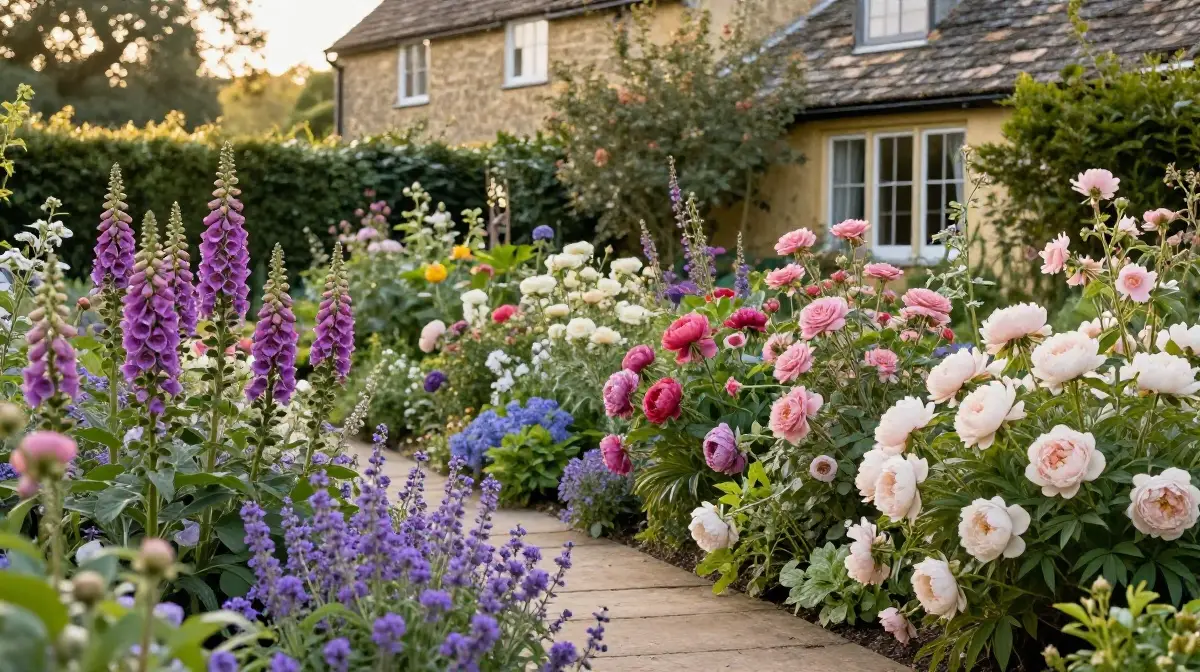
A cottage garden aesthetic translates beautifully into a grass free front yard and creates an impression of abundant, effortless beauty. This style is characterized by densely planted flowering perennials, a mix of plant heights and textures, and an overall sense of natural abundance that feels welcoming and cheerful. Plants typically used in cottage gardens include roses, foxgloves, hollyhocks, peonies, catmint, and ornamental alliums, which together create a constantly changing display of color and form throughout the growing season. A simple straight or gently curved pathway through the middle of the planting keeps the garden organized while allowing the flowers to spill over its edges in a natural way. Cottage gardens do require some seasonal maintenance, but they are self-sustaining in many respects because the perennials return each year stronger than before, and many varieties self-seed to fill in gaps over time.
Mediterranean Style Courtyards
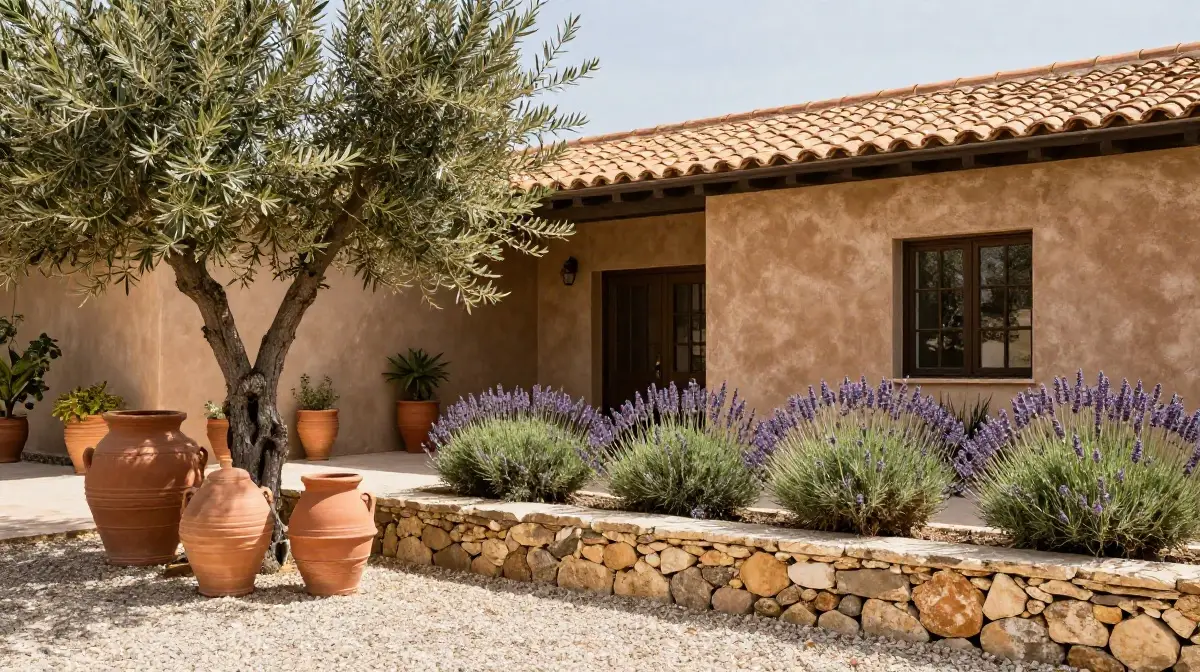
For a sophisticated and relaxed aesthetic, a Mediterranean-inspired courtyard design offers one of the most appealing options for grass free front yards. This style draws on the landscapes of Southern Europe and incorporates elements such as terracotta pots, olive trees, lavender hedges, gravel surfaces, and weathered stone or tile. The color palette tends toward warm earth tones, silver-gray foliage, and touches of vibrant purple or blue from flowering plants like lavender, rosemary, and agapanthus. A low stone wall or decorative fence defines the space and gives it an enclosed, intimate feeling. Olive trees, if your climate permits, serve as outstanding specimen trees in this style because they are slow-growing, long-lived, extremely drought-tolerant, and visually striking in every season. This approach works especially well on homes with stucco or tile exteriors and creates an unmistakably elegant curb presence.
Ornamental Grass Plantings
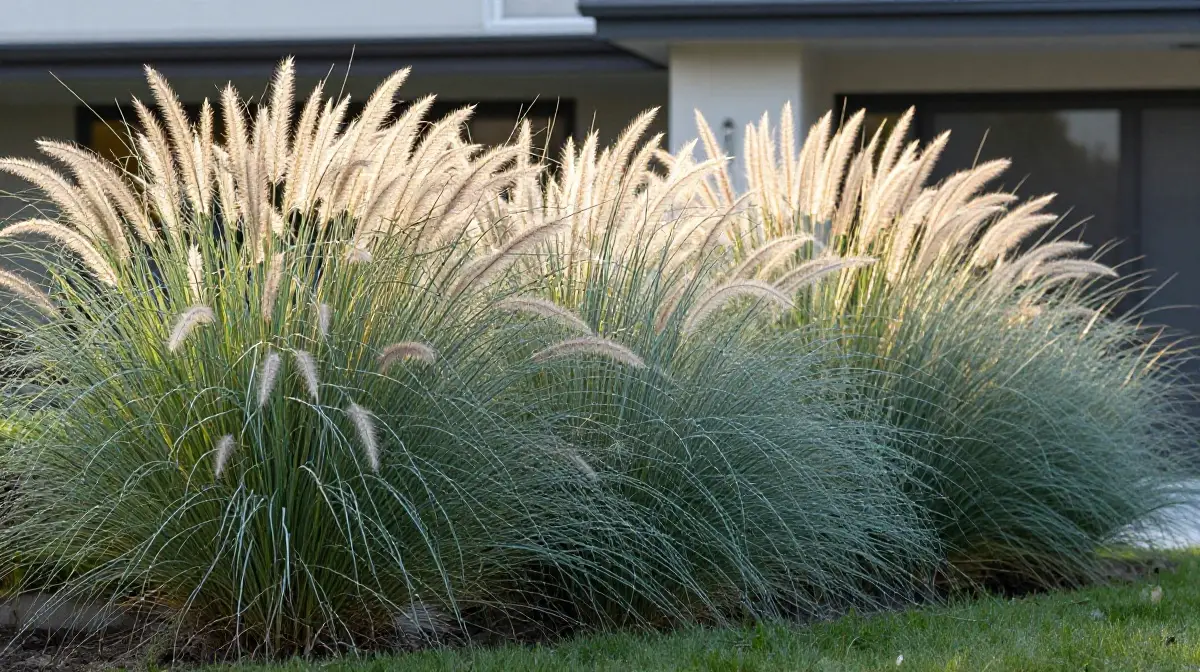
Ornamental grasses offer a graceful and dynamic alternative to traditional turf in a grass free front yard design. Unlike lawn grass, ornamental varieties such as blue fescue, feather reed grass, maiden grass, and fountain grass are grown for their visual beauty rather than as ground cover to be walked upon. These plants move gently in the breeze, creating a sense of life and softness in the landscape that hard surfaces alone cannot provide. Most ornamental grasses are extremely hardy, drought-tolerant, and require only one annual cutback in late winter to remain healthy and attractive. They can be used as borders, focal points, mass plantings, or as transitional elements between taller shrubs and lower ground covers. Their feathery plumes and fine textures contrast beautifully with bold-leaved plants like agave or hostas, creating a layered and sophisticated planting composition.
Wildflower Meadow Plantings
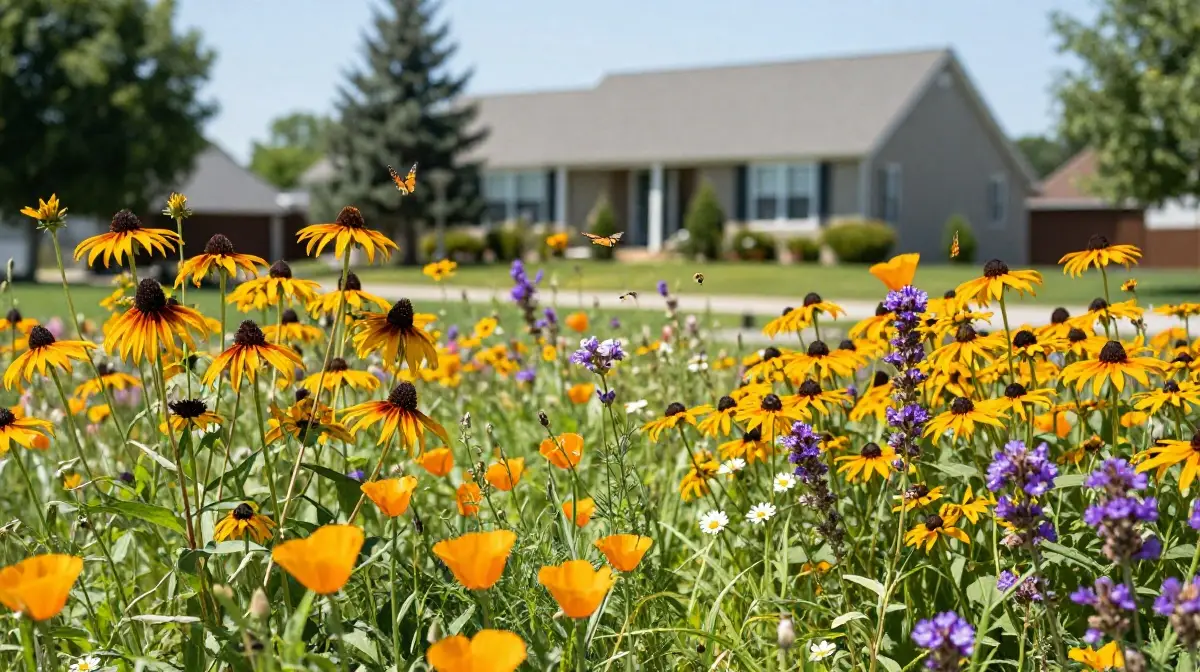
Replacing a traditional grass lawn with a wildflower meadow is one of the most ecologically valuable and visually stunning choices available for a grass free front yard. A wildflower meadow planted with species native to your region provides essential habitat and food sources for native bees, monarch butterflies, hummingbirds, and a wide variety of other beneficial wildlife. Meadow plantings typically include a mixture of annual and perennial flowers such as coneflowers, wild bergamot, black-eyed Susans, California poppies, and prairie clover, which together create waves of color from spring through autumn. Once established, a meadow requires very little intervention, needing only a single annual mowing in late fall or early spring to maintain its vigor. Some municipalities do have local ordinances regarding meadow plantings, so it is worth checking local guidelines before converting your entire front yard to this style.
Bark and Wood Chip Ground Cover
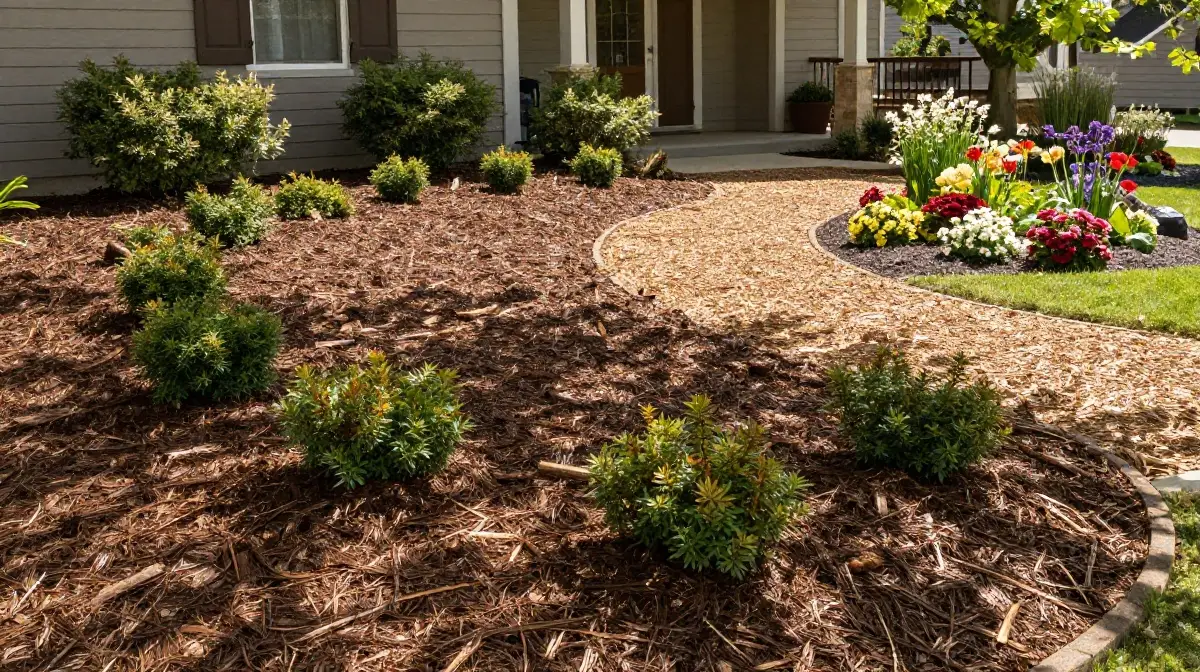
Wood chips and bark mulch are among the most affordable and readily available materials for covering open ground in a grass free front yard, and they offer a natural, warm aesthetic that complements a wide range of planting styles. A generous layer of wood chips around trees, shrubs, and perennial beds suppresses weeds effectively, retains soil moisture, and slowly breaks down over time to enrich the soil with organic matter. Wood chip pathways create informal and charming walkways through garden areas and are soft underfoot, making them comfortable for bare feet and safe for children playing outdoors. Many municipalities and tree services offer free or low-cost wood chips to homeowners, making this one of the most economical approaches to lawn replacement. Refreshing the wood chip layer once or twice a year keeps the yard looking tidy and ensures that weed suppression remains effective throughout the growing season.
Low-Growing Shrub Borders
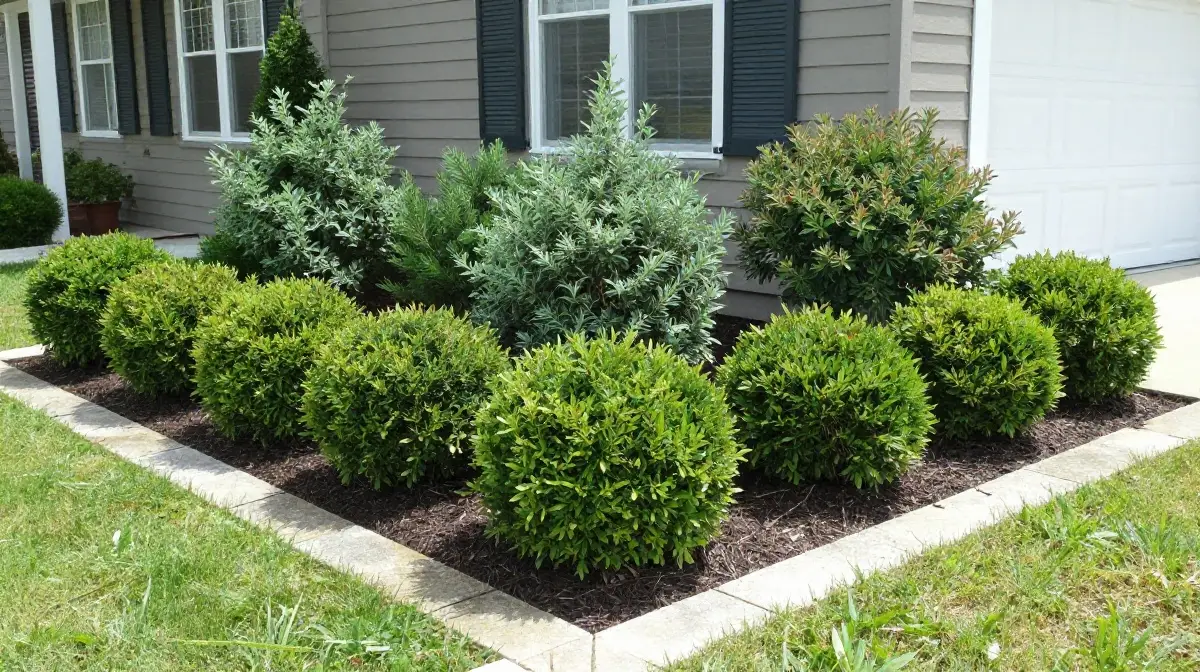
Planting low-growing shrubs across your front yard is an excellent strategy for eliminating grass while creating a neat, structured landscape that requires minimal upkeep. Shrubs such as dwarf spirea, compact barberry, creeping juniper, and low-growing azaleas provide year-round structure and seasonal interest through their foliage, flowers, and berries. Once established, most shrubs need only occasional pruning to maintain their shape and size, making them far less demanding than a lawn that requires attention every single week during the growing season. Low shrubs also serve a practical purpose by defining property lines, discouraging foot traffic across planting areas, and providing cover for small beneficial wildlife. Mixing shrub varieties with different leaf colors, textures, and seasonal interest ensures that the yard looks dynamic and appealing throughout the entire calendar year without requiring constant replanting or replanting.
Permeable Paving Systems
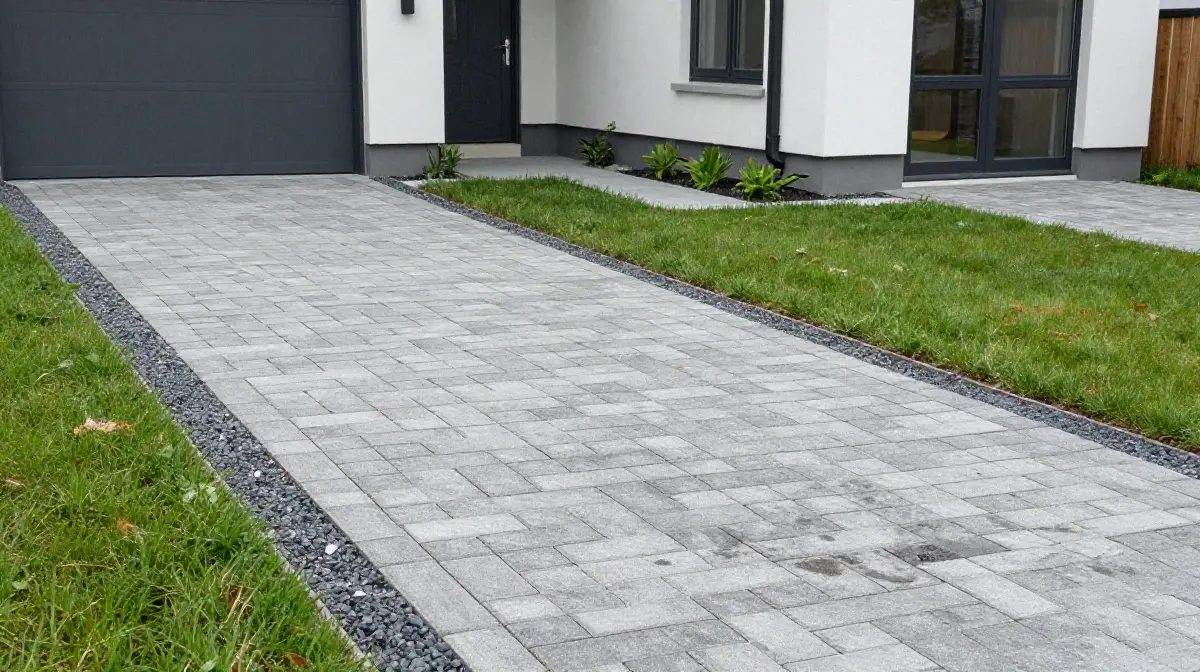
Permeable paving is a forward-thinking solution for grass free front yards that addresses both aesthetics and environmental responsibility simultaneously. Unlike traditional concrete or asphalt, permeable paving systems allow rainwater to filter through the surface and into the soil below, reducing stormwater runoff and replenishing groundwater supplies. Materials such as permeable concrete, interlocking pavers with gravel joints, and recycled rubber surfaces are all available options that look attractive while performing an important ecological function. This type of paving is particularly beneficial for front yards in urban areas where stormwater management is a concern. Permeable surfaces can be used for driveways, walkways, and broad open areas, and they can be combined with planted strips or borders to create a balanced and attractive design. Many local governments offer incentives or rebates for homeowners who install permeable paving as part of water management programs.
Zen and Japanese-Inspired Gardens
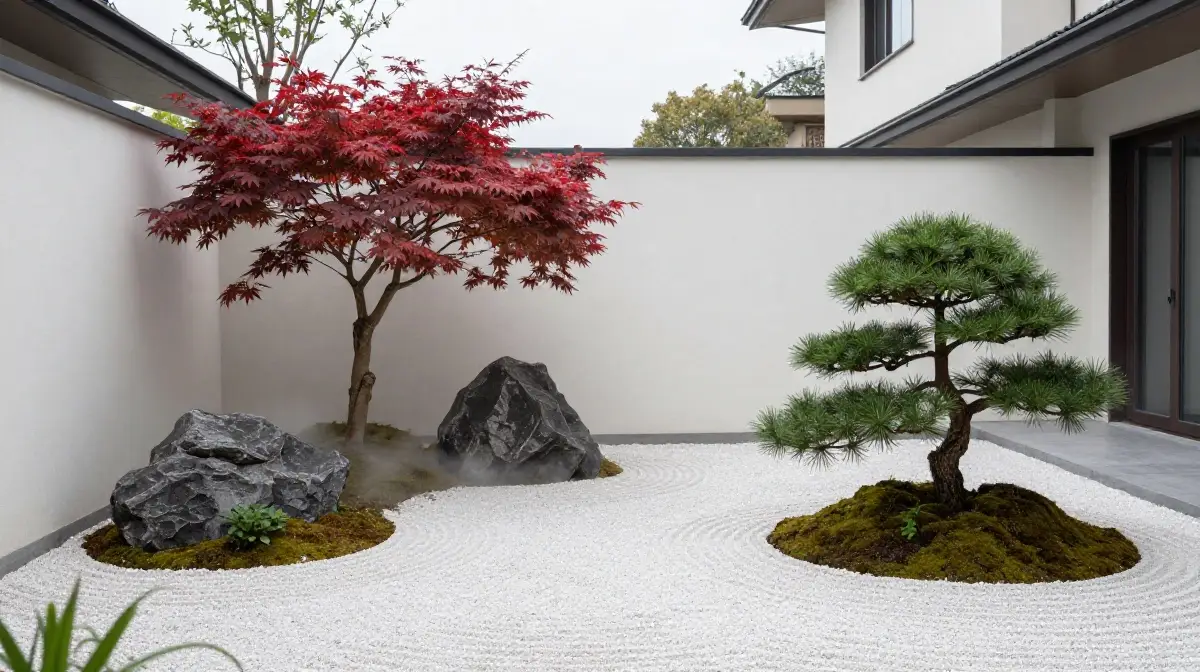
A Zen-inspired garden brings a sense of calm, order, and intention to a grass free front yard and is one of the most distinctive design approaches available. This style typically incorporates raked gravel or sand, carefully placed boulders, low-growing mosses or ground covers, and minimalist plantings of bamboo, Japanese maple, or ornamental pine. Every element in a Zen garden is chosen and positioned with great care, creating a space that feels deliberate and harmonious rather than cluttered. The raked gravel patterns that are characteristic of Japanese gardens require periodic maintenance to keep their lines crisp, but the overall garden demands very little water, pruning, or replanting. This design style works especially well on smaller front yard spaces where a sense of depth and contemplation is more valuable than variety of plant material. It also pairs beautifully with contemporary home architecture and creates a memorable and serene street presence.
Rock Gardens with Drought-Tolerant Plants
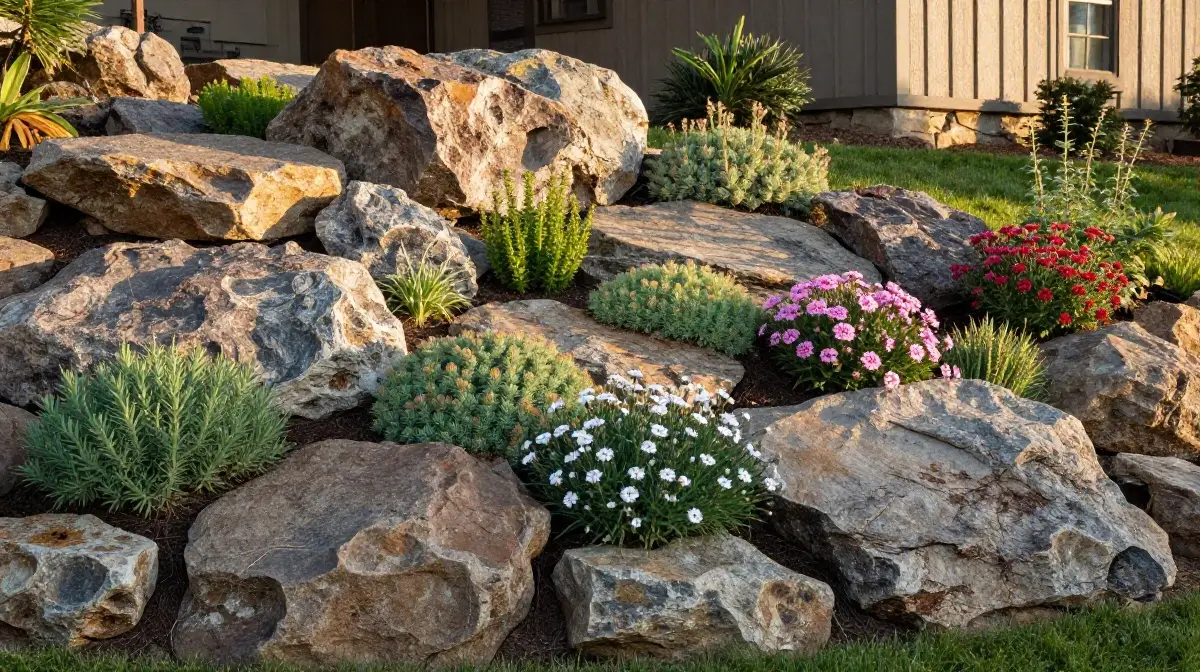
Rock gardens combine natural stone boulders and decorative rocks with small, drought-tolerant plants to create a rugged and beautiful grass free front yard that practically maintains itself. The rocks serve multiple purposes in the design, anchoring the visual composition, retaining warmth that benefits surrounding plants, and eliminating the need for ground cover in areas where plants are difficult to establish. Between and around the rocks, plants such as sedum, thyme, hens and chicks, dianthus, and alpine asters thrive in the excellent drainage that rocky soil provides. Rock gardens look especially natural on sloped front yards where traditional lawns tend to develop drainage problems and are difficult to mow safely. A well-designed rock garden improves with age as the plants fill in and the rocks develop the soft patina that comes from weathering, creating a landscape that looks as though it has always been part of the natural environment.
Container and Potted Plant Displays
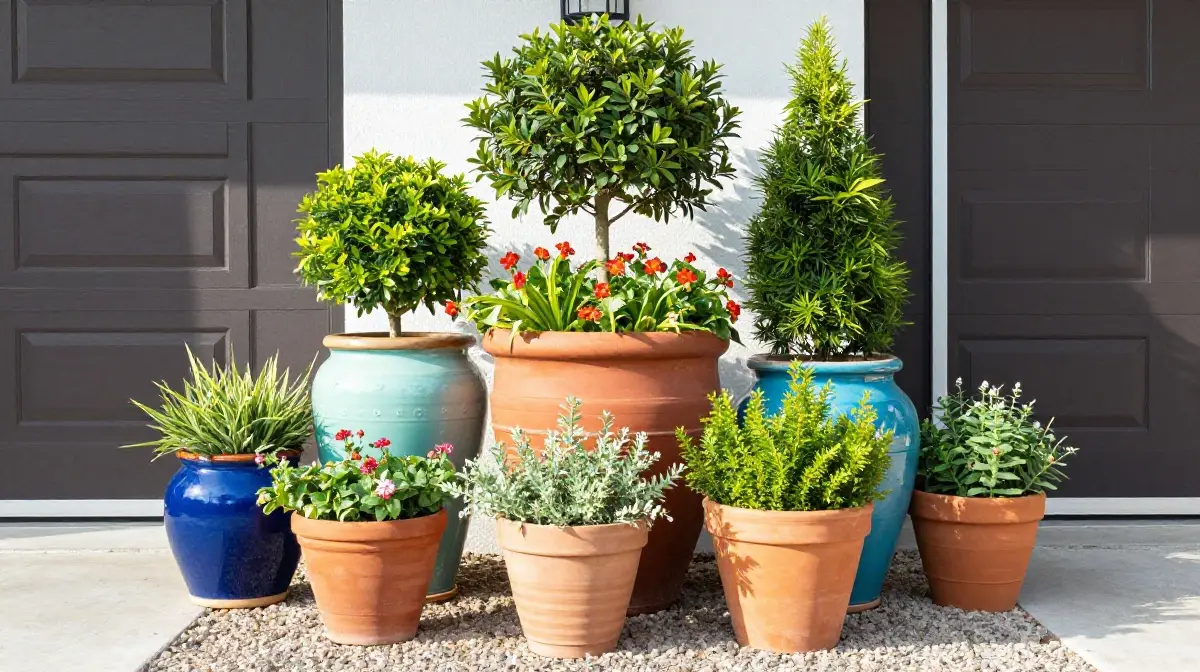
For homeowners who want maximum design flexibility in a grass free front yard, container gardening offers an endlessly adaptable approach. Large decorative pots and planters filled with ornamental trees, flowering shrubs, grasses, or seasonal annuals can be arranged in groupings near the front entry, along pathways, or across a gravel or paved surface to create a layered and colorful display. Containers allow you to change the look of your front yard with the seasons simply by swapping out plants, and they give you the ability to grow species that might not be suited to your native soil. Drought-tolerant plants in containers do require more frequent watering than those planted in the ground, but the maintenance is still far less intensive than maintaining a grass lawn across the entire front yard. Choosing pots with drainage holes, using quality potting mix, and selecting plants appropriate to your light conditions are the keys to keeping a container display looking its best throughout the year.
Conclusion
Transforming your front yard into a grass free space is one of the most rewarding landscaping decisions you can make as a homeowner. Whether you choose the timeless elegance of a Mediterranean courtyard, the ecological richness of a native plant garden, the clean simplicity of gravel and stone, or the lush abundance of a cottage perennial bed, the result is a front yard that serves your lifestyle, respects your local environment, and looks beautiful without consuming your weekends. The 22 ideas presented in this guide demonstrate that giving up grass does not mean giving up beauty, greenery, or character. It means gaining freedom, creativity, and a landscape that works with nature rather than against it. Start with one or two ideas that resonate with your vision, experiment with plants that suit your climate, and watch as your front yard evolves into something truly remarkable.
You may also like this:22 Must Have Party Items Ideas for Perfect Events
Frequently Asked Questions (FAQs)
1. What is the cheapest grass free front yard option?
Gravel, decomposed granite, and wood chip mulch are among the most affordable choices. These materials are widely available, easy to install without professional help, and require virtually no ongoing cost after the initial installation. Pairing them with a few budget-friendly native plants keeps overall expenses low.
2. Can I replace my front yard grass without professional help?
Yes, many grass free front yard projects are well within the reach of a motivated homeowner. Removing existing grass can be done by smothering it with cardboard and mulch, renting a sod cutter, or using a safe soil solarization method. Ground cover plants, gravel, and container gardens are all easy to install without specialized skills.
3. What ground cover grows best in a shaded grass free front yard?
Moss, ajuga, sweet woodruff, pachysandra, and creeping Jenny are excellent choices for shaded areas. These plants thrive without direct sunlight and stay low to the ground, creating a tidy and attractive surface. Moss in particular is ideal for deeply shaded spaces with consistent moisture.
4. Will a grass free front yard affect my home’s resale value?
A well-designed grass free front yard generally has a neutral to positive effect on resale value, especially in regions where water conservation is important. Buyers are increasingly drawn to low-maintenance, sustainable landscapes. A poorly designed or neglected yard, regardless of whether it has grass, can negatively affect curb appeal.
5. How do I prevent weeds in a grass free front yard?
The most effective weed prevention strategies include laying landscape fabric or cardboard beneath gravel or mulch, applying a thick layer of mulch three to four inches deep around all plants, and planting densely so that ground covers shade out weed seedlings. Regular inspection and hand-pulling of weeds when they are small prevents them from becoming established.