Introduction
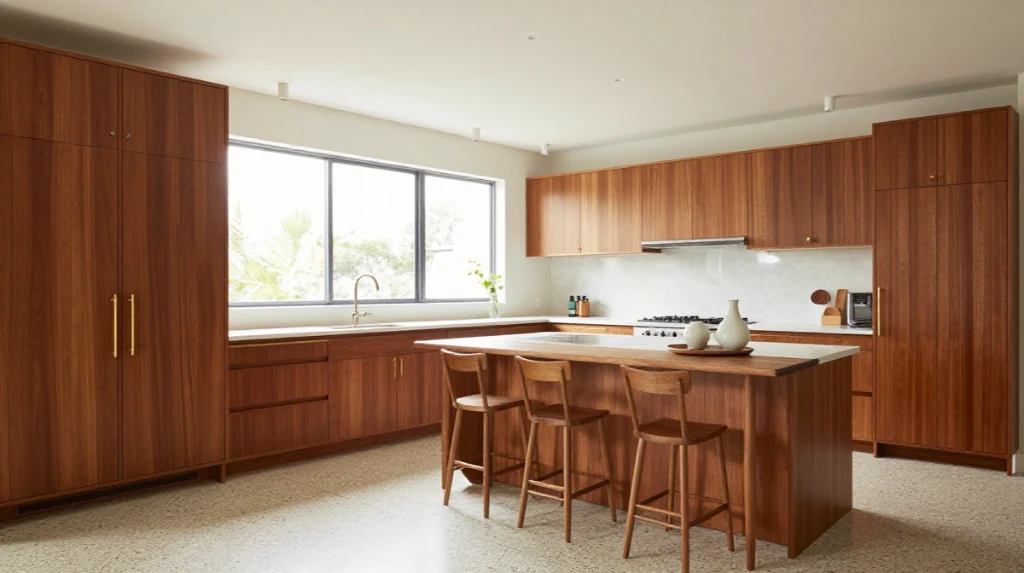
There is something about a mid-century modern kitchen that feels both nostalgic and fresh at the same time. Maybe it is the warm wood tones, or the way clean lines make a small space feel calm instead of cluttered. Whatever the reason, this style has managed to stay relevant for decades, and it shows no sign of slowing down.
If you are planning a kitchen update, you have probably noticed how much inspiration is floating around right now. Between Pinterest boards and design accounts, it can feel overwhelming to figure out which ideas actually fit your space, your budget, and your daily routine. That is exactly what this guide is here to help with.
Below are twenty two practical, real-world ideas for bringing mid-century modern kitchen design into your own home, along with tips on materials, colors, layout, and small details that make a big difference.
What Makes a Kitchen Truly Mid-Century Modern
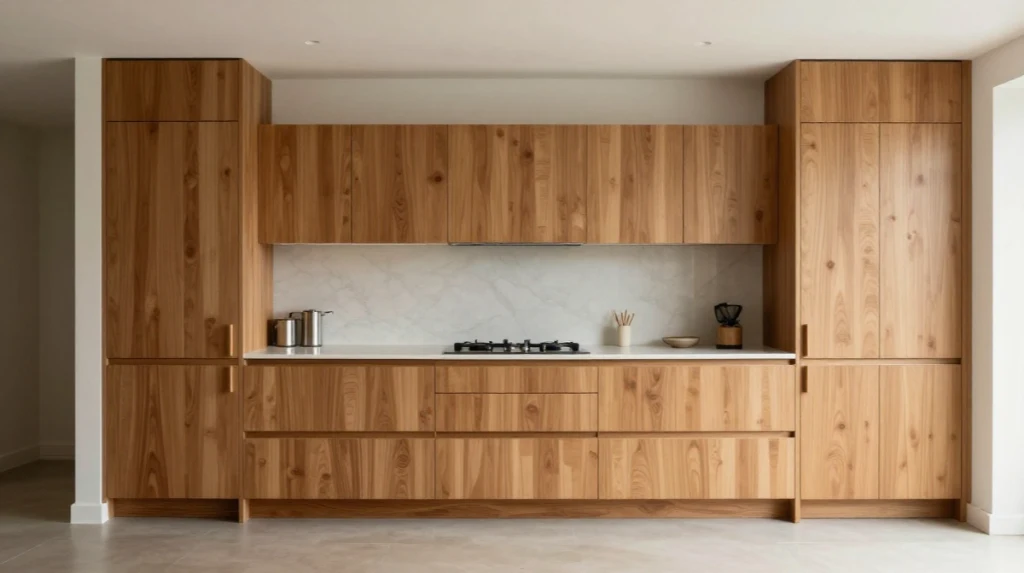
At its core, this style is about simplicity, function, and a strong connection to natural materials. It grew out of post-war American homes, where architects and designers wanted furniture and interiors that felt lighter and more open than what came before. Organic shapes, honest materials, and a lack of unnecessary ornamentation are the foundation of the look.
If you are just starting to explore this style, focus on three things first: wood tones, clean cabinet lines, and a color palette that feels warm rather than stark. Once those three elements are in place, everything else becomes easier to layer in without the kitchen feeling like a costume rather than a home.
Flat-Front Cabinets for a Clean Look
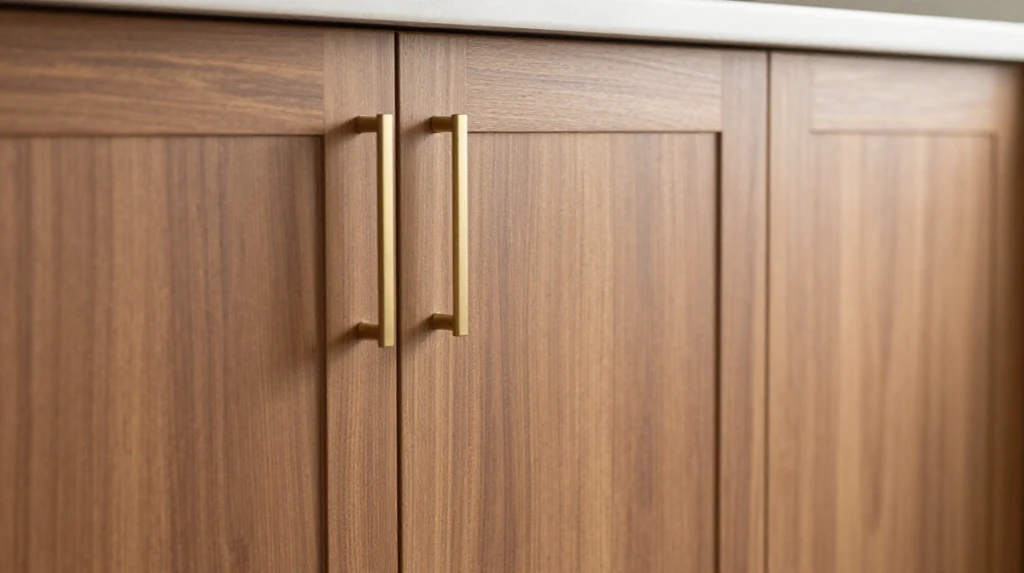
Flat-front cabinets are one of the easiest ways to bring this style into a kitchen without a full renovation. Unlike ornate raised-panel doors, these cabinets have smooth, simple surfaces that let the wood grain or paint color do the talking. The result feels tidy and intentional.
If you already have cabinets you like the shape of, consider swapping the hardware and adding a slim wood veneer to flatten the profile. This is a budget-friendly update for anyone who wants the look without replacing an entire kitchen.
Warm Wood Tones with Teak and Walnut
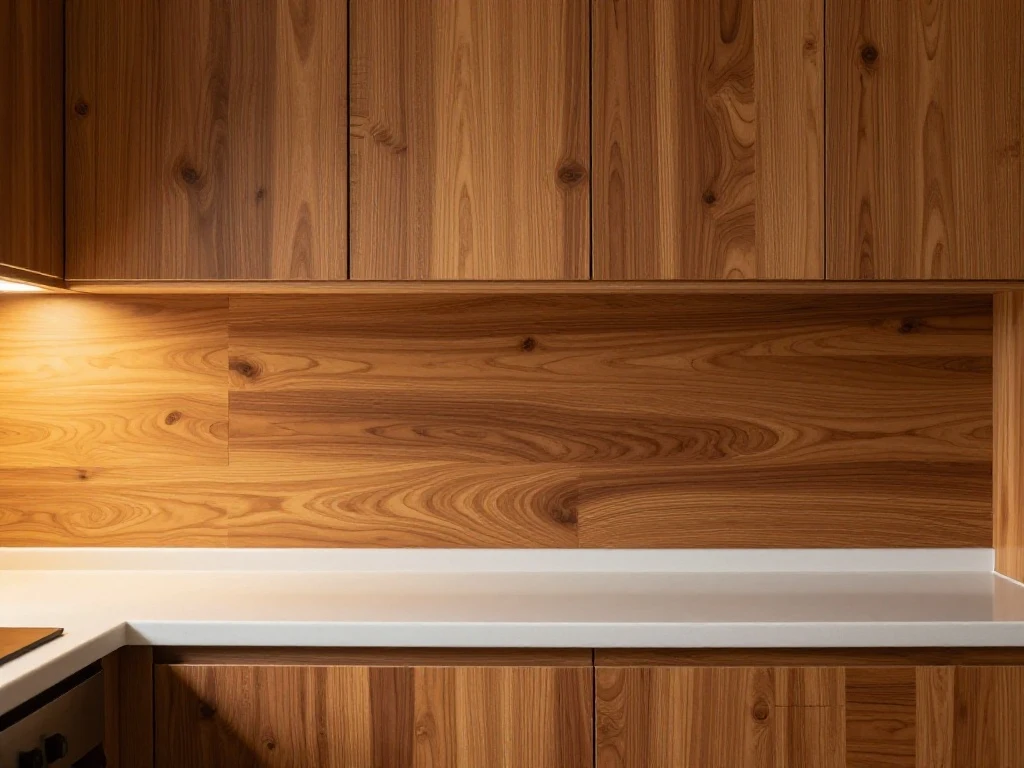
Teak kitchen cabinets and walnut wood kitchen finishes are practically synonymous with this design era. These woods bring a rich, warm tone that pairs beautifully with white walls, matte black accents, or pastel kitchen colors. The grain itself becomes part of the visual interest.
When shopping for wood cabinetry, ask about the finish type. A matte or satin finish tends to look more authentic to the period than a high gloss coat, which can feel closer to a modern minimalist kitchen than a true retro one.
Two-Tone Cabinet Combinations
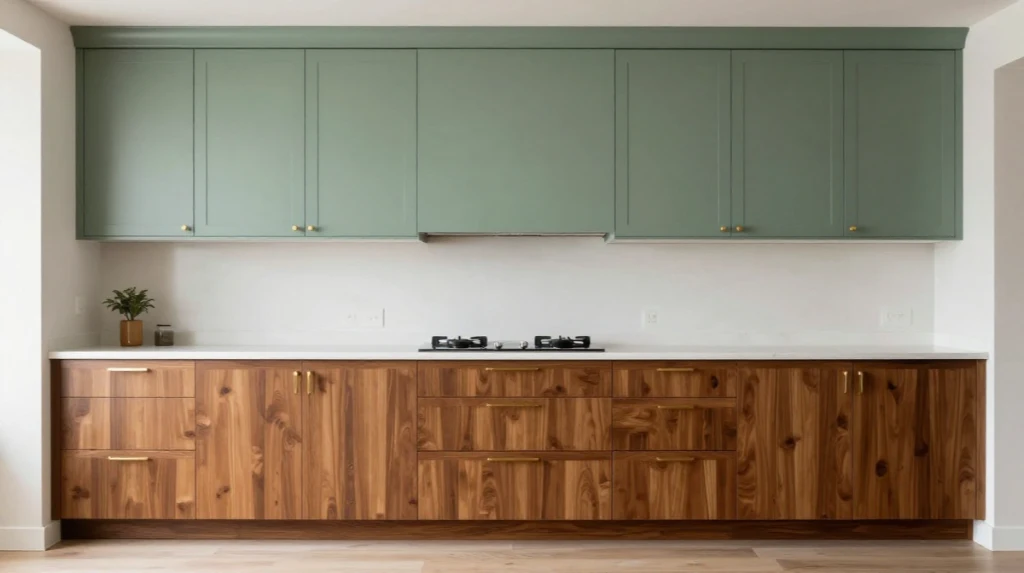
Two-tone cabinets were common in mid-century homes long before they became a modern design trend again. Pairing a wood tone on the lower cabinets with a painted color on the uppers, or the reverse, adds visual depth without overwhelming the space.
A common mistake is choosing two colors that fight for attention. Stick to one neutral and one accent tone, such as walnut paired with soft sage or muted blue, to keep the balance feeling calm and cohesive.
Open Shelving for Everyday Display
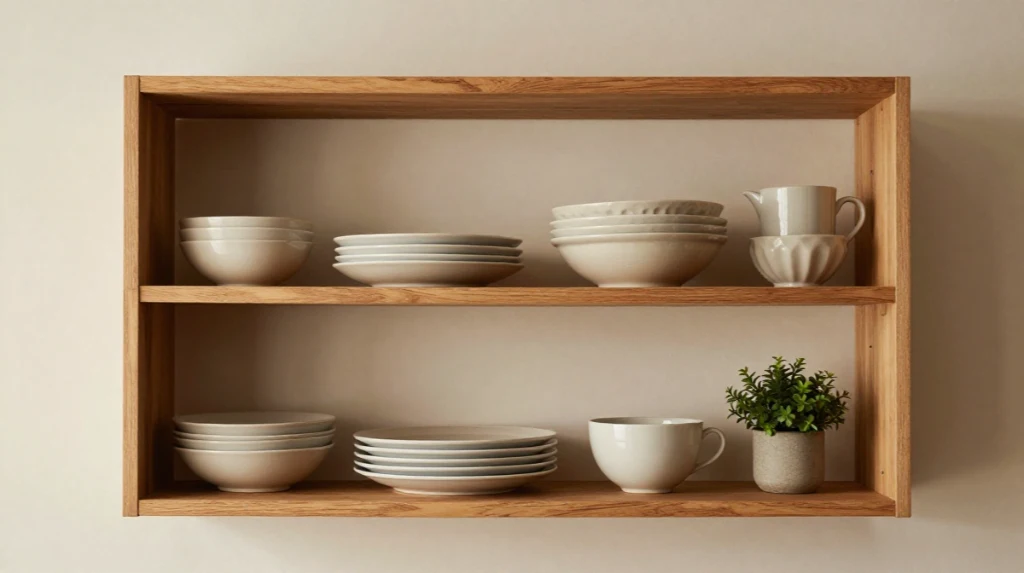
Open shelving kitchen ideas fit naturally into this style because the whole design philosophy values function you can see and use. Displaying everyday dishware, glassware, or a small plant adds personality without cluttering the counters below.
Keep styling simple. Group items by color or material rather than piling everything on at once. A floating shelves kitchen setup with just a few curated pieces will always look more intentional than one that is overloaded.
Statement Pendant Lighting
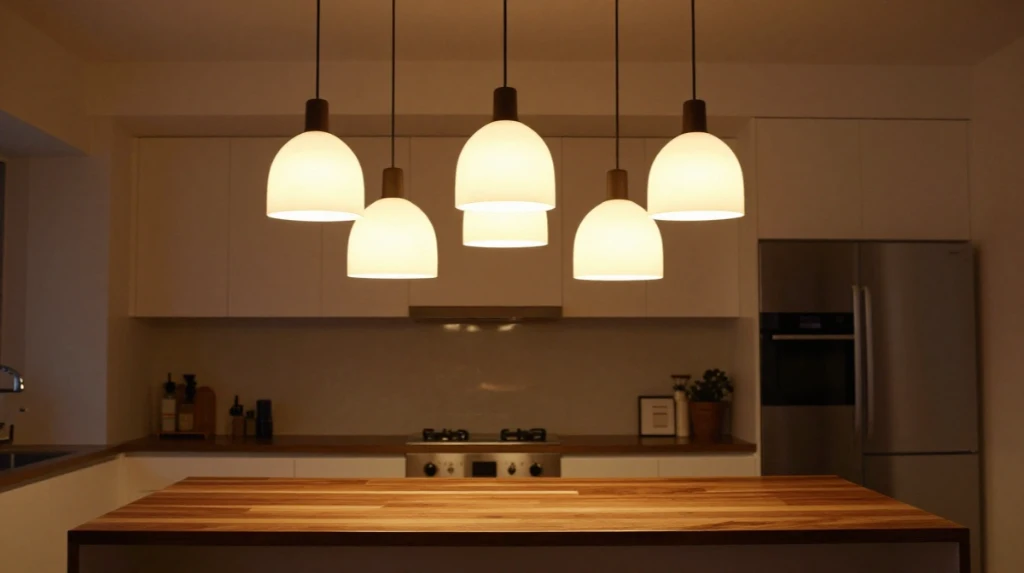
Lighting does a lot of heavy lifting in this style. Pendant lighting kitchen fixtures with rounded or geometric shapes instantly signal the era, especially when hung in a cluster over an island or dining nook.
Pay attention to scale. A pendant that is too small will look lost over a large island, while an oversized fixture can overwhelm a compact kitchen. When in doubt, measure the space first and choose a size that leaves breathing room on either side.
Sputnik and Globe Chandeliers
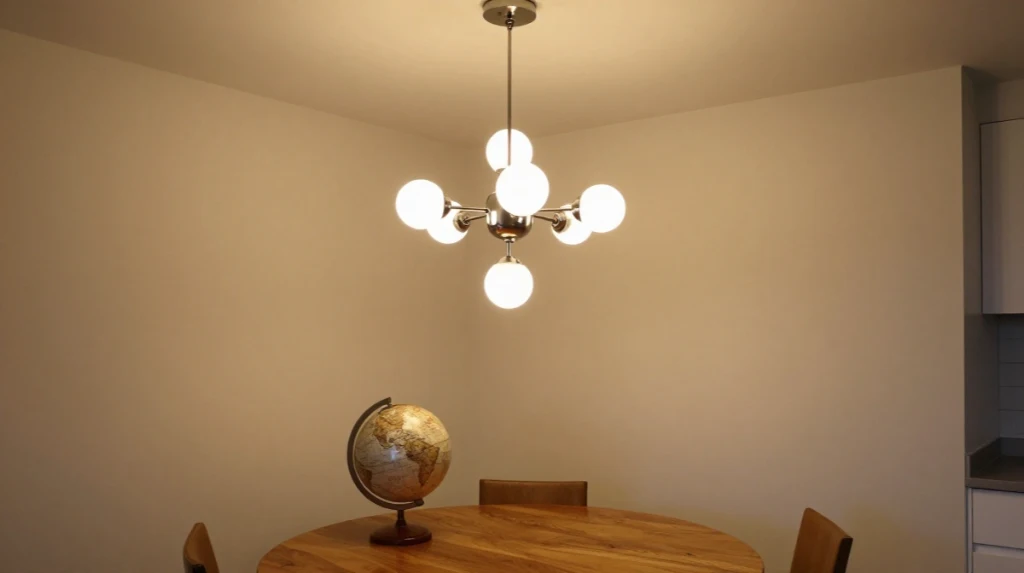
For a bolder statement, a sputnik chandelier kitchen fixture or a set of globe pendant lights brings sculptural interest to the ceiling. These pieces work especially well in kitchens with higher ceilings or an open plan kitchen layout, where there is room for the eye to travel upward.
If you love the look but worry it is too dramatic for daily life, try it above a breakfast nook or bar area instead of the main cooking zone. This way you get the visual impact without it competing with task lighting needs.
Bold Brass and Tapered Hardware
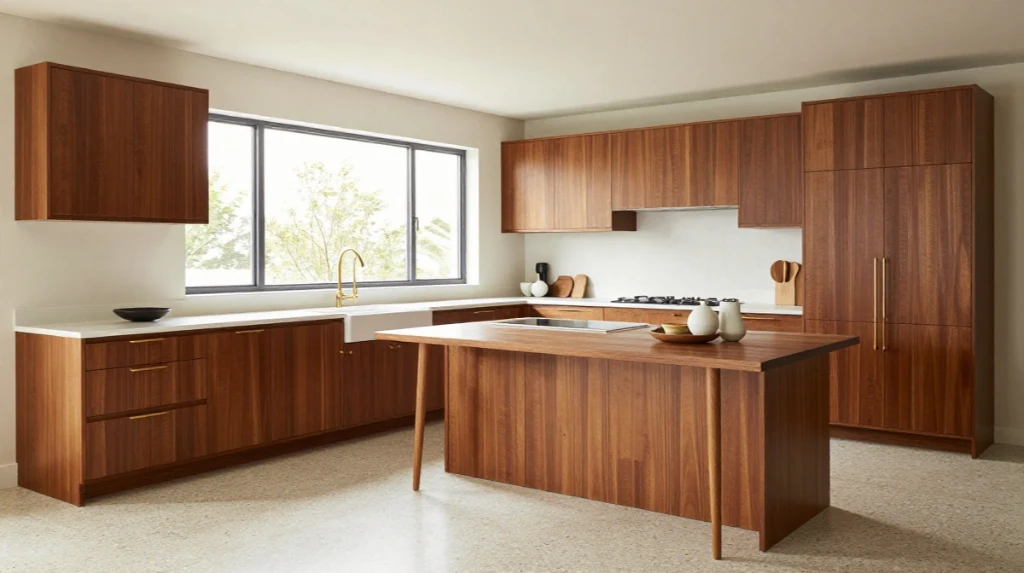
Small details like hardware carry a surprising amount of design weight. Brass cabinet hardware with slim, tapered profiles reflects the era’s love of understated elegance. It also pairs well with both wood and painted cabinetry.
If a full renovation is not in the budget, swapping hardware is one of the fastest and cheapest ways to shift a kitchen’s entire feel. It usually takes a weekend and a screwdriver.
Terrazzo and Linoleum Flooring
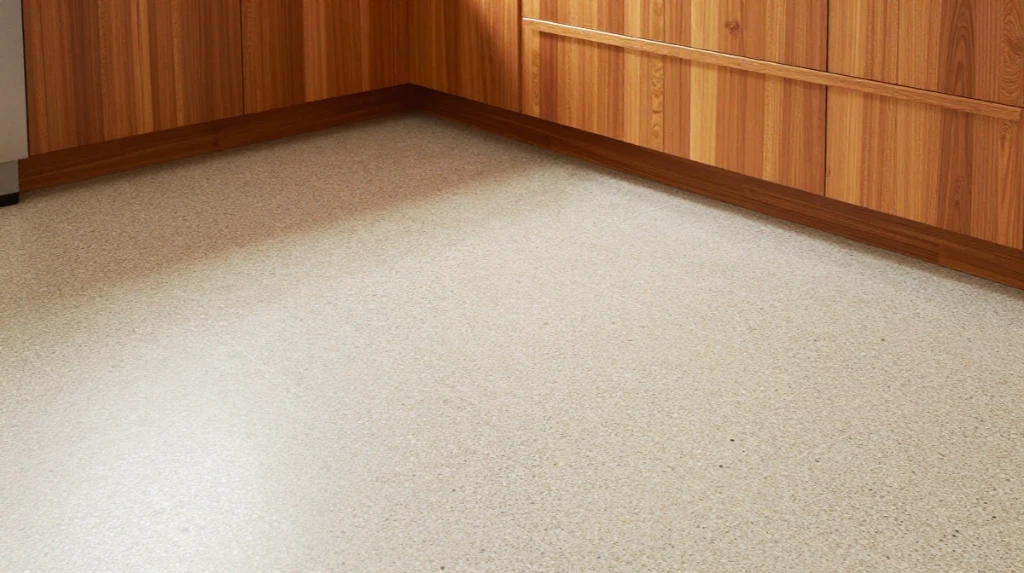
Terrazzo flooring kitchen designs have made a strong comeback, offering a speckled, textured look that adds personality underfoot. Linoleum floor kitchen options are another period-accurate choice, known for being durable and easy to maintain.
Both materials hold up well in high-traffic kitchens. If you are worried about cost, terrazzo-look tile is a more affordable alternative that mimics the texture without the price tag of poured terrazzo.
Retro Color Palettes with Avocado and Harvest Gold
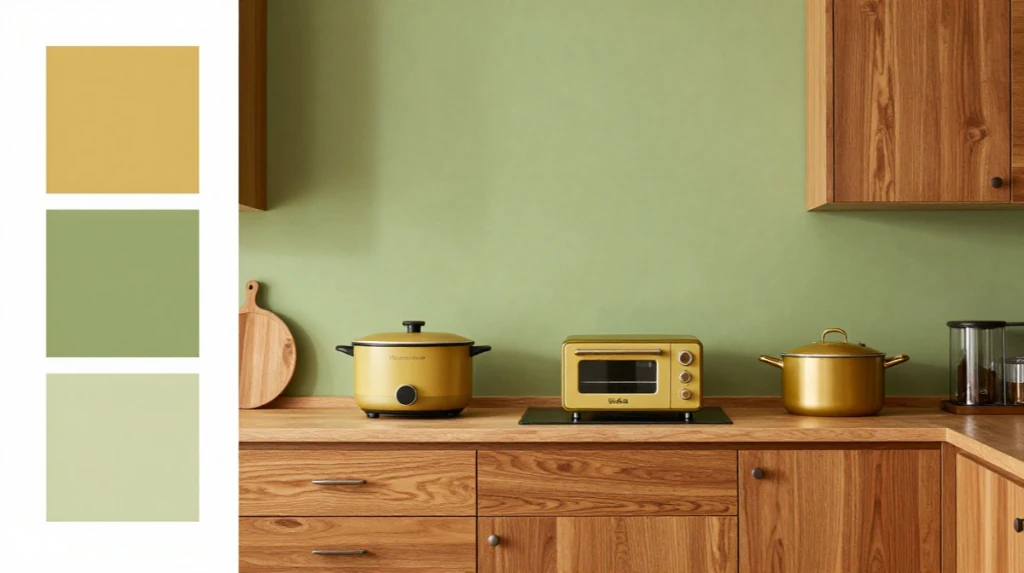
Avocado green kitchen and harvest gold appliances are some of the most recognizable colors from this era. While a full kitchen in these tones can feel like a strong commitment, using them as accent colors keeps the nostalgic feel without overwhelming the space.
Try incorporating these shades through a single accent wall, a set of barstools, or small appliances rather than covering every surface. This keeps the palette feeling curated instead of theatrical.
Pastel and Earth Tone Accents
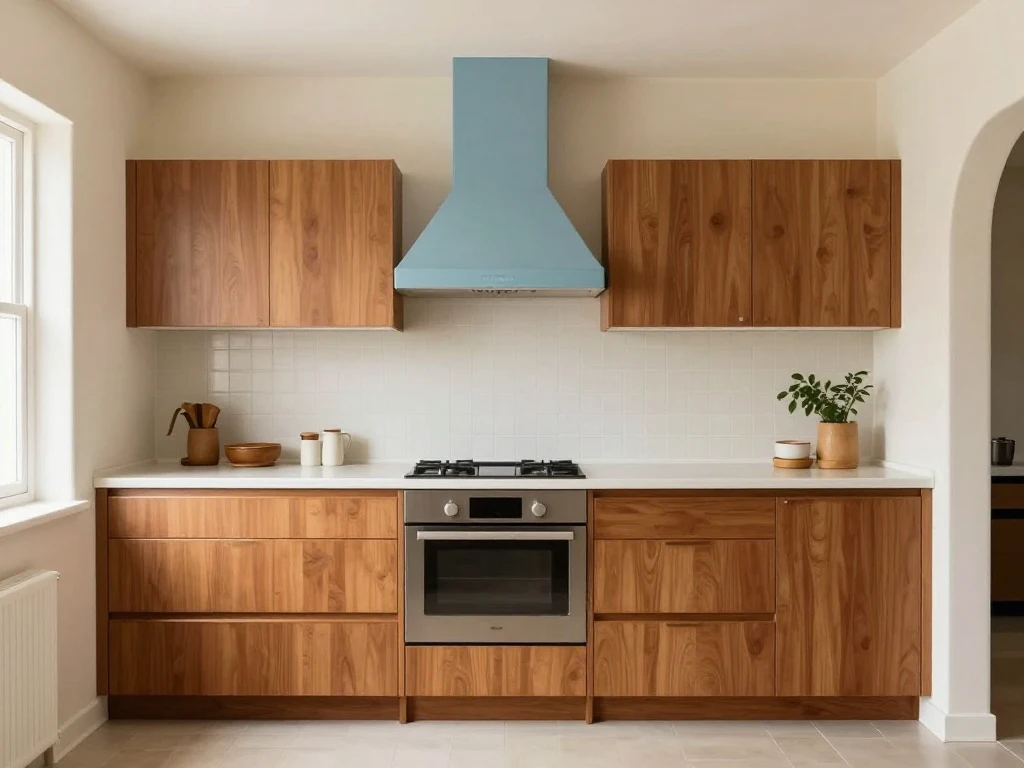
Warm earth tones kitchen palettes and soft pastel kitchen colors both fit comfortably within this design language. Think muted terracotta, dusty blue, mustard, and soft cream. These tones feel grounded and calming rather than trendy.
A good approach is to choose one dominant neutral for cabinetry and walls, then bring in color through textiles, dishware, or a single accent tile. This keeps the palette flexible if your taste shifts down the road.
Geometric and Boomerang Patterns
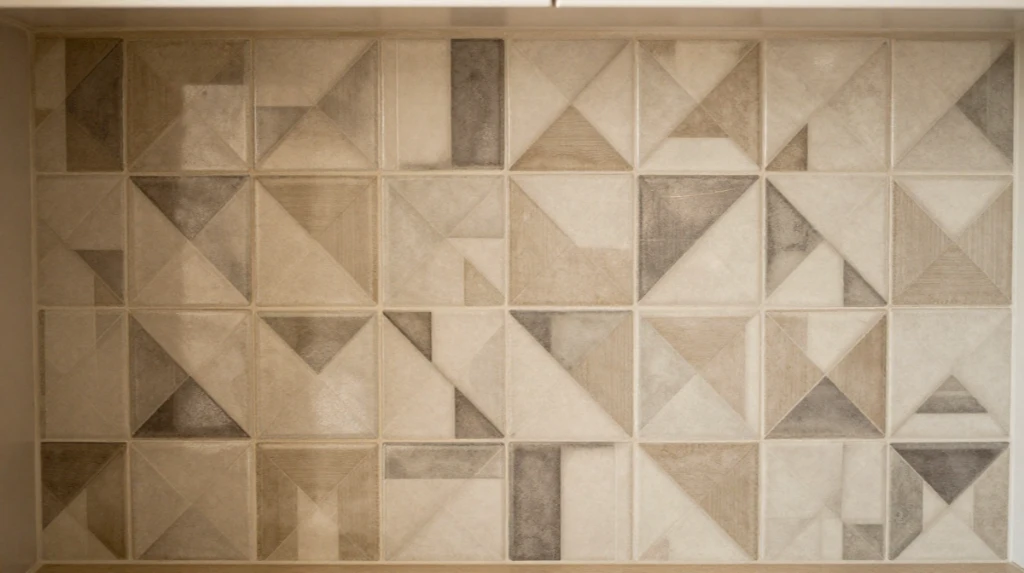
Geometric pattern kitchen elements, including the classic boomerang pattern, add movement and visual interest to countertops, tile, or textiles. These patterns were everywhere in the 1950s kitchen style and remain instantly recognizable today.
Use pattern sparingly if you are new to this look. A patterned backsplash or a set of curtains is often enough to bring in that playful energy without making the space feel busy.
Statement Backsplash Tile
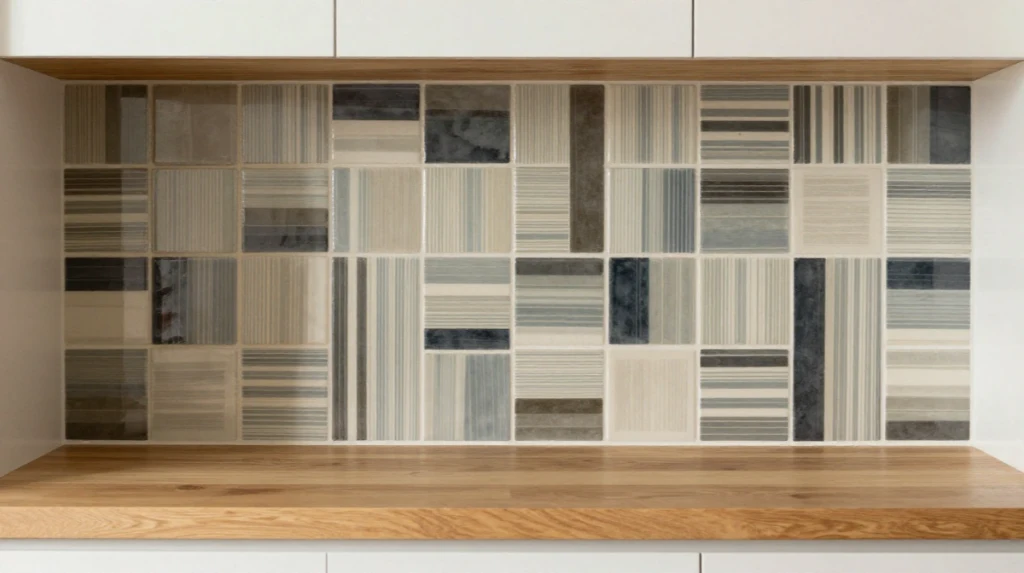
A statement backsplash tile is one of the most impactful upgrades you can make. Whether you choose a bold graphic pattern, a subway tile alternative in an unexpected color, or a handmade ceramic tile with texture, this single feature can define the whole kitchen.
Balance a bold backsplash with simpler cabinetry and countertops. Letting one element take the spotlight keeps the design from feeling cluttered or competing for attention.
Kitchen Islands with Mid-Century Character
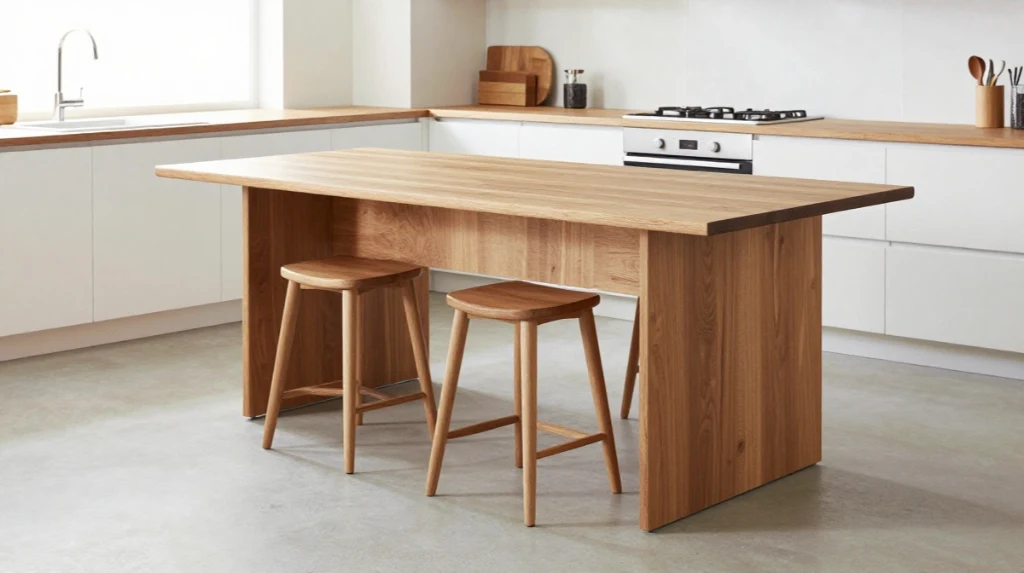
A kitchen with island seating gives you both function and style. Choose an island with tapered legs, a wood top, or a contrasting color from the rest of the cabinetry to give it a distinct, furniture-like presence rather than a built-in block.
Islands also work well as a place to introduce color or pattern if the rest of the kitchen is kept neutral. It becomes a focal point without requiring a full redesign.
Breakfast Nooks and Banquette Seating
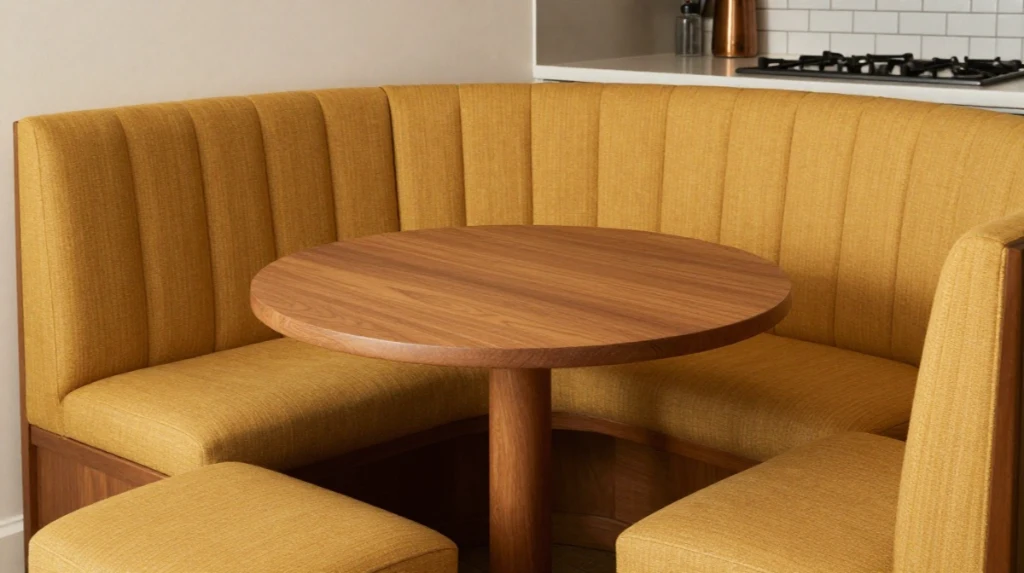
Kitchen banquette seating and a cozy breakfast nook kitchen area bring warmth and function to a mid-century modern kitchen. These built-in seating areas were common in period homes and remain a practical way to add seating without taking up floor space.
Pair banquette seating with a round or oval table to soften the room’s lines. Rounded shapes were a signature of this design era and help balance out the straight edges found in cabinetry and shelving.
Bar Stools with Tapered Legs
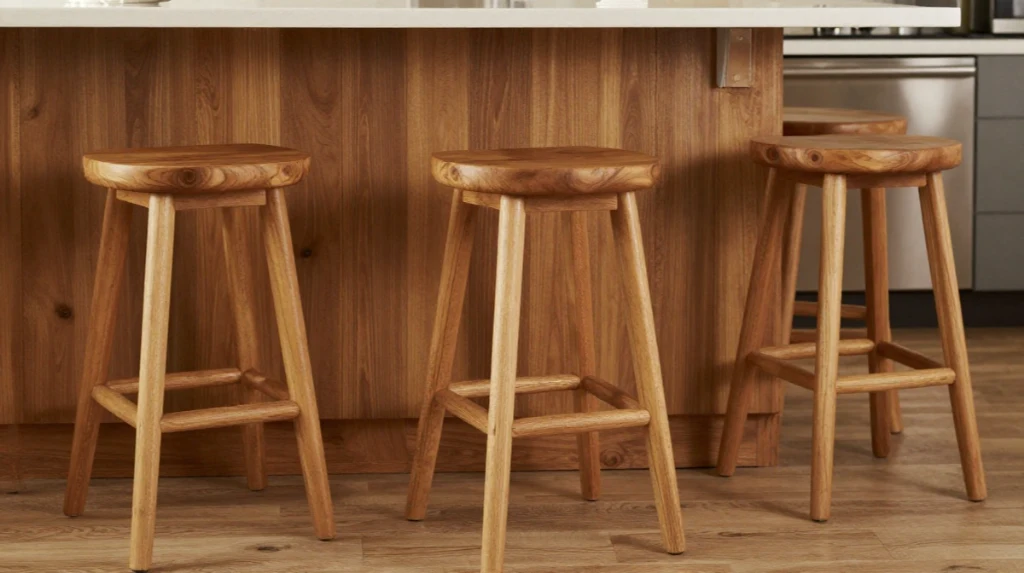
Tapered leg furniture kitchen pieces, including bar stools, are an easy way to reinforce the style at the counter or island. Look for stools with slim wooden legs and simple, curved seats.
If your budget allows for only one furniture swap, bar stools are a smart place to start. They are visible, affordable compared to cabinetry, and easy to change again later if your taste evolves.
Retro Appliances with Modern Function
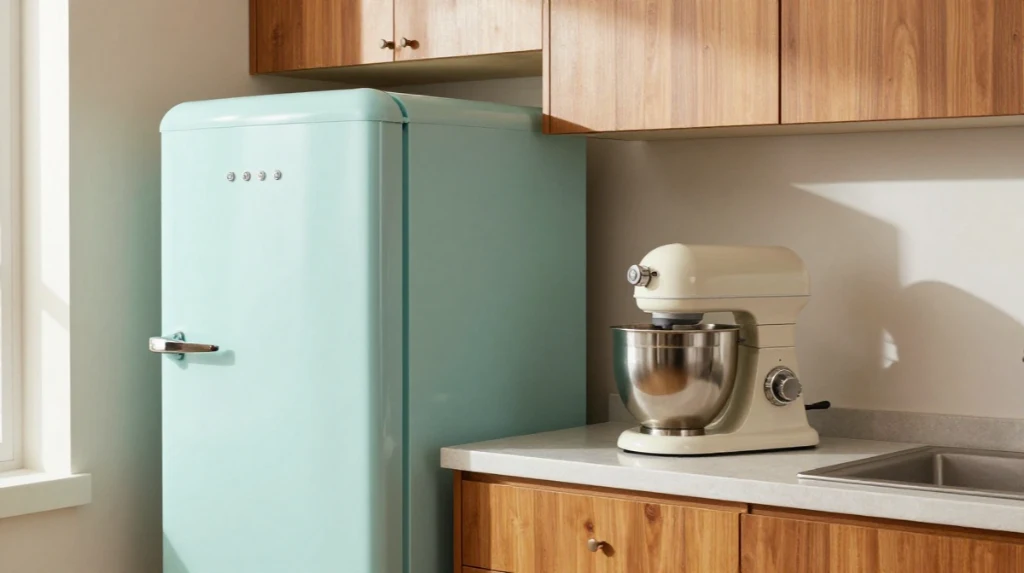
Retro appliances modern kitchen setups let you enjoy the look of the past with the performance of today. Brands offering a Smeg refrigerator kitchen option or retro-styled ranges combine vintage curves and colors with current energy efficiency.
If a full retro appliance suite feels like too much, start with one statement piece, such as a colorful refrigerator or a countertop mixer like a classic KitchenAid mixer kitchen model, and build the rest of the space around it.
Indoor Outdoor Flow with Large Windows
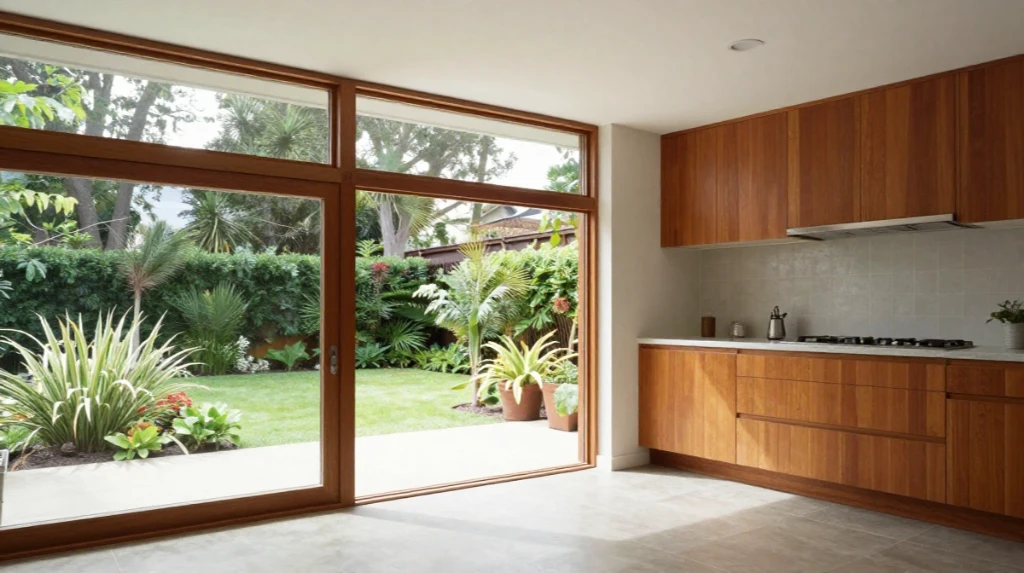
Indoor outdoor living kitchen design was a defining feature of mid-century architecture, and large windows kitchen layouts remain a strong way to bring that feeling into a modern home. Natural light softens wood tones and makes colors read more true.
If large structural changes are not possible, consider swapping heavy window treatments for simple, light-filtering options. This alone can make a kitchen feel more connected to the outdoors.
Skylights for Natural Light
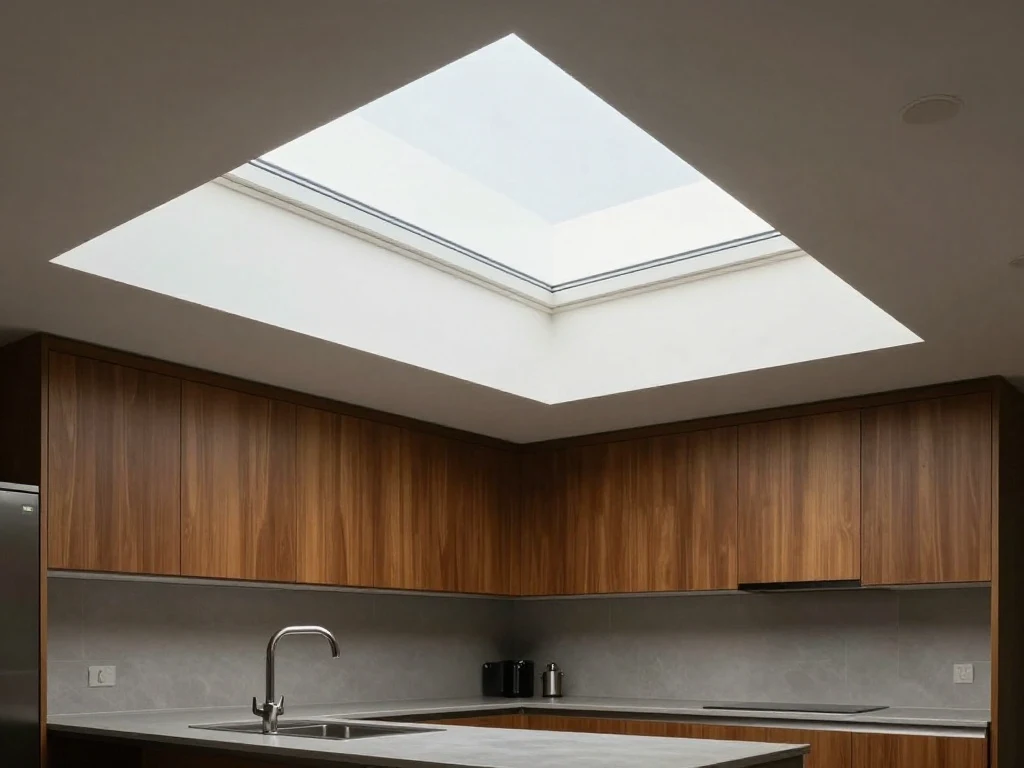
Skylights kitchen design adds another layer of natural light, especially useful in kitchens without much exterior wall space. The extra daylight highlights wood grain, tile texture, and color in a way that artificial lighting cannot fully replicate.
If a skylight is not feasible, layered lighting with a mix of task, ambient, and accent lighting can help mimic some of that same warmth and depth throughout the day.
Galley and U-Shaped Layouts
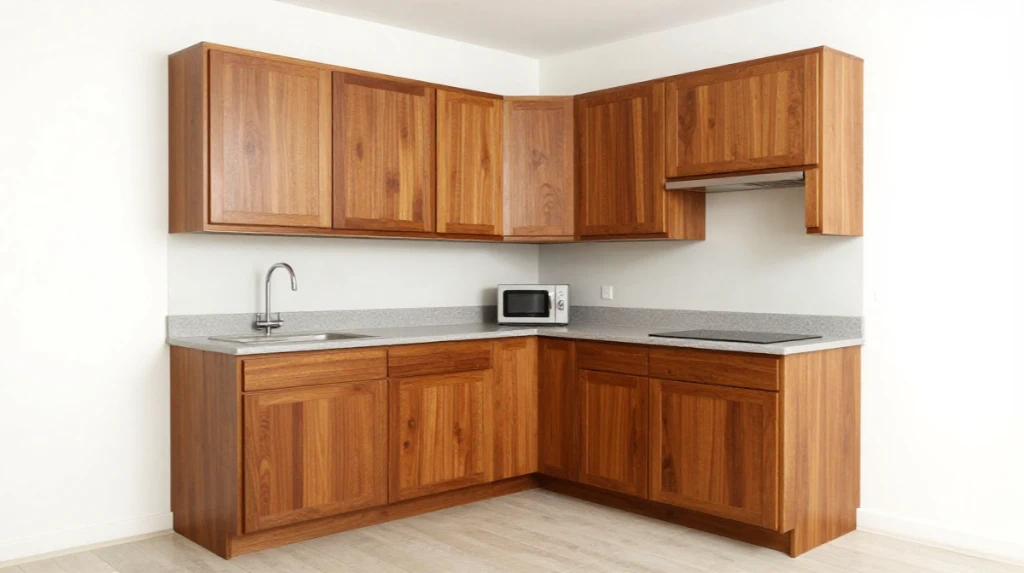
Galley kitchen design and U-shaped kitchen layout options were both common in mid-century homes, prized for their efficient use of space. These layouts keep everything within easy reach, which supports a smooth kitchen workflow efficiency that still matters today.
If you are working with a smaller footprint, resist the urge to overfill the space with decor. This design era valued function first, so keeping counters clear will actually make the style feel more authentic.
Mixing Vintage Furniture with Modern Function
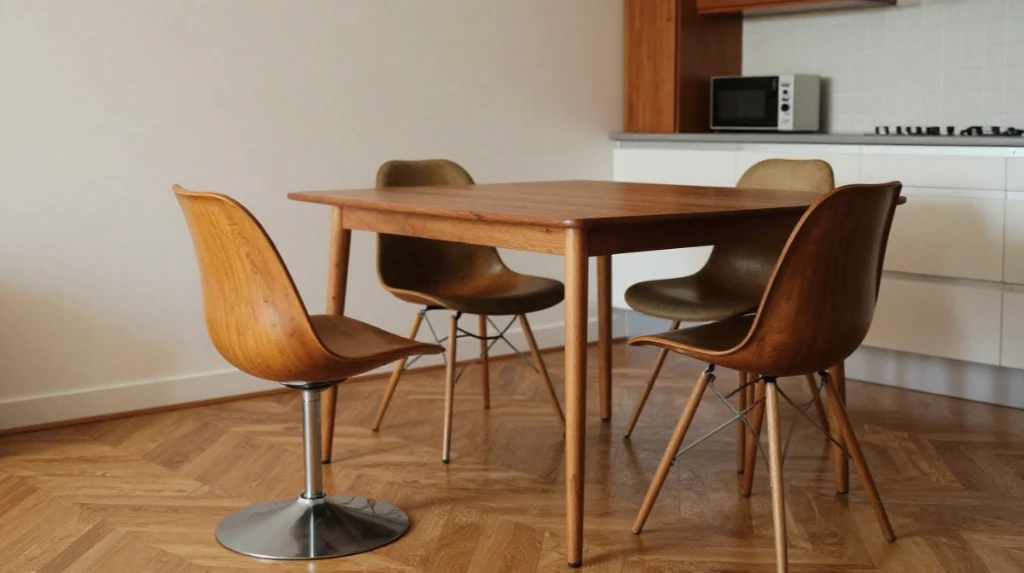
Bringing in a few curated vintage pieces, such as a tulip chair kitchen accent or an Eames inspired dining chair, adds authenticity that new furniture alone cannot replicate. These pieces carry real character and history.
You do not need an entire set of vintage furniture to make an impact. One or two well-chosen pieces mixed with newer items often looks more collected and personal than an all-matching set.
Sustainable and Natural Materials
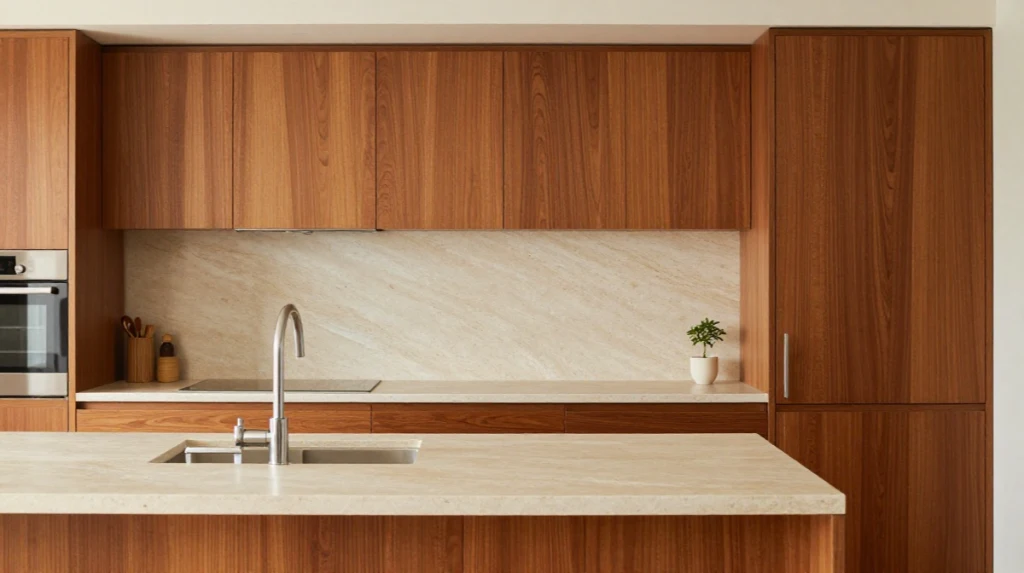
Natural materials kitchen choices, from solid wood to stone countertops, reflect the era’s respect for honest, long-lasting materials. This approach also happens to align well with sustainable kitchen materials that are popular again today.
When possible, choose materials that age well rather than ones that need frequent replacing. Wood that develops a natural patina over time actually adds to the charm rather than detracting from it.
Quick Comparison Table
| Design Element | Best For | Approximate Cost | Maintenance Level | Style Impact |
|---|---|---|---|---|
| Flat-Front Cabinets | Full or partial renovation | Moderate to high | Low | High |
| Brass Hardware Swap | Budget updates | Low | Low | Medium |
| Statement Backsplash | Focal point upgrade | Moderate | Low | High |
| Terrazzo Flooring | New flooring projects | Moderate to high | Low | Medium |
| Retro Appliances | Kitchen with character | High | Moderate | High |
| Banquette Seating | Small or cozy kitchens | Moderate | Low | Medium |
| Vintage Furniture Pieces | Adding personality | Varies | Low | High |
Conclusion
A mid-century modern kitchen design is really about balance. It blends warm materials with clean lines, function with personality, and nostalgia with everyday practicality. You do not need to recreate a 1950s kitchen style exactly to capture the feeling. A few well-chosen elements, whether that is warm wood cabinetry, a bold pendant light, or a single vintage chair, can shift the whole tone of the room.
Start with the changes that fit your budget and timeline, then build from there. Whether you are working on a full renovation or a weekend refresh, this style rewards thoughtful choices over quick trends, which is exactly why it has remained loved for so many decades.
You may also like this: 22 Mid-Century Modern Apartment Design Ideas for a Chic Home
Frequently Asked Questions
1. What colors work best in a mid-century modern kitchen?
Warm earth tones, soft pastels, and classic shades like avocado green or harvest gold all fit well. Many homeowners pair a neutral wood tone with one accent color for balance.
2. Is mid-century modern kitchen design expensive to achieve?
Not necessarily. Small updates like hardware swaps, a statement backsplash, or new bar stools can bring the look into a kitchen without a full renovation budget.
3. What flooring works best for this style?
Terrazzo and linoleum are both period-accurate choices known for durability. Tile that mimics terrazzo texture is a more affordable alternative.
4. Can I mix mid-century modern with other design styles?
Yes. Many homeowners blend it with Scandinavian or organic modern elements, since both styles share a love of natural materials and clean lines.
5. What is the easiest way to start this style on a budget?
Begin with hardware, lighting, or a single furniture piece like a tapered-leg bar stool. These smaller updates create noticeable impact without a large investment.

1 Comment