
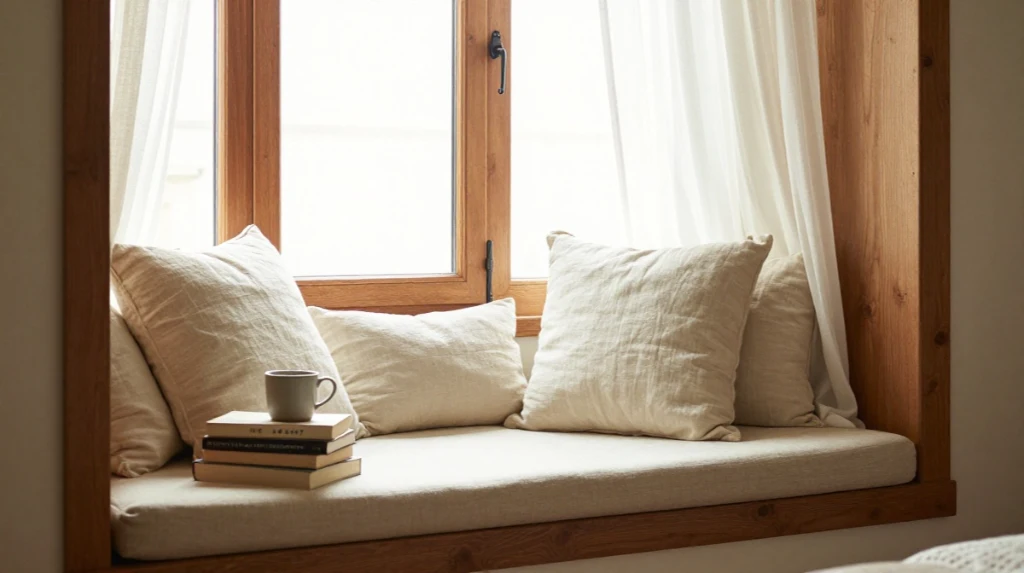
Introduction
There is something deeply satisfying about having a small corner of your home that belongs entirely to you. A place where the noise fades, the light falls just right, and you can lose yourself in a good book for an hour without feeling guilty about it.
A well-designed reading nook does not need to be large or expensive. It just needs to feel intentional. Whether you have a bay window, an unused hallway corner, or a tucked-away space under the stairs, there is a reading nook design waiting to happen there.
This article walks you through 22 real, practical, and visually inspiring ideas for creating a cozy reading corner that fits your space, your budget, and your personal style.
The Classic Window Seat Reading Area
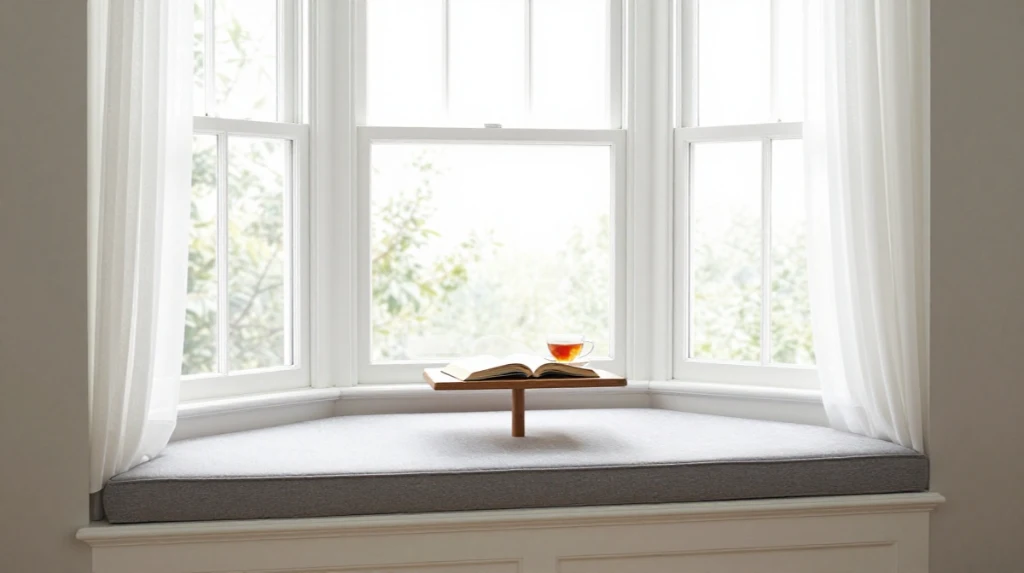
A bay window seat is one of the most beloved reading nook ideas for good reason. Natural light pours in, the view gives your eyes a break between pages, and the built-in seating feels purposeful rather than accidental.
Add a thick cushioned window seat, a few reading nook pillows in linen or cotton, and a small side table for your tea. If the seat has a hinged lid, you get hidden storage for extra blankets too.
Built-In Bookshelf Nook
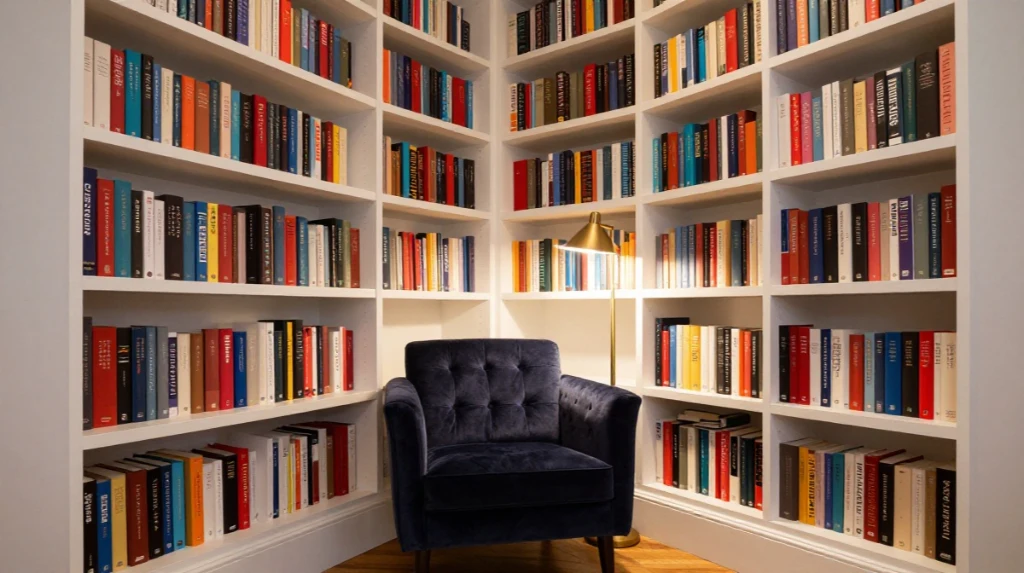
A built-in reading nook with shelves on either side creates a framed, library-like feel that is hard to match with furniture alone. The shelves keep your books within arm’s reach and the enclosed structure gives the space a sense of privacy.
This works especially well in living rooms or home library designs where you want the nook to feel like a dedicated room within a room.
Under Stairs Reading Nook
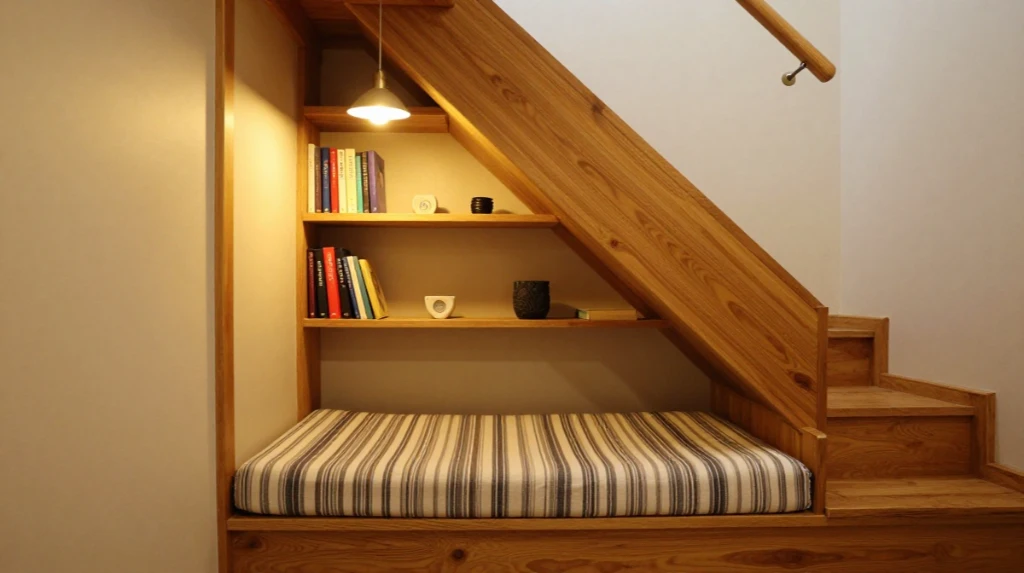
The space beneath a staircase is one of the most underused areas in any home. With a fitted cushion, some warm lighting, and a few shelves built into the sides, it becomes one of the most charming reading nook ideas for small homes.
Children especially love this setup because it feels like a secret hideaway. Adults appreciate it for the same reason.
Bedroom Reading Corner
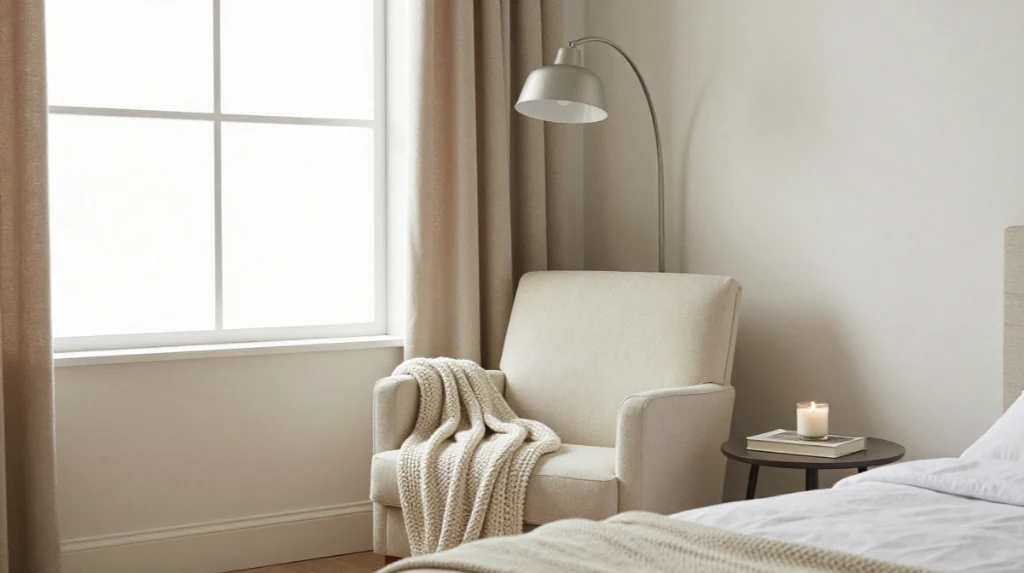
Not everyone has a spare room for a home library. A bedroom reading nook solves that problem without requiring extra space. Pull a comfortable reading chair into an unused corner near a window, add a floor lamp, and layer a small rug underneath.
This simple arrangement creates a clear separation between the sleeping area and the reading space, which actually helps both activities feel more intentional.
Floor Cushion Reading Area
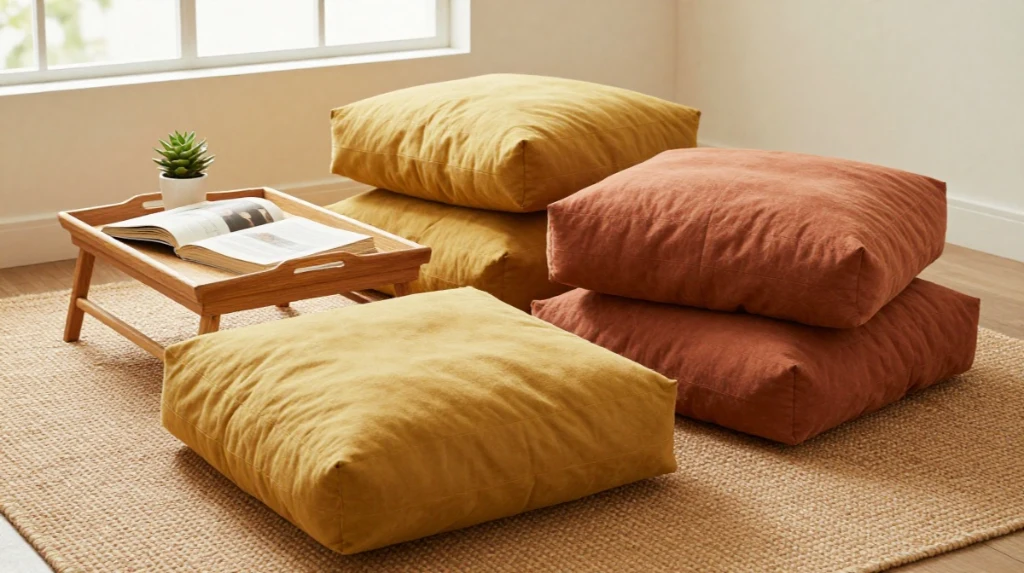
If you prefer low, relaxed seating, a floor cushion reading area is a practical and budget-friendly option. Stack a few large floor cushions, add a low side table or a tray, and drape a throw blanket over the pile.
This works particularly well in bohemian reading nook styles where the goal is comfort over structure. It is also a great reading nook for kids since they can move the cushions around freely.
Reading Nook with Curtains
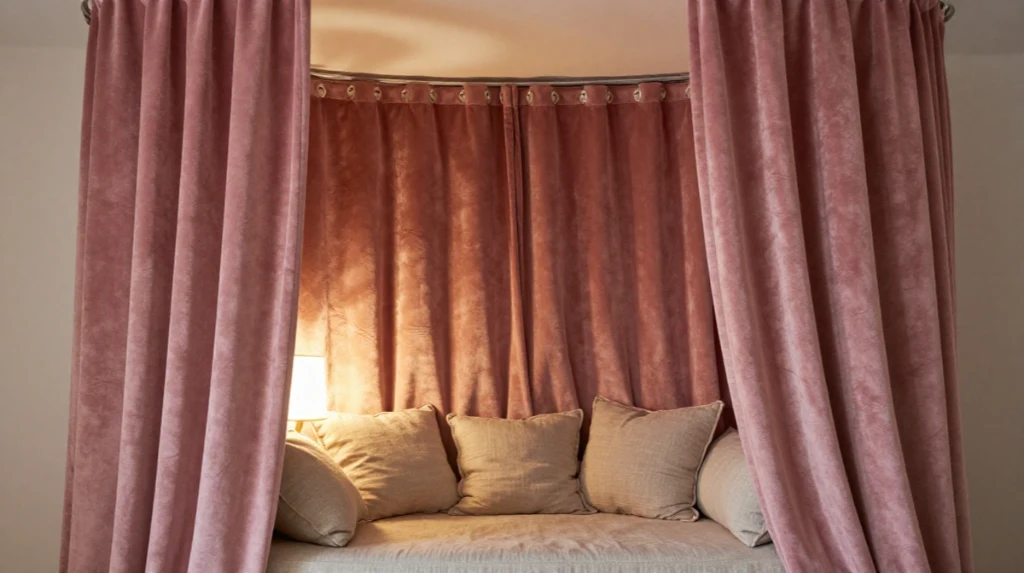
Adding curtains around a reading nook changes the entire mood. They create a soft enclosure that signals to everyone in the house that this is your quiet space.
Sheer curtains let light through while adding a dreamy, slightly romantic quality. Heavier drapes in velvet or linen block sound and light more effectively if you want a true indoor reading retreat.
Attic Reading Nook
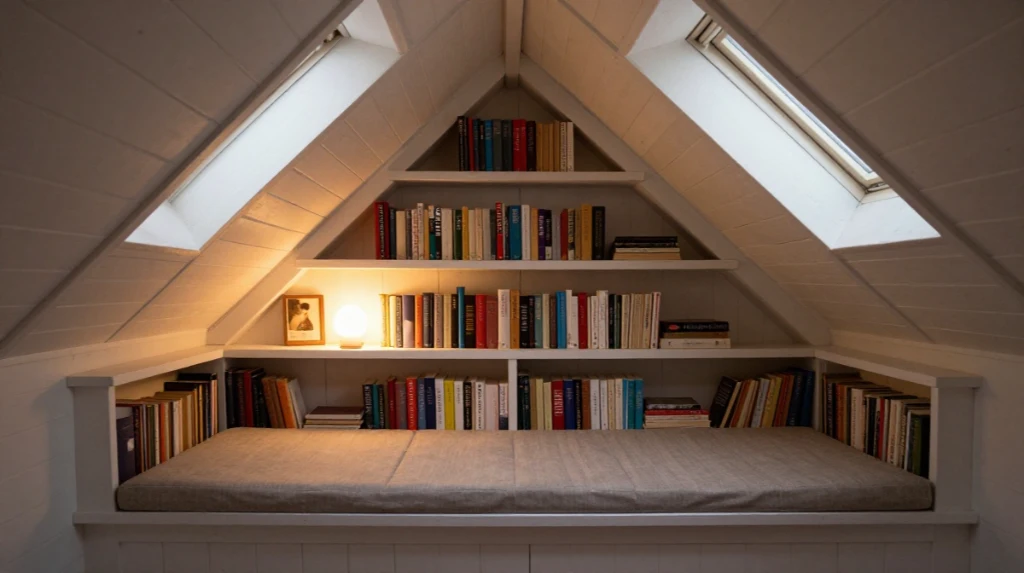
An attic is a naturally atmospheric space for reading. The sloped ceiling, the quiet, and the sense of being slightly removed from the rest of the house make it ideal.
Fit a cushioned bench along the lowest part of the slope where standing is awkward anyway, add built-in shelving along the walls, and install warm-toned reading nook lighting overhead. The result is a cozy home library that feels like it belongs in a novel itself.
Minimalist Reading Nook
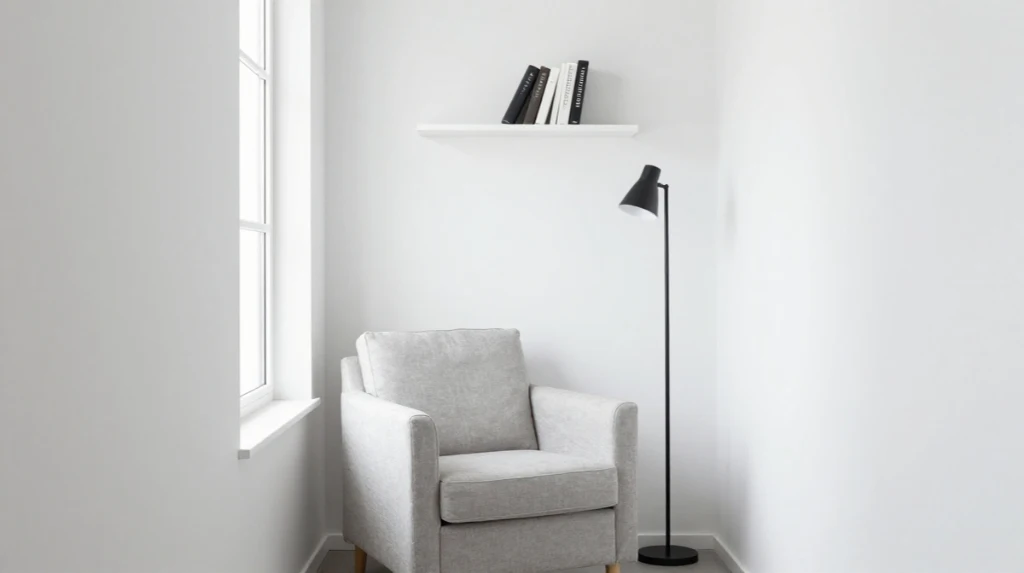
A minimalist reading nook works on the principle that less is more. One good chair, one well-placed lamp, one small shelf. Nothing extra, nothing decorative for decoration’s sake.
This style suits people who find cluttered spaces distracting while reading. Neutral tones, clean lines, and negative space are the key elements. It also photographs beautifully for anyone creating a reading nook aesthetic for their home.
Rustic Reading Nook
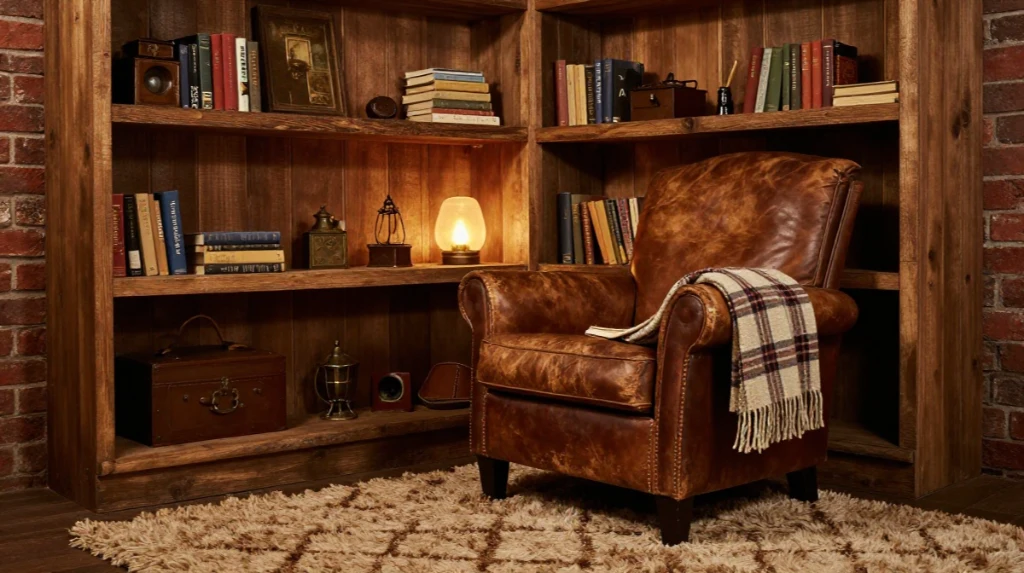
Reclaimed wood shelving, a worn leather chair, a plaid throw blanket, and a reading nook rug in earthy tones. The rustic reading nook borrows from cabin and farmhouse aesthetics and works well in homes with wooden floors or exposed brick walls.
The warmth this style creates is almost tactile. It looks like a space that has been used and loved for years even when it is brand new.
Bohemian Reading Nook
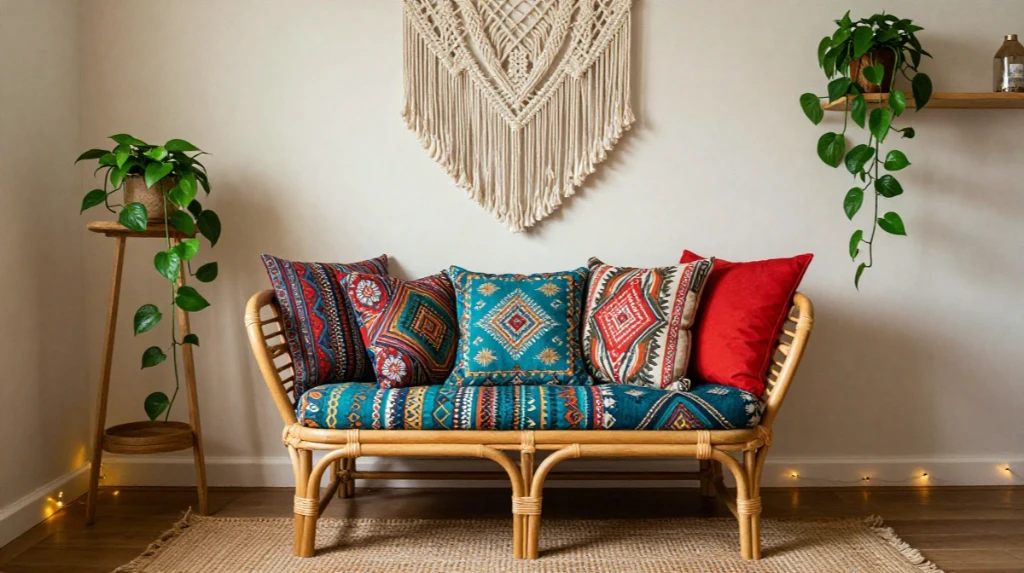
Layers are the foundation of a bohemian reading nook. Patterned cushions, woven baskets, macrame wall hangings, trailing plants, and a mix of warm-toned lighting all contribute to the look.
A reading nook with plants fits naturally into this style. Hanging plants or a small shelf with potted succulents add life and texture without taking up floor space.
Modern Reading Nook
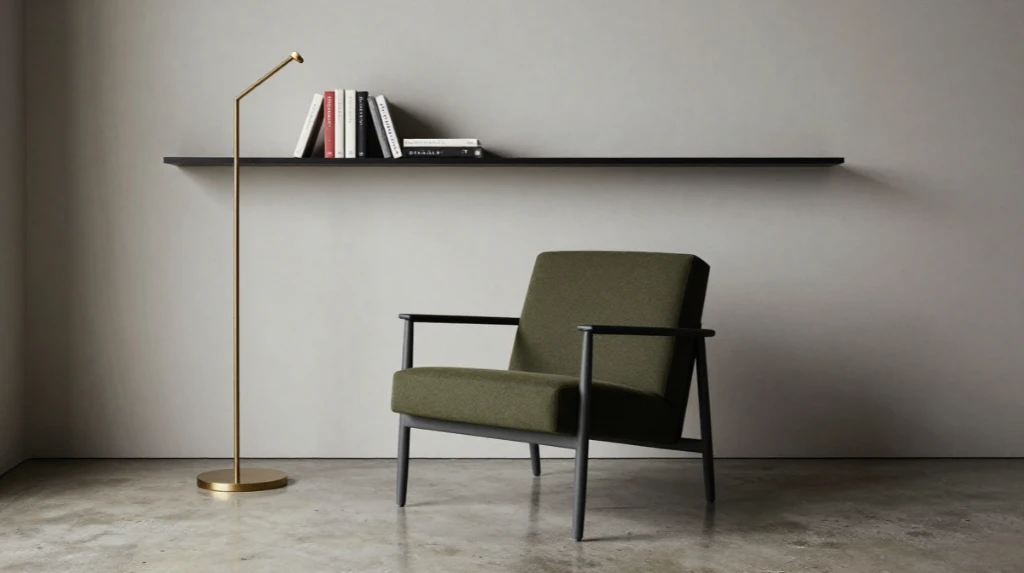
Clean shapes, muted or monochrome tones, and deliberate material choices define the modern reading nook. Think a low-profile chair in a single accent color, a geometric floor lamp, and a floating shelf above rather than a bulky bookcase beside.
This style works well in contemporary apartments where space is at a premium and every piece of furniture needs to earn its place.
Kids Reading Nook
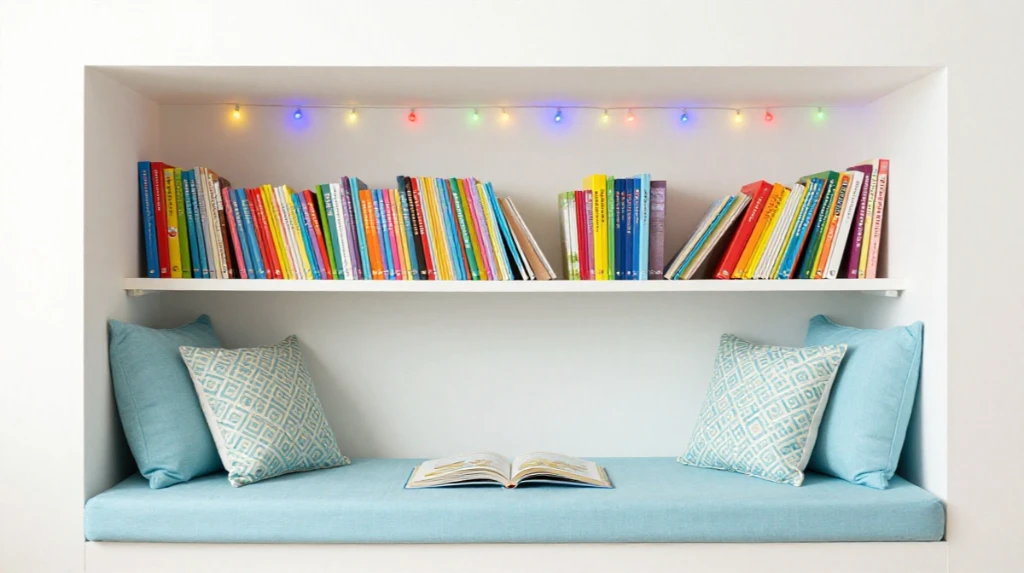
A reading nook for kids works best when it feels like their own small world. Low shelving they can reach independently, a reading nook with curtains they can draw closed, bean bags or floor cushions, and their favorite books displayed face-out rather than spine-out.
Soft, washable fabrics are practical here. Bright colors or themed decor help make the space feel genuinely theirs rather than a watered-down version of an adult space.
Reading Nook with Storage
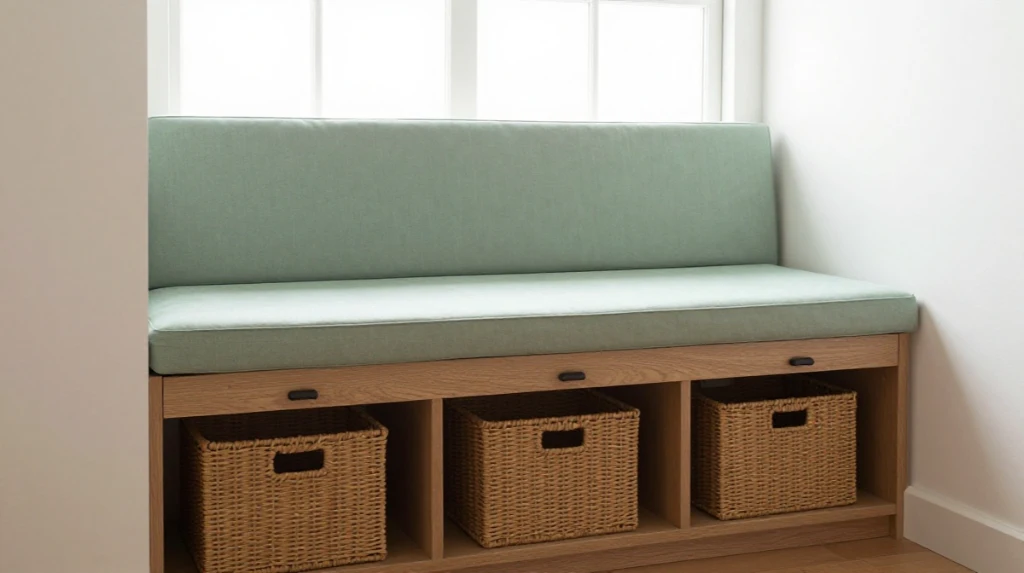
In small homes, storage is never optional. A reading nook with storage solves two problems at once. Built-in drawers beneath a window seat, baskets tucked under a bench, or a reading nook bookshelf that doubles as a room divider all keep the space functional.
This approach suits small space nook ideas where you cannot afford to dedicate square footage to a space that only serves one purpose.
Corner Bookshelf Nook
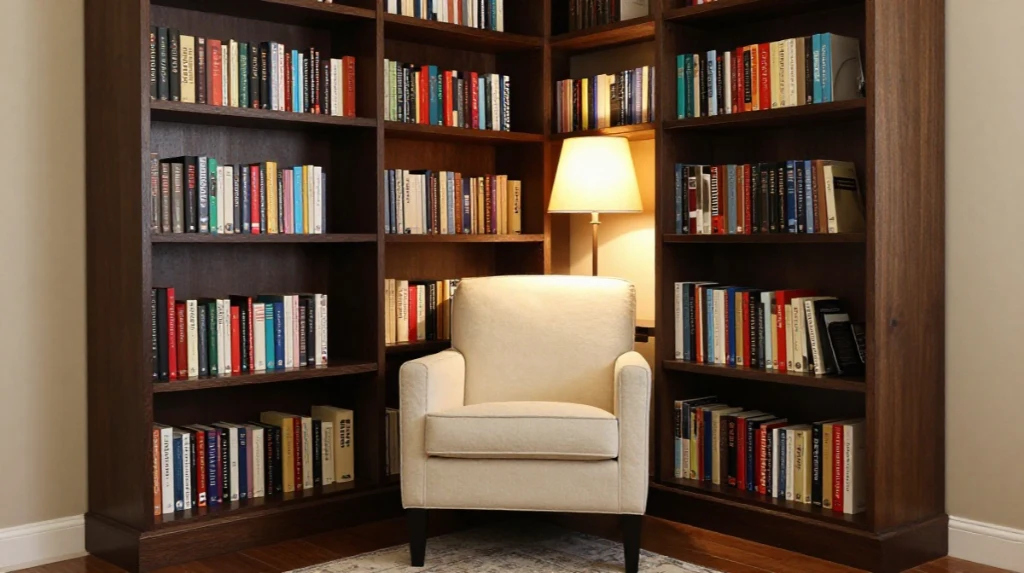
Two bookshelves placed at a right angle in a room corner create a natural enclosure for a chair and lamp. It is one of the simplest reading nook design ideas to achieve without any construction.
The shelves frame the space visually, provide book storage within reach, and give the corner a sense of purpose. Add a reading nook accent wall in a contrasting color behind the chair to anchor the whole setup.
Reading Nook with Layered Lighting
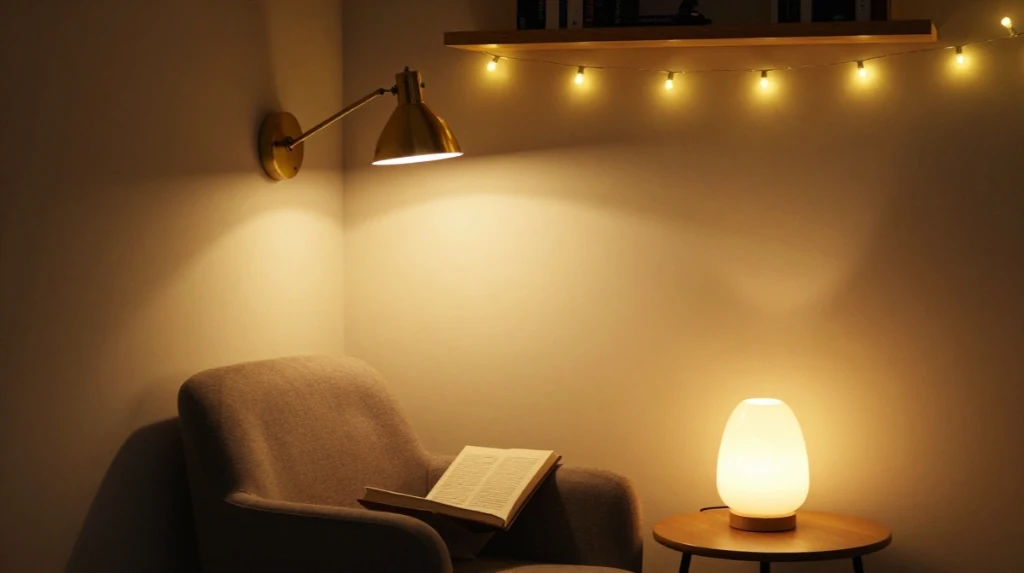
Lighting is one of the most important decisions in reading nook design and one of the most overlooked. A single overhead light is rarely enough.
Layered lighting in a reading nook typically means a floor lamp or wall-mounted reading light at eye level for task lighting, a softer ambient lamp for mood, and perhaps a string of warm bulbs if the space is partly enclosed. Reading nook warm lighting in amber or soft white tones reduces eye strain and makes the space feel more welcoming.
Basement Reading Nook
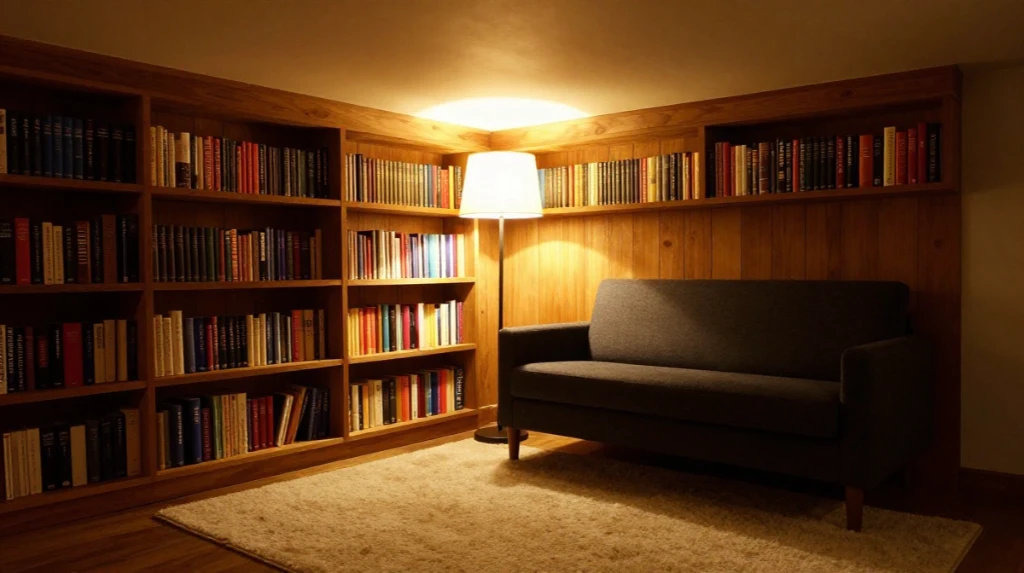
Basements are often underused beyond storage. A reading nook in a basement can be genuinely wonderful if the lighting is handled well. Since natural light is limited, warm artificial lighting becomes even more important.
A well-upholstered chair, a thick rug for warmth underfoot, shelving along the walls, and a dehumidifier running quietly in the background can turn a basement corner into a peaceful reading corner that feels completely separate from the main house.
Outdoor-Inspired Indoor Reading Retreat
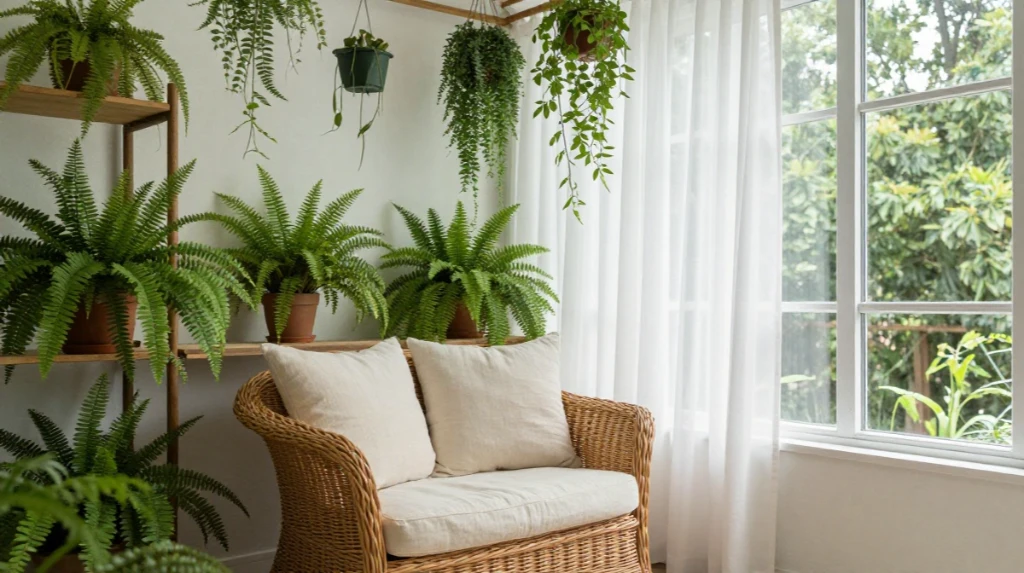
Bringing the outside in is a design principle that works especially well in a home reading sanctuary. A reading nook with natural light, indoor plants, a wicker or rattan chair, and linen fabrics in natural greens and whites creates a space that feels like a garden room.
This style is calming and is particularly suited to people who find nature imagery relaxing while reading.
Budget Reading Nook
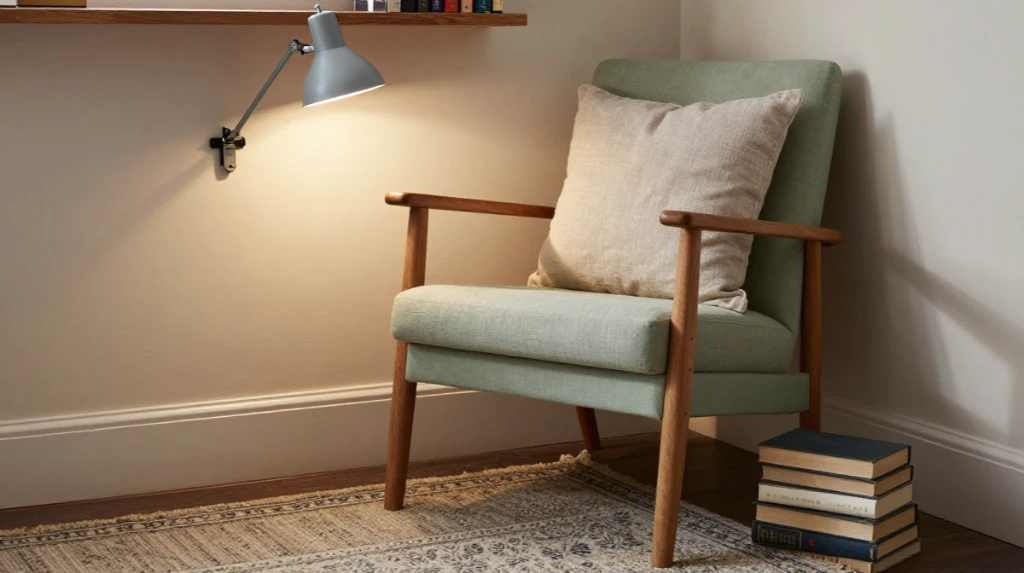
A beautiful reading nook does not require a renovation budget. A second-hand armchair reupholstered in a fabric you love, a few floating shelves from a hardware store, a thrifted floor lamp, and a rug from a discount home store are all you need.
The reading nook pillows and throw blankets you choose will do more for the overall feel than any furniture purchase. Focus your budget on comfort first.
Reading Nook with Accent Wall
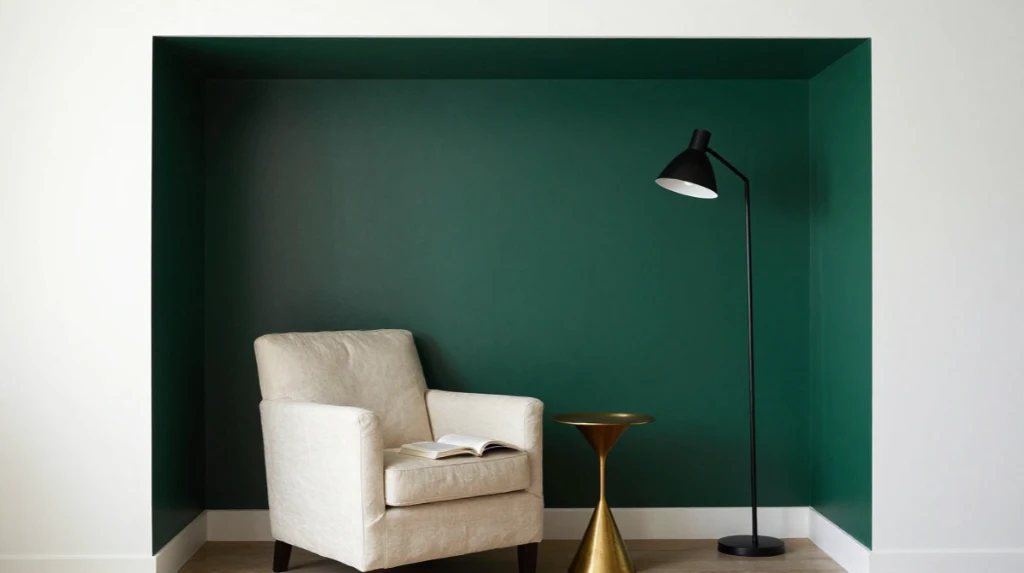
Paint alone can define a reading nook within an open-plan space. A reading nook accent wall in a deep color, a botanical wallpaper pattern, or a textured finish immediately signals that this corner has its own identity.
Pair the accent wall with seating that faces into the room rather than the wall, so the nook feels open while still being visually contained.
Personalized Reading Nook
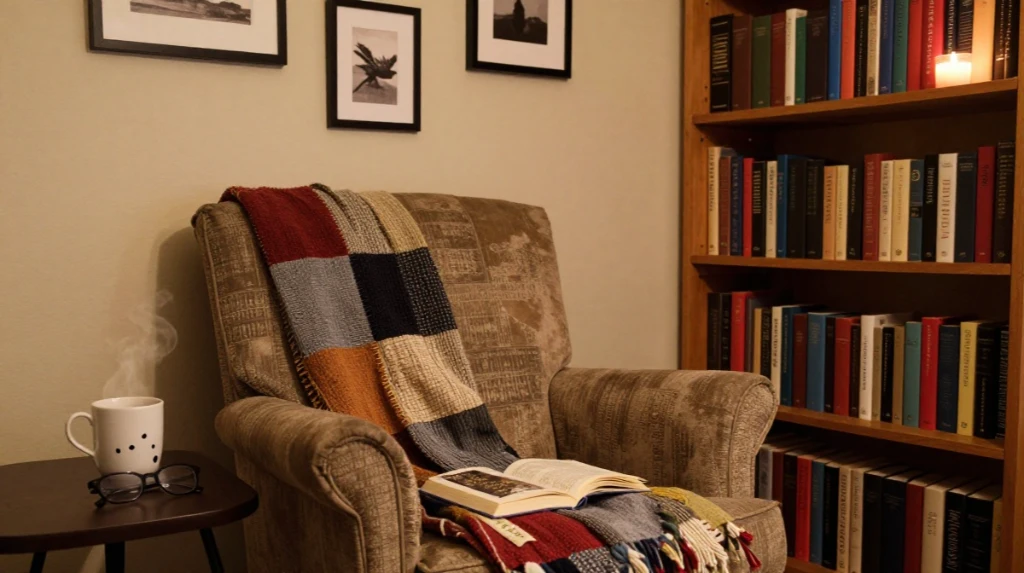
The best reading nooks are the ones that reflect the person who uses them. A collection of framed bookmarks on the wall, a shelf dedicated to a specific genre, a candle in a favorite scent, a mug warmer on the side table.
These small details turn a comfortable reading chair into a personalized reading nook that genuinely feels like yours.
Reading Nook with Organization in Mind
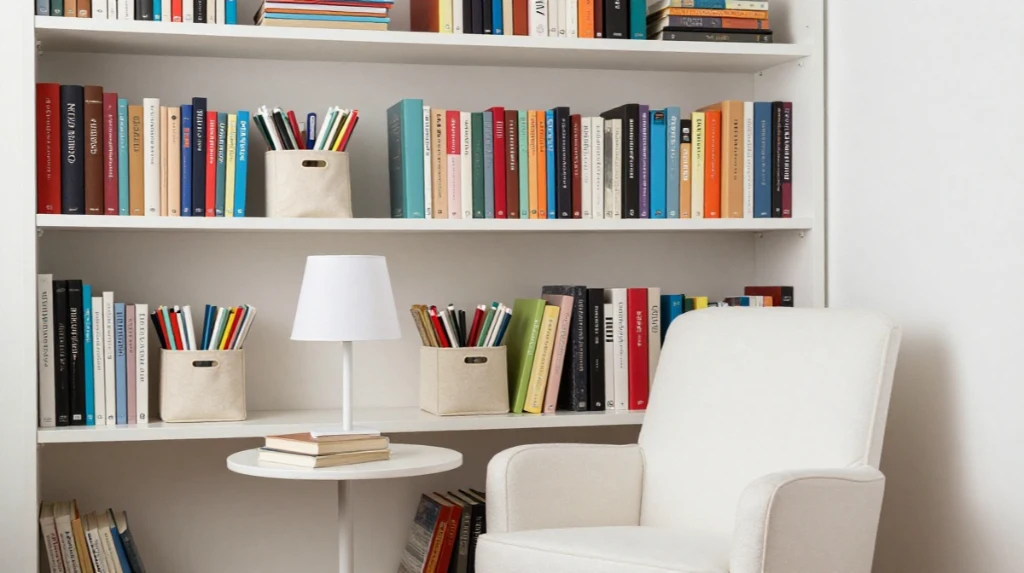
Books multiply. A reading nook that starts tidy can quickly become cluttered if organization is not built in from the beginning.
Use a mix of closed storage for supplies and open shelving for current reads. A small basket for bookmarks, reading glasses, and notepads keeps the surface of a side table clear. Reading nook organization is worth thinking about before you add furniture, not after.
Quiet Reading Room

If you have the luxury of a dedicated room, turning it into a quiet reading room is one of the most satisfying home projects possible. Line the walls with bookshelves, invest in one genuinely comfortable chair, add a footstool, layer the lighting, and hang curtains that block both light and sound.
A quiet home sanctuary like this does not need to be large. Even a small spare room converted entirely for reading will feel like the most valuable room in the house.
Quick Comparison Table: Reading Nook Styles at a Glance
| Style | Best For | Key Elements | Budget Level | Space Needed |
|---|---|---|---|---|
| Minimalist | Distraction-free readers | One chair, one lamp, clean lines | Low | Any size |
| Bohemian | Eclectic, layered aesthetics | Cushions, plants, mixed textures | Low to Medium | Medium corner |
| Rustic | Warm, cabin-like feel | Wood, leather, earthy tones | Medium | Any size |
| Modern | Contemporary apartments | Clean shapes, muted tones | Medium to High | Small to medium |
| Built-In | Permanent, polished look | Shelves, window seat, carpentry | High | Dedicated wall or alcove |
| Kids Nook | Families with children | Low shelves, soft fabrics, color | Low to Medium | Small corner |
| Budget DIY | First-time decorators | Thrifted pieces, paint, cushions | Low | Any size |
Conclusion
A reading nook does not ask for much space, money, or time to build. It asks for a little intention. The right chair in the right corner with the right light is enough to create a space that changes how you feel in your own home.
Whether your style leans toward a clean, modern reading nook or a layered, bohemian reading corner, the ideas in this list are meant to meet you where you are, not where some design magazine thinks you should be.
Start with what you have. A corner, a cushion, a lamp. Build from there. The reading nook design that works best for you is the one you will actually use.
You may also like this: 22 Entry Divider Design Ideas for Stylish Home Layouts
Frequently Asked Questions
1. What is the ideal size for a reading nook?
There is no fixed size. A space as small as three feet by three feet can work if the seating fits comfortably and the lighting is good. The key is making the space feel intentional rather than squeezed.
2. What type of chair is best for a reading nook?
An armchair with good lumbar support works well for most people. If you prefer lounging, a chaise or a deep-seated chair with an ottoman is a better fit. Avoid chairs that are purely decorative since comfort matters most.
3. How do I add a reading nook to a small bedroom?
Use a corner near the window. A small armchair or even a floor cushion with a wall-mounted reading light takes up minimal space while creating a clear reading area separate from the bed.
4. What lighting works best in a reading nook?
A directional lamp placed at shoulder height on the reading side is the most practical option. Warm white bulbs reduce eye strain. Avoid lighting placed directly above or behind you as it creates shadows on the page.
5. Can I create a reading nook without any construction or renovation?
Yes. Two bookshelves placed at an angle, a comfortable chair between them, a floor lamp, and a rug underneath create a defined reading nook without any building work at all. Curtains hung from a ceiling-mounted rod can add enclosure without drilling into walls.