
Introduction
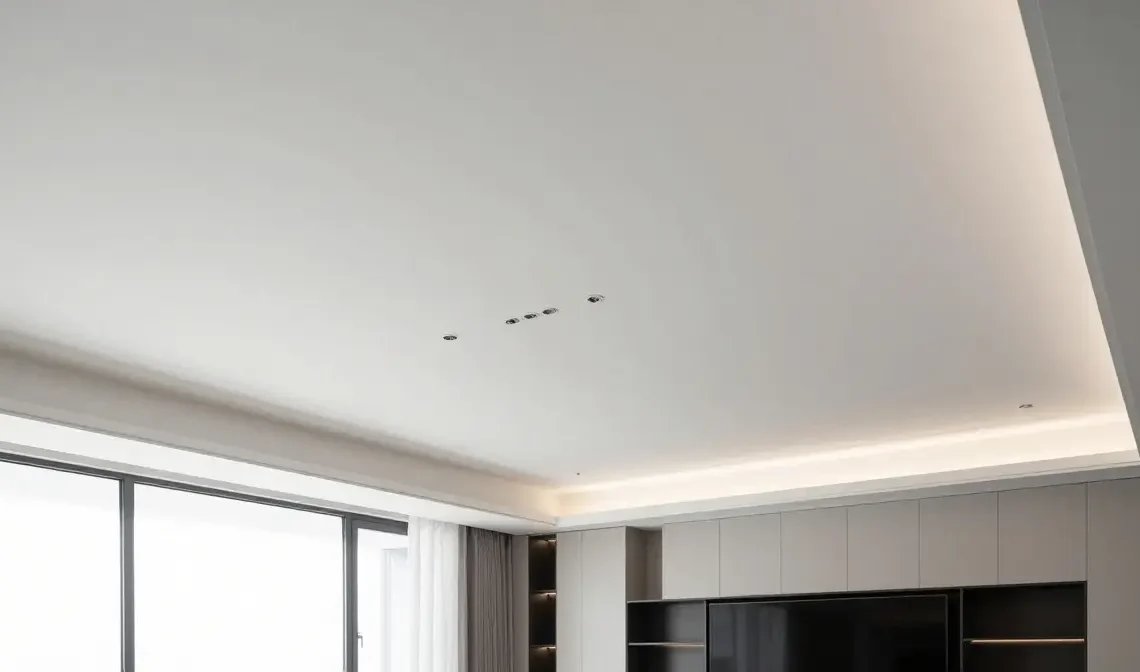
For most of us, the honest answer is “nothing.” It’s just a flat white surface we walk under every day without a second thought. But here’s the thing — that blank space above your head is one of the biggest untouched canvases in your entire house, and once you start paying attention to it, you can’t unsee how much potential it holds.
Modern ceiling design has quietly become one of the most exciting parts of interior styling. Designers now call it the “fifth wall,” and for good reason. A well-planned ceiling can make a small room feel taller, a plain room feel finished, and a tired space feel brand new, all without touching the floor or the walls. Whether you’re working on a full home renovation or just want a refresh that feels worth the effort, this guide walks you through real, usable ceiling ideas that fit different rooms, budgets, and styles.
Tray Ceiling for Depth and Drama
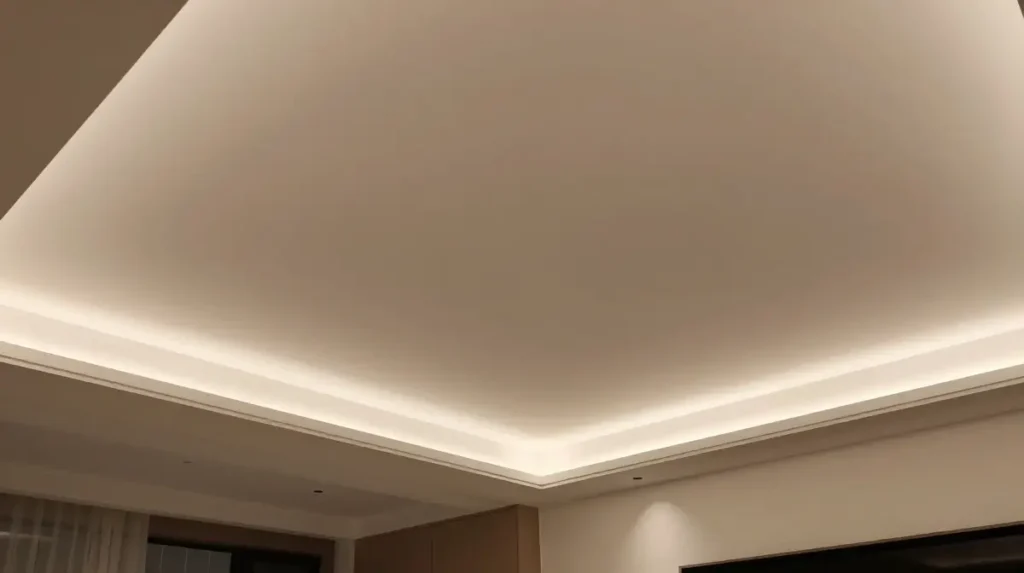
A tray ceiling is basically a raised center section that sits higher than the surrounding border, creating a layered, almost sculptural look.
It works beautifully in living rooms and bedrooms where you want a touch of formality without going over the top. Paint the inset section a slightly different shade than the rest of the ceiling, and you instantly get depth that a flat surface could never give you.
Coffered Ceiling for a Classic Yet Updated Look
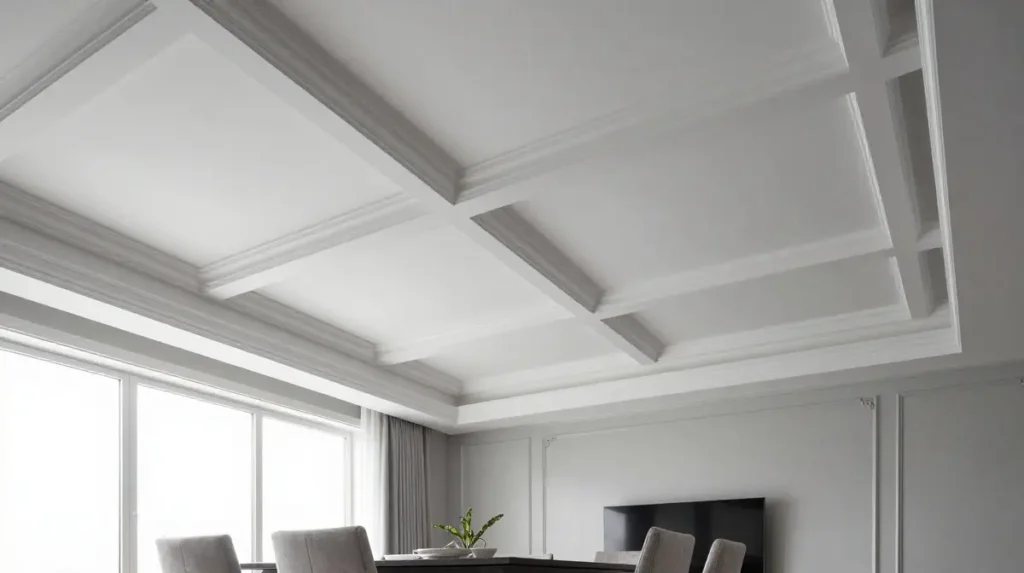
Coffered ceilings use a grid pattern of recessed panels, and while the style has old-world roots, the 2026 version leans lighter and more refined.
Instead of heavy dark wood beams, try thinner trims painted white or soft grey. It still gives that architectural richness but feels current rather than dated.
Exposed Beam Ceiling for Natural Texture
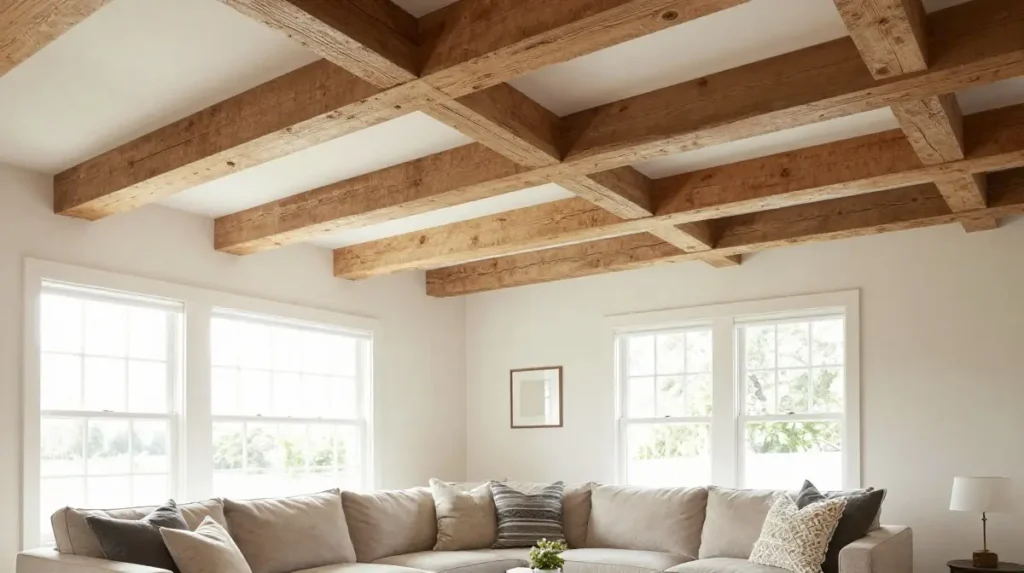
If your home has good ceiling height, exposed beams add warmth and a sense of craftsmanship that drywall alone can’t match.
This works especially well in farmhouse, rustic, or industrial-style interiors. The trick is balance — pair raw wood beams with a lighter ceiling color so the room doesn’t feel heavy or closed in.
Suspended Ceiling for Clean, Functional Style
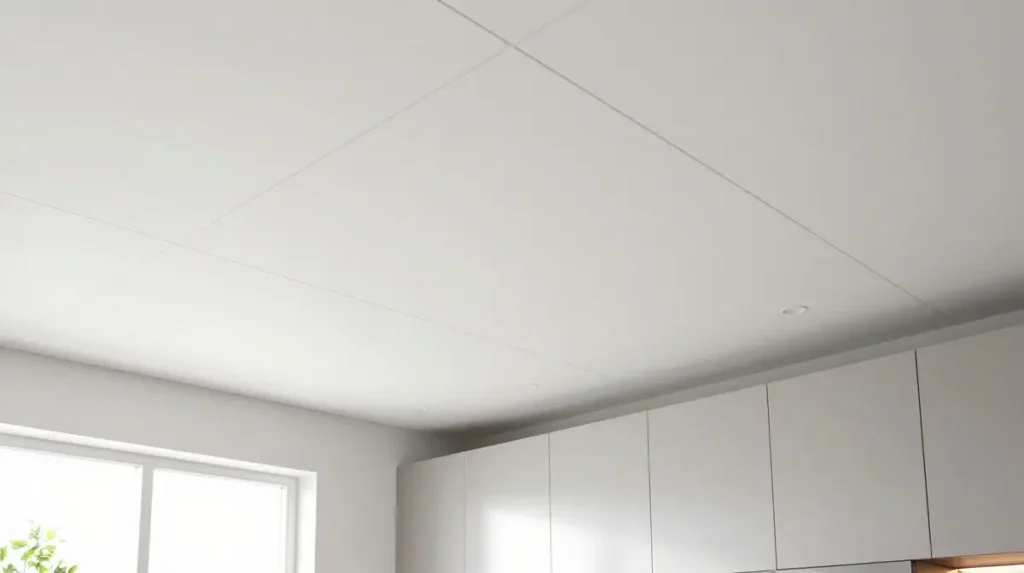
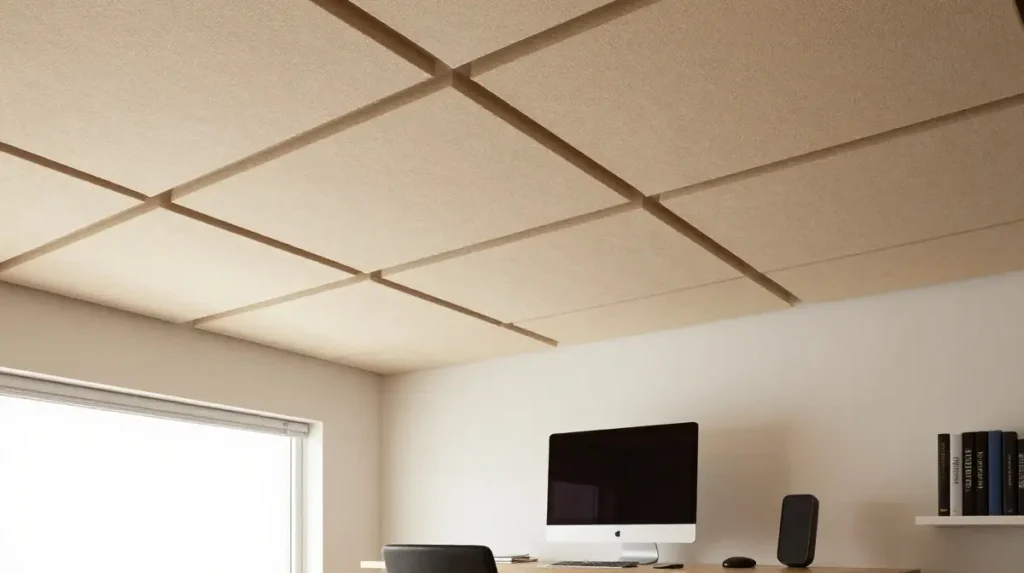
Suspended or false ceilings aren’t just about hiding wiring and ducts anymore.
With clean grid lines and subtle texture, a suspended ceiling design gives rooms a finished, almost gallery-like feel. It’s a practical choice for kitchens, hallways, and home offices where you also want easy access to electrical work later.
Gypsum Ceiling Design for Smooth Custom Shapes
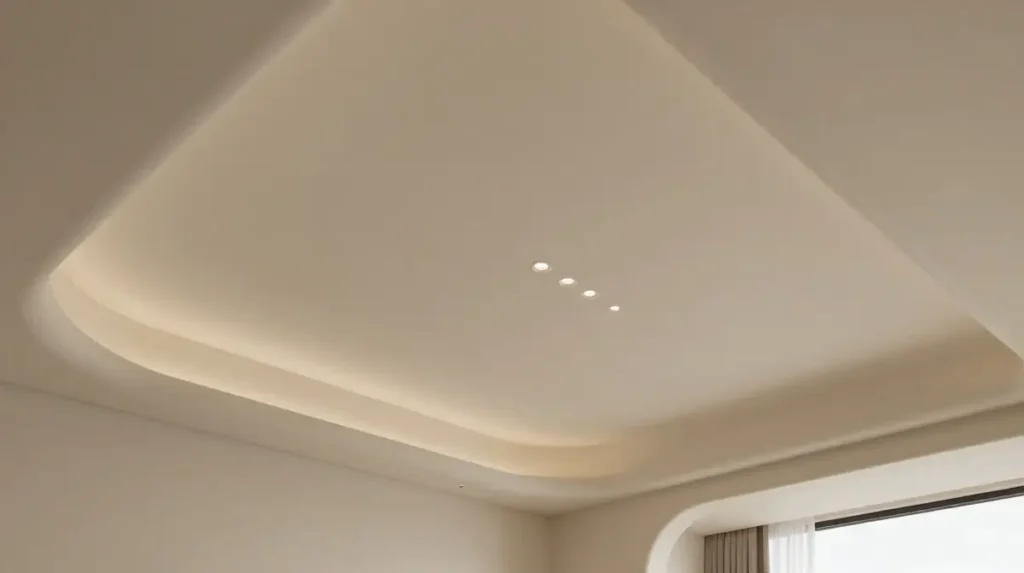
Gypsum board is one of the most flexible materials for ceiling work because it can be molded into curves, steps, and custom outlines that plain plaster simply can’t achieve.
A gypsum ceiling design lets you create soft, rounded shapes around lighting fixtures, which adds a quiet sense of luxury without shouting for attention.
POP Ceiling Design for Detailed Patterns
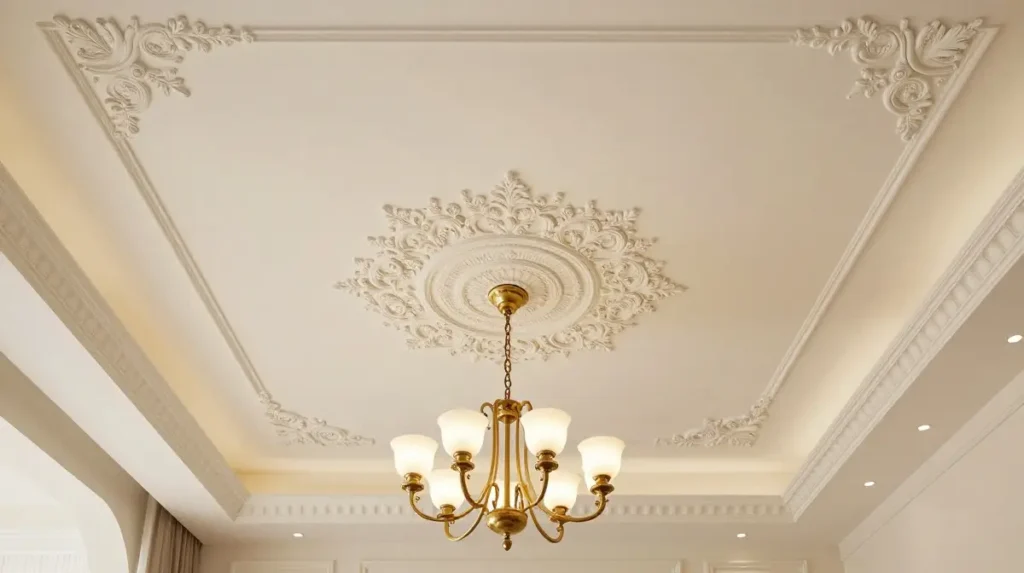
POP, or plaster of paris, remains a favorite for homeowners who want intricate detailing, like floral borders or layered cornices.
The material sets quickly and holds fine detail well, so if you’re drawn to ornamental touches in your living room or hall, a POP ceiling design gives you that without needing a full carpentry team.
Vaulted Ceiling to Maximize Height
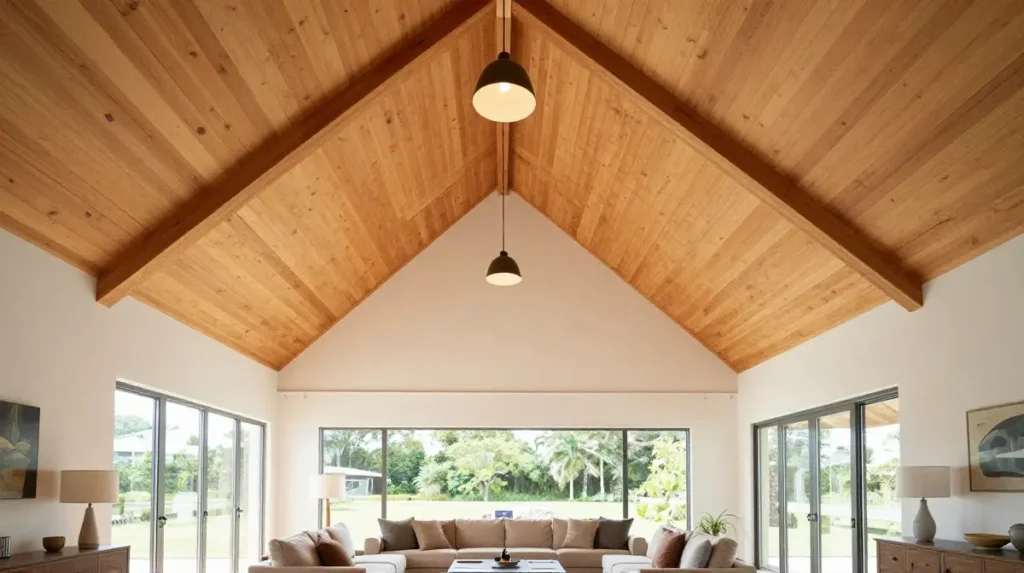
If you’re lucky enough to have a vaulted or sloped ceiling, lean into it instead of boxing it in. Keep the surface simple and let the architecture do the talking.
Adding a single statement light fixture at the peak draws the eye upward and makes the whole room feel grander than it actually is.
Wood Ceiling Design for Warmth
Wood ceiling design has shifted away from the dark, heavy beams of the farmhouse era toward lighter, linear slats made from oak, ash, or bamboo.
Slatted wood ceilings add rhythm to a room, draw the eye upward, and visually stretch the space. There’s also a practical bonus — the gaps between slats can hide acoustic material, which cuts down on echo in open-plan homes.
Geometric Ceiling Design for a Bold Statement
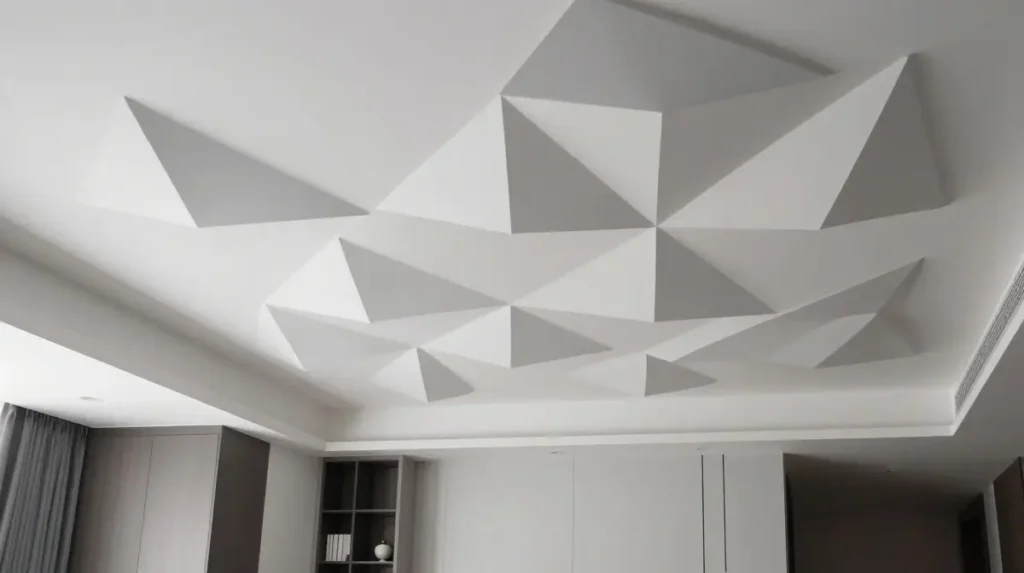
Triangles, hexagons, or angled panel work can turn a plain ceiling into the focal point of the room. This style suits modern or contemporary homes where you already have clean lines elsewhere.
Keep the rest of the room fairly simple so the geometric pattern doesn’t compete with too many other details.
3D Ceiling Panels for Texture Without Heavy Construction
Three-dimensional ceiling panels are an easy way to add depth and shadow play without a full structural overhaul.
They come in tile form, so installation is quicker than custom plaster work, and they’re a solid pick if you want a textured, modern look on a tighter timeline.
Stretch Ceiling for a Sleek, Seamless Finish
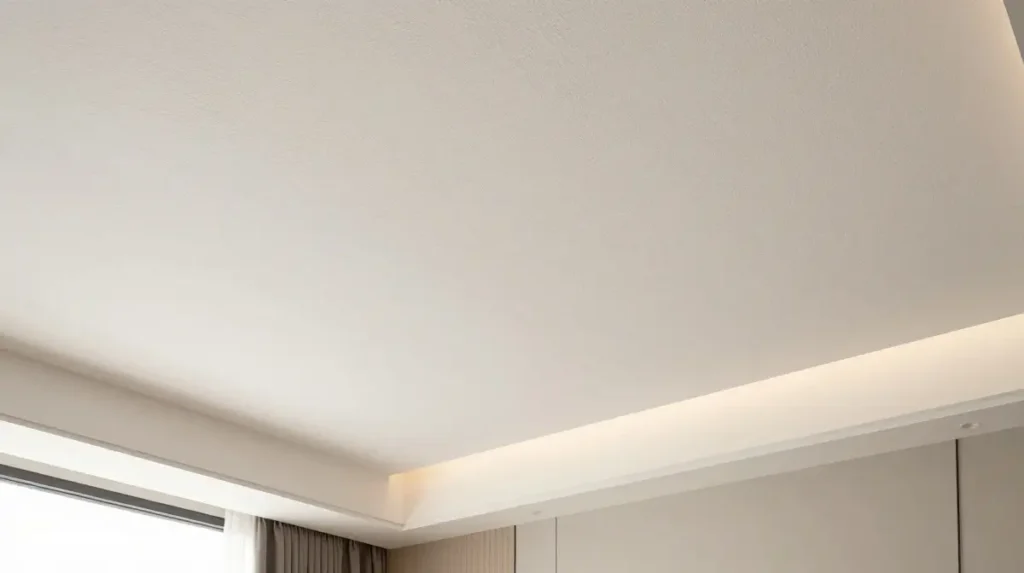
Stretch ceilings use a tensioned PVC or fabric membrane installed beneath the actual ceiling, giving a perfectly smooth, almost glossy finish.
They’re popular in contemporary homes because they hide imperfections completely and can be lit from behind for a soft glow effect.
Acoustic Ceiling Design for Noise Control
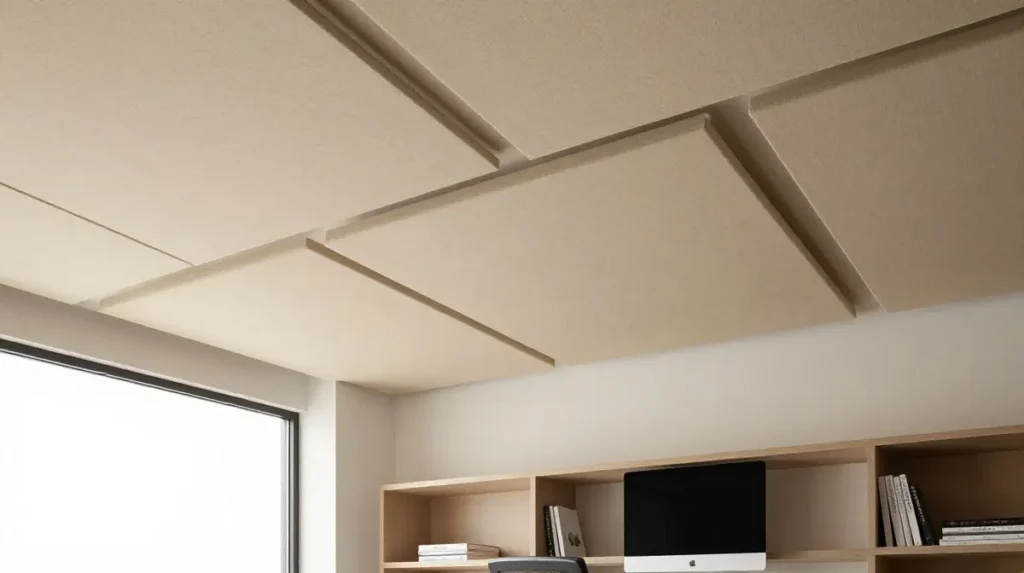
If echo or street noise is an issue, an acoustic ceiling design solves a real problem while still looking good.
Modern acoustic panels come in fabric-wrapped or perforated wood finishes, so you don’t have to settle for the dated foam-tile look from old offices.
Cove Lighting Ceiling for Soft Ambient Glow
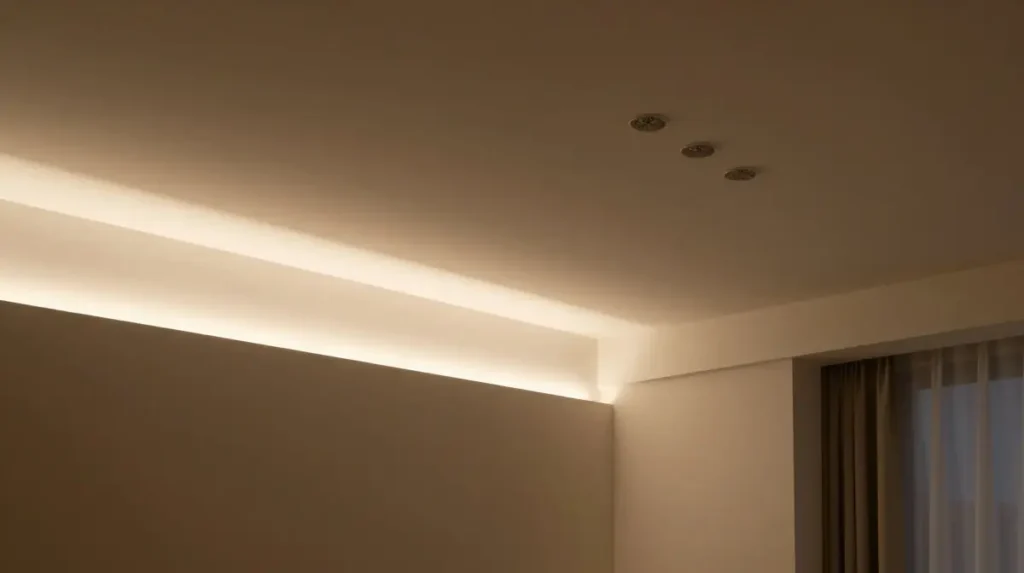
Cove lighting hides LED strips in a recessed channel along the ceiling’s edge, washing the wall or ceiling with indirect light.
It’s one of the simplest ways to add a hotel-like ambiance to a bedroom or living room, and it pairs naturally with tray or stepped ceiling designs.
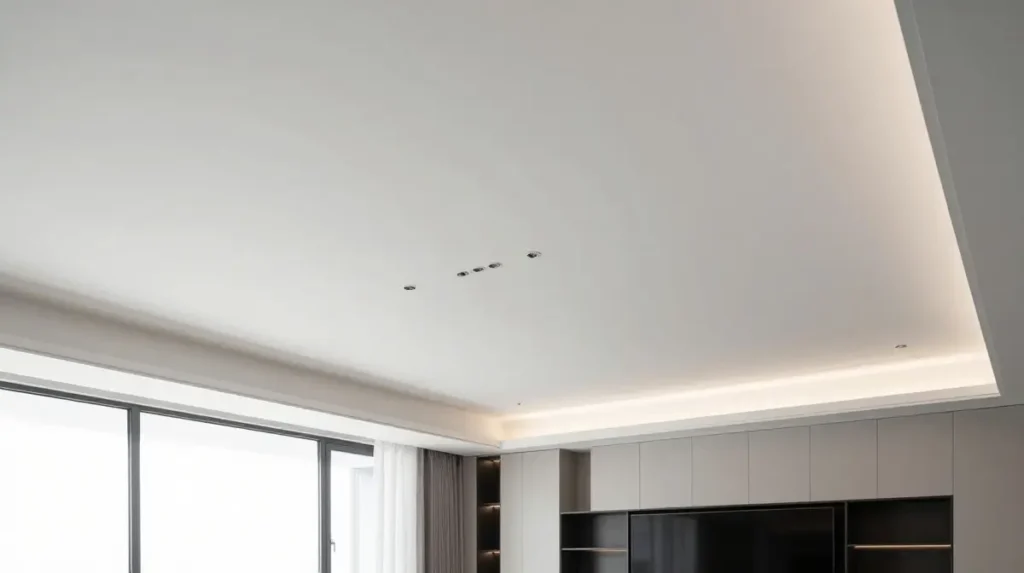
Recessed Lighting Ceiling for a Clutter-Free Look
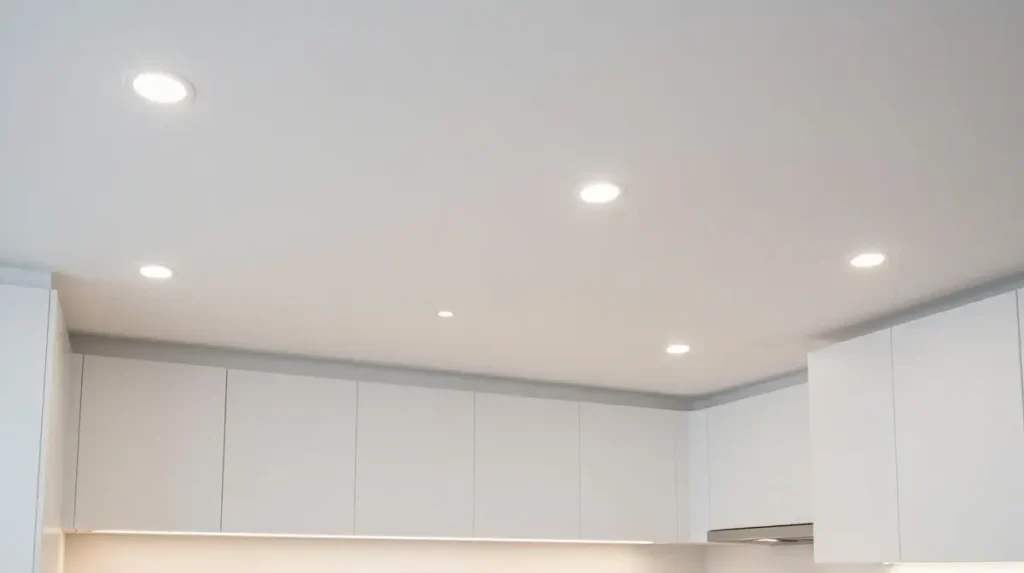
Recessed lighting sits flush with the ceiling surface, so you get even illumination without any visible fixtures hanging down.
It works in nearly every room and is especially useful in kitchens, where you want bright, shadow-free task lighting over counters.
Chandelier Ceiling Design for a Centerpiece Moment
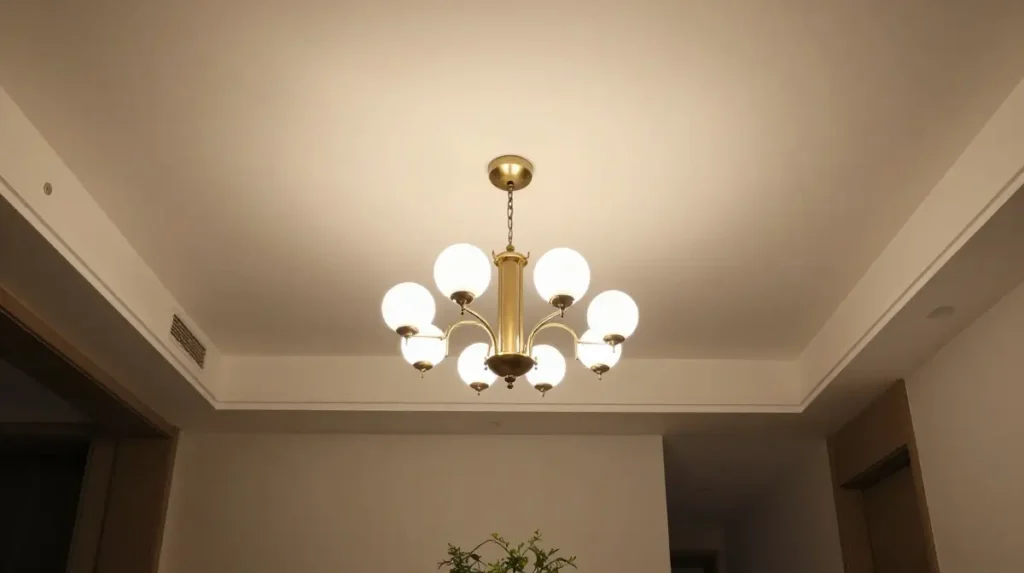
Sometimes the ceiling design is really just the setting for one great fixture.
A well-placed chandelier, especially over a dining table or in an entryway, can carry an entire room’s character. Keep the surrounding ceiling fairly plain so the fixture stays the star.
Skylight Ceiling Design for Natural Light
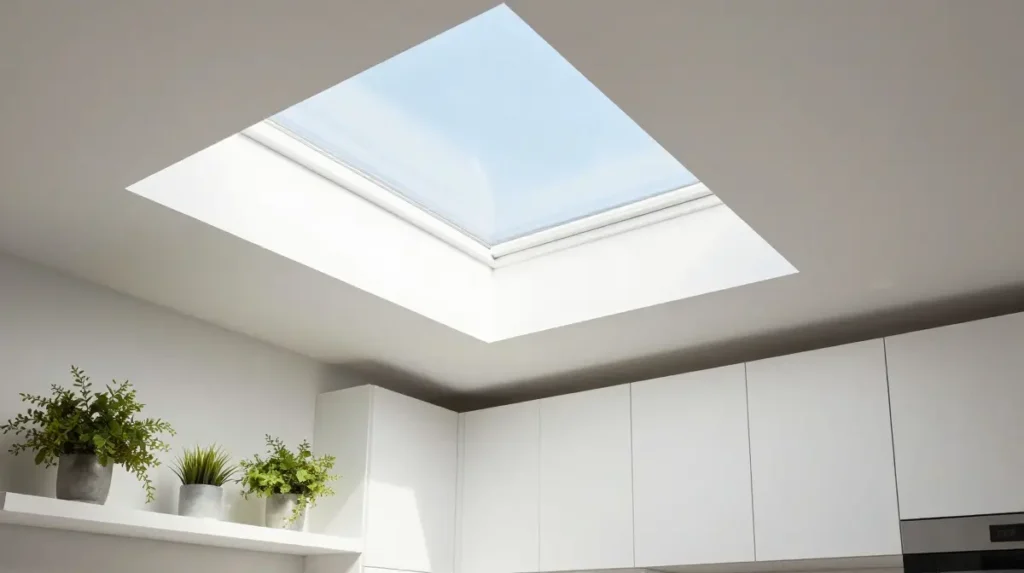
Few things change a room’s mood like daylight pouring in from above.
A skylight brings in natural light that side windows can’t always reach, and it works especially well in kitchens, bathrooms, or reading nooks where you want a brighter, airier feel during the day.
Minimalist Ceiling Design for Understated Elegance
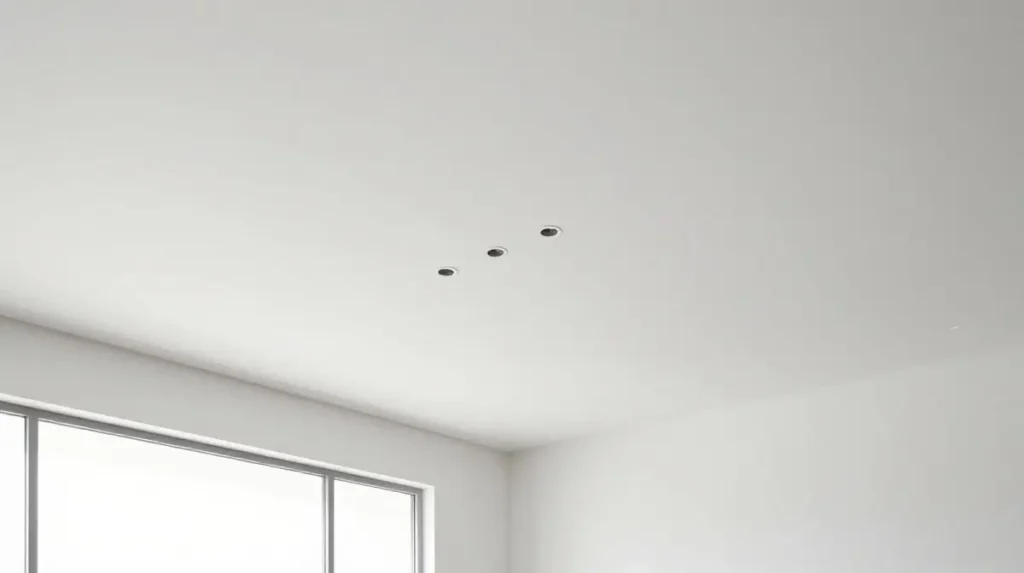
Not every ceiling needs ornamentation.
A minimalist ceiling design, with crisp white paint, hidden lighting, and zero unnecessary detailing, suits Scandinavian and Japandi-style homes perfectly. The restraint itself becomes the style statement.
Mirror Ceiling Design for a Statement Touch
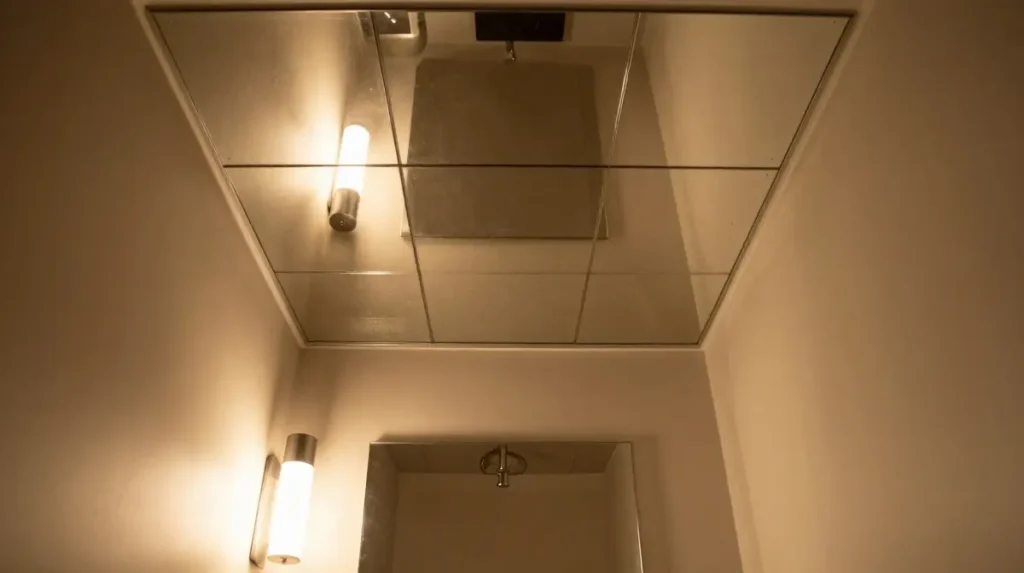
This one’s bold, and it’s not for every space, but a mirrored ceiling panel in a small powder room or accent nook can make the area feel larger and more dramatic.
Use it sparingly — a full mirrored ceiling in a large room can feel overwhelming rather than elegant.
Wallpaper Ceiling Design for a Maximalist Touch
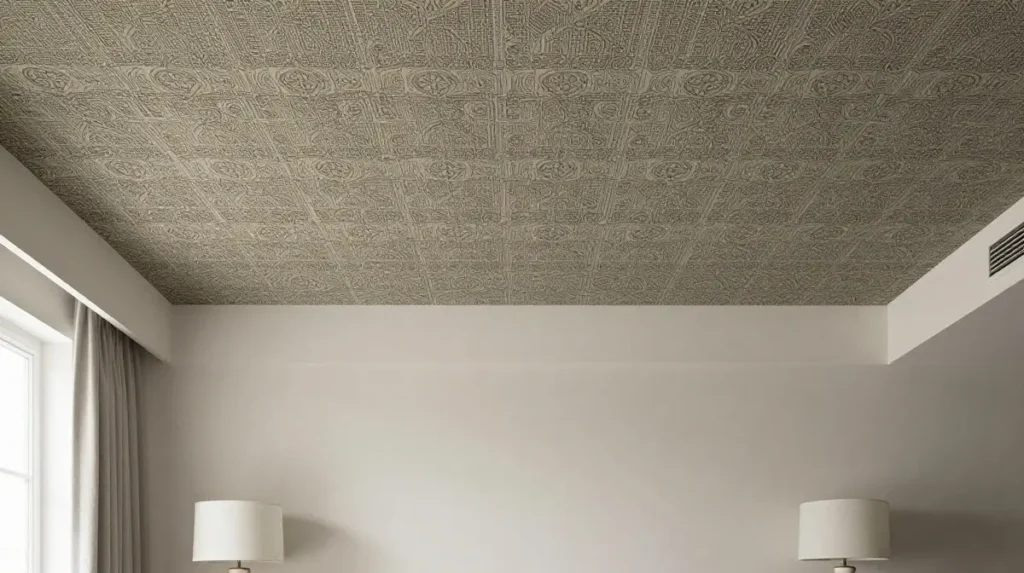
For homeowners who want personality over restraint, applying a bold, large-scale wallpaper to the ceiling turns it into the room’s art piece.
In a mostly neutral or monochrome room, a patterned ceiling adds character without needing extra wall décor.
Black Ceiling Trend for a Cocooning Effect
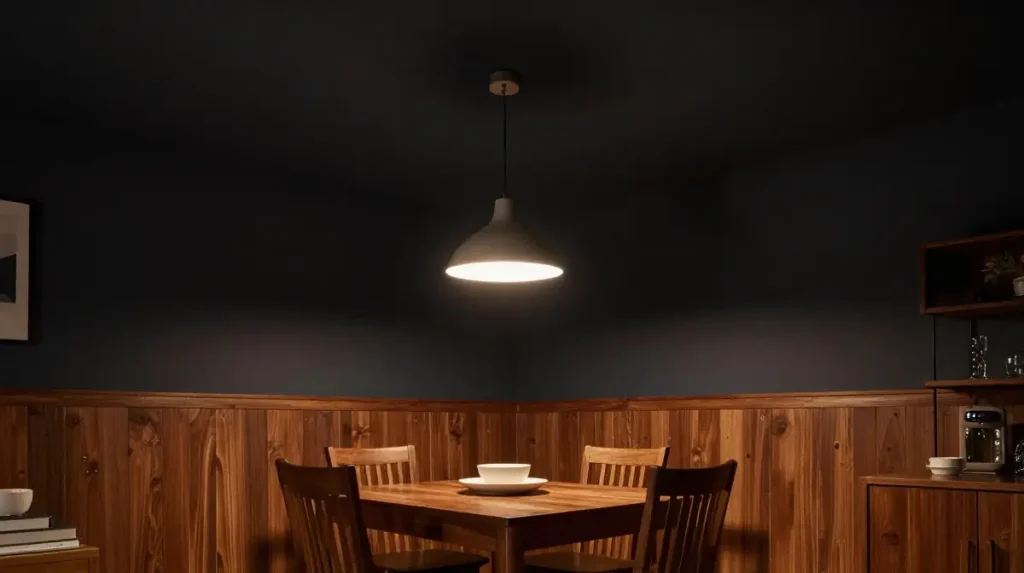
Dark ceilings sound intimidating, but in the right room they create a warm, intimate, almost cocoon-like atmosphere.
This works particularly well in dining rooms, home theaters, or bedrooms where you want a cozy, grounded feel rather than bright openness. Pair a black or deep charcoal ceiling with warm lighting so it doesn’t feel cold.
Industrial Ceiling Design for Raw Character
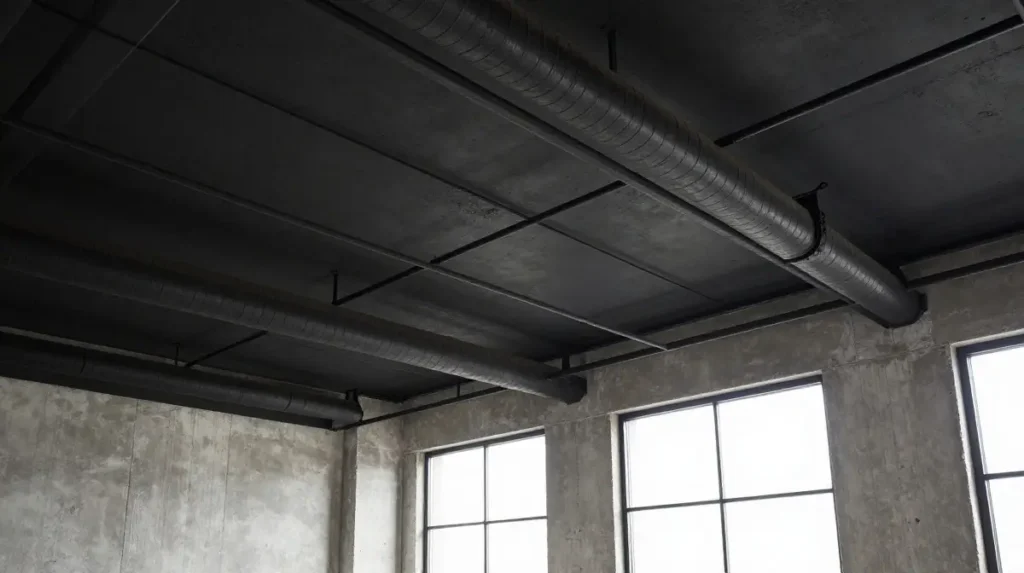
If your space has exposed pipes, ducts, or concrete, don’t fight it. Paint everything a uniform dark color, like matte black or charcoal, so the structural elements blend together rather than looking like an unfinished space.
This industrial ceiling design approach is common in lofts and converted warehouse apartments.
False Ceiling for Hall to Tie the Whole Space Together
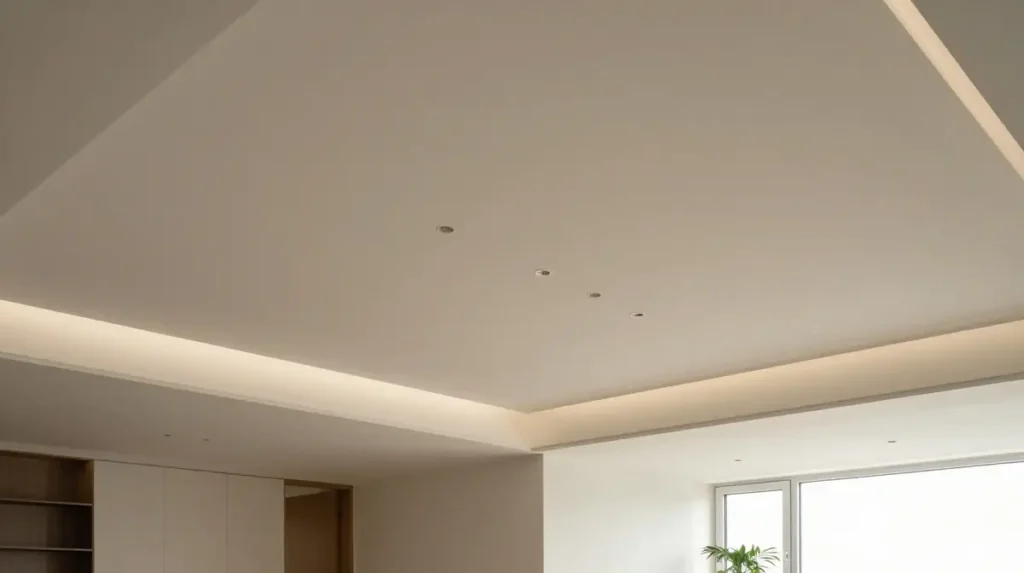
Living and hall areas usually benefit most from a layered false ceiling, since this is the room where people spend the most time and notice details the most.
A combination of a tray section, cove lighting, and a centered fixture gives the hall a finished, intentional feel that ties the whole layout together.
Quick Comparison: Popular Ceiling Design Types
| Ceiling Type | Best For | Approx. Cost Level | Installation Time | Maintenance |
|---|---|---|---|---|
| POP Ceiling | Detailed, ornamental patterns | Moderate | 5-7 days | Low, occasional touch-up paint |
| Gypsum Ceiling | Custom curved shapes | Moderate to High | 4-6 days | Low |
| Tray Ceiling | Adding depth to living rooms/bedrooms | Moderate | 3-5 days | Low |
| Wood Ceiling | Warmth, natural texture | High | 5-8 days | Moderate, occasional sealing |
| Stretch Ceiling | Sleek, seamless modern look | High | 2-3 days | Very low |
| 3D Panels | Quick textured upgrade | Low to Moderate | 1-3 days | Low |
| Suspended Ceiling | Hiding wiring, ducts | Moderate | 3-5 days | Low |
This table is meant as a starting point, not a fixed quote — actual cost and time will depend on your room size, material quality, and local labor rates.
Ceiling Design Tips by Room
Living rooms handle the most visual weight, so they’re a good place for tray ceilings, coffered patterns, or a wood accent paired with cove lighting. Bedrooms work best with calmer choices like a soft tray ceiling, warm wood slats, or simple recessed lighting that won’t feel too stimulating before bed.
Kitchens benefit most from practical choices, recessed lighting for task work, and moisture-resistant materials since steam and heat are a daily reality there. Bathrooms need similar moisture-conscious materials, and a small skylight can make a huge difference in a windowless bathroom.
Common Ceiling Design Mistakes to Avoid
A lot of ceiling projects go wrong not because the idea was bad, but because the proportions weren’t considered. Heavy coffered or tray designs can make a low-ceiling room feel cramped instead of grand, so always measure your actual ceiling height before committing to anything layered.
Another common mistake is mixing too many trends at once, a textured ceiling, bold color, and an oversized chandelier in the same small room rarely works together. Lighting placement gets overlooked too; recessed lights installed without a plan often leave shadowy corners instead of even illumination. And if you currently have a popcorn ceiling, don’t paint over it hoping it’ll look fine. Removal is messy, but it’s usually worth doing properly before installing any new design.
Maintenance Tips for Long-Lasting Ceilings
Dust your ceiling fixtures and any textured surfaces every few months, since dust collects faster on raised or patterned areas than on flat paint. For kitchens and bathrooms, check periodically for moisture staining, especially around vents and skylights, as catching a small leak early saves a lot of repair work later.
If you’ve gone with a painted accent ceiling, keep a small amount of matching paint on hand for quick touch-ups, since ceiling marks are far more noticeable under direct lighting than wall marks are.
Conclusion
Your ceiling doesn’t need to be an afterthought anymore. From a simple coat of warm color to a fully layered tray ceiling with hidden lighting, there’s a version of modern ceiling design that fits almost any room, budget, and personal style.
The best approach is to start with what your room actually needs, more height, softer light, added warmth, or just a finished look, and choose a design that solves that problem rather than picking something purely because it looks good in a photo. Once you start treating the ceiling as part of your design plan instead of a blank surface, the rest of the room tends to fall into place around it.
You may also like this: 22 Luxury Living Room Design Ideas for Elegant Interiors
Frequently Asked Questions
1. What is the most popular modern ceiling design right now? Layered ceiling designs that combine panels with hidden LED lighting are currently leading the trend, since they add depth and a soft glow without feeling overly decorative.
2. Is a false ceiling worth it for a small apartment? Yes, as long as you keep the design subtle. A simple suspended or gypsum ceiling with recessed lighting can make a small room feel more finished without lowering the height too much.
3. How much height do I lose with a false ceiling? Most false ceiling designs reduce room height by about 4 to 8 inches, though this varies depending on the material and how much lighting equipment needs to be hidden inside.
4. Are dark ceilings a bad idea in small rooms? Not necessarily. In small rooms with good lighting, a dark ceiling can create a cozy, intentional feel rather than making the space look smaller, especially when paired with warm light fixtures.
5. What’s the easiest way to update a ceiling on a low budget? Painting a defined accent section, switching to a more interesting light fixture, or adding faux ceiling tiles are all low-cost ways to refresh a ceiling without major construction work.