
Introduction
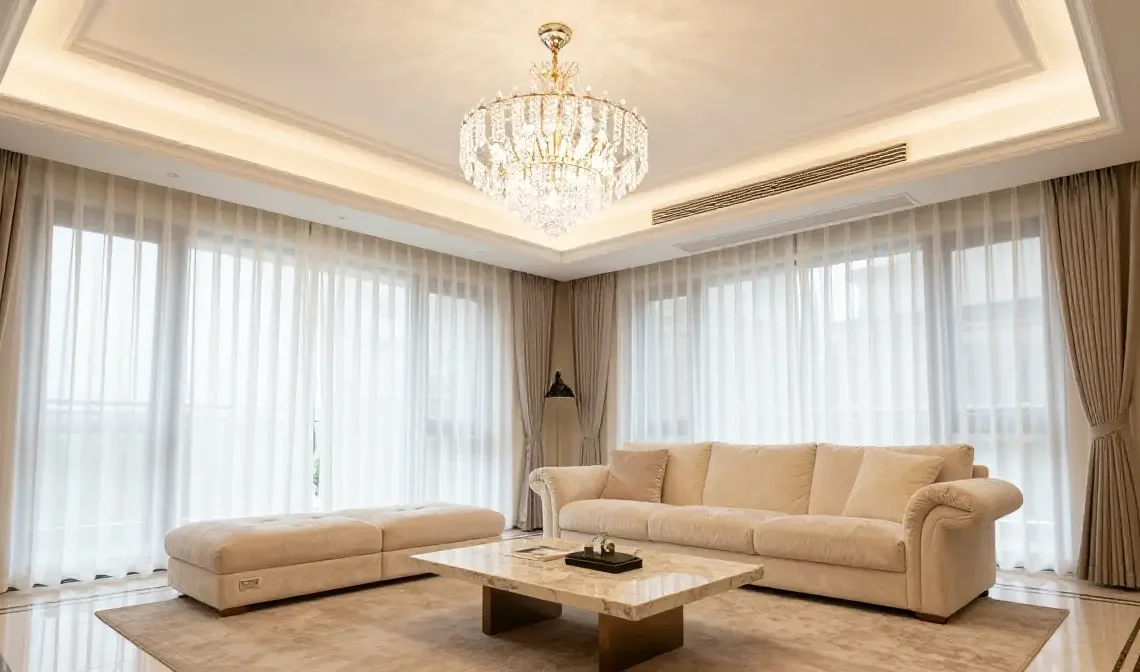
Walking into a living room that feels calm, expensive, and put together is one of those small joys that makes a house feel like home. You do not need an unlimited budget or a professional designer on speed dial to get there. What you need is a clear plan, a bit of patience, and an eye for the details that actually matter.
Luxury living room design is not about cramming a space with expensive things. It is about intention. Every color, fabric, and light source should work together instead of competing for attention. This guide walks through twenty two practical, doable ideas that will help you build a living room that looks polished, feels comfortable, and reflects your own taste rather than a showroom catalog.
Whether you are starting from scratch or refreshing a tired space, these luxury living room ideas are meant to be realistic. Some require a weekend project, others a slow collection of pieces over time. Either way, by the end you will have a clear sense of direction for your own elegant interior.
Start With a Neutral Color Palette
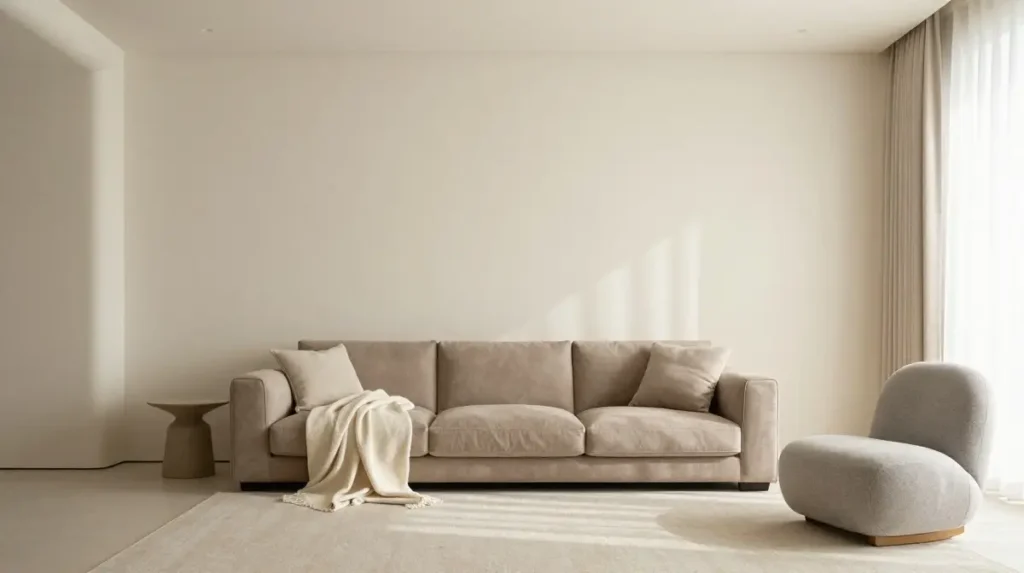
Most high end living room designs lean on a neutral base such as ivory, beige, taupe, warm white, or soft gray. These shades feel calm and let the furniture and textures take center stage instead of fighting with bold wall colors.
A simple trick is to use different shades of the same neutral tone across walls, upholstery, and rugs. This layering creates depth without adding visual noise. If the room ever feels flat, a single accent in a deeper tone, like charcoal or olive, can ground the space without overwhelming it.
Choose a Statement Chandelier
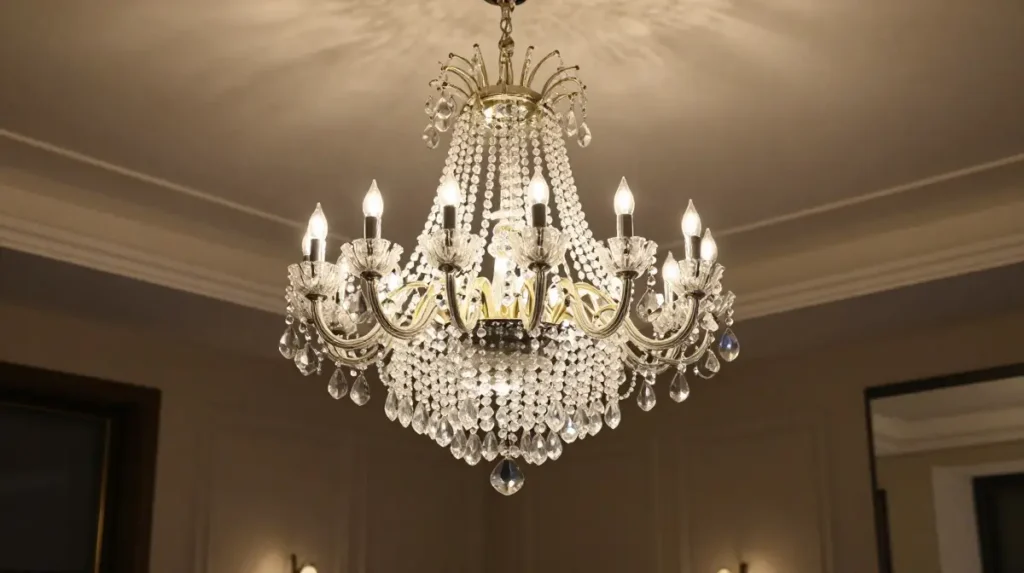
A chandelier is one of the fastest ways to make a living room feel grand. Crystal lighting fixtures bring a traditional, glamorous interior design feel, while a sculptural or geometric fixture suits a more contemporary luxury design.
Hang it above the main seating area so it draws the eye upward and anchors the room. Pair a bold fixture with simpler furniture so the chandelier remains the focal point rather than one of many competing elements.
Invest in a Plush Sofa as the Anchor Piece
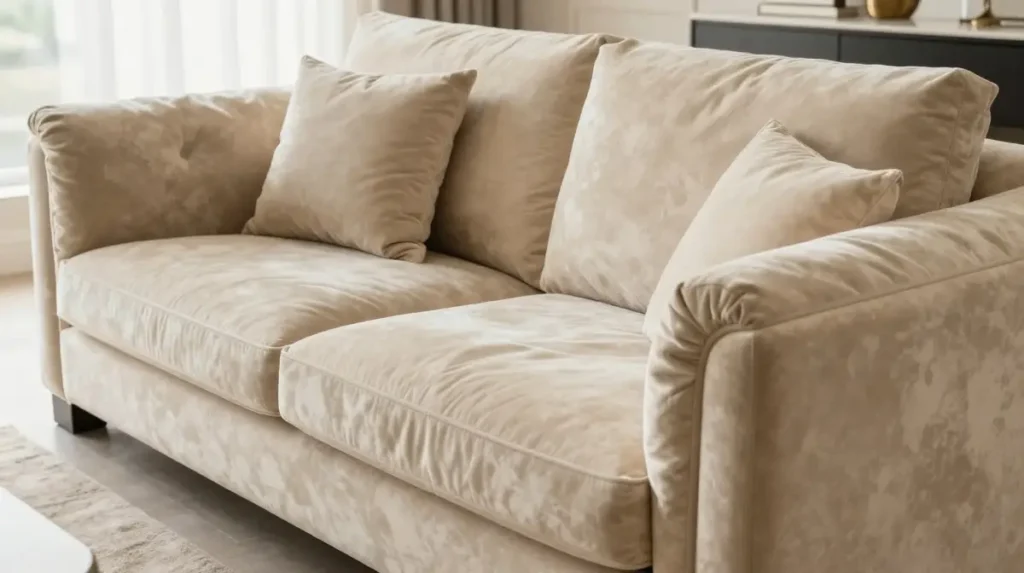
The sofa sets the tone for the entire room, so it deserves more attention than any other purchase. A plush sofa in a quality fabric, whether that is velvet upholstery or a soft boucle, instantly signals comfort and care.
Rather than buying several mid range pieces, many designers suggest choosing one hero piece and building everything else around it. A well proportioned, deep seated sofa will outlast trend driven furniture and remain the heart of the room for years.
Layer Different Lighting Sources
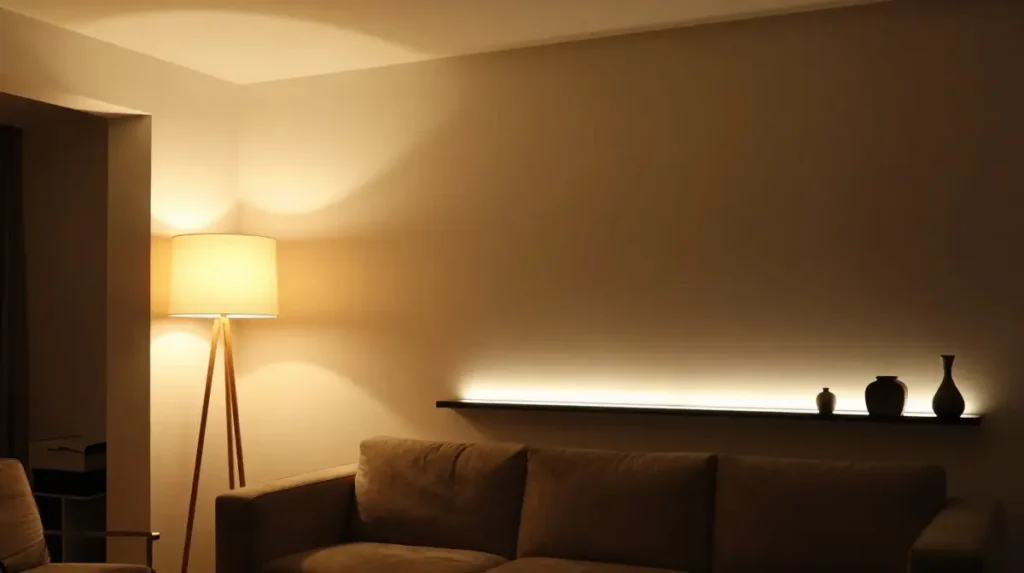
Relying on a single overhead light is one of the most common reasons a living room feels flat instead of refined. Layered lighting design combines ceiling fixtures, floor lamps, table lamps, and accent lighting to build depth and warmth.
This approach also lets you adjust the mood depending on the time of day. Soft lamp light in the evening feels intimate, while brighter accent lighting works well for daytime tasks like reading. Adding dimmer switches is a small upgrade that makes a noticeable difference.
Add Texture Through Mixed Materials
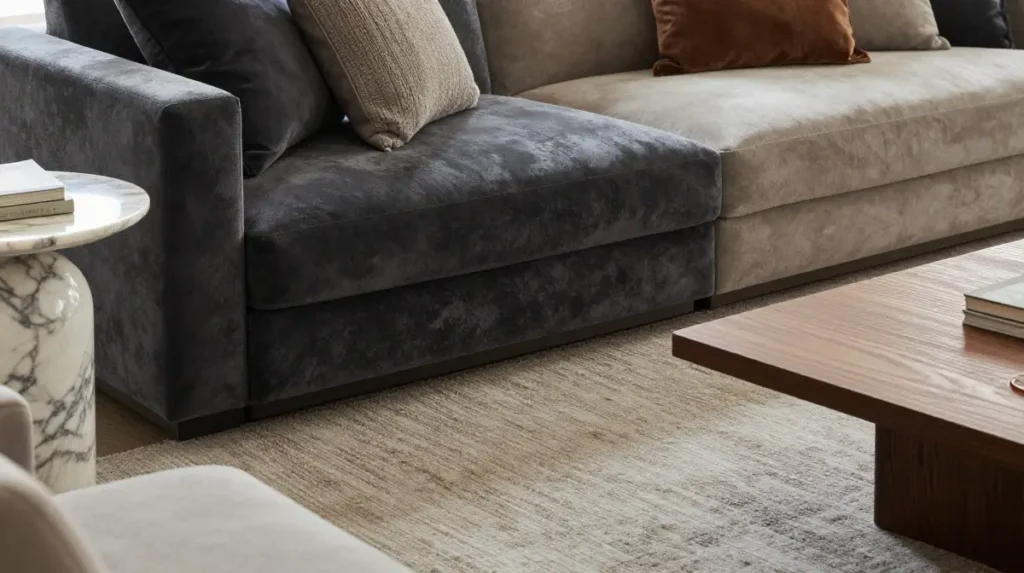
Texture is what separates a flat looking room from one that feels rich and dimensional. Combining a velvet sofa, a wool or silk rug, a marble side table, and a wood coffee table gives the eye plenty to explore without relying on bright colors.
A useful rule is to include at least three different textures in any seating area. Smooth, soft, and structured materials placed near each other create contrast that reads as intentional rather than random.
Use Marble Flooring or Accents
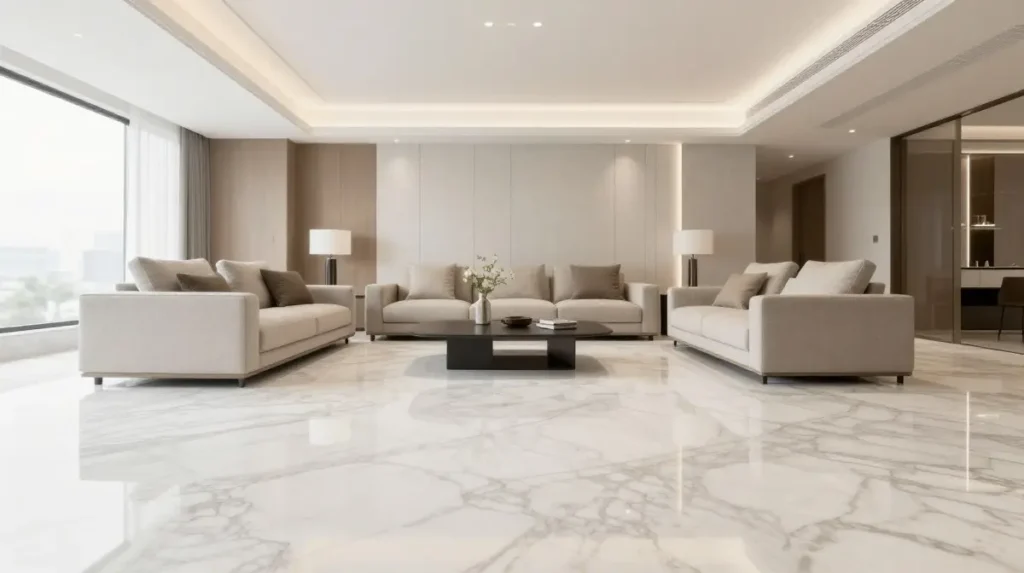
Marble flooring is a classic marker of luxury home interiors, but full marble floors are not realistic for every budget or every home. A marble coffee table, side table, or even a marble tray on a console can bring the same elegant feeling in a smaller, more affordable way.
If real marble is out of reach, marble look tile or laminate has improved significantly and can be a smart, budget-friendly alternative for an upscale living room look.
Install Floor to Ceiling Windows or Tall Drapery
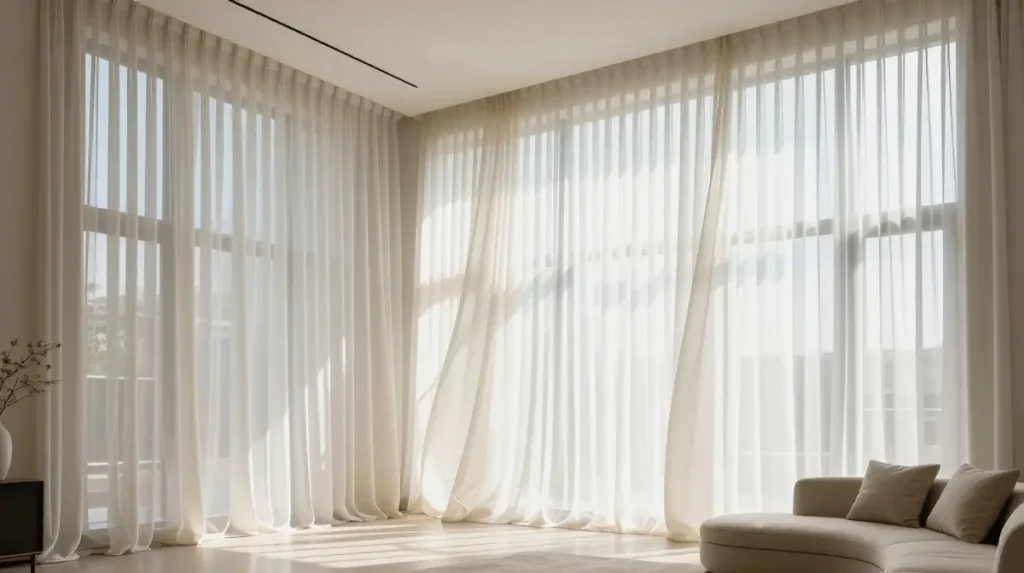
Natural light makes any room feel more expensive, and floor to ceiling windows are a favorite feature in modern luxury living room design. If a full window renovation is not possible, hanging curtains higher than the window frame creates a similar illusion of height.
Silk curtains or simple linen drapery in a floor length style add softness to the room while making ceilings appear taller than they actually are.
Choose a Designer Coffee Table as a Focal Point
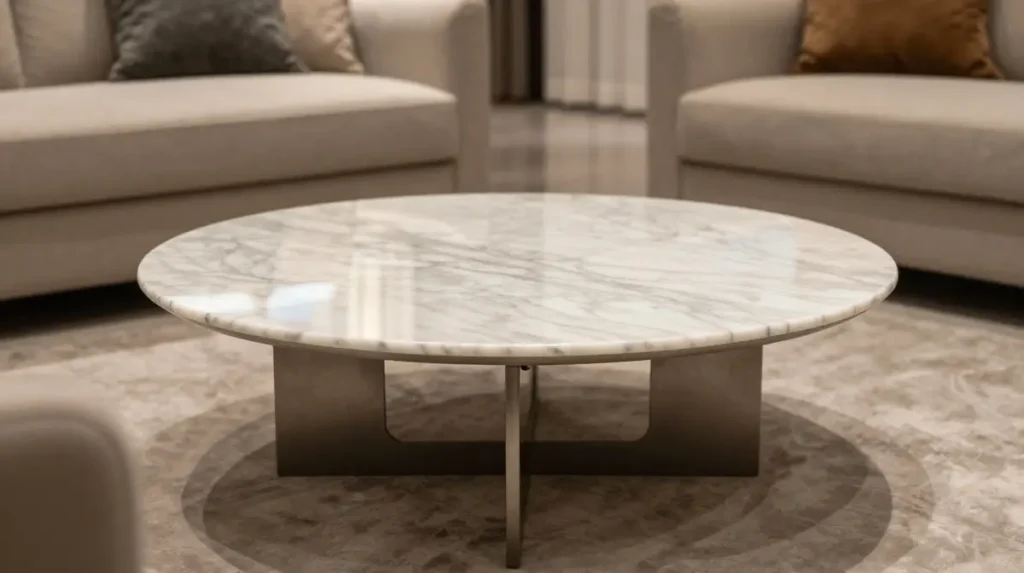
A statement coffee table does more work than people expect. Sculptural shapes, mixed metal legs, or a marble top can turn a functional piece into a conversation starter.
Keep the rest of the room slightly simpler if the coffee table is bold, so it has room to stand out rather than blending into a crowd of competing shapes.
Bring in Velvet and Silk Upholstery
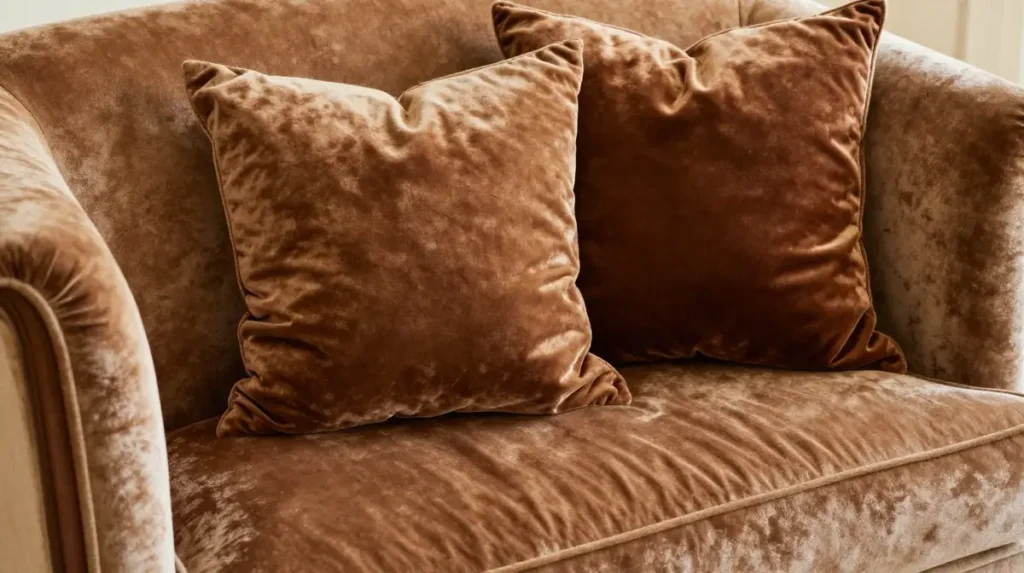
Premium upholstery fabric is one of the quickest ways to elevate seating without buying entirely new furniture. Reupholstering an existing chair in velvet or adding silk throw pillows can shift the entire feel of a room.
These fabrics catch light differently than cotton or polyester blends, which is part of why they read as more luxurious even in small amounts.
Add a Designer Rug to Anchor the Seating Area
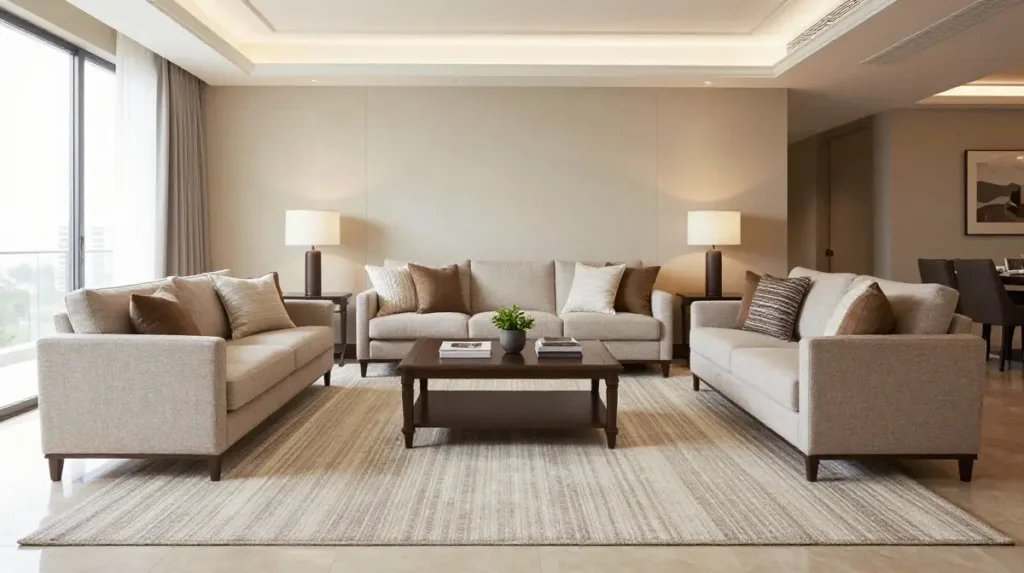
Designer rugs do more than protect flooring. A large, well chosen rug visually defines the seating area and ties the furniture together as one cohesive group instead of scattered pieces.
Choose a rug large enough that at least the front legs of every sofa and chair sit on top of it. A rug that is too small is one of the most common mistakes in otherwise well designed living rooms.
Use Gold or Mixed Metal Accents
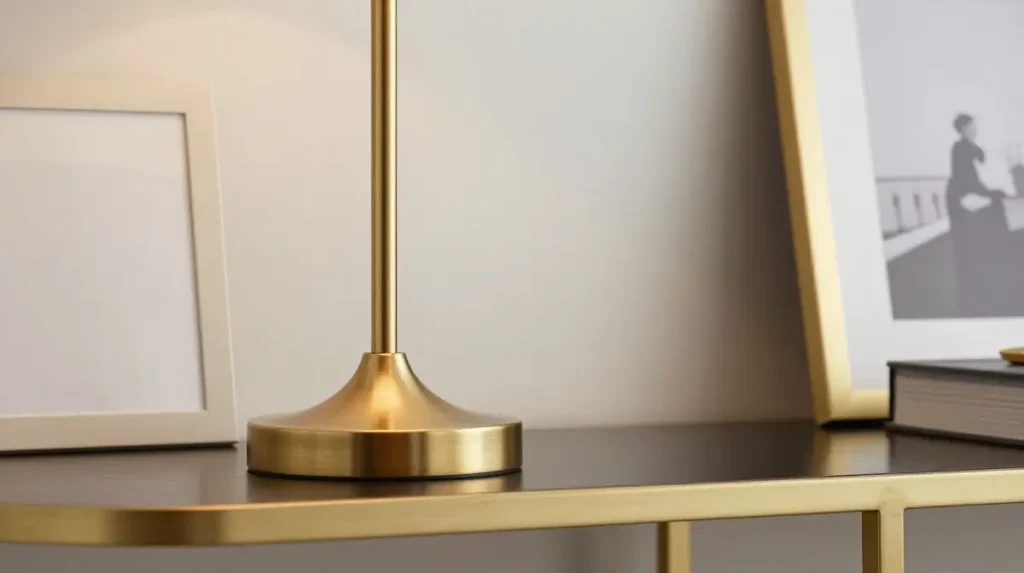
Gold accents decor and mixed metal finishes bring a subtle sheen that reads as expensive without shouting for attention. Lamp bases, picture frames, door handles, and table legs are easy places to introduce metal tones.
A helpful guideline is to mix two metal finishes at most, such as brass and brushed nickel, so the room feels curated rather than mismatched.
Display Statement Art Pieces
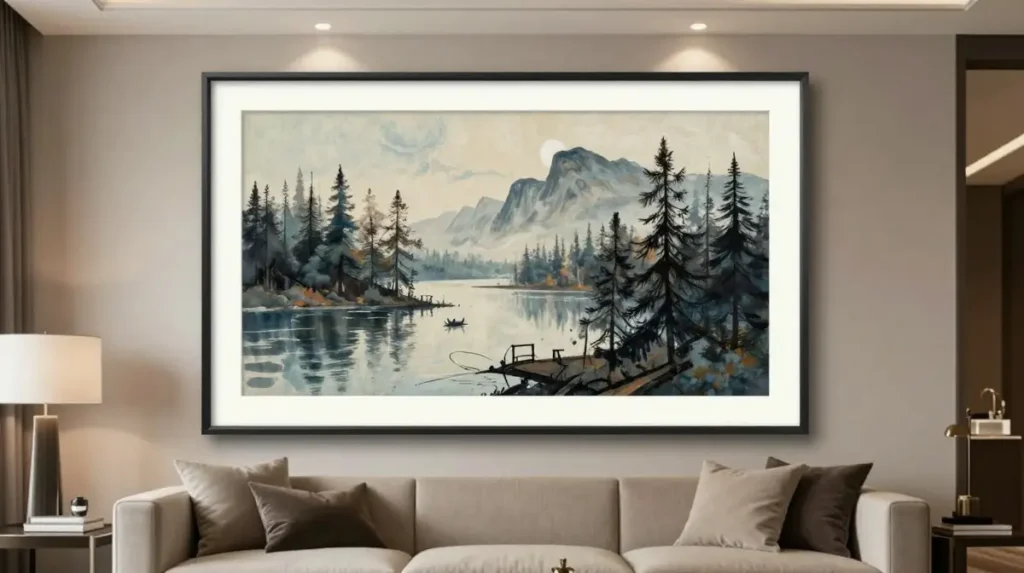
Empty walls make even a beautifully furnished room feel unfinished. Statement art pieces add color, personality, and a sense of identity that furniture alone cannot provide.
Oversized art tends to have more impact than several small pieces scattered around. A single large painting or print above the sofa, properly lit, often does more for the room than a gallery wall of smaller frames.
Try an Accent Wall
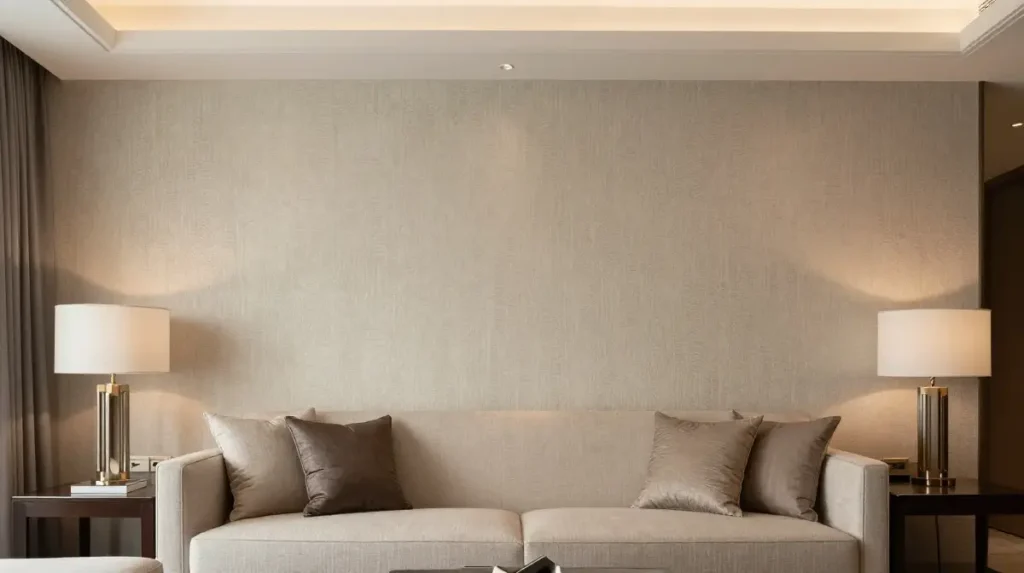
Accent wall ideas range from a bold paint color to textured wallpaper or wood paneling. A single feature wall behind the sofa or fireplace gives the room depth without overwhelming the entire space in color.
Textured wallpaper in a subtle pattern works particularly well in classic living room design, while a deep paint color suits more contemporary luxury design.
Build Custom Built Ins Around the Fireplace
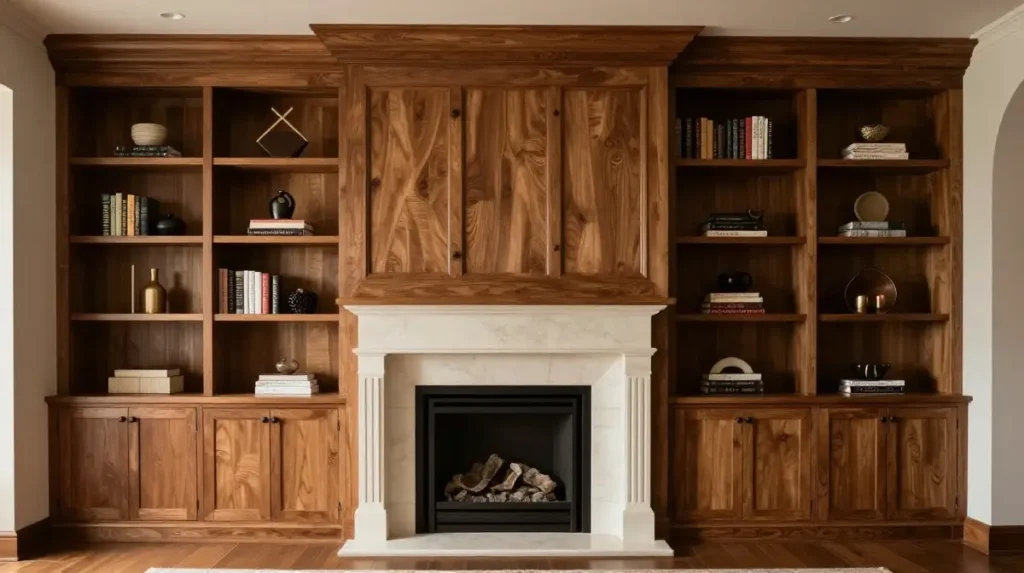
Custom built ins around a fireplace or media area add a tailored, architectural feel that off the shelf furniture cannot replicate. They also provide practical storage, which keeps the room looking tidy and curated.
If a full carpentry project is not in the budget, even simple floating shelves styled with books and a few decorative objects can mimic the look on a smaller scale.
Pay Attention to the Fireplace Mantel Design
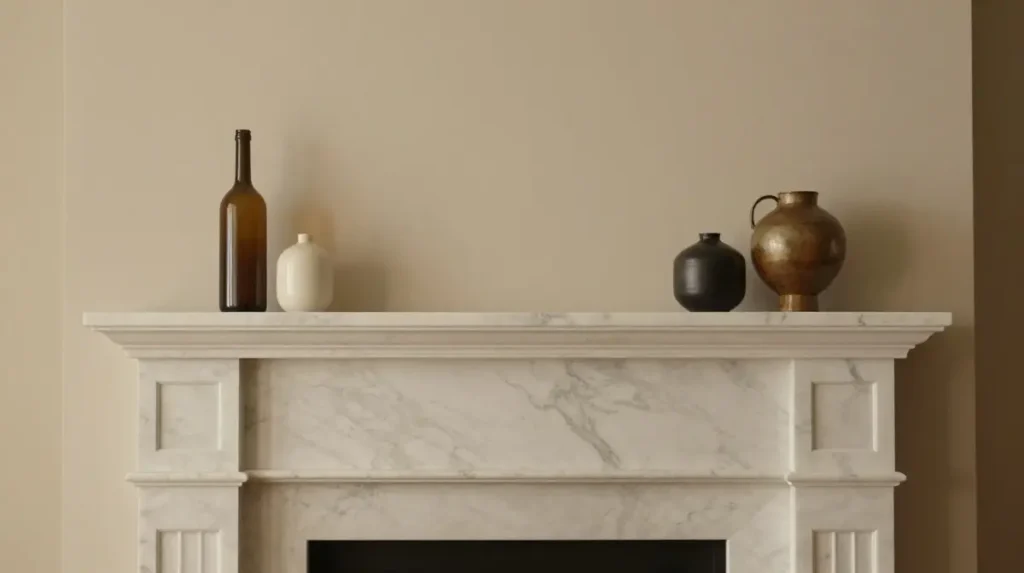
The fireplace is often the natural focal point of a living room, so the mantel deserves thoughtful styling. A mix of height, texture, and a few curated objects, rather than a cluttered row of frames, keeps the mantel looking refined.
Marble or natural stone surrounds add to the sense of permanence and quality that luxury living rooms tend to share.
Choose Sculptural Furniture Pieces
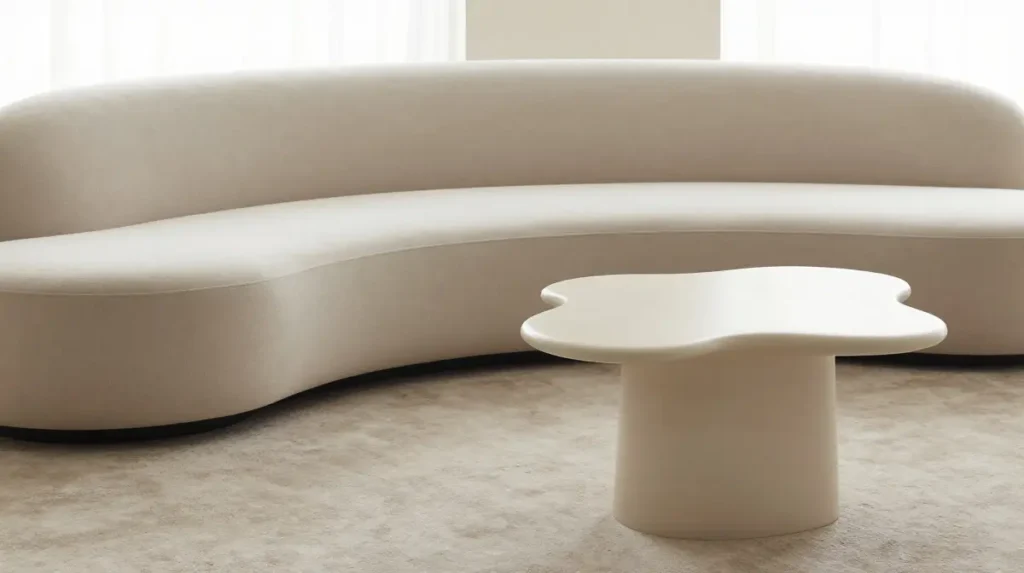
Sculptural furniture pieces, whether a curved sofa, an organic shaped side table, or an unusual armchair, introduce movement into a room full of straight lines. Curves soften a space and often feel more inviting than rigid, boxy furniture.
This idea works particularly well in open concept living rooms, where softer shapes help define separate zones without needing walls.
Add High Gloss or Reflective Finishes
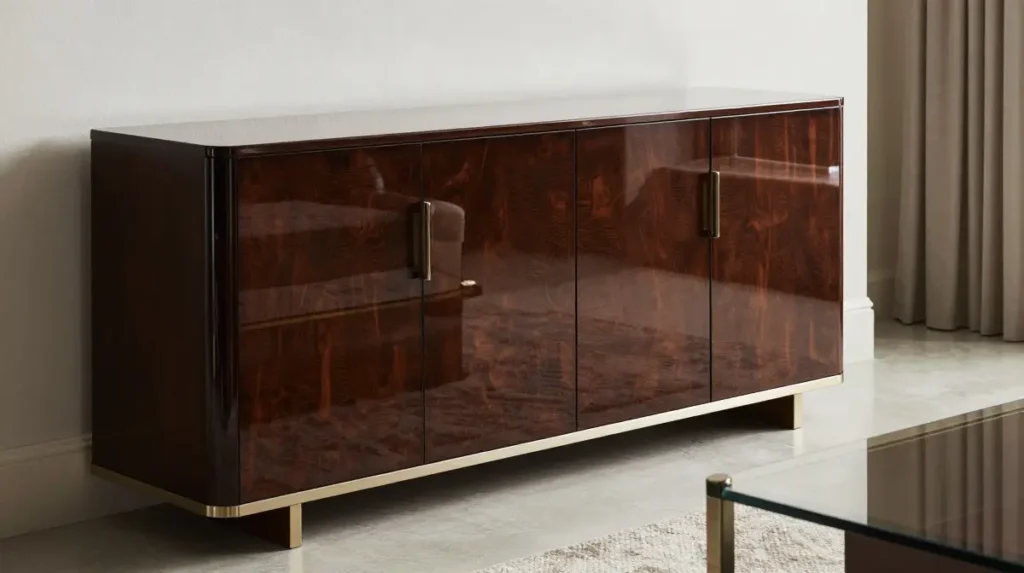
High gloss finishes on cabinetry, side tables, or trim catch and bounce light around the room, which makes spaces feel brighter and larger. Used sparingly, alongside matte textures like wool or linen, these finishes add a layer of polish without feeling cold.
Balance is key here. A room with too many shiny surfaces can feel sterile, so pair gloss with at least one or two soft, matte textures nearby.
Curate Rather Than Decorate
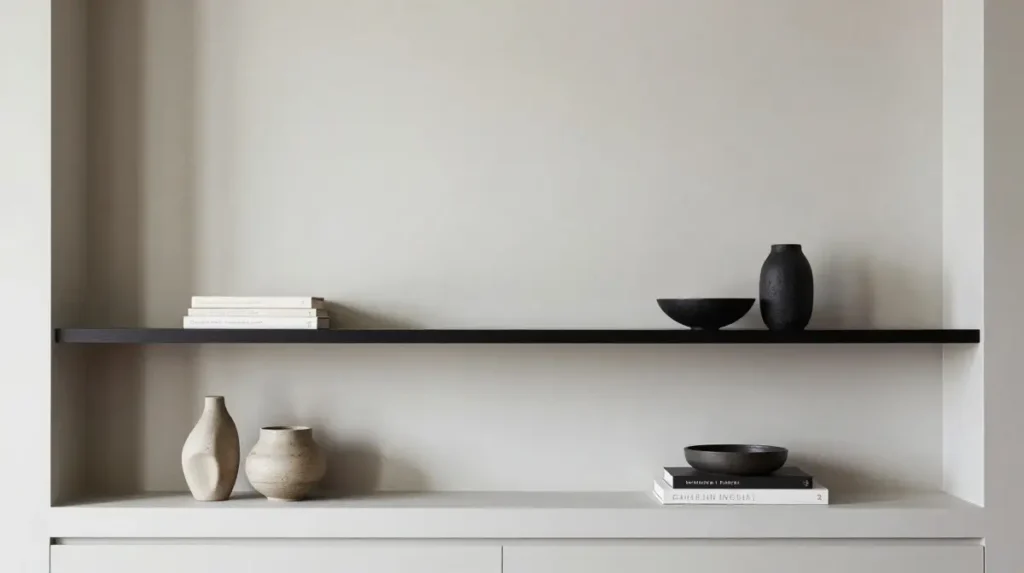
One of the biggest differences between a cluttered room and a luxury one is restraint. Curated home decor means choosing fewer, better pieces instead of filling every surface with objects.
Before adding a new item to a shelf or table, ask whether it adds meaning or simply fills space. Luxury interiors tend to have breathing room around each object.
Use Natural Stone Accents
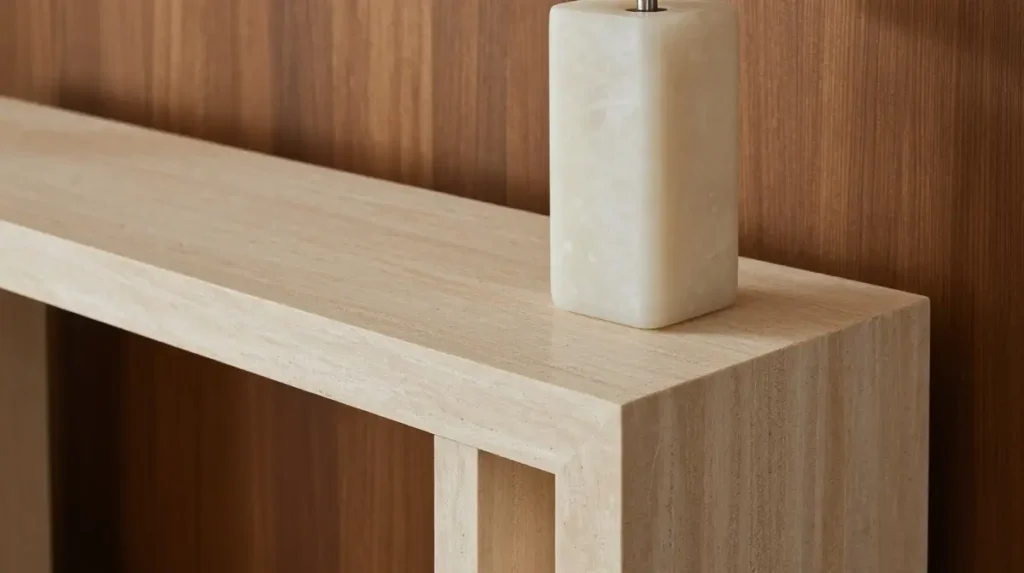
Natural stone accents, such as a stone topped console or a travertine lamp base, bring an organic, grounded feeling into the room. Stone pairs particularly well with warm wood tones and soft textiles, balancing hard and soft elements.
These pieces also tend to age well, since natural stone does not go out of style the way trend driven decor sometimes does.
Keep Furniture Arrangement Open and Conversational
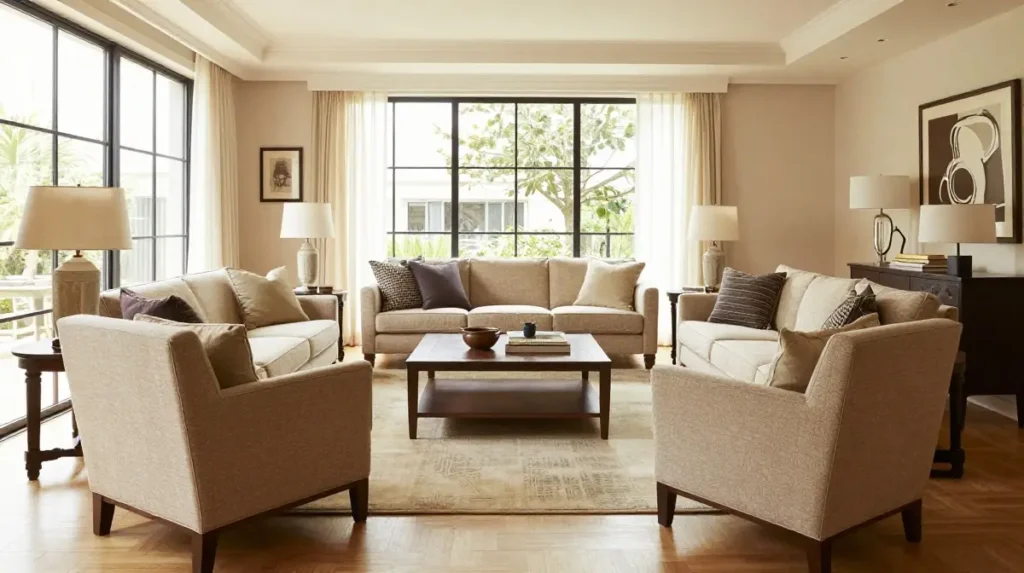
Luxury seating arrangements are usually designed around conversation rather than simply facing a television. Placing seating in a loose circle or facing pairs encourages people to actually use the room together.
In open concept living rooms, floating furniture away from the walls, rather than pushing everything to the perimeter, often creates a more sophisticated and intentional layout.
Choose a Monochrome or Tonal Color Scheme
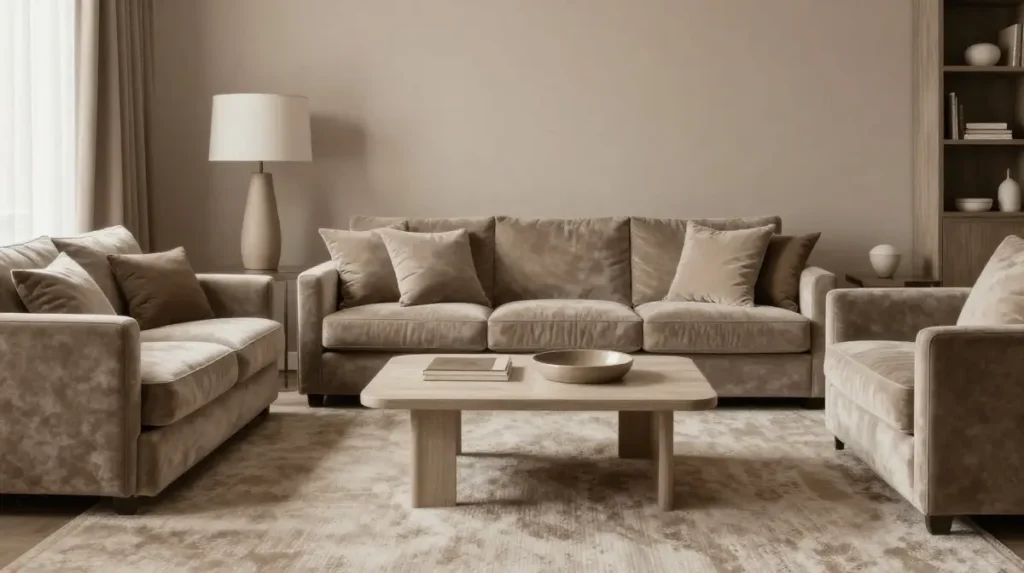
A monochrome interior design approach, using different shades and textures of a single color family, creates a sense of calm and cohesion. This works particularly well in smaller living rooms, where too many competing colors can make the space feel busy.
Adding texture within a tonal scheme, such as a bouclé chair against a velvet sofa in a similar shade, keeps the look from feeling flat.
Avoid Common Luxury Design Mistakes
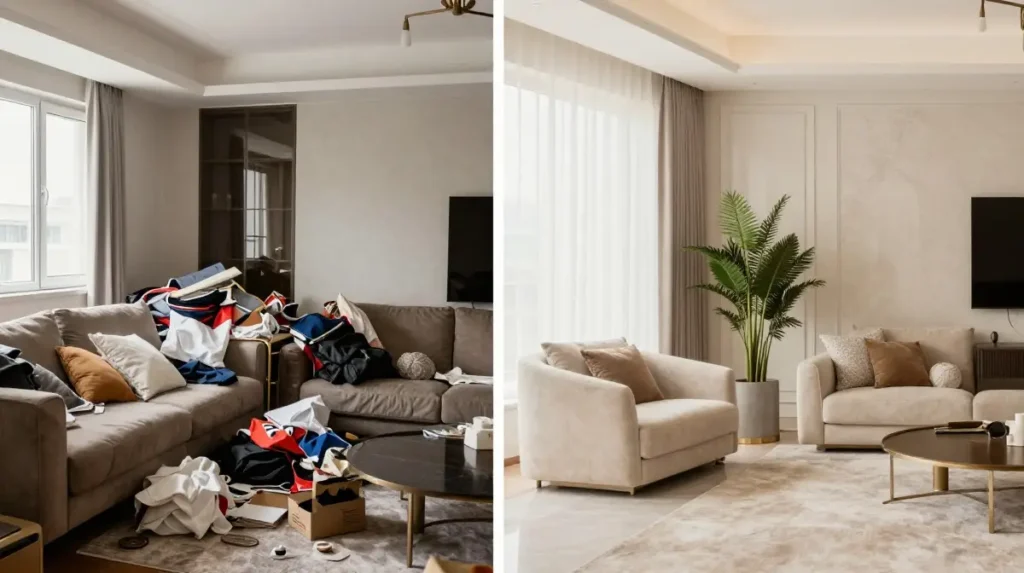
A few habits quietly undercut an otherwise well planned room. Overcrowding furniture, mixing too many bold patterns, choosing a rug that is too small, or relying on a single overhead light are frequent culprits.
Another common mistake is chasing trends instead of timeless interior design choices. Trendy colors and shapes can date a room quickly, while classic shapes in quality materials tend to age gracefully.
Quick Reference Table: Luxury Living Room Elements at a Glance
| Design Element | Budget-Friendly Option | Premium Option | Best For | Maintenance Tip |
|---|---|---|---|---|
| Lighting | Floor lamp plus table lamp | Crystal chandelier | Any room size | Dust fixtures monthly |
| Flooring | Marble look tile | Natural marble | Open concept spaces | Reseal stone yearly |
| Seating Fabric | Cotton velvet blend | Genuine silk or velvet | Formal living rooms | Spot clean, avoid direct sun |
| Coffee Table | Wood with metal legs | Marble top sculptural table | Conversational layouts | Use coasters, wipe with soft cloth |
| Wall Treatment | Single accent paint color | Textured wallpaper or paneling | Behind sofa or fireplace | Avoid abrasive cleaners |
| Rug | Synthetic blend rug | Hand-knotted wool or silk rug | Anchoring seating areas | Rotate every six months |
This table is meant as a quick starting point. Mixing budget-friendly and premium choices within the same room is completely normal and often looks more interesting than going all in on one price level.
Final Thought
A genuinely elegant living room does not come from one expensive purchase. It comes from the way color, texture, lighting, and furniture work together as a whole. Starting with a calm neutral palette, layering in lighting, choosing one or two statement pieces, and resisting the urge to overfill the space will take you further than any single splurge item.
Luxury living room design, at its core, rewards patience. Build the room in stages, choose quality where it matters most, and let the space reflect how you actually want to live in it. The result will feel less like a showroom and more like a home that happens to look beautiful too.
You may also like this: 22 Hobby Room Ideas for a Creative and Cozy Space
Frequently Asked Questions
What makes a living room look luxurious without a big budget? Focus on texture, lighting, and a cohesive color palette rather than expensive items. A neutral base, layered lighting, and one or two statement pieces like a rug or art print can transform a room for relatively little cost.
Do I need a chandelier for a luxury living room? No, a chandelier helps but is not required. A well-chosen floor lamp, table lamp, and accent lighting combined can achieve a similarly warm, layered effect.
What colors work best for a high end living room? Neutral tones such as beige, taupe, ivory, and soft gray are the most common choice because they feel calm and let furniture and texture stand out. Deeper accent colors like charcoal or olive can be added in small amounts for contrast.
How do I avoid making a luxury living room feel cluttered? Choose fewer, better quality pieces instead of filling every surface. Leave breathing room around furniture and decor, and avoid mixing too many bold patterns in one space.
Is marble flooring necessary for a luxury look? Not at all. Marble look tile or a few marble accents, such as a side table or coffee table, can bring the same elegant feeling at a fraction of the cost of full marble flooring.