
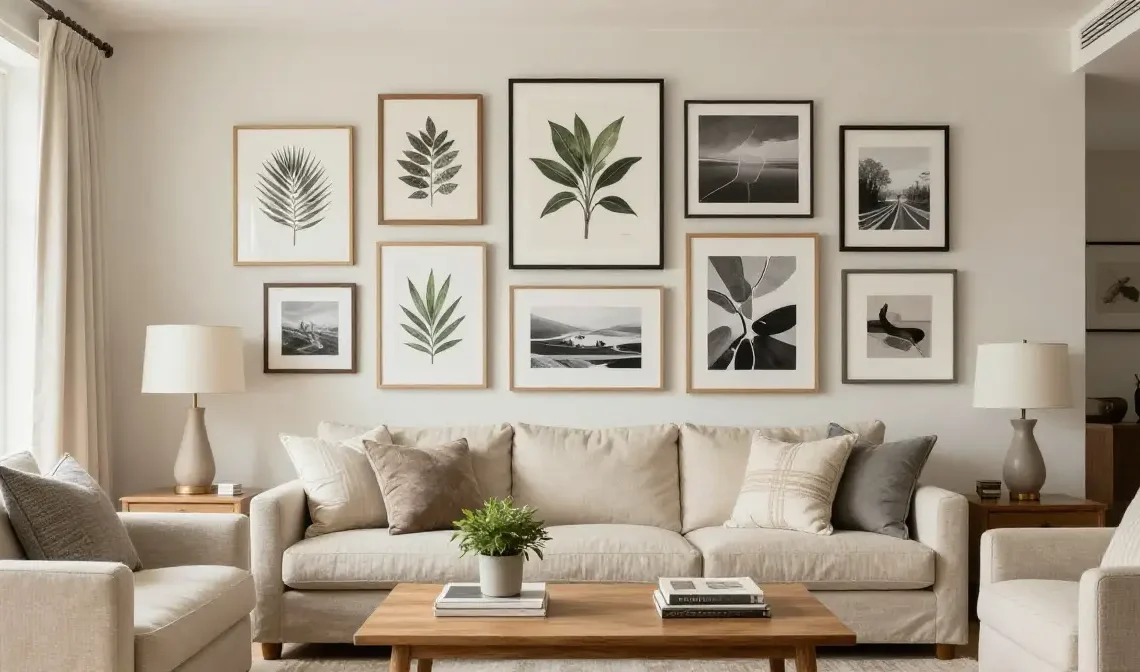
Introduction
There is something quietly frustrating about a blank wall. You know it needs something, but you are not sure what to put there, how big it should be, or where exactly it should hang. You buy a piece you love, hold it up against the wall, and then just stand there guessing.
Wall art placement layout is one of those things that looks simple but actually has a lot of thought behind it. The right arrangement can make a room feel pulled together, cozy, and full of personality. The wrong one can make even expensive art look out of place.
This guide covers 22 practical and inspiring wall art arrangement ideas that work for real homes, real budgets, and real people who just want their walls to look good.
Start With the Eye-Level Rule Before Anything Else
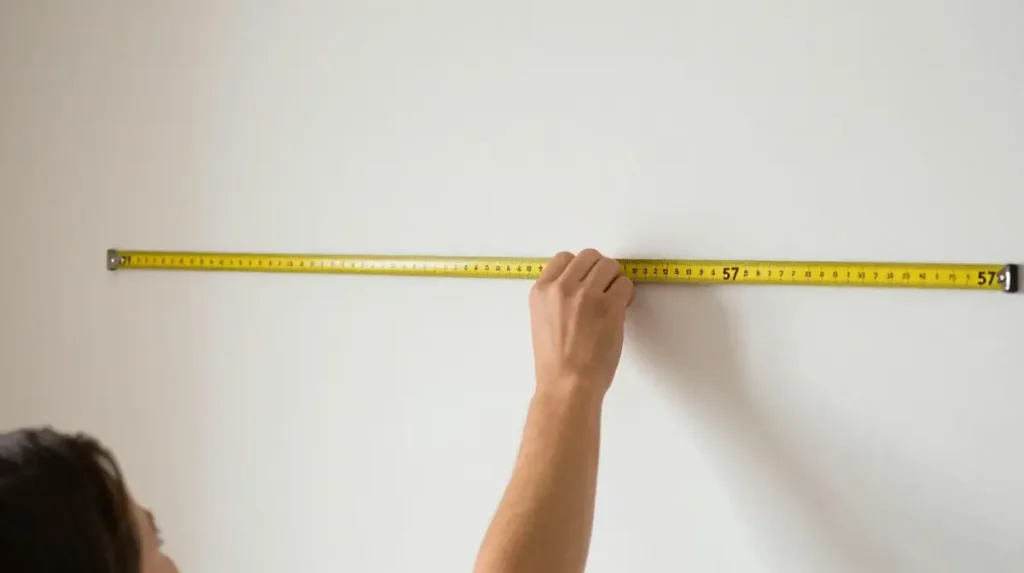
The most important wall art placement rule is hanging art at eye level. The center of any piece or arrangement should sit around 57 to 60 inches from the floor. This is the standard used in most galleries and it works just as well in homes.
Many people hang art too high. When that happens, the piece feels disconnected from the furniture and the rest of the room. If you are ever unsure, always go lower rather than higher.
Use a Sofa as Your Anchor Point for Living Room Art
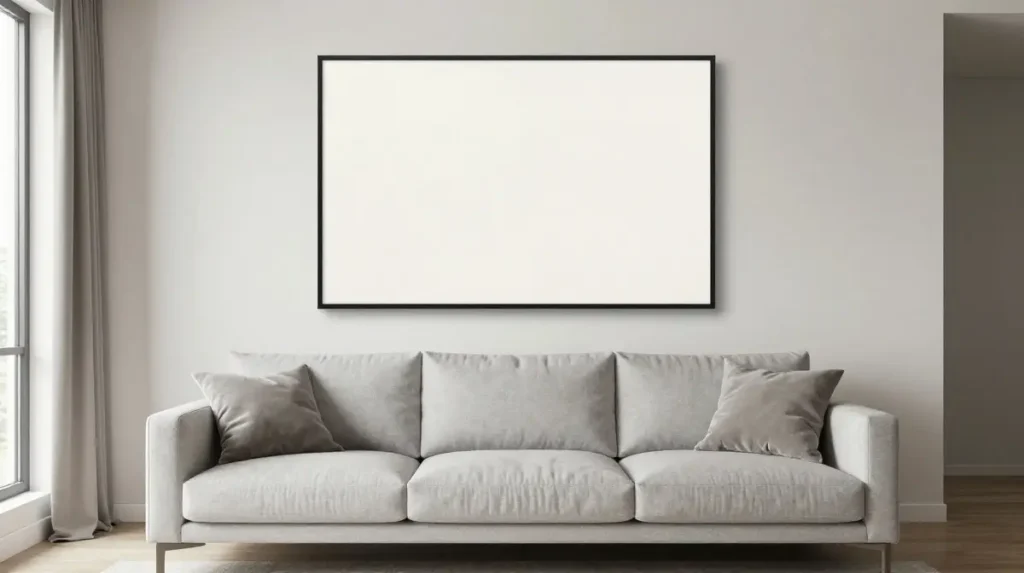
Wall art above sofa ideas are some of the most searched topics in home decor for a reason. The sofa is usually the largest piece of furniture in a living room, and the wall behind it is prime decorating space.
A single large canvas or a grouped arrangement works well here. The art should be roughly two thirds the width of the sofa. Leave about 6 to 10 inches of space between the top of the sofa and the bottom of the frame so it feels connected without being cramped.
Try a Classic Symmetrical Gallery Wall for a Clean Look
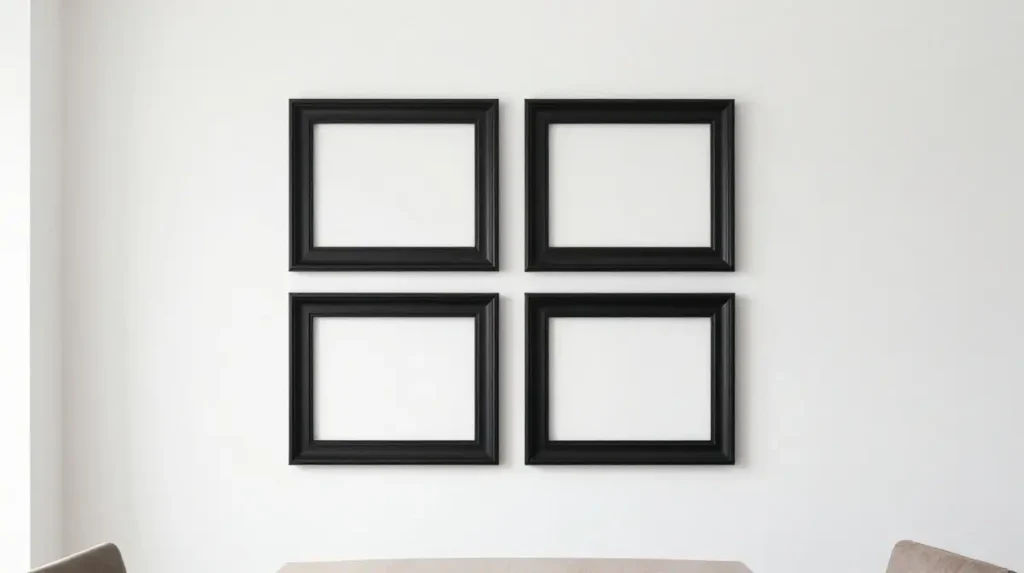
Hanging pictures symmetrically gives a room a formal, organized feel. This works especially well in dining rooms, entryways, and bedrooms where you want a polished look.
Choose matching frames in the same size and color. Arrange them in a grid pattern with equal spacing between each piece. About 2 to 3 inches between frames keeps things tight and intentional without looking cluttered.
Go Asymmetrical for a More Relaxed and Personal Feel
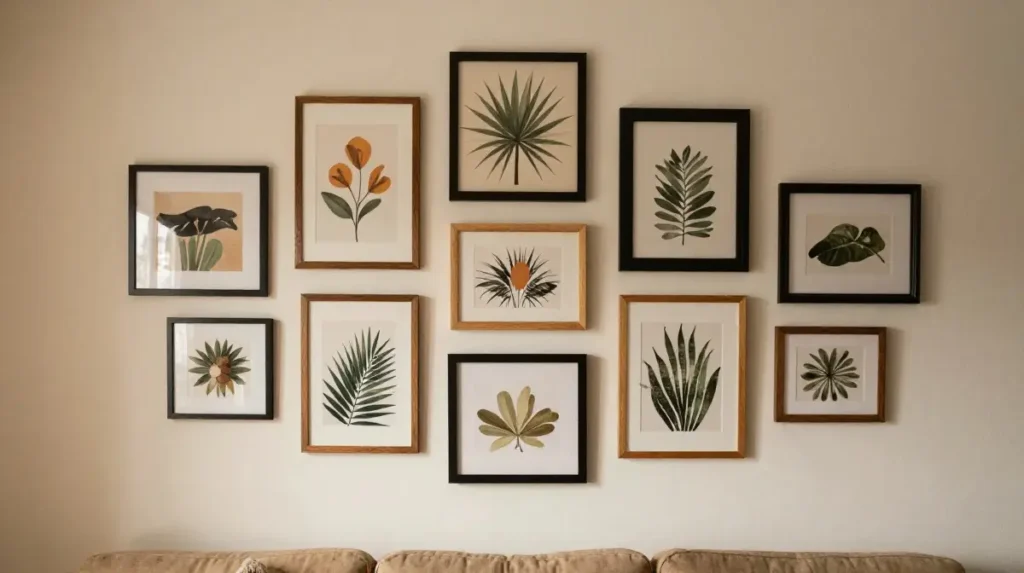
An asymmetrical wall art display has a lot more energy and personality. Instead of matching frames and equal spacing, you mix sizes, orientations, and even types of art.
This style suits living rooms, creative home offices, and boho or eclectic spaces. The trick is to find a visual balance even when things are not perfectly even. Start with your largest piece slightly off-center and build around it.
Create a Statement Wall With One Large Piece
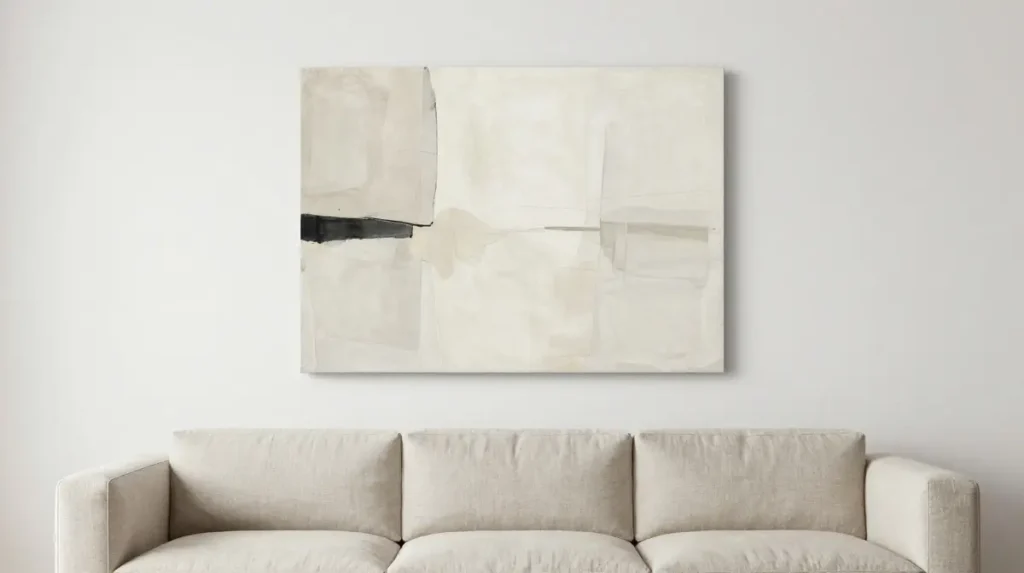
Sometimes less is more. A single large wall art placement on an otherwise bare wall creates a strong focal point without any complexity.
Abstract art, botanical prints, and oversized canvas paintings all work beautifully as solo statement pieces. The art needs to be large enough to hold its own. In most living rooms, that means at least 24 by 36 inches or bigger.
Plan Your Gallery Wall on Paper Before Touching the Walls
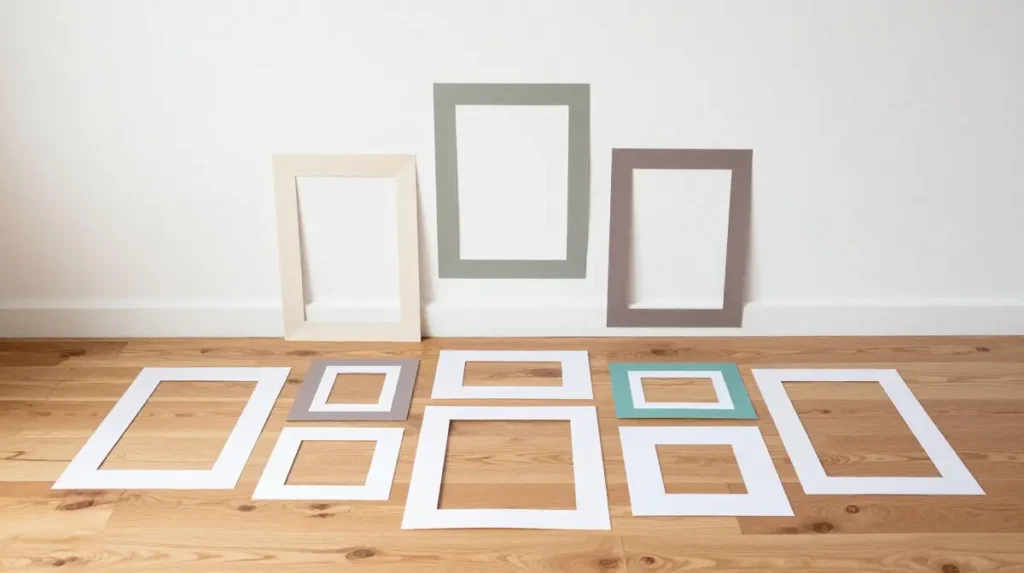
One of the best DIY gallery wall ideas is to sketch your layout before you hammer a single nail. Trace each frame on paper, cut out the shapes, and tape them to the wall with painter’s tape.
This lets you try different wall art arrangement ideas without any commitment. Move things around until the spacing and balance feel right. It saves holes in the wall and a lot of frustration.
Use Odd Numbers for a More Natural Grouping
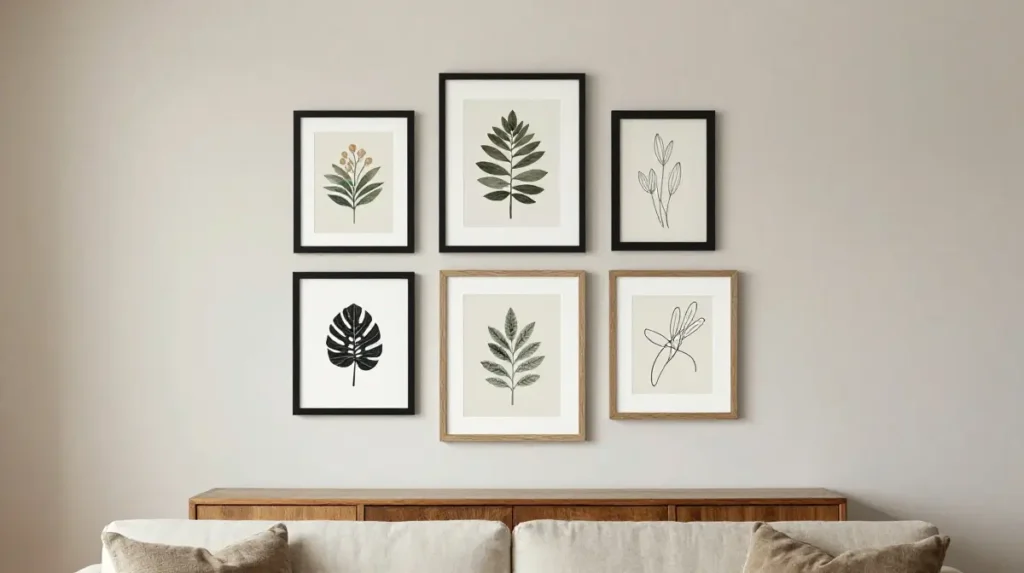
Art grouping on walls looks most natural when you use odd numbers. A set of three canvas pieces, five small prints, or seven frames in a cluster all have a pleasing rhythm that even numbers tend to miss.
This is one of those wall art placement rules every homeowner should know. It applies whether you are working with matching frames or a mismatched frames gallery wall.
Decorate Your Staircase Wall With a Flowing Arrangement
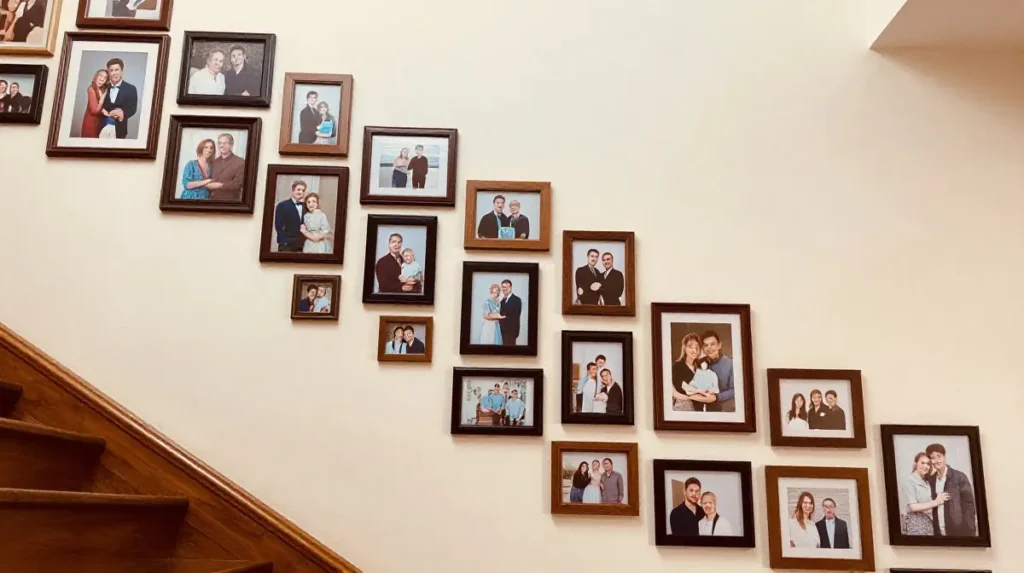
Staircase wall art layout follows the angle of the stairs. As the arrangement goes up the wall, the frames should rise at a steady diagonal to follow the line of the steps.
Keep consistent spacing between frames. A mix of family photos, prints, and small mirrors works well here. The staircase wall is one of the most underused spaces in a home and one of the most visually rewarding when done well.
Hang Art Above the Bed to Frame the Sleeping Area
Bedroom wall art placement above the headboard works best when the art is centered and proportional. One wide piece or a triptych arrangement both work well.
Leave 8 to 10 inches between the top of the headboard and the bottom of the frame. Art that hangs too high above a bed looks floating and disconnected. Too low, and it feels like it could fall.
Layer Floating Shelves With Art for a Flexible Display
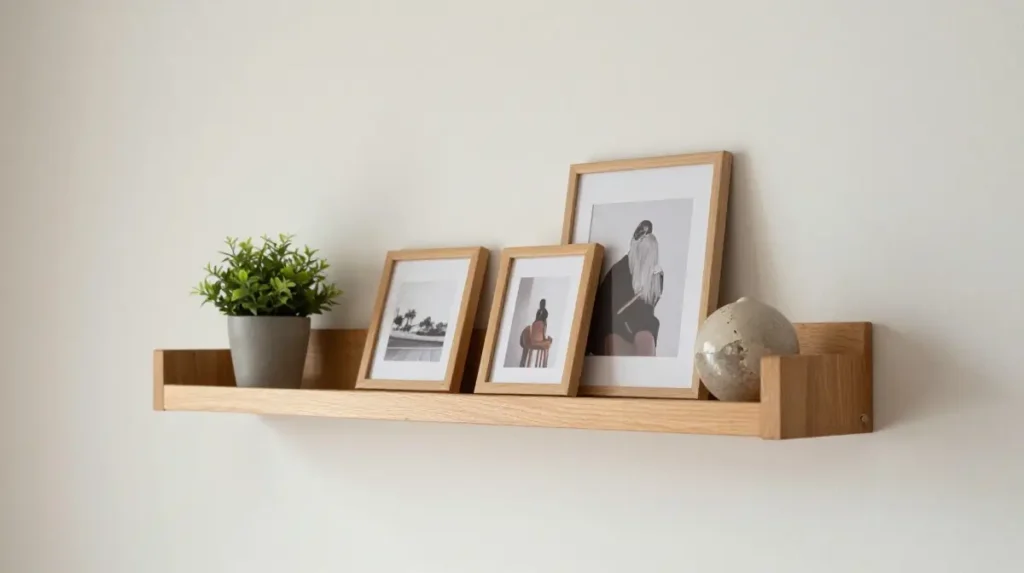
Floating shelves with art give you a layout you can change whenever you want. Lean small prints against the wall on the shelf, mix in small plants, books, or decorative objects, and rotate pieces whenever you feel like a change.
This is one of the most practical wall art ideas for renters or anyone who does not want to commit to nail holes.
Use a Single Horizontal Piece to Widen a Narrow Wall
In a hallway or narrow room, a wide horizontal canvas art arrangement makes the wall feel broader. It draws the eye sideways, which creates a sense of more space.
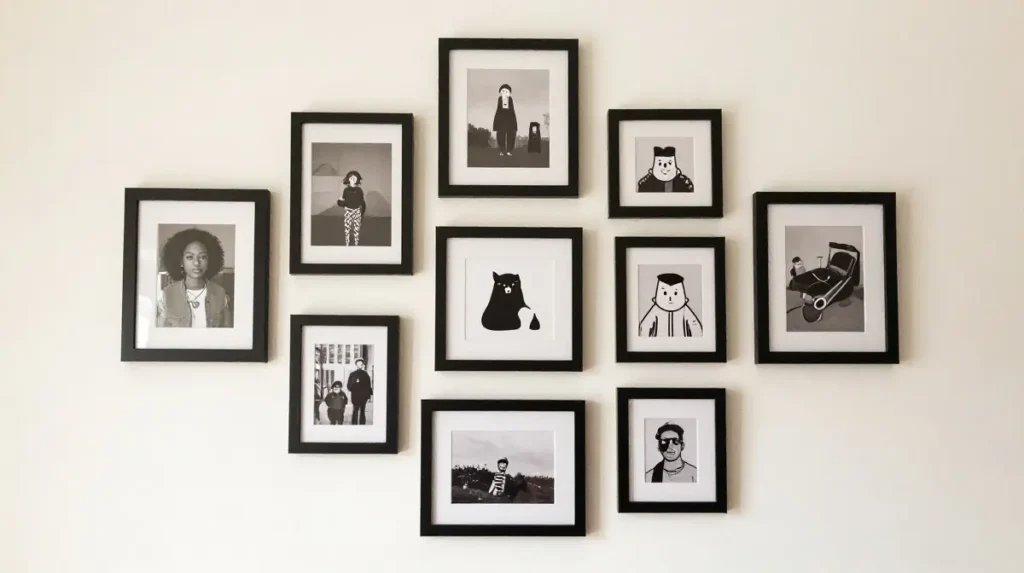
This is one of the simplest ways to use wall art size and orientation to change how a room feels. A black and white photo wall with a long panoramic print works particularly well in modern and minimalist spaces.
Group Small Pieces Into a Tight Cluster for Big Impact
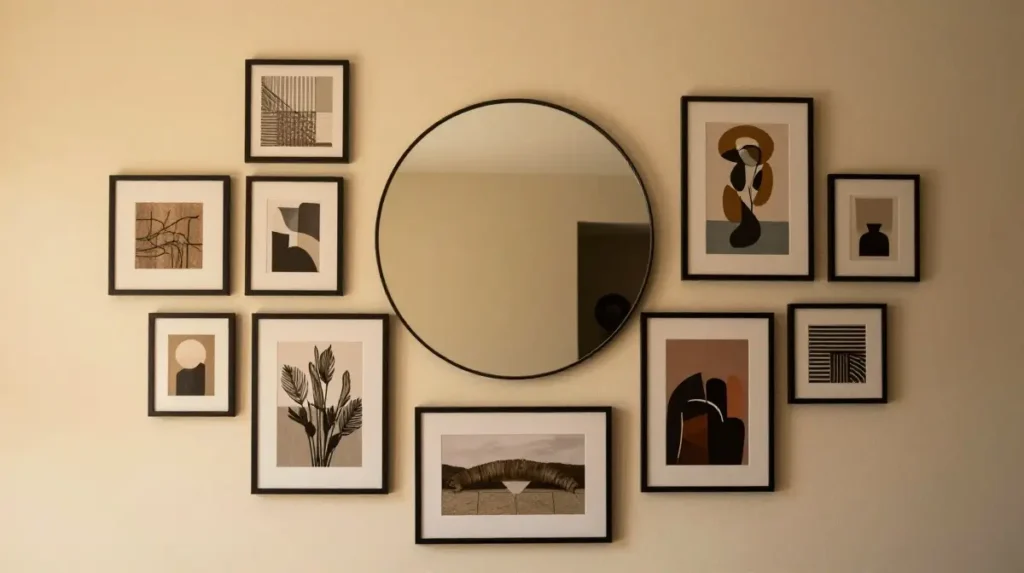
Small wall art grouping can have just as much presence as one large piece when arranged thoughtfully. Gather five to nine small frames and hang them close together, almost touching, so they read as a single unit from across the room.
This is a great wall art display idea on a budget because small prints are far more affordable than large statement pieces.
Add a Mirror to Break Up an All-Art Wall
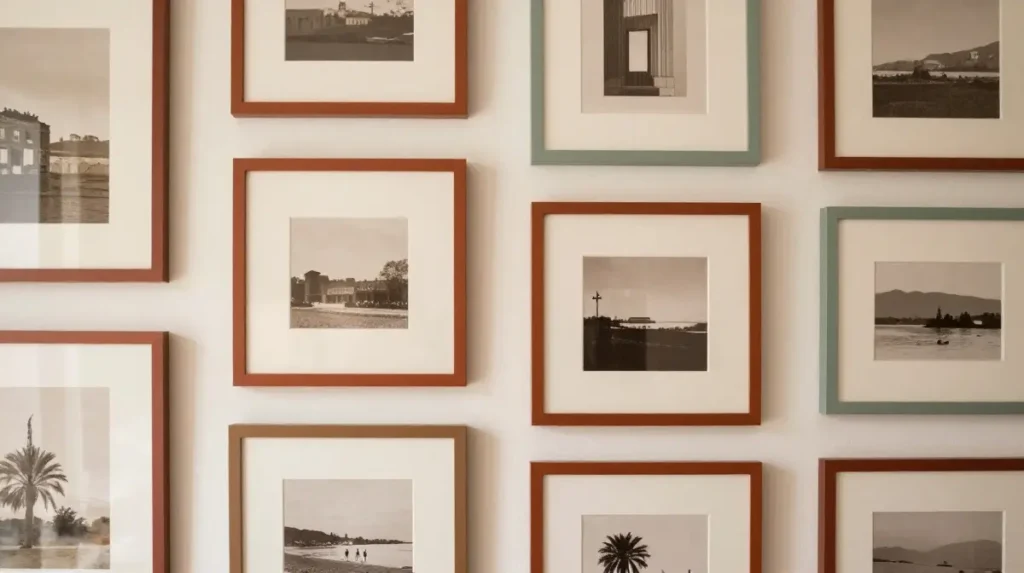
Mixing a mirror into your wall art arrangement adds light, depth, and variety. A round mirror among rectangular frames adds contrast and keeps things from looking too flat.
Mirrors also make small rooms feel larger, which is one reason this trick is so popular in entryway wall decor ideas and small bedroom layouts.
Use Color Coordination to Tie Mixed Frames Together
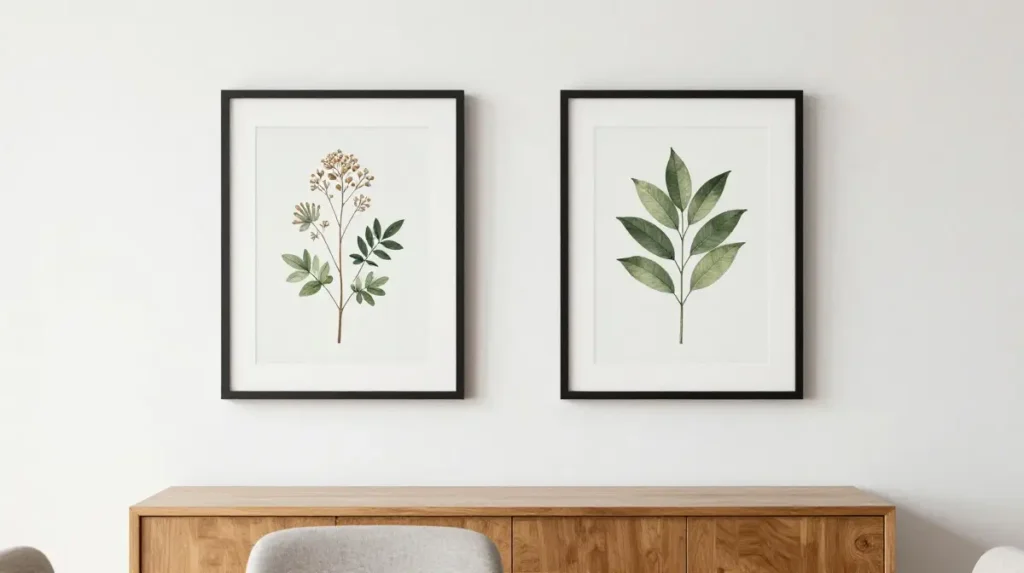
Wall art color coordination is what makes a mismatched gallery wall look intentional rather than chaotic. Pick two or three colors that appear across all the pieces, whether in the artwork itself or the mat and frame colors.
Even if the frames are different shapes and sizes, shared color pulls everything together visually.
Decorate the Dining Room Wall With a Simple Two-Piece Arrangement
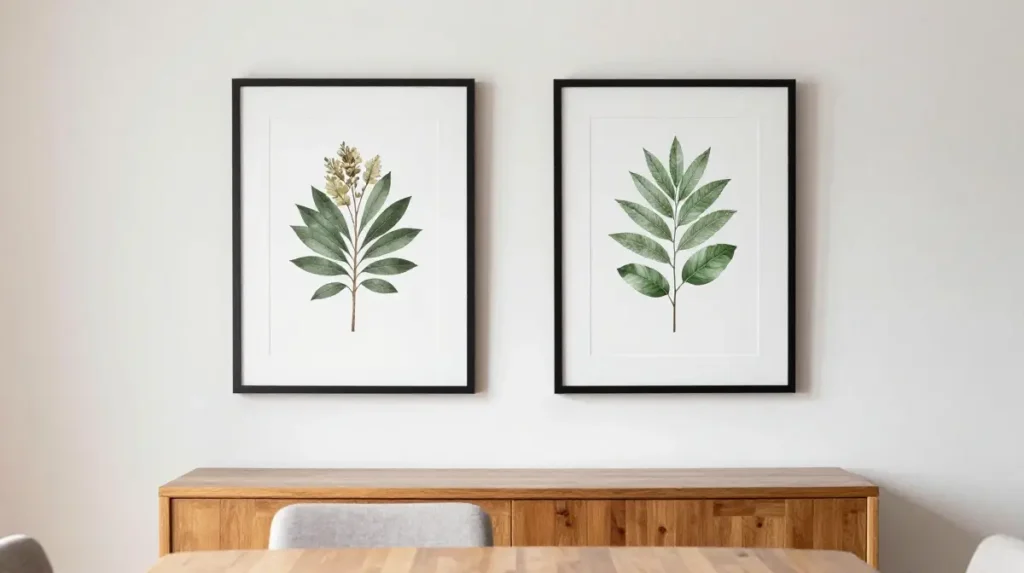
Dining room art arrangement tends to work best when it is calm and balanced. Two pieces of equal size hung side by side at eye level feel elegant without competing with the activity of the room.
Choose art with warm tones or botanical subjects to complement the natural social energy of a dining space.
Hang Art in the Entryway to Set the Tone Immediately
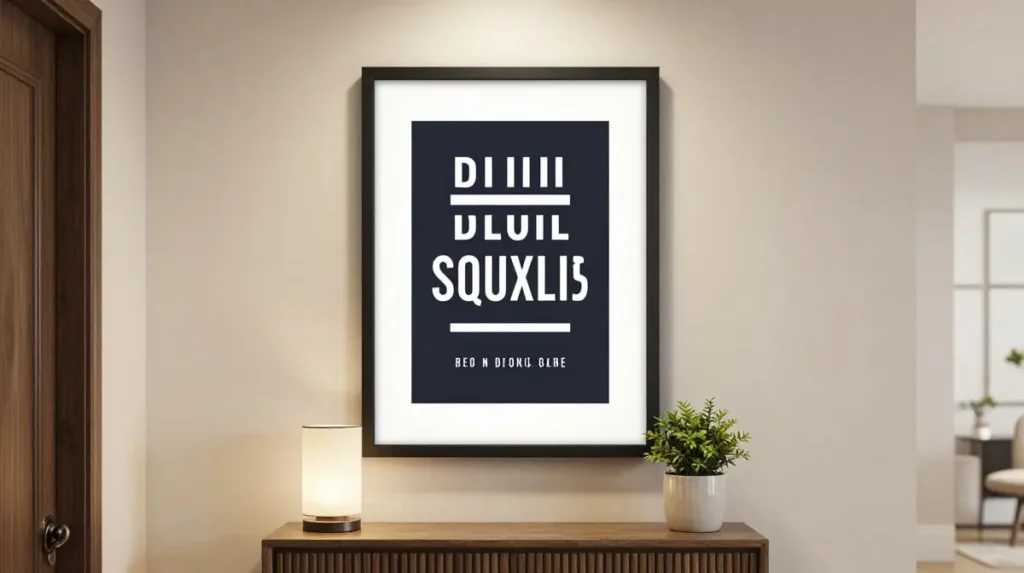
The entryway is the first thing people see when they walk into your home. Entryway wall decor ideas should feel welcoming, personal, and a little bit bold.
A single statement piece, a small gallery cluster, or even a simple framed quote all work well depending on the size of the space. Keep it at eye level and uncluttered so the entrance feels open.
Decorate a Home Office Wall With Purposeful Inspiration
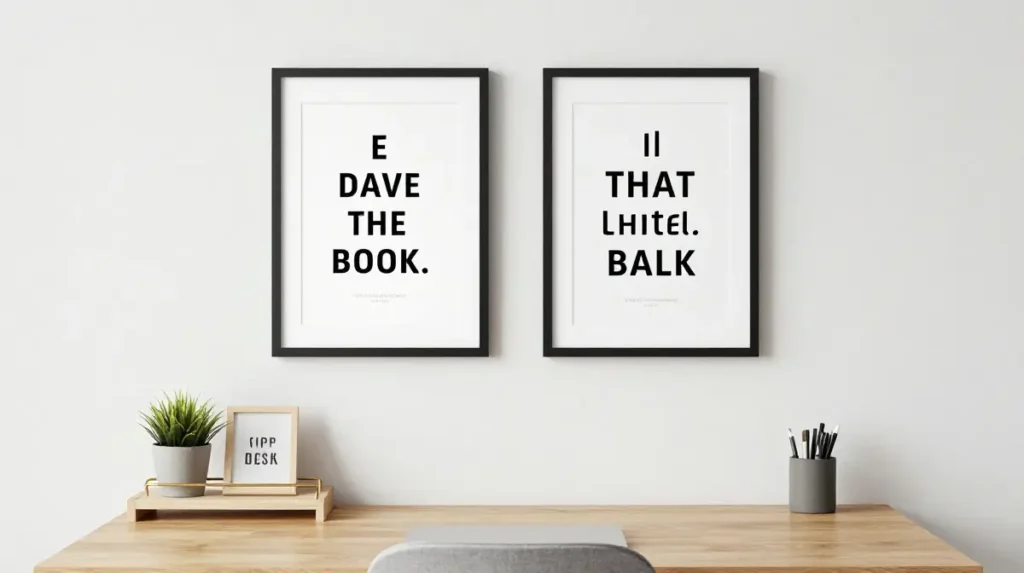
Home office wall decoration should balance inspiration with focus. Too many pieces create visual noise that makes it harder to concentrate. Too few leave the space feeling cold.
One or two framed prints above your desk, a small floating shelf with a plant and a leaning print, or a single motivational piece at eye level are all clean, effective choices.
Apply the Rule of Thirds to Large Walls
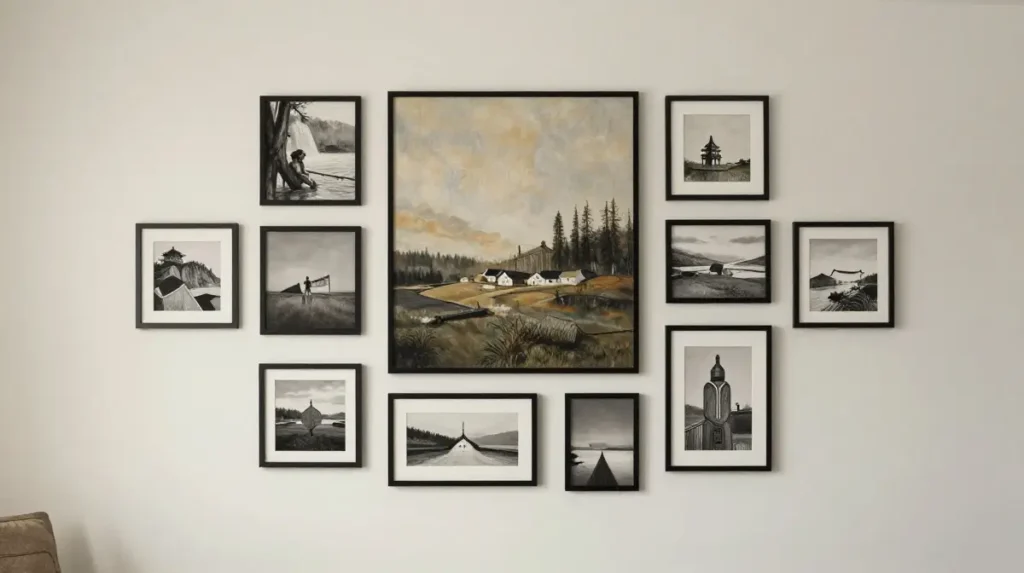
How to decorate a large empty wall is one of the most common decorating challenges. The rule of thirds helps. Mentally divide the wall into a grid of nine equal sections and place your main art or arrangement where the grid lines intersect.
This naturally creates a balanced, visually interesting layout without requiring everything to be centered.
Use Vertical Art to Make Low Ceilings Feel Taller
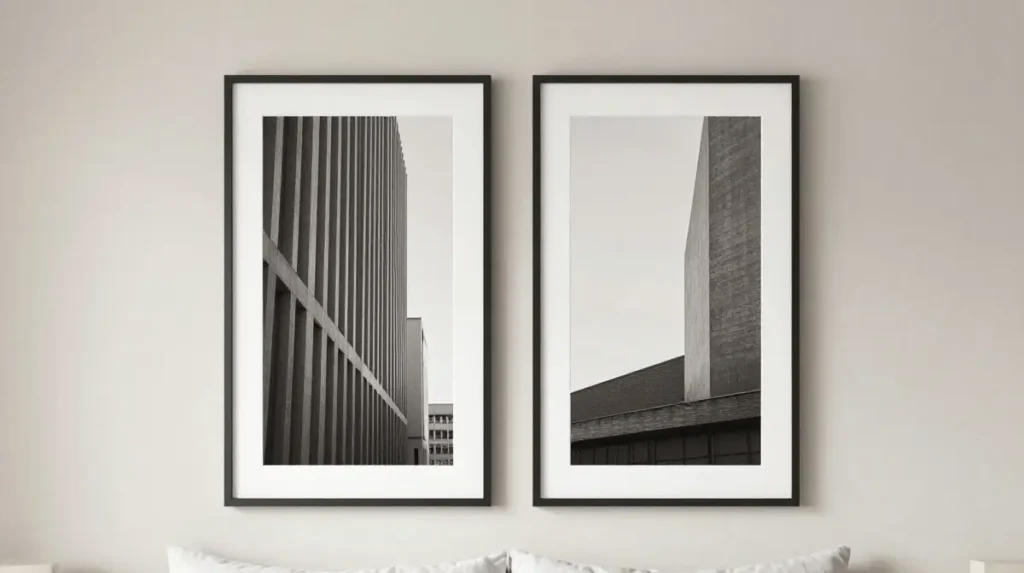
Vertical canvas art or tall framed prints draw the eye upward, making ceilings feel higher than they are. This works especially well in bedrooms and living rooms where you want to maximize the sense of height.
Pair two tall narrow pieces side by side for a modern, architectural feel that adds structure to the room.
Hang Kitchen Wall Art at Practical Heights Near Functional Areas
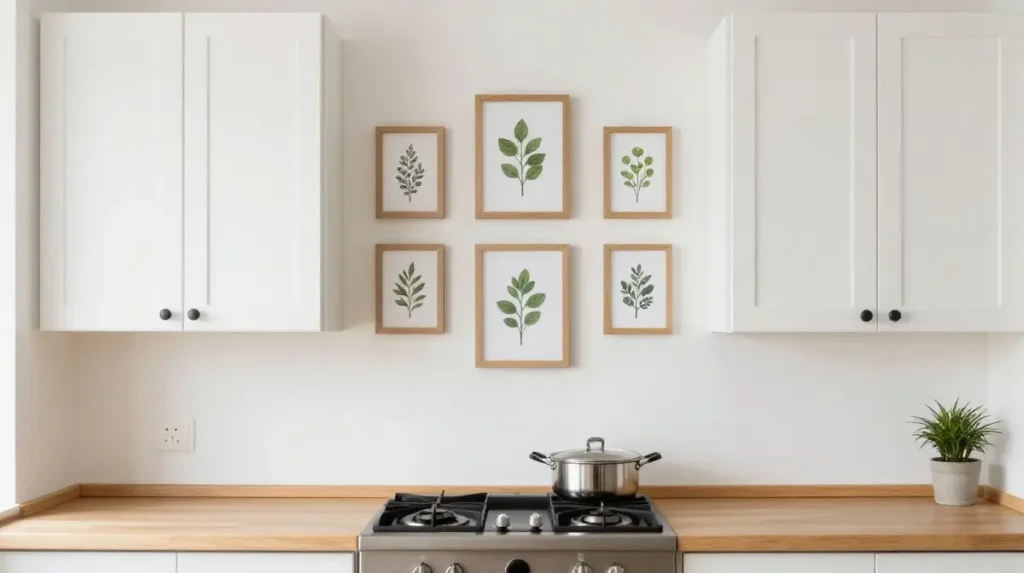
Kitchen wall decor placement requires a bit more thought because of cabinets, shelving, and appliances. Look for blank wall space between upper cabinets or beside the refrigerator.
Small framed herb illustrations, food-themed prints, or simple typographic art all suit the kitchen well. Keep art away from heat and moisture sources to protect the frames and paper over time.
Use a Template Kit or Hanging Strip System for Renter-Friendly Layouts
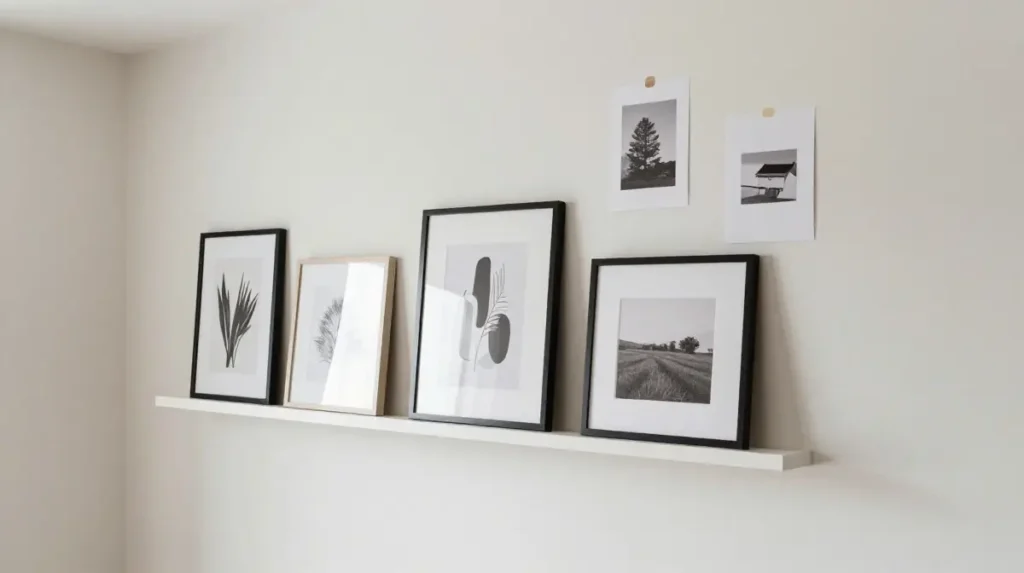
Wall art arrangement ideas without nails are more popular than ever. Adhesive hanging strips, tension rods with clips, and leaning frames against a shelf or mantel all work without damaging walls.
These methods are especially useful in rental apartments where you need to keep walls in original condition. They also make it easy to update your layout whenever you feel like a refresh.
Mix Textures and Mediums to Add Depth to Your Wall Display
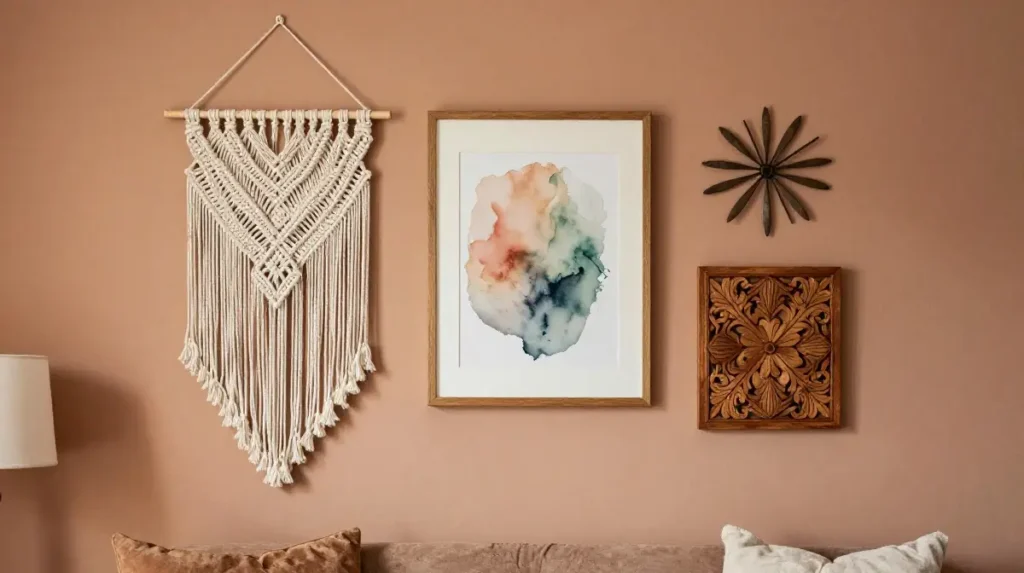
A blank wall does not have to be filled with just framed prints. One of the most creative and personal wall art placement layout ideas is mixing different textures and mediums together on the same wall. When done thoughtfully, this approach adds visual depth, warmth, and a handcrafted quality that flat prints alone cannot achieve.
Think beyond the frame. A woven macrame piece beside a watercolor print, a small wooden carved panel next to a metal wall sculpture, or a ceramic wall hanging grouped with a linen-framed botanical illustration all create a layered look that feels collected over time rather than purchased in a single trip to a store.
Conclusion
Wall art placement layout is less about following rigid rules and more about understanding a few core principles and applying them with confidence. When you know how high to hang a piece, how to group art by scale and color, and how to plan a layout before committing to it, the process becomes much less stressful and a lot more enjoyable.
Start with one wall, one idea, and a little bit of patience. The right arrangement will make your home feel more like you.
You may also like this:22 Luxury Living Room Color Palette Ideas for Elegant Spaces
FAQs
1. How high should wall art be hung?
The center of the piece should sit around 57 to 60 inches from the floor. This is considered eye level in most spaces and works in almost every room.
2. How do I arrange multiple pieces of wall art?
Start with your largest piece and build outward. Use odd numbers, keep spacing consistent, and plan the layout on paper before hanging anything.
3. What size wall art works best above a sofa?
The art should be roughly two thirds the width of the sofa. For a standard 84-inch sofa, look for art that is around 54 to 60 inches wide, either as one piece or a grouped arrangement.
4. Can I hang wall art without nails?
Yes. Adhesive hanging strips, leaning frames on shelves, and tension rod systems all work well, especially in rental spaces where wall damage is a concern.
5. How do I make a small wall art grouping look intentional?
Use a consistent color palette across frames, keep spacing tight and even, and choose a unifying element like matching mat colors or a shared art style to tie the group together.

1 Comment