
Introduction
A dining room says more about a home than most people realize. It is where meals happen, but it is also where conversations linger and where the day slows down a little. If your current dining space feels cluttered, mismatched, or just uninspired, you are not alone in wanting something calmer and more intentional.
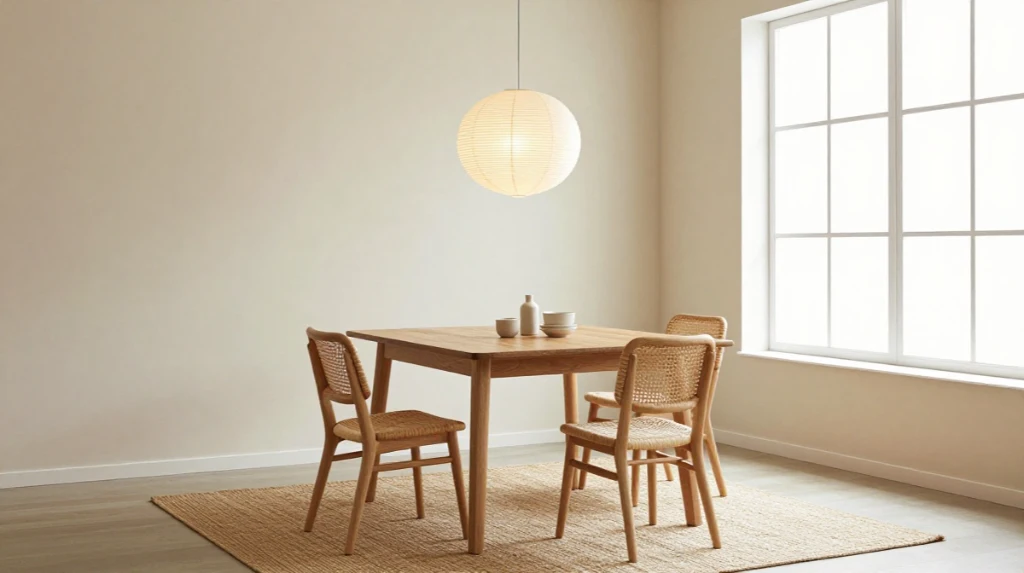
Japandi dining room design has become one of the most loved styles for exactly this reason. It blends Japanese minimalism with Scandinavian simplicity, creating a look that feels warm rather than cold, and simple without feeling empty. Every piece has a purpose, and every corner has room to breathe.
This guide walks through 22 practical ideas for bringing this style into your own dining room, from furniture and lighting to color and texture. Whether you are starting from scratch or slowly updating what you already have, these ideas are meant to be realistic, not just decorative.
Natural Wood Dining Table
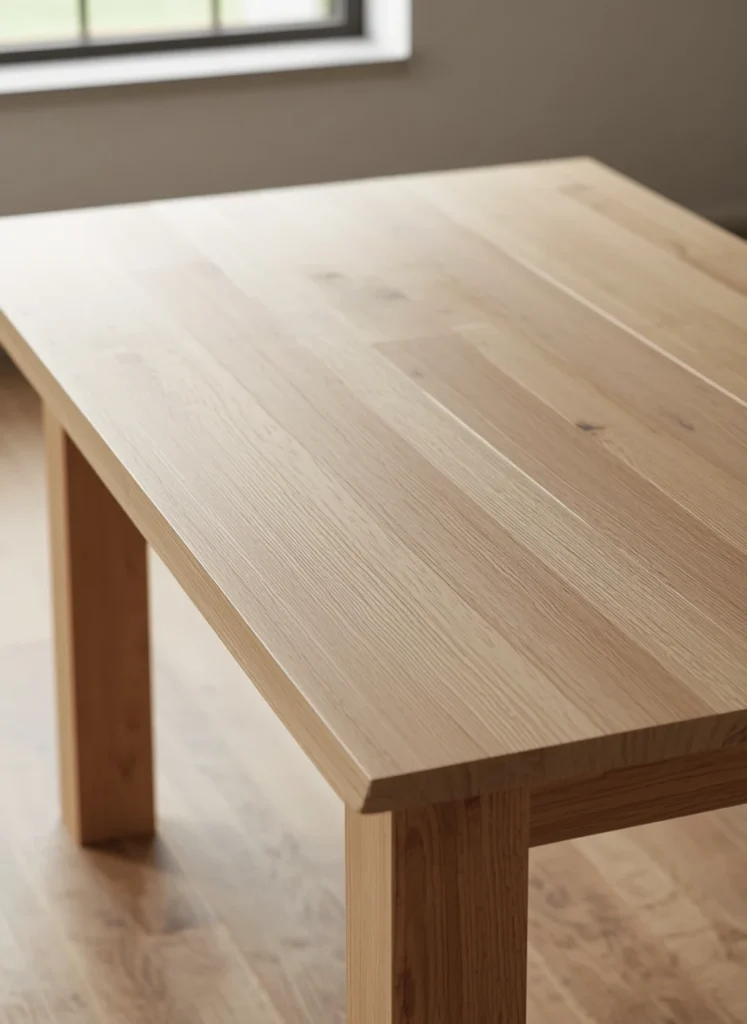
A solid wood table is the heart of almost every Japandi dining room. Light oak, ash, and walnut are especially popular because their natural grain adds character without shouting for attention. This single piece often sets the tone for everything else in the room.
If you already own a table that feels too dark or too busy, a light sanding and a matte oil finish can soften its look. Choose a table with simple, straight legs rather than ornate carving to keep the minimalist aesthetic intact.
Neutral Dining Room Color Palette
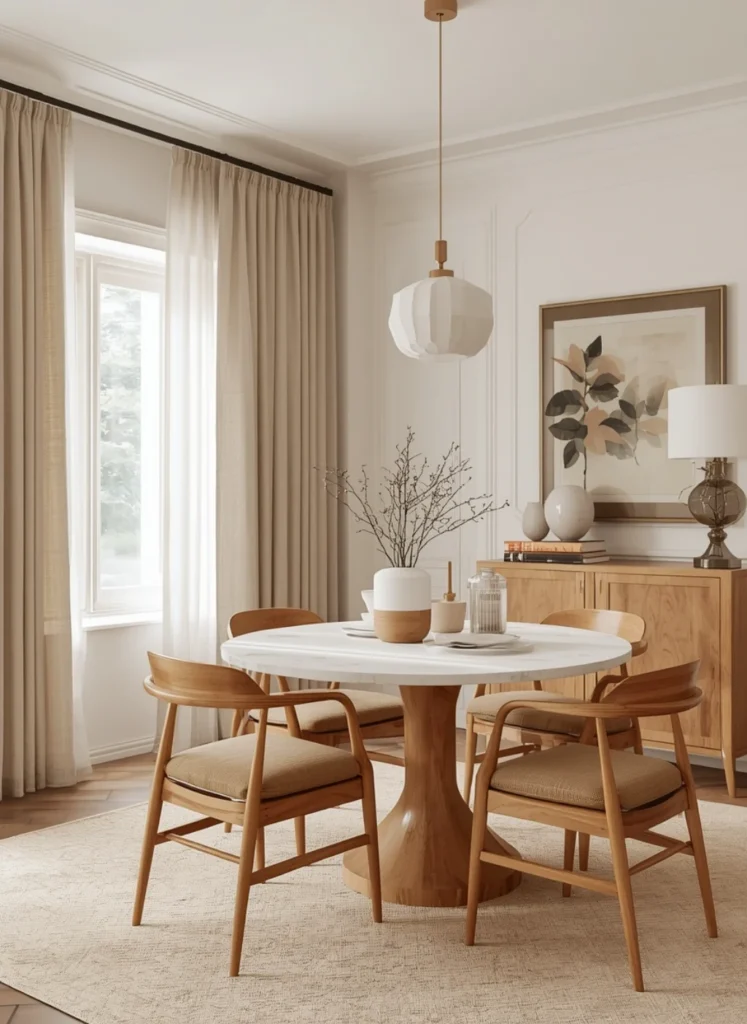
A neutral dining room decor scheme is one of the easiest ways to bring instant calm into the space. Think soft whites, warm beige, sand, and gentle taupe rather than stark, cold white. These tones create a quiet backdrop that lets texture and natural materials stand out.
Start small if you are not ready to repaint the whole room. A single accent wall in a muted color palette or new curtains in a warm neutral tone can shift the mood significantly without a big renovation.
Wabi-Sabi Inspired Decor
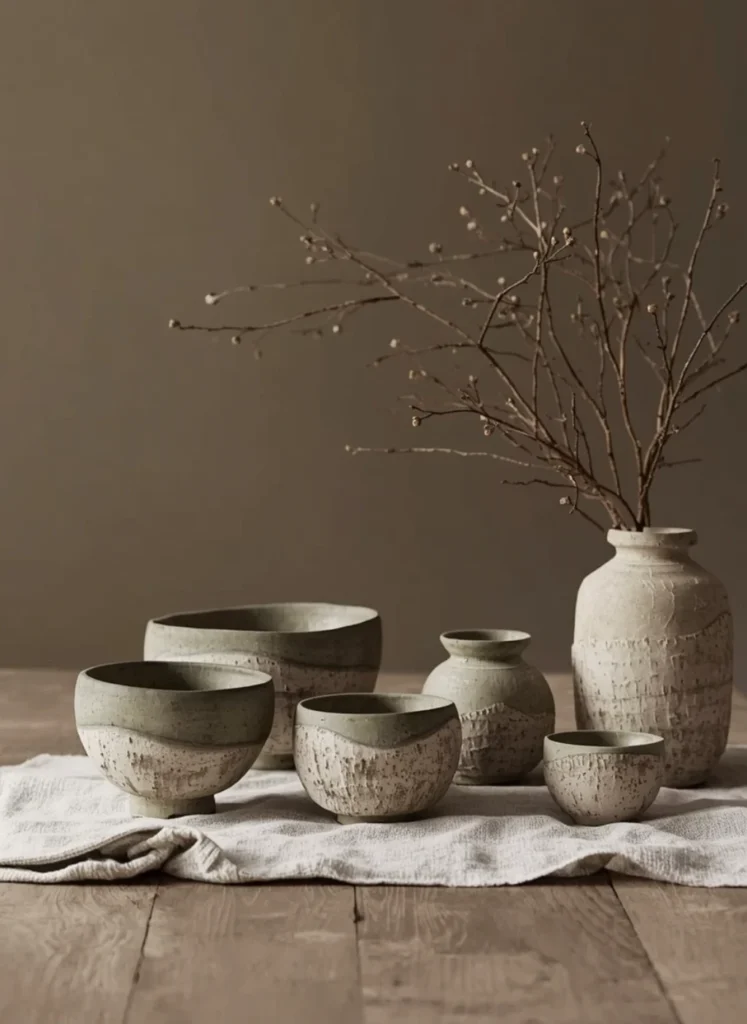
Wabi-sabi dining spaces embrace imperfection instead of hiding it. A slightly uneven ceramic bowl, a table with visible grain, or a chair with natural wear all belong here. The idea is to appreciate things as they are rather than chasing flawless symmetry.
This mindset also makes decorating less stressful. You do not need matching sets or perfectly aligned decor. A little imperfect beauty actually makes the room feel more lived-in and personal.
Rattan Dining Chairs
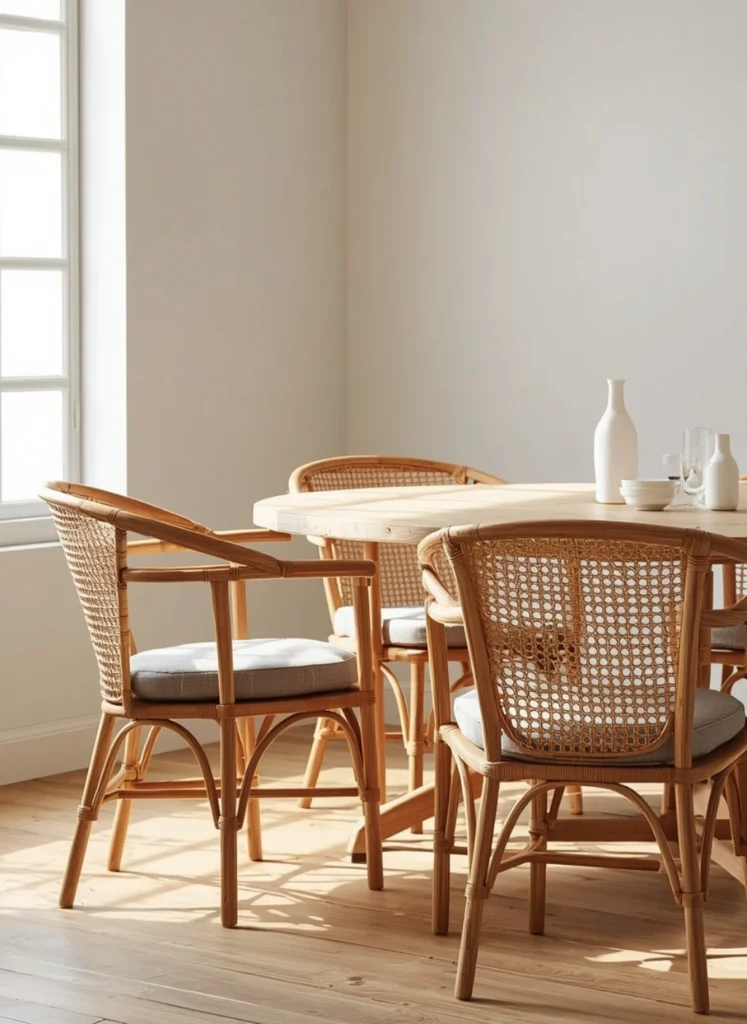
Rattan dining chairs are a signature piece in many Japandi rooms because they add natural texture without visual heaviness. Their open weave lets light pass through, which keeps the room feeling airy even with several chairs around the table.
Pair rattan chairs with a wooden table for a cohesive, grounded look. If comfort is a concern, add a simple linen or cotton cushion in a neutral shade rather than a patterned one.
Linen Dining Chair Covers
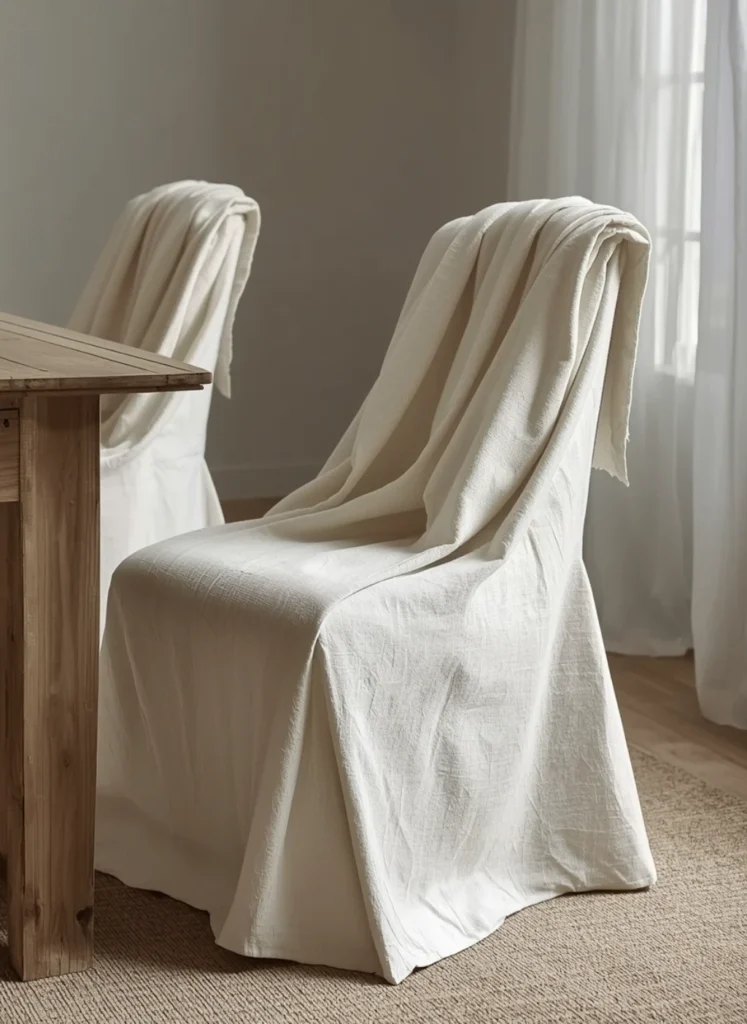
Linen dining chair covers soften the overall look of a dining set and add a relaxed, tactile quality to the room. Linen wrinkles naturally, and in this style, that is part of its charm rather than something to avoid.
Choose off-white, oatmeal, or soft gray covers so they blend with your existing palette. They are also a budget-friendly way to refresh old chairs without replacing them entirely.
Low Dining Table Setup
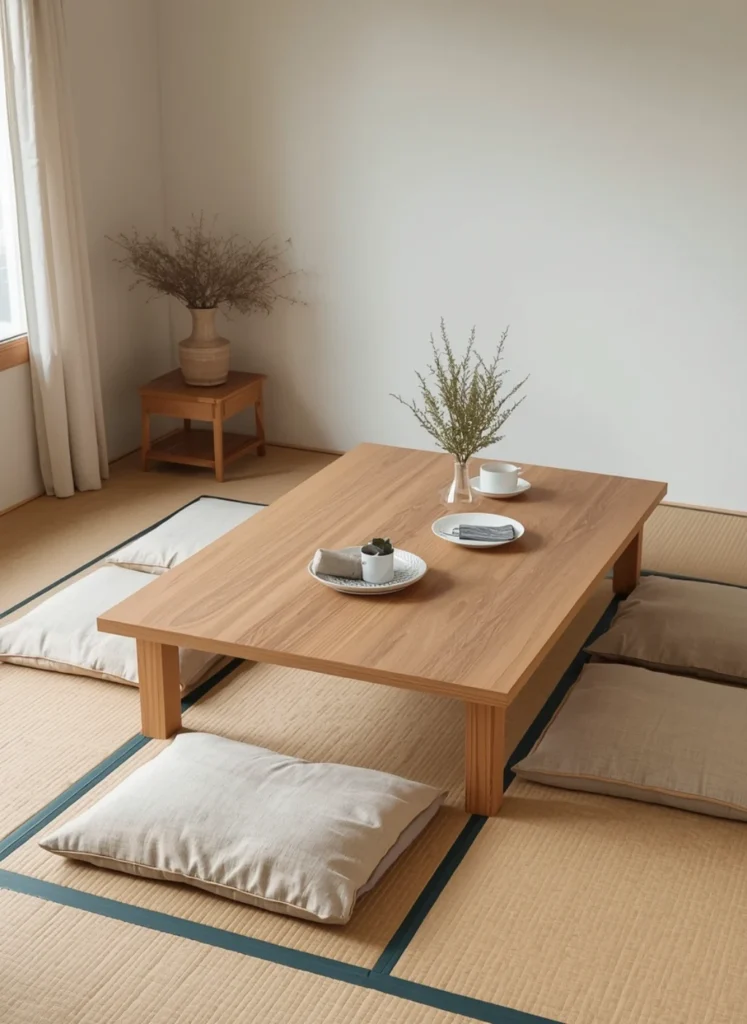
A low dining table paired with floor cushions brings a distinctly Japanese influence into the room. This setup works especially well in smaller spaces or as a secondary seating area for casual meals and tea.
If a full low-table setup feels like too much of a change, even one low table used for display near the dining area can introduce that same sense of grounded interiors without a total redesign.
Shoji-Inspired Screen Dividers
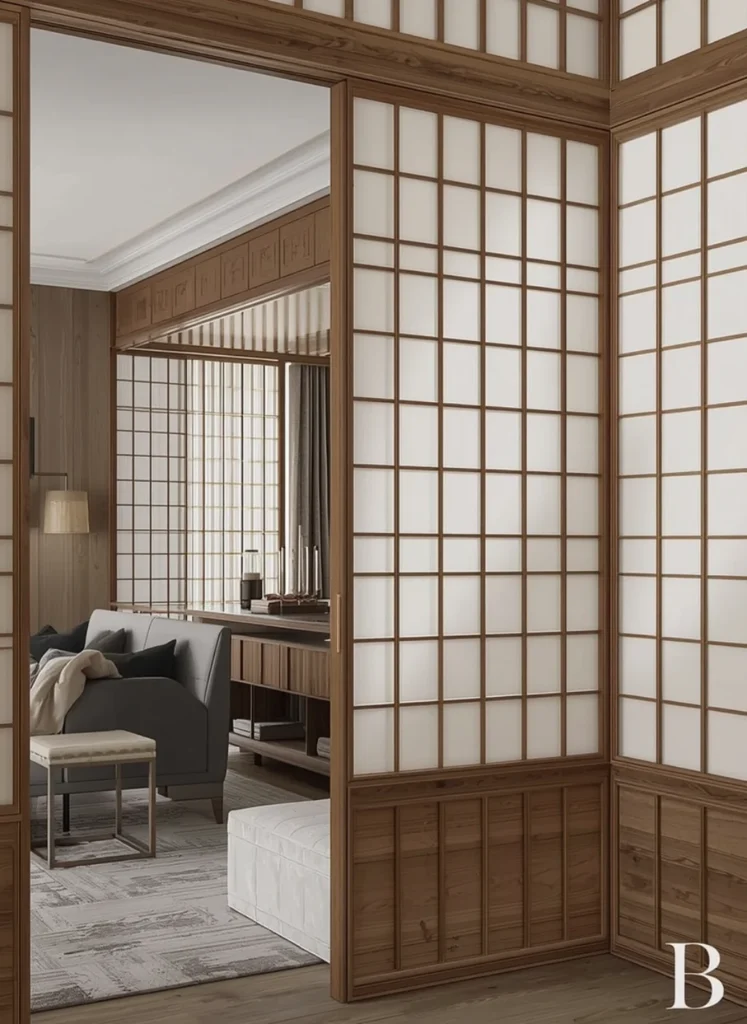
A shoji screen dining room detail brings soft, diffused light and a sense of privacy without closing the space off completely. These wood-framed panels with translucent paper or fabric inserts are both functional and visually calming.
Use one to separate the dining area from a kitchen or living space in an open floor plan. It adds structure while still allowing light and movement to pass through naturally.
Japandi Pendant Lighting
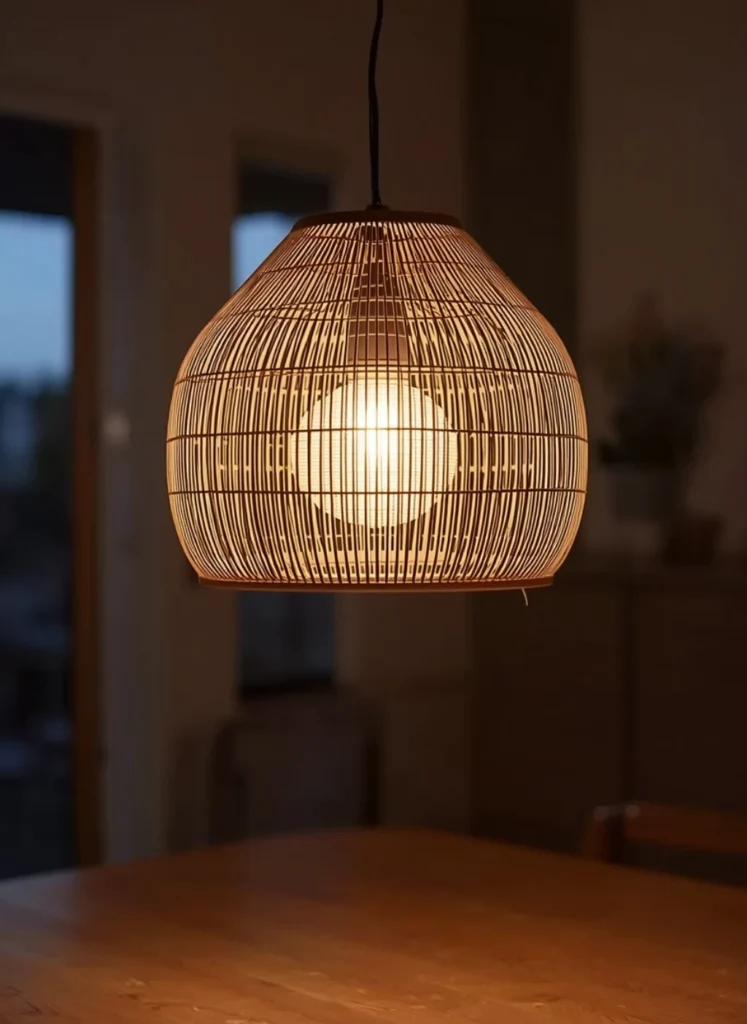
A well-chosen Japandi pendant light does more than illuminate the table. Paper, rattan, or matte ceramic shades create soft, warm lighting that feels intimate rather than harsh. This kind of fixture often becomes a quiet focal point above the table.
Hang the pendant at a height where it does not block sightlines across the table, usually around 30 to 34 inches above the surface. Dimmable bulbs give you more control over the mood during dinners.
Matte Black Accents
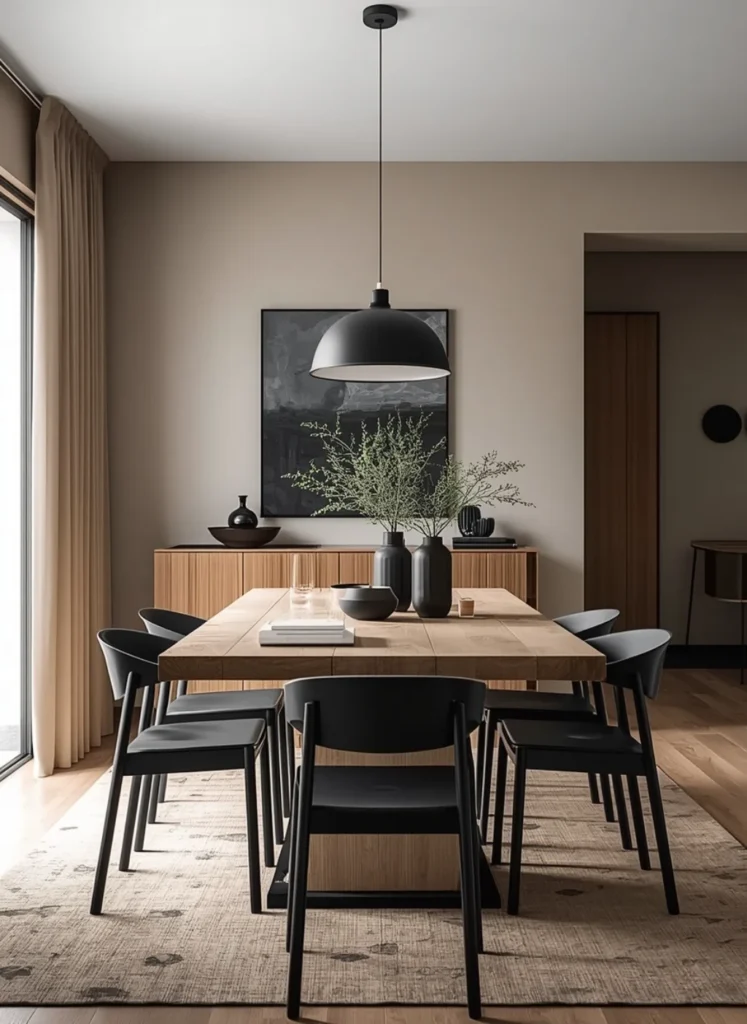
Matte black dining fixtures provide just enough contrast to keep a neutral room from feeling flat. Think slim chair frames, drawer pulls, or a pendant light fitting in matte black rather than shiny chrome.
Use black sparingly as an accent rather than a dominant color. A little gentle color contrast goes a long way in a room built around softness and warmth.
Ceramic Tableware Display
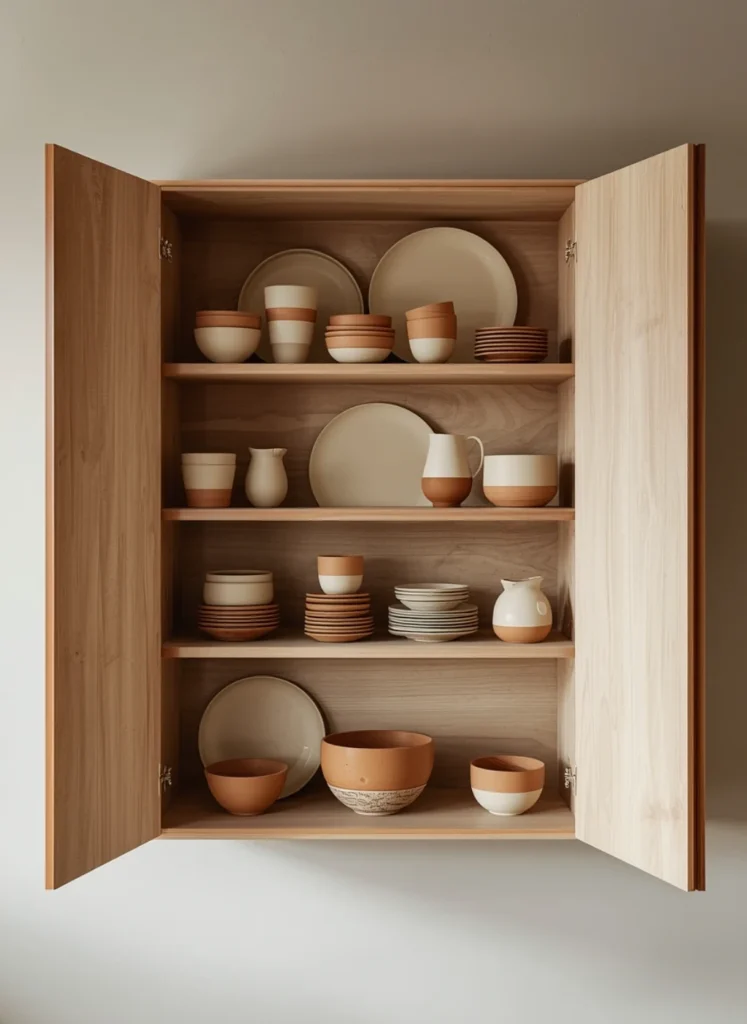
Ceramic tableware dining pieces, especially handmade or slightly irregular ones, add warmth to open shelving or a sideboard. Earthy glazes in cream, terracotta, or soft sage complement the rest of the room beautifully.
Rotate a few pieces on display rather than showing everything at once. This keeps the space feeling curated instead of crowded, and it gives you room to add new pieces over time.
Indoor Plants in the Dining Space
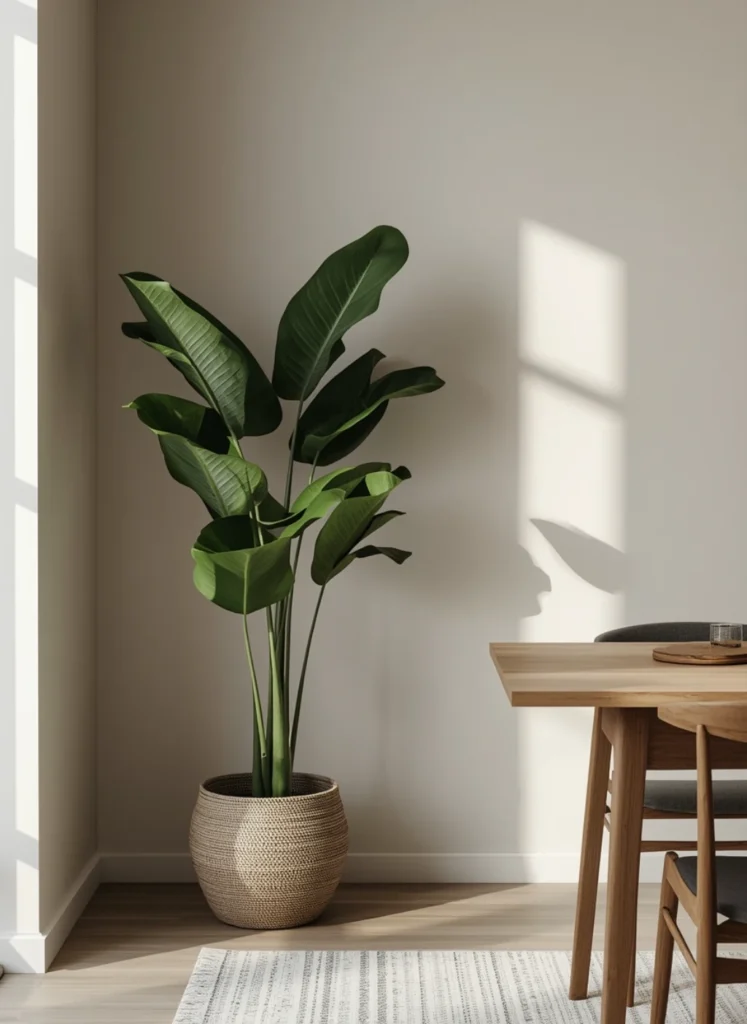
Indoor plants dining room styling brings a living, breathing element into an otherwise still space. A single fiddle leaf fig in the corner or a small trailing plant on the table introduces natural color and softens hard lines.
Choose low-maintenance varieties like snake plants or pothos if you are new to plant care. Even one healthy plant creates a stronger nature connection indoors than several struggling ones.
Natural Fiber Dining Rug
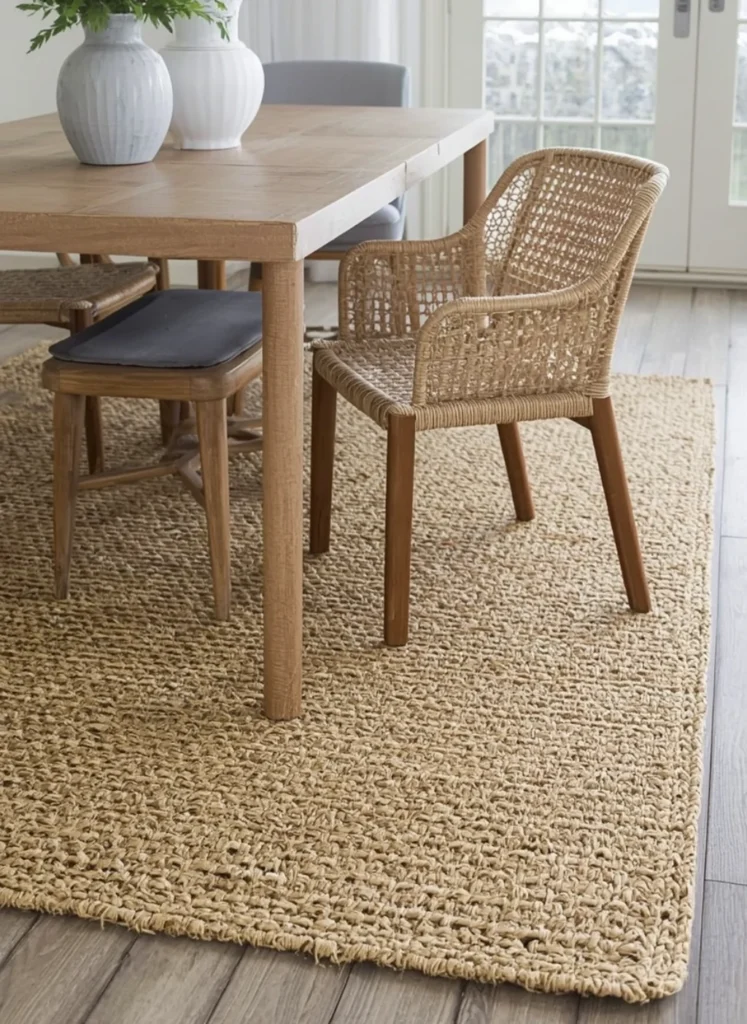
A natural fiber dining rug made from jute, sisal, or seagrass adds texture underfoot and defines the dining area within an open layout. These materials also tend to be more durable and easier to clean than delicate wool rugs.
Size the rug so all chair legs stay on it even when pulled out. This small detail keeps the space looking intentional rather than as an afterthought.
Bamboo Dining Furniture
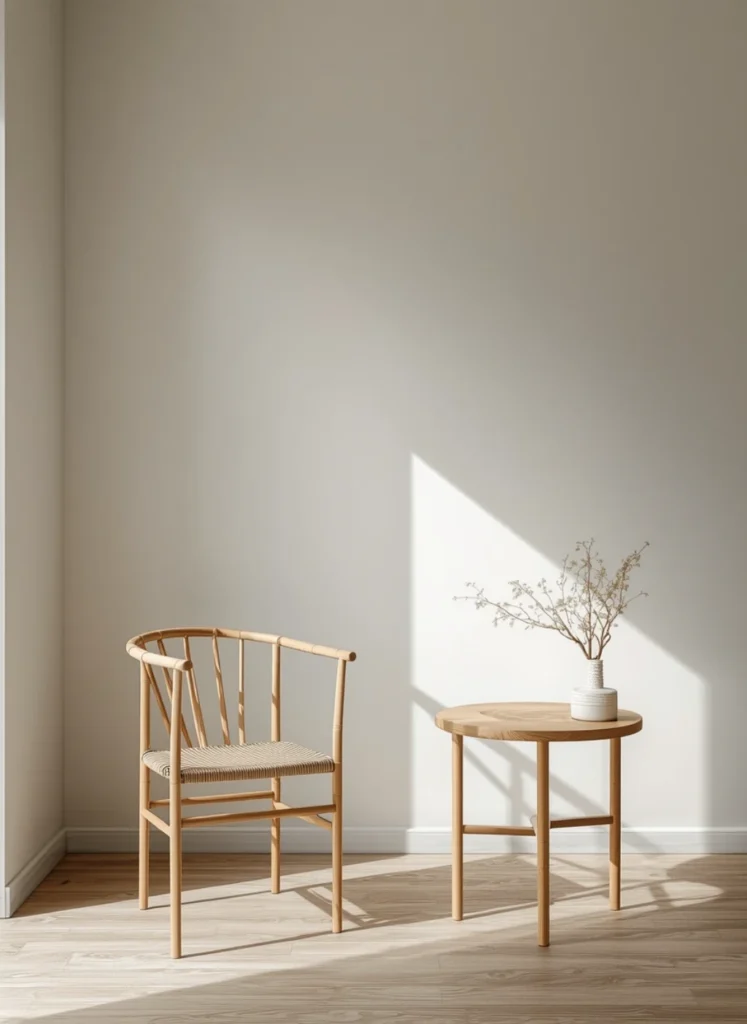
Bamboo dining furniture offers a lighter, more affordable alternative to solid hardwood while still fitting the natural, earthy feel of Japandi design. Bamboo chairs, shelving, or even a small serving cart work well here.
Because bamboo is lightweight, it is a practical choice for smaller apartments where furniture sometimes needs to be moved or rearranged.
Handcrafted Dining Decor
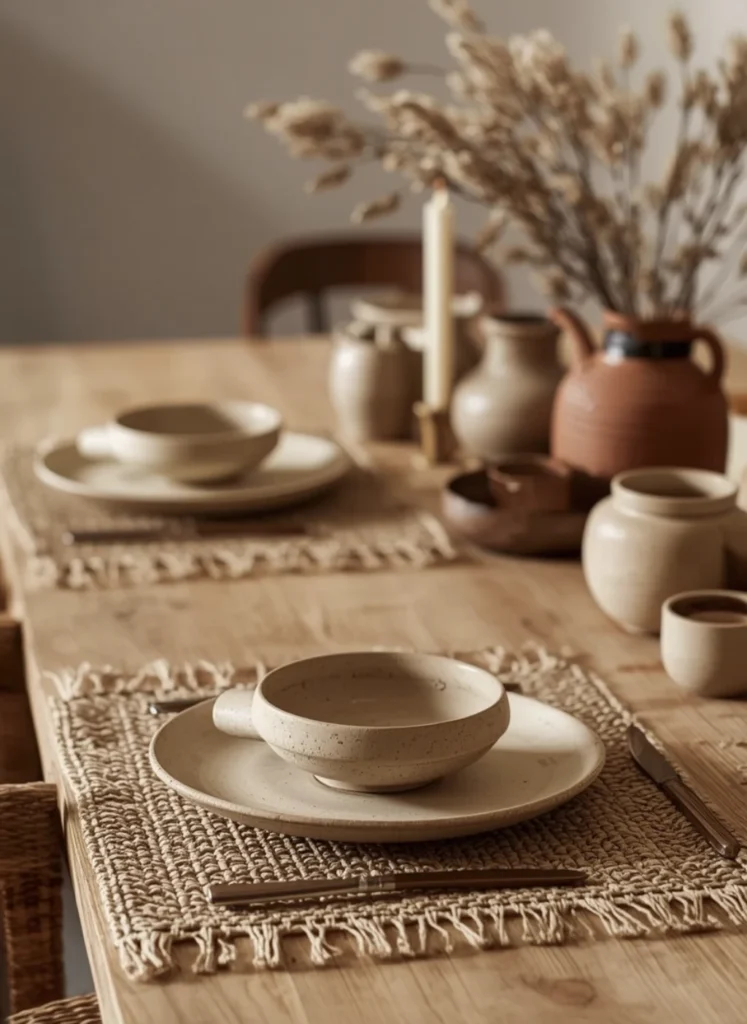
Handcrafted dining decor, from woven placemats to hand-thrown pottery, adds a personal, artisanal quality that mass-produced items simply cannot match. These small details often become the pieces guests notice and ask about.
Support local makers or small studios when you can. Beyond the aesthetic value, these pieces bring a sense of artisan dining furniture and story into the room.
Layered Organic Textures
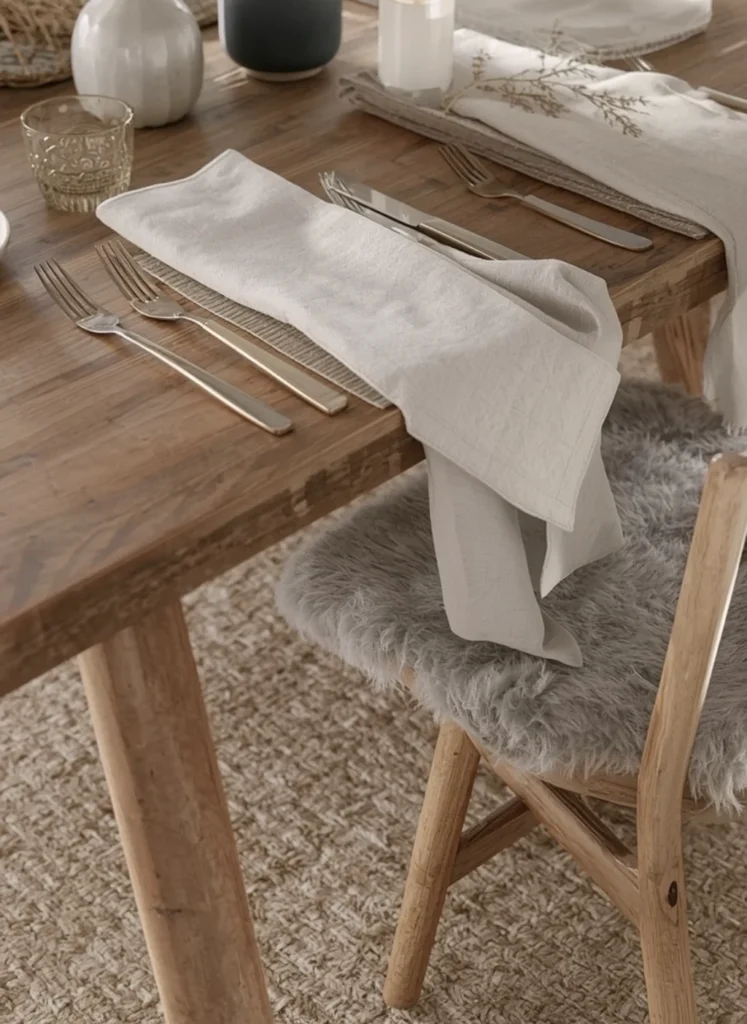
Mixing organic textures home elements, like wood, linen, stone, and rattan, keeps a neutral room from feeling one-dimensional. Texture does the visual work that pattern would normally do in other design styles.
Try combining at least three different textures in one dining setup, such as a wood table, linen napkins, and a woven rug. This creates textural contrast without needing bold color.
Japandi Wall Decor
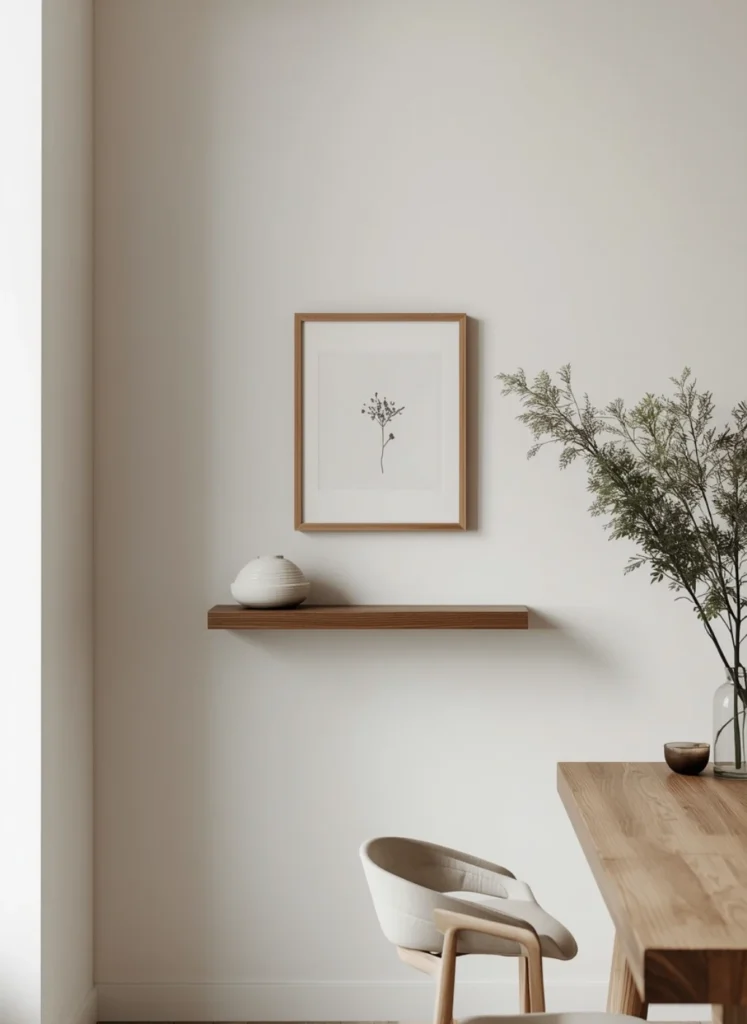
Japandi wall decor favors simplicity over statement pieces. A single framed print, a woven wall hanging, or a small wooden shelf with one or two objects is usually enough. The goal is visual rest, not decoration for its own sake.
Leave generous empty space around wall pieces. This visual breathing room is part of what makes the style feel so calming compared to more maximalist approaches.
Wood and Stone Combination
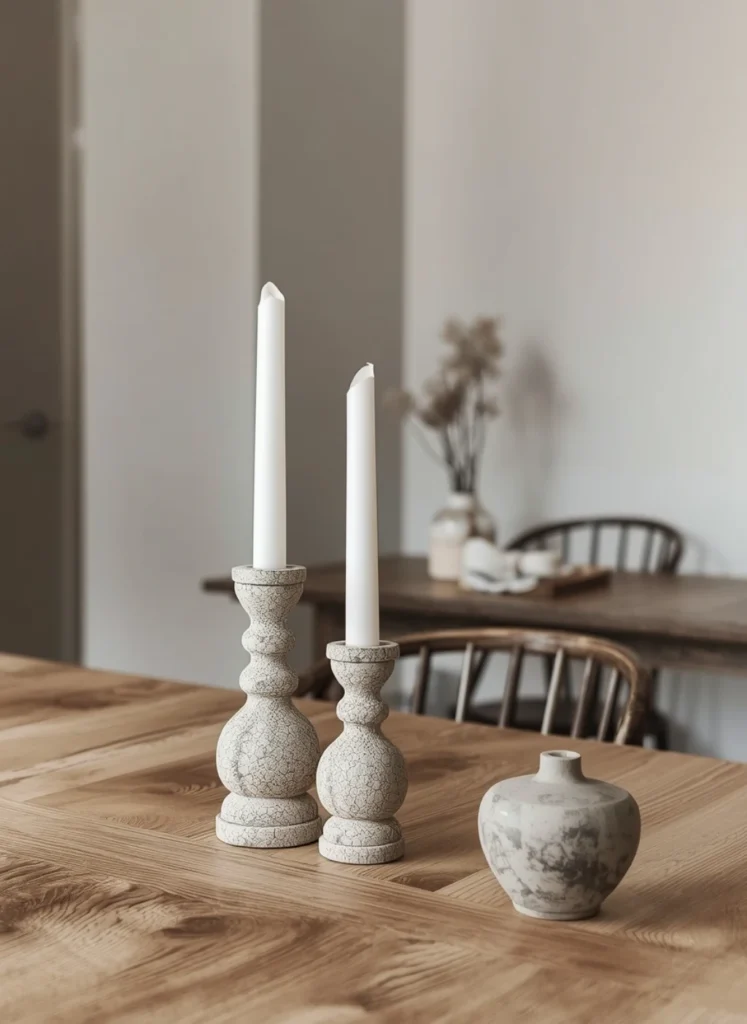
Pairing wood and stone dining room materials, such as a wooden table with stone-based candle holders or a stone accent wall, adds depth and a sense of permanence to the space. These natural pairings feel timeless rather than trend-driven.
If a full stone feature feels excessive, start with smaller elements like stone coasters or a concrete-based vase to introduce the same honest materials feeling gradually.
Clutter-Free Layout
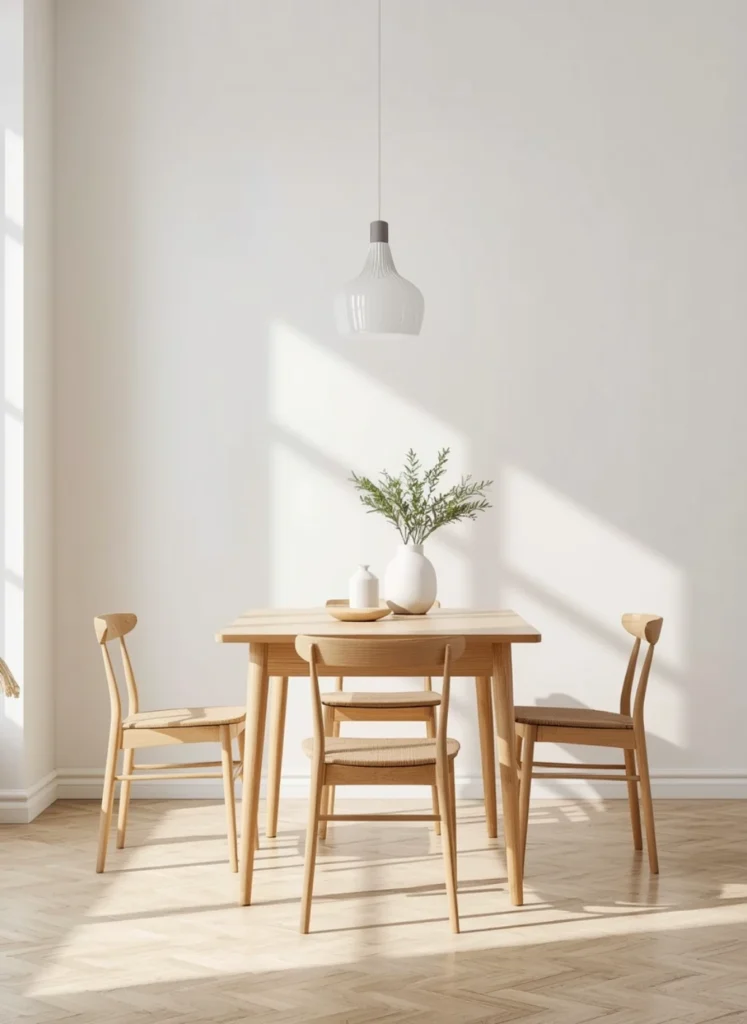
A clutter-free dining room is central to Japandi design, since visual calm depends on having fewer, better-chosen items rather than more decoration. Every object in the room should earn its place.
Do a seasonal edit of your dining space. Remove anything that has not been used or appreciated recently, and store extra tableware out of sight rather than displaying everything at once.
Warm Minimalist Lighting
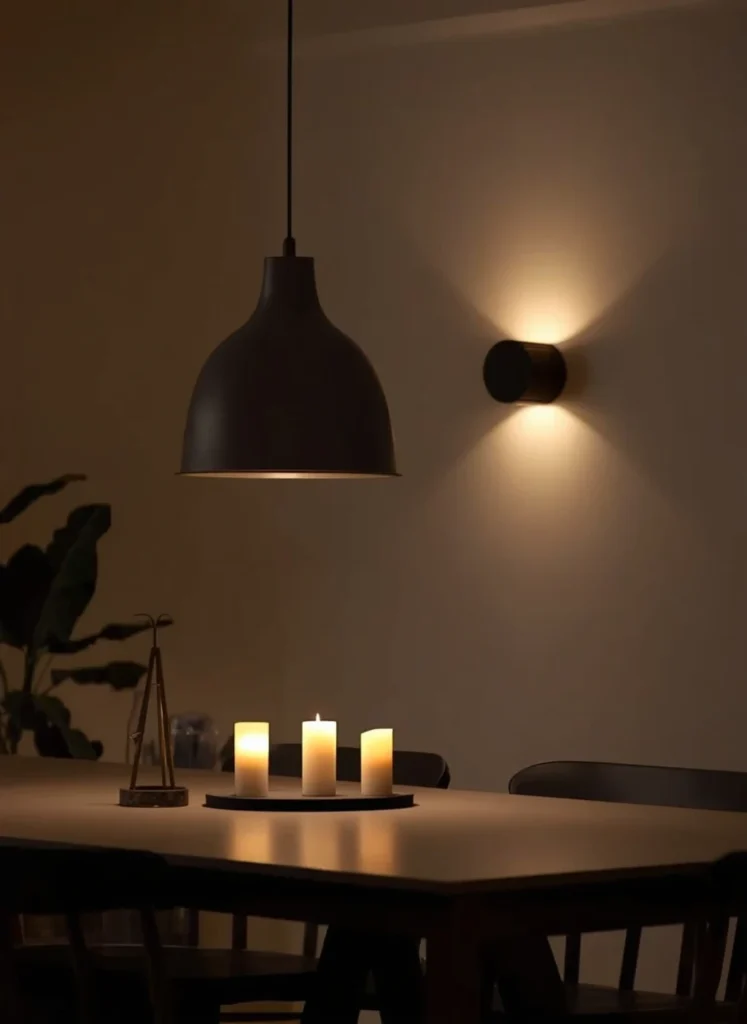
Beyond the main pendant, soft ambient lighting from wall sconces, table lamps, or candles adds warmth during evening meals. Harsh overhead lighting alone can make even a well-designed room feel cold and uninviting.
Layer at least two light sources in the dining area. This creates a more relaxed formality, where the room still feels put-together but never stiff or overly formal.
Functional Storage Solutions
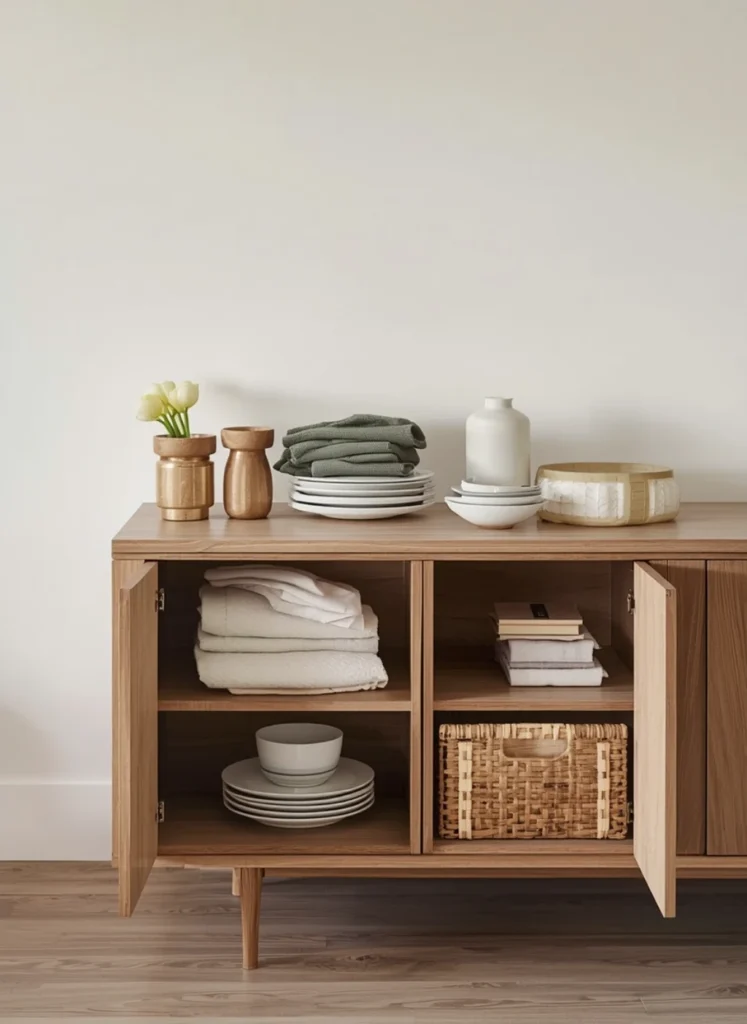
Functional minimalism means storage should be both practical and quiet in appearance. A low wooden sideboard or a simple open shelving unit keeps tableware accessible without adding visual noise to the room.
Group similar items together inside storage, like all ceramics on one shelf and linens in a drawer. This small habit makes daily use easier and keeps the room looking tidy with far less effort.
Biophilic Design Touches
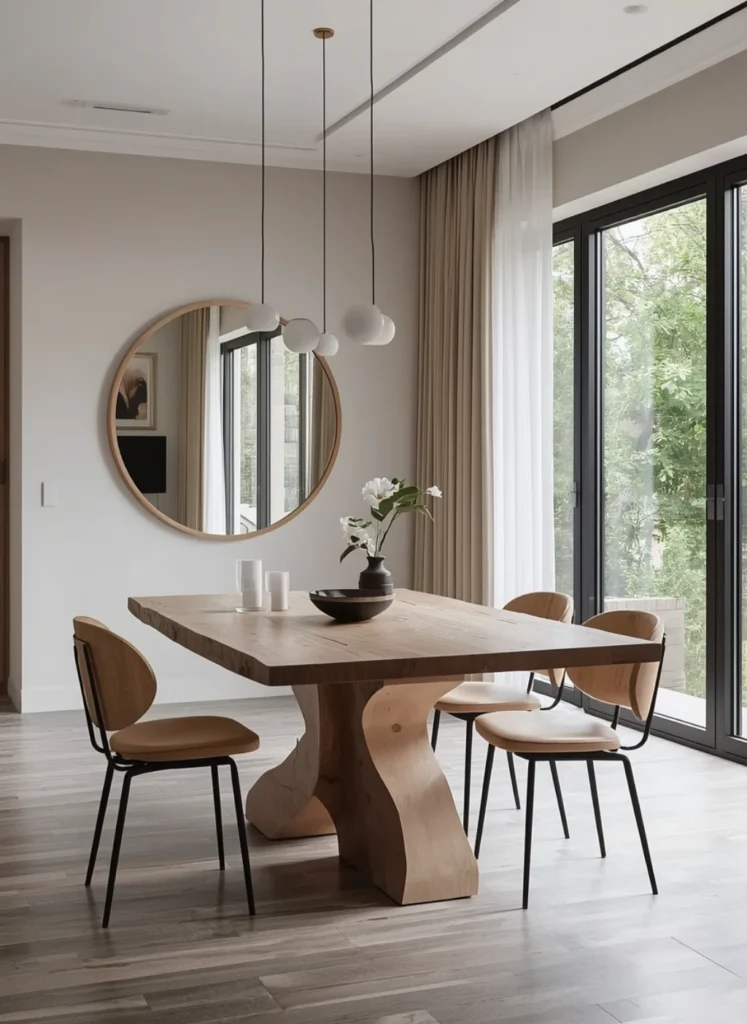
Biophilic dining room design goes beyond a single plant. It includes natural light, organic shapes, and materials that connect the space back to the outdoors, such as a live-edge table or a window seat near the dining area.
If your dining room has limited natural light, mirrors placed opposite a window can help reflect what light is available and make the space feel more open and connected to the outside.
Timeless Color Accents
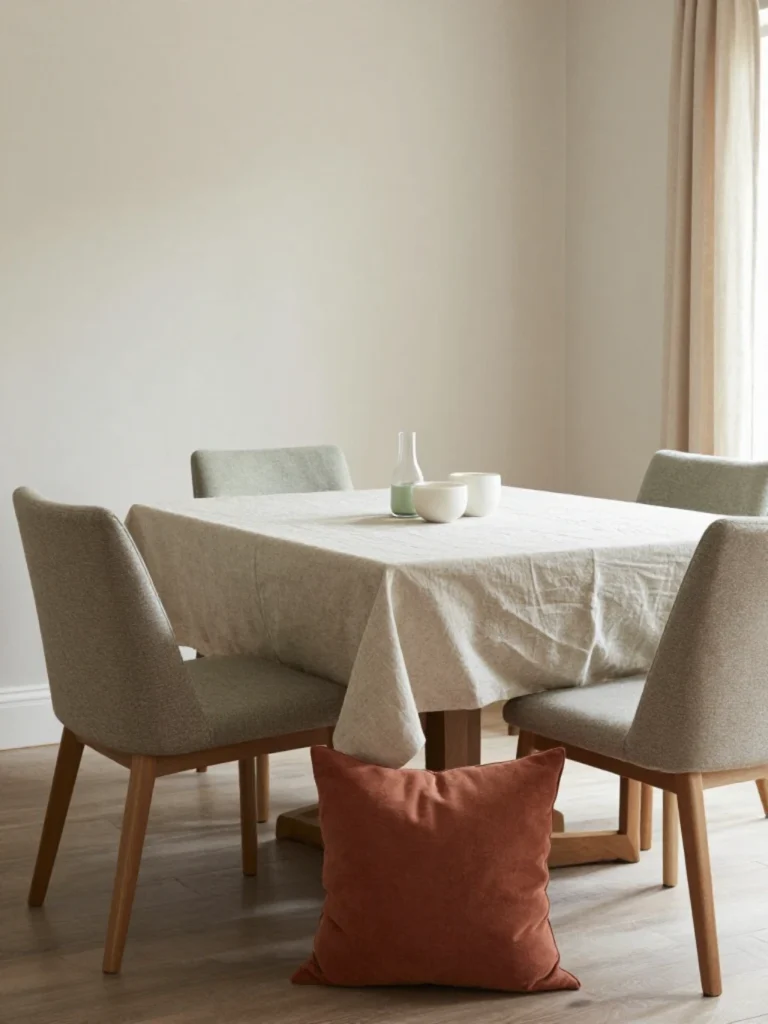
A few japandi color palette accents, like deep terracotta, sage green, or soft charcoal, can be introduced through cushions, art, or table linens without disrupting the overall calm. These colors feel grounded rather than trendy.
Keep accent colors to one or two per room. This restraint is part of what gives Japandi spaces their refined simplicity, even when a little color is present.
Bringing these ideas together does not mean applying all 22 at once. Most well-designed Japandi dining rooms are built gradually, piece by piece, with attention to how materials and colors relate to each other over time.
Quick Comparison Table
| Element | Best Material | Style Impact | Budget Level |
|---|---|---|---|
| Dining Table | Solid oak or walnut | Grounding centerpiece | High |
| Chairs | Rattan or bamboo | Light, airy texture | Medium |
| Lighting | Paper or ceramic pendant | Warm, intimate glow | Medium |
| Rug | Jute or seagrass | Defines the space | Low |
| Wall Decor | Wood, woven fiber | Quiet visual interest | Low |
| Tableware | Handmade ceramic | Personal, artisanal touch | Medium |
| Storage | Wood sideboard | Clutter-free organization | Medium |
Conclusion
Creating a Japandi dining room design is less about following a strict formula and more about choosing pieces that feel honest, natural, and useful. Wood, linen, rattan, and soft neutral tones work together to create a space that feels calm without feeling empty or overly styled.
Start with one or two changes, whether that is a new pendant light, a linen chair cover, or simply clearing off a cluttered sideboard. Over time, these small, intentional design choices add up to a dining room that feels genuinely peaceful to sit in, not just nice to look at in photos.
You may also like this: 22 Japandi Bathroom Design Ideas That Blend Style and Serenity
Frequently Asked Questions
1. What defines a Japandi dining room style?
It combines Japanese minimalism and Scandinavian simplicity through natural materials, neutral colors, and functional, clutter-free furniture.
2. Is Japandi design expensive to achieve?
Not necessarily. Many elements, like linen covers, a natural fiber rug, or ceramic decor, are affordable and can be added gradually over time.
3. What colors work best in a Japandi dining room?
Soft whites, beige, sand, sage, and warm gray form the base, with small accents of terracotta or charcoal for depth.
4. Can small dining rooms use Japandi design?
Yes. Its focus on uncluttered living and light materials like rattan and bamboo makes it especially well-suited to smaller spaces.
5. What is the easiest way to start a Japandi makeover?
Begin with lighting and textiles, such as a pendant light and linen chair covers, before investing in larger furniture pieces.

1 Comment