
Introduction
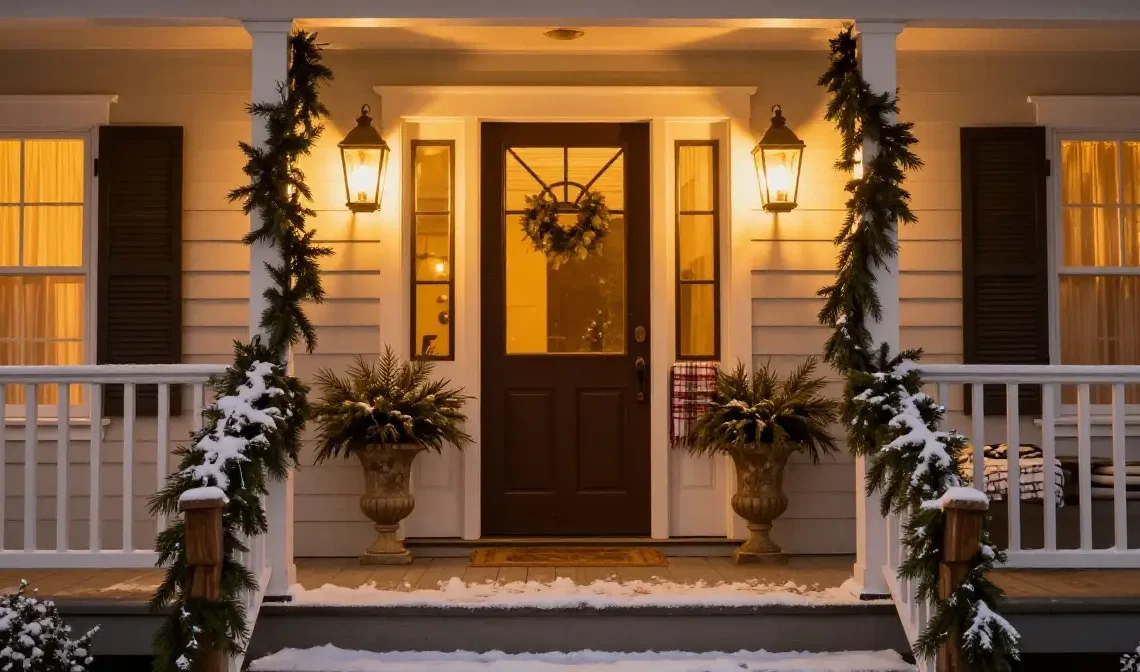
There is something quietly beautiful about a porch in winter. The air is crisp, the world slows down a little, and your front entryway becomes the first thing anyone sees when they visit your home. But too many porches sit bare through the cold months, looking forgotten while everything inside stays warm and decorated.
You do not need a large budget or a design background to change that. With the right winter porch styling ideas, even a small covered porch can feel like a welcoming retreat. Whether you are going for rustic and cozy, clean and modern, or something inspired by Scandinavian hygge, there is a combination of textures, lighting, and natural elements that will work for your space.
This guide walks through twenty-two ideas you can actually use, with practical tips on what works in cold weather and what looks better in photographs than it does in real life.
Layering Outdoor Rugs for Warmth and Texture
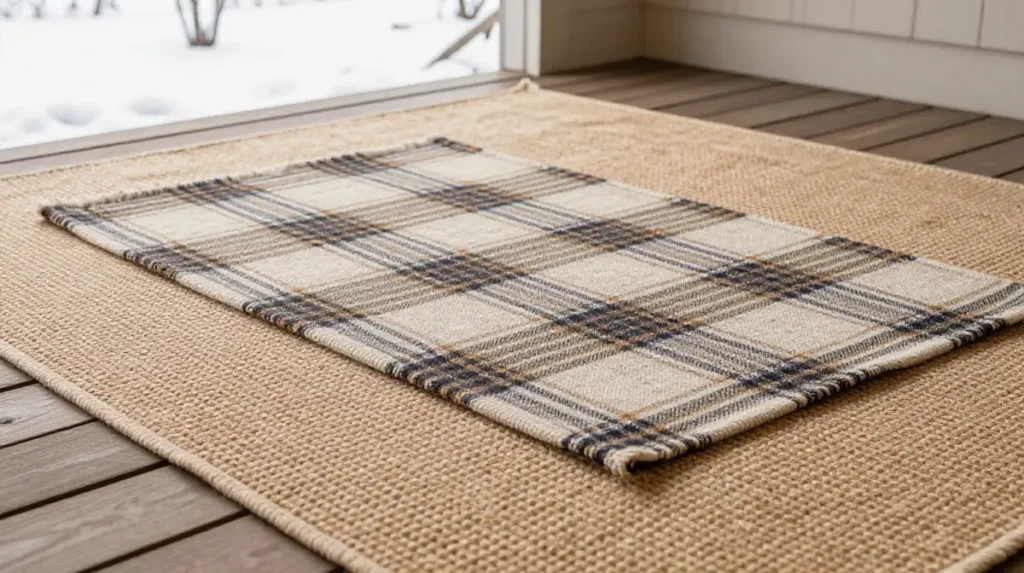
A single flat rug does very little for a winter porch. Layering two rugs of different sizes and textures instantly makes the space feel more curated and cozy. Start with a flat-weave jute rug as a base, then place a smaller plaid or wool-style rug on top. This adds visual depth and also makes the space feel warmer even before you add a single candle or throw.
For cold weather durability, look for rugs labeled as weather-resistant. Natural fiber rugs can absorb moisture in wet climates, so check the materials before buying.
Using Lanterns as the Anchor of Your Winter Porch Lighting

Lanterns are one of the most effective tools for winter porch styling ideas because they work in almost any style. A set of two or three lanterns in varying heights placed near the front door creates an immediate focal point. Fill them with battery-operated pillar candles for a safe, low-maintenance glow that looks just as warm as real flame.
Black metal lanterns suit modern and farmhouse porches equally well. Aged brass or copper tones work better with rustic or traditional setups. You can also place a single oversized lantern beside a porch bench for a cozy nook effect.
Hanging a Winter Wreath That Goes Beyond Holiday Themes
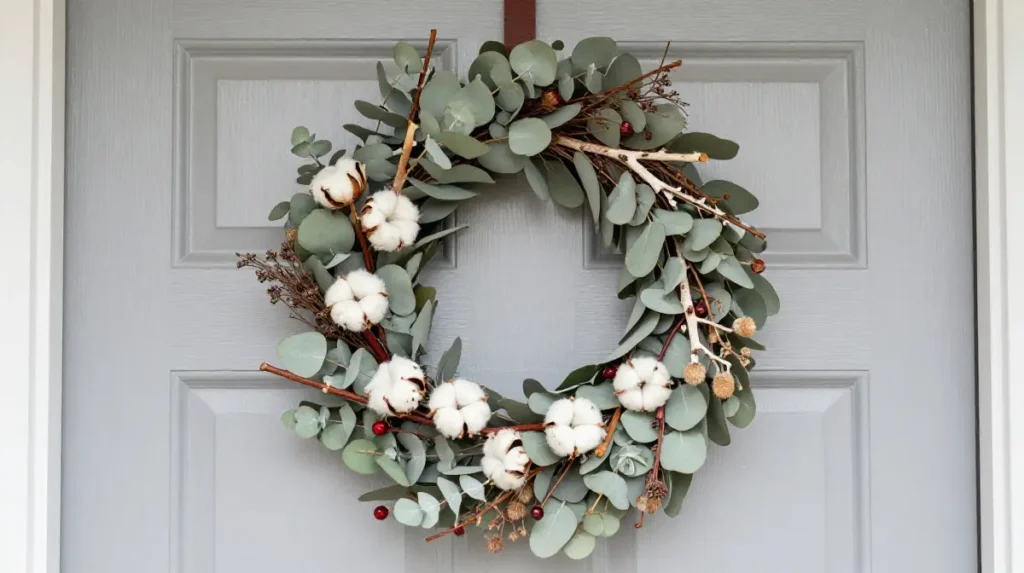
Most people swap out their wreath on December 26 and leave the porch bare for the rest of winter. A non-holiday winter wreath made with evergreens, dried cotton stems, eucalyptus, or birch branches can stay up through February without looking out of season.
A wreath in neutral tones with a simple ribbon or none at all reads as intentional and sophisticated. It also allows you to decorate around it with seasonal changes without the wreath clashing.
Styling Porch Urns with Evergreen Arrangements
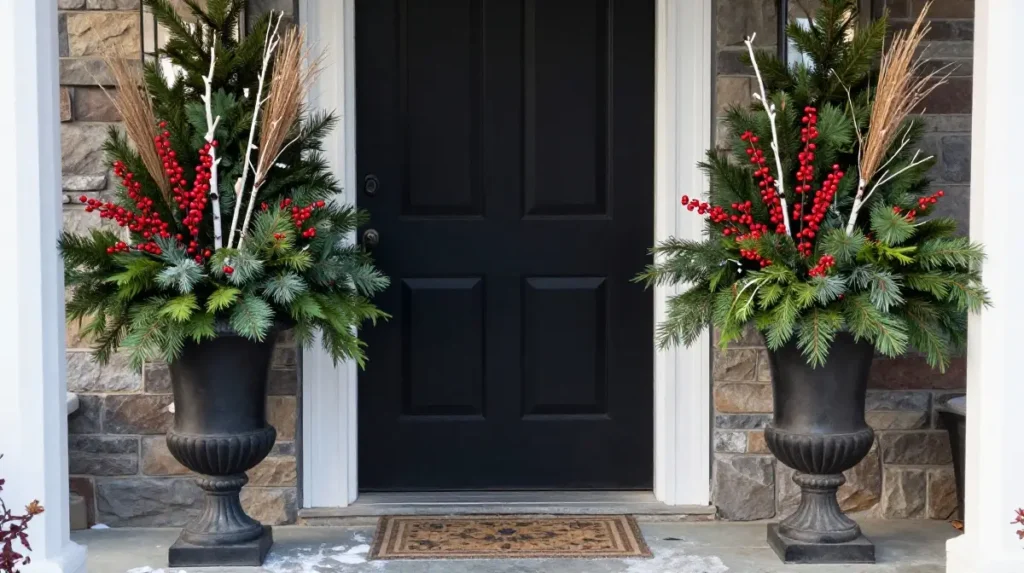
Porch urns are underused outside of the holiday season. In winter, fill them with a mix of tall evergreen branches, red berry stems, birch twigs, and dried seed heads. This kind of arrangement looks full, seasonal, and entirely natural.
You do not need fresh-cut flowers to make a porch urn look finished. Dried and natural materials actually hold up better in cold temperatures and require no maintenance once arranged.
Adding a Porch Swing with Cozy Textiles
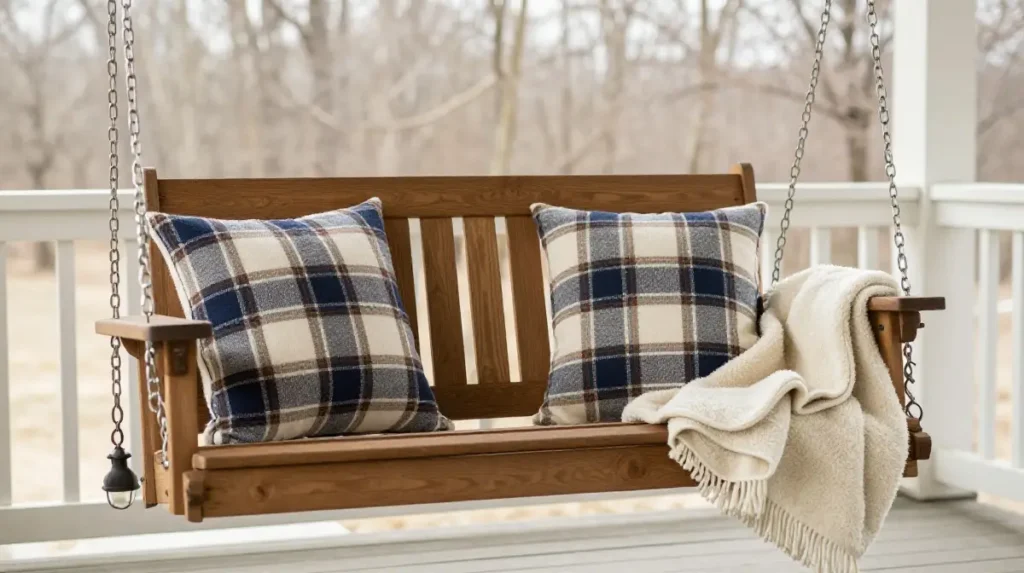
A porch swing styled for winter becomes a genuine destination. Layer it with outdoor-rated throw blankets in wool or fleece textures and add two or three outdoor pillows in plaid or neutral tones. This kind of cozy porch seating turns a functional piece of furniture into a spot people actually want to use on mild winter evenings.
If your porch swing is made of wood, check that it has been sealed or treated for weather resistance before leaving textiles on it through the season.
Stringing Lights Across the Ceiling or Railing
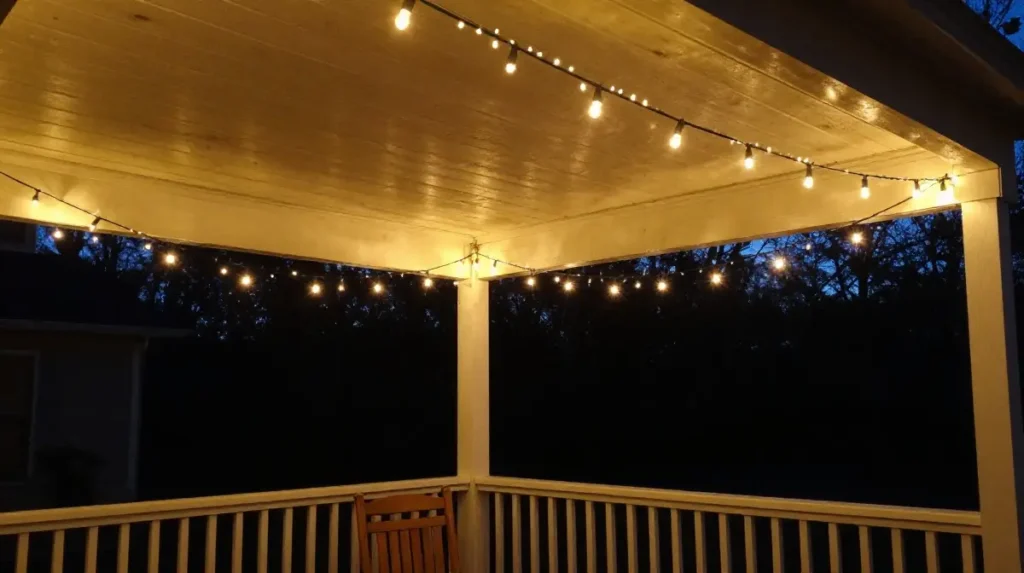
Outdoor string lights in winter work differently than summer cafe lights. In winter, the darkness comes earlier and the warm glow of overhead lighting transforms a porch entirely. Wrap them along porch railings or drape them across the ceiling in a loose, unfussy pattern.
Warm white bulbs feel more seasonal and cozy than cool white, which can read as clinical in cold weather. Plug-in solar string lights work well during shorter winter days if you have limited outlet access.
Bringing in Pinecones and Wood Logs as Natural Decor
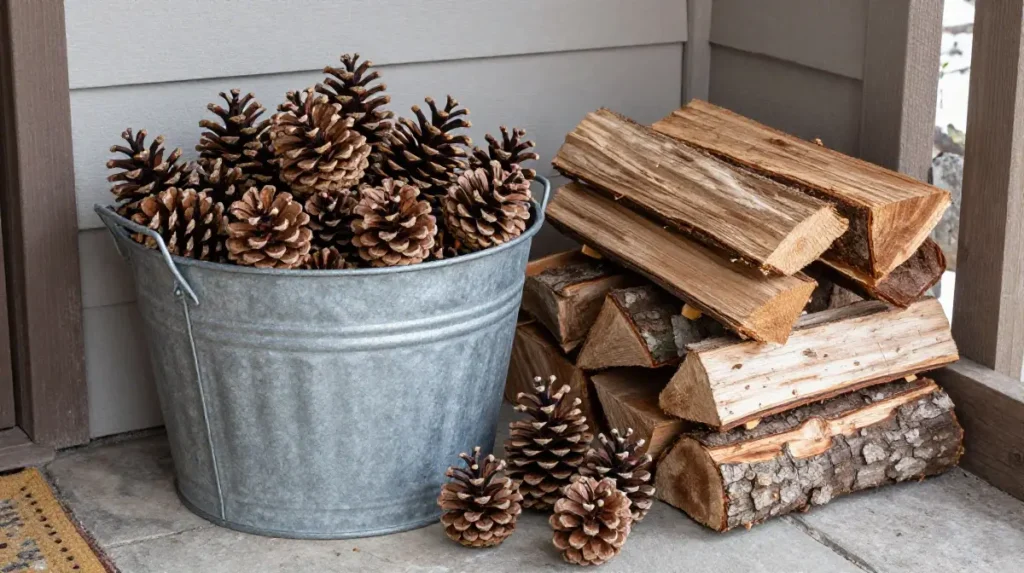
Pinecone porch decorations are free if you live near pine trees and cost very little at craft stores. Fill a galvanized metal bucket or a wicker basket with large pinecones for a textured, seasonal display that requires zero maintenance.
Stacking a small bundle of firewood logs beside the door or along the porch railing serves both a practical and decorative purpose. The wood adds a rustic, earthy warmth that no manufactured product can quite replicate.
Working with a Neutral Winter Porch Color Palette
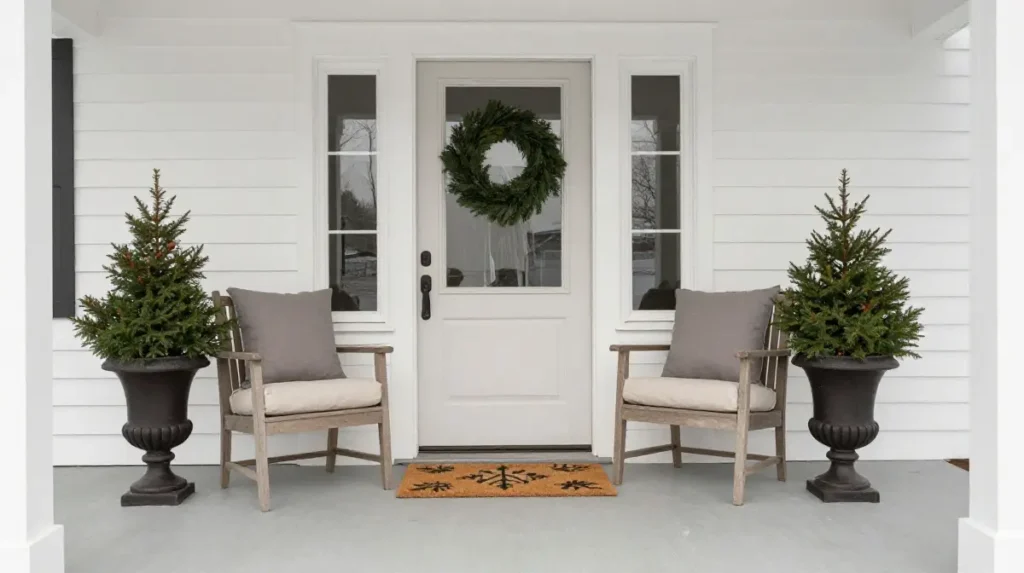
The most cohesive winter porches tend to use a restrained palette. Think warm whites, soft grays, deep greens, brown tones, and the occasional dark red or plaid accent. When every element fits within a similar color family, the space looks intentional even if the pieces came from different places.
Avoid mixing too many competing patterns. If you have a plaid rug, keep the pillows solid. If you have a patterned welcome mat, keep the urns simple.
Styling Porch Steps for a Welcoming Entry
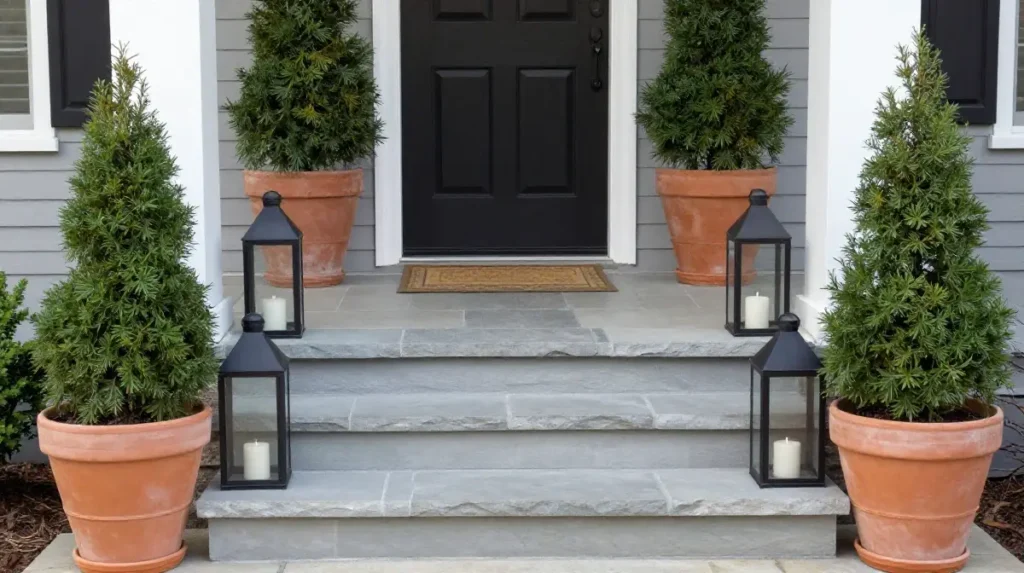
Porch steps are often overlooked in winter porch makeovers, but they are the first thing a visitor physically interacts with. Place small potted evergreens or boxwoods in identical pots on each step, alternating with lanterns if the steps are wide enough.
A series of matching terracotta or galvanized pots in descending sizes creates a stepped display that looks deliberately styled and takes less than an hour to put together.
Using Buffalo Check and Plaid Porch Decor
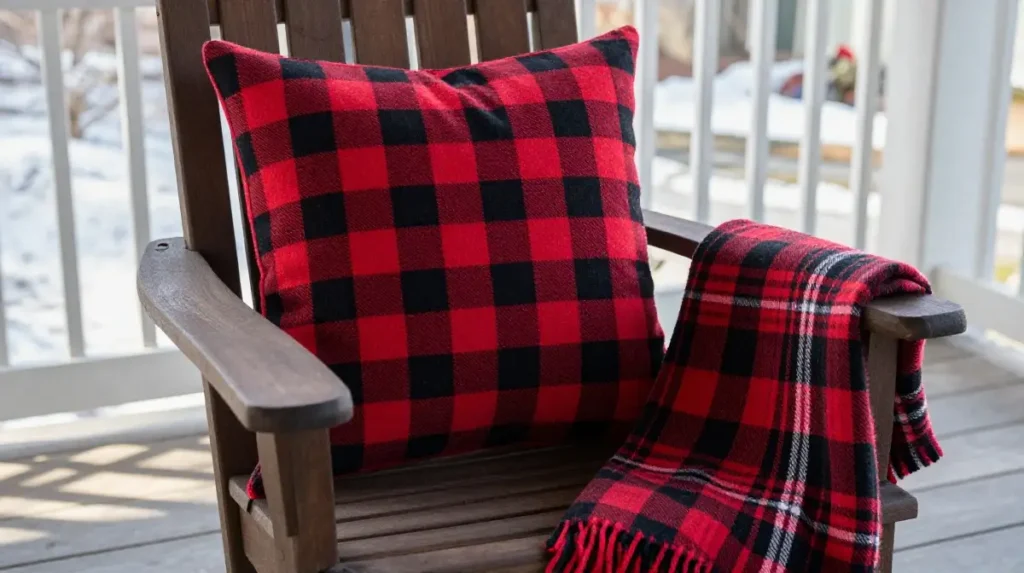
Buffalo check has been a staple of winter outdoor decorating for years because it signals warmth and familiarity. A buffalo check outdoor pillow, welcome mat, or throw blanket adds seasonal personality without requiring any permanent changes to your porch.
If your porch furniture is neutral or dark in tone, a red and black or green and black check pattern will stand out clearly and look sharp against wood or metal furniture frames.
Styling a Porch Nook with a Chair and Side Table
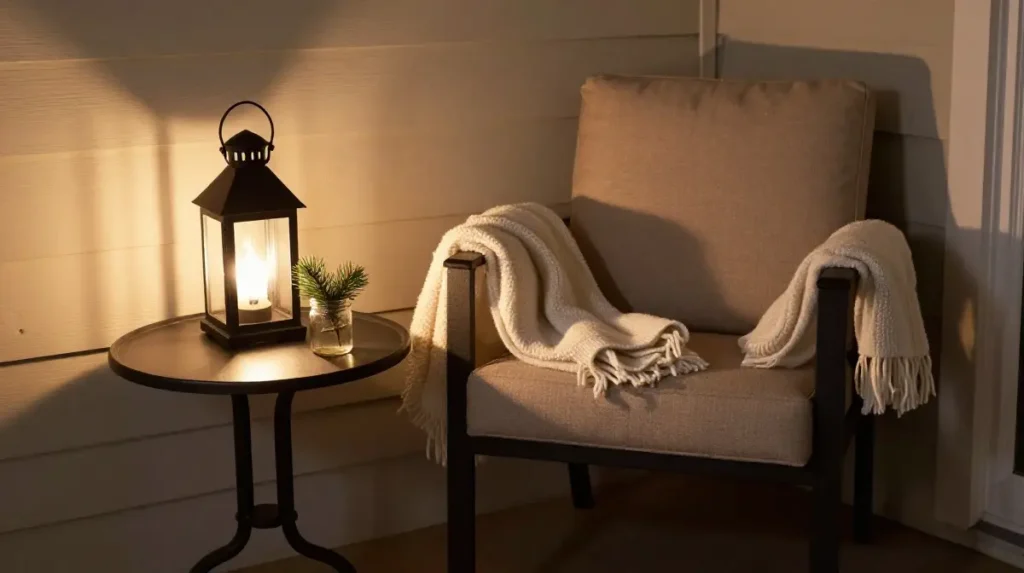
Even a small porch can hold a single armchair and a small side table. Style this corner with a throw blanket draped over the arm of the chair, a small lantern on the table, and a simple evergreen sprig in a jar or vase. This kind of porch nook signals that the space is lived in and loved, not just decorated for appearances.
Decorating with Birch Branches and Winter Botanicals
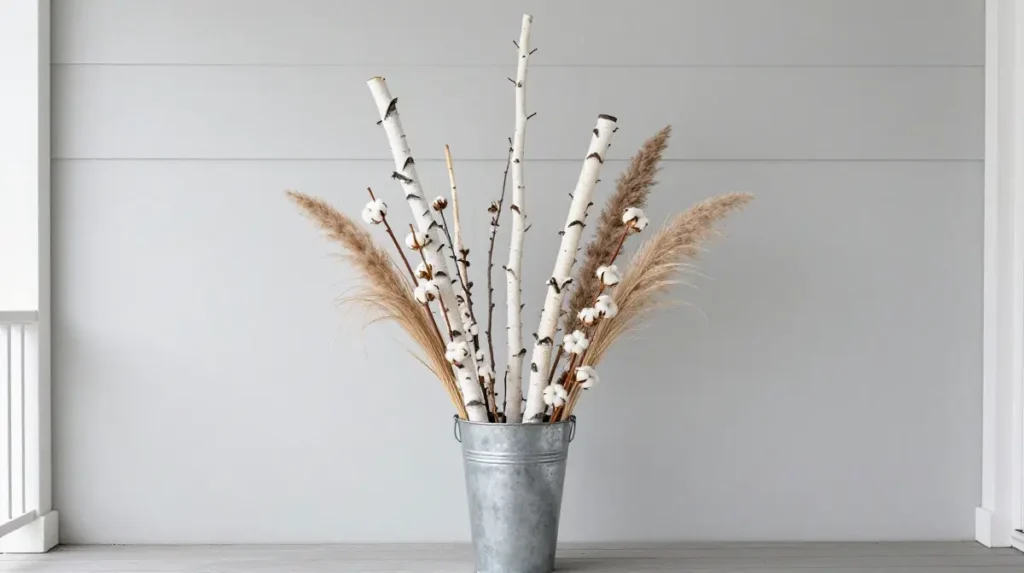
Birch branches, either natural or faux, add a sculptural quality to winter porch styling that is hard to replicate with other materials. Place a bundle of birch branches in a tall urn or large galvanized bucket and let the natural white-gray tones do the work.
You can also weave in dried grasses, cotton stems, or preserved eucalyptus for color variation without overpowering the quiet elegance of the birch.
Adding an Outdoor Heater or Fire Pit for Functional Warmth
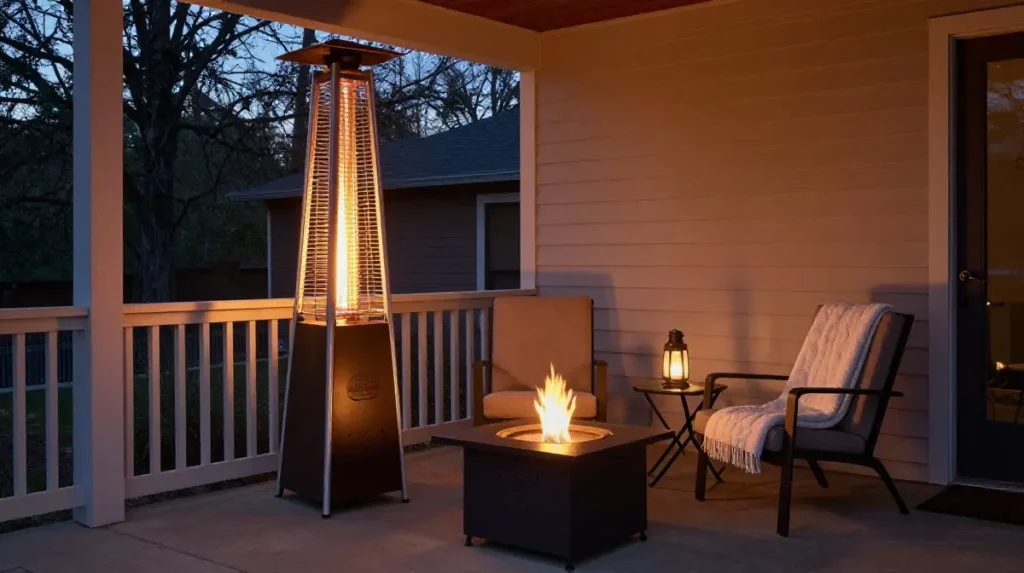
A porch becomes significantly more usable in cold weather when there is a heat source. A freestanding outdoor heater works well on covered porches and keeps a seating area genuinely warm. A portable tabletop fire pit is a smaller-scale option that also adds ambiance.
Choose a heater or fire element that fits your porch dimensions. Oversized heating equipment on a small porch creates a cluttered and unsafe setup.
Placing a Statement Winter Welcome Mat
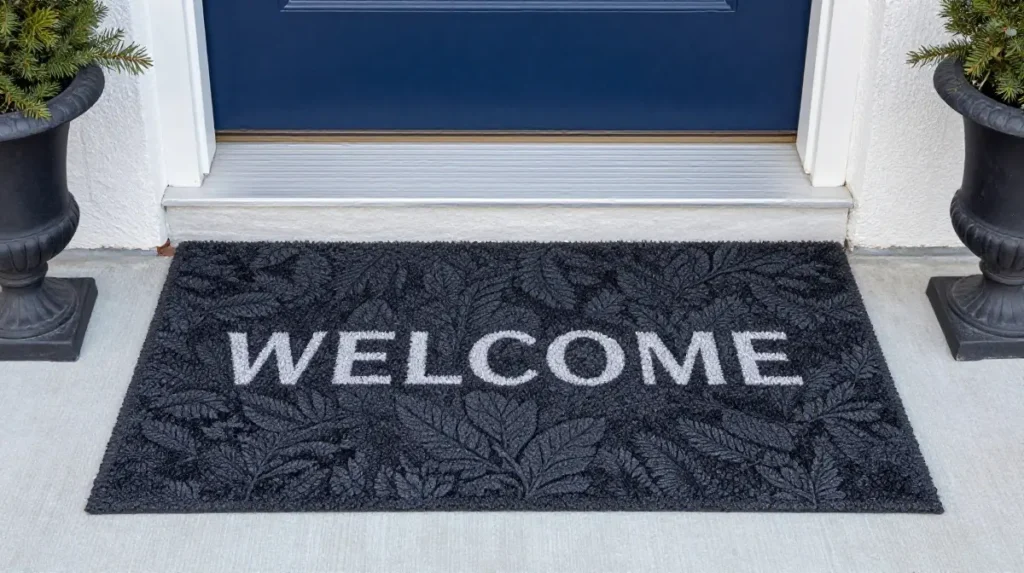
A welcome mat is a small detail that does a lot of work for curb appeal in winter. Look for mats with seasonal motifs like snowflakes, winter botanicals, or simple geometric patterns in dark, weather-tolerant tones. Avoid light-colored mats that show dirt quickly in wet winter conditions.
The mat should be wide enough to fit the door frame proportionally. A mat that is too small looks like an afterthought, no matter how nice the rest of the porch looks.
Incorporating Scandinavian and Hygge Porch Decor
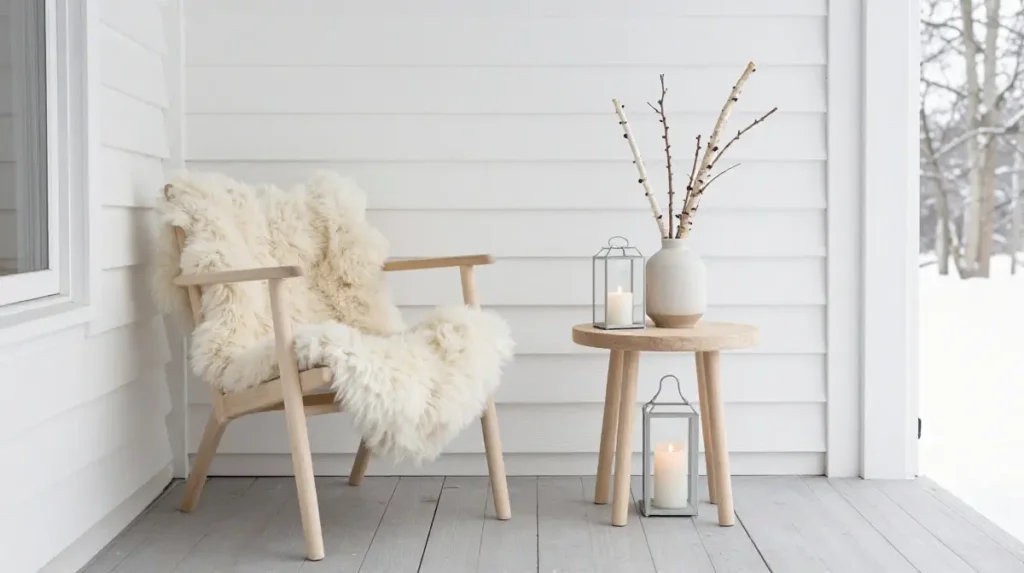
Hygge-inspired porch styling is less about specific products and more about atmosphere. The core idea is that a space should feel warm, simple, and genuinely comfortable. On a porch, that means soft lighting, natural textures, minimal clutter, and a seating area that invites you to sit down.
Nordic-style winter porch decor leans into clean lines, natural wood, sheepskin textures, and candle-like lighting. It avoids excess ornamentation in favor of a few well-chosen pieces that feel personal and calm.
Using Galvanized Metal Containers and Accents
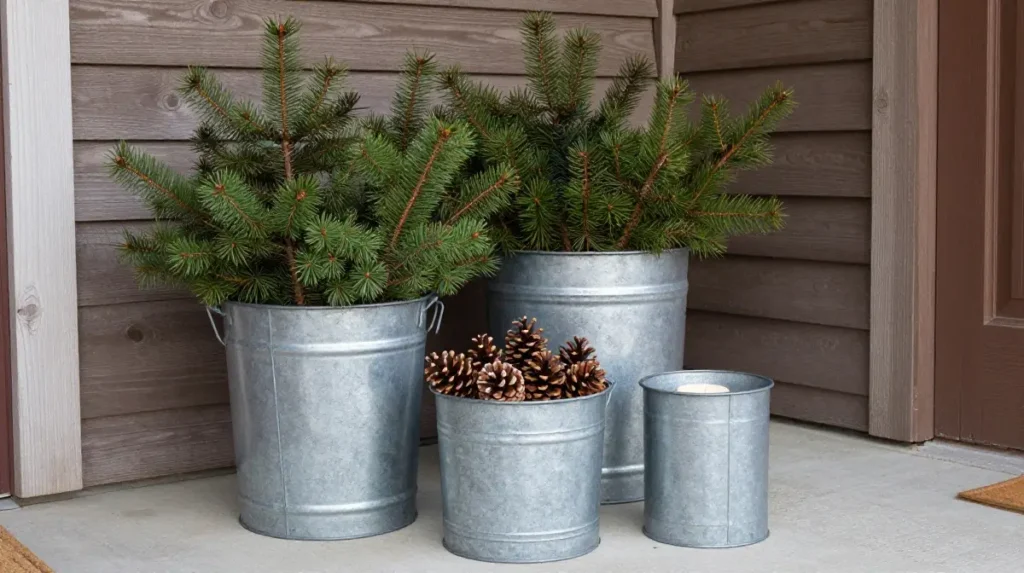
Galvanized metal is one of the most durable and versatile materials for outdoor winter decorating. It holds up in rain, snow, and freezing temperatures without rusting quickly and looks equally at home in farmhouse, industrial, or rustic porch settings.
Use galvanized buckets for pinecone storage, galvanized planters for evergreen arrangements, or a galvanized tray as a surface for grouping lanterns and candle holders.
Displaying a Seasonal Porch Garland
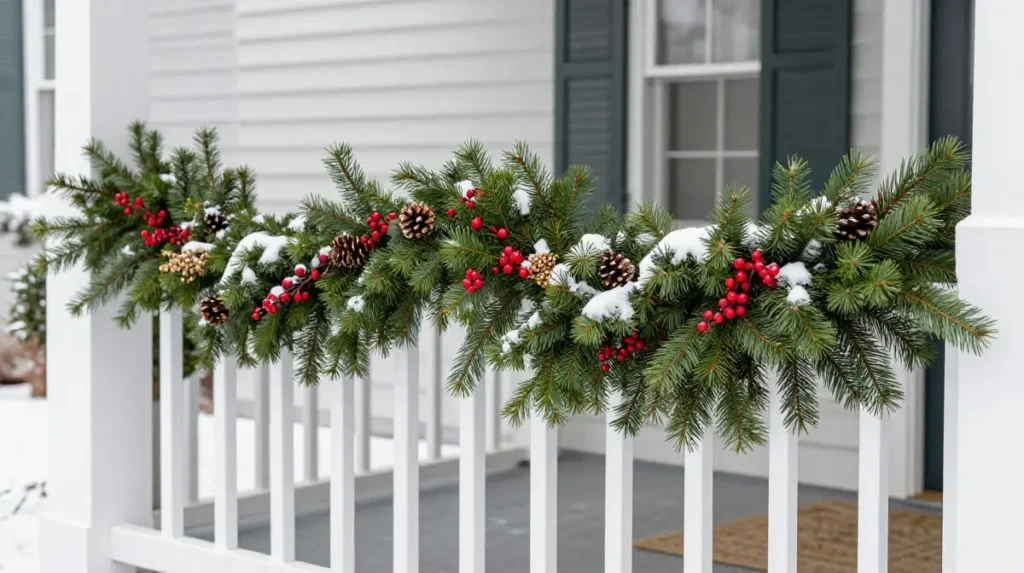
A garland along the porch railing or draped across the top of the door frame adds a horizontal line of texture and color that pulls the space together. In winter, choose garlands made from preserved or faux evergreens, eucalyptus, dried berries, or magnolia leaves.
Skip garlands that shed heavily in the cold. Some fresh-cut greenery dries out quickly in winter wind and becomes brittle and messy within a few weeks.
Keeping a Small Porch from Feeling Cluttered in Winter
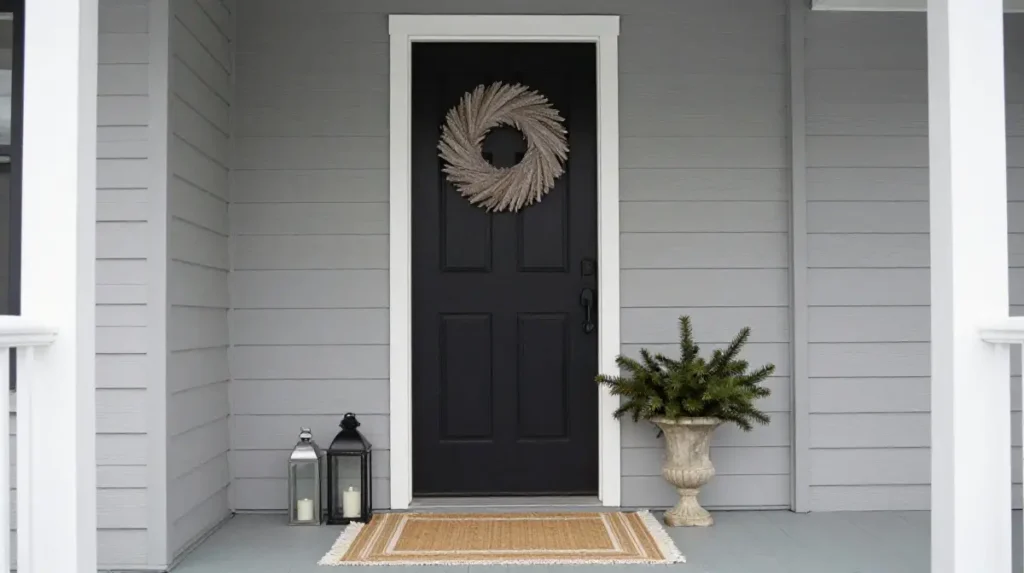
Small porch winter ideas require more editing than large porches. The temptation is to add as much as possible to make the space feel full, but restraint usually produces better results. Choose three to five key elements and make sure each one is doing visual work.
A lantern, one urn, a layered rug, and a simple wreath can be enough for a small entry porch. Adding too many competing elements makes a tight space feel chaotic rather than cozy.
Transitioning from Holiday to Post-Holiday Winter Decor
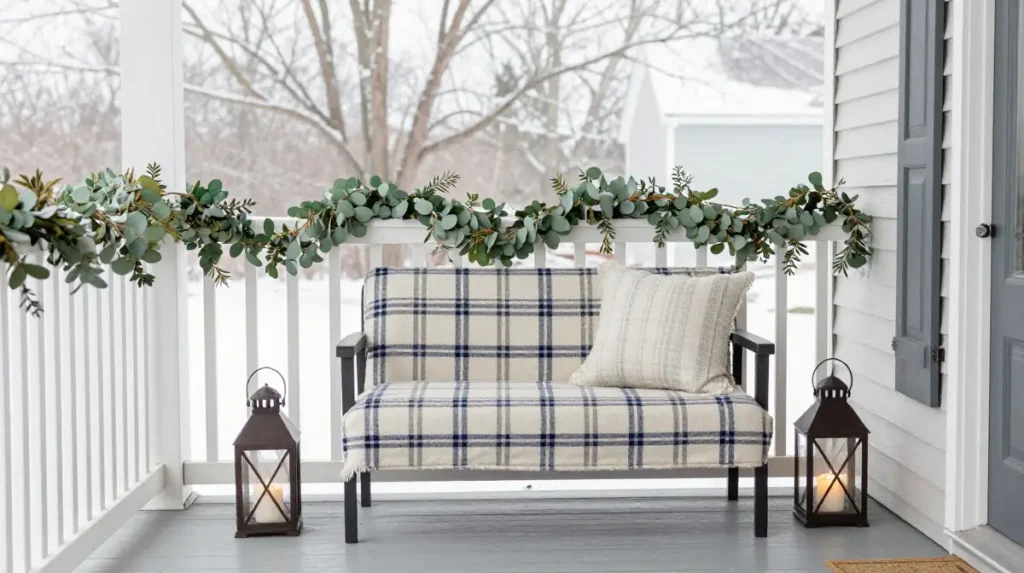
One of the most common porch decorating challenges is the gap between January and March, when holiday decor comes down and spring is still months away. Plan ahead by keeping a few non-holiday winter pieces in your styling kit: neutral lanterns, evergreen arrangements without ornaments, plaid textiles in non-Christmas colors, and natural branch bundles.
These elements carry through from December into February without looking like leftover holiday decor.
Using Outdoor Candles and Flameless Alternatives
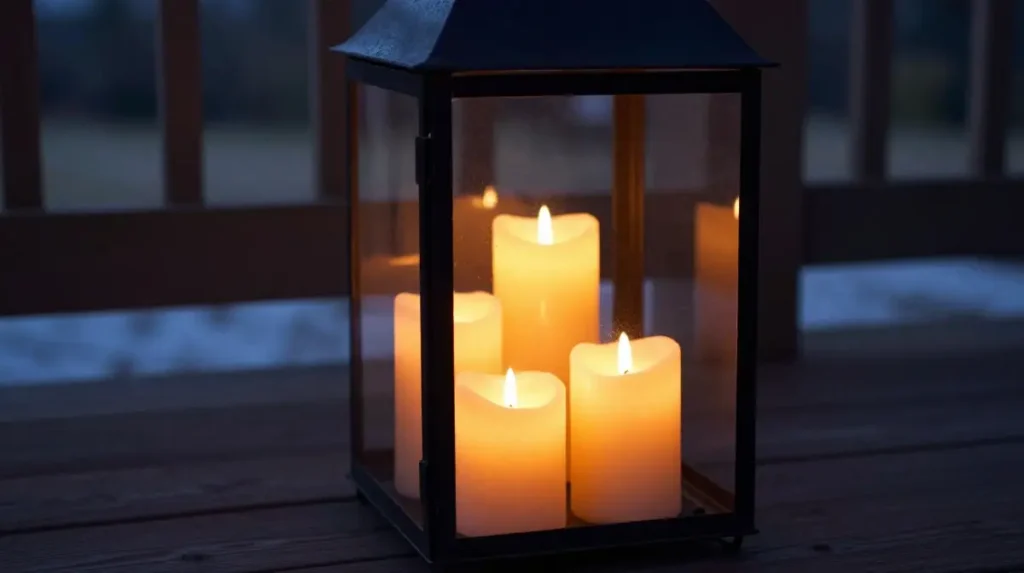
Outdoor winter candles in lanterns or pillar holders add warmth and movement to a porch after dark. In windy or exposed porches, flameless LED candles are the more practical choice. High-quality flameless candles now look convincingly real, especially inside a lantern where the flame is partially obscured.
Group candles in odd numbers for a more natural-looking arrangement. Three pillar candles of varying heights inside a single lantern look more intentional than two identical ones side by side.
Refreshing the Porch on a Budget
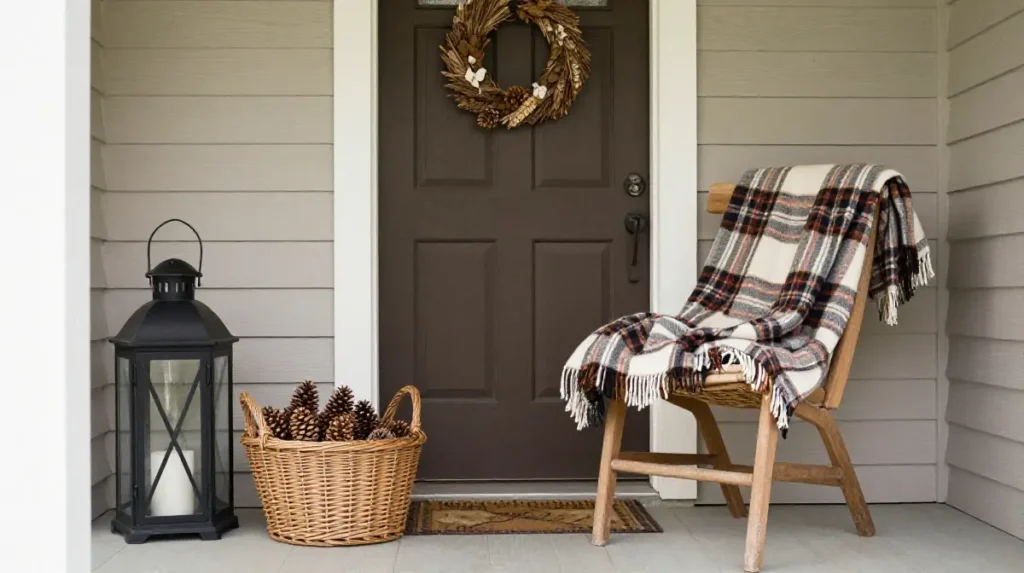
Winter porch styling on a budget starts with what you already have. Rearrange existing furniture, pull textiles from inside the house that are rated for light outdoor use, and collect natural materials like pinecones, branches, and dried seed heads from your yard or a walk.
Thrift stores often carry lanterns, baskets, and metal containers at very low prices. A can of matte spray paint in black, oil-rubbed bronze, or dark green can unify mismatched pieces into a cohesive set quickly and cheaply.
Styling the Porch Railing with Winter Greenery and Ribbon
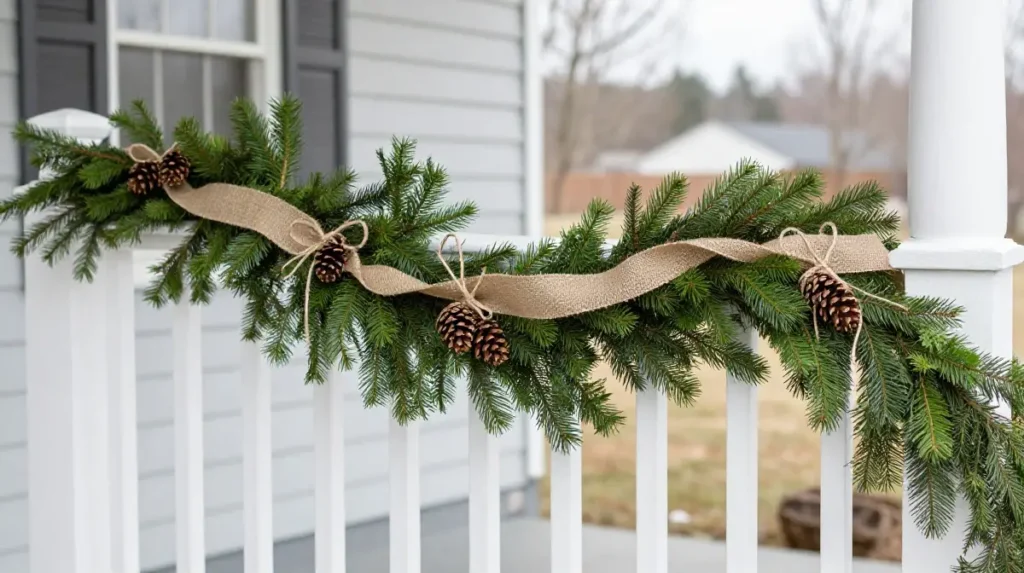
The porch railing is one of the most visible parts of your exterior, yet most people leave it completely bare through the winter months. With a little effort, it can become one of the strongest design elements in your overall winter porch styling ideas.
Start by weaving a simple garland of faux or preserved evergreen along the top rail. You do not need to cover every inch. A loosely draped garland that runs the length of the railing and hangs slightly on each end looks relaxed and intentional at the same time.
From there, you can add small accents at even intervals. A pinecone tied with a piece of natural twine, a small bundle of dried berries, or a sprig of eucalyptus tucked into the garland every foot or so adds texture without making the railing look overcrowded.
Conclusion
A winter porch does not need to be an afterthought. With a few intentional choices around lighting, natural materials, texture, and color, it can become one of the most inviting spots around your home through the coldest months of the year.
The ideas in this guide range from completely free to modestly priced, and most can be done in an afternoon. Start with the elements that appeal to you most and build from there. A good winter porch styling approach is less about following a strict plan and more about understanding what makes an outdoor space feel genuinely comfortable and worth returning to.
Whether your porch is wide and open or compact and covered, there is a winter arrangement that fits. Take what works, leave what does not, and enjoy the process of making your outdoor space feel like a natural extension of your home, even in the coldest season.
You may also like this:22 Coffee Bar Home Design Ideas for Cozy Cafe Style Corner
Frequently Asked Questions
1. What are the best materials for winter porch decor that can handle cold weather?
Galvanized metal, treated wood, weather-resistant fabric, and faux or preserved greenery all hold up well in cold temperatures. Avoid untreated natural fiber rugs in wet climates and real candles on exposed or windy porches.
2. How do I make a small porch look cozy in winter without overcrowding it?
Stick to three to five key pieces: a rug, a lantern or two, a wreath, and one seating element with a throw. Less is more on a small porch. Choose items with visual weight rather than filling every surface.
3. Can I use fresh greenery on my winter porch, or is faux better?
Fresh greenery looks beautiful for a few weeks but dries out and sheds in cold, windy conditions. Faux or preserved greenery lasts the entire season with no maintenance. For urns and wreaths that need to look great for months, preserved or high-quality faux is the practical choice.
4. What lighting works best for a winter porch?
Warm white string lights and LED lanterns are the most versatile. Avoid cool white or blue-toned lights in winter as they feel cold rather than cozy. Battery-operated or plug-in options work depending on your outlet access.
5. How do I style my porch for winter after Christmas without it looking bare?
Remove specifically holiday elements like ornaments and red-green color combinations, but keep neutral lanterns, evergreen arrangements, plaid textiles in non-holiday tones, and natural branches. These carry the winter aesthetic comfortably through January and February.

1 Comment