
Introduction
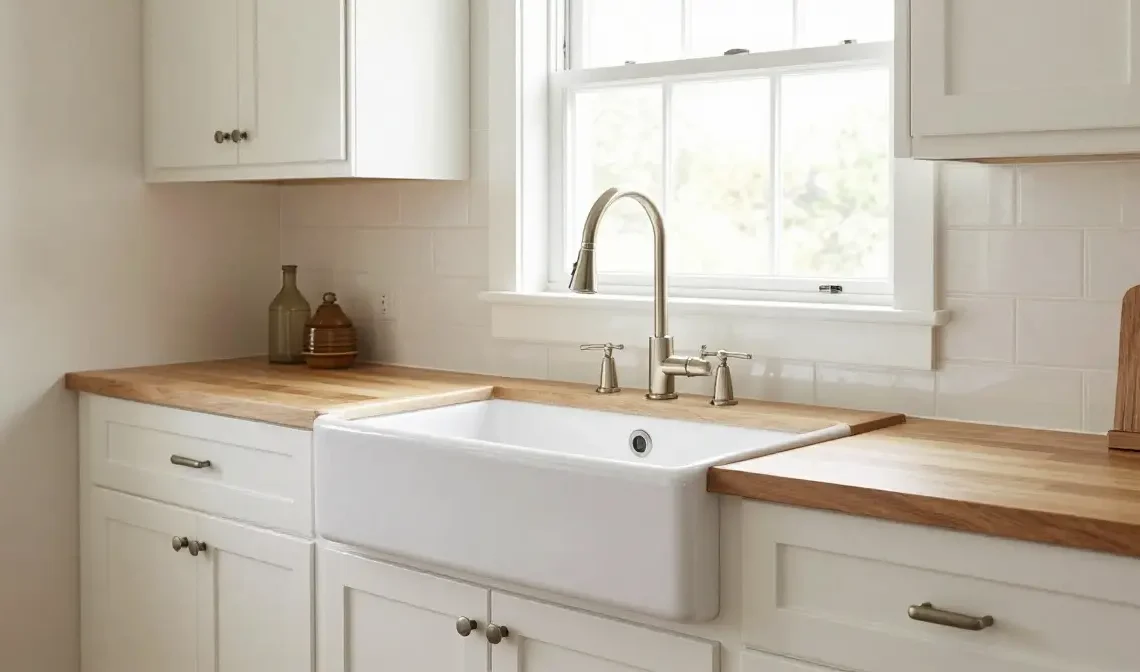
If you have ever stood in a showroom staring at sinks, wondering why something so ordinary feels like such a big decision, you are not alone. A kitchen sink isn’t just where dishes get washed. It’s where you fill the pasta pot, rinse the strawberries from the farmers market, wash a toddler’s sticky hands, and stand for longer stretches of time than almost anywhere else in the house. So when people start talking about farmhouse sink design, what they’re really asking is simple: how do I pick something that looks good for the next twenty years and still works hard every single day?
That’s exactly what this guide is for. We’re walking through twenty-two farmhouse sink design ideas that balance the look you want with the practicality you need, from materials and colors to sizing, faucet pairings, and the small mistakes that trip people up during a remodel. Whether you’re saving ideas for a Pinterest board or actually picking tile samples this week, there’s something here for your stage of the process.
The classic white fireclay sink
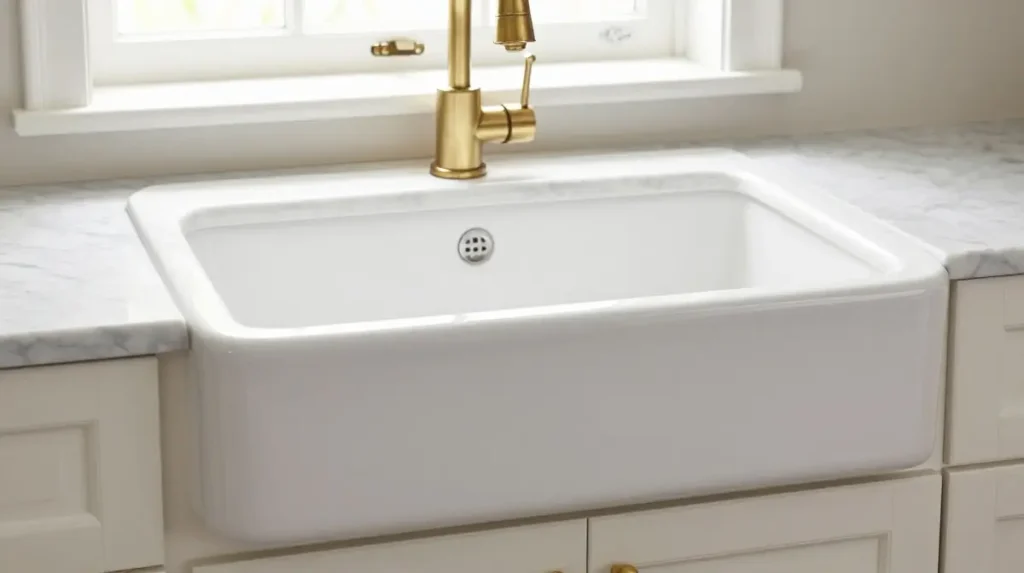
White fireclay remains the most requested option for a reason. It has a soft, almost matte finish that resists staining better than people expect, and it pairs with nearly every cabinet color from sage green to charcoal.
Fireclay is fired at extremely high temperatures, which makes it dense and chip-resistant compared to standard ceramic. If you want a sink that photographs beautifully and ages gracefully, this is your safest bet.
Stainless steel for a modern farmhouse look
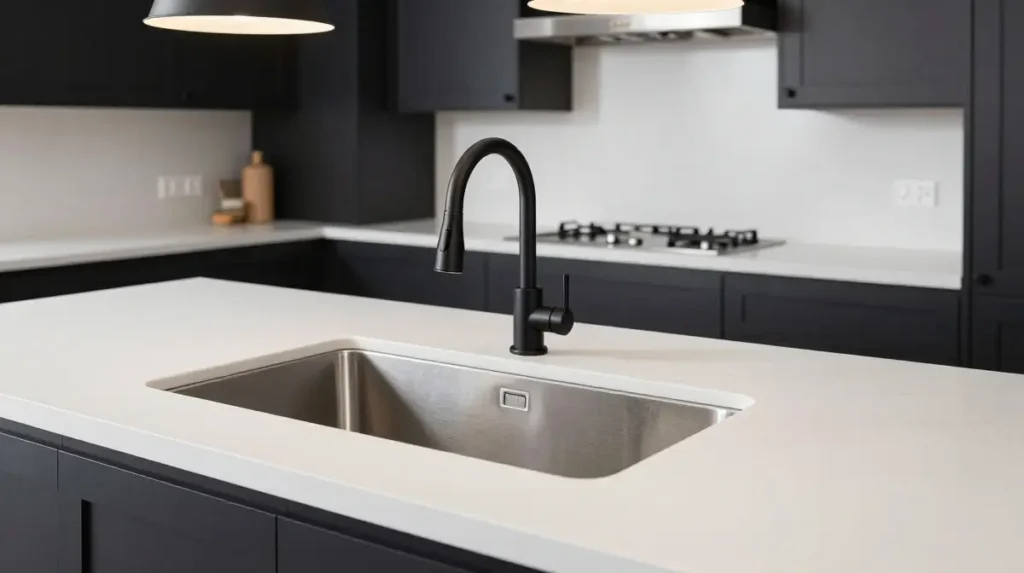
Not every farmhouse kitchen needs to look like a cottage. Stainless steel apron-front sinks bring an industrial, modern farmhouse feel, especially in kitchens with quartz countertops and matte black hardware.
They’re also lighter than fireclay or cast iron, which can simplify installation, and they handle heat and heavy pots without much worry.
Cast iron with enamel coating
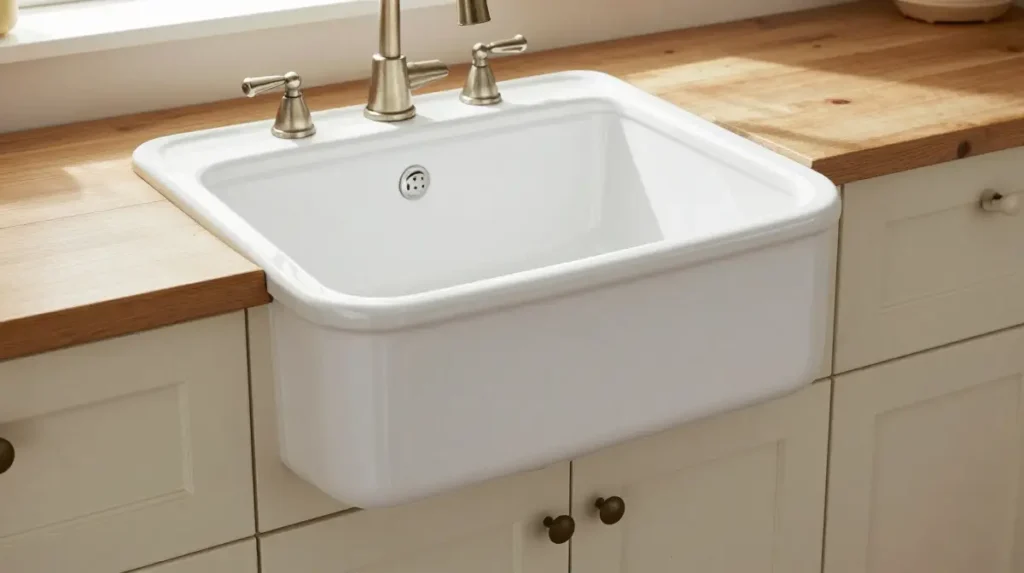
Cast iron sinks coated in enamel give you that heavy, old-world feel with a glossy finish that’s easy to wipe down.
They hold heat well, which is handy if you’re soaking pans, and the weight makes them feel sturdy under daily use. The tradeoff is that enamel can chip if you drop something heavy and sharp directly on the rim, so a sink grid is worth the small investment.
Copper farmhouse sinks for warmth
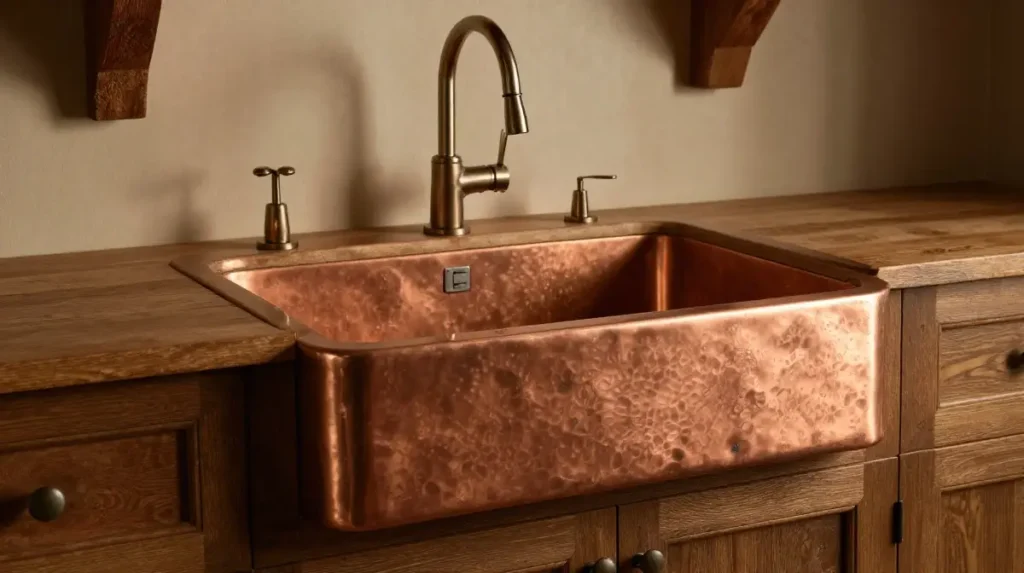
A copper farmhouse sink is one of those design choices that instantly becomes a conversation piece.
Over time, copper develops a natural patina that deepens in color, which some homeowners love and others prefer to maintain with regular polishing.
Black farmhouse sinks for contrast
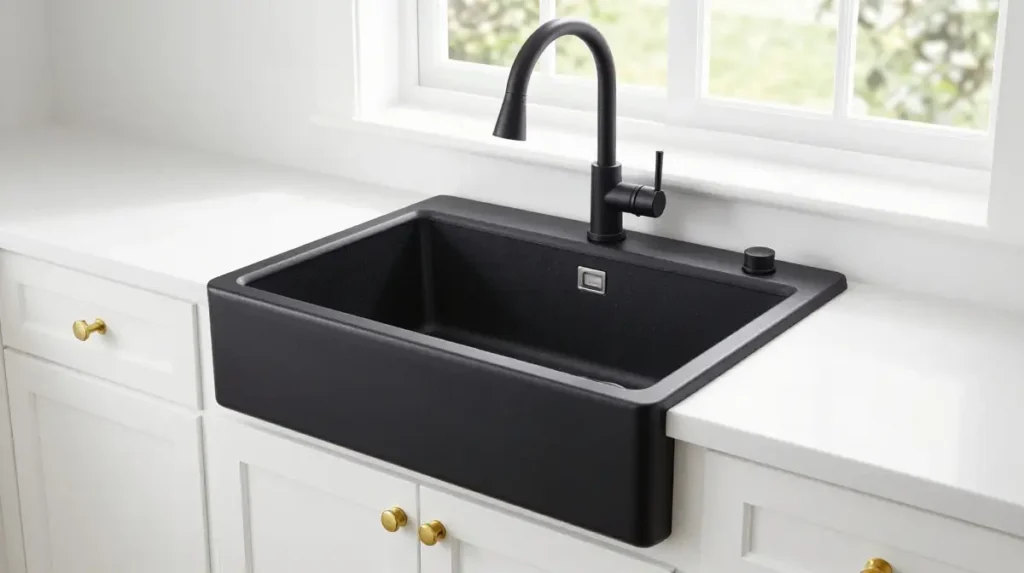
Either way, it brings warmth to a kitchen that white or stainless simply can’t replicate.## Black farmhouse sinks for contrast
Black apron-front sinks have grown from a niche choice into a real trend, especially in kitchens with white shaker cabinets and brass or matte black fixtures.
The contrast makes the sink the focal point of the room rather than something that blends into the countertop. Granite composite is the most common material for black sinks since it holds color evenly and resists scratching.
Single bowl farmhouse sink for big tasks
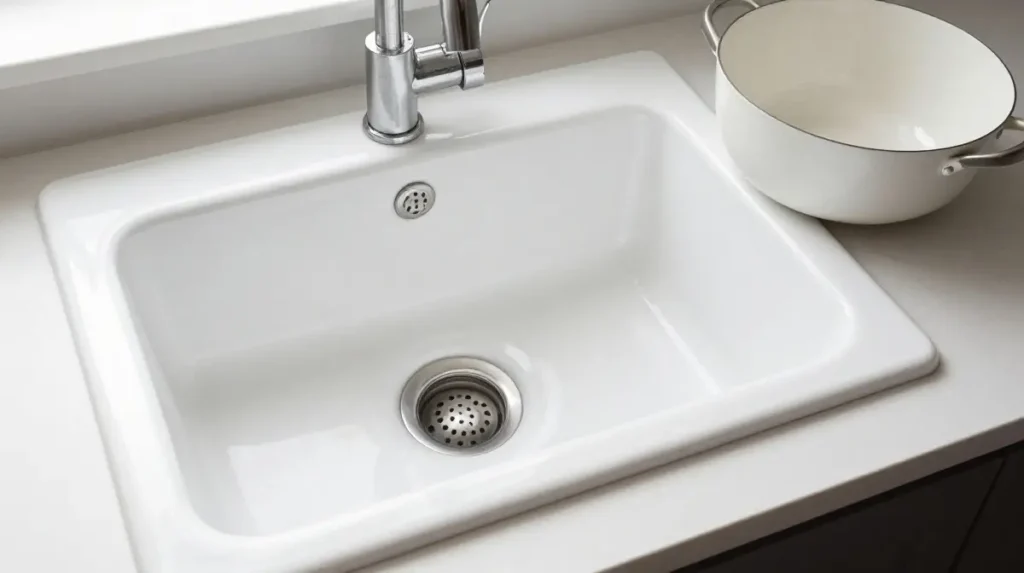
A single bowl farmhouse sink gives you one wide, uninterrupted basin, which is genuinely useful if you cook a lot, wash big pots, or have a large family. There’s no divider getting in the way when you’re soaking a baking sheet or filling a stockpot.
If your kitchen sees heavy daily use, this configuration tends to win out over a divided sink.
Double bowl farmhouse sink for everyday flexibility
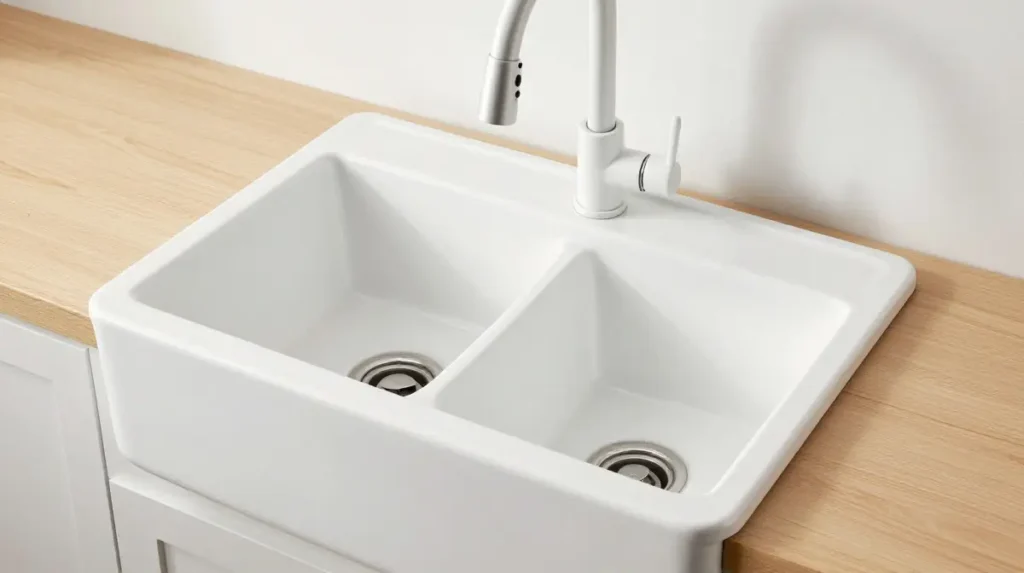
On the other hand, a double bowl farmhouse sink lets you separate tasks, like soaking dishes on one side while rinsing produce on the other.
It’s a practical pick for households that don’t need the largest possible single basin but still want the classic apron-front look with a bit more day-to-day organization.
Workstation farmhouse sinks for small kitchens
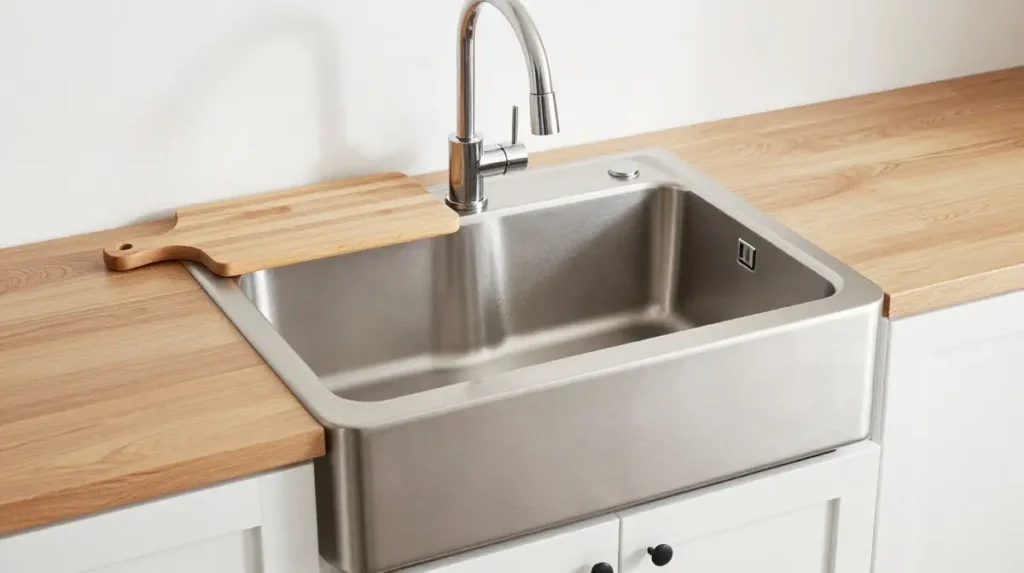
Workstation sinks have become one of the smartest farmhouse sink design trends for smaller kitchens. Built-in ledges hold cutting boards, colanders, and drying racks directly over the basin, turning the sink into extra prep space when counter room is tight.
This is a particularly good option for apartments, cottages, or any kitchen where every inch of counter matters.
Apron sink with a drainboard
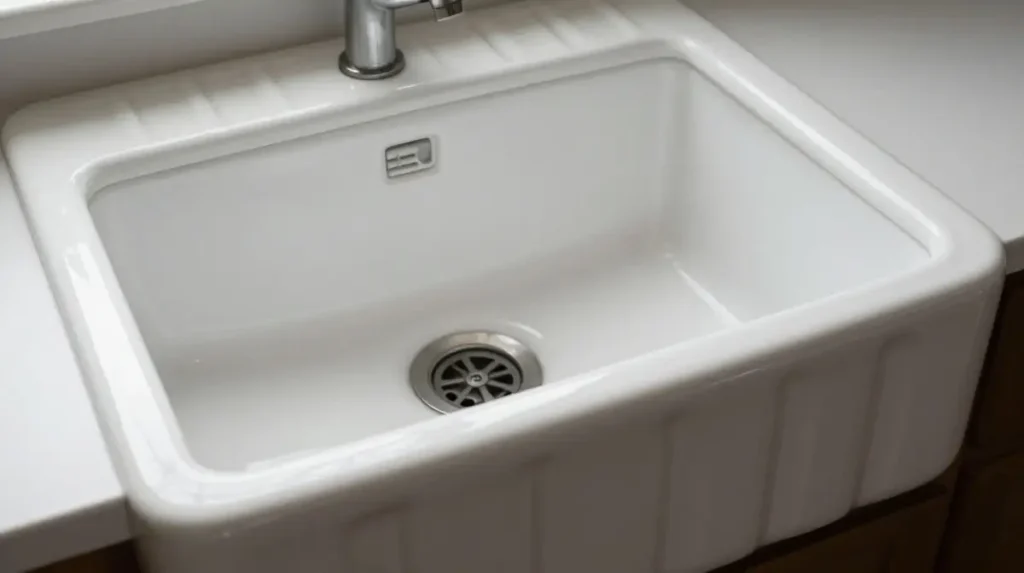
A farmhouse sink with a built-in drainboard is a nod to older Belfast and butler sink designs, where the ridged side of the basin let water run off dishes naturally.
It’s a charming detail for a vintage-inspired kitchen, and it’s genuinely useful if you don’t love using a separate dish rack on the counter.
Pairing with butcher block countertops
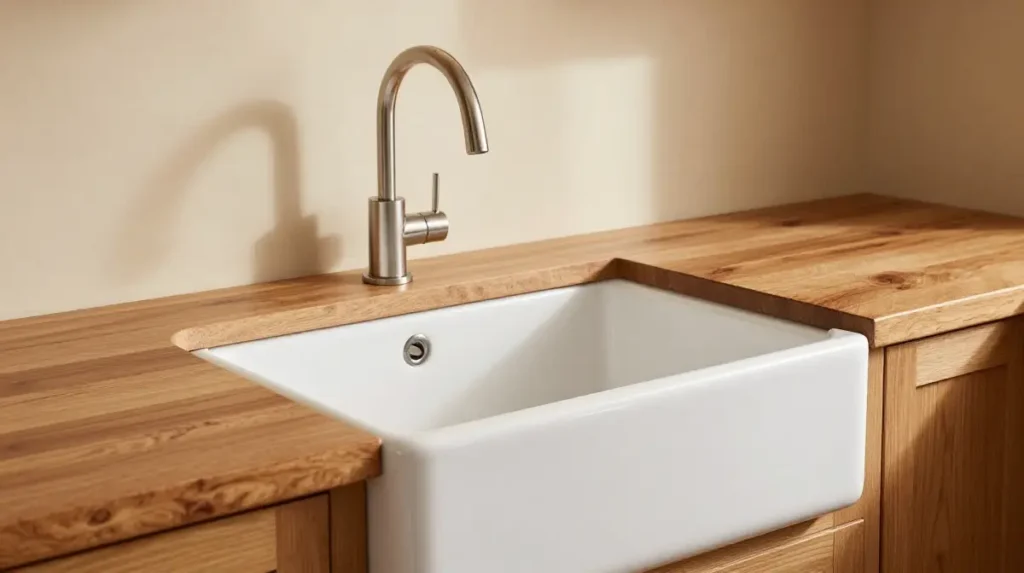
Butcher block and farmhouse sinks were practically made for each other. The warmth of the wood softens the more rugged look of an apron-front sink, especially in fireclay or stainless steel.
Just make sure the area around the sink is properly sealed, since wood near water needs more upkeep than stone.
Pairing with quartz or granite countertops
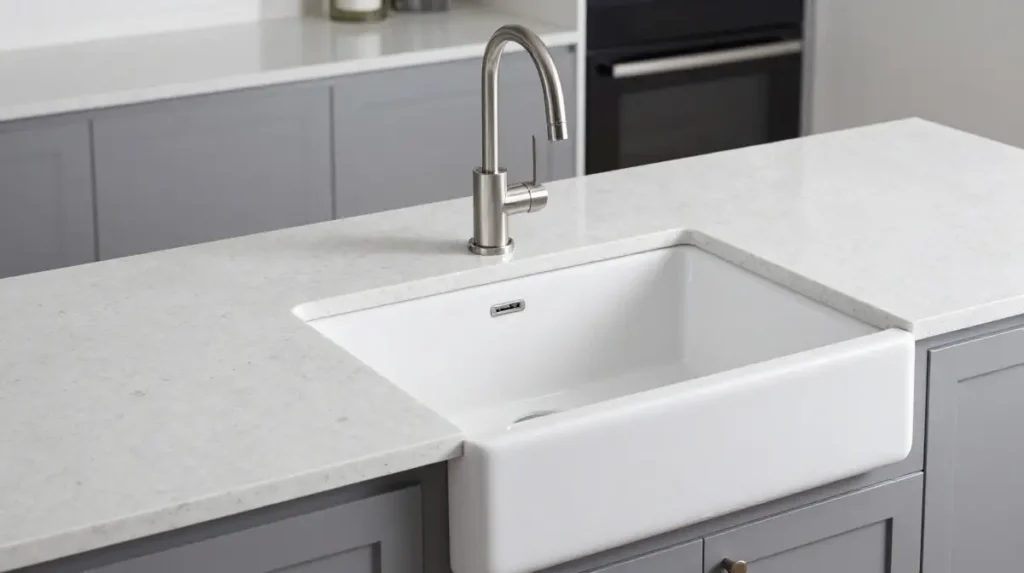
If low maintenance matters more to you than rustic charm, quartz or granite countertops pair beautifully with a farmhouse sink while keeping things practical.
Quartz resists stains and doesn’t need sealing, which makes it a strong match for busy households that still want the classic sink silhouette.## Subway tile backsplash for a timeless backdrop
Subway tile backsplash for a timeless backdrop
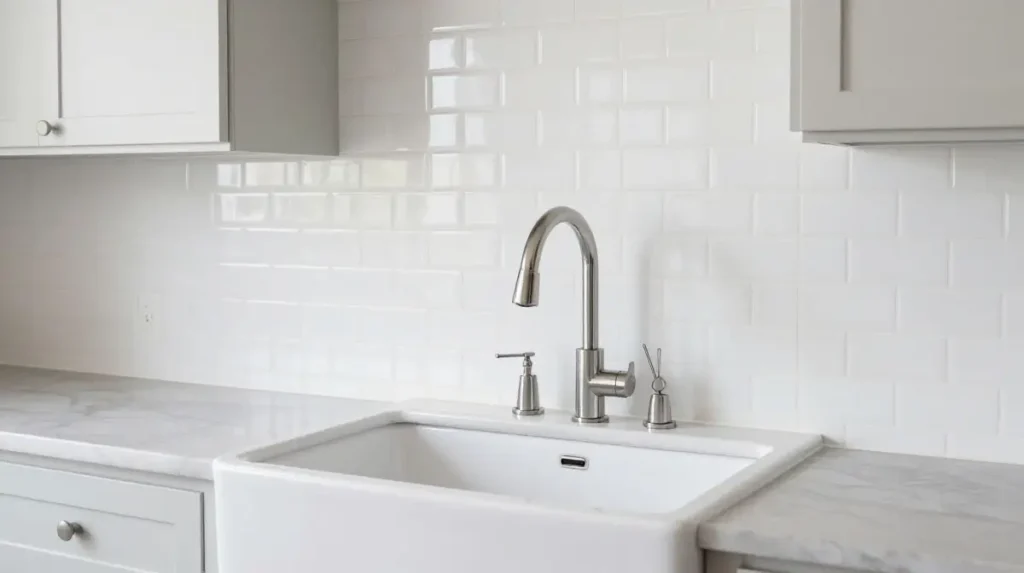
Subway tile remains one of the most common backsplash choices behind a farmhouse sink, and it earns the title of timeless for good reason.
Its simple, rectangular shape doesn’t compete with the apron-front sink for attention, and it works whether your cabinets are bright white or a deep forest green.
Open shelving above the sink area
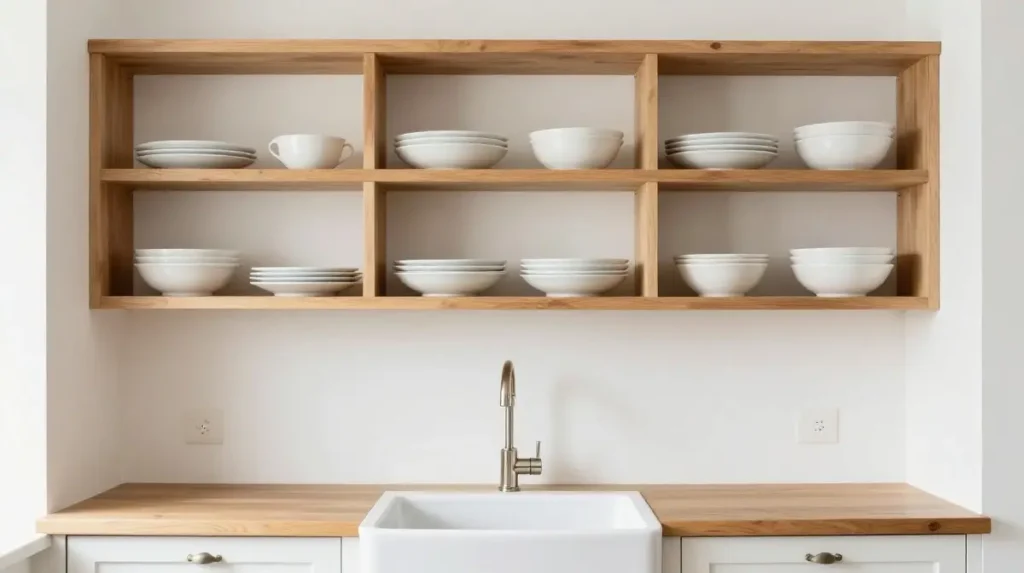
Open shelving near a farmhouse sink gives the kitchen a lighter, more lived-in feel. It works especially well when paired with simple ceramic dishware, since the openness draws the eye toward the sink and countertop rather than closed cabinet doors.
Just keep in mind that open shelves need more regular dusting and tidying than a closed cabinet would.
Exposed wood beams for rustic charm
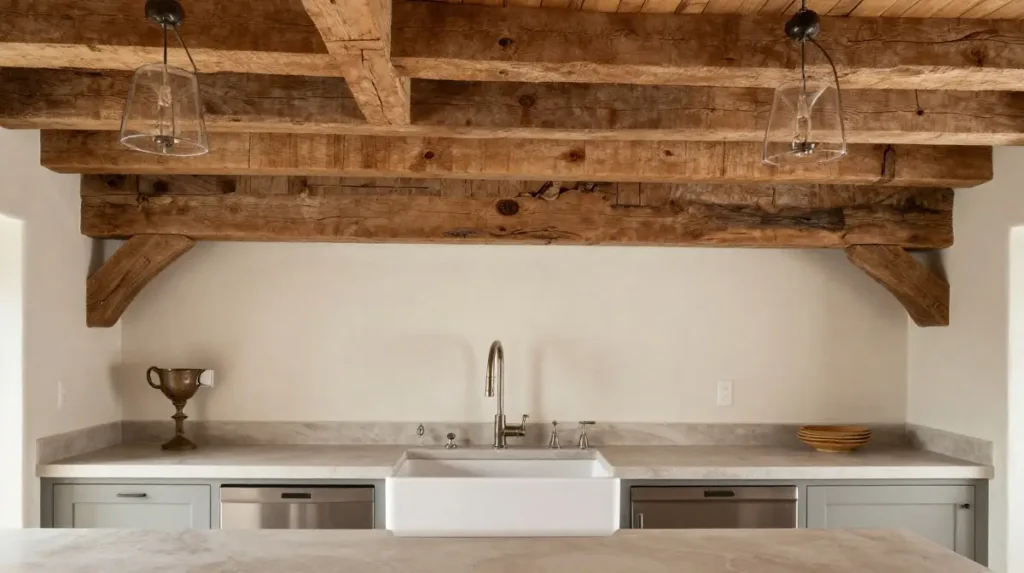
If your kitchen has the structural bones for it, exposed wood beams above a farmhouse sink area create an instant rustic anchor.
This pairing works particularly well in kitchens that already lean toward a country or cottage style, tying the ceiling detail back down to the sink as a visual through-line.
Farmhouse sink on a kitchen island
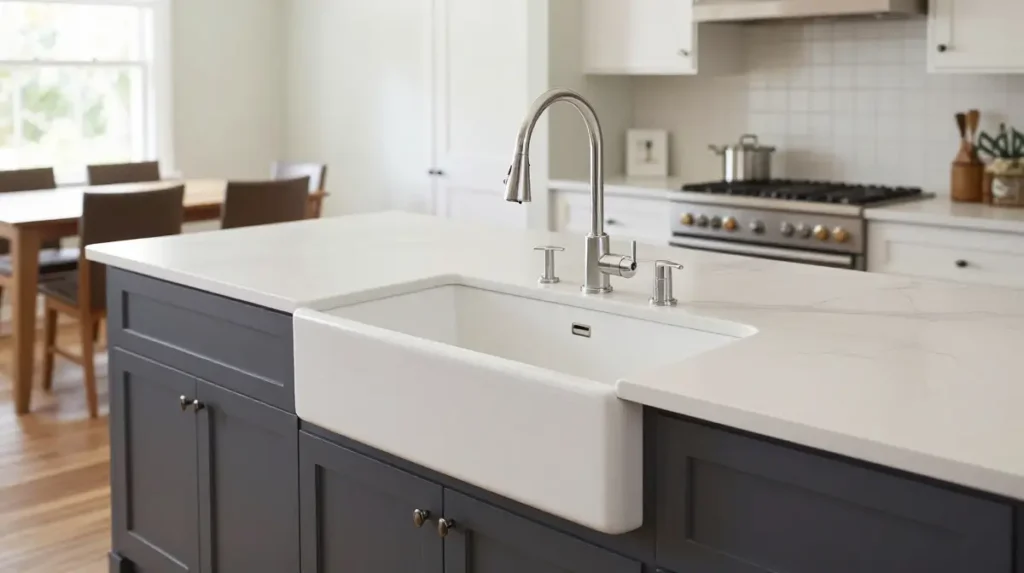
Placing a farmhouse sink on a kitchen island, rather than against the wall, has become a popular layout for open-concept homes.
It lets the person washing dishes face the rest of the room instead of a wall, which is a small change that makes a big difference during family gatherings or while keeping an eye on kids.
Bridge faucets for a vintage feel
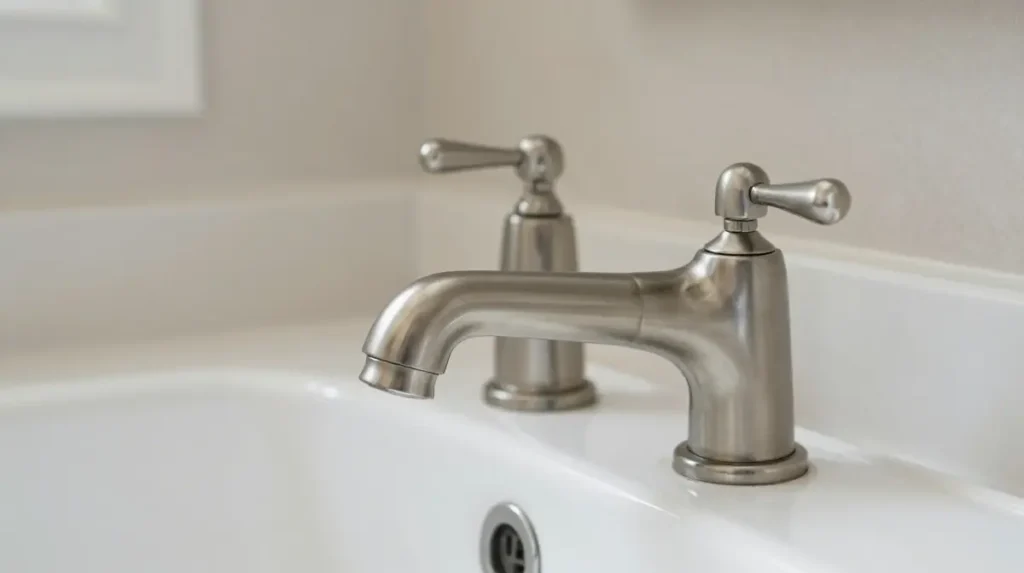
A bridge faucet, with its raised connecting bar between the two handles, pairs naturally with a farmhouse sink’s old-world silhouette.
It’s a detail that signals intentional design rather than a quick fixture swap, and it’s available in finishes from polished nickel to matte black depending on your kitchen’s overall palette.
Gooseneck faucets for practicality
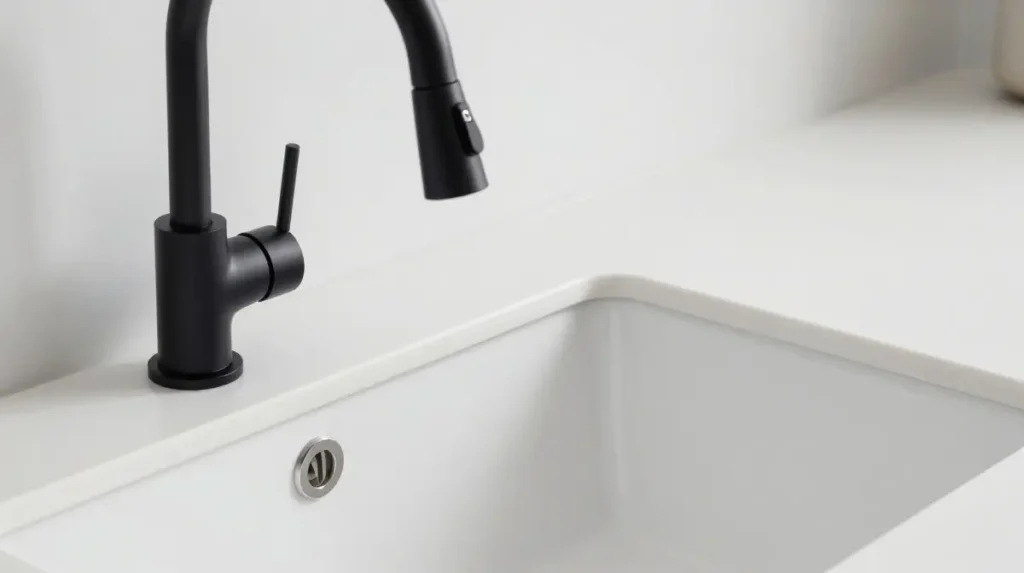
If you want function over form, a tall gooseneck or pull-down faucet gives you more clearance for filling large pots and washing oversized dishes, which a farmhouse sink’s deep basin practically demands.
This is a smart pick if your sink doubles as the main prep and cleanup zone in a busy household.
Small kitchen farmhouse sink solutions
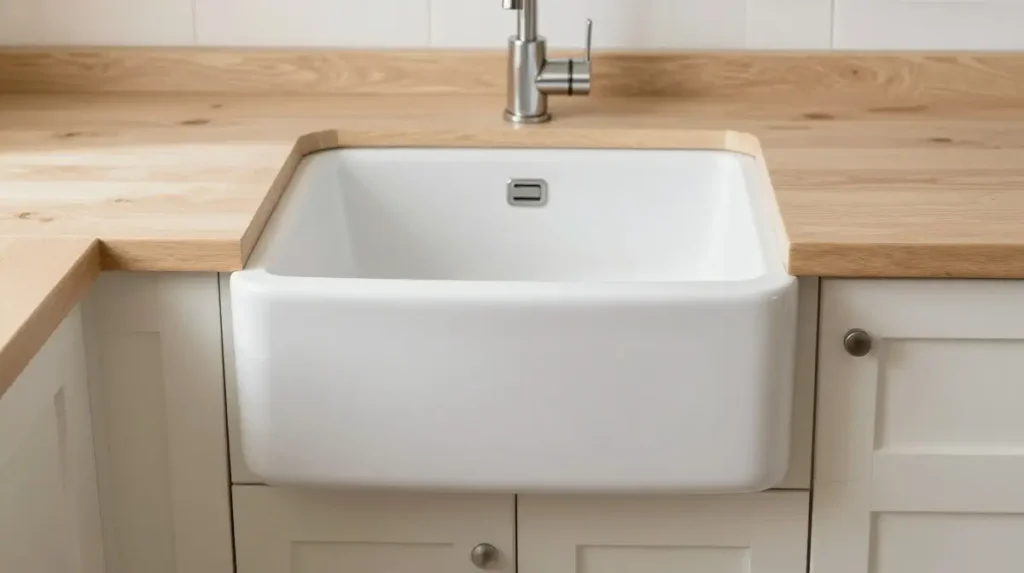
A farmhouse sink doesn’t have to mean a massive 36-inch basin. Narrower 24 to 27-inch options exist specifically for smaller kitchens, giving you the same apron-front charm without overwhelming a compact cabinet run.
Pairing a smaller sink with a simple, straight apron front keeps the look clean rather than crowded.## Coastal farmhouse sink styling
Coastal farmhouse sink styling
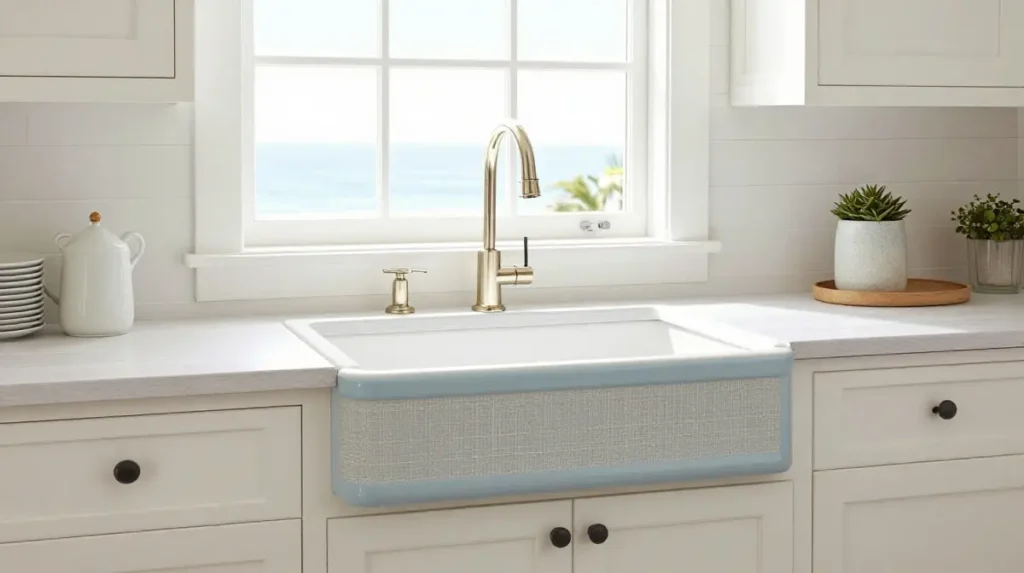
A coastal take on farmhouse sink design usually means a bright white or soft blue basin paired with light cabinetry, woven textures, and natural light.
It keeps the classic apron-front shape but trades rustic wood beams for airy, breezy finishes, which works particularly well in beach or lake house kitchens.
Industrial farmhouse sink pairing
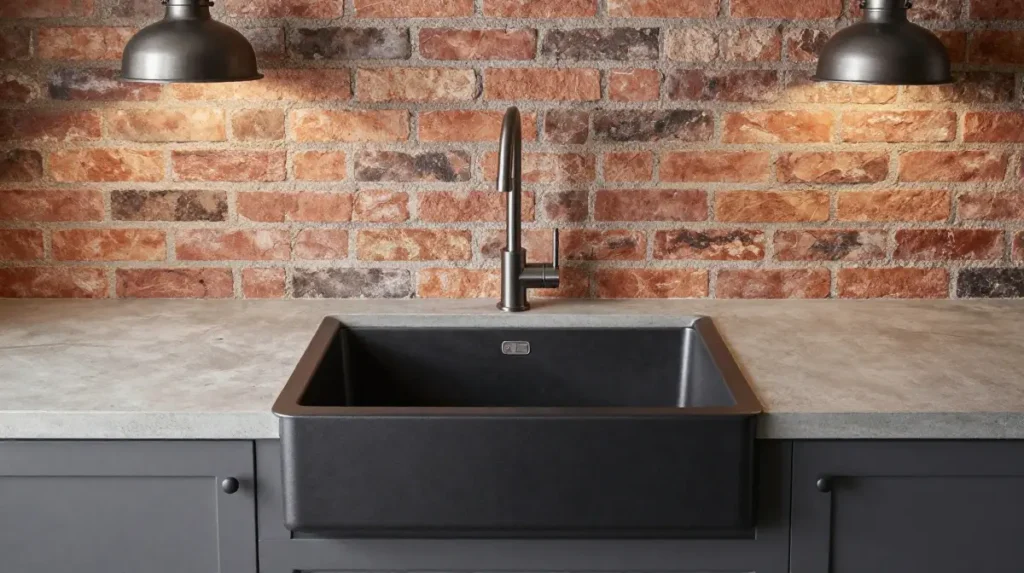
For a more industrial farmhouse look, a stainless steel or matte black sink pairs with exposed brick, metal pendant lighting, and concrete-style countertops.
It’s a slightly edgier interpretation of farmhouse style, proving the apron-front sink isn’t locked into one decorating box.
Vintage farmhouse sink details
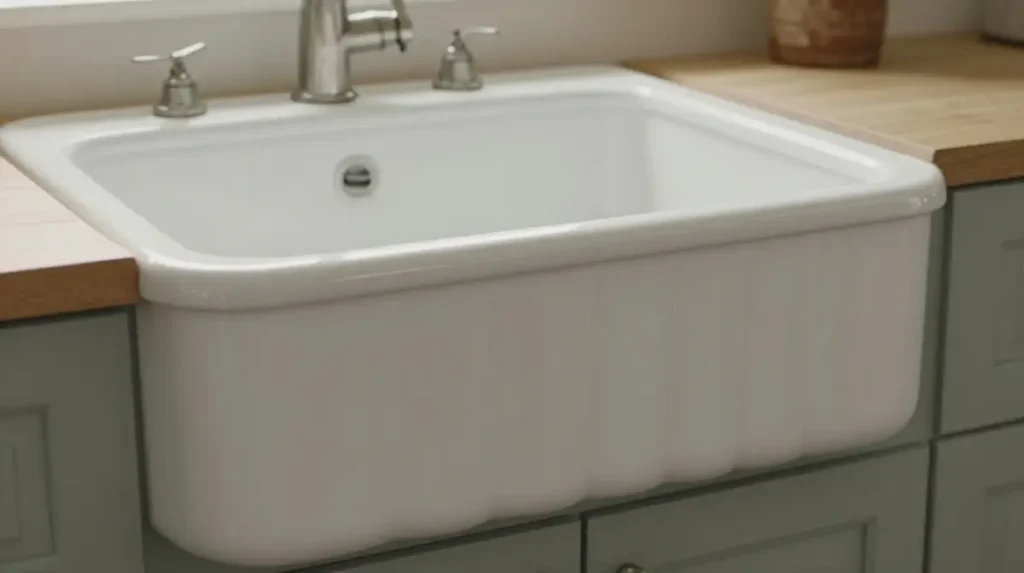
A ridged or fluted apron front, sometimes called a Belfast or butler sink, brings genuine vintage character to a kitchen.
These details were originally functional, helping water drain off dishes, but today they’re mostly chosen for the textured, old-house look they add to an otherwise modern kitchen.
Sink accessories that add daily function
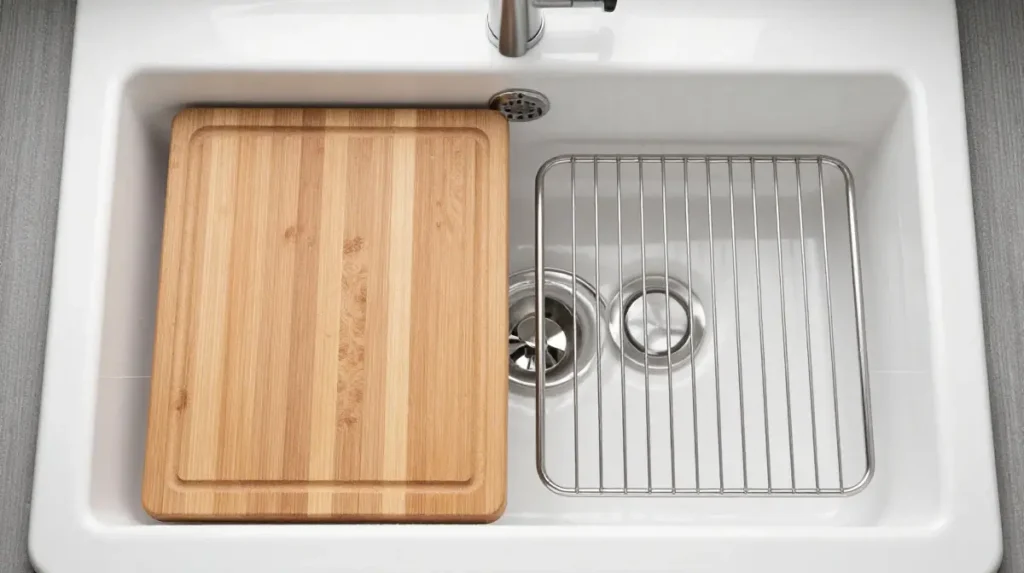
Beyond the sink itself, small accessories make a real difference in daily use.
A fitted cutting board that rests across the basin, a sink grid that protects the bottom from scratches and chips, and a compact dish rack sized to your basin all extend the life of your sink and make it more useful day to day.
Quick Camparision Table:
| Material | Average Price Range | Durability | Maintenance | Best For |
|---|---|---|---|---|
| Fireclay | Mid to high | Very high, chip resistant | Low, easy to wipe clean | Classic and modern farmhouse kitchens |
| Stainless steel | Low to mid | High, dent resistant | Low, but shows water spots | Modern and industrial kitchens |
| Cast iron (enamel) | Mid to high | High, but enamel can chip | Moderate | Traditional and cottage kitchens |
| Copper | High | High, develops patina | Moderate to high, may need polishing | Warm, rustic kitchens |
| Granite composite | Mid to high | Very high, scratch resistant | Low | Bold color and contrast kitchens |
Conclusion
If a full fireclay or copper sink is outside your budget, stainless steel apron-front sinks offer the same silhouette at a noticeably lower price point. Pairing a budget sink with a strong faucet choice and simple, well-fitted cabinetry can still deliver a high-end look without the high-end price tag.
So whether you’re drawn to the clean simplicity of white fireclay, the warmth of copper, or the practicality of a workstation design, a farmhouse sink really does work across a wide range of kitchen styles. The apron-front shape has stuck around for well over a century because it solves a real problem: it gives you more room to work, more durability where you need it most, and a look that doesn’t go out of style after one design trend fades. Start with how you actually use your kitchen, match the material to your maintenance comfort level, and the rest of the design tends to fall into place naturally.
You may also like this: 22 Rustic Farmhouse Kitchen Design Ideas for Cozy Spaces
Frequently Asked Questions
Is a farmhouse sink hard to install? Farmhouse sinks are heavier and require a properly sized base cabinet, so professional installation is recommended, especially for fireclay or cast iron models.
What is the most durable farmhouse sink material? Fireclay and granite composite are generally the most chip and scratch resistant, making them good choices for daily heavy use.
Can a farmhouse sink fit in a small kitchen? Yes, narrower 24 to 27-inch farmhouse sinks are designed specifically for smaller kitchens without overwhelming the space.
Do farmhouse sinks work with modern kitchens? Absolutely. Stainless steel and black granite composite farmhouse sinks pair well with modern and industrial kitchen styles, not just traditional ones.
How do I clean a fireclay farmhouse sink? A soft cloth with mild dish soap is usually enough for daily cleaning, and a non-abrasive cleaner can handle tougher stains without scratching the surface.