
Introduction
There is something calming about walking into a room that feels lived in, warm, and honest. Primitive living room design brings back that feeling. It leans on natural materials, simple shapes, and a little imperfection, which is exactly what makes it feel so welcoming instead of stiff or overly polished.
If you have ever felt like your living room looks nice but not cozy, this style might be the fix. Primitive decor is not about spending a lot of money. It is about choosing pieces with character, mixing textures, and letting a little wear and history show instead of hiding it.
This guide walks through 22 practical primitive living room design ideas, along with real styling tips, mistakes to avoid, and simple ways to bring rustic charm into your own space without a full renovation.
Rustic Wood Furniture Pieces

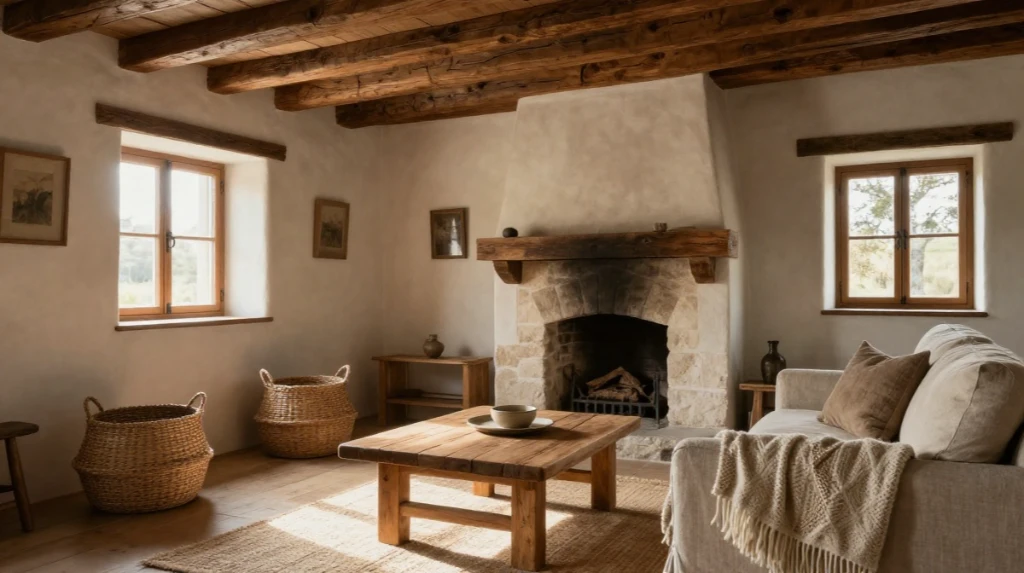
Wood is the backbone of any primitive living room design, and it should feel a little rough around the edges rather than perfectly smooth. Think chunky coffee tables, solid wood benches, and simple wooden side tables with visible grain and natural imperfections. This kind of furniture gives the room an honest, grounded feeling instead of a showroom look.
If you are shopping on a budget, look at secondhand shops or estate sales before buying new. A worn wooden bench with a few scratches often looks more authentic than a brand new piece. Avoid furniture with high gloss or shiny lacquer finishes, since that tends to clash with the primitive style.
Stone Fireplace as a Focal Point

A stone or aged brick fireplace instantly anchors a primitive living room. It becomes the natural gathering point, the same way it would have been in an old farmhouse or cabin. Even a smaller stone surround can make the whole room feel more grounded and intentional.
If you already have a plain fireplace, you do not need to rebuild it. A simple wooden mantel, some dried greenery, and a few candleholders can transform the look without major construction. Keep the styling on the mantel simple so the stone or brick texture stays the star of the space.
Exposed Wooden Beam Ceilings

Exposed wood beams add height, texture, and old world charm to a living room. They break up a plain ceiling and give the eye something interesting to follow. This detail is common in colonial and pioneer style homes, and it still works beautifully in modern spaces.
If real structural beams are not an option, decorative faux beams can create a similar effect at a much lower cost. Choose a finish that is slightly weathered rather than perfectly stained, since a raw wood ceiling beam should look like it has history behind it.
Earthy Neutral Color Palette

Primitive living room design leans heavily on a muted color palette. Think warm browns, soft tans, deep greens, and faded reds instead of bright or trendy colors. These earthy tones mimic the natural materials used throughout the space and keep everything feeling calm.
When picking paint or fabric colors, test a few swatches in natural daylight before committing. Colors that look good under artificial light can shift completely once the sun hits them. Sticking with two or three main tones keeps the room cohesive instead of busy.
Vintage and Antique Accent Pieces

Antique furniture and decor give a primitive living room its sense of history. An old wooden crate used as a side table, a vintage mirror with a distressed frame, or an aged lantern all add personality that new items simply cannot copy. These pieces tell a story just by sitting in the room.
Flea markets, thrift stores, and family hand me downs are great sources for authentic vintage furniture. You do not need a whole room of antiques. Even two or three well placed pieces can shift the entire feel of the space.
Woven Baskets for Storage

Woven baskets are both practical and decorative in a primitive living room. They hide clutter like blankets, magazines, or toys while adding natural texture at the same time. A stack of different sized baskets near the sofa looks intentional rather than messy.
Choose baskets made from natural materials like seagrass, rattan, or willow rather than plastic versions. If storage space is limited, a single large basket under a side table can still make a noticeable difference in how tidy the room feels.
Handcrafted Wall Art

Handcrafted or folk art style wall pieces bring warmth and individuality to primitive decor. This might include simple stitched samplers, hand painted signs, or wooden carved artwork. These pieces feel personal rather than mass produced, which fits the primitive style perfectly.
If you enjoy do it yourself projects, this is an easy area to start. A simple stenciled saying on reclaimed wood or a hand painted small canvas costs very little and adds a lot of charm. Group two or three pieces together instead of scattering them randomly around the room.
Wool and Linen Textiles

Natural fabrics like wool and linen are essential to primitive living room design. Wool throw blankets, linen curtains, and cotton cushion covers all add softness while staying true to the natural, handmade feeling of the style. Synthetic fabrics tend to look out of place here.
When layering textiles, mix textures rather than patterns. A chunky knit throw paired with a plain linen cushion looks more balanced than several busy patterns competing for attention. Wash natural fibers gently to keep them soft and long lasting.
Reclaimed Barn Wood Accents

Barn wood furniture and accents bring an authentic, weathered look that cannot be faked easily. A reclaimed wood shelf, picture frame, or accent wall adds texture and history at the same time. The slightly rough, aged surface is part of the appeal.
If sourcing real barn wood is difficult in your area, many home stores sell reclaimed style wood panels that mimic the same texture. Seal the wood lightly if you plan to use it near high traffic areas, so it holds up over time without losing its natural character.
Wrought Iron Light Fixtures

Wrought iron fixtures, whether it is a chandelier, wall sconce, or lantern style lamp, add a rustic edge to primitive living rooms. The dark, slightly rough metal pairs beautifully with natural wood tones and stone surfaces, creating a nice contrast in materials.
Choose fixtures with a matte or aged black finish rather than polished chrome or brass, since shiny metals feel too modern for this style. Dimmable bulbs are a smart addition, since softer lighting enhances the cozy, candlelit rustic ambiance this style is known for.
Open Shelving with Rustic Charm

Open wooden shelving is both functional and visually appealing in a primitive living room. It gives you a place to display books, pottery, or small antique items while keeping the wall from feeling too bare. Unlike closed cabinets, open shelving keeps the room feeling airy.
Avoid overcrowding the shelves. Group items in small clusters of two or three with some empty space between them. This creates a curated look rather than a cluttered one, and it makes each piece easier to notice and appreciate.
Layered Textured Rugs

Rugs add warmth underfoot and help define the seating area in an open living room. In primitive design, natural fiber rugs like jute or wool work best, often layered with a smaller vintage style rug on top for extra texture and interest.
If you are working with a smaller budget, a single well chosen rug can still make a big impact. Look for muted patterns or solid earthy colors rather than bold geometric prints, which tend to feel too contemporary for this style.
Distressed Furniture Finishes

Distressed finishes give furniture that authentic, well loved appearance that defines primitive decor. This could mean a chipped painted cabinet, a worn wooden chair, or a table with visible knots and grain. The slight imperfections are part of the charm, not a flaw to hide.
If you want to distress a piece yourself, light sanding along the edges and corners creates a natural worn look. Take your time and step back often to check the effect, since it is easier to sand more than to undo an overly distressed finish.
Colonial Inspired Seating

Colonial and early American style seating, like ladder back chairs or simple wingback chairs, fits naturally into a primitive living room. These pieces have clean, functional shapes without unnecessary detail, which keeps the room feeling grounded and practical.
Reupholstering an old chair in a simple linen or cotton fabric is often cheaper than buying new and gives you a piece with real character. Look for solid wood frames, since they tend to last much longer than modern particleboard alternatives.
Dried Flower and Botanical Decor

Dried flowers, wheat stems, and botanical arrangements bring a soft, natural touch to primitive living rooms without needing regular watering or care. A simple dried flower arrangement in a stoneware vase adds color and texture with almost no maintenance.
Rotate your dried arrangements seasonally to keep the room feeling fresh. Lavender, eucalyptus, and wheat are easy to find and hold their shape well over time, making them a low effort way to add natural beauty to any shelf or table.
Galvanized Metal Accents

Galvanized metal buckets, trays, and containers add an industrial, farmhouse touch that pairs surprisingly well with primitive wood and stone elements. They are practical too, working well as planters, storage containers, or simple decorative pieces on a shelf.
Mix galvanized metal sparingly so it accents the space rather than dominates it. One or two pieces, like a metal tray under a candle display, is usually enough to add contrast without making the room feel cold.
Quilted Throws and Pillows

Quilted textiles carry a lot of history in primitive design, often tied to handmade traditions passed down through generations. A quilted throw across the back of a sofa or a few quilted pillow covers add pattern and warmth without overwhelming the room.
If you have an old family quilt, even a worn one, consider displaying it rather than storing it away. Draping it over a chair or wooden ladder turns a sentimental item into a meaningful piece of decor.
Candlelit Ambiance with Rustic Holders

Soft, warm lighting is a big part of what makes primitive living rooms feel cozy. Rustic candleholders made from wood, iron, or aged metal create a gentle glow that complements the natural materials throughout the room.
Group candles of different heights together on a mantel or tray for a simple, effective display. If open flames are a concern, flameless candles now come in realistic designs that still give off that same warm, flickering light.
Exposed Brick Wall Accents

An exposed brick wall, even a small section, adds texture and warmth that plaster or drywall simply cannot match. It works especially well behind a fireplace or as a feature wall, giving the room an aged, established feeling.
If your walls are not brick, textured wallpaper or brick style panels can create a similar look for much less cost and effort. Keep furniture and decor near the brick wall simple, so the texture itself remains the focal point.
Farmhouse Style Sofa Choices

A farmhouse style sofa, usually upholstered in a simple linen or cotton fabric with slightly rolled arms, fits naturally into a primitive living room. Neutral colors work best here, since they blend easily with the wood tones and textiles around them.
Slipcovered sofas are a practical choice for this style, since they are easier to clean and can be swapped out as your color scheme changes. Choose a sturdy, low profile frame that feels solid rather than overly plush or modern.
Primitive Wall Shelving Display

Simple wooden shelving used specifically for display, rather than storage, gives you a place to feature small collections like pottery, old bottles, or hand carved items. This kind of curated display adds personality without requiring a full redesign.
Keep the arrangement varied in height and shape rather than lining items up in a straight row. A slightly asymmetrical display often looks more natural and intentional, which fits the relaxed, handcrafted feeling of primitive decor.
Heirloom and Sentimental Objects

Nothing makes a primitive living room feel more authentic than objects with real history behind them. An old family clock, a hand stitched sampler, or a well worn rocking chair passed down through generations adds meaning that store bought decor cannot replicate.
If you do not have family heirlooms on hand, secondhand shops often carry similar pieces with their own history attached. Displaying even one or two sentimental objects gives the room a personal story instead of feeling like a decorating template.
Quick Comparison Table
| Design Element | Best Material | Maintenance Level | Budget Friendly Option | Ideal Placement |
|---|---|---|---|---|
| Rustic Wood Furniture | Solid reclaimed wood | Low | Secondhand shops | Living area center |
| Stone Fireplace | Natural stone or brick | Low | Faux stone panels | Main focal wall |
| Woven Baskets | Seagrass or rattan | Low | Thrift store finds | Beside sofa |
| Wool Throws | Wool or cotton blend | Medium | Layer over existing sofa | Sofa back or arm |
| Wrought Iron Fixtures | Aged black metal | Low | Repainted old fixtures | Ceiling or wall |
| Dried Botanicals | Wheat, lavender | Very Low | Air dry fresh flowers | Shelf or mantel |
| Open Shelving | Unfinished wood | Low | DIY wood boards | Empty wall space |
Conclusion
Bringing primitive living room design into your home does not require a complete overhaul or a large budget. It comes down to choosing natural materials, embracing a little imperfection, and picking pieces that feel warm and honest rather than polished and new. Even small changes, like swapping in a woven basket or hanging a piece of handcrafted wall art, can shift the entire feeling of the room.
The most important thing to remember is that this style is meant to feel comfortable and personal. Do not worry about matching every piece perfectly or following every idea on this list. Start with one or two changes, live with them for a while, and slowly build a living room that feels like it has always belonged to you.
You may also like this: 22 Single Wide Trailer Living Room Design Ideas That Maximize Space
Frequently Asked Questions
1. What defines primitive living room design?
It focuses on natural materials, simple shapes, muted colors, and a slightly worn or handcrafted appearance rather than polished, modern finishes.
2. Is primitive decor the same as farmhouse style?
They overlap a lot, but primitive design leans more toward colonial and pioneer influences, while farmhouse style often feels a bit more refined and coordinated.
3. How can I create this look on a small budget?
Shop secondhand for furniture and accents, use dried flowers instead of fresh ones, and focus on textiles like throws and pillows to add texture affordably.
4. What colors work best for a primitive living room?
Warm neutrals, soft browns, faded greens, and muted reds work best, since they reflect the natural materials used throughout the space.
5. Can primitive design work in a small living room?
Yes, as long as you avoid overcrowding the space. Choose a few key pieces, like a wood coffee table and woven baskets, rather than filling every corner with decor.

1 Comment