
Introduction
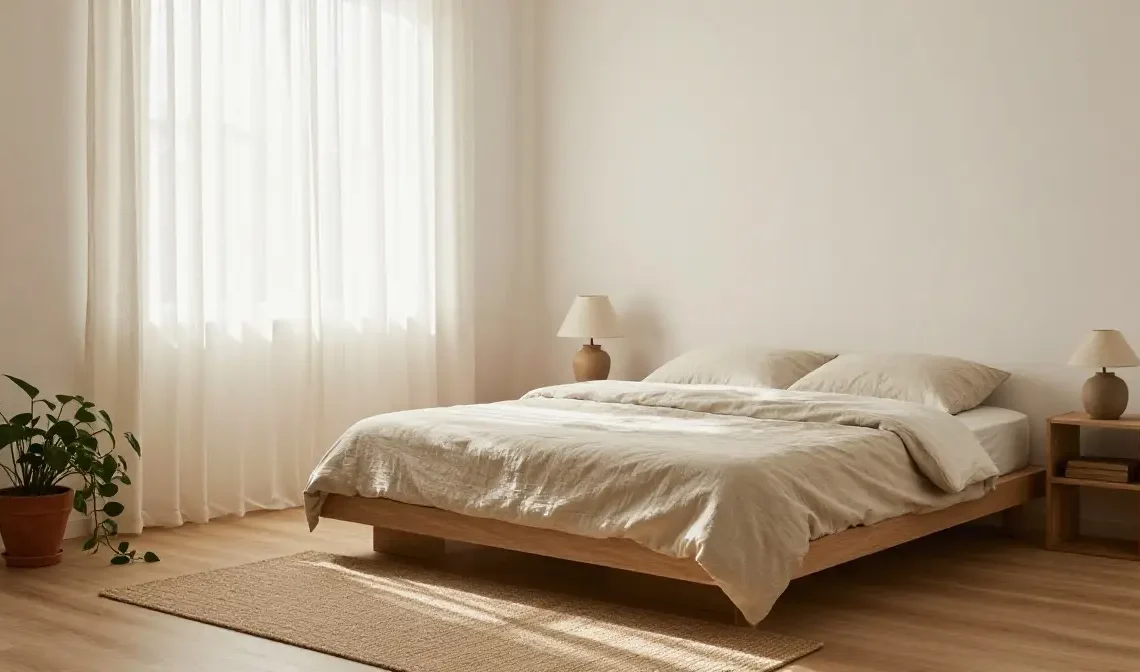
There is something deeply satisfying about walking into a bedroom that feels quiet, clean, and warm all at once. No clutter on the nightstand. No visual noise pulling your attention in five directions. Just a space that actually lets you breathe.
That is what minimalist bedroom styling is really about. It is not about making your room look empty or cold. It is about keeping only what matters — the right furniture, the right textures, the right light — so everything works together to create a peaceful bedroom atmosphere.
Whether you are starting from scratch or just tired of a room that never feels restful, these ideas will help you build something calm, cozy, and genuinely livable.
Choose a Neutral Bedroom Color Palette First
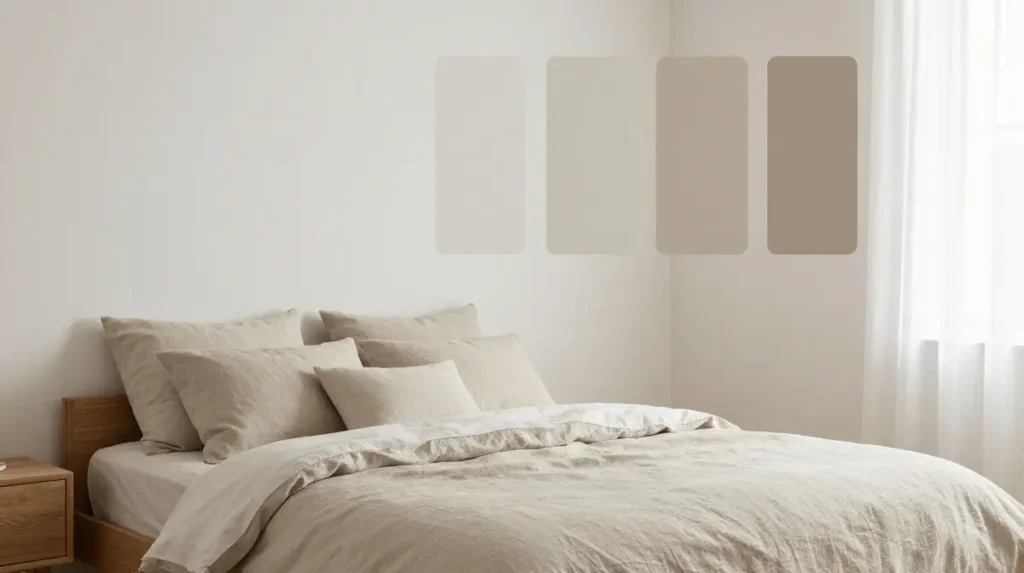
Before anything else, pick your colors. A neutral bedroom palette — warm whites, soft beiges, muted greiges, or gentle clay tones — creates instant calm. These shades reflect light gently and make a room feel larger without any extra effort.
You do not need to paint everything white. A warm white bedroom with one or two deeper earthy tones on cushions or a throw can feel incredibly layered and sophisticated.
Let Your Bedding Do the Heavy Lifting
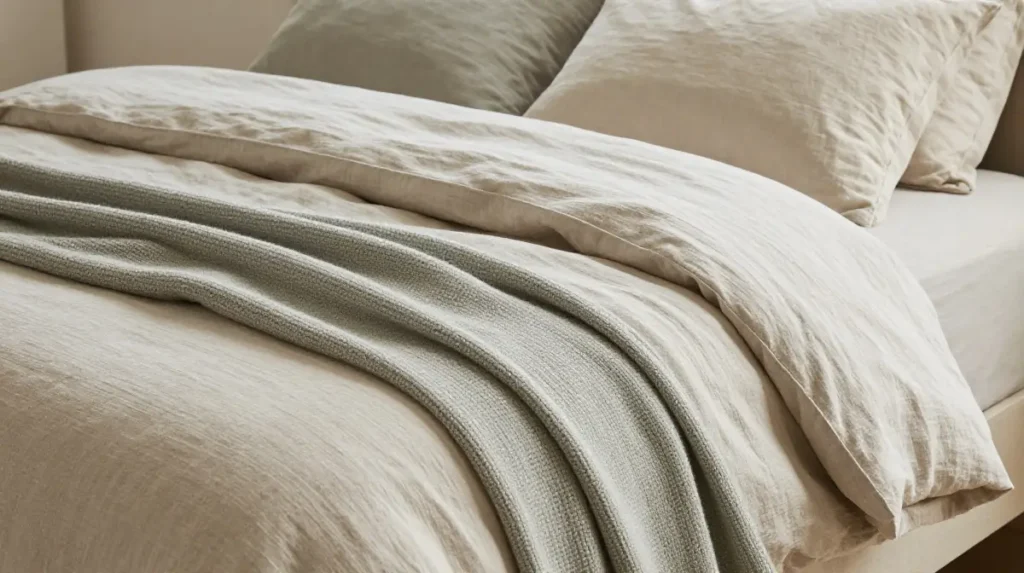
In a minimal bedroom, your bed is the focal point. Linen bedding in muted colors — oatmeal, dusty sage, or soft terracotta — adds texture and warmth without clutter. Layer a fitted sheet, a relaxed duvet, and a knitted throw folded at the foot for that cozy bedroom aesthetic that looks effortless but intentional.
Avoid loud patterns. Simple tones and natural fabrics photograph beautifully and age gracefully.
Keep Furniture Simple and Purposeful
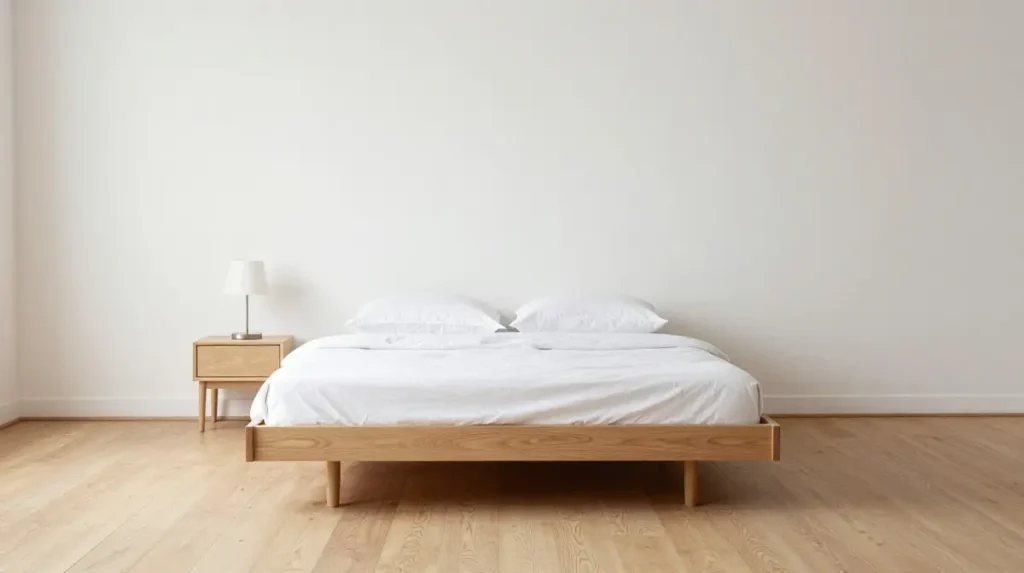
Minimal furniture does not mean no furniture. It means choosing pieces with intention. A low bed frame or platform bed aesthetic keeps the room visually grounded. A single nightstand with one lamp and one small object is enough.
Ask yourself what each piece of furniture actually does for you. If the answer is nothing, it probably does not belong in a minimalist bedroom.
Use Wood Tones to Add Warmth
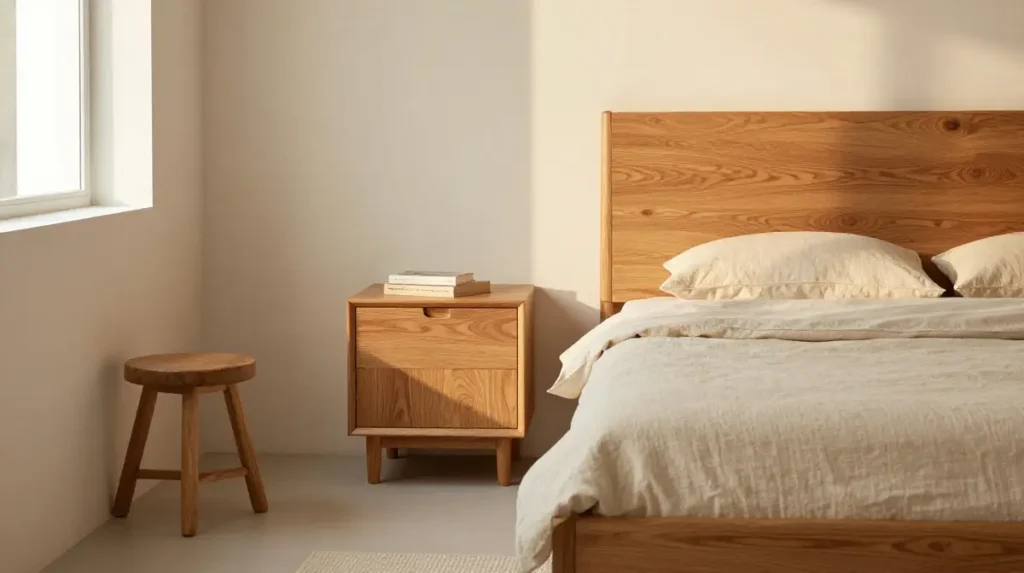
One of the most common mistakes in minimalist styling is going too stark. Bedroom wooden accents — a natural oak frame, a walnut side table, or a simple wooden stool — bring organic warmth that prevents the space from feeling clinical.
Wood works in almost every minimalist interior design style, from Scandinavian bedroom design to Japandi bedroom style to wabi sabi bedroom aesthetic.
Layer Textures Instead of Adding More Stuff
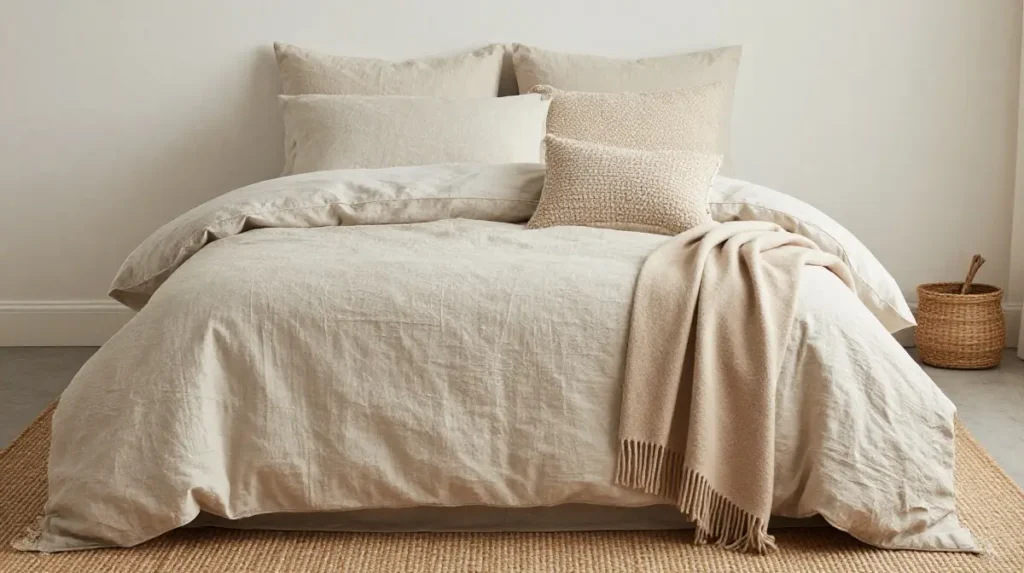
When you limit decor, texture becomes your best tool. Bedroom layering textures — a linen duvet, a boucle cushion, a wool throw, a jute rug — creates visual depth without adding clutter.
Soft furnishings carry a room. They make it feel inhabited and cared for. Mix matte with slightly textured, smooth with nubby, and flat with dimensional for a result that reads as rich without being busy.
Get the Lighting Right
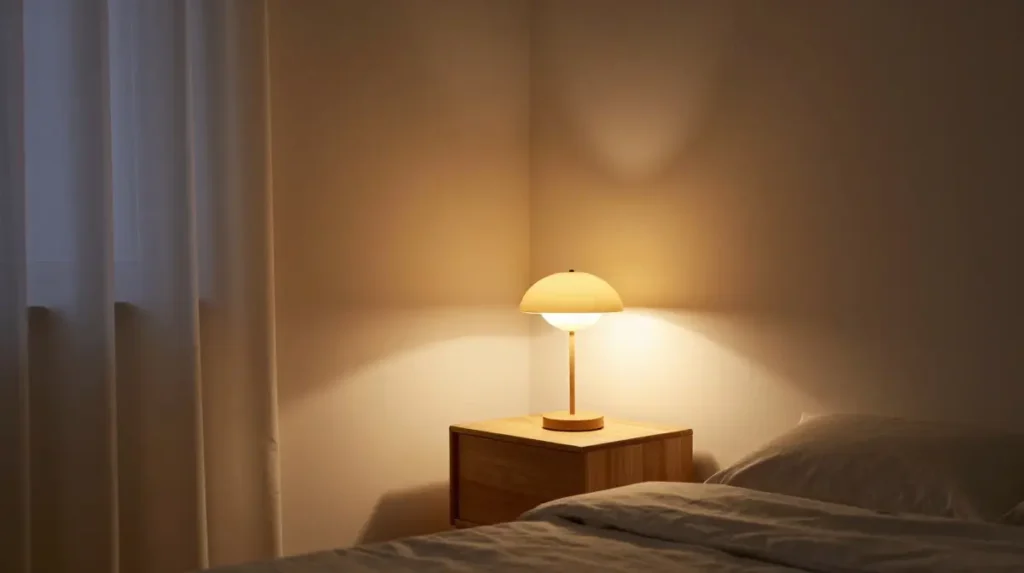
Soft bedroom lighting changes everything. Harsh overhead lights work against a calm bedroom aesthetic. Instead, use warm-toned bulbs, a table lamp on your nightstand, and consider a dimmable option if possible.
Ambient bedroom lighting — floor lamps in corners, small wall sconces, or even a string of warm bulbs — creates that hygge bedroom atmosphere where everything feels cozy and low-pressure. This kind of bedroom mood lighting is also genuinely better for sleep.
Choose a Low Bed Frame or Platform Bed
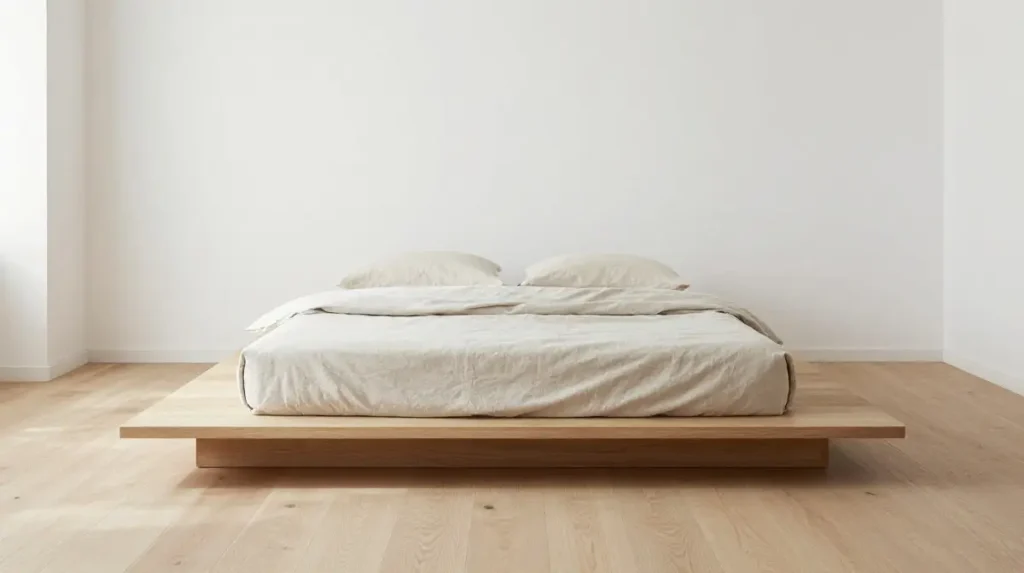
A platform bed aesthetic sits close to the ground and creates a sense of openness and simplicity that taller, bulkier frames cannot match. It also makes a small bedroom styling project much easier because it frees up visual space above the mattress.
Paired with clean bedding and a simple headboard — or no headboard at all — a low bed frame feels both modern minimalist and quietly luxurious.
Declutter With a System, Not Just a Clean-Up
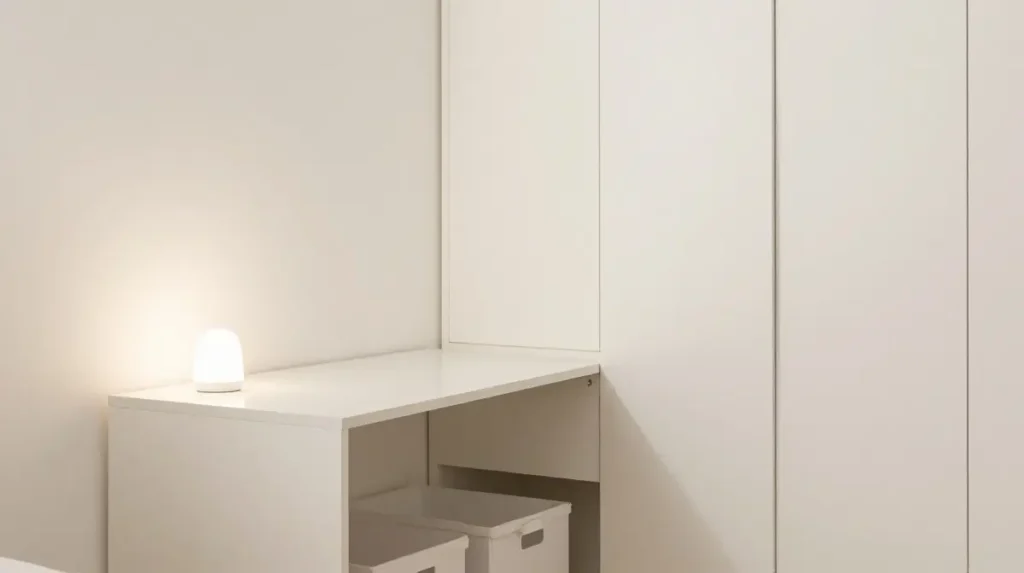
A clutter-free bedroom does not happen by accident. Bedroom declutter ideas work best when you have a real system. Assign every object a home. If something does not have one, it either needs storage or it leaves the room.
Bedroom storage solutions like under-bed boxes, a simple wardrobe with closed doors, or a floating shelf with limited items keep surfaces clear. Out of sight is a real strategy here, not just a design principle.
Add One or Two Plants, Not a Garden
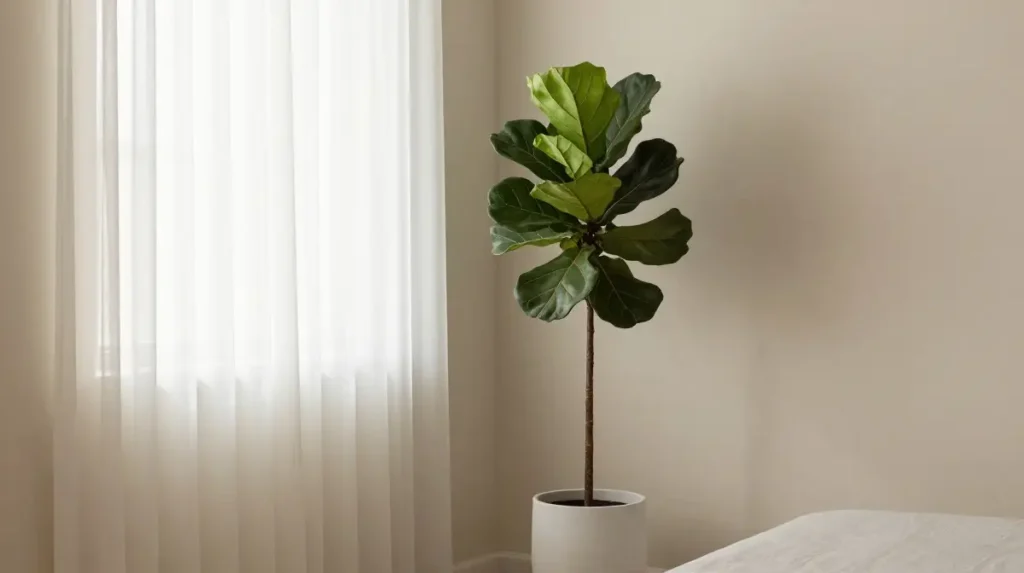
Bedroom plant decor adds life and softness to a minimal space. A single fiddle leaf fig, a trailing pothos, or a small snake plant near a window can completely change the mood of a room.
Keep it to one or two plants. More than that starts to feel like a different kind of clutter. Choose plants that do well in lower light if your room does not get much sun.
Try a Monochrome or Tonal Approach
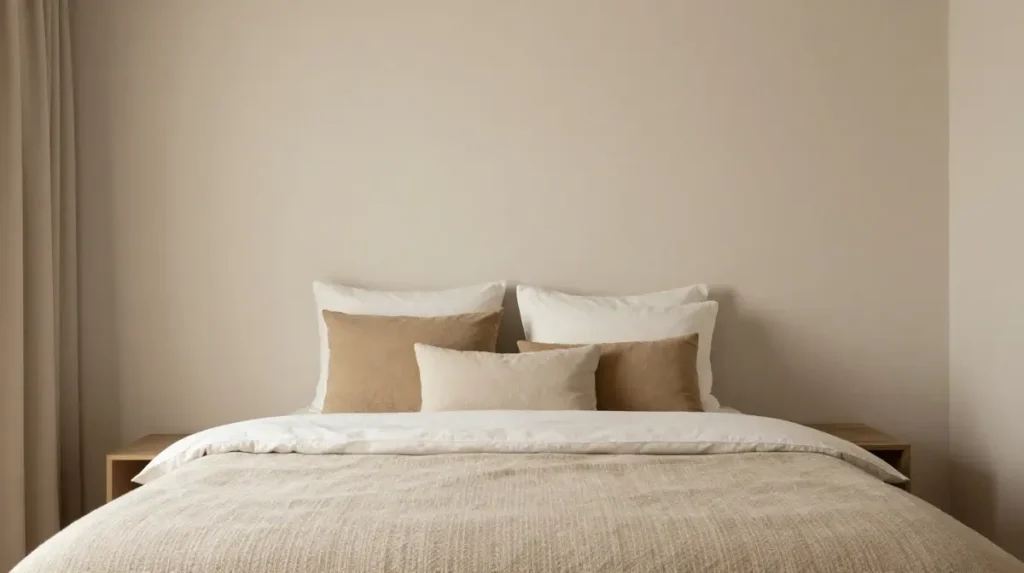
A monochrome bedroom design does not mean all-grey or all-white. It means working within one color family and varying the shades and textures within it. This creates a serene bedroom design that feels pulled together without requiring a designer’s eye.
Tonal dressing is particularly effective with warm neutrals — layering sand, cream, caramel, and amber tones creates a warm minimalist bedroom that feels cohesive and calm.
Use Curtains to Soften the Space
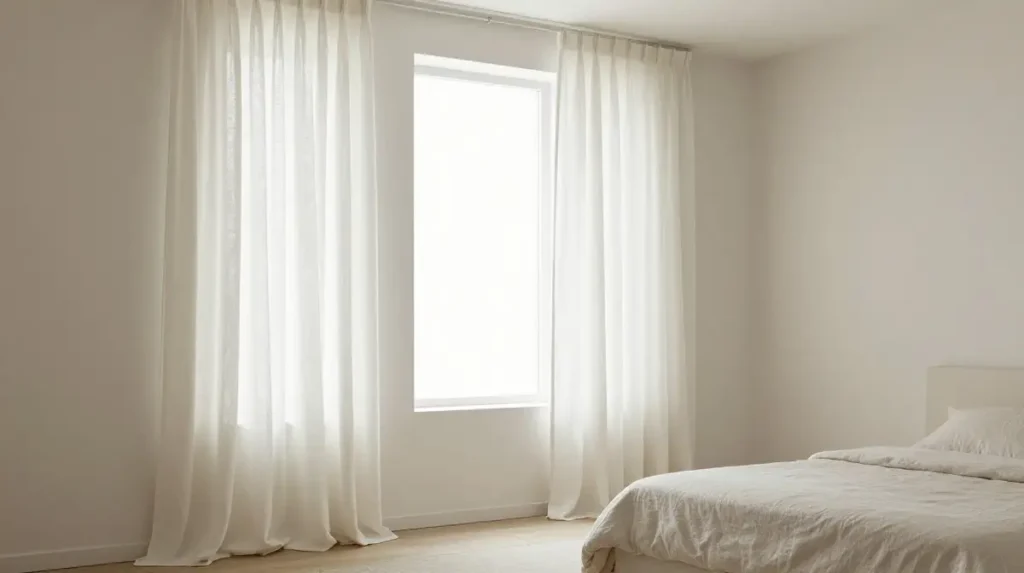
Bedroom curtain ideas for a minimalist room usually point in the same direction — long, floor-length panels in linen or cotton, in a color close to the wall. This creates a soft, elongated look that makes ceilings feel higher and windows feel more generous.
Avoid heavy, dark drapes unless blackout function is the priority. Sheer or semi-sheer panels filter light beautifully and add a soft, dreamy quality to the room.
Keep Nightstand Styling Simple
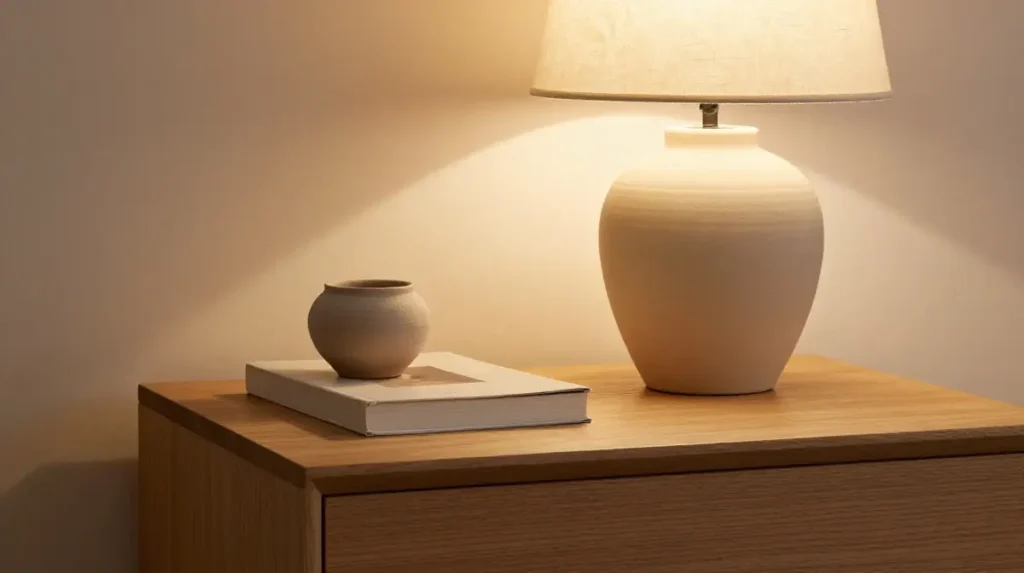
Simple nightstand styling is a small detail with a big impact. Limit yourself to three objects maximum — a lamp, something you are currently reading, and one small object that means something to you. That is it.
A cluttered nightstand disrupts the clean bedroom aesthetic even when the rest of the room is perfectly styled. It is often the last thing you see before sleep and the first thing you see in the morning, so keep it intentional.
Bring In Natural Materials
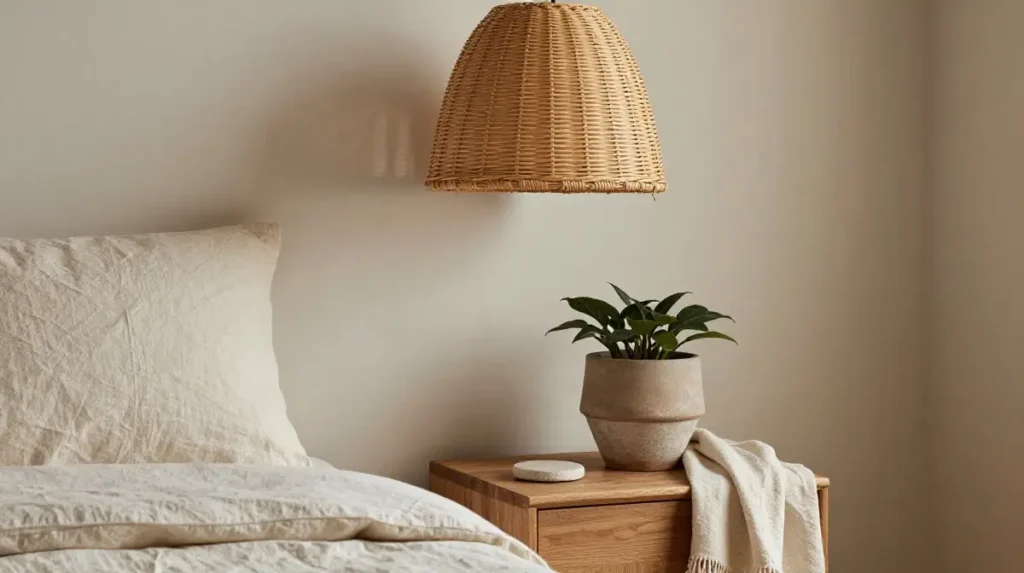
Natural materials bedroom styling feels grounded in a way that synthetic pieces rarely do. Rattan, linen, cotton, clay, stone, and wood all bring an organic quality that complements a minimal approach.
These materials are also part of the wabi sabi bedroom style philosophy — embracing imperfection and natural texture as beauty rather than flaws. A linen cushion with a loose weave or a terracotta pot with slight irregularities adds character.
Try a Bedroom Rug to Anchor the Space
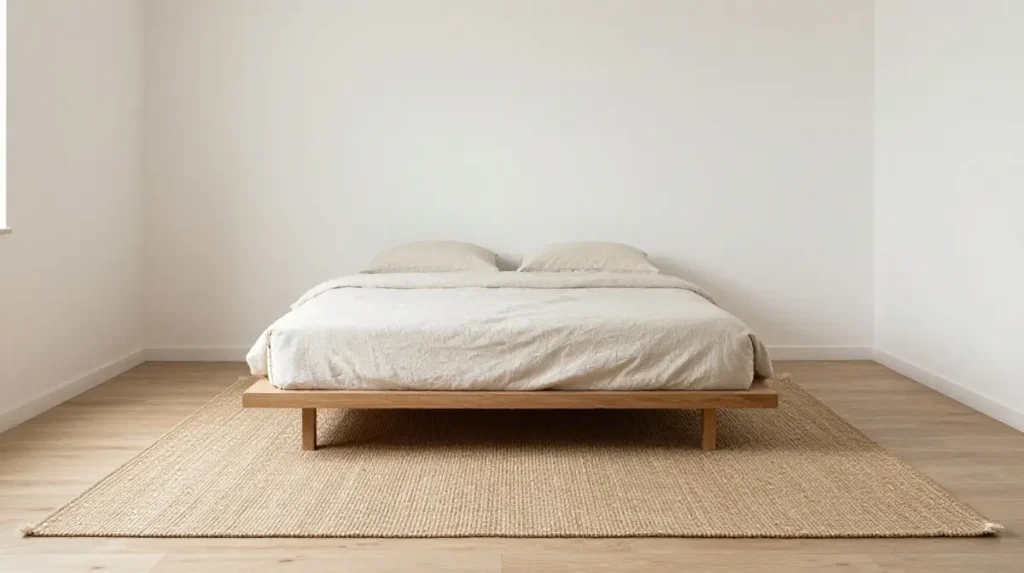
A bedroom rug idea that works well in minimal spaces is a large, low-pile rug in a muted tone placed under the bed and extending on each side. This grounds the furniture, adds softness underfoot, and creates a sense of completeness.
Natural fiber rugs like jute or wool work especially well. Avoid busy patterns — simple textures or very subtle geometric shapes are the safest choice for a serene bedroom design.
Use Mirrors Thoughtfully
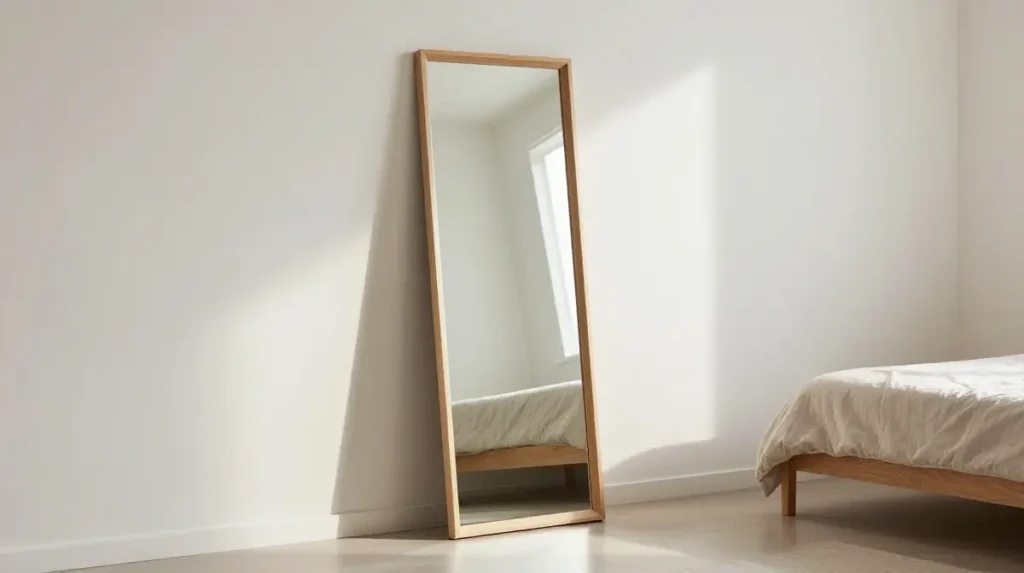
A well-placed mirror in a minimalist bedroom adds light, depth, and a sense of space without decorating clutter. A full-length leaning mirror in a natural wood frame is practical and visually pleasing.
Avoid gallery walls of mirrors or ornate frames. One good mirror in the right spot is enough.
Embrace Negative Space
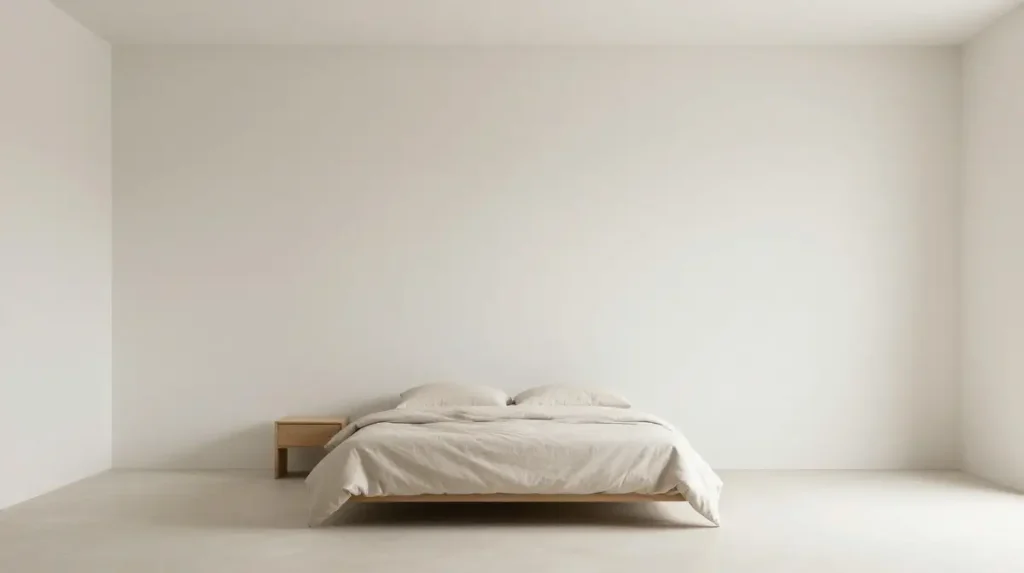
One of the most underused tools in bedroom decor is simply leaving space empty. A blank wall. A clear surface. An open area of floor. Negative space in a minimalist bedroom is not wasted — it is what makes the rest of the room feel calm and intentional.
This is particularly important if you are working with a small bedroom. Resisting the urge to fill every corner makes the space feel larger and more restful.
Consider Bedroom Feng Shui Basics
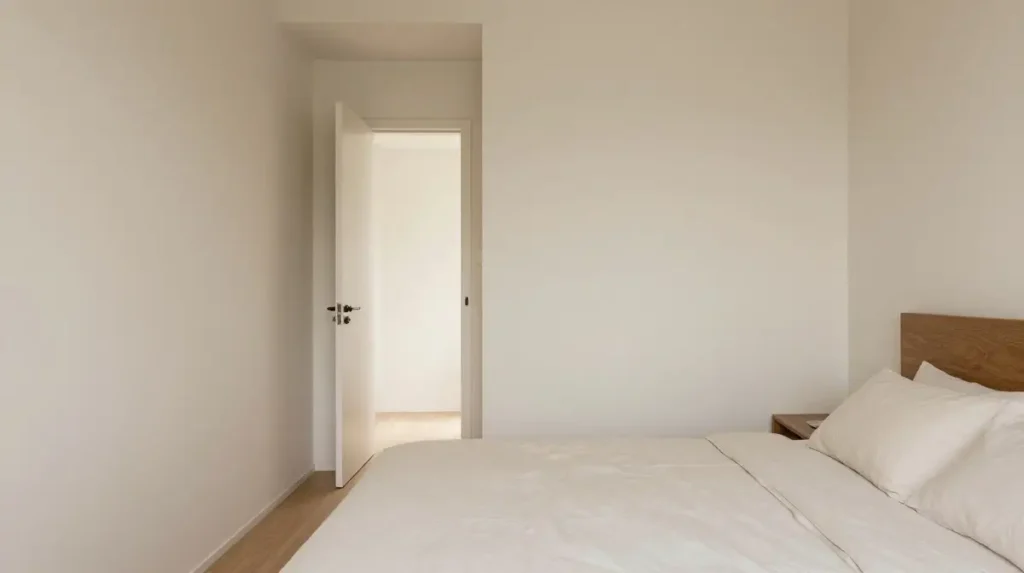
Bedroom feng shui tips are not mystical — most of them are just good spatial logic. Position the bed so you can see the door without being directly in line with it.
Avoid storing things under the bed if possible. Keep electronics out of direct eyeline. These small adjustments support both a calm bedroom aesthetic and genuinely better sleep.
Add Personality Through One Meaningful Object
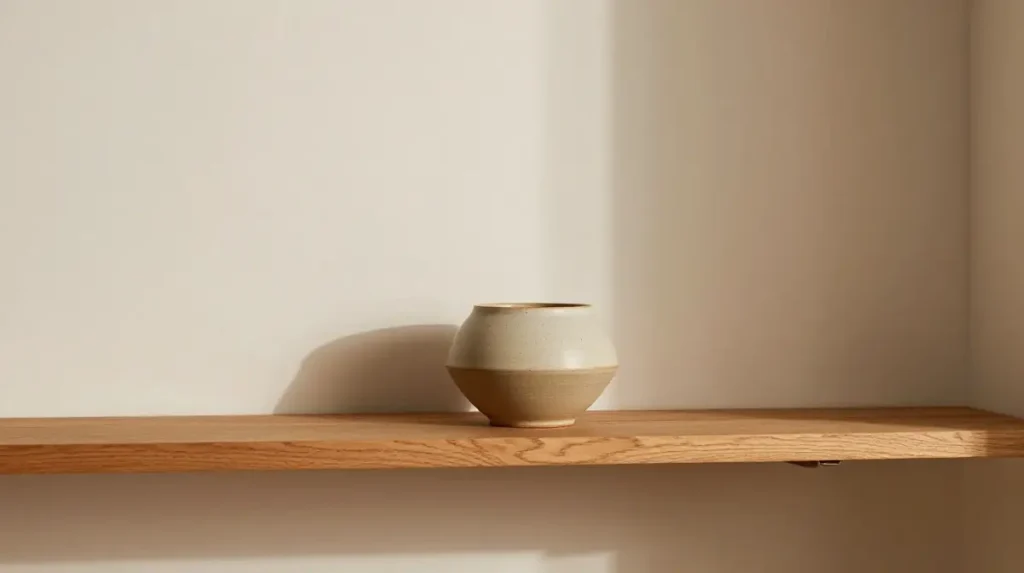
Minimalism does not mean impersonal. A boho minimalist bedroom might include one piece of handmade pottery, a woven wall hanging, or a single framed print that genuinely means something to you.
One object with a story is more interesting than ten decorative items bought quickly. Choose carefully, display simply, and let that one piece do the work.
Style Bedroom Walls With Restraint
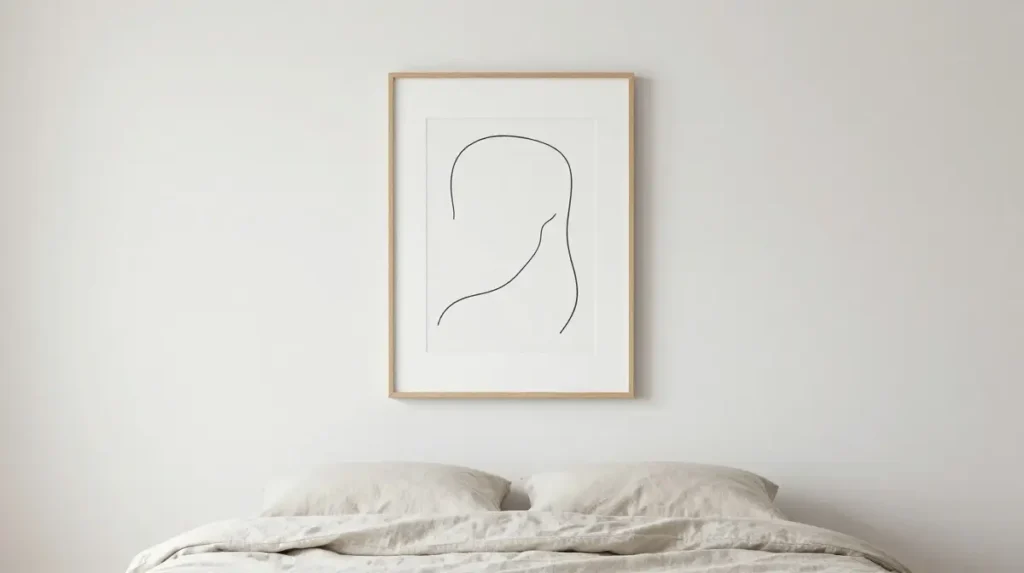
Bedroom wall decor in a minimal space works best when it is sparse. One large piece of art hung at the right height, or a small cluster of two or three simple frames, is enough. A blank wall is always better than a busy one.
Earthy tone bedroom art — landscapes, abstract shapes in natural tones, simple line drawings — works across almost every minimalist style and ages well.
Make It Feel Cozy, Not Cold
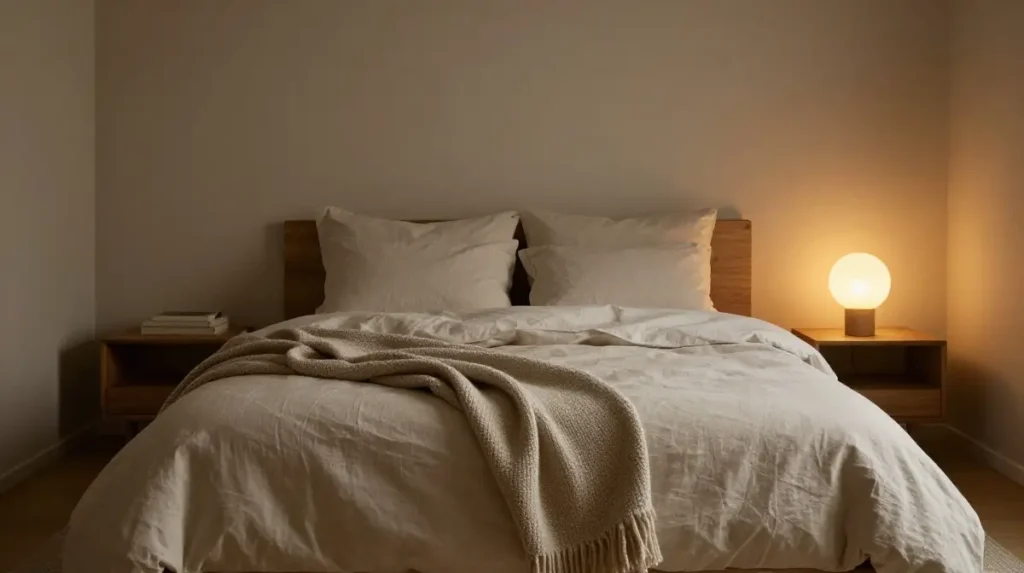
The most common worry about minimalist bedroom styling is that it will feel cold or sterile. The answer is warmth through materials, not more objects. A cozy neutral bedroom feels warm because of the textures it contains, not the number of things on display.
Wool, linen, cotton, wood, and warm-toned lighting do most of the heavy lifting. You do not need more stuff. You need better stuff.
Keep It Sustainable and Budget-Friendly
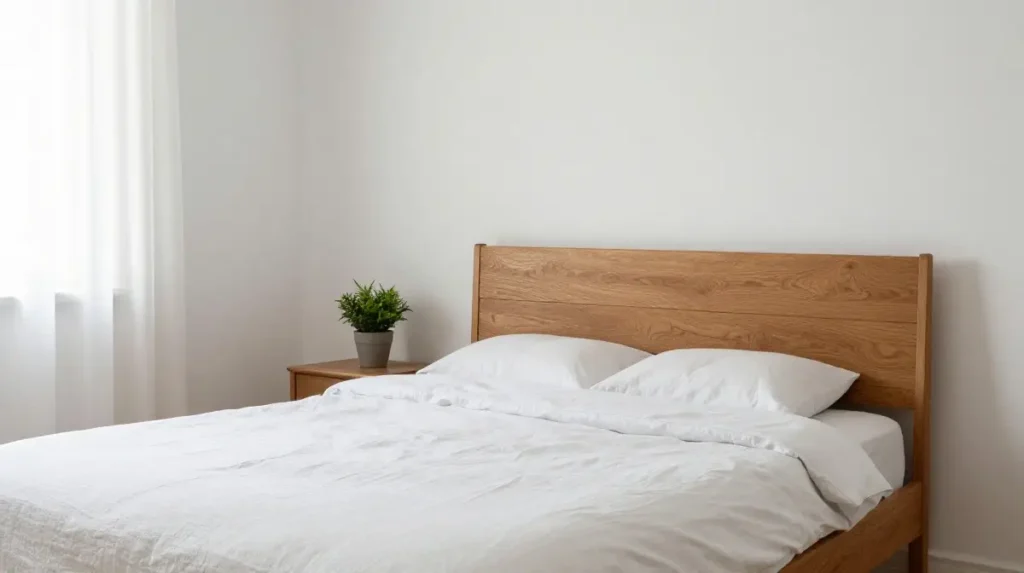
An affordable minimalist bedroom is absolutely achievable. Second-hand wooden furniture, basic linen bedding from accessible retailers, and simple plants are all you need to start. The DIY minimalist bedroom approach — painting existing furniture, making simple curtains, or repurposing objects — produces results that feel personal and considered.
Buying less but buying better is both a minimalist principle and a practical one.
Maintain It Over Time
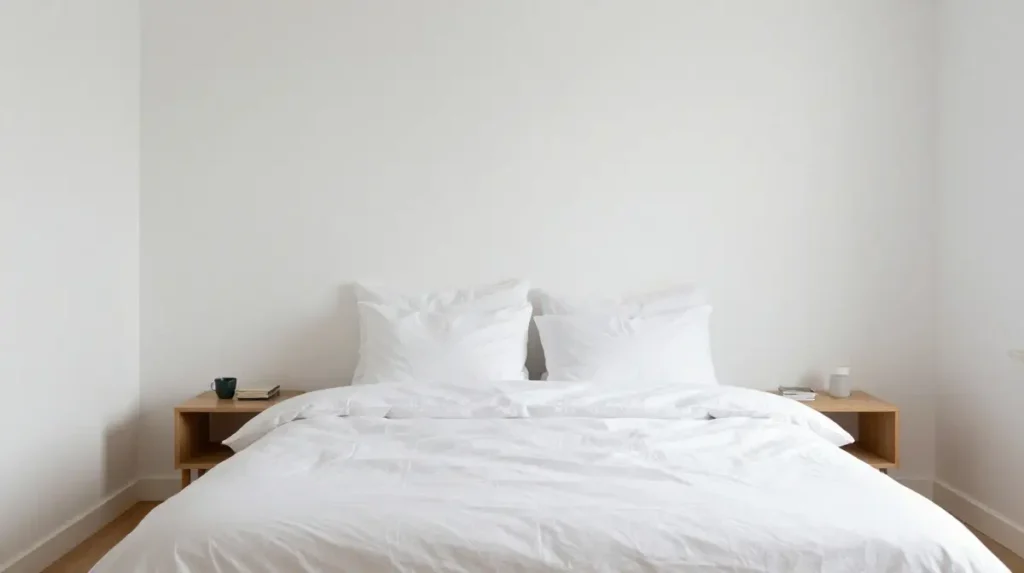
The hardest part of minimalist bedroom styling is not creating it — it is maintaining it. Set a small habit of a ten-minute reset each week. Clear surfaces, return things to their homes, remove anything that has crept in uninvited.
A serene bedroom design only stays serene when it is tended. It does not take much. It just takes consistency.
Conclusion
A minimalist bedroom does not have to feel like a show home or a hotel room with no personality. When it is done well, it feels like the most personal space you have — just without the noise.
Start with color. Add texture. Keep surfaces clear. Choose furniture that earns its place. Let light do the work it is meant to do. These are not complicated ideas. They are just quiet ones — and quiet, in a bedroom, is exactly the point.
You do not need to change everything at once. Pick two or three ideas from this list and start there. A calmer, cozier bedroom is genuinely within reach.
You may also like this:22 Minimalist White Living Room Ideas for Clean Elegant Spaces
FAQ
FAQ 1: What is the easiest way to start minimalist bedroom styling?
Start by removing everything from one surface — your nightstand or dresser — and only putting back what you actually use. That single act creates immediate calm and shows you how much you can live without.
FAQ 2: Can a minimalist bedroom still feel warm and cozy?
Absolutely. Warmth comes from materials and lighting, not quantity. Linen bedding, a wool throw, warm-toned bulbs, and wood accents will make a minimal room feel deeply cozy without adding clutter.
FAQ 3: What colors work best for a calm minimalist bedroom?
Warm whites, soft beiges, muted greiges, and earthy neutrals are the most reliable choices. They reflect light gently, feel restful, and work well with natural textures and wood tones.
FAQ 4: How do I add personality to a minimalist bedroom without cluttering it?
Choose one or two meaningful objects and display them intentionally. A handmade ceramic piece, a single framed photograph, or a plant you genuinely love adds character without visual noise.
FAQ 5: Is minimalist bedroom styling expensive?
Not at all. Many of the most effective elements — decluttering, neutral paint, simple linen bedding, second-hand wooden furniture — are low-cost or free. The minimalist approach is inherently about buying less, which saves money over time.

1 Comment